Word of the Year

Come the end of the year, and we see various lists, rankings, selections ,’ Best of..’,  ‘..of the Year’, and what have you. For me, the most interesting of these is the Word of the Year, or WOTY.

Word of the Year is what is considered the most important word(s) or expression(s) in the public sphere during a specific year. It is supposed to capture the zeitgeist of the year gone by. There is no THE Word of the Year. There are several Words of the Year, assessed and declared by several bodies—dictionaries, learned societies, etc.

The tradition started in German when the first Wort des Jahres was selected in 1971. The word was aufmüpfig, meaning rebellious or insubordinate.

The first English WOTY was declared by the American Dialect Society’s in 1990, and was bushlips, meaning insincere political rhetoric (from Bush’s ‘read my lips’ comment). The American Dialect Society (ADS) is a learned society, not connected to any commercial interest, and their WOTY is picked by vote of independent linguists, though anyone can nominate a word at any time of the year. As appropirate for a seriously academic institution, ADS really gets into the issue, defining several categories apart from overall WOTY, including: Most useful/Most Likely to Succeed WOTY; Political WOTY; Digital WOTY; Informal WOTY; Acronym/Initialism of the Year; AI-related WOTY; Most Creative WOTY; and Euphemism of the Year. While all other organizations declare WOTYs at the end of the given year, ADS comes out with it’s in the beginning of the next year.

As we have seen from the newspapers, several other organizations also pick their own WOTYs, using different methodologies. Here is a look at some of the popular ones and how they are selected:

Oxford WOTY

‘The candidates for the Word of the Year are drawn from evidence gathered by our extensive language research program, including the Oxford Corpus, which gathers around 150 million words of current English from web-based publications each month. Sophisticated software allows our expert lexicographers to identify new and emerging words and examine the shifts in how more established words are being used.

Dictionary editors also flag notable words for consideration throughout the year and use other sources of data to identify contenders.

We regularly take into account the many suggestions sent to us via social media.

The final Word of the Year selection is made by the Oxford Languages team on the basis of all the information available to us.’ (https://corp.oup.com/word-of-the-year/)

Cambridge WOTY

‘The candidates for the Word of the Year are drawn from evidence gathered by our extensive language research program, including the Oxford Corpus, which gathers around 150 million words of current English from web-based publications each month. Sophisticated software allows our expert lexicographers to identify new and emerging words and examine the shifts in how more established words are being used.

Dictionary editors also flag notable words for consideration throughout the year and use other sources of data to identify contenders.

We regularly take into account the many suggestions sent to us via social media.

 The final Word of the Year selection is made by the Oxford Languages team on the basis of all the information available to us.’ (https://dictionary.cambridge.org/editorial/word-of-the-year)

Dictionary.com

‘Dictionary.com’s Word of the Year and short-listed nominees capture pivotal moments in language and culture. These words serve as a linguistic time capsule, reflecting social trends and global events that defined the year. The Word of the Year isn’t just about popular usage; it reveals the stories we tell about ourselves and how we’ve changed over the year. And for these reasons, Dictionary.com’s 2024 Word of the Year is demure.’ (https://www.dictionary.com/e/word-of-the-year)

Merriam-Webster WOTY

‘When the Word of the Year was started in 2003, Merriam-Webster determined which words would appear on the list by analyzing page hits and popular searches to its website. For example, the 2003 and 2004 lists were determined by online hits to the Merriam-Webster Online Dictionary and Online Thesaurus and to Merriam-WebsterCollegiate.com.

In 2006 and 2007, Merriam-Webster changed this practice, and the list was determined by an online poll among words that were suggested by visitors to the site. Visitors were requested to vote for one entry out of a list of twenty words and phrases. The list consisted of the words and phrases that were frequently looked up on the site and those that were submitted by many readers.

From 2008 onwards, however, user submissions have not been a deciding factor, and the list has been composed only of the words which were looked up most frequently that year. Merriam-Webster said that the reason for the change was that otherwise ordinary words were receiving so many hits that their significance could not be ignored.’ (https://www.merriam-webster.com/wordplay/word-of-the-year)

The Oxford WOTY 2024 is brain rot, which is ‘any Internet content deemed to be of low quality or value, or the supposed negative psychological and cognitive effects caused by it’.

The Cambridge WOTY for the year is manifest, meaning ‘to speak your dreams into existence. It’s also associated with the practice of visualizing goals to achieve them’.

And stop press! Merriam-Webster has just declared polarization as its WOTY. While polarization means division into two sharply contrasting group, Merriam-Webster’s editor at large clarified further that in the context of their choice. “Polarization means that we are tending toward the extremes rather than toward the center.”

If only we could ‘manifest’ ‘brain rot’ and ‘polarization’ away, wouldn’t that make for a great 2025!

–Meena

Frozen Poetry: The Art of Calligraphy

Though the term ‘calligraphy’ is Greek for ‘beautiful writing’, as the art form evolved, the word has taken on a larger meaning. 

Today, people think of calligraphy as:

‘… the art of forming beautiful symbols by hand and arranging them well.’
or
‘…a set of skills and techniques for positioning and inscribing words so they show integrity, harmony, some sort of ancestry, rhythm and creative fire.’

Calligraphers don’t like you to equate the form to ornamental decorated letters or to the use of letters as ornaments, insisting it is about symbols themselves being beautifully formed and arranged.

They say at some level, it is not handwriting at all, because the primary goals of handwriting are to be quickly and easily written and accurately read. In fact, beauty, personality and artistic impact are nowhere near as important in handwriting as clarity and speed (I wish someone had told my primary school teachers that!).

Calligraphy, they say, is ‘writing as an art form’ and not ‘artistic-looking handwriting’. So while handwriting aims to be read, calligraphy aims to produce an ‘art’ reaction.

Calligraphy is ‘a skill which involves touch, pressure, hand movement, unity, and that elusive quality we term “beauty.’ (V. Studley).

The art originated in ancient China, where characters were initially carved onto materials like animal bones and tortoise shells. Over time, this practice evolved into using ink brushes and writing on paper. From China, it moved to neighbouring countries, and slowly Westwards. The ancient Romans used reed or quill pens dipped in ink to write on long rolls of paper, while Christian churches later adopted western calligraphy to reproduce Biblical texts. Arabic calligraphy based on Arabic letters is also very well-developed, and an important part of art and architecture.

The tools used in calligraphy are all-important. While initially, the Chinese artists used ink brushes, the Romans started using reed or quill pens. Calligraphy was revolutionized with the invention of the steel nib. Different types of steel nibs—e.g., those with pointed tips and those with flat, broad edges being used for different calligraphy styles.

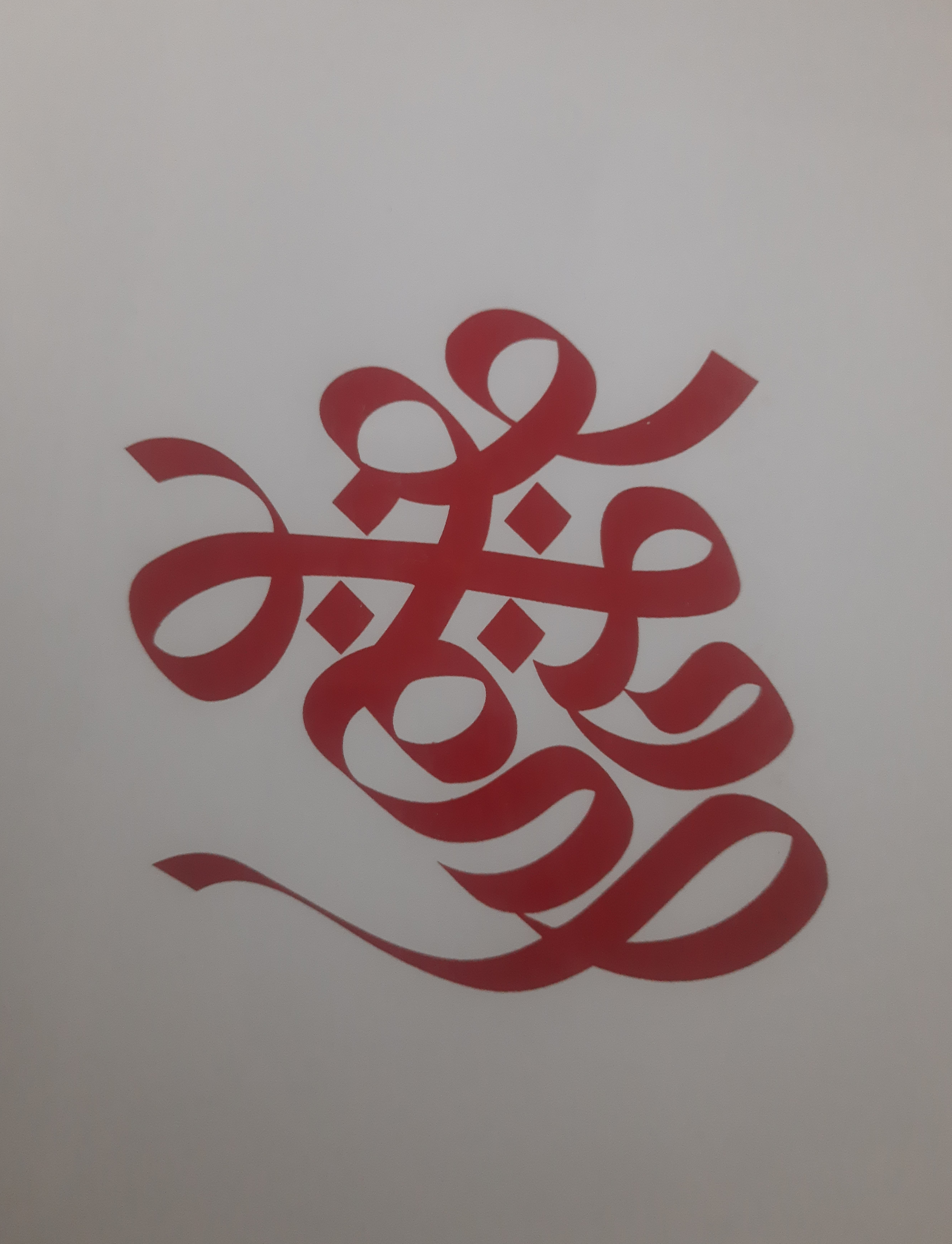
Calligrapher PP Raju’s work–both spiritual and meditative

The symbol of Indian Rupee adopted in 2010 is a great example of calligraphy. The symbol is an amalgam of Devanagari “Ra” and the Roman Capital “R”. It was conceptualised and designed by Udaya Kumar, an alumnus of the IDC School of Design of IIT Bombay.

The reason for this meander down calligraphy-lane is because only last week, Kochi hosted the second edition of the International Calligraphy Festival of Kerala (ICFK). The festival was organized by the Kerala Lalitha Kala Academy and the Thiruvananthapuram-based Kachatathapa Foundation, which is led by renowned calligraphy artist Narayana Bhattathiri. It brought together calligraphers from South Korea, France and Vietnam with Indian calligraphy experts like Achyut Palav, often referred to as the patriarch of Indian calligraphy, and D. Udaya Kumar, the creator of the Indian Rupee symbol. It was a priceless learning opportunity for students, teachers, advertising artists, art lovers and art enthusiasts from fine arts colleges, design institutes and design colleges in Kerala.

Apart from lectures, demonstrations and discussions on the subject, there were a range of activities including workshops, live demonstrations, an international calligraphy exhibition, and calligraphy quizzes.

What a beautiful event that must have been, for as someone said ‘Calligraphy is a kind of music not for the ears, but for the eyes.’

–Meena

Reviving Crafts: Kamaladevi Chattopadhyay

As the country gears up to celebrate India’s 77th Independence Day, memories are revived of the significant events and persons in the unique movement that led India to her ‘tryst with destiny’ to become a free nation on 15 August 1947.

Among the innumerable individuals who contributed in different ways to reaching this  momentous moment, is a name of a woman whose contributions were not limited to a single area, but spanned a wide range of fields, all of which coalesced into the empowerment and enrichment of the newly-independent nation. She was Kamaladevi Chattopadhyay—freedom fighter, actor, social activist, art connoisseur, and driving force behind the renaissance of Indian handlooms and handicrafts.

Kamaladevi’s interest in the area of crafts was nurtured in her childhood when she had participated in the creation of objects for the innumerable rituals, which were part of the daily life in many homes. She was drawn to the simplicity as well beauty in these everyday objects. But it was after she met Gandhiji that she understood this deep relationship between these objects and our daily lives. As she wrote: “How beneficial it was for us to live with them and make them an integral part of our daily existence”. She quoted Gandhiji: “Association is the essence of relationship which endears articles of everyday use to the user. This endearment finds a way of enhancing the aesthetic values in these articles, just as we love to dress up our loved ones, so we love to embellish our homes. Here, the Craftsman employs his ingenuity through creative imagination. We are mostly carried away by a finished product, may be excited by watching the process, but remain unmindful of the deep chords within us that are stimulated when we create something with our own hands. Therefore, in the Indian tradition, creation does not mean making novel and exotic articles to please one’s fancy, but endowing everything we use in our daily life with beauty. Therefore, nothing is created without a purpose”. Thus there was an inextricable link between form and function.

Khadi was more than a political symbol for Gandhiji; by making spinning an essential part of the process, he brought in respect for working with hands, and the act of creation, as well as a form of meditation and unification. Gandhiji also made the regeneration of crafts an integral part of the freedom movement. According to him, freedom was not to be defined in political and military terms only, but also in the social patterns that would lead to building inner personality, the spiritual content of the nation.

Kamaladevi was deeply moved by this philosophy. At the time, the long tradition of indigenous crafts was threatened by the rise of factory-made goods and mass production; many crafts were rapidly disappearing. For her, crafts revival and independence from British rule were interlinked agendas. Kamaladevi made it her mission to champion the cause of handicrafts and handlooms. She saw crafts not in isolation, but as a part of the rich fabric of our life involving all the creative expressions of people interwoven in their daily lives.  She began at the grassroots, travelling to the remotest villages, getting to know the crafts people and understanding their issues. She formed crafts communities, involved the crafts people in training programmes, and opened up their work for a wider audience through exhibitions and exports of handicrafts. Thus she also supported the notion that crafts could have contemporary significance. Craftsmanship need not, however, be bound up wholly with tradition. While it continues to draw strength from the past, it has also to be tuned to the present, evolve a new relationship with the current flow of life.            

Kamaladevi perceived that cottage industries had an important socio-economic and political role as these led to the decentralization of social and economic power, as well as providing employment and economic security to rural communities. Her efforts towards a crafts renaissance in India were multi-pronged. She made great efforts to rehabilitate women with craft-based livelihoods, in the refugee camps following Partition. She helped establish institutions and systems to empower artisans and to sustain their crafts: The Cottage Industries Board (CIB), the Indian Cooperative Union (ICU), the All India Handicrafts & Handloom Board, the Cottage Industries Emporium, Regional Design Centres, the Crafts Council of India (CCI), and the Crafts Museum, among others. She was appointed the chairperson of the All India Handicrafts Board in 1952.

For Kamaladevi, crafts were not only a way of recognising the significance of one’s own culture but also, of developing a sense of appreciation of other world cultures as well. It was her inspiration that created the World Crafts Council in affiliation with UNESCO. The Crafts Councils became an instrument of the different governments across the world to reach to the masters of their traditions.

Besides her seminal contribution to the revival of handlooms and handicrafts Kamaladevi was instrumental in the creation of several other initiatives and institutions in the field of the performing arts, music, and fine arts, as well as the All India Women’s Conference (AIWC) a national organization of repute that worked for legislative reforms and women’s empowerment. She is remembered not just for espousing the cause of craftspeople, but as a person whose vision was that every human being should live a life of dignity; and one who wanted to enrich the lives of people irrespective of caste, creed or nationhood.

Among the many awards that she was bestowed, the most fitting was the Charles Eames’ Award which honoured her as the one individual, who had contributed to the Quality of Life in India in this era.

Almost a century after Kamaladevi sparked the renaissance in Indian handicrafts and handlooms the country continues to celebrate their creators. 7 August is marked as National Handloom Day to remind us of their contribution to the cultural and economic landscape of the country. The date also commemorates the launch of the Swadeshi Movement in 1905, which emphasized self-reliance and indigenous craftsmanship.  

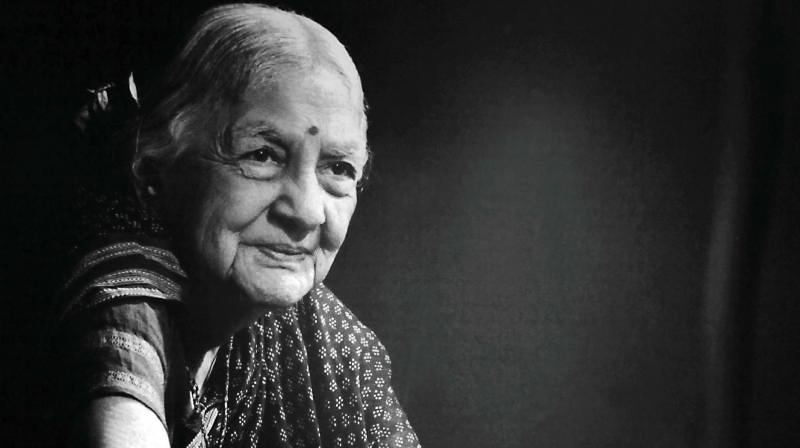
–Mamata

More on Kamaladevi:  https://millennialmatriarchs.com/2021/03/30/multi-faceted-nation-builder-remembering-kamaladevi-chattopadhyay

The Little Red Caps: Olympic Phryges

We are well into the Olympics—complete with controversies, exhilarating triumphs and heart-breaking failures. And we will see more super-human achievements in the weeks to come.

Overseeing all the fun, festivities and sports are the Olympic mascots of Paris 2024, the Phryges. The phryges are little red hats. This is somewhat unusual, because the mascots are often, but not always, characters—often indigenous animals or birds, or human forms representing the cultural heritage of the host country.  Generically, mascots are ‘a person or thing that is supposed to bring good luck, especially one linked to a particular organization or event; a person, animal, or object adopted by a group as a symbolic figure especially to bring them good luck’

Why is a red hat the mascot for the Paris Olympics? Well, the phryge holds a lot of significance for the French, and is a deep part of their cultural heritage. The phryge is a soft hat, generally red, which was first worn by freed slaves in Phrygia, an ancient Greek kingdom (in present-day Turkey). The storming of the Bastille prison in July 1789 marked the beginning of the French Revolution. Revolutionaries who were involved in the storming wore phryges. And slowly the hats came to symbolize the Revolution itself, and since then have since been known as a symbol of liberty and the revolution. Even today, protesters don them as they march. Marianne, the personification of France, is often shown wearing a Phrygian cap.
The Paris Olympics have two Phrygres: one for the summer Olympics, and one for the Paralympics. The Paralympics mascot  which ‘has a visible disability also sends a strong message: to promote inclusion.’

Both the Phryges are blue, white and red — the colors of the French flag.  They sport a gold “Paris 2024” logo on their chests. Their eyes are made out of a “cockade of France” –a knot of ribbons that is the French national ornament.  Each Phryge has its own personality. The Olympic Phryge is ‘the smart one” with a “methodical mind and alluring charm.’ The Paralympic Phryge is ‘a party animal, spontaneous and a bit hot-headed.’ 
Olympic mascots have been around  since 1968. They symbolize the Olympic spirit; spread the values highlighted at each edition of the Games; promote the history and culture of the host city; and give the event a festive atmosphere. They bring a personality to the Games, capturing the styles, traditions and cultures of the host country. The mascots are especially meant to connect with youth.

The very first Olympic Mascot was‘Shuss’, a little man on skis in the skiing position to which his name alludes.  He wears a two-coloured head, resting on a zig-zag flash-shaped foot with the Olympic rings featuring on his head. He symbolized the winter Olympics that took place in Grenoble, also in France. Waldi was the first Summer Olympics mascot. This dachshund, a very popular animal in Bavaria known for its endurance, tenacity and agility, was the symbol of the Olympics held in Munich in 1972.

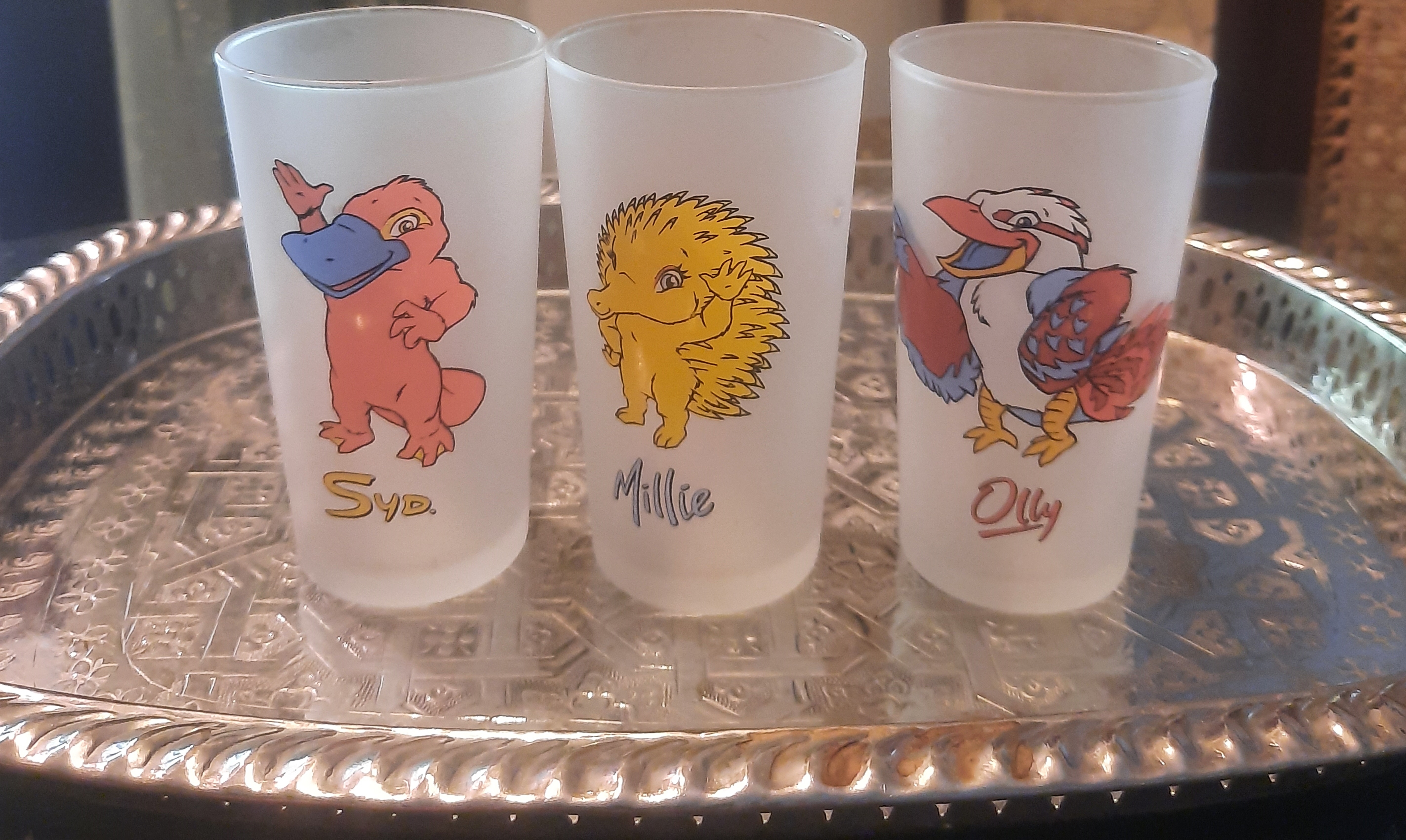
Sydney Olympics Sovernirs
Sovenirs from Sydney Olympics Year!

Since then, the Olympics have featured various animals, birds and objects. Unusual objects have included Schneemandl’  a snowman wearing a red Tyrolean hat (Innsbruck winter Olympics); Magique, a little imp in the shape of a star and a cube (Albertsville); Neve a snowball; Gliz an ice cube (Turin) etc. There are some mascots which are not an animal, nor a human figure, nor an object. One of the most unusual was Wenlock (London 2012) made from one of the last drops of steel used to build the Olympic Stadium in London. The light on his head was similar to those found on London’s famous black cabs. The shape of his forehead resembled the Olympic Stadium roof. His eye was the lens of a camera. He wore five bracelets in the colours of the Olympic rings.

India has not yet hosted the Olympics, but the 1982 Asian Games mascot Appu the Elephant, and the 2010 Commonwealth Games Shera the Tiger, were much beloved. The Phryges follow in this beloved tradition.

So here is to the spirit of the Phryges which aim to show that sport and its values can do great things, and that sports are about fraternity, solidarity and can help society grow.

–Meena


Here Come the Clean-Green Olympics!

This Friday, 26 July, will see the start of the 33rd Summer Olympics. Over the next few weeks, till 11th August, Paris—the main host city, and 16 other cities around France as well as Tahiti, a French overseas island, will see 800 sporting events. With this, Paris becomes only the second city in the world (apart from London) to host the Olympics for the third time. But it is a good long time since the last time it held the Games—a century to be exact!

 The arrangements for the games are aimed at setting new benchmarks for quality, convenience, security and aesthetics. The 4-hour opening event will set the tone. The Paris 2024 opening ceremony will be unique in that it will not take place in a stadium. Instead, nearly a hundred boats will be deployed, which will carry thousands of competitors and other guests on a 6 km scenic route on the River Seine. The boats will be organized by country. Along the way, they will sail by the newly-repaired Notre-Dame Church, several bridges and other Paris landmarks, and will arrive at the Eiffel Tower. The banks of the river will be alive with music, dances and performances woven together into a 12-part show. The speeches and other formalities will all be a part of the overall presentation-experience, as the Games are declared open by French President Emmanuel Macron.  The show will end around 9.30 pm when the sun sets.

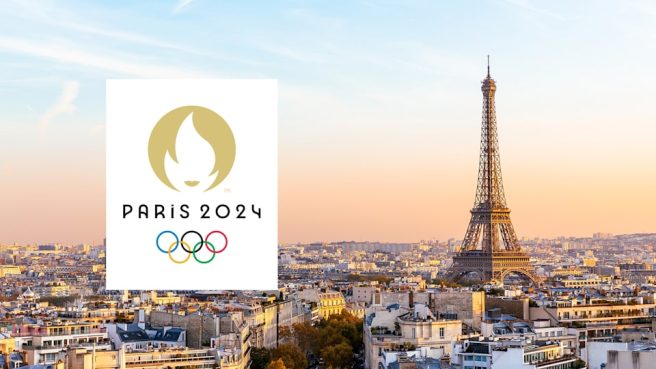
Paris Olympics

About 10,500 athletes will participate in the ceremony, which will be attended by about 100 heads of state. There will be over 3 lakh spectators on the banks. 80 giant screens will be put up along the way.

Other unique aspects of the 2024 Olympics:

  • This will be the first Olympics in history to achieve numerical gender parity, with an equal number of female and male athletes– 5250 men and 5250 women.
  • Break-dancing: For the first time break-dancing will be introduced as a competitive event. There will be two events, one for men and the other for women.
  • For the first time in history, the public will be part of Olympic experience! They will be allowed to run the same course of the Olympic marathon on the same day as the Olympians.
  • The marathon swimming event and the swimming leg of the triathlon will be held in the River Seine, as they were in 1900. From 1923 until recently, swimming had been banned in the Seine due to water-quality issues, but the authorities have put in their utmost to clean up the river, and have assured that it is safe.

Most significantly, the organizers have vowed to make these the ‘greenest Olympics’, with efforts to make to make it carbon-neutral, and to cut the carbon footprint of the Olympics in half compared to previous editions. They will try to offset more emissions than the Games create. Some of the steps the organizers are taking include:

  • The Olympics will run on 100% green energy generated from new sources of wind and solar energy, like windmills on the Normandy coast as well as solar panels on the roofs of venues in Paris.
  • The Games will mainly use only existing venues and temporary structures, thereby avoiding the carbon footprint of building new ones. Only two new venues will be built–for aquatics and basketball.
  • There will be no air conditioning in the athletes’ rooms. Instead, buildings in the athletes’ village have been designed with a cooling system drawing water from underground. Moreover, facades have been designed so they get little direct sun.
  • The Village will use 94 per cent recycled materials and a special construction process that emits half as much carbon.
  • After the games are over, the Athletes’ Village will allocate the houses for permanent residences.
  • Athletes’ mattresses will be made from recycled fishing nets, and the base of the beds will be made from reinforced cardboard.
  • Local farms will provide 80 per cent of the 13 million meals served during the Games, thereby lowering emissions.
  • Most Olympic venues will be accessible by public transport, and 1000 km of new cycling lanes have been created. 3000 pay-and-use bikes will be deployed.
  • About 2 lakh new trees have been planted.

Sounds like these Olympics are going to set new benchmarks! Appropriately so, for the motto “Citius, Altius, Fortius – Communiter” or “Faster, Higher, Stronger – Together” is not just about the sports events themselves, but every aspect of the Games!

Here is to the spirit of the Games!

–Meena

Celebrating Tree-shapers: World Topiary Day

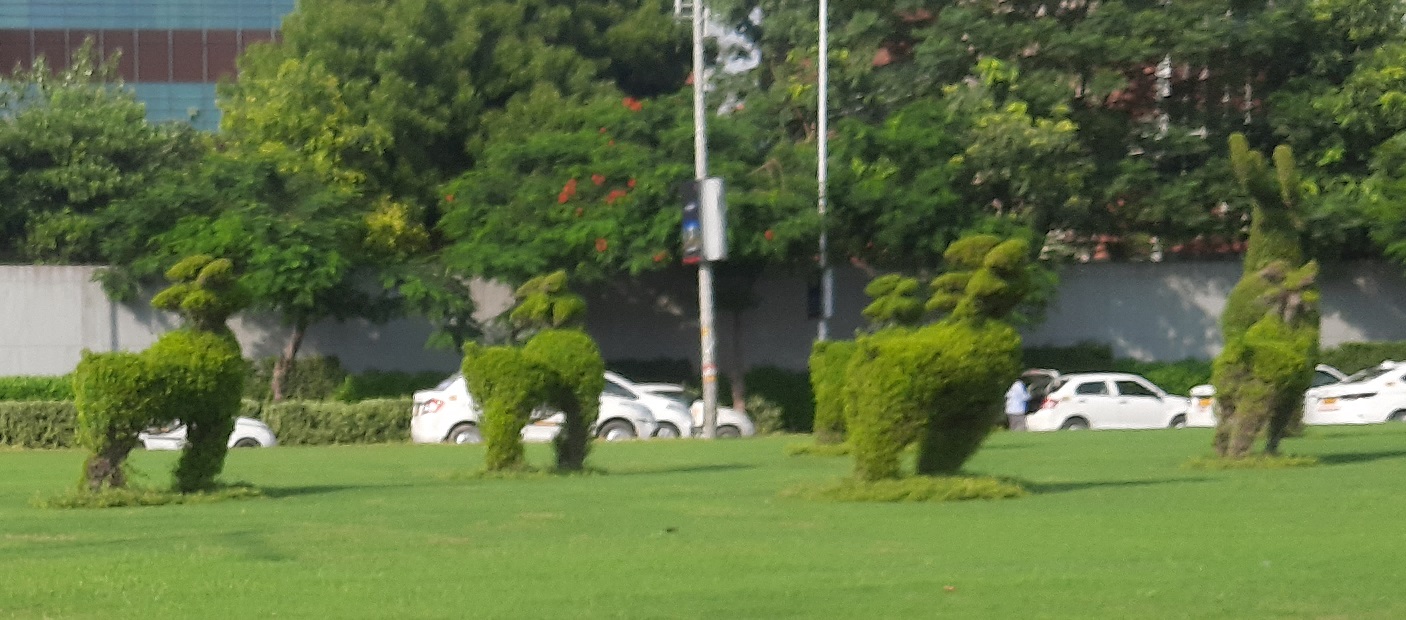
Have you seen deer walking across a traffic island in the middle of a crowded urban space? Or perhaps elephants in your city garden? Well, that is topiary.

Topiary, as per the Britannica, is ‘the training of living trees and shrubs into artificial, decorative shapes’. It is an ancient art, going back to the time of the Romans. In fact, Gaius Matius Calvinus, a contemporary of Julius Caesar is supposed to have been one of the first practitioners, and Caesar is said to have popularized it all over the Roman Empire.

There are three fundamental types of topiary:

  • Shrub topiary which consists of shrubs which are designed and shaped in various shapes and sizes. Very experienced gardeners do the cutting freehand, while others use frames.
  • Vine topiary, wherein vines and climbers are encouraged and shaped to grow in various topiary forms
  • Moss topiary where a frame is filled with wet moss and the chosen plant, and grown in the desired shape.

Whatever the type of topiary, it is an endeavour which requires ongoing work, care, patience and expertise

The fortunes of topiary have waxed and waned. After a long lull, the Italian Renaissance, which saw the flowering of many arts, also saw the revival of topiary. It became the rage in Italy, France (including in the Versailles), and with the Dutch and English.  The British took to it with passion, and it was found not only in the homes of the rich and the famous, but also in the modest gardens of peasants and tradesmen. Imagination was the only limit, with ships, fantastical beasts and human figures, all roaming the lawns.

Till topiary went overboard. And it was the mighty pen which defeated the scissors. Alexander Pope wrote a satirical essay “Verdant Sculpture” criticizing over-the-top topiary, and as a result, by the 1720s and ‘30s, topiary fell out of favour and was cleared from most prominent English gardens. The Levens Hall Garden was one of the few which escaped, and is today the oldest topiary gardens, with 30,000 bedding plants carved in a variety of shapes.

Till topiary was again revived in the 1840s. Not at the same scale, but it became moderately popular.

In its own unique forms, topiary has been quite popular in Asia too. China and Japan have practiced it for many centuries, with the objective of helping the trees achieve their “natural” form. Even the popular bonsai is a form of topiary.  Japanese Zen Gardens make extensive use of different topiary techniques.

Topiary
Topiary at Delhi Airport

In 2021, a new event, World Topiary Day, was created by the owners of one of the world’s oldest topiary gardens, the Levens Hall and Gardens in Cumbria, UK, which dates from 1694. World Topiary Day marked on May 12th every year, celebrates ‘… the fantastic art of topiary (shaping and cutting particular types of tree into geometric shapes and forms that resemble common objects and people) and its heritage within the world of gardening’, and seeks to inspire ‘…keen gardeners and lovers of al fresco living to adopt topiary’s style and structure within their own private gardens.’

A new award for topiary has also been announced as recently as this year and the ‘…search is on for Britain’s best topiary artists thanks to the inaugural Topiary Awards, which are now open for entries until May 31.’

In India too, many gardens and public spaces have examples of topiary. But sadly, after the initial enthusiasm, they are not maintained well, and therefore go out of shape. 

India is however home to the tallest topiary as per the Guinness Book of Records. This is the Samban-Lei-Sekpil in Manipur, started in 1983, which has now reached 18.6 m (61 ft) in height. The plant used is Duranta erecta, a shrub common in Manipuri gardens. It is shaped into a tiered structure called ‘sekpil’ that honours Umang Lei, the forest god.

Here is to tree-shapers, tree-barbers, tree-architects and their tribe, for adding green landmarks and a touch of whimsy to our lives.

–Meena

The Colours of Life

We just marked the day of colours. Yes, Holi of course.  

But another one too–the International Colour Day which just went by on March 21. This Day celebrates all aspects of colour and the impact they have on our lives, and how they make the world a better place.

Now who would declare a day for colours? Well, an organization called the International Colour Association (ICA). This is an old and respected institution, which counts the National Colour Associations of over 30 countries among its members. It aims to ‘encourage research in all aspects of colour, to disseminate the knowledge gained from this research, and to promote its application to the solution of problems in the fields of science, art, design and industry on an international basis.’

The idea of an international colour day was proposed in 2008, and adopted in 2009. The particular date—21 March—was chosen because it is the summer equinox—the day when the sun shines directly on the equator, and the day and night are of equal length.

International Colour Day
International Colour Day Logo

If there is a day, can a logo be far behind? Well, not too far! The International Colour Day logo was adopted in 2012. The creator was Hosanna Yau of Hong Kong, who explained the logo thus: ‘two circles form an eye, with an equal half of rainbow color and black representing light a nd darkness, day and night, everyone feast one’s eye on the international color day.

The study of colour is known as chromatics, and is basically about light and its interactions with matter. Colorimetry, which sounds so much more likely a candidate for this, is actually about a related field—‘ the measurement of the wavelength and the intensity of electromagnetic radiation in the visible region of the spectrum. It is used extensively for identification and determination of concentrations of substances that absorb light.’

Colours because of their ubiquity and the emotional and psychological impacts they have, often become a shorthand for other things.

Coming to one of the colour-related matters which has recently been much in the news in India is the Pink Tax. A viral video put out by Sanjay Arora, an advertising veteran, and commented on by several well-known people including Dr. Kiran Mazumdar-Shaw has kept this in the headlines. I have to admit, I had never heard of this, so thanks Mr. Arora!

What is Pink Tax? As the World Economic Forum explains it: ‘Men and women often buy similar day-to-day products. But research shows that consumer products targeted and advertised to women are sometimes more expensive than comparable products marketed to men. This disparity is referred to as a so-called pink tax.’  The video gives several everyday examples, from deos to haircuts, where the  women’s version is more expensive. A research study in the US looked at 800 gender-specific products from nearly 100 brands and found enormous price disparities across product categories.   For instance, personal care products targeted to women were 13% more expensive than similar men’s products. Dry cleaning costs for women’s dress shirts was  almost double that for dry cleaning of men’s shirts!

You will find plenty of examples close to home. Next time you are browsing or shopping, just do a quick comparison Such differential pricing imposes an extra burden on women, who anyway earn less and have less economic power.

My Colour Day resolution is to boycott products which have stark disparities. I will be happy to buy a men’s deo—I don’t there is any difference anyway.

–Meena

Belated Happy Holi!

Ring in the New!

Welcoming the new year with the ringing of bells is an old tradition, immortalized by the lines from the familiar lines by Alfred Lord Tennyson.

‘Ring out the old, ring in the new,

Ring, happy bells, across the snow;

The year is going, let him go;

Ring out the false, ring in the true.’

Down the ages and across the world, bells have played an important role—from summoning people to a gathering place, to a role in religious rituals, to announcing danger, to attracting attention. And importantly, to summon children to school, and provide them joyful reprieve at the end of classes! I am talking of course of traditional metal bells which are rung manually.  These traditional bells are ‘melodic percussive musical instruments usually made of metal (bronze, copper, or tin) but sometimes made of glass, wood, clay, or horn. When a bell is struck by a clapper (an interior object) or an exterior mallet or hammer, the bell, constructed of solid, resonant material, vibrates and produces a sonorous ringing sound’. Each bell is unique, depending on the material it is made of, how thick it is and its size and shape. Based on these factors, it resonates at certain harmonic frequencies and pitches. 

bell

A bell is usually suspended from a yoke– a cross piece that allows the bell to hang freely. The top of the bell is known as the crown and the middle portion is called the waist. The lower open section is known as the mouth, and the lower edge of the bell is called a lip. The part of the bell which is struck with a clapper is the thickest part of it, and is called the sound bow. Some bells are rung with clappers, a metal sphere that swings inside the bell Others are struck with a mallet or stick externally.

Gungroos represent a variation. Rather than being bell-shaped, they are orbs, with a few openings, which have small metal balls or even tiny stones enclosed within, which rattle and produce a tinkling sound.

With new technologies and means of communications, traditional bells and the traditional role of bells is diminishing. But interest in these bells and bell-ringing is alive. Many thousands of people around the world practice bell-ringing as hobby!

In fact, January 1 is observed as Bell Ringing in some countries. Many universities in the UK have bell-ringing clubs. When you join such a club, you first have to master the technique of pulling the rope attached to the clapper in a rhythmic way. Once you have mastered this, you can start “change ringing”–rhythmically ringing in a descending scale and then changing the order in which the bells ring in various different ways. Team bell-ringing is an activity which requires immense amount of coordination, and is a competitive event!

Bell Ringing Day not only sets out to encourage bell-ringers, but also to focus attention on the need to restore and maintain bells.

Our temples have beautiful bells which devotees ring as they go in. Most homes have small bells, and pujas are accompanied by the chiming of bells. Dancers wear ghungroos or rows of bells on their ankles. Cows are adorned with bells which chime as they move.

A cheery note to begin the year!

Happy New Year, and may the chiming of bells bring in good tidings!

Peace on earth, and goodwill to all.

–Meena

It’s Still Christmas!

We are somewhere in the first quarter of the Twelvetide—the 12 days following Christmas. In the old days, December 25 was only the beginning of Christmas which started on that day, and went on till January 6th, which was considered by some to be more important than Christmas day itself! The 12 days mark the journey of the Magi, the three wise men, who set out to see the Baby Jesus on seeing the star, and ends at the feast of Epiphany, on Jan 6th, when they actually met Him.

The Christmas song ‘The Twelve Days of Christmas’ has always intrigued me as I could never make head or tail of the strange array of gifts given on each day. And I am sure that many others are confused as well. But things started falling into place after I realized that each gift was symbolic of something in Christian belief or ritual, and is linked to Twelvetide. And what exactly are these gifts?

On the first day, someone’s true love gives her a partridge in a pear tree. Apparently, this symbolizes Jesus Christ himself.

12 days of Christmas

The second day brings a gift of 2 turtle doves—which stand for the Old and New Testaments.

The 3 French hens of Day 3 are the virtues of faith, hope and charity.

Particularly confusing are the gifts of the fourth day—viz, 4 calling birds. What on earth are calling birds? Well, opinion is divided. They could be blackbirds or starlings or crows! But the number 4 stands for the 4 gospels.

The 5 golden rings of the fifth day are a more conventional gift and stand of the five books of the Old Testament.

6 geese-a-laying symbolize the 6 days of creation, and this, in some weird way, seems to make some sense!

The day after that brings 7 swans-a-swimming. These stand for the seven sacraments recognized by the Catholic Church —Baptism, Eucharist, Confirmation, Reconciliation, Anointing of the sick, Marriage and Holy orders.

The intriguing 8 maids-a-milking symbolize the eight beatitudes or the sacred blessings which mark the opening of the Sermon on the Mount.

Continuing with pretty ladies, the next day brings 9 ladies dancing, which are the nine fruits of the Holy Spirit, namely love, joy, peace, forbearance, kindness, goodness, faithfulness, gentleness and self-control.

The nimbleness of the ladies is matched by 10 lords-a-leaping who come along on the tenth day. These symbolize the Ten Commandments.

The 11th day brings along accompaniments for the dancers and prancers in the shape of 11 pipers piping, who represent the 11 faithful apostles. I do feel the pipers could have come ahead of the ladies dancing.

And the last noisy day brings along 12 drummers drumming—symbolizing the 12 points of the apostle’s, i.e., the 12 points of faith that Christians believe in.

This carol was first published in 1780, but is believed to be much older.

Someone has gone to the trouble of calculating the cost of these gifts and has estimated the total for 2022 at a whopping $45,523.27. And this is when each gift is counted only once (i.e., assuming that the second day brings only the 2 turtle doves, and not another partridge in a pear tree).

Here is to the continuing spirit of Christmas—peace and joy to all our fellow-people!

–Meena

Not quite the Big Top, But a Circus Nevertheless

Growing up, the circus was definitely a major event in our lives. Every two or three years, a circus would come to town, and we would be taken to see it. Mothers used this as major leverage as in: ‘study for your tests and get a good score, otherwise no circus’; ‘you keep staying out beyond 6.30, and no circus for you’, etc.

After a gap of about four and a half decades, last week I went to the circus again.

So much had changed. And so much was the same.

What had changed? Well to begin with, the circus was no longer in a tent. That itself was a shock, because down the centuries, at least starting 1825, when Joshuah Purdy first used a large tent for his circus, the circus has been synonymous with the ‘big top’, which symbolized the big round tent in which circuses were staged. The circus I went to was staged in a closed auditorium!

The setting itself obviously gave rise to changes in the acts and the format. There was no longer space for simultaneous acts which added to the melee and the excitement—remember the elephants in the inner ring, as acrobats rode unicycles in the next ring, and clowns ran around hitting each other in the outermost one?

And which really struck awe in us, like the trapeze or the intrepid motorcyclists in the dome of death were not possible in the confined space.

There were two welcome changes.  There were no animal acts. While the central government released a notification in 1998 barring bears, monkeys, tigers, panthers, and lions from being exhibited or trained as performing animals, there were some exceptions made. A more total ban started being imposed in 2013. We also used to see child acrobats in those days, which again was banned around the same time.

Another major difference was the quality of the costumes. Gone the tawdry and shabby clothes. Today the clothes were slick and tastefully designed.

But the core had not changed! The excitement of the children which is the spirit and soul of the circus was intact. They were totally absorbed in whatever went on in the stage, oohing and ahhing at the stunts and tricks. They were glamour-struck with the performers and vying with each other to reach out and touch them. They were laughing at and with the clowns. They were dancing in the aisles with the music. The bottom line is that children don’t change!
And the size of the audience was heartening too. The circus was running in town for 15 days, with three shows per day. The show we went to easily had an audience of about 500. The circus obviously is able to compete quite effectively with more modern means of entertainment.

It gave hope that the circus is alive and well. After all, the circus has pretty old roots in India. Giuseppe Chiarini brought the Royal Italian Circus to India and put up shows for the first time in Bombay in 1879. It is said that the Rajah of Kurduwadi along with his riding master Vishnupant Chatre had gone to see the circus. Chiarini in a conversation told the Rajah that no Indian would be able to put up a circus comparable to his even in a year’s time. Chatre, who did a lot tricks with horses, took up the challenge and succeeded, and the Great Indian Circus was born. Chatre did equestrian performances while his wife was a trapeze artist at the circus. Chatre toured around India with the circus. On these travels, he reached Thalassery (Tellicherry) in Kerala with the circus, where he met Keeleri Kunhikannan a martial arts and gymnastics teacher. Chatre knew that the trend elsewhere in the world was the increasing mix of gymnastic and acrobatic acts in the circus. So he asked Kunhikannan to train acrobats for his circus, which the master began to do in 1888. At the turn of the centry, Kunhikannan opened a full-scale circus school in Chirakkara, a village near Kollam, which gave rise to several great circus performers and entrepreneurs.

And so the show goes on! In fact, a new circus school opened in Pondicherry as recently as 2012. This is run by Kalou Achaia who has trained as a circus artist around the world. The school attracts a large number of students.

A good thought on World Circus Day marked on the third Saturday of every April, to celebrate circus creators, performers, and artists.

–Meena

PS: Thank you Rambo Circus, for giving the childern a taste of the circus!