Wandering Violin Mantis

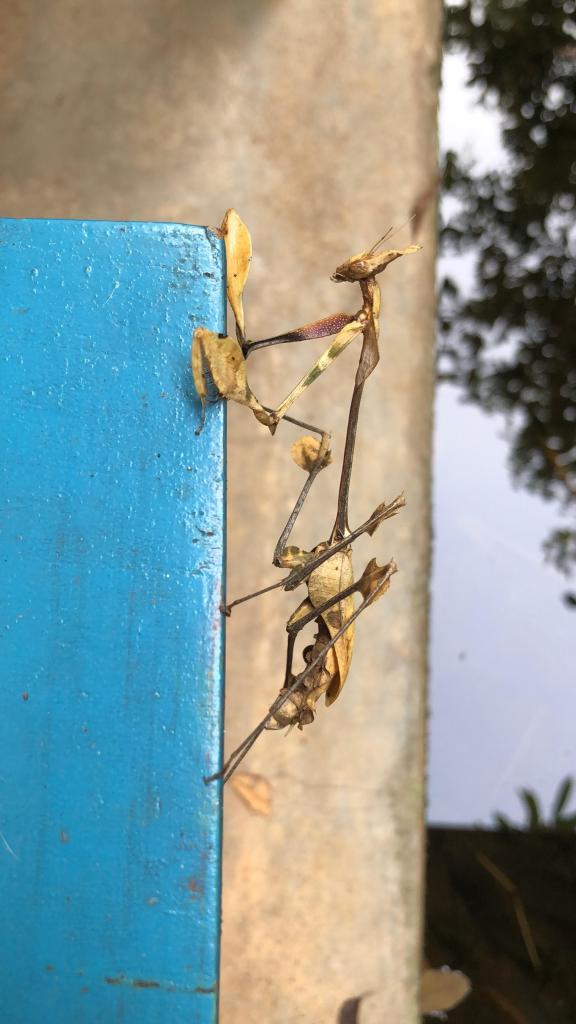
Recently my son shared a photo and asked us to guess what it was. At first glance it seems like a lovely composition of dried leaves and twigs. But a closer look revealed that this did not seem to be a random coming together of bits and pieces but a cleverly designed creature of nature. While our guesses revolved around thinking it to be some kind of stick insect, I, as usual wanted to probe deeper! To start with I asked Aditya to tell where and how he came upon this intriguing creature.

This is what Aditya shared.

The other day I was stepping out to see if the laundry was dry. As I stepped into the afternoon sunshine, over the narrow water channel circling the house — ostensibly keeping ants away but long defeated by the garden’s branches and vines that reached over and served as bridges, for not only ants but squirrels and civets too — I did a double-take of the bench by the door. This is where we spend a quiet hour every morning drinking tea and slowly waking up; by the bench is an abandoned wooden drawer set on its side, now a teapoy. From its corner hung a couple of dry leaves on a twig — the overnight cobwebs must have caught them. 

But something had made me turn and look closer, though I couldn’t say what. Perhaps it was the way the leaves dangled, defying gravity, or their neatly stacked arrangement, or simply that their brown was striking against the blue-painted face of the drawer. It took another moment, and then it was clear these were no leaves, though the disguise was commendable. The twig bobbed up and down, took a few steps along the edge of the drawer, and made for the bench. 

I recognised this bug — I had been mesmerised by it a few years before when I had encountered it just as unexpectedly in a friend’s outdoor kitchen. That’s when I had found out what it was called — the Wandering Violin Mantis — and this had tickled me especially because the kitchen belonged to a luthier and violinist, whom I was house-sitting for as he was away wandering the world. 

I called out to my partner and she rushed downstairs to see. In turns, as one of us took pictures, the other attempted to invite the mantis onto our hand. After a quick survey of the landscape with its beady eyes and a few of its legs, it climbed on. Then it was on its way, making long strides up our arms, slightly prickly and very tickly as one felt the weightless but saw-toothed limbs on the skin. The attentive head kept looking around and exploring its changing geography, as we kept twisting and turning, and giggling and marvelling at the lanky visitor. We deposited him back on the bench, where he stayed a while longer before wandering off somewhere else.

Wow! Close encounters with a Wandering Violin Mantis! While I had missed out on this first-hand experience I turned to secondary sources to find out more.

To start with my guess that it was a stick insect proved wrong. This was a mantis, which belonged to a different order (Mantodea). The name ‘mantis’ is derived from Greek, meaning ‘prophet’ or ‘diviner’, and the Wandering Violin Mantis is known scientifically as Gongylus gongylodes. Gongylus is derived from the Greek word gongylos meaning round which may refer to the shape of its appendages. This unique creature was first described by Carl Linnaeus, also known as the father of modern taxonomy.

Its common name is Wandering Violin Mantis, and it is also known as Indian Rose Mantis, Dead Leaf Mantis and Ornate Mantis. The most intriguing of the names is the first one. Look closely and one will see very long spindly legs that support the wide thorax which is shaped like the soundboard of a violin, while the long neck that ends in an arrow-shaped head resembles the neck of the violin. The thin legs that resemble dry sticks, end in large appendages. The mantis usually walks on its mid and hind legs, keeping its strong forelegs raised. Thus the moniker Violin Mantis. (I cannot find any reference to why the addition of the prefix ‘Wandering’.)

A close up of its face with its biting-chewing mouth parts demonstrates its predatory instincts. This mantid feeds exclusively on flying insects, but it is not an active hunter. The insect find a spot where it is perfectly camouflaged as dry twigs and leaves, and sits and waits for an insect to fly by, or to land nearby. With the ability to rotate its head a full 180 degrees, the mantis has a panoramic view of its surroundings. To further enhance their disguise, mantids often adopt a unique pose, tilting their body sideways and lifting their front legs. Remaining motionless, stealthily hanging upside down from a stem or sitting erect they easily pass for a twig swaying in the breeze.

In case of a flier-by, the mantis grabs it right out of the air, using its fast reflexes and remarkable accuracy to snatch its prey from mid-air. In case of an unsuspecting one that lands on a flower in search of nectar, it is efficiently snatched up by the predator. The raptorial front legs are perfect for grasping and holding the unwary prey. The mantis selects its prey wisely, avoiding insects that are too large to easily capture.

In turn the Wandering Violin Mantis is preyed upon by a variety of animals including birds, bats, spiders and lizards. I wonder how useful their camouflage is in protecting them from being spotted by these predators. I am sure that many a mantis has escaped the beady eyes looking for a meal by passing off as a sprig of dry leaves! And in case it is spotted, the mantis makes a last attempt to escape by spreading out its wings to display the brightly-coloured underside that may startle the hunter.

These masters of camouflage can be found in diverse habitats including forests, grasslands and even gardens. They are found is several parts of South and Southeast Asia, especially South India Sri Lanka, Myanmar, Thailand and Java.

Curiously these gentle and non-aggressive insects are popular as pets in the US and some other countries. Unlike other mantis species the males and females can live together (without eating each other up!). However their enclosures would require to create and maintain the temperature and humidity of their natural habitats, plenty of climbing space with foliage and sticks, and a diet of flying insects. Judging from the number of websites with tips on how to cage and keep this mantis, this seems to be a popular insect pet.

I feel sad about this confinement. Why not celebrate this fascinating creature of nature where it belongs? And feel the excitement when one has the WoW! (Wonder of Wildlife) moment of making the acquaintance of the Wandering Violin Mantis! 

— Mamata

Libraries Take Wing

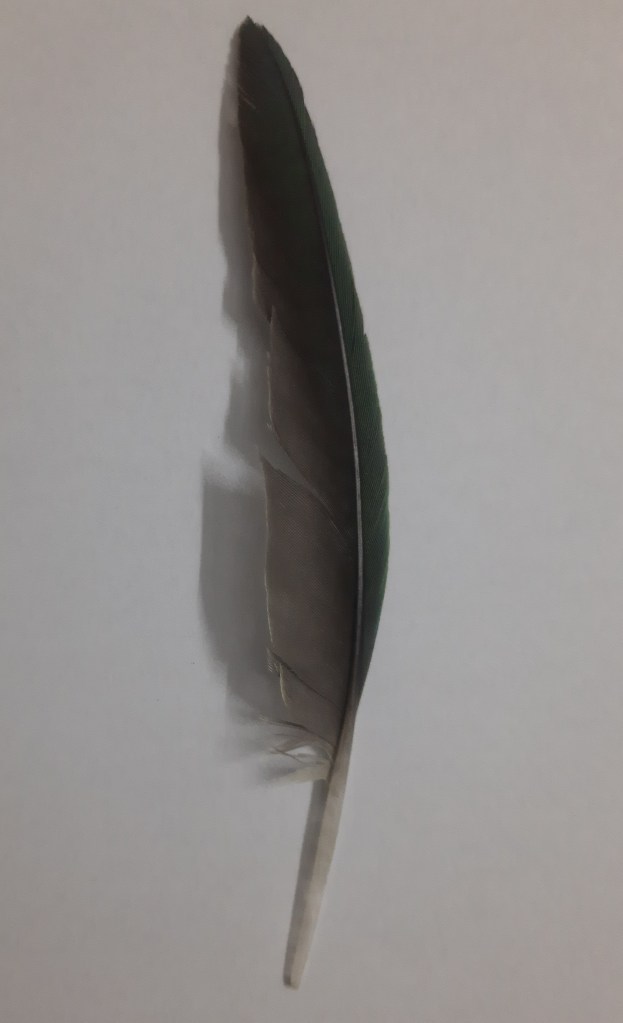
How often we randomly pick up a feather as we walk along. And wonder which bird it could belong to.

A feather library is where we can turn to for help in such a situation. These are digital or physical collections of bird feathers, used for research and education. They are an invaluable resource for understanding bird species, identifying feathers, and gathering data on bird health and natural history. These libraries are important tools for the study and conservation of bird species, offering insights into bird morphology and helping in the identification of feathers found in the wild.

There are not too many across the world. Some of the established ones include:

1. The Feather Atlas created by the U.S. Fish and Wildlife Service is a comprehensive image database of North American birds and covers about 438 species. It can be browsed by bird order, family, or species. It has an open identification tool in which one can fill in details about feather patterns, colors, size, and position, which can help you identify the bird your feather belongs to.

2.Featherbase (Germany) has been created by a working group of German feather-scientists and other collectors worldwide who have come together and contributed their personal collections. It holds close to 8000 specimens from over 1,000 bird species, with a focus on European and African birds. The collection includes high-resolution images and detailed anatomical information, and has supporeted studies in forensics, conservation, and biodiversity monitoring. It is rigorously classified and offers options of various languages so that birders from across the world can use it.

3. Found Feathers (iNaturalist Project) is a citizen science initiative where users contribute observations of feathers they find. The project encourages the collection of feather length and placement data, enhancing the database’s utility for researchers and birders. There are over 2,00,000 observations from across the world.

Special among these is India’s Feather Library. This pioneering initiative is the first of its kind in India and the world, dedicated to documenting, identifying, and studying the flight feathers of Indian birds. It is the passion project of architect Esha Munshi, a dedicated bird watcher who has seen over 1500 bird species across the world, and veterinarian Sherwin Everett who works in a bird hospital in Ahmedabad. They have created the library with the aim of having all feather-related data under one roof, fostering collaboration and advancing the collective understanding of Indian birds. In the short span of time since inception on Nov 15, 2021, 135 species have been documented.

The process is rigorous. They collect feather specimens from dead birds at rescue centres to establish a primary database of bird species. They then make detailed notes on the flight feathers, taking into account the number of Primaries, Secondaries, Tertials (Wing Feathers), and Rectrices (Tail Feathers), along with basic details such as overall length, bill length and width, leg lengths, etc. Then they stretch out one wing and fan the tail in both dorsal and ventral views to document the exact number of feathers, unique characteristics, colour, pattern, and size etc. The physical collection is housed at the National Centre for Biological Sciences (NCBS) in Bangalore.

The database is open to all and provides easy access.

Kudos to the dedication and passion of people like Esha and Sherwin who through their efforts help support avian research, conservation efforts, and educational outreach. And make a better world.

Happy Environment Day!

–Meena

Prickly Love

May 10 is celebrated as Cactus Day in the US. It is “a day dedicated to recognizing and appreciating the unique and fascinating world of cacti. This day also serves as a reminder of the many cactus species facing extinction and the need for their conservation, especially in their natural habitats.” Cacti are flowering plants that produce seeds. They are able to bloom every year, but they will produce an abundance of flowers in response to heavy rains. The family Cactaceae comprises many species of flowering plants with succulent (water-storing) stems.

It is entirely appropriate that it is a day marked in the US. Because 1749 out of the known 1750 species of cacti are native to the Americas! In other words, cacti were not originally found in any other part of the world.

I have to admit, this kind of blew my mind. All of us, from the time we are children, when asked to draw deserts or make an exhibit around the theme, have always generously populated our deserts with our own versions of cacti.

But cacti occur naturally only in the Americas–from Patagonia in South America, through the US, to parts of Canada. Anywhere else we see them, they have been taken by humans.

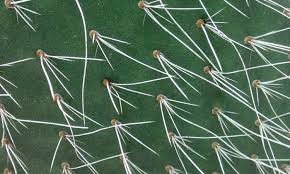
There are however equivalents in other parts of the world. There are the Euphorbs, tamarisks, saltbrushes etc. in Africa, and succulent and spinifex grasses in Australia. In India we have khejri, thoor, acacias etc. all of which grow in our deserts. But these are not cacti. All them have various adaptations to dry conditions like small or no leaves, spines, thick stems and deep roots. But they differ from cacti in that they do not have areoles. The presence of a structure called the areole is what sets cacti apart from all other plants. Areoles are round or elongated, often raised or depressed area on a cactus which is equivalent to a bud and from which spines, flowers, stems, or roots grow.

Cacti were introduced to Europe by, no surprises, Christopher Columbus. In 1493, on his second voyage to the Americas, he brought back a specimen of the prickly pear—the first time a cactus was seen in Europe. It caught the fancy of botanists, horticulturists and the public, and led to widespread cultivation of these plants.

They came to India with the Europeans, most likely sometime in the 16th or 17th century. In recent times, there has been much interest in these plants. They are much prized for their dramatic looks and are a feature in every balcony garden and indoor succulent-tray.  At a commercial level, the dragon fruit, cultivated widely across the country and now found in roadside fruit stands everywhere, is a cactus. Known  as pitaya or pitahaya, it is native to southern Mexico, Central America, and parts of South America. It is a climbing cactus species. The fruit is low in calories, rich in antioxidants and is said to have many other wonderful properties. But frankly, I am yet to get used to the bland taste!

For a few years now, our Central Arid Zone Research Institute (CAZRI), and ICARDA, an international organization, have been experimenting with cultivation of cacti, with a view to using it as fodder. Cacti as a fodder crop is seen as having the potential to help in the widespread shortage of green fodder, particularly during the summer months in many parts of the country. While still in experimental stages, it is thought to have some possibility.

India also has large and scientifically significant cacti collections. The National Cactus and Succulent Botanical Garden and Research Centre is located in the city Panchkula, the satellite town of Chandigarh. It is spread over seven acres and houses over 2500 species of cacti and succulents. The Regional Plant Resource Centre at Bhubenehswar has Asia’s largest collection of cacti. This Centre has created 200 new varieties and hybrids of cacti by breeding, growth manipulation, etc.

We said at the start that all except one cactus species was native to the Americas. The one exception is Thipsalis baccifera also know as the mistletoe cactus, which occurs naturally not only in the Americas, but also Africa, Madagascar, and close home in Sri Lanka. Scientists are still figuring out the how and why of this exception.

So look at cacti with new eyes. Love them, but don’t hug them!

-Meena

Celebrating Mother Earth: Pachamama

This week the world celebrated Earth Day on 22 April. What started in the United States in 1970 as a one-day demonstration of concern about the threats to the natural environment, grew into a sustained global movement to conserve and protect our Planet Earth which is increasingly threatened in every way. Earth Day continues, to this day, as the largest secular day of celebrating Mother Earth across the world.

The reverence and celebration of Earth as the all-sustaining and nurturing Mother goes back millennia. All indigenous cultures believe that Earth sustains and nurtures all living things, of which humans are but one part. This belief is manifested in the traditions and practices of communities in different parts of the world. One of these is the deification of the Earth as a Goddess, especially in indigenous cultures of the Meso-Americas. This Goddess is Pachamama.

In the culture of the Andean people Pachamama represents the Earth and all its life forms. The word Pachamama comes from the Quechua, an ancient language of the Andean people. Pacha means ‘world’ and mama means ‘mother’, translating to ‘Mother Earth’. It represents the Goddess that exists in all elements of nature. It is the spirit of the land, the essential force that sustains life. Communities celebrate Pachamama through ceremonial rituals and offerings before embarking on any important activity: as a prayer for good crops; to overcome adversities, or requesting protection for livestock, people, and all living things. They also offer thanksgiving for each season’s harvest. The ceremonies demonstrate the integral role that Pachamama plays in agriculture and their daily sustenance. For the Andean people, who have a tradition of herbal medicine, Pachamama is also integral to health and well-being. They believe that honouring Pachamama supports both physical and spiritual health.

Pachamama is a vital life force encompassing four cosmological Quechua principles of Water, Earth, Sun, and Moon, which she embodies as the ultimate Earth Mother deity. The word thus is also taken to mean Mother Cosmos.

For the Andean people Pachamama’s presence is woven into the daily fabric of their lives. As a powerful force that sustains and nourishes, they are careful that their actions should not provoke her wrath. They believe that earthquakes are a manifestation of her displeasure. The rituals and traditions such as challa a ritual where a small portion of chica a fermented corn drink is poured on the ground as an offering to the Goddess, and offerings of cocoa leaves are a symbol of the respect and reverence of the people for Mama Pacha or La Pachamama as she is also called. Another ritual includes burying food, throwing sweets and burning incense to give thanks for the harvest. This is an expression of Ayni, the principle of reciprocity, a giving back to the earth, fostering a balanced relationship between Nature and humans. Shrines dedicated to the goddess are also constructed from natural materials such as tree trunks or rocks.

As in all cultures, culinary traditions also play a part in expressing gratitude for the sustenance that the earth provides. The preparation and sharing of Pachamanca, as part of community feasts is rich in symbolism. The word comes from the Quechua words for ‘earth’ and ‘pot’, and refers to the feast of potatoes, meats, vegetables, and sweet potatoes and corn that have been steamed in a stone-heated, herb-infused underground oven. The oven is made in a pit in the earth, lined with a sequence of layers of stones which have different heat holding capacities. The stones symbolize Inti, the Sun God, and the source of warmth. The ingredients are wrapped in banana leaves and also layered according to their cooking time, from meat and potatoes at the bottom to fruits such as plantains and pineapples at the top. Following a smattering of herbs and beans, the earthen oven is covered with soil and the buried ingredients cook slowly as they are imbued with aromatic heat and smoke. The ritual of burying the food signifies a return to the womb of Mother Earth. Pachamanca is a tribute to Pachamama, with all the offerings fed to the Earth before they are ceremonially dug out and shared to be eaten by the community. Even today this traditional feast symbolizes the community’s history and tradition of thanksgiving and reverence for the all sustaining Pachamama.

The concept of Pachamama symbolizes the interconnectedness of all living things who are sustained and nurtured by a healthy and vibrant Earth. This concept has resonated with ecological movements across the world. And yet, day-after-day, this Earth is being damaged, disturbed and pushed to the brink in every sphere.

It is in such dire moments that we need to look for some rays of hope. The concept of Pachamama is a reminder that we need to look beyond our own needs, wants and luxuries to remember and respect the source of all that meets these human demands. 

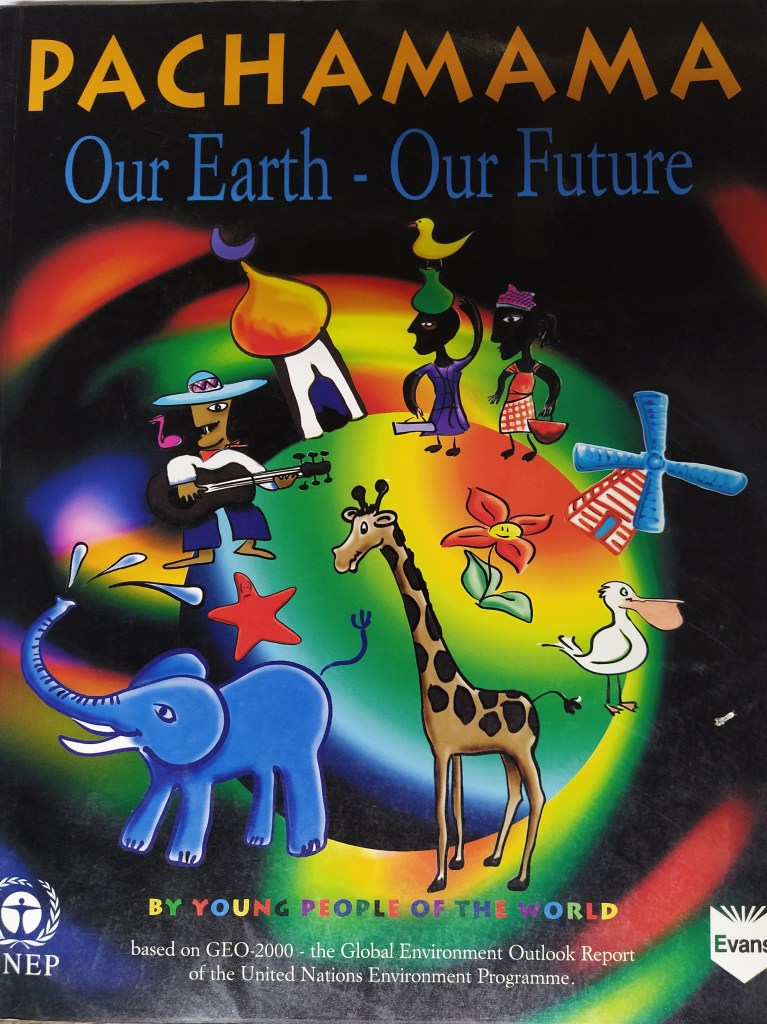
Several years ago I was part of an international project that invited contributions from young people around the world to read the UN Global Environment Outlook Report and send in their reactions and responses to the state of the environment, as well as suggest possible ways of tackling these issues. Case studies and examples of positive actions were also collected. The enormously rich inputs (text as well as visual) were sorted and edited also by a panel of young editors. The outcome was a heart-warming book. The unanimous choice for the title: Pachamama: Our Earth Our Future.

This stemmed from one of the young editors: I have visited South America and I have a personal relationship with Pachamama. I know her—she exists. She breathes in the forests, she rages in the earthquakes and volcanoes, she flows through the rivers and crashes on the shore with the sea. I feel her arms around me, nurturing me and all she asks of me in return is to love her, care for her, nurture her.

–Mamata

Woolly, Woolly

The recent weeks have seen a number of news items starting with ‘Woolly…’. That is not very normal—the phrase ‘woolly-thinking’ is too archaic to be used as a pejorative across the lines in Parliaments.

But this bandying about of the word is neither from debates nor about shearing of sheep and records set therein.

The references all come from the world of science.

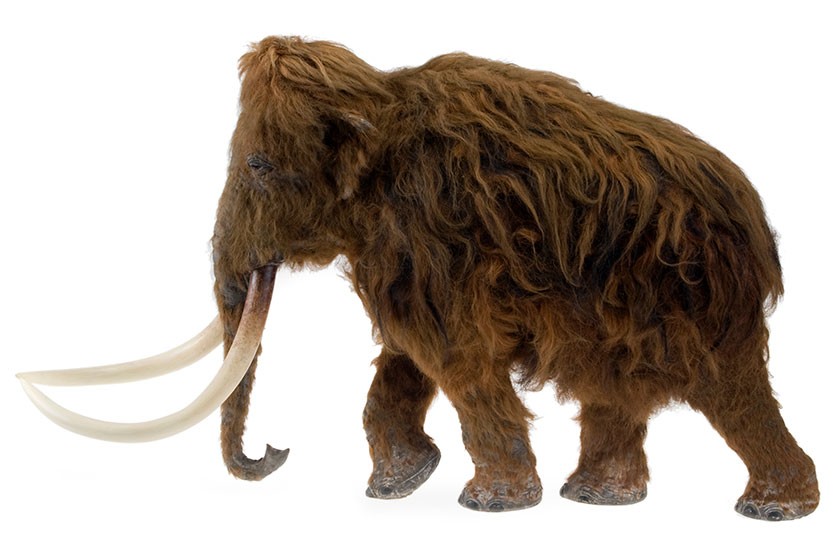
The first set of references stem from experiments of mixing mutations from the extinct mammoth and extant mice to create a woolly mouse! No, creating mice, woolly or otherwise, is not the purpose of the group of scientists which is working on this. The ultimate objective is to actually re-create the woolly mammoth itself. This is only a small intermediate step.

Now who would want to do such a thing, and why? Well, a company appropriately called Colossal Laboratories and Biosciences is behind this. Colossal refers to itself as a ‘de-extinction’ company. In a throwback to Jurassic Park, this company has retrieved the DNA of the 8-ton giant woolly mammoths which walked the earth over 4000 years ago from permafrost. They have mixed this with the genes of mice through complex gene-editing processes and have, after over three years of trials and experiments, created litters of normal sized mice which however have the ‘long, wavy, woolly hair of the mammoth’. They also have fat metabolism that mimics that of the giants. Colossal sees these mice as the first step in the route to actually re-create mammoths. They plan to work up to editing Asian elephant genes to express the traits of the woolly mammoth, and introduce the stem cells into an elephant embryo. The embryo would then be implanted into the womb of a female elephant, and lo and behold, a mammoth would be born to her!

For those who thought only a few years ago that this was the height of woolly thinking, well, maybe with the birth of the woolly mice, they are re-thinking!

Apart from the mind-boggling technical prowess required however, there are many debates about the ethical and environmental dimensions of ‘de-extinction’. (A TED Talk by Stewart Brand titled ‘The Dawn of De-extinction: Are you Ready?’ offers interesting insights).

The second set of woolly references is nothing so controversial. It is the recent discovery of a flowering plant whose flowers, rather meanly, have been called Woolly Devils. The plant or the flowers don’t seem to do any harm to anyone, but have been so dubbed because the flowers are hairy-looking, have florets which resemble devils’ horns, and the plant has been discovered in the desert in Chihuahua  (an ecoregion that covers areas of northern Mexico and the southwestern U.S., including west Texas, parts of New Mexico, and southern Arizona) along some paths in in an area known as the Devil’s Den. The plant belongs to variety known as “belly plants”—because scientists find it comfortable to study them while lying on their bellies! 

How unfair it is to name this newly-discovered plant (Ovicula biradiata) as Woolly Devils is borne out by the fact that scientists think they may produce chemicals of medicinal value.

Only time will tell where the quest for the woolly mammoth leads, and what benefits the woolly devil brings us.

In the meantime, we can pray for an end to woolly thinking.

–Meena

The Leaves Come Drifting Down

At the moment, leaves are the bane of my life.

They drift down in their tens through the day. The lawns, porch and verandahs are no sooner swept that they come drifting down to make a mess, yet again.

And Saturday, when Bangalore was hit with unexpected torrential rains, our house almost flooded because fallen leaves had covered the water outlets on our terrace and there was a good six inches accumulated before we realized it and cleared the outlets. A few more minutes and the water would have entered the house.

But in general of course, who doesn’t love leaves: the variety of the shades of green, their shapes and sizes, the shadows they cast, the way they rustle in the breeze or when birds and squirrels play among them.

There are some people who take this love and appreciation to aesthetic heights. They are the leaf-artists.

Some people of course consider the leaf itself as art.’ There is artistry to a leaf that I find hard to put into words. In looking at leaves, the colours and veining, the patterns and textures, I get a good feeling. Leaves are nature’s artistry on display’, says Hank Erdmann, a leaf-photographer.

Others use the leaf as the medium. These leaf-artists express themselves through various creative expressions using leaves. This spans leaf printing, leaf carving, leaf painting and leaf collage. All of these are based on highlighting the leaf’s natural colours, shapes and textures.

It is likely that leaf-art is as old as our cave-dwelling ancestors. One can easily imagine our grandnmother picking up a leaf and carving a design on it with a sharp stone. And from these projects must have emerged the use of leaves as a medium for writing on—palm leaves were used for writing since the 5th century BCE in India. The ephemeral nature of the medium however has not left much proof of art on leaves.

But two contemporary artists have taken leaf-art to a new level.

The first is the Colombo Ecuadorian photographer, Yinna Higuera. Her recent collection ‘Traces’ is a series of portraits of rural Ecuadorian women, made on banana, cocao, coffee and other leaves. The collectoin documents the lives of these women, and portrays their link with nature and its cycles. The exhibition has been shortlisted for a Sony World Photography award, 2025. This is based on the technique of ‘chlorophyll printing’. The images are printed leveraging the leaf’s photosensitivity, merging photography with nature. This is an alternative photographic process where photographic images are developed on natural leaves through the action of photosynthesis, and goes back to the 19th century.

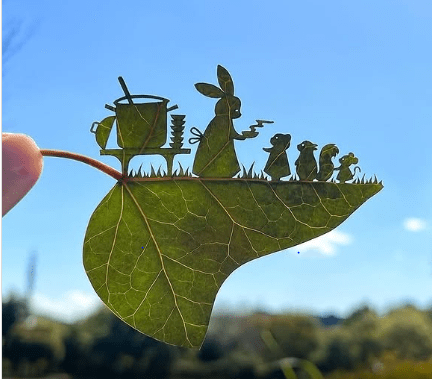
Another artist making waves (or gentle breezes) with his leaf art is Lito, a Japanese artist. He uses a completely different technique. He carefully selects a leaf, makes an intricate drawing on it, and painstaking carves it. The scenes often depict animals, birds and landscapes. Lito makes one leaf-carving every day! For him, this is not just a means of artistic expression, but also a way of managing his ADHD. It helps him focus, be calm–he sees it as a form of meditation. And importantly for him, leaf-carving is a means of earning a livelihood.

So I am going to re-calibrate. And appreciate each leaf as it drifts down to land on my verandah. Before muttering irritably at it!

And to end, here is a poem on leaves by Sarojini Naidu, whom Mamata wrote about a few weeks ago:

Like a joy on the heart of a sorrow,
   The sunset hangs on a cloud;
A golden storm of glittering sheaves,
Of fair and frail and fluttering leaves,
   The wild wind blows in a cloud.

Hark to a voice that is calling
   To my heart in the voice of the wind:
My heart is weary and sad and alone,
For its dreams like the fluttering leaves have gone,
   And why should I stay behind?

–Meena

PS: Today there are even Leaf Engraving Machines, ‘specialized for intricate leaf designs, perfect for crafting unique art pieces!’

The picture is from Lito’s Instagram page, art_dailydose

Ants and their Homes

For every one of us, there are about 2.5 million of them. Yes, that’s how much ants out-number us. They inhabit every corner of the world other than Antarctica, Greenland, Iceland, and some islands.

We humans swing between appreciation of these insects for their qualities of team work and hard work, and irritation when they invade our homes or kitchens. The ants probably swing between the same two emotions—appreciation of the humans who feed them, and disapproval of clumsy or mean humans who step on them or kill them.

Beyond human approval or disapproval, ants have a huge role in the ecosystem. They serve as seed dispersers for plants, hosts for a wide range of associate organisms, and act as both predator and prey. The role of ants in nutrient decomposition and soil turnover is enormous–they are estimated to excavate up to 13 tons of soil per hectare annually and increase local nutrient availability by a significant order.  Moreover, they create and maintain of microhabitats for a variety of other organisms.

The subject of today’s piece is their homes. They make their homes in a variety of places, and these structures are made with an enormous amount of labour by thousands of the creatures working together.

Most species of ants are soil-nesters. Soil meets their needs for food, moisture and protection. Since these ants move a lot of soil in the process of building their nests, they provide a valuable service to the soil-based ecosystem they occupy by their tunnelling and de-compacting of the soil. Some soil nesting ants construct a simple nest with one vertical tunnel, which has branches on either side for ant food, eggs and larvae. But other ground nesting ants build elaborate below-ground galleries going several metres below ground, with a network of interlocking interconnecting tunnels.

Wood-nesting ants are the next category. Carpenter ants are the best examples of these. They nest in wood that is rotting, dead, dying, or with a high moisture content. The ants bore into the wood and make elaborate nests. They do not eat the wood but deposit the wood they bore outside the nest. While they usually build outdoors in trees, it is not unknown for them to build in wooden structural elements in our houses.

There is category of ants which are called opportunistic nesters. These will nest almost anywhere, including under rocks, concrete slabs, air conditioners, inside holes in walls etc.

Ant nest

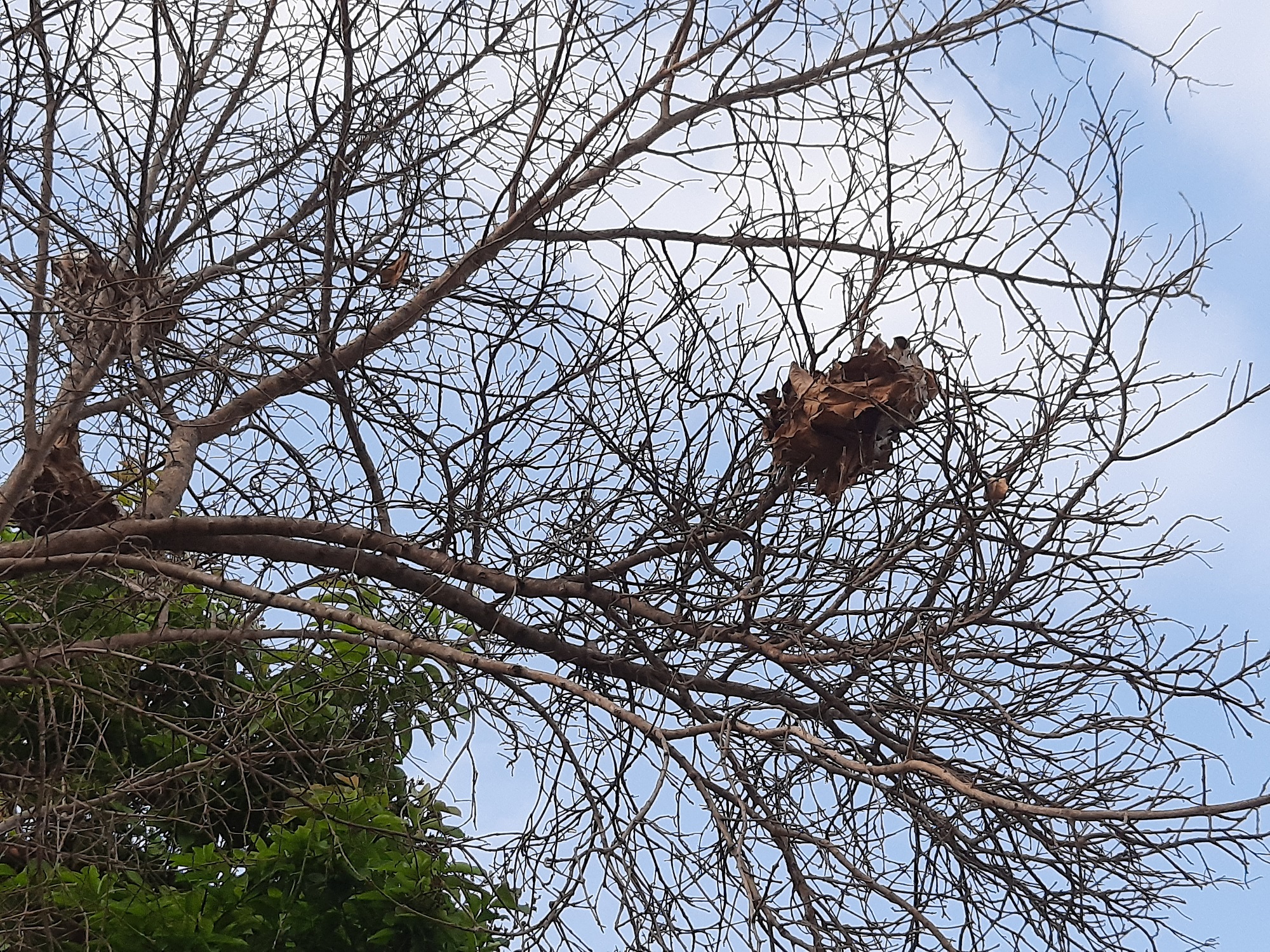
A fourth category, which are most visible to us at the moment are arboreal ants which construct nests on trees using leaves. These light red ants Oecophylla smaragdina, popularly known as weaver ants, stitch together individual leaves using larval silk to form nesting cavities.  The nests are round-oval and use leaves of different sizes ranging from 8-32cm. About twenty leaves are used to make each nest. These ants are aggressive in defending their territories, and a colony may take over an entire tree with nests distributed throughout.   Incidentally, these ants, called “Rukkung” in Arunachal Pradesh, are consumed in various forms in some of the North-eastern states.. 

I see these every evening on my walks—the falling leaves in this season leave the trees bare, which make the nests very visible. And marvel at the intricacy of the nests and the hard work that goes into each of them. What wonders there are around us, if only we take a minute to look!

–Meena

Spineless!

Fountain of Bees, Rome

They make up over 90 per cent of life on earth.

There are about 1.3 million species of them.

They are found in every part of the world.

They range from one-fifth the thickness of a strand of your hair, to the 30 ft long giant squid.

These are the invertebrates—animals without a backbone. Why backbones, in fact, invertebrates don’t any bones at all! Invertebrates include ants, spiders, worms, snails, bees, butterflies, corals, lobsters, crabs…they are the spineless majority!

As the famous biologist EO Wilson put it, ‘Invertebrates don’t need us, we need invertebrates’.  Critically, they pollinate flowers, hence allowing plants to propagate so that there is food for all. They are at the base of all food-chains.  Humans also eat invertebrates—think crabs, lobsters etc. They maintain the ecological balance by eating each other and being eaten! Earthworms and some related creatures help dig up and aerate the soil, and make it fertile. They are important in another way too—most parasites are invertebrates!

All invertebrates are cold-blooded and about 80 per cent of them are terrestrial. Most of them undergo metamorphosis.

They fall into nine phyla, compared to vertebrates which all belong to one phylum.

In spite of their ubiquitous presence and the role they play in our lives, we don’t pay enough attention to these co-inhabitants of our world. For instance, while most countries have national animals or birds, few have national invertebrates. Exceptions include Denmark, which lists the Small Tortoiseshell as its national butterfly; Estonia which lists the Swallowtail; Finland which lists the Seven-spot Ladybird as its national insect and Latvia which has the Two-spot Ladybird for its. Several US states have State Insects, as does Karnataka (the honeybee). Many Indian states also have State Butterflies.

India is unique in that it has named a National Microbe—the Lactobacillus bulgaricus. This was done in 2012, based on a nation-wide completion. It was selected based on its importance in making yogurt or curd. Some US states also have State Microbes. The first state to declare an Official State Microbe was Oregon which chose brewer’s or baker’s yeast as the Official Microbe because of its importance to the craft beer industry there.

Designating such national and state symbols is important, given that we don’t focus enough on these creatures which make up about 95 per cent of all species on earth. Creating a buzz brings attention to them, hopefully leading to more studies and research, ensuring their well-being which is so critical to ours.

In order to increase awareness about invertebrates, last year the well-known British newspaper The Guardian started an ‘Invertebrate of the Year’ contest. This was confined to the UK. This year’s competition, the second of the series, has gone international. So any of us can send in a nomination for an invertebrate, along with reasons why we favour this particular one.

To give you an idea, last year’s winner was the earthworm, which was voted in with 38 per cent of the total votes. The least number of votes was garnered by the invasive Asian or yellow-legged hornet.

Surely you have an invertebrate you love or hate. This is your chance to put it on the world map. Submit your entries at https://www.theguardian.com/environment/2025/feb/12/nominate-your-invertebrate-species-of-the-year by midnight (GMT) on Tuesday 4 March.

–Meena

Avian Ambassadors: National Birds

A news item that President Joe Biden had signed a bill on Christmas Eve 2024 that designated the bald eagle as the national bird of the USA was confusing, to say the least. One had always assumed that this had always been so, given that it was seen on all official US documents, and indeed even the US passport. It turns out that while the bald eagle has been the national symbol since it appeared on a copper cent in 1776, and has been appearing on the Great Seal of the US since 1782, the bird had never been legally recognized as the national bird till 24 December 2024.

Behind this lies an old story. On 4 July 1776, the Declaration of Independence was signed whereby the 13 American colonies severed their political connections to Great Britain. Following this it was decided that the new nation should have an official seal. It took three committees and six years before the seal was finalized on20 June 1782. The seal denoted a bald eagle grasping an olive branch and arrows in its talons. The significance of this is explained thus: ”The olive branch and the arrows held in the eagle’s talons denote the power of peace and war. The eagle always casts its gaze toward the olive branch signifying that our nation desires to pursue peace, but stands ready to defend itself”.

The bald eagle lives only in North America and to the people of the newly-born republic this bird was a symbol of courage, strength and freedom. It soon became a cultural and political symbol appearing on official documents, US currency, military insignia, and popular merchandise. Thus the bird remained a national emblem in the US for nearly 250 years, but it had not been officially designated to be the national bird until Congress passed the bill.

Many countries have a national bird. These are usually representative, in one way or another, of the country that they are the designated symbol of. The designation is done in different ways. The approaches range from the official, semi-official or unofficial, ranging from government decrees to popular vote. The choice is usually from among birds that have a high recognition factor.

Some countries in Central and South America have selected flamboyant birds as their national symbols, while some have selected bird species that are unique to their country. Among these are Gautemala’s Resplendent Quetzal and Papua New Guinea’s Raggiana Bird-of-paradise, which are spectacularly colourful. A beautifully matched choice is that of the Cuban Trogon or Tocororo whose colours exactly match the colours of Cuba’s flag. These birds cannot survive in captivity, and thus symbolizes the people’s love of freedom.

Some countries have selected threatened species in the hope to promote their conservation measures, like Bermuda’s Cahow or Bermuda Petrel (endangered) and Cambodia’s Giant Ibis (critically endangered). While Dodo is the unofficial mascot of Mauritius, seen as a symbol everywhere, it is sadly extinct. Thus the country has officially adopted the Mauritius Kestrel as its national bird. This is a rare bird of prey, endemic to the island and its recovery from near extinction (only four known individuals in the wild in 1974) to over 350 kestrels today, is a successful conservation story.  

Some Arab states have also designated other species of falcons as national birds. These birds represent grace, elegance, ability and alertness, and are considered a symbol of bravery. A variety of eagles have been a favoured choice of several countries for these very attributes. These include golden eagle (national bird of Albania, Mexico, Kazakhstan, Scotland, Serbia, and Germany), African fish eagle (Namibia, Zambia, Zimbabwe), harpy eagle (Panama), Javan hawk-eagle (Indonesia), Philippine eagle (Philippines), and the white-tailed eagle (Poland).

The raptor with the largest wing span in the world, the Andean condor of South America has been designated the national bird by several countries in that continent for its different qualities–Bolivia (for boundary-less pursuit), Chile (for strength), Colombia (for liberty and order), and Ecuador (for power, grandeur, and valour).

Whereas Japan could have adopted the Red-crowned crane as its national bird because of its scientific name Grus japonensis, it has chosen the kiji or Green pheasant. This bird is said to be particularly sensitive to earthquakes, to which Japan is prone. It is also features in many literary works.

Curiously, Grus japonensis was selected to be the national bird of China through an internet survey which was launched by the Chinese Wildlife Animals Protection Association and about 20 news organizations in 2004. The Red-crowned crane was the choice of about 1.3 million Chinese netizens to be the national bird.

Britain was pretty late in the naming of its national bird. In 2015 there was an online poll of over 200,000 people in Britain to vote for a national bird in response to a campaign started by ornithologist David Lindo. From an original list of 60 birds, online voters arrived at a shortlist of 10 birds. The Robin won first place with 34% of the vote, followed by the barn owl and blackbird.  

Another popular vote led to the change in Denmark’s national bird. Till 1984, the Skylark was the national bird, but a poll held by a TV show indicated that the more popular choice was the mute swan. The mute swan’s Danish name (Knopsvanen, literally meaning ‘the knob swan’) refers to the black knob it has over its orange beak. This selection was not based on natural history criteria but rather the association of the bird with Hans Christian Anderson’s famous fairy tale about the ugly duckling that grew into a swan.

Thus there are many reasons and many avenues that make a national bird. Closer to home, there is an interesting tale. In the 1960s the Government of India was encouraged by international bird conservation organisations to select a national bird. It was suggested that this could be a bird species that was in immediate need of protection, and thus attention. The most obvious choice at the time was the Great Indian Bustard that was already endangered then, with less than 1300 individuals in the wild. The famous ornithologist Salim Ali emphasised that this spectacular bird required “an urgent, nation-wide effort” to save it from its impending doom. As the story goes, in this respect, the Bustard was a logical choice. But there was a concern that its name could easily be misspelt or mispronounced, leading to much embarrassment! Whether this is just jest or a fact, it was the peacock which made the title in 1963, not because of its conservation status, but because of its cultural significance, religious and legendary associations, beauty, and widespread distribution in the country. 

–Mamata

Contested Hedges

Contested borders are in the news every day. You can’t miss the claims and counter-claims between neighbouring countires—in our case, mainly China.

But it seems that disputes between neighbours on humble garden hedges are as serious. In the UK, disputes between neighbours on this issue have even resulted in deaths, with one Mr. Wilson of Lincolnshire, dying from gunshot wounds sustained during an argument over hedges, and a Mr. Reid dying of a heart attack after a heated dispute with his neighbour on the same subject. While not so drastic, many people have been levied stiff fines on the charge of trespass for cutting their neighbours’ encroaching hedges. In all, there were 1,00,000 hedge disputes in the UK prior in 2003.

Why do these disputes arise? A major reason is that the hedge blocks too much light to a neighbour’s house or garden; or that the hedge blocks a view. Or a neighbor’s overgrown hedge may encroach on your property. Also, branches or roots may cross into your property from a neighbor’s property or a public road.

This serious situation led to the passing of laws to manage the situation. In 2003, UK passed laws to manage disputes related to hedges. The UK Law essentially is about ‘high hedges’ defined as those over 2 meters in height. Transgressions of hedge-related law come under the definition of Anti-Social Behavior, since 2003!

The situation is understandable, given the extent of hedges in the UK. Laser scanning has shown that the UK has 390,000 km of hedges and hedgerows (1-6 metres tall) on field boundaries– enough to go round the world almost 10 times.

A step back. What is a hedge? A hedge is a line of shrubs (and occasionally trees), planted closely (3 feet or closer) which form a barrier or mark the boundary of an area, such as between neighbouring properties. Hedgerows on the other hand are hedges used to separate a road from adjoining fields, or one field from another, and which may incorporate larger trees. Apart from demarcating boundaries, hedges and hedgerows may serve as windbreaks to improve conditions for crops, as. A hedge is also called a “live fence”.

Under the UK Law, these disputes don’t go to court. Neighbours are encouraged to reach negotiated settlements. If this does not work, a written complaint may be given to the local Council, which will look into both sides of the argument and give a decision. Either the Council will reject the complaint, or they will give an order to cut the hedge to the mandated height. The cutting has to be done keeping in mind The Wildlife and Countryside Act 1981 which makes it an offence to destroy any bird’s nest that is either in use or being built!

Few other countries have such elaborate laws on the subject. However, some local authorities in the US do regulate the height or placement of hedges. For example, a resident of Palo Alto was arrested for allowing her xylosma hedge to grow too tall.

So go ahead. Do grow your Photinia, Duranta, Golden Cypress, Nerium, Hibiscus, Copper Leaf, Ixora, Tecoma, Vilayati Mehendi or whatever else takes your fancy. But make sure they don’t inconvenience your neighbours and get your behaviour labelled as anti-social—at least under the UK laws!

If everyone could plant hedges and learn to maintain them with discipline, maybe we will also learn to manage other boundary disputes without resorting to violence.  It could make for a world where boundary disputes become a thing of the past!

–Meena