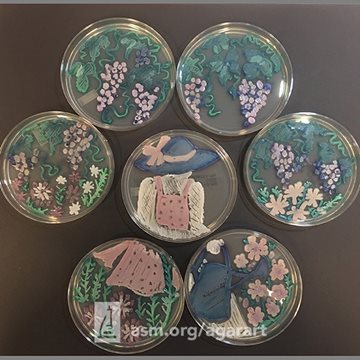
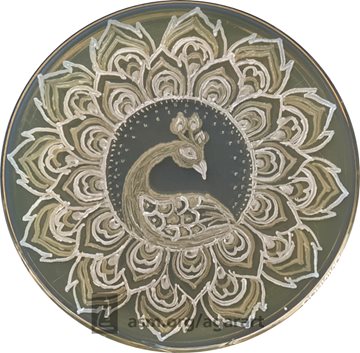
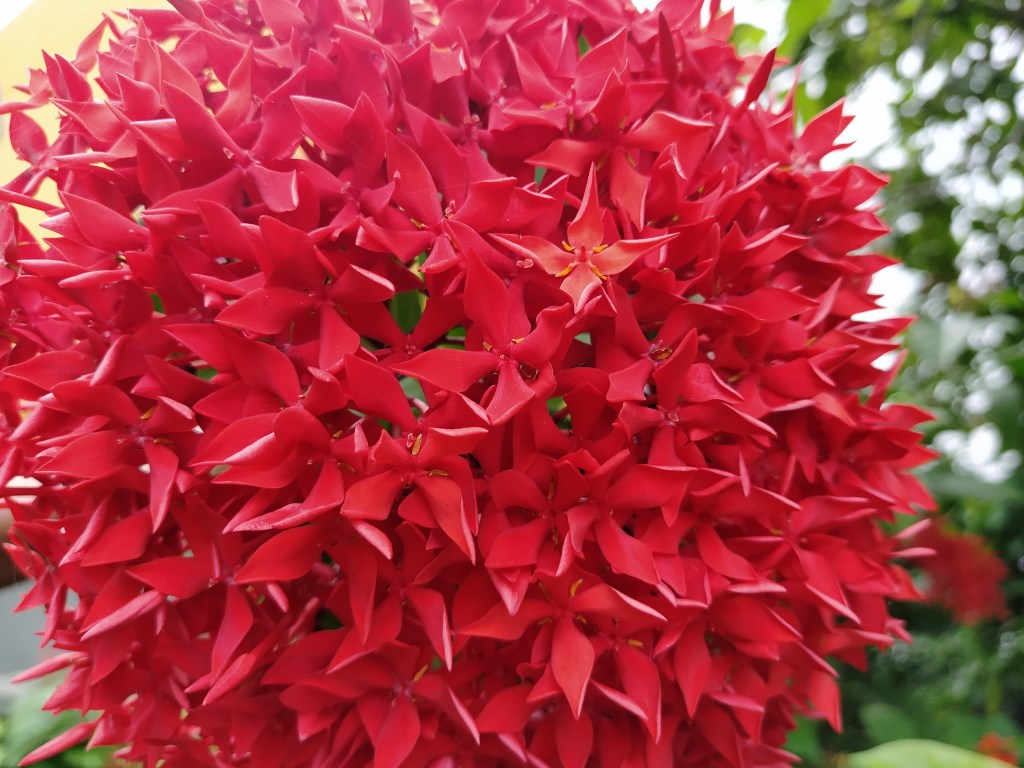
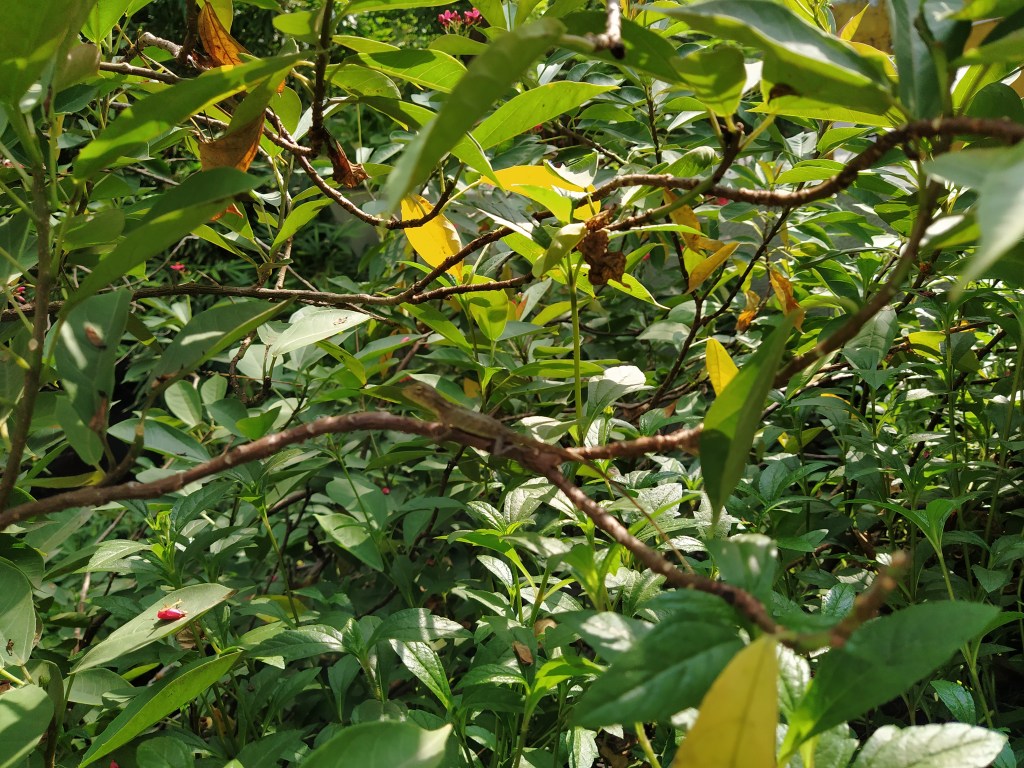
Looking and Seeing

A couple of months after the lockdown started there was a spurt of pieces and pictures about different aspects of the natural world that people had started noticing around them—the variety of birds and insects; the hues of the sunsets and sunrises; the vegetation with its changing cycles; the diverse sounds of nature, and much more. True that these became more evident as the relentless activity and cacophony of urban life became more muted. But perhaps, more likely, it was the fact that we humans have had more time to ‘stop and stare’ as it were.  

If we were to stop a moment and think about it, we are always ‘looking’ at things but how often are we really ‘seeing’ something? We use our eyes, but our gaze is glancing, merely considering the objects, people and scenes that pass before our eyes. Things appear as they are at first glance, and we move on, not stopping to take in the image in all its dimensions and depths.

The dictionary says that to look means to direct your eyes in a particular direction, while in order to see, you must notice or become aware of someone or something. Seeing is not only noticing that something is, but understanding it, attending to it, and looking past the obvious to enjoy its more subtle nuances. It means noticing not only the details but also how those details are part of a whole.

Thus seeing is not just a function of the eyes but rather a combined effort of the eyes and the brain, which work together to sort out visual input and arrange it into meaningful images, within a context, and with significance to detail.

How do an artist and a scientist ‘look at’ and ‘see’ the same thing? Two beautiful passages bring these together on the same canvas.

Georgia O’Keeffe a 20th-century American painter and pioneer of American modernism best known for her canvases depicting enlarged flowers explained why she did this: A flower is relatively small. Everyone has many associations with a flower–the idea of flowers. You put out your hand to touch the flower–lean forward to smell it–maybe touch it with your lips almost without thinking–or give it to someone to please them. Still–in a way–nobody sees a flower—really–it is so small–we haven’t time– and to see takes time, like to have a friend takes time. If I could paint the flower exactly as I see it no one would see what I see because I would paint it small like the flower is small. So I said to myself–I’ll paint what I see–what the flower is to me but I’ll paint it big and they will be surprised into taking time to look at it–I will make even busy New-Yorkers take time to see what I see of flowers.

Nobel-winning physicist Richard Feynman sees more than the aesthetic. As he said: I have a friend who’s an artist and has sometimes taken a view which I don’t agree with very well. He’ll hold up a flower and say “look how beautiful it is,” and I’ll agree. Then he says “I as an artist can see how beautiful this is but you as a scientist take this all apart and it becomes a dull thing,” and I think that he’s kind of nutty. First of all, the beauty that he sees is available to other people and to me too, I believe…

I can appreciate the beauty of a flower. At the same time, I see much more about the flower than he sees. I could imagine the cells in there, the complicated actions inside, which also have a beauty. I mean it’s not just beauty at this dimension, at one centimeter; there’s also beauty at smaller dimensions, the inner structure, also the processes. The fact that the colors in the flower evolved in order to attract insects to pollinate it is interesting; it means that insects can see the color. It adds a question: does this aesthetic sense also exist in the lower forms? Why is it aesthetic? All kinds of interesting questions which the science knowledge only adds to the excitement, the mystery and the awe of a flower. It only adds. I don’t understand how it subtracts.

As the great French novelist, playwright, essayist, and filmmaker Marguerite Duras said “The art of seeing has to be learned”. This takes time, patience, and attention. And having learnt it, a skill that continually needs to be honed.

Today we are inundated with fast moving visual images that grab our eyeballs as they flash across our screens. But our attention spans are continually decreasing, as is our attention to detail. We do spend most of our times with our eyes wide open, but how much of that time do we spend in seeing? What better time than now, to start practicing the art of seeing?

Look! Can you see what I did?

As I look at my little garden blooming after the rains, aflutter with multi coloured butterflies, and vibrant with the hum of the bees, I rejoice in ‘seeing’ it with new eyes each day.

–Mamata

A Preposterous and Perplexing Beast

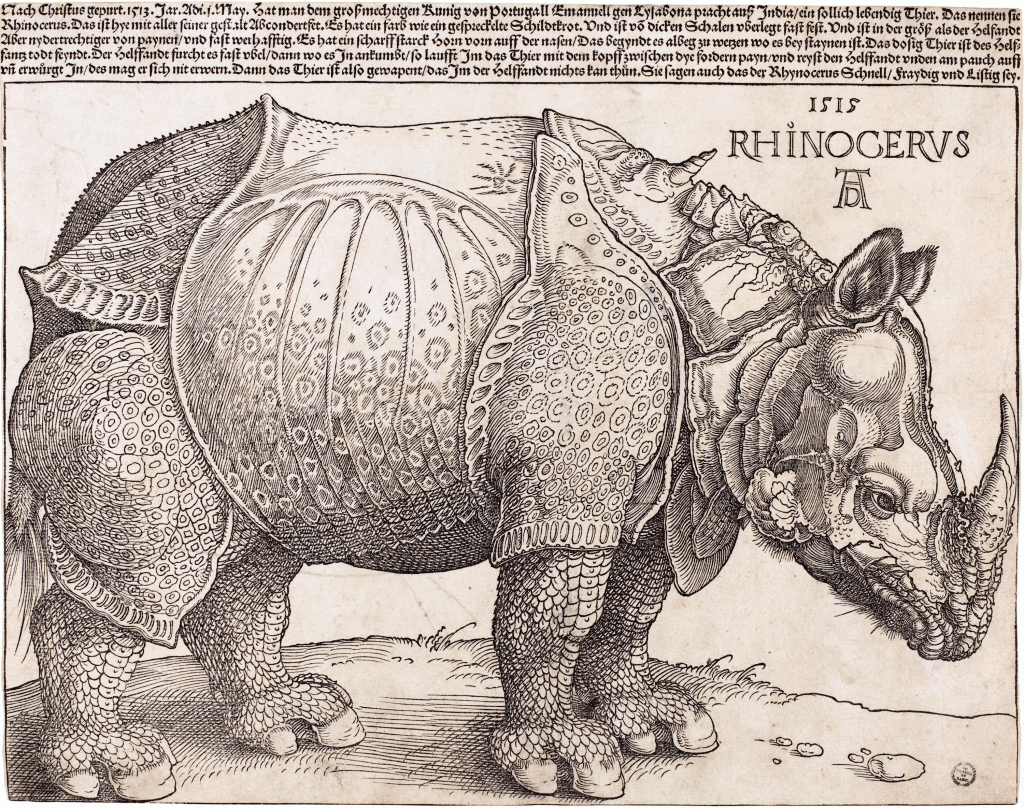
Dürer’s 1515 RHINOCERVS Source:https://en.wikipedia.org

In the sixteenth century, trade and merchant ships used to carry plants, spices and exotic animals from the colonial outposts of the ruling powers to Europe. In 1515, among the ship load of gifts despatched by the governor of Portugese India, Alfonso d’Albuquerque, to King Manuel I in Portugal, was a curious animal known by its Gujarati name of genda, and its Indian keeper, named Ocem. This rhino was the first to arrive in Europe since the days of the Roman Empire, and it caused quite a sensation. The animal was examined by scholars and the curious, and letters describing the fantastic creature were sent throughout Europe.

Albrecht Dürer, an artist, mathematician, engraver and painter living in Nuremberg read about this strange animal and based on the description, he began a pen sketch which became a woodcut. Dürer’s 1515 RHINOCERVS became famous. Dürer himself had never seen a rhino and hence his rendering was more fanciful than accurate.

In many ways a rhinoceros is an odd-looking creature. Even its name, literally meaning a creature with a horn on its nose, belies its unusual appearance. Much before Dürer, even for those who had seen a real rhino, its strange form and peculiar characteristics spawned a variety of tales. Tribes in Africa and Asia where the rhinoceros is found in the wild, have their folk tales that imagine how this creature came to be what it is. Here are some abridged versions.

A folk tale of the Tharu people of the Terai grasslands at the foothills of the Himalaya describes how the beast was created by the Hindu god Vishwakarma. He picked the best parts of many animals on earth and stitched them together. His creation had the skin of an elephant, the hooves of a horse, the ears of a hare, the eyes of a crocodile, the brains of a bear, the heart of a lion, and horns like Nandi, Shiva’s bull. Viswakarma creatively twisted, moulded and further modified these parts, even fusing two horns into one. The result was beyond his expectation, a masterpiece of the art of imperfection.

The naturalist and wildlife writer Edward Pritchard Gee recounted an ancient Indian myth that explains the ‘armour plating’ of the rhino. It is said that, once, Lord Krishna decided to use rhinos in place of elephants in battle. However, when the creature, all covered in armour for battle, was brought in, it was found to be too stupid to obey commands. Therefore, it was sent back to the forest. Unfortunately, they forgot to take off its armour—and so it remains until this day.

One African tale tells of how the rhino got its skin. Long long ago, when all the animals were without a skin, God gave each one a needle and told them to sew a skin for themselves. The animals got to work, each creating for themselves beautifully patterned and fitting skins. But Kifam, the first black rhino, was clumsy and short sighted. As he started on his skin, he dropped his needle; so he charged back and forth looking for it, but being short sighted, he could not find it. In frustration, he snatched up a thorn and started stitching, trying to put something together. When he put on his hastily assembled patchwork coat, it hung in wrinkles and folds. The other animals all laughed at him; this made him very cross; he was sure that they had hidden his needle. Since then the rhino charges at everything that crosses his path.   

Another African folktale explains the rhino’s habit of scattering its dung. As the story goes: In days long ago when animals could talk, Elephant always used to tease rhino about his near-sightedness and bad temper. One day Rhino really lost his temper. He challenged Elephant to a contest. The contest was to see who could produce the largest dung heap. Imagine two very large animals and the vast quantities of vegetation they eat, and you can imagine the lot of dung that they both make! But in the contest, Rhino made the larger pile of dung. The elephant was enraged. He attacked the poor rhino with his trunk and tusk and beat him till he cried for mercy. Finally the Elephant stopped the beating but made Rhino promise that he would never again challenge Him—the mighty Lord of the Beasts. Rhino never forgot that dreadful beating, and he is afraid to ever offend Elephant again. And that is why he always kicks at his dung heap, scattering it until it is quite flat, so that it always looks smaller than that of the Elephant.

While Rhino’s looks may be perplexing, it is the Rhino’s survival in the wild which is a   pressing issue for wildlife conservationists. Rhinos also have the unfortunate distinction of being one of the most endangered animals on earth.

Of the world’s five species of rhino, two are found in Africa–the Black Rhino and the White Rhino. The other three species are found in Asia. These are the Greater One-Horned (Indian) Rhino, the Sumatran Rhino and the Javan Rhino. While each of these species faces a different level of threat, some of the common threats that all of them face include poaching for their horn, habitat loss, and extreme climate events like floods and tsunamis.

Around 2010 less than 30,000 rhinos were alive in the wild. The plight of the Rhinoceros was not widely known around the world, and most people didn’t know just how close to total extinction majestic species was. So WWF-South Africa announced World Rhino Day in an effort raise awareness about this beast in peril, in an effort to save the world’s remaining rhinos.

Today this has become an international event. How this came about is another, modern-day, story of two determined and dedicated women.

In mid-2011, Lisa Jane Campbell of Chishakwe Ranch in Zimbabwe was preparing for World Rhino Day. She searched online for ideas and potential collaborators, and found a blog by Rhishja Cota-Larson from Saving Rhinos in the USA. Lisa Jane sent Rhishja an email, and the two found they shared a common goal of protecting rhinos. In the months that followed, they worked together to make World Rhino Day 2011 an international day of celebration of all five species of rhinos, and awareness of the threats that they face. The two continued to work together to promote this day every year.

22 September–World Rhino Day has since grown to become a global phenomenon, uniting NGOs, cause-related organisations, businesses, and concerned members of the public from nearly every corner of the world!

This is my small celebration of this quirky creature with a horn on its nose!

–Mamata

Look Around for the Butterflies!

September is observed as Butterfly Month in India. We have about 1400 species of butterflies–from the 190 mm wingspan Southern Birdwing, to the tiny Grass Jewel with a 15 mm wingspan. And we are yet to discover all the species there are—in the last few years, 77 species have been discovered in just the Matheran Hills near Mumbai.

Citizen-scientists who sight, record and report their findings are critical in any exercise of species monitoring. So here is a list of some popular guides to Indian butterflies which can get you started on your butterfly journey. Who knows, you may discover a new one, or help to expand the understanding of range or behavior! Good luck!

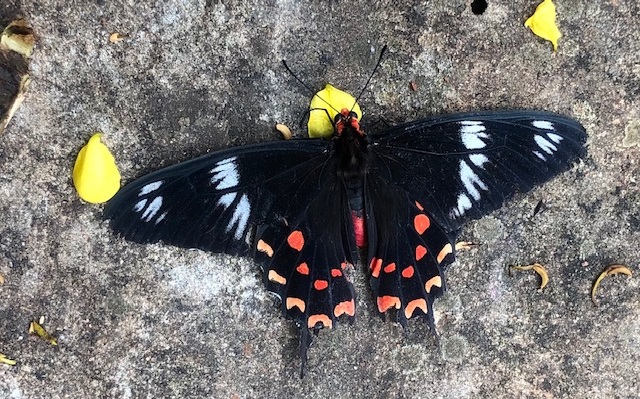
Common Rose Butterfly. Bangalore. August 2020. Photo credit V. Raghunathan
  1. Butterflies of India. Thomas Gay, Isaac Khemikar and JC Puneetha. WWF/Oxford University Press.
  2. A Naturalist’s Guide to the Butterflies of India, Pakistan, Nepal, Bhutan,  Bangladesh and Sri Lanka. Peter Smetacek.
  3. Identification of Indian Butterflies. J.H. Evans. BNHS.
  4. Butterflies of the Indian Region. MA Wynter-Blyth. BNHS.
  5. Butterflies of India. Arun Pratap Singh. Om Books International.

There are several excellent region-specific guides too, including:

  1. Butterflies of the Western Ghats. H. Gaonkar.
  2. Butterflies of Peninsular India. K. Kunthe, G. Madhav.
  3. Butterflies of Sikkim. Meena Haribal. Nature Conservation Foundation.
  4. Butterflies of Delhi. Peter Smetack. Kalpavriksh.

(Unapologetically non-conforming to  APA or any other referencing  style!)

And a few tips to help butterflies along:

  1. Butterfly gardening is a great way to provide a hospitable environment. Butterflies need different plants for different stages of their life-cycles. So planting a garden with many different types of flowering plants (or having pots with different kinds of plants) is a good first step. On the whole, plants like hibiscus, shankpushpi, sunflower, chrysanthemum, marigold, mint etc. are among those preferred by butterflies.
  2. Wherever you live, see if you can have some small areas which are left wild, with local species of wild plants. This will help butterflies, as these are probably their preferred vegetation.
  3. Stop use of chemical pesticides in your garden. These can cause serious harm to the butterfly  at the various stages of its development.

–Meena

A Tree for all Reasons

The recent festival of Janamashtami brought to mind one of the few poems that I remember well from my school Hindi textbook. The first verse, roughly translates as:

Mother, if this Kadamb tree

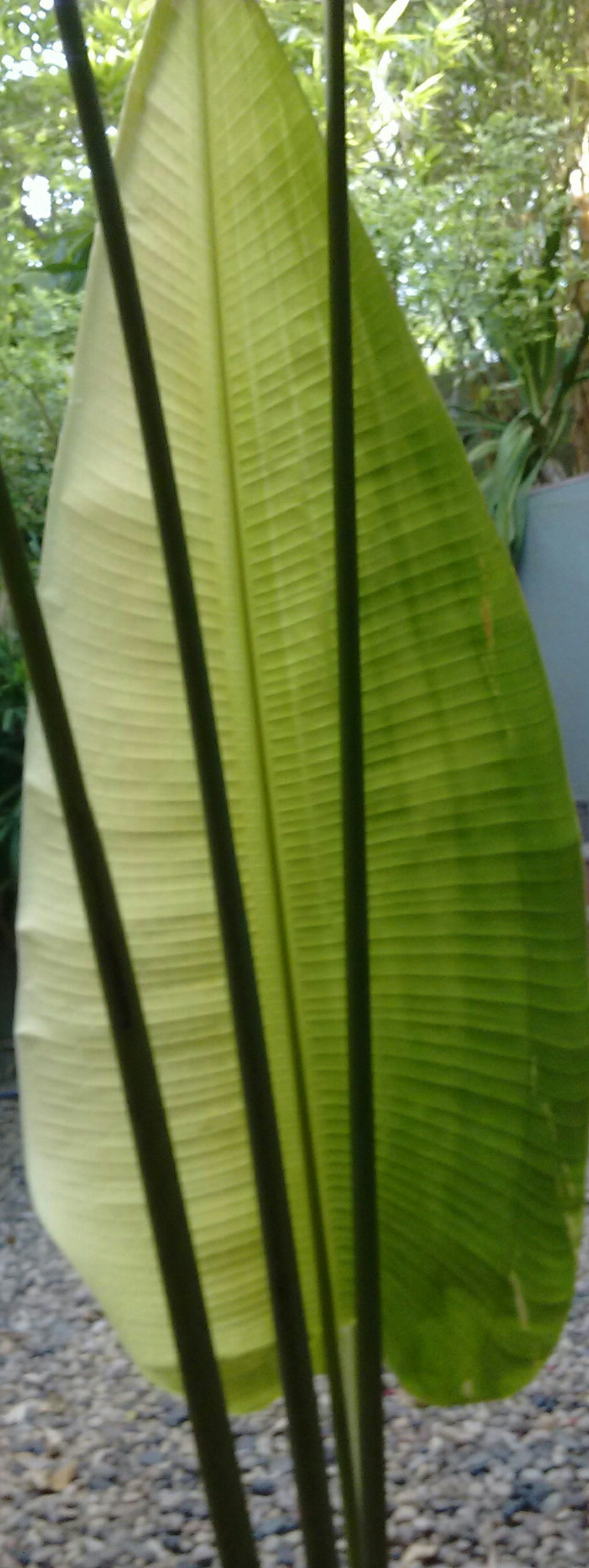
image.jpg
Photo credit: Rekha Chhaya

Was on the bank of the Yamuna

I too would sit on its branches

And turn into a Krishna.

For years, in my mind, the Kadamb tree and Krishna were closely associated. This was reinforced by many traditional paintings depicting Krishna and his consort under the shade of what was meant to be a Kadamb tree. I did not see a real Kadamb tree till years later.

We had long wanted to plant a Kadamb tree in our little garden but felt that there would not be enough space for it to grow comfortably. A couple of years ago the huge Rain tree just outside our gate began to dry and decline. We felt that this was a good time and place to plant our Kadamb tree. Watching it grow has led us to learn more about this tree.

The Kadamb (Anthocephalus kadamba, Neolamarckia cadamba) or Burflower tree is indigenous to South and South East Asia. It is a fast-growing tree, especially in its early years, and may reach heights of 15-20 metres. The straight uniform trunk is usually smooth and grey, becoming slightly cracked as the tree ages. The trunk sends out uniform horizontal branches creating an umbrella-shaped crown, and the leaves are alternately arranged and clustered at the ends of the branches.  The light glossy green leaves are oval, and 15 to 30 cm long. They have prominent veins on top and are lightly haired underneath. The tree sheds its leaves to conserve water in areas with a long dry season, but stays evergreen where the dry season is short. The leaves are fed to cattle.

Flowering usually begins when the tree is 4–5 years old; and flowers appear between June and August.  The Kadamb flower that looks like a pom pom is, in fact, a ball of tightly-packed tiny funnel-shaped yellow-orange flowers. They have a sweet fragrance and are used for making perfumes. The flowers are offered in temples, and worn as hair adornments.

This year, with Covid on our minds, the flowers which were usually described as a resembling furry tennis ball have taken on an uncanny resemblance the Corona virus!

The flowers are followed by compound fruit that also resembles the round flower head. The fruit is made up of numerous small fleshy capsules compressed together in a ball. It is relished by monkeys, bats and birds. A single ball may contain almost 8000 seeds. When it turns orange and ripens, the small capsules split apart, releasing a burst of seeds. A single ball may contain almost 8000 seeds which are dispersed by wind and rain. So the cycle of nature continues.

The different parts of the tree are also said to have pharmacological and biological properties that have medicinal value. In traditional medicine the bark is used to cure fever and cough, and juice of the fresh bark to treat inflammation of the eyes. The plant parts are believed to be effective in curing digestive disturbances, parasitic infection, high cholesterol and triglycerides, antibacterial activity, musculoskeletal diseases, fungal infections, cancer and anti-diabetic activity, and find place in Ayurvedic preparations.

For many Indians, it is not so much the botany as the mythology of the tree that fascinates. The Krishna connection is the best known, and this tree where he is said to have rested, romanced, and played his flute, is a recurring motif in poems, stories and paintings. The tree is also referred to as Haripriya or favourite of the God.

But the Kadamb tree also features in many a lore and legend in different parts of India. It is mentioned in the epics and the Puranas as a beautiful shady tree blossoming in the rainy season. The tree lends its name to the Kadamba Dynasty which said to be the first ruling kingdom of Karnataka, with Banavasi as its capital. It was considered a holy tree by the dynasty. The Kadambotsava spring festival is celebrated in honour of the Kadamba kingdom by the Government of Karnataka at Banavasi in February every year. The Kadamba flower was the emblem of Athmallik State, an erstwhile princely state of India, now part of Odisha.

According to another belief, Goddess Durga Devi, an avatar of Devi Parvathi, loved to live amidst Kadamba trees, and her presence is sensed if the koel sings in the Kadamb forest. Hence, the name Kadamba-vana-vasini or Kadamba-vana-nilaye (one who dwells in the Kadamb forest). In Madurai in Tamil Nadu, the Kadamba tree is considered to be the sthalavruksham (tree of the place) and a withered relic of the tree is preserved at Meenakshi Temple. The tree is also associated with a local deity called Kadambariyamman and the place was once said to be a Kadambavanam (Kadamba forest).

The Kadamb is part of the folk lore of many tribal communities, and even now is associated with tribal festivals and rituals. In Madhya Pradesh the festival of Karma or Karam is celebrated with dance and songs in the bright fortnight of the month of Bhado (August-September), during the rainy season. One of its rituals consists of the worship of the Karam or Kadamba tree.  In West Bengal and Odisha, agricultural communities celebrate Kadam festival by planting Kadamb saplings. Tribal communities of Chattisgarh believe that planting Kadamba trees close to lakes, rivers and ponds, brings happiness and prosperity.

In Theravada Buddhism, it is believed that the Kadamb tree was where Sumedha Buddha achieved enlightenment.

From medicine to mythology, the Kadamb has something to offer. As I watch my young Kadamb growing fresh and tall in this rainy season, every new leaf seems to have its own tale to tell. And my friend Rekha and I, like two fond mothers, exchange notes on our respective Kadamb trees. Hers is flowering this year; I will have to wait another year.

–Mamata


Tiger Tales

July 29 is celebrated as International Tiger Day as a way to

DSCN6148.JPG
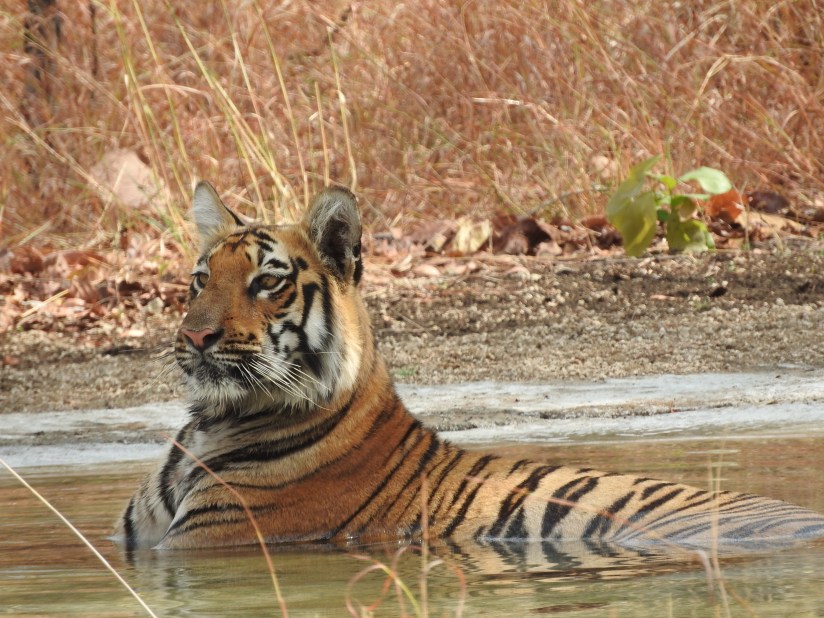
Photo credit: Seema Bhatt 

raise awareness about the magnificent but endangered tiger. The day was founded in 2010 at the Saint Petersburg Tiger Summit, when the 13 tiger range countries came together to create Tx2—the goal to double the number of tigers in the wild by the year 2022. While this deadline is only two years away, it is reported that the current number still far from the goal. It is estimated that the total number of tigers in the wild in the world is 3900.

India is one country which has been showing a significant rise in its tiger population. Last year on International Tiger Day, the results of the Tiger Census 2018 were announced to reveal that the total population of the Royal Bengal Tiger in India is 2967, which is more than double that of 2006. India is also now officially one of the biggest and safest habitats of the Tiger.

As someone who is more comfortable with stories rather than statistics, all the tiger talk took me to the story of Jim Corbett—a teller of many a tiger tale.

James Edward Corbett was born on 25 July 1875 into a family of English ancestry in Nainital, in what is now Uttarakhand; he was one of twelve children. His father who was the postmaster of Nainital died when James was only four years old, leaving his widow to raise the large family on a meagre pension. The young James, or Jim as he was called, had to start earning at an early age to help out the family.

Jim was a wanderer from the time he could walk, and he spent his childhood exploring every nook and corner of the nearby forest, observing the plants, animals and birds. In those days, hunting was a part of everybody’s life. When he was just 5 years old Jim was taken by his brother on a hunting expedition. He was handed a gun and asked to report if he sighted a bear. Much later Jim wrote in one of his books, Jungle Lore, that that was the most frightening experience of his life. But this experience also laid the foundation of Jim’s life-long link with forests.

The fear of the jungle combined with the desire to know more about it led Jim to be observant but also careful. He learned to be silent, which places to avoid, and which to explore further. By the age of 7 he began to be totally absorbed in the natural world around him, appreciating it, trying to understand it, and even attempting to classify animals he saw by the functions they performed. For example, different kinds of birds. He wrote in his diary:

Bird’s that beautify nature’s garden: In this group I put minivets, orioles and sunbirds.

Birds that warn of danger: drongos, red jungle fowl and babblers.

Birds that perform the duty of scavengers: vultures, kites and crows.

Having sorted the jungle birds and animals according to his own classification, Corbett began to study them in detail, tracking them, understanding their calls and pugmarks, and learning to mimic their many sounds. In one of his books he shares this mystery and magic thus: “There is no universal language in the jungles; each species has its own language, and though the vocabulary of some is limited, as in the case of porcupines and vultures, the language of each species is understood by all the jungle-folk.”

Honing all his senses to recognise the signs and movements of wildlife, the observant and fleet-footed young Jim soon became a shikari in the true sense–a person who is one with the environment in which he hunts, and with the hunted. Shooting his first leopard at age eight, Corbett went on to become an excellent hunter, and gained fame for killing several dreaded man-eating tigers. But history has it that he has never killed any big cat without confirming that it had harmed a human.

Over the years, Jim’s love for animals translated into wildlife photography. Inspired by his friend, Frederick Walter Champion, he started to record tigers on film. In the mid 1920’s, when he was in his fifties, Corbett completely gave up shooting with a gun and turned to shooting with a camera. He felt that “far more pleasure was got from pressing the button of a camera than is ever got from pressing the trigger of a gun.”

Jim Corbett spent his remaining years in writing about his hunting adventures and jungle experiences, and promoting the cause of conservation. In November 1947, Corbett and his sister left for Kenya, where he lived till his death in 1955. Jim Corbett’s entire life was a testimony to his close connection to nature, and the joy it gave him. As he wrote: “The book of nature has no beginning, as it has no end. Open this book where you will, and at any period of your life, and if you have the desire to acquire knowledge you will find it of intense interest, and no matter how long or how intently you study the pages, your interest will not flag, for in nature there is no finality.”
But what makes Corbett so special is that he became one of the first champions of the conservation movement in India. Using his influence over then Provincial Government, Corbett played a key role in the establishment, in 1939, of Hailey National Park, India’s first national reserve for the endangered Bengal tiger. In 1957, the park was renamed Jim Corbett National Park in his honour. In 1968, one of the five remaining sub-species of tigers was named after him as Panthera Tigris Corbetti, or Corbett’s Tiger.

For us in India, tiger tales and Jim Corbett are closely linked. And today, his words are as true as they were when he wrote them in 1944:

“The tiger is a large-hearted gentleman with boundless courage and that when he is exterminated–as exterminated he will be unless public opinion rallies to his support–India will be the poorer, having lost the finest of her fauna.”

–Mamata


Online Nature?

As the global pandemic continues to keep children indoors in many parts of the world, there is a continuing barrage of information on how to keep them ‘meaningfully engaged’. And heading the list is online activities–the one-size-fits-all solution. It started with online classes and assignments to help complete the academic year and requirements. This grew to include online ‘activities’ with students following virtual instructions to make and do things. And then, on to stories being told through a face and voice on a one-way screen.  And now, invitations to discover Nature online.

This in itself seems to be a contradiction in terms. EspeciallIMG_20200611_093510y for an environmental educator whose work and mantra for over three decades had been ‘connecting children with nature’. Environmental education as we believed was learning in the environment, learning through the environment, and for the environment. More than anything else, this was true for nature education. Based on this conviction we worked with passion and imagination to create hands-on teaching-learning experiences–from stepping outside the classroom to observe a single tree, to a camping experience of immersion in natural surroundings. These were experiences that engaged not just the head, but all the five senses—seeing, hearing, smelling, tasting and feeling—and thence the heart. We believed that it was the heart and not the head which would create a new generation of sensitive, informed and able champions of the environment.
As Rachel Carson beautifully put it, “For a child…, it is not half so important to know as to feel. If facts are the seeds that later produce knowledge and wisdom, then the emotions and impressions of the senses are the fertile soil in which the seeds must grow”.

But this was a Sisyphean task. Even while people like us were advocating the ‘take children outdoors’ experience, children everywhere were beginning to stay indoors more and more, due to a variety of reasons. The seriousness of the situation was highlighted in a book titled Last Child in the Woods: Saving Our Children From Nature-Deficit Disorder. Published in 2005, the author Richard Louv expressed his apprehension at the growing phenomenon of alienation from Nature, and coined the term Nature-Deficit Disorder.

NDD was then an unwanted side-effect of the electronic age and a plugged-in-culture. Today, this is threatening to be a major fallout of an unfamiliar and unprecedented global pandemic. As our children remain cloistered in what we hope is a safe environment, our lives are slowly been taken over by technology.

Much can be taught and learnt online. But Nature? Will the most beautiful pictures and inspiring speakers be able to match the intangibles of a personal experience? Will a set of neatly-framed images on a flat screen be able to create an experience that engages all the senses? Will it have any room for the magic of “feeling”? Will it create the child-nature connection that is a fundamental element of a children’s cognitive development, as well as its psychological and physical health.

What will be the psychological, physical and cognitive costs of this technology-supported human alienation from nature, particularly for children in their vulnerable developing years?

When some day in the not too distant future we emerge from our sanitised cocoons, blinking our eyes in the sunshine, let us remember again that real and not virtual Nature is the best teacher.

“It is a wholesome and necessary thing for us to turn again to the earth in the contemplation of her beauties to know of wonder and humility.” Rachel Carson

–Mamata


Anarkali At My Window

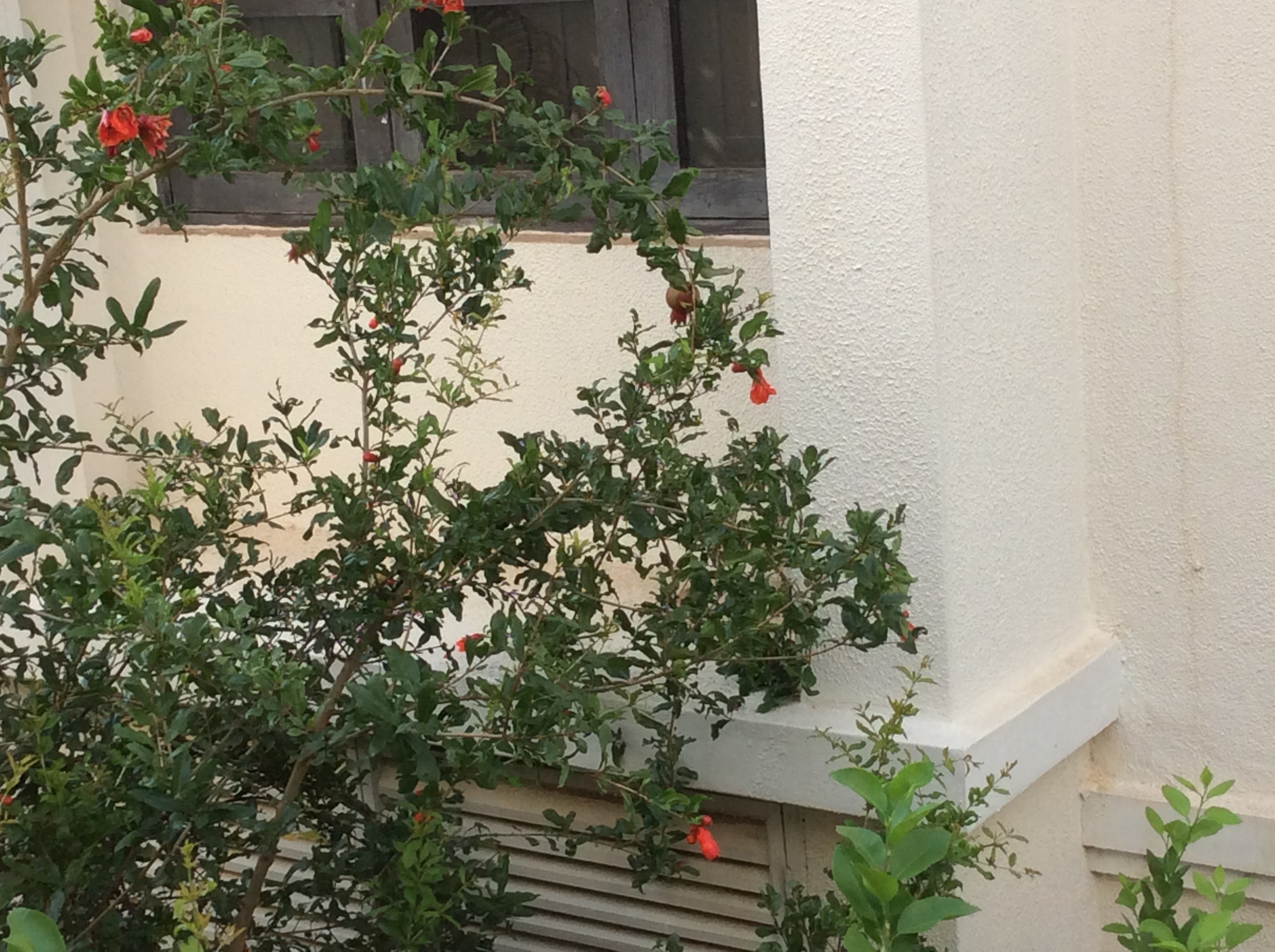
BFCA646E-31A4-47A9-AB75-B961DD704B3ELockdown has certainly make us more observant and has given us new ways of looking at things. There is a pomegranate tree whose top I can see from my window—and considering I spend eight or nine hours working in that room, it is very central to my vision! It is currently flowering, abuzz with bees, and fruits have started forming.

I have always wondered why Anarkali*, the beauty who stole the to-be Emperor Jahangir’s heart and brought him to loggerheads with his father Emperor Akbar, was called so. Was the flower so beautiful that our most famous beauty was named for it? I never did think so.

Well, my recent close encounters with the tree and flowers have given me a greater appreciation of the beauty of the flower. Bright waxy orange blossoms which stand out against the green of the leaves, and a nice shape. And bees drawn to them by the dozens, as maybe men, young and old, were drawn to Anarkali (one version is that she was part of Akbar’s harem, and that rivalry between father and son for her favours was at the heart of the dispute).

But maybe more than just the beauty of the flowers, it is the associations that the ancient fruit has, that makes the pomegranate so much part of the imagination. It is one of the few fruits which is mentioned in the texts of many religions.

Starting from ancient Greek mythology–in the story of Persephone’s abduction by Hades, lord of the underworld, the pomegranate represents life, regeneration, and the permanence of marriage.The story is that one day while out gathering flowers, Persephone was kidnapped by Hades and taken down to his kingdom. By eating a few pomegranate seeds, Persephone tied herself to Hades.

Pomegranate is mentioned in the Vedas and is an important part of Ayurveda. It is a symbol of fertility and abundance, and one of the nine fruits offered to Goddess Durga.

In Buddhism too, it is significant. The Buddha received many valuable gifts from wealthy disciples. But it is said that a poor old woman’s gift of a small pomegranate was the one that delighted him most. It is also said that he once offered a pomegranate to the demon Hariti, which cured her of her alarming habit of eating children.

It finds a place in Zoroastrianism too. In Persian mythology, Isfandiyar eats a pomegranate and becomes invincible.

In Islam, the fruit is considered a symbol of harvests, wealth, and wellness. Legend has it that each pomegranate contains one seed that has come down from paradise. Along with olive, dates and figs, it is one of the four sacred fruits in Islam.

In Judaism, it is believed that each pomegranate has 613 seeds—one for each of the Bible’s Commandments. The Song of Solomon compares the veiled cheeks of a bride to the two halves of a pomegranate.

1A6133BD-4C41-49AA-BA38-4EED5DB8E6ADThe pomegranate is a symbol of resurrection and life everlasting in Christian art, and the pomegranate is often found in devotional statues and paintings of the Virgin and Child, as in Bottecelli’s ‘Madonna of the Pomegranate’ shown here.
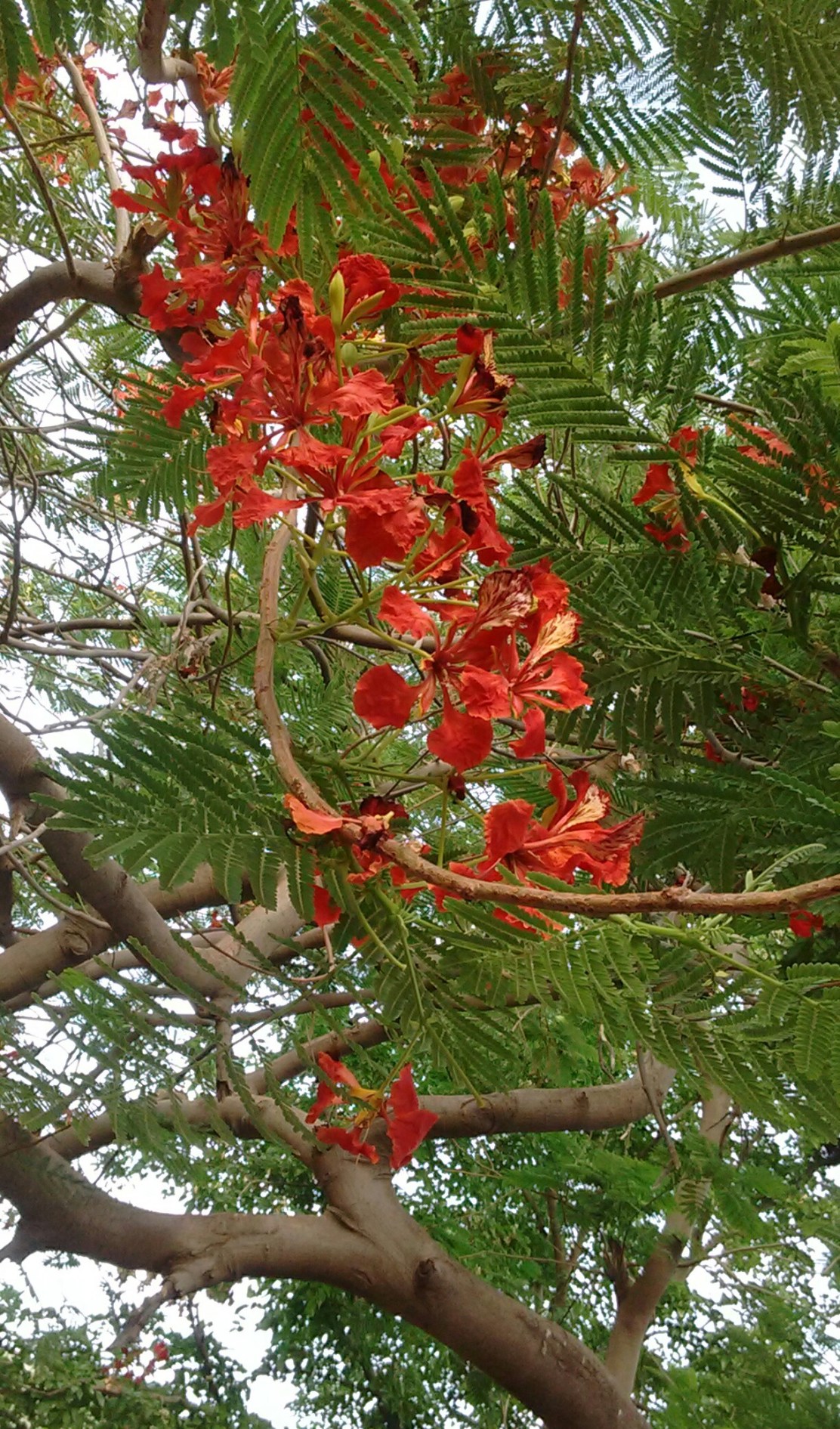
I shall delight in the beauty of the pomegranate flowers for now. I shall try to get a few fruits before the parakeets get them all. And I shall let thoughts of all the health and prosperity they will bring me help me through the Lockdown!

–Meena

*Anar= Pomegranate. Kali= Flower