Indicator Tea

Those who have gone through high school science will remember lab-experiments involving indicators. Adding a drop of phenolphthalein and noting that critical point at which the colourless liquid in the flask turned a bright pink. Or when the litmus paper turned red or blue. Remember how critical it was for our grades to observe these colour changes correctly? As a B.Sc Chemistry student, indicators played a pretty large part in my life!

Those colour changes are what my experiences with butterfly-pea tea took me back to. This tea has been much in vogue for some time now. But keeping in character, I am of course about two years behind the trend.

This in spite of having the creeper literally at my doorstep. Planted there to supply flowers for my mother’s puja– the shankpushpi flower is specially a favorite of Lord Shiva–it has proven itself a hardy survivor of my spurts of inept gardening. It grows and flowers and flourishes. The indigo-blue flowers are equally beautiful on the plant and in the puja.

Clitoria ternatea commonly known as Asian pigeonwings, bluebellvine, blue pea, butterfly pea or  Darwin pea, is known for its blue flowers, though there is a less common white variant. In India, it is called shankpusham, girikarnika or aprajita.

Here it is used mainly for worship and to some extent in Ayurveda, mainly for de-stressing, and to boost memory and brain function.

The use in Southeast Asia is more varied. It is an integral part of many Thai, Malaysian and Burmese recipes as an ingredient and as a colouring agent, and is very widely used in Chinese medicines.

Which brings me to the visually-stunning butterfly-pea tea, which is a wildly popular drink in those countries (and now the world). Made by steeping a handful of flowers (fresh or dry) in hot water, the resulting tea is a lovely blue. Squeeze a lemon into it, and it turns pink or even violet—taking you right back to your school lab! It is basically the same phenomenon—a change in pH resulting in a change in colour.

Research on the use of Butterfly Pea in managing Alzheimer’s has been ongoing for some time now. The latest is a research study from National Centre for Biological Sciences, India, published in Journal of Medicinal Chemistry, which takes forward the hypothesis that extracts from this plant ‘can help in neuroprotection and prevent progressions that cause the ailment’.

So go ahead and plant a shankpushi in your garden or a pot—only making sure that it gets enough sun. It is not at all difficult to grow—my creeper sheds seeds all around, and each week, I find tens of little plants wanting to curl around the nearest support and climb. It will do well in most soils, even enriching them, as it is leguminous and will fix nitrogen. Apart from watering it once in a while, you don’t need to do much.

And in return, it will add beauty to your garden, adorn your puja room, help you make conversation-piece teas, salad additions and coloured rice. And hopefully also boost your brain-power. A winning proposition all around!

–Meena

Did I See What I Saw?

8.15 pm, June the 9th, 2021. Bangalore.

I was looking out at the madhu-malti (Combretum indicum; English names: Chinese Honeysuckle or Rangoon Creeper) in my garden.

And I saw an amazing sight. An aerial creature hovering and sucking nectar from the flowers. It darted away and was back for another 10-15 second go at the flowers. And again and again and again. And the movements were accompanied by a whirring sound.

Smaller than any bird I have seen, and with gauzy wings, it was much larger than any bee or wasp. To me, at first sight it looked like a giant wasp. But a wasp that was behaving like a sunbird or a humming bird. So then I wondered whether it was some sort of sunbird. But I didn’t feel comfortable with either explanation.

I rushed to get my phone. The creature was a fast-darting type; my phone does not have a great camera; the light was bad; last but not the least, I am a terrible photographer. I clicked away, knowing full-well that there would be nothing out of the exercise other than some dark blurs. And I was right.

I called Raghu. He came a few minutes later. Just caught a few glimpses of the creature. Not enough for him to make any conjectures apart from that it was a larger-than-ordinary flying creature. It did not hover when he came. The saga ended when it vanished into the dark. Raghu said it was just a moth and it was my hyperactive imagination which had seen it hovering and sucking.

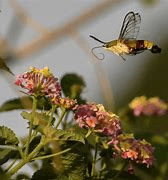
I could not let this insult pass. I went to good old Google. And have concluded that what I saw was a Hummingbird Moth, probably a Hummingbird Hawkmoth (genus Macroglossum). But which one, I cannot tell.

Kitching, Kendrick and Smetacek in their enumeration ‘ A List Of Hawkmoth Species (Lepidoptera: Sphingidae) Of India, Nepal, Bhutan And Sri Lanka, Including Their Common Names’ list about 20 Hummingbird Hawkmoths which may be sighted across this area. The common names run an interesting gamut, from Black-Based Hummingbird Hawkmoth to Burnt-Spot Hummingbird Hawkmoth to Obscure Hummingbird Hawkmoth.

Obviously not the pic I took!

What is this creature which looks like a bird and acts like a bird, but is an insect? An evolutionary phenomenon called convergent evolution or homoplasy explains this resemblance. In homoplasy, two creatures from different families and orders develop similar forms which serve the same functions. Basically, Hummingbird Moths mimic hummingbirds because it gives them some advantages. What could these advantages be? Scientists opine that looking like a bird may help them for two major reasons: first, these moths are diurnal, and this makes them more vulnerable to predators. They are also pretty colourful, which adds to the vulnerability. So looking like a bird may fool predators, and give them an edge.

These moths, like hummingbirds, have extremely strong wings to enable them to hover and sip. Hummingbirds beat their wing over 80 times a second. While the moths are not quite as fast, the speed is enough to keep them suspended over the flower for several seconds at a time. They have very long proboscis, which enable to suck the nectar.

Good to know. But can I be sure that what I saw was a Hummingbird Hawkmoth?

No. While Hummingbird Hawkmoths have been sighted in Bangalore, they are supposed to be seen in South India in the winter. But this sighting was in June.

And emphatically, all HHs unlike most other moths, are diurnal creatures. They are supposed to be active in the daytime, especially when it is sunny and bright. But this sighting was at 8.15 p.m.

These moths are supposed to come back at the same time to the same place, day after day. But alas, not in my case. I have been watching the madhu-malti for the last few days not only between 8 and 8.30 p.m., but on and off through the day, with nary a sight.

So did I see what I saw?

–Meena

Carle’s Creatures

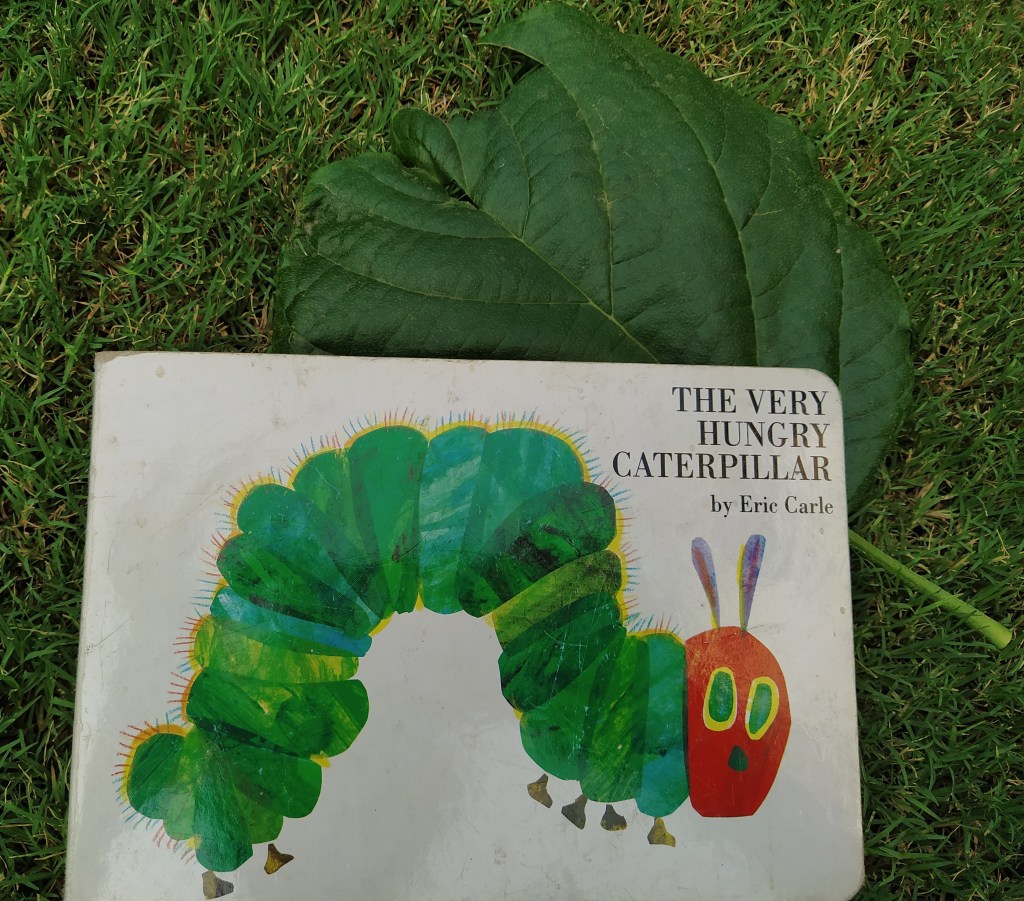
A very hungry caterpillar, loads of food, lots of colour, very few words (224 to be precise) and little holes to poke tiny fingers through—that’s the formula that made one of the most popular children’s books of all times. The book simply called The Very Hungry Caterpillar has sold more than 55 million copies around the world since it was first published in 1969, and has been translated into more than 70 languages.

This was one of the many books that author and artist Eric Carle created to delight generations of children (and parents like me) across the world.

Eric Carle died last week at the age of 91 leaving behind a legacy of colour and care for the generations to come.

Eric Carle Jr. was born on June 25, 1929, in Syracuse, New York, to German immigrants. When Eric was six years old, his parents moved back to Germany. With the start of World War II his father was drafted into the German army and soon became a prisoner of war in Russia. Eric, who was then 15, managed to avoid the draft but was conscripted by the Nazi government to dig trenches on the Siegfried line, a 400-mile defensive line in western Germany. The war left its ravages all around; his father returned home a broken man.

At the end of the war, Eric joined the State Academy of Fine Arts in his hometown Stuttgart to study typography and graphic art, from where he graduated in 1950. Eric always dreamed of returning to America, the land of his happiest childhood memories. In 1952, with only 40 dollars to his name, he decided to move to New York City, where he got a job in advertising, working as a graphic designer for The New York Times where he worked for nearly a decade. By then, he had had enough of the advertising profession, and was thinking of changing direction.

Inspired by what his art teacher had once told him—“start anew, move on, keep surprising”, Eric Carle embarked on a career as a freelance designer when he was almost 40 years old. He knew he wanted to make pictures but the thought of doing children’s books never crossed his mind. But as serendipity would have it, one of the pictures that he had created for an advertisement caught the attention of Bill Martin Jr, a respected educator and author, who asked Eric to illustrate a book for him. That opened up the new direction that he had been seeking. Soon he began writing and illustrating his own picture books.

Many of Eric Carle’s picture books are about small creatures like caterpillars, ladybugs, spiders, crickets and fireflies. These are a tribute to some of his happiest childhood memories of walks with his father. As he recounted “When I was a small boy, my father would take me on walks across meadows and through woods. He would lift a stone or peel back the bark of a tree and show me the living things that scurried about. He’d tell me about the life cycles of this or that small creature, and then he would carefully put the little creature back into its home. I think in my books I honour my father by writing about small living things,” he continued. “And in a way I recapture those happy times.”

Eric celebrates these little creatures and the world they inhabit with vibrant art work in his signature style of creating images by layering tissue paper painted with acrylic colours, and rubbing with his fingers, brushes or other objects to create different textures. His love for bright and intense colours was perhaps a subconscious rebellion against the colourless and grim palette of the Nazi Germany that he grew up in. Under the Nazis modern, expressionistic art was banned and all exterior facades were painted a dull grey or brown. As an illustrator Eric Carle not only used brilliant colours but often portrayed his creatures in unconventional colours to show his young readers that in art, there is no wrong colour.  

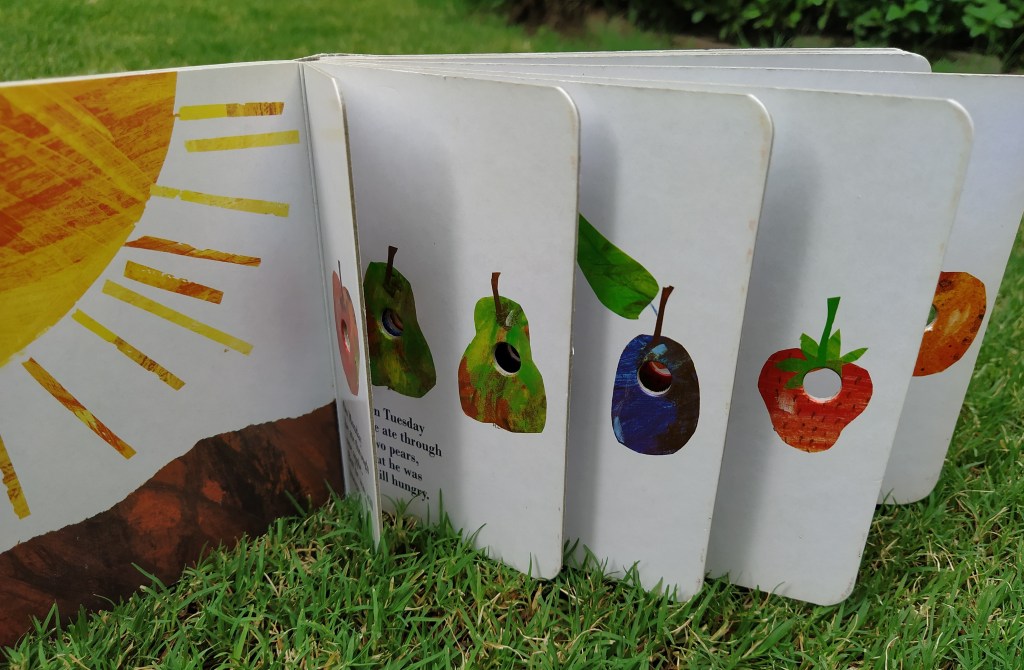
What makes the Caterpillar book so unique is its interactive element which is created with using a hole in the pages. Suddenly the book becomes a toy which little fingers can explore, and enjoy, just as they want to. The idea for that ‘something extra’ came to Eric as he was idly playing with a paper punch and saw the holes that he had punched in some papers.

These were the design elements that defined Eric’s work. But the content was equally rich and meaningful. Eric had an instinctive sense of what made children and childhood so special. He drew upon the child in himself to reveal the cherished thoughts and emotions of children, and treated then with understanding and respect. The confusions and insecurities of the little creatures in his books reflect those of the little children who face their first transitions like leaving the familiar security of home to enter the strange new world of school. As Eric Carle explained, The unknown often brings fear with it. In my books I try to counteract this fear, to replace it with a positive message. I believe that children are naturally creative and eager to learn. I want to show them that learning is really both fascinating and fun.”

Above all he believed that children needed hope and excitement for what the future holds; and nothing expresses that better than the hungry caterpillar that transforms itself into a beautiful butterfly!

The magic of Eric Carle’s books lies not just in their visual appeal but in the opportunity that they offer children to freely express their curiosity and creativity as they learn about the exciting world around them.

Every little child is like a hungry caterpillar, hungry for taking in the colours, sounds, and tastes of the world around. And just as the ravenous caterpillar ate its way through apples and pears, plums and strawberries, oranges, and piles of other goodies, through every day of the week, children have a voracious appetite for learning and imbibing new knowledge and new experiences. And unlike the caterpillar, they don’t get a stomach ache from being overstuffed with these! Let us strive to satiate these hungers by opening up the world for our children, by joining them in the adventure of exploring and discovering the world around them.

A good day to start is World Environment Day that is celebrated on 5 June.

–Mamata

Froglore

May 22 is marked as the International Day of Biological Diversity. Last year the theme was Nature is the Solution. And carrying forward the same, the theme this year is We are Part of the Solution—a reminder that humans are but one strand in the intricate web of life, and that our lives are intricately and inextricably bound with every other strand in this web. Nature sustains us not only in terms of resources, but also nurtures us culturally and spiritually.

A few weeks ago I wrote about an example of how plants are an integral part of the traditional knowledge, culture and customs of many indigenous peoples. (see https://millennialmatriarchs.com/2021/04/22/maria-and-her-magic-mushrooms/).The study of this close relationship is called ethnobotany. Scientists and anthropologists also study the past and present interrelationships between human cultures and the animals in their environment. This is called ethnozoology. One of these relationships that has long fascinated anthropologists is the one with snakes and amphibians. These are creatures that commonly evoke revulsion, fear, suspicion and awe, sometimes even hysteria. And yet these are richly represented in mythology, culture, art, and literature of indigenous cultures around the world.

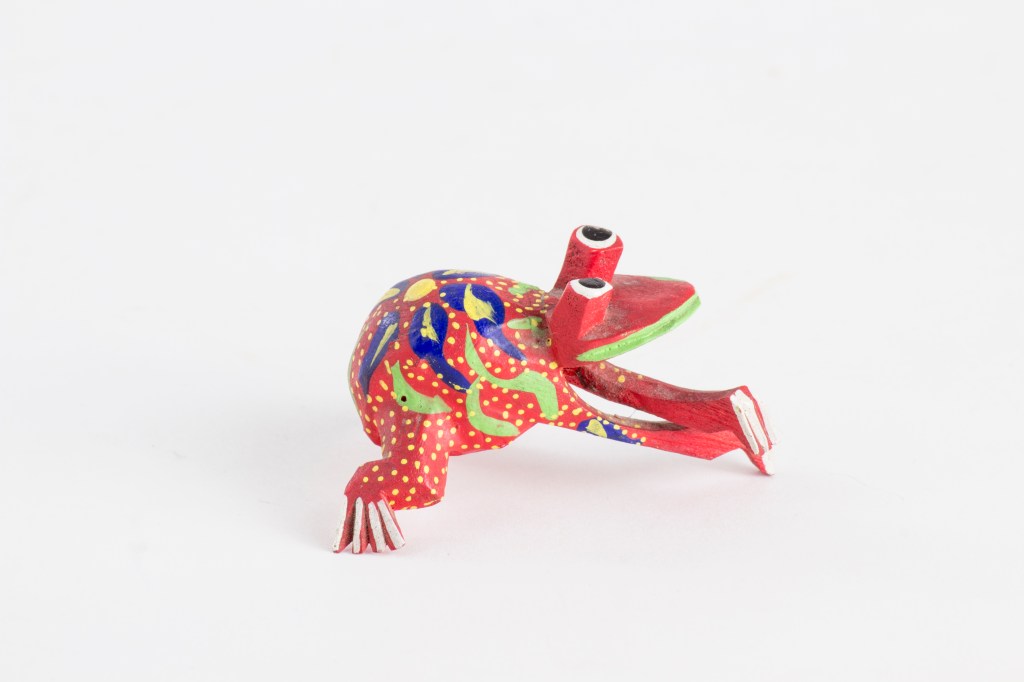
Source: Frog artefact collection of Seema Bhatt

While researching for an exhibition on frogs, I discovered a wealth of fascinating facts and beliefs about creatures that we don’t often give a second look, let alone a second thought to—frogs and toads.

The human imagination, has over eons, cast and recast frogs and toads in legends, and beliefs. They appear in the stories and myths of almost every human culture, taking on almost every role conceivable, from the trickster, to the devil, to the mother of the universe.

In many traditions around the globe, frog is generally associated with the water element and it symbolises cleansing, renewal, rebirth, fertility, abundance, transformation, and metamorphosis in different cultures.

In ancient Egypt, the frog appears as a symbol of fertility, water, and renewal. The water goddess Heket often appeared as a woman with the head of a frog. Frogs were also the symbol of the midwife goddess Heqit, who ruled conception and birth, and Egyptian women often wore metal amulets in the form of frogs to enlist her good favour. Ancient tribes in Central America worshipped a goddess known as Ceneotl, the patron of childbirth and fertility, who took the form of a frog or a toad with many udders.

This association with fertility was also ecological. Every year the flooding of the Nile provided water and brought rich silt to grow crops; at that time frogs also proliferated in such huge numbers that the frog became a symbol for the number hefnu, which meant either 100,000 or simply “an immense number.” Thus the frog’s association with water and fertility, so important for life, made them positive symbols, 

Frogs and toads were also considered to be spirits of rain, and were used in many rituals intended to invoke the rains. The Aymara tribe of Peru and Bolivia made small frog images, which they placed on hilltops, to call down the rain. Indeed, if the rains failed, some tribes blamed the toads for withholding the rain, and would lash them in punishment.

In India it is believed that the ‘singing’ of frogs indicates that the rains have come and it is a time for celebration, while the silence of the frogs means that nature and the Gods have forsaken man. In some parts of India frog weddings are held with rites and rituals, and celebrated with feasts to invoke and appease the rain gods, especially in times of drought.

In Ancient China images of frogs were found on the drums used to summon thunder and much needed rain.

Frogs feature in the myths of many Native American tribes. In some they represent transformation and growth, while in others they are associated with springtime and renewal. They are believed to have healing powers and are considered medicine animals. In the shamanistic traditions of some of these cultures, hallucinogenic compounds derived from frogs and toads are used for religious rituals of communion with the spirit world and self-transcendence.

Thus most native cultures revered frogs and toads, as they did all forms of life, and recognised that these were all intrinsically linked with the elements of nature and each other. However in later periods and cultures, the “strange” appearance of frogs and toads with their awkward form, huge eyes and croaking calls evoked fear and a sense of eerie mystery. Folklore from medieval Europe depicted toads as evil creatures whose blood was a potent poison and whose body parts had unusual powers. Toads were commonly seen as evil spirits who accompanied witches, assisting them in their evil designs, and providing poisonous ingredients for potions. Many myths were perpetuated around toads. One widely held myth concerned the Toad-Stone, a jewel that was supposed to be found inside the toad’s head. According to myth this jewel, placed in a ring or a necklace, would heat up or change colour in the presence of poison, thereby protecting the wearer from foul play. Such references are even to be found in some of Shakespeare’s plays.

In many ancient Chinese tales and legends also, the toad is a trickster and a magician, a master of escapes and spells. Some Chinese tales refer to the toad whose face is believed to be visible at the full moon; and they believe that it is this moon-toad that occasionally swallows the moon, causing eclipses.

But the Chinese also believe that that toad is the keeper of the real, powerful secrets of the world, such as the secret of immortality. There are several legends that reinforce this belief. One is about a wandering wise man called Liu Hai and his three-legged toad companion Ch’an Chu who knows the secret of immortality, and who reveals this secret to the wise man who befriends him.

This awe of the benevolent magical powers of frogs and toads is seen in most oriental cultures. In China the frog is a symbol of good luck. The Frog spirit Ch’ing-Wa Sheng represents prosperity in business and healing. Frogs and toads also signify protection. The Chinese Danwu, or Dragon Boat Festival was traditionally celebrated to ward off diseases and plagues for the coming year. Several symbolic creatures are worshipped on this day for protection against evil spirits, and ill health, among which the three-legged toad Ch’an Chu is significant.

In Japan frogs are very auspicious. The Japanese word for frog is kaeru. Kaeru also means “return”. Travellers carried bring a frog amulet on their journey as this was believed to secure a safe return.

Thus have frogs and toads captured human imagination since time began. It is also these myths and beliefs that reminded humans of the vital role that even the seemingly insignificant creatures play. But with the march of “progress” and as humans have been relentlessly destroying the habitats of uncountable, and as yet unaccounted for, living things we are losing much more than species. We are losing the essence of what makes our lives rich and meaningful. Who will populate our mythologies when these creatures are gone? Perhaps we will be left with only one story: the story of loss.

–Mamata

Fire in the Forest

As the Indian winter winds to a close, forests in many parts of India burst into flames. Nondescript trees that are hardly conspicuous for most of the year, come ablaze with crimson-orange flowers that lend them the name Flame of the Forest.  It is a forest fire that announces the arrival of spring.

It is the Palash tree that sets the forest on fire. It gets its name from the Sanskrit word Palasha which means both ‘leaf’ and ‘beauty’. The tree was earlier known as Parna tree, which also means ‘leaf’. Another Sanskrit name for it is Kimsuka which means ‘like a parrot’. This is the root of the other common name for it—Parrot tree.

The tree has many popular common names including Bastard teak, Bengal kino, Flame of the forest, Kino tree, and Sacred tree It is also called Battle of Plassey tree.as it is believed that the village near where this battle was fought was called Palash due to the abundance of these trees there. The British mispronounced this as Plassey, and so that is how the battle is remembered in history.

The tree is known by different names in different parts of the country: Palash, Dhak and Tesu in Hindi, Palas in Marathi and Bengali, Kesudo and Khakra in Gujarati, Moduga in Telugu, Purasu Maram in Tamil, and Pangong in Manipuri.

Its botanical name is Butea monosperma. The genus Butea is named after the Earl of Bute, who was a patron of Botany; monosperma, means ‘having one seed’. It is a medium-sized deciduous tree with a crooked trunk and branches. The bark is rough and greyish but the branches are velvety and dark olive green in colour. The large trifoliate, pale bronze green leaves are initially velvety but later turn leathery. The flowers appear when the tree sheds all its leaves. The orange-scarlet flowers grow in stiff clusters of three. Each blossom has five soft petals covered with fine hair. The orange petals curve backwards, with one of them in the form that resembles a parrot’s beak, giving it the name Parrot tree.

The curious formation of the flowers is often referred to in folklore. One riddle in Bihar asks

“What has: An elephant tusk, But not a tusk;

The body of a monk, But not a monk;

The head of a crow, But not a crow;

But a parakeet?”

Curiously, for all their beauty, the blossoms are scentless. This led to the analogy, in some old writings, describing a person with beauty, but without moral or intellectual qualities as a human Palash!

The Palash tree has strong cultural and religious associations. References can be found to this tree in mythology, legends, classical, and popular literature.

According to one legend, a falcon dipped its feathers in Somarasa, the drink of the Gods which was believed to be made on the moon. One of its feathers floated down to Earth and became the Palash tree.

The tree is frequently mentioned in the Vedas and its trifoliate leaves represent the Hindu triad with Brahma on the left, Vishnu in the middle and Shiva on the right. The plant is used in many Hindu religious ceremonies. In earlier days when a Brahmin boy was initiated into monkhood, his head was shaved and he was given a Palash leaf to eat; his staff was made of Palash wood. During the sacred thread ceremony the leaves are used as platters when a particular part of a ceremony is performed; the dry twigs are used for the havan or sacred fire of the Navagraha Pooja to pacify the nine planets on the occasion of Vastu shanti. Many religious songs have mention of the fruits and flowers of Palash being offered to Gods to invoke their blessings. A Buddhist legend has it that the Queen Mahamaya grasped a branch of the Palash tree at the moment of the birth of her son Gautama Buddha.

Poets and writers have been inspired by the form and colour of the Dhak or Tesu flowers. Jayadeva in Gitagovindam compares the flowers with nails of Kamadev or Cupid with which he would wound the hearts of lovers. Rabindranath Tagore in his poems described them as a celebration of life…”the flames of the forest have lit up in smiles”. The forests of Madhya Pradesh where the Palash is found in abundance are the setting of many a Rudyard Kipling tale. 

This decorative tree thrives well on a wide variety of soils including shallow, stony sites, black cotton soil, clay loams, and even in salt lands and water-logged places. The tree is very drought resistant and frost hardy, and is resistant to browsing. It grows back even when it is cut down to ground level; and grows rapidly in full sunlight. The tree attracts birds and squirrels, and can be propagated by seeds

The different parts of the tree have numerous uses. The young leaves are used for fodder, eaten mainly by buffaloes. The fibre obtained from the tree is made into ropes and cordage. The gum from the tree, called Kamarkas in Hindi, is used in certain food dishes. The flowers are used to prepare traditional Holi colour. A bright yellow to deep orange-red dye is also prepared, used especially for dyeing silk and cotton.

The leaves have traditionally been stitched together to make plates and bowls, and even umbrellas. In some tribal communities a prospective son-in-law was tested for his dexterity in making these plates and bowls. He was accepted if his father-in-law approved of the product! Today these leaf dishes are being popularised as eco-friendly alternatives to paper and plastic.

One of the commercially important products yielded by this tree is lac. Palash is an important host for the tiny lac insect whose resinous secretion was traditionally used to make purple-red dyes used to colour silk, leather and for cosmetics. Today this is refined to make shellac. Shellac has high commercial value; it used for many products including wood sealers and finishers; floor polishes, inks, grinding wheels, electrical insulations, and leather dressings.

The Palash has numerous medicinal values in Ayurveda. Different parts of the tree are used to treat a wide range of health issues from eye ailments to liver, urinary and gynaecological disorders.

The sturdy tree also has a valuable role in soil conservation. Farmers frequently use Palash with its binding fibrous roots to stabilize field bunds and for erosion control.

When we were children we used to play a game called ‘Fire in the Forest, Run, Run, Run’. This is one forest fire that invites one to run towards it, intoxicating the viewers with its colourful flamboyance.

–Mamata

The Pied Piper of Young Naturalists

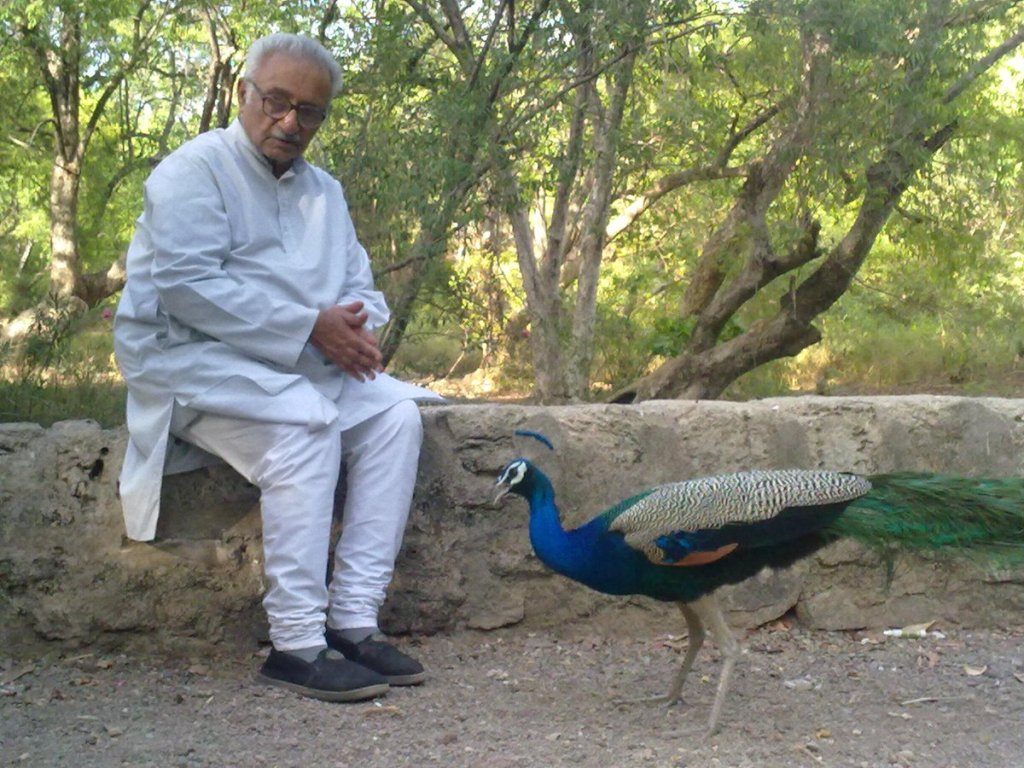
Photo source: deshgujarat.com

It was the interview that was to start my journey as an environmental educator. I had walked in with no formal academic or professional credentials to support my application, except for a great love for trekking and a passion for education. Among the distinguished naturalists that made up the interview panel was an avuncular gentleman who probed gently with questions that were probably meant to test what made me tick. I have no recollection of the exact questions, nor my answers, but I must have passed muster because I did get the job!

That was my first encounter with Luvkumar Khachar as he was later introduced. In the few years that followed I had the privilege of having Luvbha as a senior colleague, mentor, and continuing inspiration. Over the years I realised that Luvbha was all this, and much more, to thousands of young people, leading them like the Pied Piper on a lifelong journey of becoming naturalists. 

Luvkumar Khachar was one of the architects of the nature conservation movement in India. A renowned naturalist and accomplished ornithologist, he was also a passionate nature educator who made it his mission to instil the love for the outdoors in every young person. He conceived and launched the massive Nature Club movement for WWF India, and guided the Bombay Natural History Society for decades, just as he did the Centre for Environment Education after that. His own nature camps—in the desert, in the mountains, and on islands– were legendary, and perhaps every ‘not so young’ renowned naturalist today would remember being at one of those camps.

Luvkumar was born in the erstwhile princely family of Jasdan in Gujarat on 24 February 1931. His early days were spent in the great open spaces in close touch with the natural environment, planting a lifelong love for the outdoors. He always bemoaned the lack of such opportunities for later generations of youngsters. This was one of the prime factors that motivated his Nature Camps mission in the early 1970s. As he recalled, “I contemplated the  apparent lack of excitement among our youth for going out into the great open spaces. Comparing their upbringing with mine, I realized that I had had the great good fortune of  having spent my childhood at Hingolgadh with its wide views of the Saurashtra countryside, across which played the seasons, responded to by plants and animals. A majority of children, especially in urban situations, seldom see a sunrise! What struck me was the immense gulf developing between a city child and a tribal child. Were we not creating a schizophrenic society? The thought was disturbing.”

Having himself had a stint as a teacher in a conventional school he was aware of, and distressed by the fact that schools were becoming fetters to free growth, rather than liberating experiences. “We like to believe that we are descended of a civilization which nurtured intellectual giants, but fail to realise that these thinkers were leading unfettered lives in a land that was largely wilderness, replete with the bounties of Nature. By contrast, today’s child attending the most sophisticated of school is cramped and provides a constricted vision. The child of yesteryears, while enjoying advantages of limitless horizons, enjoyed the benediction of gurus who encouraged questioning. Today’s child seems sentenced to ten years of a concentration camp governed by a syllabus as tyrannical and circumscribing as any prison code! The system instead of exciting the wonder of growing minds, supresses their flights as effectively as any efficient prison warden following the prison code.”

Such scathing words were a trademark of this life-long educator who was always forthright in expressing his strongly-held opinions. But they also represented a warrior who fought tirelessly and hard for his beliefs, even in the face of hostility.

Like most naturalists of his generation, Luvkumar meticulously recorded his observations. His writing was a rare combination of science, intellect and emotion, ably supported by his natural ability as a writer. When Sanctuary Asia, one of India’s leading and best-loved magazines for wildlife science and conservation, was being planned, he told the editor “If you are going to start a wildlife magazine, please don’t make it a dry-as-dust scientific journal to be read by just 30 colleagues. Make it a popular magazine that thousands will enjoy. Because we need larger numbers to protect our wildlife.”

Luvbha was “old-world” in that he demanded high standards of discipline, integrity, commitment, and work ethic; just as he commanded respect and awe. As his young colleagues we were always a little tense about living up to his expectations, and were often pulled up by him, but there was always a twinkle in his eyes and a gentle smile that told us that we had his support in our efforts. For a while we were also lunch companions when we shared work space in the leafy environs of CEE’s Sundarvan. One of the rituals that he introduced was that one of us was to go to his office every morning with a packet of milk, and set the curd that we would all share with lunch.

Luvbha was always chided me for not going on more camping trips. I do regret that I could not attend one of his nature camps. But I am grateful for having had the privilege of learning much from him that has guided my work in environmental education, as well as life-lessons that are now deeply entrenched in me. Luvbha passed away in 2015 at the age of 84. Remembering him with respect, and many warm memories.

–Mamata

Save the Paradox!

An impossible creature like the platypus cannot but fascinate.

  • It has the beak of a duck; the tail of a beaver; the feet of an otter.
  • It is a mammal but it lays eggs.
  • It is bio-luminescent–a rare charecteristic for a mammal.
  • It is a rare venomous mammal–the males of the species have a spur on the hind feet which can deliver venom.

No wonder early scientists thought it was a hoax—that the preserved specimen they were shown had been made up by sewing together parts of various animals.

It was certainly an animal which changed world views.

It shook up the scientific world. Robert Persig, the American author and philosopher thought this pointed to the inadequacy of scientific thinking, when he said, “…when the Platypus was discovered, scientists said it was a paradox. But Pirsig’s point was it was never a paradox or an oddity. It didn’t make sense only to the scientists because they viewed the nature of animals according to their own classification, when nature did not have any.” ― Robert M. Pirsig, Lila: An Inquiry Into Morals.

It also shook up the world of religion, with anti-evolutionary theory proponents using it to cast doubt on Darwin and his theories.

The animal is found in Australia and Australia alone. Till recently, the overall conservation status of the platypus was not a matter of very deep concern. But recent reports are throwing up some red flags. Platypus habitat is reported to have shrunk by almost 25% in the last three decades. In the last decade or two, they have not been sighted in some of the areas which they traditionally inhabited. The reasons are not difficult to find—urban sprawl encroaching upon creeks and waterways which are platypus habitats; land clearing; disruption of the natural flow of rivers; building of dams and weirs; erosion of river banks; and unstable climate and increased droughts due to climate change.

Fortunately, conservation scientists don’t think the situation is beyond repair, but feel it is time to sit up and take steps. And let us hope they do! The world cannot lose this creature, for then, where would be our sense of wonder? Where the hope of a world which still holds secrets waiting to be discovered? Of the sense that ‘There are more things in heaven and earth, Horatio, than are dreamt of in your philosophy’?

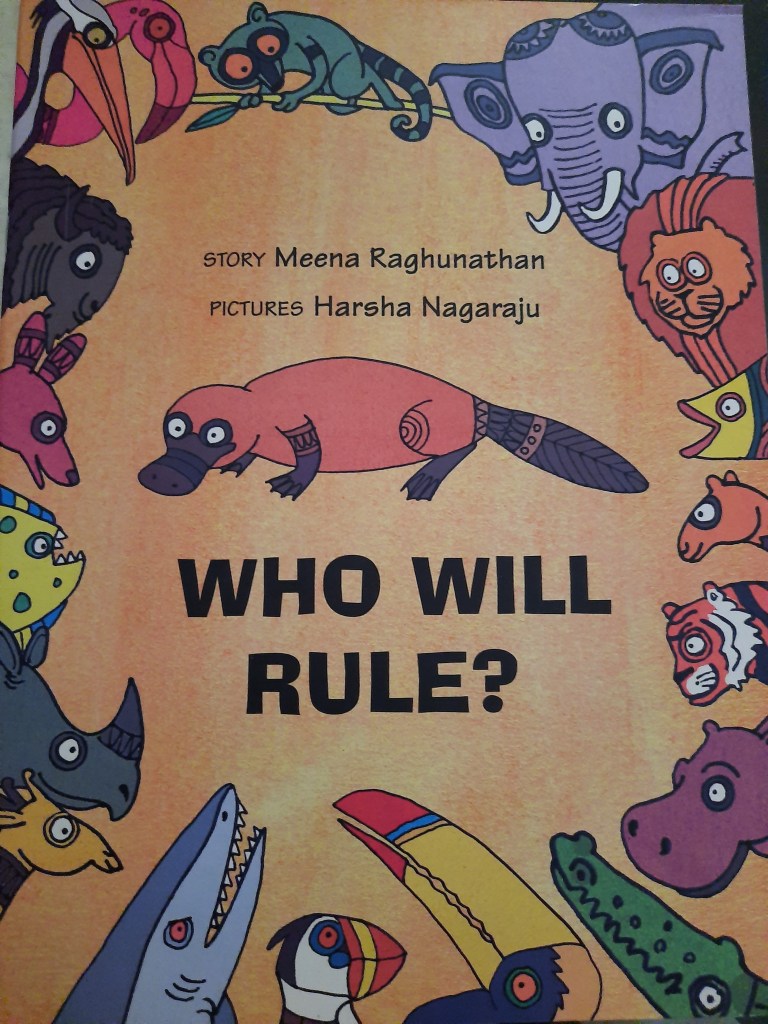
The platypus has inspired its share of lore, legend, stories and poetry. My visit to an aquarium in Australia was the only time I ever saw a platypus. And a story from Native Australian lore re-told there inspired me to write ‘Who Will Rule’, a children’s book brought out by Tulika and translated into many languages.

And to end, a classic platypus poem:

THE PLATYPUS

by: Oliver Herford (1863-1935)

A sad example sets for us: From him we learn how Indecision

Of character provokes Derision.

This vacillating Thing, you see,

Could not decide which he would be,

Fish, Flesh or Fowl, and chose all three.

The scientists were sorely vexed

To classify him; so perplexed

Their brains, that they, with Rage at bay,

Called him a horrid name one day,–

A name that baffles, frights and shocks us,

Ornithorhynchus Paradoxus.

–Meena

Fruit Salad

Last week someone gave us a fruit that was perfect in form and colour. We learnt that this was a persimmon.  I had read poems and descriptions of persimmons in Japanese literature, but had not seen nor tasted this ‘exotic’ fruit before.

This is one of the many exotic fruits that are now being seen and sold in India. Some children today are perhaps more familiar with the taste of fruits like kiwi and dragon fruit, than fruits like ber, custard apple, mango, guava, and the ubiquitous banana, that we grew up eating.

With a lot of the new fruits being introduced and cultivated in India, and several being imported from other countries, the lines between indigenous and exotic fruits are rapidly getting blurred. Along with this, and better storage systems, so is the concept of fruits that are associated with, and available in specific seasons.

Perhaps it is a good time to go back to the roots of the fruits, as I did, with the help of A Historical Dictionary of Indian Food. Here are some interesting facts.

In terms of food, fruit falls in the category of items called phala that refers to crops that are not cultivated using the plough, in contrast to food grains (cereals and pulses).

Fruits that are indigenous to India, or have been here since recorded history include ber, pomegranate, amla, sweet orange, lemon, lime, mango, sugarcane, jamun, and grapes; as well as coconut, banana and jackfruit. There is mention of these in texts as old as Vedic literature, and their use prescribed in ancient medical treatises.

Interestingly several of these have, today, gained international celebrity as Wonder Foods. Like the amla or gooseberry which is recognised as one of the richest natural sources of Vitamin C

Later arrivals were some forms of the apple, mulberry, peach, pear, plum and apricot. These were not originally of very high quality, but many of these were improved by grafting in Mughal times.

After 1500 AD there was a wave of immigrant fruits from South and Central America that included the papaya, sapota, guava, pineapple, custard apple, and avocado. But over time these began to be widely cultivated, and eventually became fruits of the native soil.

Ancient texts such as Sushruta Samhita, one of the most important surviving ancient treatises on medicine, prescribes fruits as the first item in a meal, beginning with a first round of fruits that could be chewed such as pomegranate, grape and ber; and a second round of fruit to be sucked, like sugarcane, dates, oranges and mangoes.

Fruit was traditionally preserved in India in the form of spicy pickles of mango, lime etc., or with the sweet sour flavouring of Gujarat.  With the Muslim Unani medical tradition came the murabba in which fruits were preserved in a thick sugar syrup, and flavoured with spices like ginger, cardamom, and cloves. The British took a liking to these “preserves” and started to export large quantities of these along with chutneys.

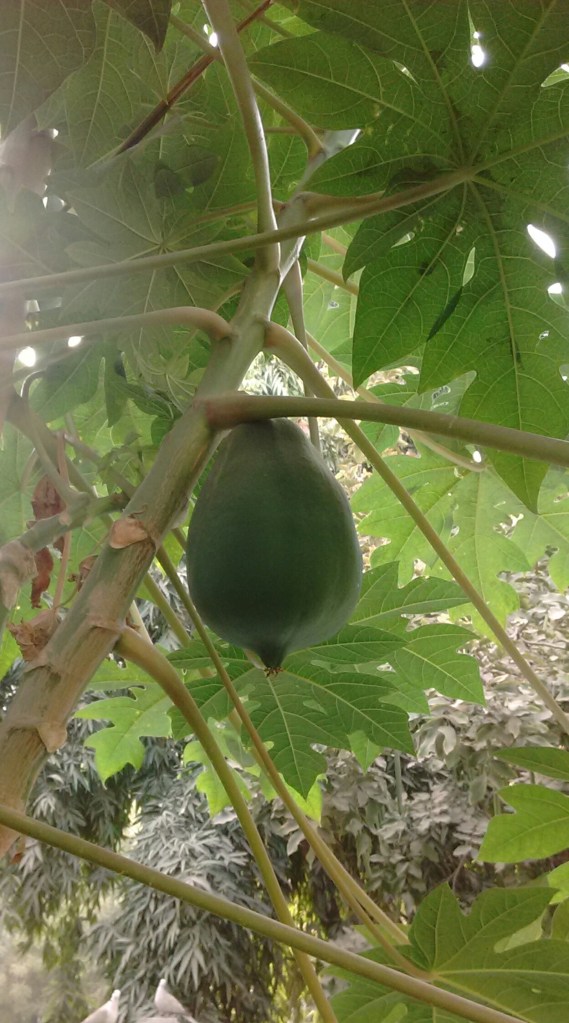
Sweet anticipation: Waiting for the papaya in the garden to ripen!

One of the major use of fruit was to ferment it to obtain alcoholic beverages. The Charaka Samhita, believed to be one of the oldest and the most important ancient authoritative writings on Ayurveda, has a long list of fruits used for this purpose which included sugarcane and its products like molasses and jaggery, grape, mango, wood apple, date, ber, banana, jackfruit and pomegranate.

While we certainly enjoy pickles and fruit wines in all seasons, it does feel a bit strange to be having a mango or watermelon in the winter. For me the anticipation of biting into the first mango in the searing heat of May, or seeing the first custard apples around the time of the Diwali festival, or picking the ripe purple jamuns that match the dark monsoon clouds is an integral part of the seasonal calendar. The pleasure of eating local and seasonal fruits is unmatched by the thrill of buying and trying exotic fruits like the dragon fruit and persimmon.

As we start 2021 which is the International Year of Fruits and Vegetables it is a good time to think about the fruits we eat, where they come from, how we buy them, and how we eat and enjoy them. After all the word fruit itself comes from the Latin fructus, whose root is frui, which means “to enjoy.”

–Mamata

The Artful Microbes

2020 has been a year dominated by a microbe. In our imaginations and our nightmares, microbes are demonic creatures which have brought the world to its knees, and are out to destroy us. The year has served to reinforce a general belief that bacteria and viruses are villainous creatures behind disease and death.

However, as all of us who have gone through middle-school biology know, on the balance, microbes as a class do more good than harm.  To recall, microbes are microscopic living organisms, too small to see with the naked eye, There are five main groups of microbes: bacteria, viruses, fungi, algae and protozoa. While some of them do cause disease, many microbes are beneficial, and many, many others do neither active harm nor good but are an intrinsic part of the ecosystem. Bacteria and fungi in the soil are essential for decomposing organic matter and recycling old plant material. Some soil microbes form relationships with plant roots and help provide the plant with important nutrients like nitrogen or phosphorus. In fact, we could not digest food without gut bacteria. They protect against infection and even maintain reproductive health. We would not have bread or yogurt without microbes. Scientists say that nearly fifty percent of the oxygen that is present in the atmosphere is produced by bacteria.

But listings are boring and a picture is worth a 1000 words! And that is what the work of the American Society for Microbiology does for microbes through its annual ASM Agar ArtContest. The results of the 2020 edition were just announced. And they help us appreciate microbes–not through a recital of benefits, but by creating art with them!

First Prize: “Strands of Antisense” by Riley Cutler, Mississippi State University Starkville.

This annual contest is for ‘art created in a petri dish using living, growing microorganisms. Creators use either naturally colorful microbes, like the red bacteria Serratia marcescens, or genetically modified microbes, like the yeast Saccharomyces cerevisiae transformed with violacein genes, as ‘paint’ and various types, shapes and sizes of agar as a ‘canvas.’

The contest has been gaining popularity and this year’s edition had close to 200 countries entries from 29 countries across the world. It vindicates Fleming (yes indeed, the discoverer of penicillin) who was probably the first agar artist but whose art form was not appreciated in his time. He would fill Petri dishes with agar (a medium used to grow microbes), and then use a lab instrument called a loop to introduce different types of bacteria on different parts of the agar. He created many ‘paintings’ by culturing microbes of different natural colours—brown, violet, pink, yellow, orange etc., in Petri dishes, planned in way to create colourful patterns. It is not that simple either. Because he had to find the right colour of bacteria and dexterously introduce it on the exact spot on the dish. Further, different bacteria grow as different speeds, and hence have to be introduced at different times, with the end result in mind. And the art is ephemeral, because soon one bacteria will grow into another’s space and blur things out.

Second Prize: “Microbial Peacock: Balaram Khamari. Sri Sathya Sai Institute of Higher Learning, Puttaparthi, India

Agar art thus is not just about creating beautiful things where they are least expected. But today, is also being recognized as a part of the art curriculum in some countries, and incorporated into biology curricula in some, since it has the potential to help students learn so much about microbes in such a hands-on way.

Thank you ASM, for showing us beauty where we least expect it, for helping us to put things in perspective, and for providing a platform for art to take wings! In 2021, may we too be able to do this in our everyday lives! May the year bring victory over the ‘bad’ microbes!

–Meena

Though these words did not make it to any listings, here are two words without which it is impossible to study microbes:

agar

agar (noun) · agar-agar (noun)a gelatinous substance obtained from certain red seaweeds and used in biological culture media and as a thickener in foods.

Petri dish

A Petri dish is a shallow transparent lidded dish that biologists use to hold growth medium in which cells can be cultured, originally, cells of bacteria, fungi and small mosses. The container is named after its inventor, German bacteriologist Julius Richard Petri. It is the most common type of culture plate. The Petri dish is one of the most common items in biology laboratories.

Pics from: https://asm.org/Events/ASM-Agar-Art-Contest/2020-Winners

Beach Lore

The good news that newspapers brought us yesterday was that eight Indian beaches had qualified for the Blue Flag tag—an achievement indeed! This Certification is awarded by Foundation for Environmental Education (FEE), an NGO, and is a respected one, with stringent requirements. There are 33 criteria spanning environmental, educational, access and safety related parameters. Beaches tagged as Blue Flag provide clean and hygienic bathing water, along with basic infrastructure for tourists.

It is not impossible to spruce up for an inspection and get a certification or award. The challenge is make the improvement sustainable, and an inclusive shared vision with all stakeholders. Let us hope these eight beaches are able to do this and stay on the list, even as more join them in the years to come.

At any rate, it provides an opportunity to revise some beachy information:

A beach is a narrow, gently sloping strip of land that lies along the edge of an ocean, lake, or river (yes, technically, even the land around a lake or along a river is a beach!).

Beaches are made of materials such as sand, pebbles, rocks, and seashell fragments. Over the decades and centuries, forces of nature—water, wind, erosion, weathering—act on the cliffs, rocks and landforms at the edge of the waters, and break them down.  As tides come in, they deposit sediment which may have sand, shells, seaweed, and even marine organisms like crabs or sea anemones. When they go out, they take some sediment back with them.

Beaches are constantly changing. Tides and weather can alter beaches every day, bringing new materials and taking away others. There are seasonal variations too. In the winter, storm winds throw sand into the air. This can sometimes erode beaches and create sandbars. In the summer, waves retrieve sand from sandbars and build the beach back up again. These seasonal changes cause beaches to be wider and have a gentle slope in the summer, and be narrower and steeper in the winter.

At 7500 kms, India has the world’s seventh-longest coastline, with nine states and two union territories having coasts.

Apart from aesthetics, beaches are habitats for many, many species. The Olive Ridley coming to nest in the Gahirmatha beach of Orissa is a phenomenon that naturalists come from around the world to witness. In all, about 2,50,000 to 3,00,000 turtles nest here every year, in the space of about two weeks. Thousands of female turtles arrive each night to lay eggs. They make nest holes, lay 100-300 eggs, smooth the nests over, sometimes covering them with vegetation, and go back. Fifty days later, the eggs hatch, and millions of little turtles, each the size of a brooch, make their way into the ocean to start their lives.  

Our coasts and beaches are also witness to a hoary past: The rockcut temples of Elephanta date back to the 6th century AD. The temples of Mahabalipuram are almost as old—going back to the 7th century. The Konarak temple dates back to the 13th century, at which point it stood directly on the sea, though today the sea has moved about 3 km away. Dwarka is believed to have been the Krishna’s capital, and is said to stand on the site of five earlier cities. Fort Aguada, Goa, built in the 17th century has a unique lighthouse. Rameshwaram has the largest temple in India.

And of course, on April 5, 1930, Gandhiji and 78 satyagrahis reached the beach at Dandi on the coast of Gujarat to make salt and history.

So let’s protect our beaches! Let’s Blue Flag them all!

–Meena