Woolly, Woolly

The recent weeks have seen a number of news items starting with ‘Woolly…’. That is not very normal—the phrase ‘woolly-thinking’ is too archaic to be used as a pejorative across the lines in Parliaments.

But this bandying about of the word is neither from debates nor about shearing of sheep and records set therein.

The references all come from the world of science.

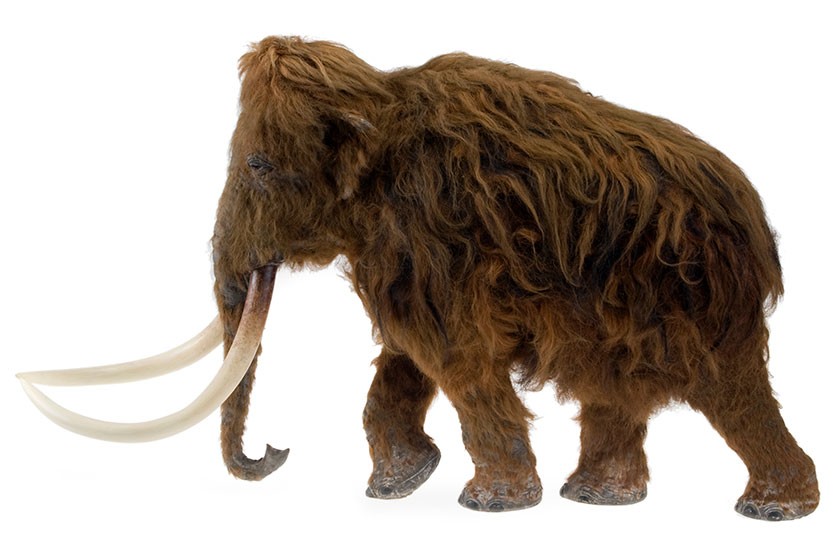
The first set of references stem from experiments of mixing mutations from the extinct mammoth and extant mice to create a woolly mouse! No, creating mice, woolly or otherwise, is not the purpose of the group of scientists which is working on this. The ultimate objective is to actually re-create the woolly mammoth itself. This is only a small intermediate step.

Now who would want to do such a thing, and why? Well, a company appropriately called Colossal Laboratories and Biosciences is behind this. Colossal refers to itself as a ‘de-extinction’ company. In a throwback to Jurassic Park, this company has retrieved the DNA of the 8-ton giant woolly mammoths which walked the earth over 4000 years ago from permafrost. They have mixed this with the genes of mice through complex gene-editing processes and have, after over three years of trials and experiments, created litters of normal sized mice which however have the ‘long, wavy, woolly hair of the mammoth’. They also have fat metabolism that mimics that of the giants. Colossal sees these mice as the first step in the route to actually re-create mammoths. They plan to work up to editing Asian elephant genes to express the traits of the woolly mammoth, and introduce the stem cells into an elephant embryo. The embryo would then be implanted into the womb of a female elephant, and lo and behold, a mammoth would be born to her!

For those who thought only a few years ago that this was the height of woolly thinking, well, maybe with the birth of the woolly mice, they are re-thinking!

Apart from the mind-boggling technical prowess required however, there are many debates about the ethical and environmental dimensions of ‘de-extinction’. (A TED Talk by Stewart Brand titled ‘The Dawn of De-extinction: Are you Ready?’ offers interesting insights).

The second set of woolly references is nothing so controversial. It is the recent discovery of a flowering plant whose flowers, rather meanly, have been called Woolly Devils. The plant or the flowers don’t seem to do any harm to anyone, but have been so dubbed because the flowers are hairy-looking, have florets which resemble devils’ horns, and the plant has been discovered in the desert in Chihuahua  (an ecoregion that covers areas of northern Mexico and the southwestern U.S., including west Texas, parts of New Mexico, and southern Arizona) along some paths in in an area known as the Devil’s Den. The plant belongs to variety known as “belly plants”—because scientists find it comfortable to study them while lying on their bellies! 

How unfair it is to name this newly-discovered plant (Ovicula biradiata) as Woolly Devils is borne out by the fact that scientists think they may produce chemicals of medicinal value.

Only time will tell where the quest for the woolly mammoth leads, and what benefits the woolly devil brings us.

In the meantime, we can pray for an end to woolly thinking.

–Meena

The Perfect Breakfast

Cooked rice soaked overnight in water, and the rice and water seasoned and enriched with various additions. This was the traditional breakfast in many rice-eating parts of India including all the Southern states, and in the East, including Odisha, West Bengal, Assam Jharkhand etc. Across the border, it is equally popular in Nepal and Myanmar and Bangladesh too. In fact, it was Kishwar Chowdhury, a contestant of Bangaldeshi origin who brought it to the world stage when she made a gourmet version on Masterchef Australia.

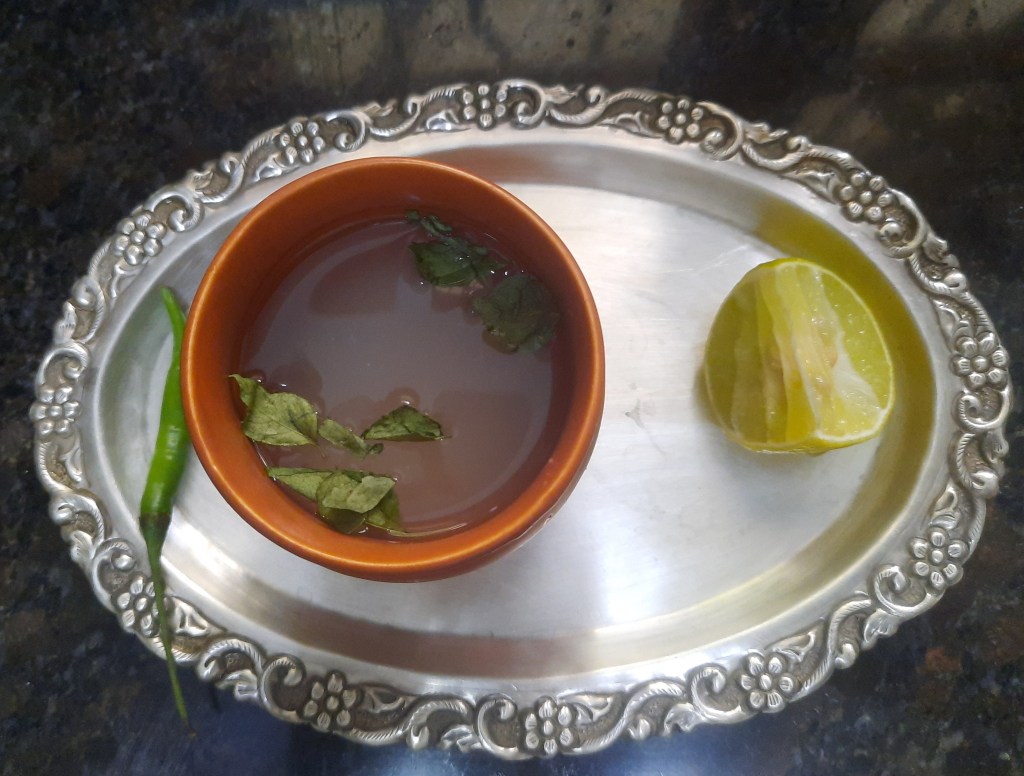
Two generations ago, even in cities, this was the standard morning fare. In Tamil Nadu, the rice was soaked overnight and the next day, mashed up, buttermilk was added, as also curry leaves, green chilies etc. My mother and her brothers had this almost every day before being sent off to school. It was healthy, nutritious, kept the stomach full for a long time. Also this ensured that rice was never wasted. And importantly, saved the mothers a load of work in the busy morning.  The nutritional value and taste of the soaked rice item is often enhanced by adding drumstick leaves, ginger, cumin, curd, lemon, a tadka, etc. There is even a sweet variant made by adding sugar or jaggery.

And this was the standard in homes across these states. Not just students but famers, workmen and others started the day with this.

Soaking cooked rice overnight leads to mild fermentation and promotes the growth of healthy bacteria. It lowers the glycemic index and increases mineral content. A paper in a respected scientific journal avers: ‘Soaked rice is rich in B6, B12 vitamins and is a source of beneficial bacteria which helps in digestion and boosts immunity. The given samples of normal cooked rice and overnight soaked cooked rice are tested for carbohydrate, crude protein, fat/oil and fiber content. The rice which was overnight soaked cooked rice was found to have more nutrient content than unsoaked cooked rice. There is an increase in energy, protein, fat, carbohydrate, fiber content and minerals. Eating fermented rice for breakfast was an old custom among the farmers. It has been proved that overnight soaked cooked rice acts as a healthy breakfast and would play an important role in the health of today’s young generation.’*

The benefits of soaked rice are now being recognized and celebrated. Odisha has taken this to heights by declaring a Day for this: Pakhala Dibasa was declared on 20 March 2011 and is marked every year by Odias everywhere. (Pakhala is Odia for soaked rice). It is appropriate that Odisha should take the lead in doing this, for the dish has a hoary history in this state. There is very early documentation of pakahla including a recipe of prasads at Lord Jagannath Temple of Puri dating back to the 10th century. There is also a mention in the Odia poems of Arjuna Das in his work Kåḷpålåtā composed during 1520-1530 CE.

And yes, in keeping with the tradition, this is another dish contested between Odisha and West Bengal!

Time to remind ourselves that health does not come from a box, nor all knowledge from the internet. Nutrition is right there in the humblest ingredients in our kitchens, and our grandmothers know a lot too!

So in honour of Pakhala Dibasa just gone by last week, and to mark Utkal Diwas (today, April 1), let us resolve to have a soaked rice breakfast at least once a week. This is especially good in the summer, as it has cooling properties.

Here is to happy, healthy breakfasts!

–Meena

*Neha Sharma M, Gayathri R, & Vishnu Priya V. (2018). Assessment of nutritional value of overnight soaked cooked rice over unsoaked cooked rice. International Journal of Research in Pharmaceutical Sciences9(3), 515–518. Retrieved from https://ijrps.com/home/article/view/4150

The Leaves Come Drifting Down

At the moment, leaves are the bane of my life.

They drift down in their tens through the day. The lawns, porch and verandahs are no sooner swept that they come drifting down to make a mess, yet again.

And Saturday, when Bangalore was hit with unexpected torrential rains, our house almost flooded because fallen leaves had covered the water outlets on our terrace and there was a good six inches accumulated before we realized it and cleared the outlets. A few more minutes and the water would have entered the house.

But in general of course, who doesn’t love leaves: the variety of the shades of green, their shapes and sizes, the shadows they cast, the way they rustle in the breeze or when birds and squirrels play among them.

There are some people who take this love and appreciation to aesthetic heights. They are the leaf-artists.

Some people of course consider the leaf itself as art.’ There is artistry to a leaf that I find hard to put into words. In looking at leaves, the colours and veining, the patterns and textures, I get a good feeling. Leaves are nature’s artistry on display’, says Hank Erdmann, a leaf-photographer.

Others use the leaf as the medium. These leaf-artists express themselves through various creative expressions using leaves. This spans leaf printing, leaf carving, leaf painting and leaf collage. All of these are based on highlighting the leaf’s natural colours, shapes and textures.

It is likely that leaf-art is as old as our cave-dwelling ancestors. One can easily imagine our grandnmother picking up a leaf and carving a design on it with a sharp stone. And from these projects must have emerged the use of leaves as a medium for writing on—palm leaves were used for writing since the 5th century BCE in India. The ephemeral nature of the medium however has not left much proof of art on leaves.

But two contemporary artists have taken leaf-art to a new level.

The first is the Colombo Ecuadorian photographer, Yinna Higuera. Her recent collection ‘Traces’ is a series of portraits of rural Ecuadorian women, made on banana, cocao, coffee and other leaves. The collectoin documents the lives of these women, and portrays their link with nature and its cycles. The exhibition has been shortlisted for a Sony World Photography award, 2025. This is based on the technique of ‘chlorophyll printing’. The images are printed leveraging the leaf’s photosensitivity, merging photography with nature. This is an alternative photographic process where photographic images are developed on natural leaves through the action of photosynthesis, and goes back to the 19th century.

Another artist making waves (or gentle breezes) with his leaf art is Lito, a Japanese artist. He uses a completely different technique. He carefully selects a leaf, makes an intricate drawing on it, and painstaking carves it. The scenes often depict animals, birds and landscapes. Lito makes one leaf-carving every day! For him, this is not just a means of artistic expression, but also a way of managing his ADHD. It helps him focus, be calm–he sees it as a form of meditation. And importantly for him, leaf-carving is a means of earning a livelihood.

So I am going to re-calibrate. And appreciate each leaf as it drifts down to land on my verandah. Before muttering irritably at it!

And to end, here is a poem on leaves by Sarojini Naidu, whom Mamata wrote about a few weeks ago:

Like a joy on the heart of a sorrow,
   The sunset hangs on a cloud;
A golden storm of glittering sheaves,
Of fair and frail and fluttering leaves,
   The wild wind blows in a cloud.

Hark to a voice that is calling
   To my heart in the voice of the wind:
My heart is weary and sad and alone,
For its dreams like the fluttering leaves have gone,
   And why should I stay behind?

–Meena

PS: Today there are even Leaf Engraving Machines, ‘specialized for intricate leaf designs, perfect for crafting unique art pieces!’

The picture is from Lito’s Instagram page, art_dailydose

Ants and their Homes

For every one of us, there are about 2.5 million of them. Yes, that’s how much ants out-number us. They inhabit every corner of the world other than Antarctica, Greenland, Iceland, and some islands.

We humans swing between appreciation of these insects for their qualities of team work and hard work, and irritation when they invade our homes or kitchens. The ants probably swing between the same two emotions—appreciation of the humans who feed them, and disapproval of clumsy or mean humans who step on them or kill them.

Beyond human approval or disapproval, ants have a huge role in the ecosystem. They serve as seed dispersers for plants, hosts for a wide range of associate organisms, and act as both predator and prey. The role of ants in nutrient decomposition and soil turnover is enormous–they are estimated to excavate up to 13 tons of soil per hectare annually and increase local nutrient availability by a significant order.  Moreover, they create and maintain of microhabitats for a variety of other organisms.

The subject of today’s piece is their homes. They make their homes in a variety of places, and these structures are made with an enormous amount of labour by thousands of the creatures working together.

Most species of ants are soil-nesters. Soil meets their needs for food, moisture and protection. Since these ants move a lot of soil in the process of building their nests, they provide a valuable service to the soil-based ecosystem they occupy by their tunnelling and de-compacting of the soil. Some soil nesting ants construct a simple nest with one vertical tunnel, which has branches on either side for ant food, eggs and larvae. But other ground nesting ants build elaborate below-ground galleries going several metres below ground, with a network of interlocking interconnecting tunnels.

Wood-nesting ants are the next category. Carpenter ants are the best examples of these. They nest in wood that is rotting, dead, dying, or with a high moisture content. The ants bore into the wood and make elaborate nests. They do not eat the wood but deposit the wood they bore outside the nest. While they usually build outdoors in trees, it is not unknown for them to build in wooden structural elements in our houses.

There is category of ants which are called opportunistic nesters. These will nest almost anywhere, including under rocks, concrete slabs, air conditioners, inside holes in walls etc.

Ant nest

A fourth category, which are most visible to us at the moment are arboreal ants which construct nests on trees using leaves. These light red ants Oecophylla smaragdina, popularly known as weaver ants, stitch together individual leaves using larval silk to form nesting cavities.  The nests are round-oval and use leaves of different sizes ranging from 8-32cm. About twenty leaves are used to make each nest. These ants are aggressive in defending their territories, and a colony may take over an entire tree with nests distributed throughout.   Incidentally, these ants, called “Rukkung” in Arunachal Pradesh, are consumed in various forms in some of the North-eastern states.. 

I see these every evening on my walks—the falling leaves in this season leave the trees bare, which make the nests very visible. And marvel at the intricacy of the nests and the hard work that goes into each of them. What wonders there are around us, if only we take a minute to look!

–Meena

Broken Frames, Broken Lives

Today, each one of us harbours doubts and fears about the rapid rise of Generative Artificial Intelligence (Gen AI), smart robots, driverless cars etc., especially whether these will take away jobs from people and give them to machines.

This has happened with every new technology since the industrial revolution. Maybe the time of maximum anxiety around technology and jobs was in the late 1700s to early 1800s, a time when quite a few people in the UK depended on the cotton, wool and silk industries for their livelihoods. This was based on the labour of framework knitters, who like some of our weavers even today, worked in their own homes. Though the hours were long and they got small wages, they were at an equilibrium. 

In the early 1800s, there were around 30,000 knitting-frames in England. But change had already started to set in. Change of fashion (men moving from stockings to trousers) and increasing exploitation of weavers by the middlemen were two major factors. But perhaps the most important was the mechanization and wide-frame machines that were coming in to make production faster. Production moved from homes to factories with this mechanization.

As more and more people lost their livelihoods, anger and frustration boiled over, and mill-owners and the new machines were targeted. The scale of the sabotage that occurred in England between 1811 and 1816 was beyond anything seen before.  In the peak three months of the riots, 175 of these new frames were broken per month! The people involved in these riots and destruction called themselves ‘Luddites’. The origin of the name is not quite clear, but some said it was after Ned Ludd, a legendary weaver who in 1770 was supposed to have smashed such machines.

Governments then, as today, were heavy-handed. Their response to the riots was to pass the Frame-Breaking Bill in the House of Commons in February 1812. The Bill was drastic– it proposed transportation or the death penalty for those found guilty of breaking stocking or lace frames. Not everyone was happy with the draft Bill– in the House of Lords, the poet and social campaigner Lord Byron argued against it saying that it was placing the value of life at “something less than the price of a stocking-frame”.  But such passionate appeals did not help, and the Bill was passed.

The Government would have expected all such riots to stop after the Bill. But exactly the opposite happened. The riots actually became more violent and rioters started using arms. The logic was that if they were going to be punished by death or deporatation for breaking frames, then they might as well do something that really deserved such drastic measures. A popular rhyme at the time was “you might as well be hung for death as breaking a machine”. A few mill owners were in fact killed. Government response also got harsher and several Luddites were hanged.

The climax of the Luddite Rebellion took place at midnight on Friday 28 June 1816. Sixteen men raided the factory of Heathcoat and Lacy at Loughborough, with around 1000 sympathisers cheering them on.  They destroyed nearly all of the fifty-five lace-frames.  Subsequently eight men were sentenced to death and two were transported.

The protests died down after that. Mechanization marched on, and the thousands who were involved in their traditional occupation lost out.

Technology will come. But how do we make the changes so we can reduce the negative impacts? How do we make the world a more inclusive place? Surely we cannot let history repeat itself!

–Meena

Photo-credit: historicalbritain.org/

Famous Women on the Wall: Happy Women’s Day

This week we celebrate International Women’s Day.

It was in 1911 that IWD started being marked. A couple of decades after that was when something called the ‘Famous Women Dinner Set’ was commissioned. This was a set of 50 dinner plates depicting famous women down history.

Kenneth Clark (Baron Clark), the art-historian and museum director, commissioned these. (Those of an older vintage may remember the BBC serial ‘Civilization’ which discussed Western art, architecture and philopsophy. Though made in 1969, it was broadcast in India in the late ‘70s or early ‘80s, and was one of the most popular art-history programmes in the world.)

Coming back to the dinner-plates, the artists given the commission were Vanessa Bell and Duncan Grant, of the famous Bloomsbury Group. This was the name given to a group of English writers, philosophers and artists who met between 1907 and 1930 in the Bloomsbury  district of London, the area around the British Museum , and discussed matters of art and philosophy.

It is said that Kenneth Clark got the idea of commissioning a special dinner service when he was dining off a historic blue-and-gold Sèvres service, originally made for Catherine the Great.

Kenneth and his wife did not interfere in any aspect of the creative work—what form or shape it would take, what pieces it would consist of, or even what it should portray.

In 1933 the work was completed, and after showing it to the Baroness, the artists presented the set of 50 plates to Kenneth Clark, who was probably quite surprised to see the result if his commission, because he thought he would be getting’…a wide ranging set of decorative crockery that included everything from soup tureens to mustard pots’

Picture from https://www.charleston.org.uk/event/famous-women-dinner-service

Vanessa and Duncan had selected 50 famous women down history—twelve each from four categories: Women of Letters (e.g George Eliot, Charlotte Brontë, 10th-century Japanese poet Murasaki. Virginia Woolf and Elizabeth Barrett Browning); Queens (including Catherine the Great, the Queen of Sheba, Elizabeth I, and Victoria); Beauties (among whom were Pocahontas and Helen of Troy); , and Dancers and Actresses (including Sarah Bernhardt, Ellen Terry and Greta Garbo). That made 48 women. The last two plates portrayed the artists Vanessa Bell and Duncan Grant. The artists had hand painted beautiful portraits of their subjects on Wedgewood plates.

Though he was initially a bit confused with the dinner service, it seems that Baron Clark quite grew to like his plates. It is said that he used to select specific plates from the service for use for particular guests, depending on their interests, or to poke fun at their sensitivities.

The dinner set, after being sold and re-sold disappeared from view for some decades, but later re-surfaced. They are now housed in the Charleston Museum in the UK—the original home of Vanessa Bell.

Another major work of art involving women and dinner is ‘The Dinner Party’, a 1979 installation by Judy Chicago. This is a dinner table arranged with place settings for 39 mythical and historical women. They are seated around a triangular table. Though controversial, this is considered a classic of feminist art.

In India we do have portraits (paintings and photographs) of women. But they are outnumbered by artistic works down the ages which put females at the centre—the oldest probably being the Harappan Girl, going back to 1750 BC or thereabouts. From there, to all the art in temples, to Raja Ravi Verma and his goddesses and mythical women, to the controversial portrayals of MF Hussain, to women painted by Amrita Shergill, Anjolie Ela Menon, Arpana Caur, Bharathi Kher and others, which are all classics today.

May many more artists immortalize real women in their art. It is an apt tribute.

Happy Women’s Day!

–Meena

And thanks to all our readers on this, the anniversary of our blog! And all those whose encouragement and support keeps it going!

Spineless!

Fountain of Bees, Rome

They make up over 90 per cent of life on earth.

There are about 1.3 million species of them.

They are found in every part of the world.

They range from one-fifth the thickness of a strand of your hair, to the 30 ft long giant squid.

These are the invertebrates—animals without a backbone. Why backbones, in fact, invertebrates don’t any bones at all! Invertebrates include ants, spiders, worms, snails, bees, butterflies, corals, lobsters, crabs…they are the spineless majority!

As the famous biologist EO Wilson put it, ‘Invertebrates don’t need us, we need invertebrates’.  Critically, they pollinate flowers, hence allowing plants to propagate so that there is food for all. They are at the base of all food-chains.  Humans also eat invertebrates—think crabs, lobsters etc. They maintain the ecological balance by eating each other and being eaten! Earthworms and some related creatures help dig up and aerate the soil, and make it fertile. They are important in another way too—most parasites are invertebrates!

All invertebrates are cold-blooded and about 80 per cent of them are terrestrial. Most of them undergo metamorphosis.

They fall into nine phyla, compared to vertebrates which all belong to one phylum.

In spite of their ubiquitous presence and the role they play in our lives, we don’t pay enough attention to these co-inhabitants of our world. For instance, while most countries have national animals or birds, few have national invertebrates. Exceptions include Denmark, which lists the Small Tortoiseshell as its national butterfly; Estonia which lists the Swallowtail; Finland which lists the Seven-spot Ladybird as its national insect and Latvia which has the Two-spot Ladybird for its. Several US states have State Insects, as does Karnataka (the honeybee). Many Indian states also have State Butterflies.

India is unique in that it has named a National Microbe—the Lactobacillus bulgaricus. This was done in 2012, based on a nation-wide completion. It was selected based on its importance in making yogurt or curd. Some US states also have State Microbes. The first state to declare an Official State Microbe was Oregon which chose brewer’s or baker’s yeast as the Official Microbe because of its importance to the craft beer industry there.

Designating such national and state symbols is important, given that we don’t focus enough on these creatures which make up about 95 per cent of all species on earth. Creating a buzz brings attention to them, hopefully leading to more studies and research, ensuring their well-being which is so critical to ours.

In order to increase awareness about invertebrates, last year the well-known British newspaper The Guardian started an ‘Invertebrate of the Year’ contest. This was confined to the UK. This year’s competition, the second of the series, has gone international. So any of us can send in a nomination for an invertebrate, along with reasons why we favour this particular one.

To give you an idea, last year’s winner was the earthworm, which was voted in with 38 per cent of the total votes. The least number of votes was garnered by the invasive Asian or yellow-legged hornet.

Surely you have an invertebrate you love or hate. This is your chance to put it on the world map. Submit your entries at https://www.theguardian.com/environment/2025/feb/12/nominate-your-invertebrate-species-of-the-year by midnight (GMT) on Tuesday 4 March.

–Meena

The Other Kumbh

The town of Kumbakonam in Tamilnadu has a hoary history. It is supposed to be the cradle of life of this yug, namely the Kali Yug. Each yug ends with a pralayam or flood which leads to the destruction of all living beings on the earth. When the last yug was about to end, Brahma put the seeds of all living organisms as well as the Vedas and Puranas, in a pot called the Amrita Kalasam or Kumbham (pot of nectar).

The pot was befittingly decorated with flowers, leaves, ausipicious cloth, sandalwood paste and a sacred thread. The Kumbham’s mouth was stopped with a coconut and it was placed on the top of mount Meru.

When the floods came, they destroyed all creatures on earth. The Kumbham prepared by Brahma was displaced, and floated on the flood waters for years and years. Finally, it settled at a spot considered to be present-day Kumbakonam.

But the seeds had to be released in order for life to start again on earth. Siva, in the guise of a hunter, discharged an arrow from His bow, breaking open the pot. The seeds of life and the Vedas and puranas in the pot were scattered around, and thus life on earth re-started.

And this spot is the site of the other great Kumbh festival. The place where the pot broke and the contents flowed out–Mahamaham kulam (tank) is where the Mahamaham festival is celebrated.  

While Masimaham is an annual event that occurs and thousands of people gather for a dip during this time, it takes on special significance once in twelve years. For it is believed that every 12 years, when Jupiter passes over Leo, the waters of all of India’s holiest rivers, including the Ganges, flow into the tank, and it is at this time that the Kumbh mela of South India is celebrated at the Mahamaham tank. Since it is believed that all the rivers of India meet at the tank on this day, a bath here is considered equal to the combined dips in all the holy rivers of India! Over 10 lakh people congregate here for the event.

Kumbakonam, meaning ‘pot’s corner’ to remind us of where the pot-of-life landed, is considered a very holy place. There are any number of ancient temples in and around the town—there is a temple wherever any shard of the pot landed. In all, there are around 188 temples within the municipal limits of Kumbakonam!

The region around Kumbakonam was inhabited as early as the Sangam Age (third century BC to third century AD), and it has played its role in the history of the region.

Down the passage of time, Kumbakonam has been a major learning center. During the British times, it was referred to as the “Cambridge of the South” with several institutions of repute, the most notable of them being the Government Arts College, considered one of the oldest colleges in Tamil Nadu. The town is home to many libraries and is considered the hub of modern Tamil writing.

Kumbakonam, relative to its size, is associated with more than its share of great achievers, including:

Srinivasa Ramanujam, the world-famous mathematician was born here and studied here. After a stint in Chennai, he went to Cambridge where he shook the world of mathematics with his uncanny understanding of numbers.

MS Swaminathan, the agricultural scientist who saved India from food-crisis and laid the foundation for food-security in our country.

Indira Parthasarathy, a Padma Shri awardee and reputed Tamil novelist whose works have been translated into many world languages.

Srinivasa Sastry, dubbed the Silver Tounged Orator of the British Empire by Winston Churchill, who played a prominent role in the Independence struggle and was an educator and administrator of repute.

2028 will see the next Mahamagam in Kumbakonam. Over 20 lakh people are expected to participate. But don’t wait till then to visit this town—it has so much to offer.

-Meena

Dedicated to Malathi Athai, whose house in Kumabakonam is the site of the most cherished memories of summer vacations.

Angostura Bitters to settle the Stomach

Queasy stomachs have plagued humanity since ancient times. Many have been the remedies, each with its own followers and detractors. For instanc, in India, ginger, omam (ajwain), jeera, curd are all popular.

Somewhere in ancient times, probably in Egypt, wine infused with herbs became a popular remedy for uneasy stomachs.  The popularity of such infusions, called bitters, was high till even a hundred years ago.

Bitters are ‘liquid aromatic alcohol-based infusions of bittering botanicals and flavoring agents’. They are extracts of seeds, herbs, roots, bark, leaves, flowers, and fruit liquid from various plants.  While they started out as medicines, soon another use was found for bitters.

Today, we have two types of bitters: Digestive bitters and Cocktail bitters. Digestive bitters aid in the digestion of food and are usually sipped straight, on the rocks, after a meal and are popular in Europe. Cocktail bitters are made from a tincture of water and alcohol, containing spices and plant-based components.  They are too strong to be had neat, and are added to cocktails to elevate the taste and add a dash of sophistication.

Of all the bitters, Angostura Bitters are probably the best known, and are a staple for every bartender and cocktail-mixer, and are used in classic cocktails like the Old Fashioned and Manhattan. More than that, they are in every kitchen cupboard in Trinidad and Tobago where they are made, as a home remedy for stomach problems. They are also an important ingredient in many local dishes.

Angostura is a tree native to South America, but strangely, the famous bitters are not made from the bark of this tree. Rather, they get their name from the town of Angostura in Venezuela, where they were invented. (The name of the town was changed subsequently, and it is now known as Ciduad Bolivar).

They were first concocted in 1824 as a medicine for the army of Simon Bolivar by a German army surgeon called Johann Siegert in the town of Angostura. He called it ‘Amargo Aromatico’. Dr. Siegert started exporting this to Europe, USA and the Caribbean. Apart from its use as a medicine, this product caught the fancy of bartenders at a time when cocktails were just becoming popular. Demand boomed.

The Siegert family migrated to Trinidad in the mid-19th century and started manufacturing the tincture in Port of Spain, the capital. And the company flourished.

Angostura Bitters were something one had vaguely read about. It definitely did not loom large in our lives. Till we visited family in Trinidad. Then we realized how big a thing it was!

A tour of the Bitters factory was of course on the essential itinerary. It was an overwhelming experience, especially to the nose! The pervasive smell of alcohol and herbs and tinctures almost made one dizzy.

All the processes of making the Bitters were on display. But the critical part is a secret—the mix and proportions of the herbs which go into making the product! It is apparently one of the world’s longest-held culinary mysteries, and no one has been able to replicate it exactly! Apparently only five people are privy to the secret.

Another part of the myth and legend of Angostura Bitters is the over-sized labels on the bottles. Apparently, in the late 1800s, Siegert’s sons decided to re-brand the product.   As a part of a competition, one brother designed the new bottle, while another designed the new label. But they did not discuss their designs with each till it was too late. So the labels that had been printed were too big for the bottles they made!  Though the Siegerts lost the competition, one savvy judge advised them to keep the design as it was. He said that this would help the packaging stand out among the competition. And that is exactly what has happened! The oversize labels area distinctive feature even today.

I remembered my bottle of Angostura Bitters from our trip to Port of Spain trip when I recently had a stomach upset. Whether thanks to this or some of the other home remedies I tried, I was better soon!

–Meena


Guillain–Barré: Real to Reality and Back

Watchers of ‘House MD’, the popular American medical serial would, unlike the general public, be very familiar with the term ‘Guillain–Barré syndrome’. GBS is a rare neurological autoimmune disorder in which a person’s immune system mistakenly attacks part of their own peripheral nervous system—the network of nerves which carry signals from the brain and spinal cord to the rest of the body. This can result in muscle weakness, loss of sensation in the legs and/or arms, and problems swallowing or breathing. Symptoms typically last a few weeks, with most individuals recovering without long-term, severe neurological complications.

The cause of GBS is not fully understood, but most cases follow after a viral or bacterial infection. Infection with the bacteria Campylobacter jejuni, which causes gastroenteritis (including symptoms of nausea, vomiting and diarrhoea), is one of the most common risk factors for GBS. People could also develop GBS after having the flu or other viral infections including cytomegalovirus, Epstein-Barr virus, and the Zika virus.

GBS is rare, affecting about 1 in 78,000 people across the world each year. But in the last few weeks, over 150 cases have been detected in India, especially in and around Pune and Maharashtra. Of concern is that a case has been detected as far away as Assam. A few deaths have also resulted.

Authorities are fully alert and taking action—both to ensure detection and treatment, but also importantly, prevention. Pune Municipal Corporation is promoting public health interventions – food and hand hygiene, and safe water — for disease management.

But getting back to ‘House MD’, so influential was the serial, that there is actually an academic paper titled ‘The usefulness of TV medical dramas for teaching clinical pharmacology: A content analysis of House M.D’, in a respected medical journal ‘Educacion Medica’!

Of course such serials often have patients misdiagnosing themselves with all kinds of exotic diseases, and generally being a pain in the neck for doctors, and a waste of resources. But in the case of one patient, Alexandria Ostrem, it was a tale stranger than fiction. Way back in 2008, when Alexandria was a teenager and an avid watcher of House. she suddenly developed trouble walking. Remembering the symptoms of GBS from all her TV-viewing, she rushed to the emergency room and insisted that the doctors test her for the syndrome. However, the results came back negative.

Her symptoms continued to worsen, and she was tested several times for GBS. But nothing positive showed up. There came a stage when she was paralyzed nearly everywhere except for some use of her arms. At this point, doctors told her they agreed with her self-diagnosis, and started treating her for GBS. She responded and got well!

In the serial House MD, the doctor and his team are super-specialists in rare diseases, and when diagnosing, they tend to think in terms of unusual and exotic diseases. Such diagnosticians are called ‘zebra hunters’, a term for someone who foolishly chooses to seek out the rarest of diseases. In the normal course of things, doctors are trained to do the opposite– summed up by the adage, “If you hear hoof-beats, think horses, not zebras.”

We are fortunate that the doctors in our health system listened to the hoof-beats carefully, and identified the zebras! Thank you all healthcare givers for all that you do for us.

Leonhard, S.E., Mandarakas, M.R., Gondim, F.A.A. et al. Diagnosis and management of Guillain–Barré syndrome in ten steps. Nat Rev Neurol 15, 671–683 (2019). https://doi.org/10.1038/s41582-019-0250-9

And here is praying that all those who have contracted GBS may recover quickly.

–Meena

The author is a laymen. All information is quoted from sources perceived to be authentic, and should not be a basis for action.

http://www.my.clevelandclinic.org/health/diseases/

http://www.who.int/news-room/fact-sheets/detail/guillain-barr%C3%A9-syndrome