Carravaggio Crosses the Seas

When we hear the name ‘Michealangelo’, we think of the Sistine Chapel. But there was another one of the same name, Michelangelo Merisi da Caravaggio (known as Caravaggio) born a few years after the original’s death, who played own his part in significantly re-defining art.

Born in Milan, his father was an architect. The family left the city in 1576 to escape a plague and moved to Caravaggio. In 1584 our Caravaggio was apprenticed for four years Simone Peterzano, a painter. He became familiar with the works of Leonardo da Vinci, Michelangelo, Titian, Raphael, and other Renaissance masters during this time.

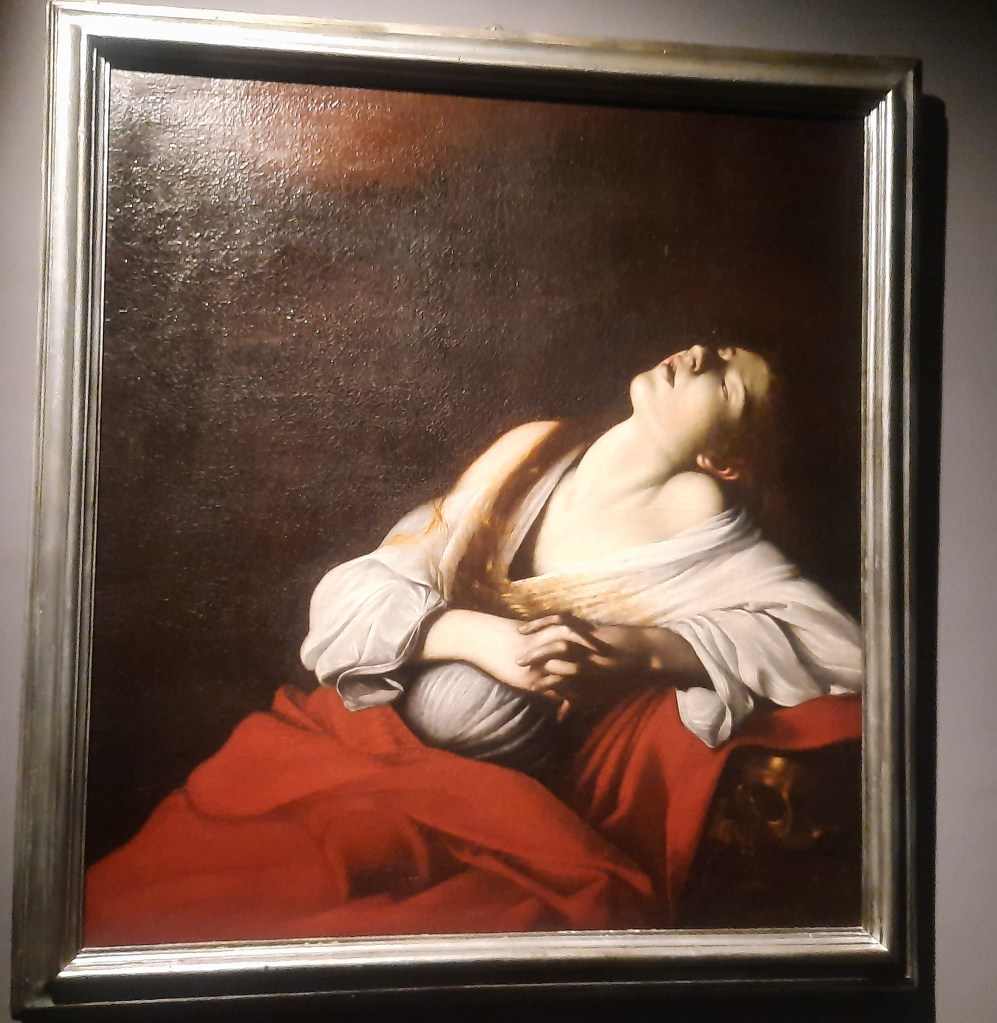
He moved to Rome, and set up in due course as an artist in his own right. Caravaggio’s work is known for its chiaroscuro (from Italian chiaro, “light,” and scuro, “dark”) technique—basically the use of light and shadow to define three-dimensional objects. Caravaggio and his followers used a harsh, dramatic light to isolate their figures and heighten emotional tension. Caravaggio’s use of realism and chiaroscuro helped to create a new style of painting that came to be known as Baroque, which shaped European art in the centuries to come.

One of his masterpieces has come to India. This is ‘Mary Magdalene in Ecstasy’, which was painted around 1606, and exemplifies his use of chiaroscuro. This painting was lost for centuries, re-surfacing only in 2014. It was authenticated as an original masterpiece by a team of leading art historians and is generally accepted as such today.

The painting travelled to India a few months ago, and was first exhibited in Delhi under the aegis of The Kiran Nadar Museum of Art, in partnership with The Cultural Centre of the Italian Embassy. Now it has come to Bangalore, and is exhibited at the National Gallery of Modern Art.

Three armed policemen are at the entrance to guard this $50 million work.The NGMA has also done its best to make it an enriching experience, with detailed panels about the artist and the painting, as well as a Virtual Reality experience.

Admittedly, It is a slightly strange feeling to go into a large, empty, almost-dark hall with only the one painting on the wall, with just one light focussed on it. A very different experience from seeing tens of paintings displayed in a room, with visitors filing from one to the other, and sometimes sitting on the benches provided to contemplate on something that catches their attention (or just to rest tired feet).

But all the care being taken with the work certainly proves India’s seriousness to protect and display of priceless art that comes to visit us.

It is not as if international masterpieces have not come to India before. Picasso’s works have been exhibited in India–the first exhibition of his works in South Asia was held at the National Museum in Delhi in December 2001 and featured 122 works. 

There are reports of original Botticelli paintings being exhibited in India too. For example, there are some reports that “Madonna of the Pomegranate” was displayed at an exhibition in Thiruvananthapuram. 

While no originals were physically displayed, there was an online exhibition of Raphael’s drawings by the India International Centre (IIC) IIC to commemorate the 500th death anniversary of the artist. 

Immersive, virtual experiences around Van Gogh’s work as well as da Vinci’s work have come to India in recent years.

Looks like India is now on the art-map, and we will be getting to see more such international masterpieces in the near future.

In the meantime, we can of course take in all the amazing art, craft, sculpture and architecture our own country offers!

–Meena

Casting a Spell

The Indian-American domination of a peculiarly American phenomenon—the Spell Bee—is something that intrigues me no end. Not to say Indian-Americans don’t excel in many pursuits out there, but these kids winning the national level spelling competitions year after year after year after year is quite something.

The American tradition of spelling competitions may have started with the Puritans. By the mid-18th century, spelling competitions were common across the country. In 1750, Benjamin Franklin apparently recommended their use in a proposal for a school. Spelling challenges were quite the rage with both adults and children in the 19th century. Mark Twain apparently mentions ‘spelling fights’ in Adventures of Tom Sawyer!

The use of the term ‘bee’ for these competitions started in the mid 1870s. It is an unusual usage of the word, as ‘bee’ usually refers to a community activity with a shared goal—like quilting bees or knitting bees.

English, with words from various sources and a variety of languages, probably peculiarly lends itself to this pastime. Afterall, I don’t think there can be much confusion how 99% of words are spelt in Tamil or Kannada or Oriya– languages with phonetic writing systems do not have so much confusion in spelling. Moreover, because English has borrowed words from many languages through its history, the result is a diverse vocabulary with inconsistent spelling patterns which are carried over from the mother-languages.

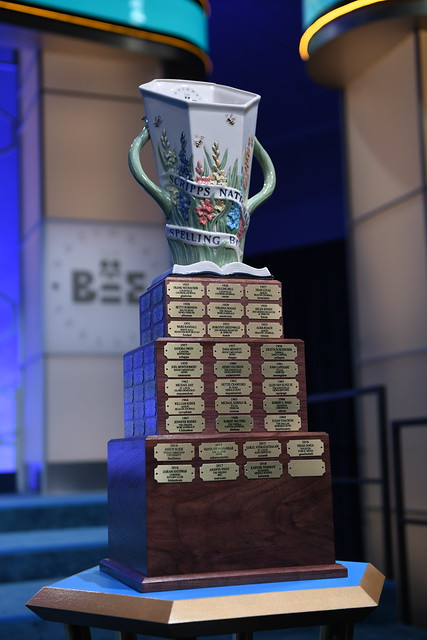
In the US, the National Spelling Bee, as we know it today, was established in 1925. The Louisville Courier-Journal was the first sponsor, who saw it as a way to foster interest in spelling and language. 

The E.W. Scripps Company acquired the rights to the National Spelling Bee in 1941. This company was started by E.W. Scripps who founded The Penny Press, a daily newspaper in Cleveland. Today, the company is involved in investigative documentaries and enterprise journalism with the purpose to ‘…advancing understanding of the world around us.’

The Spell Bee has been held annually, in late May or early June since its inception, except for a few years during World War II and in 2020 due to COVID-19.  It has evolved over time, beyond just spelling, encompassing vocabulary development and broader language knowledge. 

The first winner of the Spell Bee, in 1925, was Frank Neuhauser of Louisville, whose winning word was “gladiolus”. The next year saw a girl winning for the first time– Pauline Bell, also of Louisville, who spelt the word “cerise”. (Incidentally, girls won nine consecutive competitions from 1932 to 1940.)

Now coming to winners of Indian origin. 30 of the last 36 competitions have been won by them. Which is surely not a chance thing. Before 1999, there were only two spelling bee winners of Indian-American descent—Balu Natarajan in 1985, with the word “milieu”, and Rageshree Ramachandran in 1989 with “elegiacal”.  Nupur Lala opened the floodgates in 1999 winning with “logorrhoea,” and there has been no looking back since then! This year of course we celebrate Faizan Zaki, a 13-year-old Indian-American student from Texas, who won with the word ‘éclaircissement”

Rebecca Sealfon who won in 1997 against Prem Murthy Trivedi, has done some analysis on the subject of Spell Bee competitors, and tells us that children practice for about 500 hours in the years in which they compete; some hire ex-competitors as coaches; and they typically and unsurprisingly relax by playing word games like Scrabble or Boogle. Some try to learn every word in the dictionary. She further tells us that double ‘ll’ words are the ones which have tripped up a large number of contestants, along with the words ‘metastasize’ and ‘metonymy’.

Since I don’t know many of these words, and would certainly not be able to spell them, I can only express my wonder at these sub-14 year olds who can.

Kudos to all of you! You have cast a spell on me!

–Meena

Pic: https:spellingbee.comblogscripps-cups

Libraries Take Wing

How often we randomly pick up a feather as we walk along. And wonder which bird it could belong to.

A feather library is where we can turn to for help in such a situation. These are digital or physical collections of bird feathers, used for research and education. They are an invaluable resource for understanding bird species, identifying feathers, and gathering data on bird health and natural history. These libraries are important tools for the study and conservation of bird species, offering insights into bird morphology and helping in the identification of feathers found in the wild.

There are not too many across the world. Some of the established ones include:

1. The Feather Atlas created by the U.S. Fish and Wildlife Service is a comprehensive image database of North American birds and covers about 438 species. It can be browsed by bird order, family, or species. It has an open identification tool in which one can fill in details about feather patterns, colors, size, and position, which can help you identify the bird your feather belongs to.

2.Featherbase (Germany) has been created by a working group of German feather-scientists and other collectors worldwide who have come together and contributed their personal collections. It holds close to 8000 specimens from over 1,000 bird species, with a focus on European and African birds. The collection includes high-resolution images and detailed anatomical information, and has supporeted studies in forensics, conservation, and biodiversity monitoring. It is rigorously classified and offers options of various languages so that birders from across the world can use it.

3. Found Feathers (iNaturalist Project) is a citizen science initiative where users contribute observations of feathers they find. The project encourages the collection of feather length and placement data, enhancing the database’s utility for researchers and birders. There are over 2,00,000 observations from across the world.

Special among these is India’s Feather Library. This pioneering initiative is the first of its kind in India and the world, dedicated to documenting, identifying, and studying the flight feathers of Indian birds. It is the passion project of architect Esha Munshi, a dedicated bird watcher who has seen over 1500 bird species across the world, and veterinarian Sherwin Everett who works in a bird hospital in Ahmedabad. They have created the library with the aim of having all feather-related data under one roof, fostering collaboration and advancing the collective understanding of Indian birds. In the short span of time since inception on Nov 15, 2021, 135 species have been documented.

The process is rigorous. They collect feather specimens from dead birds at rescue centres to establish a primary database of bird species. They then make detailed notes on the flight feathers, taking into account the number of Primaries, Secondaries, Tertials (Wing Feathers), and Rectrices (Tail Feathers), along with basic details such as overall length, bill length and width, leg lengths, etc. Then they stretch out one wing and fan the tail in both dorsal and ventral views to document the exact number of feathers, unique characteristics, colour, pattern, and size etc. The physical collection is housed at the National Centre for Biological Sciences (NCBS) in Bangalore.

The database is open to all and provides easy access.

Kudos to the dedication and passion of people like Esha and Sherwin who through their efforts help support avian research, conservation efforts, and educational outreach. And make a better world.

Happy Environment Day!

–Meena

Singing Telegrams, Speeding Birds

Humans have poured in innovation and ingenuity into developing communication modes and media. Today of course the world revolves around ‘social media’ but some of the older modes are quirky and beautiful. Here is a look at two of them:

Singing Telegrams: Popular in the 1930s in the US, these were telegrams sung out to the recipient. It began in 1933 when a fan sent a birthday greeting to Rudy Vallee, a popular singing star of the times. George Oslin, the Public Relations Officer of Western Union–the company which handled telegrams–was a man who thought differently. He had long been concerned with the ‘gloom and doom’ image of telegrams, which usually arrived to announce a disaster (those old enough will recall churning stomachs when a telegram arrived—usually to announce a seriously ill relative or the demise of a loved one). He took the occasion of this birthday greeting to add a fun element to telegrams and try to change their image. So he got a lady-operator to sing the telegram out on the telephone. And so a new medium of communication was born!

But those were days when few homes even in the US had telephones. So the postal department used to actually sent someone to ring the bell of the addressee and sing out the words! Of course, this was not something that went ‘viral’ but people did use if for a lark. It continued on till 1974 when the company suspended this service. Now, in the US and even in India it seems, there are some private companies which will perform this service. They come dressed in fancy clothes to fit the occasion, and put up a full-fleged performance at the doorstep of the addresee.

Speeding Birds: Pigeons as carriers of messages have been the mainstay of armies, spies, princesses imprisoned in towers and everyone else that the romantic imagination can conjure up. But the interesting thing is that the Odisha Police had a functional pigeon messenger system till as recently as 2008!  They were used in times of disasters or during military or police action when all other means of communication like wireless, telegraph, telephone and despatch riders were disrupted or failed. The pigeons were also used for inter police station communications. Flying at a speed of about 55 kmph, carrying messages written on light-weight onion paper which were inserted into a metal capsule and tied to the bird’s leg, this mode of communication was considered no-fail. These Belgian Homer pigeons were highly trained, and considered very intelligent by their handlers!

There is a very interesting story about Orissa Police Pigeon messengers. Apparently, in 1948, when Pandit Nehru, the then-PM visited the state soon after Independence, he first went to Sambalpur. The same day, he was to address a public meeting in Cuttack, which is about 260 km away. He wanted to send an urgent message to the police in Cuttack to ensure that the arrangements were such that they did not create too much of a barrier between the public and the dais. When he asked how the message would reach Cuttack in time, the police officials there showed him the carrier-pigeon which would be doing the needful. Nehru was sceptical. But the pigeon departed Sambalpur at 6 am and was in Cuttack by 11.20 am. And when the PM reached, his instructions had been carried out! He was amazed.

Even today, though not in regular use, Orissa Police still maintains a carrier pigeon service of about 150 birds, utilizing them for communication during disasters and for ceremonial purposes.

–Meena

Visual from: https://odishapolice.gov.in/sites/default/files/PDF/PO-213_0.pdf

MOOMINS

Way back in the ‘60s and ‘70s growing up in Delhi, the family newspaper was The Statesman. It was considered by Tamilian families to be the closest substitute for The Hindu, which in those days used to arrive in Delhi with a delay of a day or two.

So like all good Tamilian families outside Tamil Nadu, we too took The Statesman. And through this, got introduced to the Moomins, which was the only cartoon strip that the paper carried.

The central characters of the cartoons, which have just turned 80, are gentle-looking hippo-like creatures called the Moomins . They are white and roundish, with large snouts. The Moomin world and its characters are the creations of the Swedish-Finn illustrator and writer Tove Jansson, and the books and comic strips were originally published in Swedish in Finland.

The core family consists of the main protagonist, Moomintroll, a small and well-meaning Moomin who who is forever having adventures and often finds himself in trouble; his mother, the nurturing and loving Moominmamma; and his father, the restless Momminpappa. And besides, there are many of their friends.

The first book was written during World War II as a fairytale for Tove to comfort herself during dark times.  It is based on the situation and stories of  millions of displaced people seeking refuge. The Moomins live in a tall blue house – a joyful place where everyone is welcome, whoever they are. The motto is ‘The door is always open’. The blue-purple Moominhouse is thus a symbol of security, shelter and a sense of belonging. No wonder then that even today the Moomins represent hope for refugees, so much so that UK cities are using this as an the inspiration for a series of art installations in UK cities, in collaboration with Refugee Week. 

The Moomin stories are tales of adventure and overcoming adversities, always with a sense of inclusion and tolerance, and living together in cheer and happiness. Harmony with nature is a recurring underlying theme. The underlying message of all the Moomin stories is that it’s the simple things that are valuable in any situation, and that one’s attitude can often change a bad day into a good one.

Many in India may not be very familiar with these characters, but there are nine Moomin novels which were all successful. The cartoon strip was syndicated in 1954, to over 120 publications in 40 countries. This comic strip reached 20 million readers daily. There was a TV show too, which was originally broadcast in Poland and then sold to other countries including the UK, and aired on PBS in the US. There are even two Moomin theme parks, one in Finland and the other in Japan. Moomin stories have been adapted for the theatre, the cinema, and as an opera.

Here are some Moomin quotes, encapsulating good sense and postivity:

‘That’s most extraordinary, but I’m so used to your doing extraordinary things that nothing surprises me.’

‘Perhaps it will come – perhaps not. It’s all the same to a person who knows that everything is unnecessary.’

‘How nice to be on your own for a bit and do what you like.’

‘I like you, I don’t want to make you feel unhappy.’

‘The main thing in life is to know your own mind.’

In a conflicted world, Moomins may be the cartoon characters we need!

–Meena

Visual: From http://www.moomins.com

Prickly Love

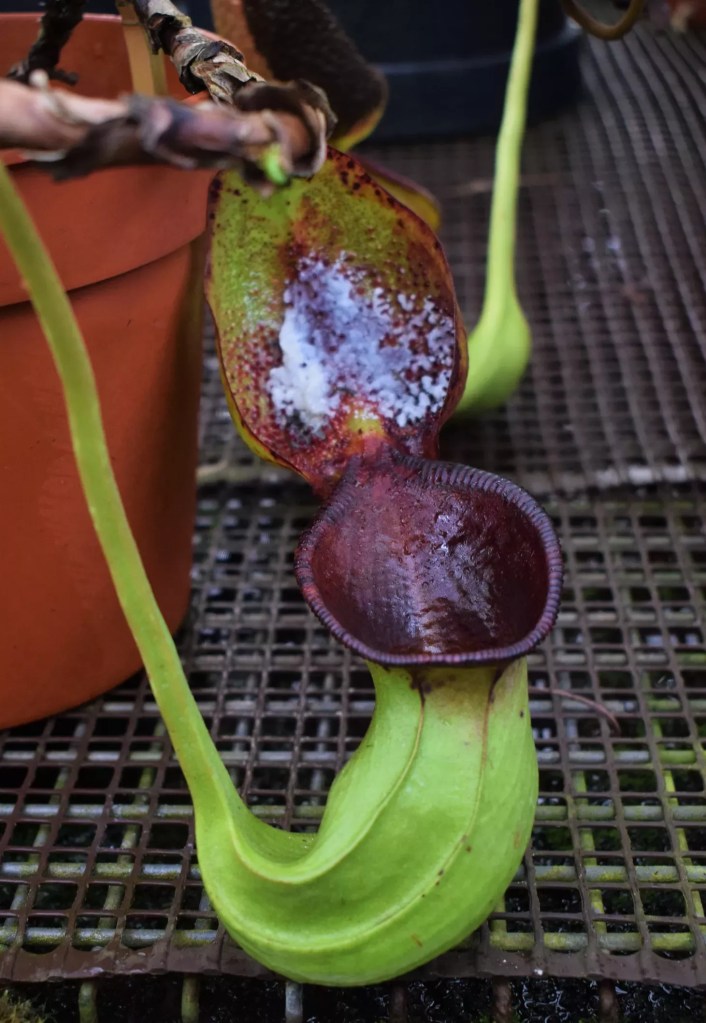
May 10 is celebrated as Cactus Day in the US. It is “a day dedicated to recognizing and appreciating the unique and fascinating world of cacti. This day also serves as a reminder of the many cactus species facing extinction and the need for their conservation, especially in their natural habitats.” Cacti are flowering plants that produce seeds. They are able to bloom every year, but they will produce an abundance of flowers in response to heavy rains. The family Cactaceae comprises many species of flowering plants with succulent (water-storing) stems.

It is entirely appropriate that it is a day marked in the US. Because 1749 out of the known 1750 species of cacti are native to the Americas! In other words, cacti were not originally found in any other part of the world.

I have to admit, this kind of blew my mind. All of us, from the time we are children, when asked to draw deserts or make an exhibit around the theme, have always generously populated our deserts with our own versions of cacti.

But cacti occur naturally only in the Americas–from Patagonia in South America, through the US, to parts of Canada. Anywhere else we see them, they have been taken by humans.

There are however equivalents in other parts of the world. There are the Euphorbs, tamarisks, saltbrushes etc. in Africa, and succulent and spinifex grasses in Australia. In India we have khejri, thoor, acacias etc. all of which grow in our deserts. But these are not cacti. All them have various adaptations to dry conditions like small or no leaves, spines, thick stems and deep roots. But they differ from cacti in that they do not have areoles. The presence of a structure called the areole is what sets cacti apart from all other plants. Areoles are round or elongated, often raised or depressed area on a cactus which is equivalent to a bud and from which spines, flowers, stems, or roots grow.

Cacti were introduced to Europe by, no surprises, Christopher Columbus. In 1493, on his second voyage to the Americas, he brought back a specimen of the prickly pear—the first time a cactus was seen in Europe. It caught the fancy of botanists, horticulturists and the public, and led to widespread cultivation of these plants.

They came to India with the Europeans, most likely sometime in the 16th or 17th century. In recent times, there has been much interest in these plants. They are much prized for their dramatic looks and are a feature in every balcony garden and indoor succulent-tray.  At a commercial level, the dragon fruit, cultivated widely across the country and now found in roadside fruit stands everywhere, is a cactus. Known  as pitaya or pitahaya, it is native to southern Mexico, Central America, and parts of South America. It is a climbing cactus species. The fruit is low in calories, rich in antioxidants and is said to have many other wonderful properties. But frankly, I am yet to get used to the bland taste!

For a few years now, our Central Arid Zone Research Institute (CAZRI), and ICARDA, an international organization, have been experimenting with cultivation of cacti, with a view to using it as fodder. Cacti as a fodder crop is seen as having the potential to help in the widespread shortage of green fodder, particularly during the summer months in many parts of the country. While still in experimental stages, it is thought to have some possibility.

India also has large and scientifically significant cacti collections. The National Cactus and Succulent Botanical Garden and Research Centre is located in the city Panchkula, the satellite town of Chandigarh. It is spread over seven acres and houses over 2500 species of cacti and succulents. The Regional Plant Resource Centre at Bhubenehswar has Asia’s largest collection of cacti. This Centre has created 200 new varieties and hybrids of cacti by breeding, growth manipulation, etc.

We said at the start that all except one cactus species was native to the Americas. The one exception is Thipsalis baccifera also know as the mistletoe cactus, which occurs naturally not only in the Americas, but also Africa, Madagascar, and close home in Sri Lanka. Scientists are still figuring out the how and why of this exception.

So look at cacti with new eyes. Love them, but don’t hug them!

-Meena

Be Safe!

Last week on April 28th, we marked World Day for Safety and Health at Work. This day has been observed since 2003, when the International Labour Organization (ILO) declared it an occasion to stress the prevention of accidents and diseases at work. It is an opportunity to raise awareness of how to make work safe and healthy, and of the need to raise the political profile of occupational safety and health.

India especially needs all the focus it can give on this. We have seen horrific accidents in tunnels, mines and building sites. Last year saw 240 significant workplace accidents being reported in manufacturing, chemical, pharma, mining and energy sector operations. And these are only the reported accidents—it would be safe to say that many  go unreported. These accidents resulted in over 400 lives being lost and about 850 serious injuries.

We in India deal in large numbers and hence these may not look very serious. The gravity of the situation hits a bit harder when we see from ILO statistics that per 1,00,000 workers, India sees about 117 fatalities, compared to  China’s figure of 7, Brazil’s 7.4, Malaysia’s  14.6, Canada’s  5, etc.

In our everyday lives, we see indifference to safety all around us.  Metro rail construction, overbridge construction, electrical and mobile tower repairs—we never see proper safety measures , or the use of harnesses or personal protective equipment. When an electrician or TV dish installer comes home, their daredevil feats raise the blood pressure.

What to talk of others, we ourselves are not 100% perfect when it comes to donning helmets on two wheelers or seat belts in cars. (I must plead guilty here myself). There seems to be a feeling that ‘it can never happen to me.’ In fact, I recall a colleague conducting surveys about safety measures with those handling hospital waste. The general response was ‘Oh, we have been doing this for years without gloves and masks. Nothing has happened to us. Nothing will. All this just interferes with our work and slows us down. So we don’t really want to wear these things.’

We cannot afford this level of indifference. At one level, is tough laws are needed.  Of workplace safety laws, we have aplenty. We have the Factories Act, 1948, Mines Act, 1952, Dock Workers (Safety, Health and Welfare) Act, 1986, and the Building and Other Construction Workers (Regulation of Employment and Conditions of Service) Act, 1996.

However, the new Occupational Safety, Health and Working Conditions Code, 2019 brought in a few years ago is controversial in that some feel it dilutes safety provisions. “The new occupational safety and health law has severely weakened the inspectorate system, prioritizing ease of doing business over labour rights and worker safety. Inspectors can no longer conduct unannounced inspections, take immediate legal action against violators, or verify compliance effectively due to self-certification and private audits,” to quote Sanjay Vadhavkar, executive committee member of IndustriAll.

While India is good at making laws, their implementation is definitely not as strict as needed. Factory inspectors and traffic cops are equally easy to get by with a little gratification. Never mind that we are talking lives here.

The answer probably lies in education. Children educated about the hazards of fireworks are transforming how Diwali is celebrated. Maybe an equally serious focus on risk, hazard and safety can make a difference. If we catch them young and teach them young, maybe our factories, mines and roads will be safer.

–Meena

Reach for the Sky: Recalling Interactions with Dr. Kasturirangan

Last week, India and the world of science lost a doyen: Dr. Kasturirangan who in the decade till 2003, led the Indian Space programme as Chairman of the Indian Space Research Organisation, as Chairman of the Space Commission and as Secretary to the Government of India in the Department of Space. During this period, India saw the launch of PSLV, our indigenously developed launch vehicle; the testing of Geosynchronous Satellite Launch Vehicle (GSLV); and IRS satellites among others.

Before that, as the Director of ISRO Satellite Centre, he headed the development of the Indian National Satellite (INSAT-2) and the Indian Remote Sensing Satellites (IRS-1A & 1B) as well as scientific satellites. He was Project Director of BHASKARA-I & II. He was also the Project Director for India’s first two experimental earth observation satellites, and subsequently was responsible for overall direction of the first operational Indian Remote Sensing Satellite, IRS-1A.

It was in his time as ISRO chief that Chandrayaan-1 was conceived.

I am proud to say that I had the chance of a few personal interactions. However, not in the context of high-science and technology!

As everyone in the country knows, Dr. Rangan was deeply involved in education, and obviously had a passion for science education (what we today call STEM). It was in this context that I had the chance to interact with him. He was the Chairman of the Board of Governors of the Vikram A. Sarabhai Community Science Centre (VASCSC), where I serve as a member. VASCSC was the result of Dr. Vikram Sarabhai’s vision of enabling the country’s top scientists to contribute to science education. The institution was started in 1966 as a facility where people concerned about the quality of science education could come together to try new ideas and methods of science teaching.

The institution has deep programmatic and emotional links with the various institutions associated with Dr. Sarabhai, the father of India’s space programme.  Dr. Kasturirangan was an obvious choice to chair it!

When very busy people take on yet another committee or chairmanship, it is often really only ornamental. With the best of intentions, they lack the time or mind-space to get deeply involved.

Not so with Dr. Rangan. He ensured to attend VASCSC Board meetings, sometimes in person, otherwise by Zoom. He was there on the dot even for Zoom meetings. He was completely clued in and asked sharp questions about the Action Taken Report. He had a prodigious memory and made quick decisions. He was always supportive of the programmes and publically appreciative of the management and staff for their innovative initiatives and their commitment. He never allowed himself to be distracted with anything else during the course of the meetings, and ensured everyone had their say. It was a humbling experience as well as a learning for all of us.

Raghu and I count it as a privilege that he consented to write the Foreword for our book: TO EVERY PARENT, TO EVERY SCHOOL: RAISING RESILIENT CHILDREN IN A VUCA WORLD (Penguin India). Even after he agreed, we were apprehensive: would he find the time to do it within the publisher’s deadline, given the enormous calls on his time? But we need not have worried. The write-up was with us a few days before the date we had indicated! And what a gracious Foreword it was!

These were people cut from a different cloth. They dedicated their lives to their mission. They wore their myriad achievements lightly. They were courteous to one and all. They listened. Nothing was too small for their attention. And they cared.

Grateful for the opportunity to interact with such inspirations.

–Meena

Money, money, money….

Well, it’s what makes the world go around for sure! But some people love money for reasons other than what it can buy.

Bangalore has one such lover of money—Rezwan Rajak, the world’s biggest collector of Indian paper money. And fortunately, he has chosen to share this passion. No, not by giving away the notes, but by setting up a museum!

Rezwan is the co-founder and Managing Director of the Prestige Group (there is a good chance you resident of a Prestige property if you live in Bangalore!). His passion for collecting Indian paper money started when he was 13 or 14. He came across some old currency notes from British India, which no longer were legal tender (think de-mo!) and were stamped ‘Refused payment’. The story behind these intriguing notes goes back to partition. Apparently, when partition happened, the new country of Pakistan did not have currency notes of its own. So for the initial period, they used the notes from undivided India, with their own stamp on them. . So the notes said ‘Reserve Bank of India’ but had an additional over-printing of ‘Government of Pakistan’.  While these were accepted in Pakistan, they were not in India. Some smart people in India of course tried to scratch off the Pakistan stamp and use them here. But the banks had a record of the notes printed for Pakistan and refused payment, in fact stamping these notes with ‘Payment refused.’

From this, to the world’s largest collection! The Museum of Indian Paper Money has over 700 specimens of Indian paper currency collected by Rezwan Razak over the decades. And the fascinating stories that go with them! For instance, there are specimens of notes of Hyderabad state which were printed in England and were being transported by sea. The ship sank with the notes and a million pound worth of gold. After 12 years, bounty hunters after the gold salvaged the ship’s cargo inlcuding the currency, and the notes were still intact in their vault.

All the currency notes printed after Independence, as well as notes from the princely states of India are displayed. There are beautifully designed Portuguese-India notes which were used in their territories, which Razak values very highly for their aesthetic appeal. There are also French-India notes.

Also on view are tokens which 36 princely states were permitted to print when metal for minting coins ran out during World War II. They look like stamps or the platform tickets which those of an older generation will be familiar with.

Another fascinating set of items on display are the prisoner of war money-coupons. During WWII, prisoners of war of various nationalities were housed in India. They could do voluntary work during this time, for which they were paid. But the payment could not be in real money as then they could use this to bribe the jailers. So coupons which looked like currency notes, but were stamped ‘Prisoner of War’ were given to them as payment. These were used to buy luxuries in jail like post-cards, chocolates, etc.

And so on and on….

India also has  the Reserve Bank of India (RBI) Monetary Museum in Mumbai. This displays about 1,500 items including coins dating back to the 6th century BC, and covering the Indus Vally period, the Gupta period, the Kushana empire, coming right up to notes and coins of modern times.  

But Razak’s museum, housed in Prestige Falcon Tower, Bangalore, the corporate headquarters of the Group, is different because it is a result of what the collector himself refers to as: ‘… a hobby which became a passion which has in turn become an obsession.’!

Sadly however, physical money may soon completely disappear with almost all transactions moving to electronic payments.  These museums become even more precious in this context!

–Meena

A Maharaja and his Art come to Town

Like many of my fellow citizens, I am not a great fan of rajas, maharajas and their ilk. Nevertheless I love one Maharaja. The Air India Maharaja of course!

And the Maharaja has come to my neck of the woods (Bangalore), bringing with him a part of his famed art collection. Yes, the National Gallery of Modern Art (NGMA) here is hosting close to 200 pieces from the Air India art collection for six months.

Air India’s was one of the largest corporate art collections in India, estimated to have been worth over Rs. 350 crores about eight years ago. The collection has been built over almost seven decades and comprises close to 4000 works. It spans across modern and contemporary paintings, folk art and miniatures, as well as sculptures, textiles, photographs and antique clocks.

The collection started in the 1940s, propelled by JRD Tata, who wanted all of Air India’s booking offices across the world to represent India. Bobby Kooka and Jal Cawasji were mainly responsible for selecting and buying the art pieces. They would not only buy paintings from established artists, they would also visit student exhibitions and pick up paintings. Many of these would be used to make calendars, post cards etc. There was another interesting way of acquiring paintings—the transportation service contract. In exchange for the works of artists, Air India would give them international air tickets! Many an artist, including MF Hussain found this offer irresistible!

There were specially commissioned art works too. For instance, in the days when smoking in the air was quite normal, the airline commissioned Salvador Dali to design a special ashtray to be given to first class passengers. This was in 1967. 500 limited edition pieces were made of an ashtray comprising a shell-shaped centre with a serpent twined around its perimeter, supported by two surrealist elephant-heads and a swan.  Dali asked for a baby elephant as payment, and got it too!

When the Tatas controlled Air India, the art works were carefully documented, displayed, stored and issued out from the Mumbai office to various domestic and international offices. After the merger with Indian Airlines in 2007 however, things went awry. The collection was moved to Delhi and there was no real ownership. There were scandals with one of Jatin Das’ works allegedly disappearing. Moreover, the works were not properly stored or cared for.

When Air India was re-privatized a few years ago, it was decided that the collection would go to the NGMA, where it could be taken care of professionally. A further decision was taken that the collection would not just stay in one location, but would travel across the country and to other countries as well.

It is as part of this that the collection has now come to Bangalore, where it is being displayed at the NGMA building which itself is a sight. Called the Manickyavelu Mansion, it belonged to Manickyavelu Mudaliar, a mining baron, who himself bought it from the Wadiyars of Mysore.  Mudaliar who came from a poor family made it big thanks to his forays into manganese and chrome mining. But the fortune did not last long and the mansion was taken over by the City Improvement Trust Board.  In 2000, it was leased out to the Ministry of Culture. So today the imposing mansion with grand rooms and a scale quite fitting to a national museum, set in serene green grounds with century old trees, is the Southern Headquarters of the NGMA.

So if you are in Bangalore, ensure you drop into the gallery to see the Air India exhibition. You will see works by Anjolie Ela Menon, B. Prabha, Arpana Caur, MF Hussain, Jatin Das and Raza, among others.

And one room is devoted to the Braille versions of these works. The paintings and the information about them are done in Braille and hopefully will be enjoyed by many.

A special exhibition indeed!

–Meena