Pencil in the Dates: Stationary Fairs around the World

Two weeks ago, we dipped our toes into the pastel-hued wonderland of Japanese stationery. This week, starting from Japan, we do a world-trip of Stationery Expos.

Japan: Two Shows, Two Personalities

Japan doesn’t just have one stationery expo—it has two, each with its own character.

The Japan Stationery Show, held every November in Tokyo, is the country’s premier industry fair. Here, manufacturers reveal their latest innovations: notebooks that open perfectly flat, mechanical pencils that never break lead, and pens that glide like a brush. It is also home to the coveted Stationery of the Year awards, which often set the trends for the year ahead. Though businesslike in its purpose, the show is open to consumers too, making it a buzzing space where industry professionals and stationery fans meet.

The Stationery Girls Expo (Bungu Joshi Haku), by contrast, is pure celebration. Launched in 2017, it caters to bungujoshi—literally “stationery girls,” a term now used for anyone who adores stationery as a lifestyle. Here, washi tapes in hundreds of designs, pastel highlighters, limited-edition pens, and playful planners dominate the stalls. The mood is festival-like—queues of eager shoppers, arms full of bags, and excited chatter about the season’s “must-have” notebook. If the Japan Stationery Show sets the industry agenda, the Stationery Girls Expo captures the culture of stationery—personal, expressive, and joyful.

With the cheerful tagline “the most enjoyable event for stationery lovers,” this expo is playful, creative, and community-driven. Its name might suggest it’s just for girls, but the event welcomes anyone with a soft spot attractive staionary. Spread across several days in Tokyo and Osaka, it has grown into Japan’s largest stationery festival, drawing nearly half a million visitors cumulatively.

The expo is also known for its Bungu Joshi Awards, where visitors vote for their favorite products—categories range from Tokimeki Design (heart-fluttering design) to Heart-throbbing Convenience (products that spark delight through functionality). The audience becomes part of the show, giving the event a democratic, festival-like atmosphere.

What’s especially interesting is the shopping system. Each visitor is given a transparent bag at entry. As they wander through stalls, they pick up treasures and drop them into their bag, paying for everything at a central cashier. It’s a clever system that avoids long queues at individual stalls and keeps visitors free to browse. The expo also offers exclusive merchandise only available on-site—tiny rewards for the true devotees.

Germany and USA

Germany’s Paperworld (now merged with Ambiente), has for decades set the global benchmark. Here the focus is on sustainability, efficiency, and innovation. Think paper made from stone, packaging that biodegrades in weeks, and pens that feel like sleek machines. It is vast, professional, and very B2B—corporate buyers and distributors scanning stalls with intent.

Then there’s the US National Stationery Show (NSS) in New York. This one feels closer to Japan in spirit—independent designers, hand-illustrated journals, greeting cards that are art in themselves. The joy of paper and pen as a form of self-expression is what binds the NSS community.

India: Now taking Mainstage

And, did you know, India has its own Expos too—two of them!

A Stationery Fair has long been part of the well-known Delhi Book Fair. Last month saw not only the 28th Delhi Book Fair, but also the 24th Stationery Fair at Bharat Mandapam. “Besides promoting books of all genres, the aim is to focus on providing students with educational books and stationery,” says Hema Maity, general manager, India Trade Promotion Organisation (ITPO).

The newer entrant is the Stationery & Write Show which debuted in 2019 in Mumbai, co-located with gifting and lifestyle fairs. That first edition saw 272 exhibitors and over 12,000 visitors—a remarkable start for a new platform. By 2022, the event had grown into a three-in-one showcase—Paperworld India + Corporate Gifts Show + Interior Lifestyle India—drawing nearly 15,000 trade visitors and 215 exhibitors. Fast forward to 2025, and the growth is striking: 18,000+ visitors from 285 Indian cities and 49 countries, with 340+ exhibitors. The annual fair, usually held in late January at the Bombay Exhibition Centre, now rivals international events in scale. It has a Delhi edition too.

And the highlights? Eco-friendly stationery made from recycled paper, cork accessories, even moss-covered desk décor. Alongside these, educational toys, quirky notebooks, and premium pens jostle for attention.

What makes India’s fairs unique is the mood—serious business buyers walk the aisles, but so do college and school students and stationery lovers. It is equal parts trade fair and festival.

The Magic That Endures

Whether in Tokyo, Frankfurt, New York, or Mumbai, expos remind us that stationery is not just about function. It is about beauty, culture, even memory. And perhaps that is why, year after year, these fairs continue to draw thousands: they affirm that ink on paper still carries magic in a screen-dominated world.

–Meena

Civil-Society Seshan: A Tribute to Jagdeep Chhokar

Mr. TN Seshan’s tenure as Election Commissioner (12 December 1990 to 11 December 1996) changed how we Indians viewed elections—he made free and fair polls a public expectation rather than an exception. The revolution he brought about was to enforce the Rules, provisions and systems that already existed, but no EC before him had acted sufficiently on. The Model Code of Conduct for instance, which political parties routinely flouted, with EC looking in the other direction. He cancelled or postponed elections where the MCC was blatantly violated. He took action to drastically reduce booth capturing, and clean up electoral rolls and reduce bogus voting. He made candidates and parties accountable for their campaign spending and took strong action against black money in elections. He strengthened monitoring of polling stations, and deployed paramilitary forces in sensitive areas. He laid the ground for Voter ID cards. He increased transparency by publishing election schedules and guidelines well in advance.

The man who ‘ate politicians for breakfast’ helped strengthen and deepen Indian democracy.

If Mr. Seshan brought about all these changes through rigorously using his given power as a bureaucrat, Jagdeep Chhokar, did it purely from the outside. He co-founded the Association for Democratic Reforms (ADR) in 1999 along with his colleague Prof Trilochan Sastry and others as an NGO.

ADR’s primary mission is to improve governance and strengthen democracy by bringing transparency and accountability into India’s political and electoral processes. Over the past two decades, it has become one of the most credible civil society voices on issues of electoral reforms, political funding, and the integrity of candidates and parties.

One can see echoes of Mr. Seshan’s work–one of ADR’s most significant contributions has been its role in disclosure of criminal, financial, and educational background of candidates contesting elections. Following a landmark Public Interest Litigation (PIL) filed by ADR, the Supreme Court of India in 2002 mandated that all candidates must file self-sworn affidavits disclosing their criminal records, assets, liabilities, and educational qualifications. This judgment fundamentally changed the way Indian voters access information about their representatives. Since then, ADR, through its platform MyNeta.info, has been collecting, analyzing, and disseminating this information for every state and national election, enabling citizens to make more informed choices.

ADR has also been active in examining political party funding and expenditure, a highly opaque area of Indian democracy. By studying income tax returns and donation reports of political parties, it has consistently highlighted the growing role of unaccounted money in politics. ADR’s reports show that a large proportion of party funding comes from unknown sources, often via electoral bonds or cash donations, which raises concerns about transparency. These findings have been widely cited in media, parliamentary debates, and reform discussions.

Beyond data disclosure, ADR has worked to strengthen electoral reforms in collaboration with the Election Commission of India (ECI), civil society organizations, and policy experts. Its advocacy has covered areas such as decriminalization of politics, regulation of inner-party democracy, curbing misuse of money and muscle power, and improving voter awareness.

Another major initiative is citizen empowerment through voter education. ADR conducts voter awareness campaigns, disseminates easy-to-understand report cards on candidates, and organizes debates and dialogues to promote ethical voting. It also collaborates with other organizations on programs like the National Election Watch (NEW), a network that monitors elections and promotes democratic accountability.

ADR has been central in challenging the electoral bond scheme in courts. In February 2024, the Supreme Court of India struck down the electoral bond scheme as unconstitutional, ordering disclosure of donor identities, amounts, etc.

In essence, ADR’s work has created a data-driven framework for citizen engagement, holding both candidates and political parties accountable. While challenges remain in implementing deeper reforms, ADR has significantly advanced transparency in Indian democracy and continues to push for systemic change.

Recent Initiatives of ADR

  • ADR has published updated data (as of July 2025) on how parties redeemed electoral bonds from 2018-24, including comparison with State Bank of India RTI responses. Their analyses show that in FY 2022-23, 82.42% of the income from “unknown sources” declared by national political parties came from electoral bonds.
  1. The report also examines the financial disclosures of Registered Unrecognised Political Parties (those registered with the Election Commission but not recognised as state or national parties).  There was a 223% rise in declared income during FY 2022-23 among these parties.
  2. ADR and its network National Election Watch (NEW) analysed the affidavits of 8,337 out of 8,360 candidates in the 2024 Lok Sabha elections
  3. Among findings:
    • Around 20% of all candidates had declared criminal cases; for state party candidates it was ~47%.
    • 46% of the winning MPs declared criminal cases, up from 43% in 2019.

A Friend

For Mamata and me however, he was Jagdeep, husband of colleague and dear friend Kiran. For me, he was also the colleague of my husband, and neighbour for decades.

What I recall very fondly is how caring of older people Jagdeep and Kiran were. Often when my parents were visiting and they knew I was travelling, they would ensure to drop in and chat, and solve any little problem they might have. The affection was mutual. He was a particular favourite of my mother’s who would rush to make rasam if she heard he had a cold.

Jagdeep did his Law when he was teaching at IIM. And he never did well in exams at all, because he did not follow the quarter-baked kunjis from which examiners expected students to mug and regurgitate answers. He would regale us with the regressive and misinterpreted answers that featured in crib-books, and while we laughed, we also worried about what lawyers were learning.

All of us who knew Jagdeep personally will of course miss you. But the whole country will miss you. Thank you for everything you have done for India’s democracy. We know it was your consuming passion and commitment for the last 25 years. And we also know it took an immense amount of courage.

Thank you Jagdeep. RIP.

Wish you all strength, Kiran.

–Meena and Mamata

Also see: Close encouters with Al-Seshan at https://millennialmatriarch464992105.wordpress.com/wp-admin/post.php?post=1106&action=edit

The Irresistible World of Japanese Stationery

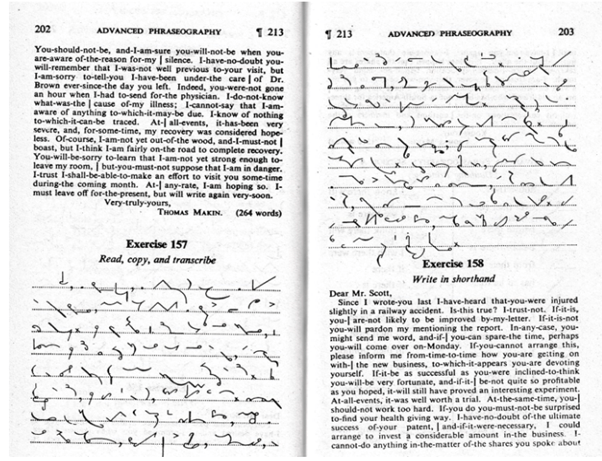
Japanese stationery–it’s not just about paper and pens. It’s an entire universe of meticulously designed (and over-engineered, some people say)products that blend functionality with a sense of artistry. From perfectly engineered mechanical pencils to pastel-hued notebooks that feel like an experience rather than just stationery, Japan’s stationery game is on another level.

Japan’s obsession with stationery is more than just a passing trend or quirky fascination. There’s a deep cultural history and a respect for craftsmanship that informs the country’s relationship with its stationery products. It’s not about pens, paper, or notebooks—it’s about reverence for beauty, functionality, and attention to detail.

At the core of this lies the cultural reverence for precision and perfection. The concept of kirei—a Japanese word that means “clean,” “beautiful,” or “elegant”—is key to understanding the stationery obsession. In everyday life, the Japanese strive for beauty and simplicity, and this aesthetic extends deeply into the design of their stationery. Minimalism is at the heart of many stationery designs: neutral colors, sleek lines, and a focus on function over excess.When it comes to everyday tools like stationery, the emphasis is on creating items that are not only practical but also exquisitely refined.

There’s a conscious focus on making something beautiful out of the mundane or utilitarian, a concept that transcends into stationery. Pens aren’t just about writing—they’re carefully crafted to deliver the perfect writing experience. Paper isn’t just a surface for notes; it’s a tactile experience that enhances the act of writing itself. Craftsmanship plays an enormous role. Many high-end stationery items, like Uni-ball pens or Midori notebooks, are created by artisans who bring decades of expertise to their craft. Stationery is an extension of this artistry.

The Zen of Stationery: Mindfulness and Ritual

Japanese students are encouraged to use their stationery in an almost sacred way. Their school notebooks are often neatly organized with an emphasis on clean, legible handwriting. Calligraphy—known as shodo—is still a highly respected art form in Japan, and the skills learned in this practice often extend into daily life.

The slow, deliberate process of choosing a pen, selecting the right paper, and finding the perfect notebook to match your mood is an act of mindfulness. It’s about being present in the moment and honouring the process of creation.

The Japanese Stationery Expo and Awards: A Celebration of Craftsmanship and Innovation

This devotion to elevating the everyday reaches its peak each year at two marquee events which take place in June every year in Tokyo: the Japan Stationery Expo and the Japanese Stationery Store Awards. Together, they showcase the best of design, functionality, and sheer creativity.

The Japan Stationery Expo is where stationery enthusiasts, designers, and brands converge to showcase the best of what the industry has to offer. (More on this expo and another interesting one next week).

If the Japan Stationery Expo is where products are showcased, the Stationery Awards are where the best of the best are recognized. They honour the incredible craftsmanship and innovation in Japanese stationery, celebrating both traditional designs and newer, boundary-pushing concepts. It’s the Oscars of the stationery world, but without the drama and red-carpet couture. Products are judged based on various criteria, including design, function, innovation, and overall quality, with awards in several categories, from Best Stationery Product to Best New Brand, and even a category for environmental sustainability.

The 2025 Awards went to:

  • Grand Prize: Pilot Kirei-na Highlighter — engineered with a guiding plate that keeps lines neat and smudge-free.
  • Design Award: Luddite THE POST Sustainable Leather Bendy Pen Case — chic, durable, and eco-friendly,
  • Functionality Award: Uni Jetstream Single Ballpoint Pen (Lite Touch Ink) — celebrated for its smooth flow and comfort, turning everyday scribbles into a silky experience.
  • Idea Award: King Jim Hitotoki Kori Jirushi Ice Stamp — a playful yet practical reinvention of a classic tool.

35 other winners were recognized, from elegant fountain pens to ingenious pen cases, and even a “tea-time notebook”.

Some of the Most Innovative Award Winners in Recent Years

1. Pilot FriXion (2006) – Erasable Ink Pen: This was one of the first pens to use thermosensitive ink, which could be erased with friction.

2. Midori MD Paper (2011) – Premium Paper Notebooks : Known for its exceptionally smooth texture, these revolutionized notebook writing with its soft, cream-colored, bleed-resistant paper

3. Lihit Lab Teffa Bag-in-Bag (2017): A unique product that allows people to organize their small stationery, gadgets, and accessories inside a larger bag. It has pockets of various sizes to fit pens, notebooks, chargers, and other essentials.

4. Kokuyo Campus Sticky Notes (2019): This product took the classic sticky note and reimagined it with a special adhesive that works even on rougher papers.

5. Karuizawa Stationery – Plantable Paper (2020): A sustainable stationery innovation that uses plantable paper embedded with seeds. Once you’ve used the paper, you can plant it and grow flowers, herbs, or even vegetables from it.

I will be content if I can read my own handwriting after a few hours. No loftier ambitions!

–Meena

Pic: .jetpens.com/

Racing with the Oars of Tradition – Kerala’s Boat Races

Come August, the air begins to buzz with anticipation in Kerala. The boat race season is here! Known locally as vallamkali (literally, boat play), the sight of dozens of snake boats slicing through the waters, powered by hundreds of synchronized oarsmen, is one of Kerala’s most spectacular traditions. Shiny black boats stretching almost 100 feet, with rowers swaying to the rhythm of a vanchipattu (boat song).

The most famous of the boat races is the Nehru Trophy Boat Race, inaugurated in 1952 when Jawaharlal Nehru, then Prime Minister, was so captivated by the spectacle that he donated a silver trophy. Today, the Nehru Trophy on the Punnamada Lake in Alappuzha attracts international attention and has been featured on tourism campaigns worldwide. But across the state, from Aranmula to Champakulam, local communities host their own races, each with its own traditions and lore.

Innovation on the Water

One of the most interesting aspects of the boat races today is how technology has crept in—not to diminish tradition, but to amplify it. While the boats themselves are still crafted the old way, using Anjili wood and painstaking carpentry handed down through generations, innovations have entered the training and organization.

Rowers now undergo scientific fitness regimes, with physiotherapists, nutritionists, and even sports psychologists guiding teams. GPS trackers and drone footage help coaches analyze synchronization and speed—things once left only to the naked eye and instinct. Live-streaming and 4K broadcasts take the drama of the races across the world, making it a truly global event. And traditional boat songs as well as new ones are now available on Spotify playlists.

Women at the Oars

But what about women? For long, the snake boat races were a male preserve, embodying sheer physicality. Yet, in recent years, there has been a quiet but important shift. Kerala has begun hosting all-women boat races—a recognition that strength and stamina are not male monopolies. In 2022, the first Vallamkali exclusively for women was held, with teams of fisherwomen taking to the waters.

Even in mixed-community celebrations, women’s teams are increasingly visible, particularly in the Kettu Vallam (smaller decorated boats) races. It is still early days, but the image of women rowing with fierce determination underlines how traditions evolve without losing their essence.

More than a Race

Preparing a snake boat involves dozens of families. Training the oarsmen requires food, lodging, and encouragement from entire villages. On race day, the banks are filled with people singing, cheering, and celebrating. Divisions of caste, class, and creed dissolve.

There is also a spiritual dimension. The Aranmula boat race, for instance, is tied to temple rituals, where the boats are offered as homage to Lord Parthasarathy. Here, winning or losing is less important than participation.

The Kerala boat races are not just about the boats—they’re about the teams, each carrying the pride of their village or community. In recent years, the competition has become so professional that many villages now run their own “boat clubs,” with dedicated squads training year-round. It’s a bit like football clubs elsewhere—loyalty runs deep, rivalries are fierce, and victories are celebrated across the community!  A few of the most celebrated teams are:United Boat Club (UBC), Kainakary, Police Boat Club, Kollam, Jawahar Boat Club (JBC), Kollam, St. Pius Boat Club, Alappuzha, Karichal Chundan (Alappuzha), Champakulam Chundan, Veppu Vallams of Aranmula.

Congratulations to the winner of this year’s 71st Nehru Boat race held last week, the boat Veeyapuram Chundan of Village Boat Club Kainakary. The winning team which was one among 75 competitors, touched the finishing line in 4.21.084 minutes.


And Happy Onam to all
!

–Meena

Pic: nehrutrophy.nic.in/

Celebrating Artful Elephants

August 12 is marked as World Elephant Day. And it is also Ganesh Charurthi time. So an appropirate time to talk about elephants.

The Asian Elephant is an endangered species, with less than 50,000 left in the wild across the world. And hence the importance of marking this day as a way of raising awareness about elephants and the dangers that threaten them.

What we see is what we grow to love and respect. And hence the importance of all the depictions of elephants we see around us—from sari borders to sculptures in ancient temples to the life-sized sculptures made from invasive weeds found in the Nilgiris, crafted by indigenous communities. Each and every one of them is an opportunity for education about our biodiversity and this magnificent species.

One can understand the ubiquitousness of elephant imagery in India—after all we hold about 60 per cent of the numbers. But interestingly, it is Taiwan which was well-known for elephant imagery all over its public parks and schools, in the form of Elephant Slides.

These are the whimsical, solid, painted playground fixtures affectionately known as “Grandpa Elephant”— and they hold fond memories for a generation of Taiwanese kids, now grown.

The elephant slide was a fixture of childhood in Taiwan from the 1960s through the 1980s. Found in schoolyards and public parks, these slides were typically made from china-mosaic or concrete, with a stairway or ladder up the back and a gently curved trunk functioning as the slide.

Many bore motivational slogans etched into the sides: “Strengthen your body to build the country.” Even in play, the messaging was patriotic. But for kids? It was all about the joy of scrambling up that broad back and riding the trunk like it was the gateway to an imaginary world.

Now, with safety codes tightened and tastes modernized, many of these eleslides have disappeared. But a movement to preserve and honour them has taken root, led by artists, writers, and nostalgic grown-ups determined to keep these gentle giants from fading away completely.

A Concrete Revival

Writer Yu Chiu-ling and designer Hsiu Pi-cheng have been at the forefront of this effort. Yu founded the Facebook group “Find Our Elephant Friends,” a digital scrapbook of elephant slide-sightings across the island. Hsiu has documented over 400 slides, many tucked away behind schools or community centres, quietly waiting to be remembered.

Their work isn’t just about playground preservation — it’s about cultural memory. About honouring the handmade, the imperfect, and the deeply local.

Elephants Across Borders

Asian elephants range across. Bangladesh, Bhutan, Cambodia, China, India, Indonesia, Laos, Malaysia, Myanmar, Nepal, Sri Lanka, Thailand, and Vietnam. Strangely, there have never been elephants in Taiwan in the wild in recorded history. While elephant fossils have been found on the island, indicating their presence in prehistoric times, there is no evidence to suggest that elephants lived in Taiwan during the period of human history documented by archaeology and literature. 

But Taiwan does have the most emotionally iconic version of the elephant slide!  You will also find their cousins in parks across Japan, Thailand, Vietnam, and parts of Eastern Europe. From Soviet-era concrete sculptures to candy-coloured cartoon versions in Tokyo suburbs, the idea of turning a beloved elephant into a playmate has clearly crossed cultures. But sadly, no ele-slides in India!

Unfortunately today, both real elephants and their concrete urban renderings are endangered. One is fighting for survival in an increasingly human-dominated world. The other is quietly disappearing with changing times.

Elephants have always symbolized memory, strength, and gentleness.

Let’s protect the real ones. And let’s remember the playful ones, too.

Happy Ganesh Chaturthi!

–Meena

PIC: https://www.thisiscolossal.com/wp-content/uploads/2023/07/pi-og.jpg

Nature’s Libraries: Where the Wild Data Lives

National Librarian’s Day is celebrated on August 12th every year to commemorate the birth anniversary of Dr. S.R. Ranganathan, the “Father of Library Science in India”.

When we say “library,” most people imagine rows of books, a quiet reading room, and perhaps a stern librarian at the desk. But in the language of library science, a “library” is defined less by its shelves and more by its functions — acquiring, organising, preserving, and making knowledge accessible.

By that definition, the world is full of libraries that hold no books at all. Some store bird calls. Others archive satellite images. Some collect DNA sequences. In fact, they are not physical spaces at all. Many are vast online repositories where scientists and citizens alike can deposit, discover, and use data.

On this Librarians’ Day, let’s explore how these nature and biodiversity depositories perform the same core functions as traditional libraries — only their collections are wild, living, and often invisible to the naked eye.


Acquisition: Gathering the Wild

Libraries begin by collecting materials. In biodiversity repositories, this might mean researchers uploading recordings to Macaulay Library (Cornell Lab of Ornithology) or Xeno-canto, which crowdsource bird calls from around the world.

  • Example: iNaturalist “acquires” photographs and species observations from millions of contributors.
  • Example: GBIF (Global Biodiversity Information Facility) harvests species occurrence data from institutions and citizen scientists alike.

Just as a public library acquires books from publishers and donors, these nature libraries acquire data from field biologists, monitoring equipment, and enthusiastic amateurs.


Organisation: Making Sense of the Collection

Without organisation, a library is just a warehouse. And hence the focus on developing classification systems. Dr. S.R. Ranganathan primarily used and developed the Colon Classification (CC) system. The Dewey Decimal system is the widely prevalent one used in most libraries across the world.

Biodiversity data portals however are based on the Linnaean system of classification and organize living organisms based on evolutionary relationships. This involves classifying organisms into hierarchical groups like kingdom, phylum, class, order, family, genus, and species. This is.

  •  Example: BOLD (Barcode of Life Data System) and GenBank organise genetic sequences by species, geography, and collection method.
  • Example: ITIS (Integrated Taxonomic Information System) standardises names so scientists worldwide speak the same language.

The result? You can search for a frog by its Latin name, its genetic barcode, or the location where it was found — just like you can search for a book by title, author, or subject.


Preservation: Guarding the Record

One of a library’s noblest duties is preservation — ensuring the information remains available for future generations. In biodiversity repositories, this may involve:

  • Storing acoustic recordings (bat calls, whale songs) in durable digital formats.
  • Archiving satellite imagery in systems like NASA Earthdata and Global Forest Watch for long-term environmental monitoring.
  • Keeping herbarium records in Tropicos and long-term forest data in ForestGEO.

Like rare manuscripts in acid-free folders, these data are preserved against loss, decay, and obsolescence.


Access: Opening the Doors

Libraries thrive when they are accessible. Many biodiversity repositories are open access — anyone can explore them. And importantly, contribute to them.

  • eBird lets birdwatchers view migration patterns and personal checklists.
  • FishBase offers species profiles for students, fishers, and marine scientists alike.
  • OBIS (Ocean Biogeographic Information System) gives marine biologists open access to ocean species occurrence data.
  • Merlin helps users identify birds by their calls.

Some repositories, like Wildlife Insights or certain ethnobotanical databases, may have restricted access for sensitive data — similar to a library’s rare books section.


Dissemination: Spreading Knowledge

A library doesn’t just keep information — it shares it. Biodiversity repositories publish datasets for conservation planning, scientific research, and education.

  • Movebank shares animal movement data for migration studies.
  • TRY Plant Trait Database supports climate change modelling.
  • The Digital Himalaya Project disseminates ethnographic and ecological knowledge, bridging science and tradition.

Why These Libraries Matter

By meeting the same functional standards as a traditional library — acquisition, organisation, preservation, access, and dissemination — biodiversity depositories are not just “like” libraries, they are libraries. Their collections may be recordings instead of novels, or genetic codes instead of encyclopaedias, but the principles are identical.

In a time of rapid environmental change, these libraries are our collective memory-keepers for life on Earth. They store the songs of rare birds, the paths of migrating whales, the genetic fingerprints of endangered plants, and the traditional wisdom of communities who have lived with nature for centuries.

So this Librarians’ Day, remember: the guardians of knowledge are not only in buildings with books. They are also in digital sound archives, genetic databases, satellite imagery vaults, and underwater biodiversity surveys. Wherever knowledge is collected, cared for, and shared — there, you will find a library. Dr. Ranganathan, I am sure,  would have been excited to explore the new realms of libraries and library science!

–Meena

There are a wide range of data depositories and libraries related to nature and biodiversity across different domains—ranging from sounds (like bat and bird calls) to genetics, species observations, satellite imagery, and more. Here is a list of some of these depositories, which Chat GPT has been kind enough to put together!


🦇 Acoustic and Sound Libraries

  1. Bat Call Library – Region-specific databases like EchoBank or ChiroVox.
  2. Macaulay Library (Cornell Lab of Ornithology) – Massive archive of bird sounds, videos, and photos.
  3. Xeno-canto – Open-access database of bird calls and songs from across the world.
  4. AmphibiaWeb – Includes some amphibian vocalization data.
  5. BLB (British Library Sound Archive – Wildlife Section) – Historical and contemporary recordings of animals.

🌍 Species Observations and Biodiversity Portals

  1. GBIF (Global Biodiversity Information Facility) – Gigantic open-access database of species occurrence data from around the world.
  2. iNaturalist – Crowdsourced species observations with photos, locations, and identification support.
  3. India Biodiversity Portal – India-specific citizen science portal on biodiversity with species pages, maps, and observations.
  4. eBird – Global birdwatching database with detailed observation checklists and trends.
  5. OBIS (Ocean Biogeographic Information System) – Marine species occurrence data.

🧬 Genetics and Taxonomy

  1. BOLD (Barcode of Life Data System) – DNA barcoding records of species.
  2. GenBank – Nucleotide sequences, often used for genetic identification of species.
  3. Encyclopedia of Life (EOL) – Species information including taxonomy, distribution, and media.
  4. ITIS (Integrated Taxonomic Information System) – Authoritative taxonomic info, mainly for North America.

🛰️ Remote Sensing and Environmental Data

  1. MODIS / NASA Earthdata – Satellite data on vegetation, land cover, fires, etc.
  2. Global Forest Watch – Forest cover, loss, and gain data based on satellite imagery.
  3. NOAA Climate Data Records – Atmospheric, oceanic, and climate-related datasets.

🐾 Camera Trap and Movement Data

  1. Movebank – Open-access database for animal movement (GPS collar) data.
  2. Wildlife Insights – Global camera trap image database, AI-assisted.
  3. PanTHERIA – Ecological and life-history data of mammals.

🌿 Botanical and Ecological Datasets

  1. TRY Plant Trait Database – Global plant trait data.
  2. Tropicos (Missouri Botanical Garden) – Botanical information with herbarium specimen records.
  3. ForestGEO (Smithsonian) – Long-term forest monitoring data across the globe.

🌊 Marine and Aquatic Life

  1. FishBase – Comprehensive fish species database.
  2. SeaLifeBase – Same as FishBase but for all non-fish aquatic life.
  3. Reef Life Survey – Citizen science marine biodiversity data.

📚 Literature and Traditional Knowledge

  1. Digital Himalaya Project – Ethnographic and ecological archives.
  2. Ethnobotanical Database – Plant use in indigenous and traditional medicine.

PIC: wildlifedata.org/

DESIGN GURU ASHOKE CHATTERJEE: A TRIBUTE ON HIS 90TH BIRTDHAY        

Ashoke Chatterjee (AC) does not like to be called ‘design guru’. But it is really not possible to come up with a better title for this piece on him. For though not a designer, his influence on design and design education in India has been immense. After all, he was Executive Director of India’s first and leading design school, the National Institute of Design (NID) from 1975 to 1985; a Senior Faculty Advisor for Design Management and Communication from 1985-1995, and Distinguished Fellow at NID from 1995 till his retirement in 2001.

AC played a critical role in conceptualizing the meaning of design in the Indian context. In 1977, he brought together UNIDO and International Council of Societies of Industrial Design (ICSID) members, designers, design-educators and others from across the world to the NID campus at Ahmedabad for a 2-day symposium. The meeting ended with the historic Ahmedabad Declaration which embodies the value of humanism in design. The core of the statement affirms:

  • ‘Its firm conviction that design can be a powerful force for the improvement of the quality of life in the developing world;
  • Its firm belief that designers must have a clear understanding of the values of their own societies and of what constitutes a standard of life for their own people;
  • That design in the developing world must be committed to a search for local answers to local needs, utilising indigenous skills, materials and traditions while absorbing the extraordinary power that science and technology can make available to it;
  • That designers in every part of the world must work to evolve a new value system which dissolves the disastrous divisions between the worlds of waste and want, preserves the identity of peoples and attends the priority areas of need for the vast majority of mankind’.

AC has lived this spirit and has helped designers and design-students across the country imbibe this spirit. He made it a fundamental principle of design education that students needed to understand that design is not restricted to contributing to business profits but also includes contribution made to the livelihoods of artisans, farmers, and the marginalized; and that designers must grapple with social issues. He was one of the early votaries of sustainability and brought this understanding to the education of designers.

As AC is always the first to aver, he is not a designer. He went to Woodstock School, after which he took an Economics degree at St Stephens College, New Delhi. Following this, he did his MBA at Miami University in Ohio, USA. He was with the International Monetary Fund in Washington DC, where he worked as a communications specialist, the Indian Tourism Development Corporation etc., before finding his home in NID and Ahmedabad.  He has advised, and advises, several national and international agencies including INTACH, Water Supply and Sanitation Collaborative Council (Geneva), the Gujarat Ecology Commission, the Government of Rajasthan Department of Health.  He served for many years as honorary president of the Crafts Council of India.

We have had the good fortune to regularly interact with AC over the decades. He was a not-infrequent visitor to the Centre for Environment Education where we worked for many decades, and each occasion brought its laughter, learning and a warm sense of having a caring mentor. He has been on the Governing Council (GC) of CEE from the early years, and as a local GC member, was invited for brainstorming, meetings, events, certificate-distributions and what have you—and if he did not have any prior commitments, he would attend.  He generously served on the advisory committee of several large projects that CEE was involved in, and brought his wisdom to bear not only on the content and design, but also on stakeholder management. As programme leaders, we would often be called into the GC meetings to make presentations on our projects; the butterflies in our tummies would settle when we met his twinkling eye, and he nodded ever-so-slightly to us. And after the presentation, he would sometimes pass us a little chit saying that we had done a good job. That truly made our day!

Ashoke Chatterjee played a key role in the National Drinking Water Mission, which in the late 1980s was tasked with ‘providing safe drinking water to all villages, assisting local communities to maintain sources of drinking water in good condition, and for specific attention for water supply to scheduled caste and scheduled tribe communities.’ AC prepared a road map on the communications aspect of this initiative, without which the gains could neither have been attained nor sustained. He worked closely with CEE in developing communication and education on fluorosis, a disease endemic to large parts of Gujarat.

With all his commitments, AC writes too. Dances of the Golden Hall on the art of Shanta Rao, and Rising, on empowerment efforts among deprived communities in rural Gujarat, are among his well-known books. His latest work (with Harji Malik), in English and Hindi, is titled Learning Together at Jawaja and chronicles the 50-year journey of the Jawaja project.

There is never a meeting with AC when we don’t come away feeling enriched—both as professionals and as human beings.

THE RURAL UNIVERSITY, JAWAJA

One of the criticisms against academic institutions is that they are far removed from every day realities and seldom contribute in solving real-life challenges. The Jawaja project undertaken by IIM Ahmedabad in partnership with the National Institute of Design (NID), Ahmedabad is an early exception. Ashoke Chatterjee was a key part of this.

It was in 1975 that Ravi Matthai, IIM-A’s legendary first fulltime director, set out on a journey to see how corporate management principles could be used to solve the major problem facing India–poverty. Ravi Matthai had stepped down as Director in 1972, and could now devote time to such a project.

The decision was taken to work in Jawaja, a drought-prone district of Rajasthan, consisting of about 200 villages and a population of 80,000. There seemed very little scope for development there, given the arid landscape and lack of water and other physical resources. But Prof Ravi Matthai had a different perspective, because he saw people as the biggest resource.

As the project team understood the area better, they found that the area had a 300-year tradition of leather-craft. The communities there were also skilled at weaving. And so the project decided to build on these skills to develop sustainable livelihoods for the communities there. Prof Matthai roped in NID to join hands with IIM-A, to work on livelihoods and empowerment of the communities in Jawaja. Thus along with Ashoke Chatterjee, his counterpart in NID, he started the journey which involved many faculty from both institutes.

The idea was to connect traditional artisans with contemporary disciplines of management and design, and knowledge institutions which had this knowhow. There were some important basic principles underpinning the effort. The first and foremost was that the relationship was one of mutual respect and learning—after all, even as the communities learnt new skills, the faculty of the institutions were learning how their knowledge could be put to use in solving social problems. Another important aspect was to see how much of the value chain could be controlled by the artisans and communities themselves, so that their incomes could be enhanced. The idea was to innovate and design new products which would have new markets, so that the traditional value chains could be broken and the craftspeople could play a greater role in more areas. The focus was also on working in groups, to give greater resilience and strength to the efforts.

The process was, by design, a gradual one, moving from basic products which did not need very high quality craftsmanship, such as leather school bags and woven floor mats, to higher value ones like office supplies, trendier bags, and high-end furnishings.

The challenges were, of course, many. Apart from the need to design new products which would use the old skills, technologies and equipment, another major concern was quality control.

To quote Ashoke Chatterjee on the subject: The Jawaja project was one experiment which integrated many aspects of craft: heritage, culture, social structure, design vocabulary and NID’s design inheritance. But it was not a craft project; it was development defined as self-reliance for those who have been the most dependent in our society. Ravi Matthai explained self-reliance thus: Can people do something for themselves tomorrow that others are doing for them today and they should be released of that dependence? Ultimately, Jawaja taught us that the whole is about people and you have to attend to people first and last or else nothing you do will be sustained.

The depth of AC’s understanding of craft traditions in India, and his humanity are reflected when he says: Jawaja provided a benchmark in crafts: first focus on and understand the community before we intervene in crafts. Who are the people? What are their earnings? What are their aspirations? What is in it for them? Before we start giving people lectures about their ancient traditions, ask what’s in it for them to stay in the tradition? In the case of Jawaja, many of the heritage problems for leather workers were things they wanted to run away from. Their caste elders told them they must not be identified as leather workers; they must have some other identity. When they stopped flaying animals they were left stranded without an identity. We often look at tradition and heredity as some exquisite artefact, but for them it was centuries-old discrimination.

The Jawaja project was an educational experiment-in-action based on the idea that development activities must be a vehicle for learning. The enduring success of the bold experiment is seen even today at several levels.

The first was the creation of self-reliant institution of crafts people–the Artisans’ Alliance of Jawaja and its associations. These started to manage all links of the value chain in Jawaja, from raw material procurement, finances, bank dealings, design and technology know how, and marketing processes. These are active even today, and continue to innovate, produce and market products which are highly valued.

The second is the impact of the project on the larger development scene. It was the learning from running this grassroots education and empowerment project that the idea of setting up a specialized institution for education in rural management came up, and the Institute of Rural Management (IRMA), Anand, was born. This was given shape by Prof Ravi Matthai and two other professors who had been with IIM-A—Dr Kamla Chowdhry and Dr.Michael Halse.

The Jawaja experiment’s widespread legacy is that it influenced development sector thinking on how to approach community-based livelihood interventions in a spirit of mutual respect and learning.

–Meena

From: Inspirations: Individuals and Institutions That Defined India’s Sustainability Journey. Mamata Panday, Meena Raghunathan.Bookwell Publications. 2025.

See also: The Jawaja Project https://millennialmatriarch464992105.wordpress.com/wp-admin/post.php?post=3624&action=edit

Pic: NID site

Caring for Care-givers

Care-giving for children with Intellectual and Developmental Disabilities involves a lot of time and a lot of effort, as the children may need assistance for even basic everyday tasks, like personal hygiene and eating.  If they are attending an institution, they may need to be dropped and picked up. Someone has to be there with them at all times of the day.

This also reduces the earning ability of parents, as at least one of them will have to be at home all day.

Parents of such children live under constant worry about the future: Who will look after the child after they are gone? How to financially provide for them? Will their child be cared for, safe and loved after them? They often face stigma and rejection from family, friends and society. They are in constant emotional stress.

These day-to-day challenges and long-term worries put an enormous pressure on the parents.  Worldwide studies have shown that such care-givers suffer more from chronic diseases as well as stress, anxiety and depression. They also neglect their own care.

This is not a well-recognized problem and there are few initiatives to support such families.

That is why the project described below is special.

AMC, a 62 year-old NGO, with the guidance and support of Dr. Srinivasa Murthy retired Professor of Psychiatry at the world renowned Nationa Institute of Mental Health and Neuro-Sciences (NIMHANS), conceived Project ENRICH, to understand challenges of care-givers and develop a programme of support.

Process of Project ENRICH

The project team had deep conversations and interactions with care-givers of children with special needs to understand aspects of caring for such children. The team found that parents face several challenges in their everyday life, from understanding what the special child means to them, to how to care for the child, to financial issues, family un-involvement, lack of knowledge on the availability of government support, associated health conditions of the child at a very young age, and relationship issues due to less understanding between the parents.

Key components of ENRICH

Based on the extensive research with parents and care-givers the set out the following programme:

1. Training for the parents. The training involves helping them understand and practice 10 self-care activities, namely:

  • Finding purpose in life
  • Enhancing supports and connectedness
  • Sharing of feelings
  • Journaling- Learning to use journaling as a tool at a time of distress
  • Relaxation and leisure-breathing, yoga, meditation
  • Music- To help understand the importance of relaxation and pleasure activity when faced by any difficulty or thoughts in stressful situations.
  • Exercise- Understand the importance of practicing exercises every day for 15-20 minutes
  • Understanding the importance of sleep
  • Importance of proper nutrition.

These sessions are held in small batches of 10 parents per batch, giving the time and safe-space to the parents to express their journeys.

2. Publications: Based on the interactions with parents and with expert inputs, two books have been published under the ENRICH project which will enable the learnings to be disseminated, and provide guidelines for other groups to take up such initiatives. Initially published in English and Kannada, these have recently been brought out in Gujarati with in partnership with National Institute of Mental Health and Neuro-Sciences (NIMHANS). The publications are:

  1. Loss Love & Growth- Stories of Families Caring for a Person with Special Needs: The book is a compilation of 25 stories of unique lived experiences of the caregivers of persons with Intellectual and Developmental Disabilities (IDD). The stories are based on the interviews held with these caregivers and families.
  2. Self-Empowerment Activities for Emotional Health-Guide for caregivers of persons with Special Needs: The book includes caregiver guidance and health practices recommended by international bodies such as UNICEF and WHO. The content of this book is for informational purposes only and is not intended to diagnose, treat, cure, or prevent any conditions or disease. This publication is meant as a source of valuable information for the reader, however, it is not meant as a substitute for direct expert assistance.Caring for Care-givers
     

3. Skill-training for care-givers: One of the key findings of ENRICH was that a major anxiety among parents of special children is how to enhance their earnings to take better care of their children and save for their future.     

A skill center, which would help train family members has been set up at AMC, which is open for parents and family members of any child with any type of disability.

Mothers trained at the center have started earning incomes. It is not just the money. They look forward to the future with more confidence and positivity.

AMC looks to collaborate with like-minded individuals, organizations and corporates to share the processes, knowhow and products of Project ENRICH across the country (or the world, for that matter!)

Proud to be associated with AMC.  

–Meena

For more information on AMC and to connect: https://amcin.org/

Remembrancers To Resurrectionists: A Stroll Through Forgotten Job Titles

Once upon a time—before HR departments and LinkedIn profiles—jobs came with titles so evocative, so oddly poetic, they sound like characters straight out of a Dickensian drama or a Ruskin Bond vignette. While today’s professions lean towards the ultra-pragmatic and descriptive, many titles of the past came with a whiff of romance. For example: the Remembrancer.

Yes, the Remembrancer. Not an app. Not a diary. A person. One whose very profession was to remember. Specifically, to remind monarchs and magistrates of important affairs—debts, legislation, ceremonies. A Remembrancer was originally an official tasked with reminding a monarch or government body about matters of state, legal affairs, or financial obligations. The title comes from the idea of “remembering” important business that required attention.

The City Remembrancer of London–a post dating back to 1571–still exists, quietly observing proceedings in Parliament, tucked behind the Speaker’s Chair. We can’t help but picture him as an elderly gentleman in an impeccably cut coat. who acts as a liaison between the City of London and Parliament. Their duties include monitoring legislation that might affect the City, representing the City at ceremonial functions, and advising on constitutional matters. The Remembrancer also attends the State Opening of Parliament and sits in a specially designated place in the House of Lords.

It is not just the UK. India too continues something that must have started in colonial times. We still have Legal Remembrancers in our legal system, primarily at the state level. They play a crucial role in advising the government on legal matters and representing the state in court proceedings. The Legal Remembrancer (or Remembrancer of Legal Affairs) is a government official who acts as the chief legal advisor to the state government. 

Even quainter are the roles that seem to exist simply to add charm to history books. The Ale Conner who tested beer for public consumption. The Knocker-Up who tapped windows with a stick to wake people up before alarm clocks were invented.

Saggar Maker’s Bottom Knocker is not a Victorian insult; it is an occupation. In pottery, a saggar is the box which holds the clay which is being fired. By placing various substances in a saggar, dramatic effects can be produced on the finished pottery. A master-craftsman called a saggar maker made the saggars. But bases of the saggars were produced mechanically and did not require much skill. They were left to young apprentices called bottom knockers, as they literally knocked them into shape.

While a Computist might bring visions of those working on advanced computer programmes, in the old days, these were people charged with calculating Easter based on lunar cycles—part astronomer, part theologian. An alternative term for jyotish?

A Lector was a person who used to read out Karl Marx or pulp fiction to cigar workers in Cuba while they rolled tobacco leaves by hand.

Resurrectionists or resurrection men were body-snatchers who would steal fresh corpses and sell them to medical schools for students to practice dissection. This trade flourished at the end of the 18th and beginning of the 19th centuries in Britain as a result of a lack of bodies to dissect in these schools. Organised criminal gangs would steal recently buried bodies, or acquire dead bodies before burial, and then sell them at a premium to anatomy teachers who used them to demonstrate dissection and also give students a chance to try dissecting themselves, as this was a required part of medical training. The widespread practice of body snatching led to the Anatomy Act in Britain, which legalized the use of unclaimed bodies for anatomical study.

We can’t help but wonder what future historians will make of us. “Brand Evangelist,” they might scoff. “Was that a missionary or a marketer?” “Content Creator—was that a novelist or a TikToker?”

Perhaps some titles are best left in the mists of time, to be stumbled upon in dusty libraries or trivia nights. But wouldn’t it be something to bring a few back? A ceremonial Remembrancer for family birthdays, perhaps? A Beadle to enforce silence during Zoom calls?

Till then, we’ll sip our tea like old scribes, toast to forgotten vocations, and remember to remember the Remembrancers.

My first and recent encounter with the wonderfully romantic word ‘remembrancer’ was not in a pleasant context. A Haryana committee which recommended the appointment of Vikas Barnala, an accused in a stalking case, to the position of assistant advocate general in the office of advocate general, included a Remembrancer.

–Meena

Pic credit: Our Great American Heritage

Waxing Moon? Waning Moon?

We usually think we know what we need to about the Moon. After all, we see it almost every night—peeking between clouds, trailing us on evening walks, or gleaming quietly over exam-season all-nighters. But ask most adults how to tell if the Moon is waxing or waning, or what phase it is in, and you’re likely to get a sheepish shrug.

Moon Day (July 20) is a good time to find out more—because the Moon is more than just a pretty face.

The Moon’s Phases

As we know, the Moon doesn’t shine on its own. What we see is sunlight reflecting off its surface. As the Moon orbits Earth once every 27.3 days, the portion we see illuminated changes depending on the relative positions of the Sun, Earth, and Moon.

But because Earth is also moving around the Sun, the complete lunar cycle (from New Moon back to New Moon) takes about 29.5 days. This is called a synodic month.

During this period, the Moon goes through eight distinct phases:

  1. New Moon – The Moon is between Earth and Sun; its illuminated side faces away from us.
  2. Waxing Crescent – A sliver appears on the right side (Northern Hemisphere). “Waxing” means it’s growing.
  3. First Quarter – Half of the Moon is visible—right half lit.
  4. Waxing Gibbous – More than half is lit, increasing toward full.
  5. Full Moon – The entire face is illuminated. Earth is between the Sun and Moon.
  6. Waning Gibbous – The light begins to shrink; left side remains lit.
  7. Last Quarter – Half again, but this time the left half.
  8. Waning Crescent – Only a small sliver remains on the left.

And then the cycle begins again.

What Does “Gibbous” Mean?

“Gibbous” comes from the Latin gibbosus, meaning hump-backed or bulging. It refers to the Moon when it’s more than half but not fully illuminated. A nearly full Moon—either on its way there (waxing) or just past (waning). So:

  • Waxing Gibbous = swelling toward full.
  • Waning Gibbous = shrinking after full.

Waxing or Waning?

If you are following the progress of the moon night after night, you will know if it is waxing of waning. But would you know if you just happened to glance up one night? Indeed there are ways to tell. In the Northern Hemisphere:

  • If the right side is lit, the Moon is waxing.
  • If the left side is lit, the Moon is waning.

This holds true whether you’re looking from a balcony in Bengaluru or walking through a park in Boston. But here’s where it gets interesting:

The Moon is Universal—but Not Identical

The same Moon is seen all over the world—but not always in the same orientation. If you’re in the Southern Hemisphere, everything flips:

  • Waxing appears with left side lit.
  • Waning shows up with right side lit.

In fact, a person in the Southern Hemisphere sees the Moon “upside down” compared to someone in the Northern Hemisphere. For example:

  • When it’s a First Quarter Moon in India, the right half of the Moon is illuminated.
    In Australia, it’s still the First Quarter—but they see the left half lit.
  • When it’s a Waxing Crescent in New Delhi, it appears on the right side.
    In Cape Town, that same sliver appears on the left side.

It’s the same phase, same Moon—but reality shifts, depending on where you stand!

Once we learn to read the Moon, it becomes a kind of nightly compass. It connects us to the rhythm of the Earth, of time itself. And yes, it’s also fun to casually identify a “waning gibbous” and enjoy the raised eyebrows from unsuspecting friends.

So the next time someone asks, “Is it waxing or waning?”—you’ll know. And if you’re feeling generous, you might just pass on that little rhyme:

🌒 “Right is bright, it’s waxing with might.”
🌘 “Left is lit, it’s waning a bit.”

–Meena

Picture source: https://spectrumnews1.com/wi/milwaukee/