Inspired by Gandhi: Lal Bahadur and Lalita Shastri

October 2 is the birth anniversary of two greats who contributed to the building of modern India—Mahatma Gandhi and Lal Bahadur Shastri. The celebration of the first has always overshadowed the second (though with each passing year, both are fading from memory).

To make up, here are some gleanings building on a biography of Shastri that I recently had the opportunity to read (Lal Bahadur Shastri: Politics and Beyond. Sandeep Shastri–not a relative by the way, only an ardent admirer).

Shastri’s father was a school teacher and later clerk in government service. Sadly, he died when Lal Bahadur was barely 18 months old. His mother, the daughter of a teacher, moved back to her maternal house where the children grew up.

Shastri’s family was not particularly active in the Freedom Movement, but he was highly influenced by a teacher, Nishkameshwar Prasad Mishra, who was passionately involved in the Movement. Inspired by his teacher, young Lal Bahadur started reading the works of national leaders, and after attending a meeting addressed by Gandhiji and Madan Mohan Malaviya, he dropped out of school just 3 months before his Std. 10 exams,  to join the independence struggle. He later graduated in Philosophy and Ethics from Kashi Vidyapith, where ‘Shastri’ was the degree given, which then became attached to his name!

As a member of the Servants of the People Society, he worked under the guidance of Gandhiji for the betterment of Harijans. Under the Mahatma’s influence, he also became a member of the Indian National Congress 1928, and went on to play a leadership role in the organization and during various phases of the struggle, including the Quit India movement.

After Independence, he went on to the Central Government after a short stint in UP. He went on to hold several portfolios, before becoming the Prime Minister in 1964.

A few snippets and facts which are not widely known:

Shastri is known for the slogan ‘Jai Jawan, Jai Kisan’. But his respect for business people was no less. Exhibiting a very modern understanding of the linkages between business and society, as far back as 1965 he said businessmen had ‘an even greater role than that of an economist and the politician. Too often the community views the businessman’s aims as selfish gain.. (That) impression can be removed only when business becomes fully alive to its social responsibilities.’

He was the one behind India’s White Revolution–the national campaign to increase the production and supply of milk. It was his political leadership that saw the Amul milk co-operative take shape, and the creation of the National Dairy Development Board.  

Lal Bahadur married Lalita Devi in 1927. She too was an ardent Gandhi follower and lived a very simple life. Her unstinting support to her husband enabled him to live a life of service to the nation.

This story is a beautiful illustration of Lalitaji’s high ideals and principles.

Once when Shastri was in jail, he learnt that Lalita was unwell. He wrote to her, asking her to take a glass of milk every day. The reality was that the household was very short of money, and she just could not afford a glass of milk for herself. But she did not want to trouble her husband by telling him this. So she found an ingenious way to do what her husband wished. She found a tiny glass, such as used to feed infants, and took milk in this every day. She wrote to her husband that she was doing as he wished. It was only much after his release that he learnt about this. He was amazed by how she stuck to the truth and still helped him stay him untroubled by the everyday problems so that he could focus on his work.

To such people of integrity and principles do we owe our freedom. Every day the thought should trouble us as to whether we are living up to their vision.

–Meena


Thanks, but No Thanks: Awards Declined

Last week I was ruminating on KK Shailaja and her refusal of the Magsaysay award. She is not alone. There are several people across the world who for principles or personal choices refuse awards.

Arguably the most prestigious award in the world is the Nobel. But there are two people who have refused the Noble too.

The first was the author Jean-Paul Sartre, who in principle refused all official awards. He declined the 1964 Literature Prize, stating: ‘A writer must refuse to allow himself to be transformed into an institution, even if it takes place in the most honourable form.’

The other person who refused the Nobel was Le Duc Tho of North Vietnam. He and Henry Kissinger were awarded the 1974 Peace Prize together  ’for jointly having negotiated a cease fire in Vietnam in 1973’. However, Le Duc Tho refused the award ‘on the grounds that his opposite number had violated the truce’. He said ‘peace has not yet been established’.

Russian mathematician Grigori Perelman’s reason for declining the Fields Medal, considered the Nobel of mathematics, was similar to Jean-Paul Sartre. He said that he had no interest in money and fame and did not want to be on display like a zoo animal. Considering that the inaugural award was $1-million, that was a brave stand.

Arundati Roy
Arundati Roy

Protest against governments is often a reason to refuse awards. For instance, Arundhati Roy, Booker-winning novelist, refused the Sahitya Akademi Award for her collection of political essays  The Algebra of Infinite Justice saying she could not accept an award from an institution supported by the Indian government, whose policies on “big dams, nuclear weapons, increasing militarization and economic liberalism” she disagreed with.

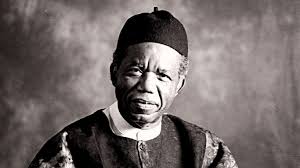
Chinua Achebe
Chinua Achebe

Another author who refused an award from his government was the renowned novelist Chinua Achebe. Nigeria offered him the ‘Commander of the Federal Republic’. But Achebe in a letter to the then-president Olusegun Obasanjo expressed his great discomfort with events in Nigeria. His letter said ‘I had a strong belief that we would outgrow our shortcomings under leaders committed to uniting our diverse peoples. Nigeria’s condition today under your watch is, however, too dangerous for silence.’ He again turned down the honour again in 2011

Not against the government, but Marlon Brando registered his protest against the establishment—in this case Hollywood. He refused the Oscar for Best Actor for the film Godfather in 1973, citing the ill-treatment of native Americans by the film industry as the reason.

Several Indians have refused the government’s high honours for several reason.  Maulana Abul Kalam Azad, freedom fighter and our first Education Minister declined the honour, taking the principled stand that those who were on selection committees for national honours should not themselves receive them.

PN Haksar bureaucrat and diplomat who served as Principal Secretary to the PM was offered the Bharat Ratna in 1973 specially in the light of his role in brokering the Indi-Soviet Treaty of Friendship and Cooperation, as well as the Shimla Agreement. He declined saying ‘Accepting an award for work done somehow causes an inexplicable discomfort to me’. Some other civil servants have also taken this stand.

A communist who probably set the standard for KK Shailaja was EMS Namboodiripad, General Secretary of the CPI (M) and the Kerala’s first Chief Minister who declined the 1992 Bharat Ratna–he said it went against his nature to accept a state honour.

Some others like Swami Ranganathananda have declined awards because it was given to them as individuals, and not to the organizations that they were part of—in this case, the Ramakrishana Mission.

Two prominent journalists—Nikhil Chakravarty and K. Subrahmanyam (who was also a civil servant)—refused Padma Bhushans because they thought it was not appropriate for journalists to accept awards from the government. As Nikhilda put it ‘journalists should not be identified with the establishment.’

Romila Thapar the distinguished historian refused to accept the Padma Bhushan twice. Her stand was that she would accept awards only ‘from academic institutions or those associated with my professional work.’

Several distinguished people have refused or returned honours due to specific incidents, as a mark of protest against the government. These include Hindi author and parliamentarian Seth Govind Das, and Hindi novelist and playwright Vrindavan Lal Varma, both protesting against the amendment of the Official Languages Act to allow for the continued official use of the English language. The famous Kannada novelist Shivram Karanth  returned his award to protest against the declaration of Emergency. PM Bhargava, scientist and founder-director of Centre for Cellular and Molecular Biology returned his award in protest of the Dadri mob lynchings and out of concern at the ‘prevailing socio-political situation’ in the country. Prakash Singh Badal ex-CM Punjab, and SS Dhindsa leader of the Shiromani Akali Dal (Democratic) party, returned their awards to show their support to the Farmers’ protests.

Some return awards because they feel the recognition has been delayed too long, or because they feel that people junior to them have been recognized before them. These include playback singer S. Janaki who felt it came too late. Sociologist GS Ghurye refused his award because he felt that people who had contributed less had been given more prestigious awards.

Whatever the reasons, when people of achievement refuse or return awards, governments and establishments need to seriously listen to the reasons. If they think the person is worth honouring, surely the point that they make by refusing the award must be worth listening to?

–Meena

The Conviction to Refuse an Honour

The Ramon Magsaysay Award is undoubtedly a high honour and prestige. Instituted in 1957 (with the first awards given in 1958), it is called the Noble Peace Prize of Asia. It ‘celebrates greatness of spirit and transformative leadership in Asia.’ It has till date, been conferred on 300 individuals and organizations  ‘whose selfless service has offered their societies, Asia, and the world successful solutions to some of the most challenging problems of human development.’ The awardees are selected by the Ramon Magsaysay Foundation trustees who call for nominations from a pool of international confidential nominators. The nominations go through a rigorous process of evaluation by the trustees.  

Awardees include Vinobha Bhave, the Dalai Lama, Mother Teresa, Verghese Kurian, Tribhuvandas Patel, The Peace Corps in Asia, Jayaprakash Narayan, Muhammad Yunus….the list of luminaries is distinguished indeed!

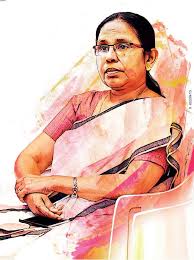
KK Shailaja
KK Shailaja

This year, Kerala’s former health minister KK Shailaja (called Shailaja Teacher) was one of those selected. This was in recognition of her stellar performance as health minister of Kerala, especially the management of Covid-19 in Kerala. She was one of the first people world-wide to recognize the potential seriousness of the virus, and ensured that her state was ready to combat it.

When she got the news of her award, Shailaja informed her party, the CPI(M). They deliberated on this and asked her to refuse it. Being a loyal party worker, she politely wrote to the Ramon Magsaysay Foundation refusing the award, saying that the battle against Covid was a collective effort, and that she was not individually responsible for it, and thus could not accept the award.

Controversy has raged since then. Was it jealousy on the part of some of her senior colleagues that she was getting such a high-profile recognition? It has been perceived for some time now that some of the party leaders in Kerala fear her success and her being highlighted on the international stage, and that is why she was refused a second term as Minister. Was it misogyny? That some people will do anything to bring down a successful women?

Well, maybe a bit of both.

But there is more to it. In fact, deep ideological reasons.

The Ramon Magsaysay Award was instituted in memory of Ramon Magsaysay, former President of the Philippines, and his commitment to integrity in governance, courageous service to the people, and pragmatic idealism within a democratic society.And indeed Ramon Magsaysay did live by these ideals. He did a lot for the people of his country, cleaned up the administration and made government responsive. He created the Presidential Complaints and Action Committee, a body which heard grievances of the public and recommended remedial actions.  He established the National Resettlement and Rehabilitation Administration (NARRA) which redistributed thousands of acres of lands to the landless. He set up the Agricultural Credit and Cooperative Financing Administration (ACCFA) to make available rural loans to small farmers and share tenants loans at low interest rates.He played a significant role in regional affairs too. Magsaysay’s presidency was considered one of the cleanest and most corruption-free in Philippine history.

So he was a tall leader, no doubt. But the explanation for Shailaja’s refusal of an award names after him goes a little further back in time. In early August 1950, using his own experiences in guerrilla warfare during World War II he was the strategist behind then-President Quirino’s plan to fight the Communist guerrillas. He led this attack when he was named Secretary of National Defence in September 1950. All his life, he opposed communism not only in speeches and forums, but also on the ground through military action.  All through his years in power, he was a close friend, ally and supporter of the United States whose foremost enemy was communism.  All his life, Magsaysay was a vocal spokesman against communists. 

So that is one part of it.

Coming to the award itself. The Ramon Magsaysay award was instituted through an endowment from the Rockefellers Brothers Fund. The Rockefellers were staunchly anti-communist. For instance, as Assistant Secretary of State, Nelson Rockefeller played a big role in the establishment of NATO, its stance against the Soviet Union, and the resolution of NATO members to defeat communism and its spread. The Rockefellers also had a big hand in the shaping of the UN and its stance against communisim.

So the people who instituted the award as well as the man whom it commemorates were dead against communism.

To me, it makes sense why Ms. Shailaja, a life-long member of the Communist Party of India (Marxist), with a deep committment to the communist ideology, refused the award. I am now a bigger fan than ever!

KK Sahilaja has a host of awards and recongitions from across the world, and awards probably do not matter to her.

But I hope that she will be able to play a bigger part in the management of public affairs not only in her state but the country too. We would be the poorer if she cannot!

–Meena

The Biscuity Taste of Nostalgia

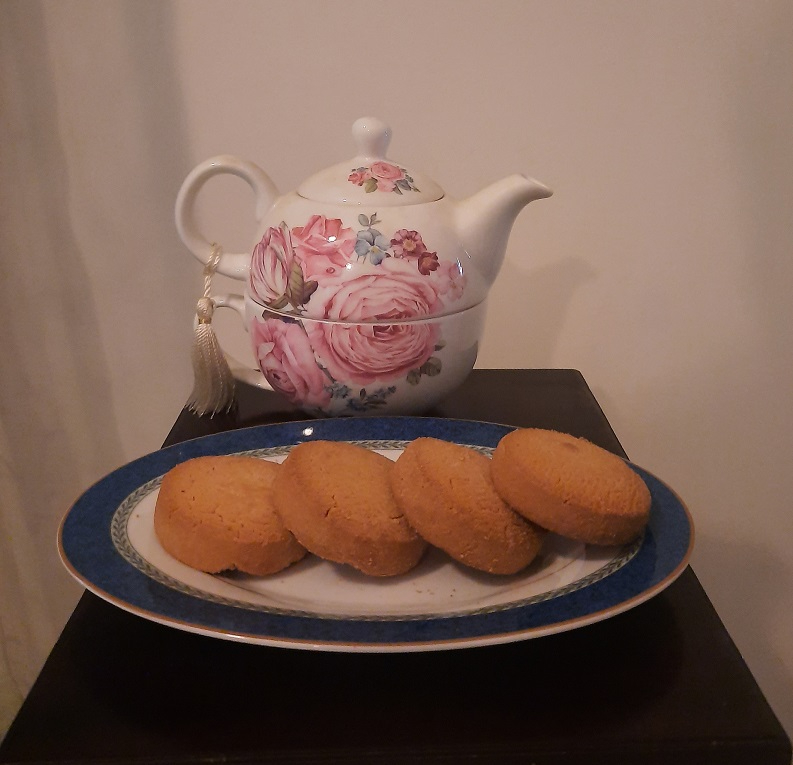
Last week, some friends knowing that we had spent several years at Hyderabad, brought us a box of Osmania biscuits. One of the specialities of Hyderabad, as per the box, the recipe for the biscuits wsa thought up on the demand of the last Nizam of Hyderabad, Mir Osman Ali Khan, who wanted a snack that was a little sweet and a little salty. So teatime this week has been pretty good!

Which made me think about biscuits in general. What exactly is a ‘biscuit’?

The word biscuit came to English from French (bis-qui), which is from the Latin root panis biscotus, which roughly means ‘bread twice cooked’. The origin of biscuits goes way back maybe even to Neolithic times. But for sure the Romans had them. In Roman times, biscuits were basically bread which was re-baked so that it would last longer, and hence could be useful for marching armies or travellers. From the 14th century onwards, biscuits became popular in England and were an important part of naval food supplies, carried on ships which set out on long journeys. These naval biscuits were highly inedible, but still an important part of a ship’s provisions as they could last for very long!

As per the dictionary, a biscuit is ‘a small baked unleavened cake, typically crisp, flat, and sweet’. Which of course is inadequate, as biscuits are often salty, and as we shall see below, sometimes leavened (made with yeast or other raising agent).

Biscuits apparently fall into four broad categories. The categories are differentiated by their recipes (mainly the amount of fat, sweet and water), and the baking process. These are:

Crackers:This covers a wide range of products characterised by crispy, open texture and savoury flavours. They are leavened.

Hard sweet biscuits: They have low sugar and fat. They have an even colour and texture,  and good volume.

Short doughs (moulded biscuits): The doughs for these are ‘short’ (ie, have more fat and less water) compared to the dough for crackers of hard sweet biscuits.

Cookies (inlcuding filled cookies): These are made from very soft doughs which are put directly on to the oven band for baking.

India is a pretty big consumer of biscuits—another legacy of our colonial past, I suppose.  Per capita consumption of biscuits in India has been estimated at 2 kilos. The biscuit industry was valued at Rs. 37,000 crore before the pandemic. Lockdowns were good for biscuits, as people stocked up on these foods with long shelf-lives, and the industry saw sharp growth.  The top-selling brands domestically are: Parle-G, Marie Gold, Good Day, Unibic and Bourbon.

India is also an important producer of biscuits along with the US and China. Significant quantities are exported to Haiti, Ghana, Angola, the UAE and the US

My all-time favourites are from a bygone era. In Delhi, my mother would take tins of atta, ghee and sugar to a nearby bakery in the morning, and send one of us to collect the biscuits in the evening. It was difficult not to slyly ‘steal the cookie from the cookie jar’ on the way home. These atta biscuits had typical stripes running along the length. I don’t know if local bakeries even exist today or take such custom-orders. But those biscuits were delicious!

Another biscuit I miss are the Mangaram wafers, or cream biscuits as we used to call them. They came in yellow and pink. They were more expensive than the normal biscuits and so were a special treat for special occasions—birthdays or if one did exceptionally well in a test or exam! Apparently, the Mangharams were from Sukkur, Sindh and had a major factory there from 1937 onwards (as also factories in Delhi, Calcutta and Mumbai). The Sukkur factory was declared evacuee property and given to a Muhammad Yakoob. It was re-named the Yacood Factory. JB Mangharam, the patriarch of the family, settled in Gwalior when they came to India during Partition, and started a factory there. After the death of the founder, the company was restructured in 1969 and again in 1977. In 1983 it became a part of the Britannia Group. Somewhere along the way, the cream biscuits fell out of favour. Was it that the family was too caught up in internal squabbles to pay attention to its star product? Or could they not keep with external competition? Or was it that tastes changed? Whatever the reasons, old-timers like me will always miss those light, sweet, exotic biscuits.

–Meena

PS: Maybe modaks or ladoos would have been a more appropriate topic today. But somehow I feel Ganesha would be game to try something new—a plateful of sweet cookies for instance. Happy Ganesh Chaturthi!

Fruity Names

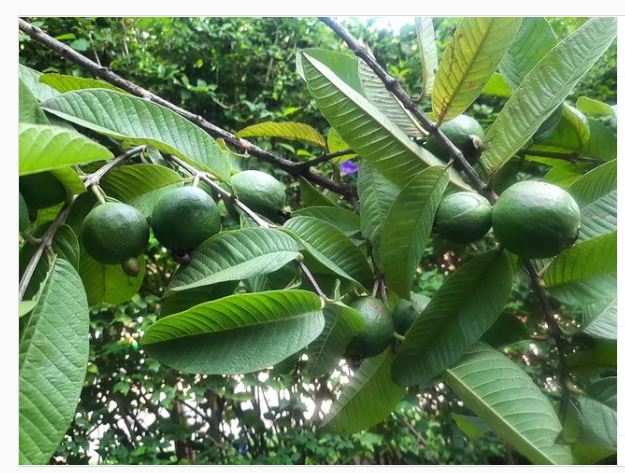
I have a guava tree which has just started fruiting this year. And with the enthusiasm of a newbie, it is overdoing the act. But I must marvel at its boldness—a thin, weak tree, it has literally 10s of fruits on each branch and is completely bowed down with the weight. Even after the birds and squirrels have done feasting on them, we are left with about 5-6 fruits every day. Which is a lot more than we can eat.

So I decided to check out some guava-based recipes. A visit to cooking sites threw up a few promising ones. But I got side-tracked. Browsing through the pages, I was reminded that guavas, apart from being called amrood, are also called peru. I was intrigued. Where did that name come from? A fairly straight forward explanation: Guava is believed to be a native of Peru in South America. Guavas came to India only around the 16th century, and probably because consignments were received from Peru, people in and around the port of Bombay started calling it that.  The fruit took well to Indian growing conditions and became popular here. Today peru or guava is the fifth-most widely grown fruit crop of India!

Guava
Guava, also called Peru

That got me thinking of the names of other fruits and vegetables which take their names from the names of places. Obviously, they are not called that in their place of origin, but when they travel, they take along the name. I doubt if anyone in the country of origin knows that the fruits are carrying the names of their countries far and wide, albeit in a strange context (how confusing it would be if people in Peru called a fruit ‘peru’!). And for sure, most people in the destination country after a passage of time, don’t link the name of the fruit to anything–a name is a name is a name and just is.

Here is a look at some more such fruit names

Peaches were called persicum—‘Persian apples’–by the Romans because they were traded by Persians. And a variation of the name stuck in English.

The name ‘currant’ is derived from the ancient Greek city of Corinth, which was known for its production of small dried grapes now known as currants.

Musk melons are sometimes called Cantaloupe. Though the fruit is not native to Italy, it was brought to the Cantus region of that country from Armenia and gained popularity there. As it slowly spread from there to other parts of the world, it carried the name of the Cantus region with it.

Oranges are indigenous to India and the origin of the name is from the Sanskrit naranaga. Most languages call oranges by some variation of this name. But in Greek, it is called portokali  because Portugese merchants traded in them.

Oranges spread far and wide, and variations developed. A type of blood orange which originated in the Mediterranean islands of Malta circled back to India and we call it the ‘Malta’. It is widely grown in Uttarakhand today. Tangerines are a variant which come from Tangier, Morocco.

Though the tamarind probably has its origins in tropical Africa, it has been cultivated in the Indian subcontinent for so long that it is universally known as Tamarind—the date of India!

Even apart from being named for the place of their origin, fruit and vegetable names are often prefixed with place names. The Devenahalli Pomelo for instance, is a special variety of the fruit which grows only in the Devenahalli area around Bangalore airport, and is tagged with Geographical Indicator (GI) status.  Another example is the Shimla Mirch. When the British brought capsicum to India, they first cultivated it in Shimla, so the name of the district is still used to refer to the now-ubiquitous vegetable.

The Nagpur orange, Lima beans, Brussels sprouts, are all named for places where they originated or where they grew abundantly. Ponni rice, so popular in the South, derives its name from the Cauvery, also called Ponni (meaning gold), since it grows in the deltas of this river.

Interestingly, the origin of the word ‘fruit’ itself can be traced back to the Latin word fructus, which comes from frui meaning ‘to enjoy’.

What could be more appropriate!

–Meena

PS: I found a few recipies for peru subzi and chutney, which shall be tried out in due course.

The Jawaja Project

One of the criticisms against academic institutions is that they are far removed from every day realities and seldom contribute in solving real-life challenges.

The Jawaja project undertaken by IIM Ahmedabad in partnership with the National Institute of Design (NID), Ahmedabad is an early exception.

It was in 1975 that Ravi Mathai, IIM-A’s legendary first fulltime director, set out on a journey to see how corporate management principles could be used to solve the major problem facing India-poverty. Ravi had stepped down as Director and could now devote time to such a project.

The decision was taken to work in Jawaja, a drought-prone district of Rajasthan, consisting of about 200 villages and 80,000 population. There seemed very little scope for development there, given the arid landscape and lack of water and other physical resources. But Prof Ravi Matthai had a different perspective, because he saw people as the biggest resource.

As they understood the area better, they found that the area had a 300-year tradition of leather-craft. The communities there were also skilled at weaving. And so they decided to build on these skills to develop sustainable livelihoods for the communities there. Prof. Mathai roped in NID to join hands with IIM-A, to work on livelihoods and empowerment of the communities in Jawaja. He and Ashoke Chatterjee, his counterpart in NID, started the journey which involved many faculty from both institutes.

The idea was to connect artisans with contemporary disciplines of management and design, and knowledge institutions which had this knowhow. There were some important basic principles underpinning the effort. The first and foremost was that the relationship was one of mutual respect and learning—after all, even as the communities learnt new skills, the faculty of the institutions were learning how their knowledge could be put to use in solving social problems. Another important aspect was to see how much of the value chain could be controlled by the artisans and communities themselves, so that their incomes could be enhanced. The idea was to innovate and design new products which would have new markets, so that the traditional value chains could be broken and the craftspeople could play a greater role in more areas. The focus was also on working in groups, to give greater resilience and strength to the efforts.

Jawaja bag
A prized Jawaja bag

The process was by design a gradual one, moving from basic products which did not need very high quality—e.g, leather school bags and woven floor mats, to higher value ones like office supplies, more trendy bags, and high-end furnishings.

The challenges were of course many. Apart from the need to design new products which would use the old skills, technologies and equipment, another major concern was quality control.

With regard to production of new designs, a train-the trainer model was envisaged, which did not work quite as planned. With regard to quality control, the idea was that it would initially be done by external experts, and would then be taken over by the crafts groups themselves. This again went slower than foreseen. Funds and resources for developing new products and for procurement of raw material were always a constraint.

But the enduring success of the bold experiment is seen even today at several levels.

The first was the creation of self-reliant institution of crafts people– the Artisans’ Alliance of Jawaja and its associations. These started to manage all links of the value chain in Jawaja, from raw material procurement, finances, bank dealings, design and technology know how, and marketing processes. These are still active today and continue to innovate, produce and market these products which are highly valued.

The second is the impact of the project on the larger development scene. It was the learning from running this grassroots education and empowerment project that the idea of setting up a specialized institution for education in rural management came up, and the Institute of Rural Management (IRMA), Anand, was born. This was given shape by Prof Ravi Mathai and two other professors who had been with IIM-A—Dr.Kamala Chowdhary and Dr.Michael Halse.

The Jawaja experiment widespread legacy is that it influenced development sector thinking on how to approach community-based livelihood interventions in a spirit of mutual respect and learning.

It is an initiative which needs to be much more widely known, understood and discussed.

–Meena

Fabrics for Freedom: Khadi and Beyond

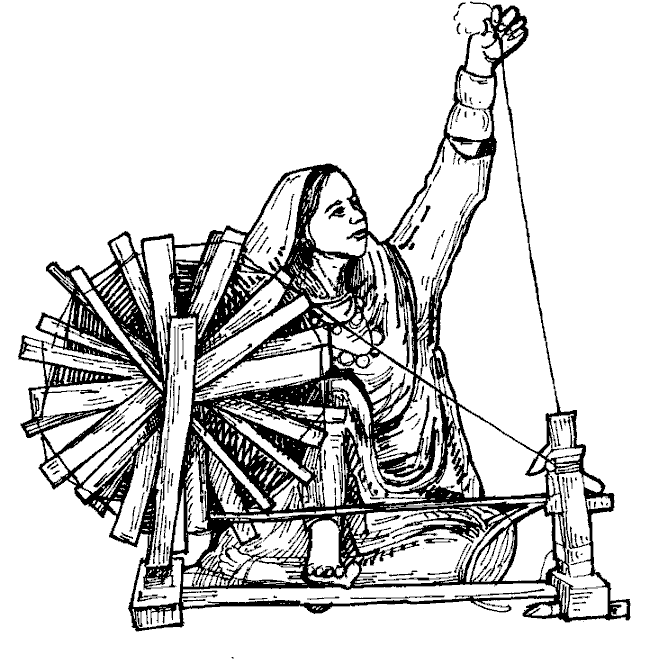
We are all aware of how central khadi was to our struggle for independence. It was not only about defying the British and refusing to buy their imported cloth, but a potent symbol that it was not mere freedom from colonial rule that was critical, but also economic independence—a means of livelihood for millions of people of the country. In the words of Divya Joshi: ‘Gandhiji presented khadi as a symbol of nationalism, equality and self-reliance. It was his belief that reconstruction of the society and effective Satyagraha against the foreign rule can be possible only through khadi….The spinning wheel was at one time the symbol of India’s poverty and backwardness. Gandhiji turned it into a symbol of self-reliance and non-violence.’

Khadi

But India is not the only country where spinning and weaving of textiles were a core part of a movement for independence. Another large British colony also used this as a weapon. This was the USA!

Britain saw its colonies including the American territories, as suppliers of raw material, insisted that they export all cotton to it, and buy all finished cloth from it. And of course it imposed huge taxes on all these products including fabric.

In defiance, the people in the American colonies started spinning their own cloth, and the spinning wheel because as important a symbol of patriotism in Americanin the 1760s and 1770s as the charkha was to the become in the 20th century in India.

Women were at the forefront of the spinning movement in the American War of Independence, and created their own homespun cloth to disrupt the British monopoly.  Fabric made this way was called “homespun.” Wearing homespun was a symbol of patriotism.  

In certain areas like New England, women showed their protest by going to ‘spinning bees’ where they would set up spinning wheels and keep each other company while they spun yarn. And these were not isolated events—for instance, in a single area, from Harpswell, Maine to Huntington, Long Island, over 60 spinning meetings were held over 32 months starting in March 1768.

The Daughters of Liberty, a group of political dissidents who got together to fight for liberty, were at the forefront of these spinning bees. They organized boycotts of British goods, especially tea, and they manufactured replacement products, especially cloth.

As in India, spinning was at the centre of a lot of publicity and was a rallying point for the freedom fighters. Newspapers reported elaborately on the smallest cloth-making development to amplify the message. Spinning schools were set up and awards were offered for the person who wove the most cloth. Old and young learnt to spin—it is reported that a 70-year-old woman in Newport, R.I., learnt to spin for the first time during the movement. Competitions were held—‘in 1769, two Connecticut women held an all-day spinning contest in which the winner spun seven skeins and two knots of fine linen yarn, just a little more than her competitor’.

The boycott of imported fabric and other goods from tea to molasses, worked, and it is estimated by some sources that the value of imported goods from Great Britain to the US fell by half in 1769 over the previous year, from 420,000 to 208,000 pounds.

So ‘swadeshi’ proved a potent war cry against imperial colonizers halfway across the world!

As it did in India almost 150 years later–rallying self-confidence, morale, giving a sense of identify.

Happy Independence Day!

Buying one pair of Khadi clothes a year can contribute to livelihoods for our millions of weavers. And they need it more than ever now, as the spinning of the national flag, which was their monopoly, has been taken away.

–Meena

Animal Tales

Since the beginning of human history, people and animals have lived in close contact. Animals are an integral part of our lives. The relationships vary: animals may be domesticated for work; they may be loved as pets; they may be hunted as food; they may be admired and envied for their strength or other qualities; they may be. But even beyond these relationships, animals fascinate humans and so the numerous myths and stories, the worship of animals, and their symbolism.  

In last week’s post marking International Tiger Day, we saw a few myths, stories and legends about tigers. While there are many tiger-stories, it is not just tigers, but many, many animals and birds—real and imaginary who feature in these tales.

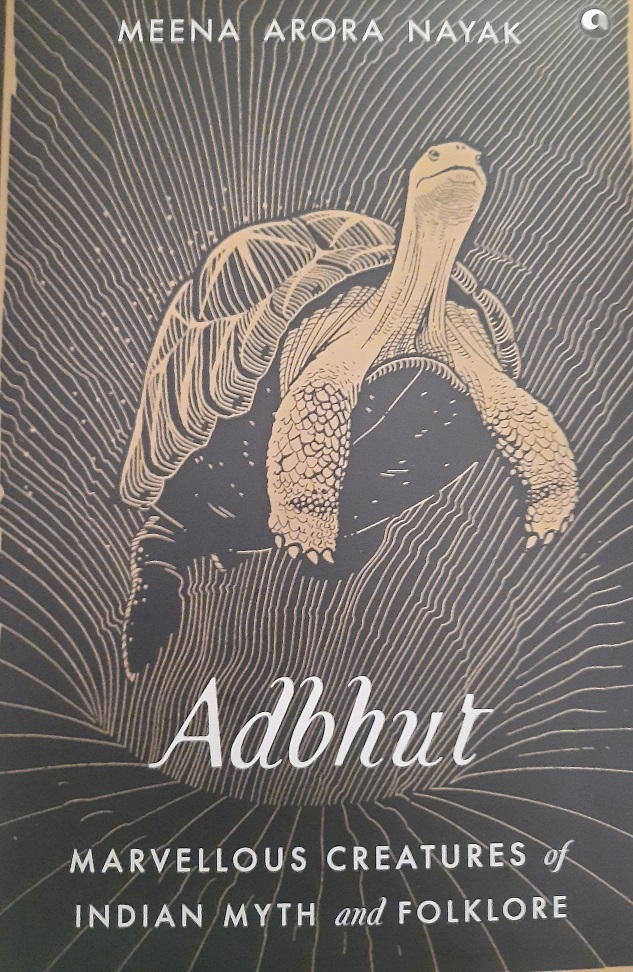
The book ‘Adbhut: Marvelous Creatures of Indian Myth and Folklore’ by Meena Arora Nayak, provides an overview of many of these. The book compiles 55 stories, drawing from all religious and cultural traditions.

The book is organized into different sections: Creatures of the Sky; Creatures of the Sea; Creatures of the Earth; Other Creatures of Air, Water and Land—Worms, Insects, Reptiles and Dragons; and Creature of Amalgam.

The last two are less familiar categories, so here are a few fascinating stories drawn from these sections of the book:

Bhramari the Beehive Goddess: Aruna was a daitya who had received a boon from Brahma, giving him immunity from death by war, weapons, man or woman, biped or quadruped or a combination thereof. To circumvent these conditions, Goddess Adi Shakti took the form of Bhramari, and her body became a beehive from which swarms of bees emerged. The bee swarms attacked and destroyed the daityas, who had no weapons against them. And at the end of the mission, all the bees merged into the Goddess’ form.

Shamir the Stone-cutting Worm: Shamir the worm was just the size of a grain of barley, but his gaze is so sharp that it could cut through stone, iron and even diamond. It is believed that the Shamir was used by Moses to engrave the names of the twelve tribes of Israel on the breastplate of a priest. After this, Shamir disappeared. It was with great difficulty that King Solomon found him and brought him to help build the First Temple in Jerusalem. The King did not want to use any tools to cut the stones because the use of such tools symbolized violence. He therefore used the shamir to cut the stones.

Nariphon the Plant Women: Both Hindu and Buddhist traditions talk about these. The mythical mountain of Meru stands in the midst of thick forests. The trees in this forest bear not fruits but beautiful young women. They emerge from the pods feet first, hanging from the trees on stems attached to their heads. They are about eight inches long. It is believed that in the last incarnation of Buddha before he was born as Siddhartha Gautama, he was so generous that his people banished him, his wife Maddi and children, to the jungle so the kingdom did not go bankrupt. Indra is said to have created Nariphon so that the eyes of itinerant sages would be drawn to these exquisite little creatures rather than to Maddi.

An interesting book which gives insights into the fascinating relationships of humans and animals, and reminds of the close bonds between humans and other animals. While not told in a story-telling style, it does indicate how our love, fears, imagination all come into play in the creation of myths and legends. The book lends itself to creative illustrations, and one wonders why only the back and front covers have them.

–Meena

The Proud Tricolour

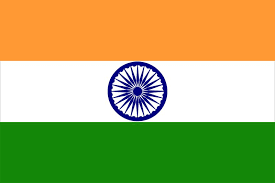
75 years ago, on 22 July 1947, Jawaharlal Nehru moved the motion for the adoption of the national flag. This is what he said on the occasion: ‘the national flag of India shall be horizontal tricolor of deep saffron (kesariya), white and dark green in equal proportions. In the centre of the white band, there shall be a wheel in navy blue to represent the chakra.’

Indian flag

Today, there are many who interpret the symbolism of the flag in different ways. But it would make sense to go back and understand the thinking of the founding fathers of the nation, who discussed and debated these issues long and hard. And what better way to understand this than through the words of one of the most eminent thinkers of the 20th century, academic, statesman and philosopher, Dr. Sarvepalli Radhakrishnan?  Dr. Sarvepalli Radhakrishnan later President of India, speaking on the motion moved by Nehru, explained the meaning of the flag design. Here are some quotes from this speech:

‘The world is full of misunderstandings, suspicions and distrusts. In these difficult days, it depends on us under what banner we fight. Here we are putting in the very centre the white, the white of the sun’s rays. The white means the path of light. There is darkness even at noon .. but it is necessary for us to dissipate these clouds and control our conduct—by the ideal light, the light of truth, of transparent simplicity which is illustrated by the colour of white.

We cannot attain purity, we cannot gain our goal of truth unless we walk the path of virtue. The Ashoka wheel represents the wheel of the law, the wheel of Dharma. Truth can be gained only by the pursuit of the path of Dharma, the practice of virtue. Truth, dharma, virtue, these ought to be the controlling principles of those who work under this Flag.’

‘The red, the orange, the Bhagwa colour, represents the spirit of renunciation. …Our leaders must be disinterested. They must be dedicated spirits.’ ..’That stands for the fact that the world belongs not to the wealthy, not to the prosperous but to the meek and humble, the dedicated and the detached.’

‘The green is our relation to the soil, our relation to plant life here on which all other life depends. We must build our Paradise here on this green earth. If we are to succeed in this enterprise, we must be guided by truth (white), practice virtue (wheel), adopt the method of self-control and renunciation (saffron).’

 In the same speech, he refers to the need for our society to change what is wrong with it. ‘Dharma is something that is perpetually moving. ..There are so many institutions which are worked into our social fabric like caste and untouchability. Unless these things are scrapped, we cannot say that we either seek truth or practice virtue. ..Our Dharma is Sanatana, eternal, not in the sense that it is a fixed deposit, but in the sense that it is perpetually changing…So even with regard to our social conditions, it is essential for us to move forward.’

Dr. Radhakrishnan occupied the George V Chair in Philosophy at Calcutta University; served as Vice Chancellor of Andhra University and Benaras Hindu University. Oxford University appointed him to the H.N. Spalding Chair of Eastern Religions and Ethics. He served on India’s Constituent Assembly and also as chairman of the University Education Commission. He was a chairman of the Board of UNESCO and leader of the Indian delegation to the same. He was Indian Ambassador to Moscow, then Vice President of the country, and its second president from 1962 to 1967.

He was a nationalist who believed in an India built and guided by those who were truly educated, by those who had a personal vision of and commitment to raising Indian self-consciousness.

His scholarly works include: Indian Philosophy, 2 vol; The Philosophy of the Upanishads;  An Idealist View of Life Eastern Religions and Western Thought;  East and West: Some Reflections; A Sourcebook of Indian Philosophy; and The Pursuit of Truth.

And of course, many of us have grown up reading his Ramayana and Mahabharata!

So as we mark the 75th anniversary of the adoption of the Tricolour, and are almost upon our 75th Independence Day, it is time to re-dedicate ourselves to the real meaning of the flag, which Dr. Radhakrishnan’ sums up as: ‘The Flag tells us ‘Go ever alert, be ever on the move, go forward, work for a free, flexible, compassionate, decent, democratic society in which Christians, Sikhs, Moslems, Hindus, Buddhists, will all find a safe shelter.’

–Meena

Purposefully Unparliamentary

Over the last week, media has been full of news, editorials, funny pieces and trying-to-be-funny pieces about the list of banned words issued by the Parliament Secretariat in India—apparently a standard practice before the start of a session.

banned words

The use of language and words is a zone of contention in most parliaments across the world. Nor is this a phenomenon of recent times. The earliest recorded instances are from 991 AD, when incidents of ritual cursing and boasting (called flyting) were reported between Germanic chieftains.

The discretion to rule what is acceptable and what is not, is generally left to the Speaker of the house, but there are often lists and books and rules to guide them. While some Speakers revel in the power to cut down the words of their House colleagues, others feel constrained to do so by the duty imposed on them. For instance, ‘Un-parliamentary language is one of the things for which a Speaker must be on guard. Since the beginning of Confederation, a list has been drawn up of words, expressions and sentences that are not to be used by Members in the House. To employ them is to incur the wrath of the presiding officer of the day, and the penalties can be swift and harsh.. Now, as a humane, civilized man, it is not a task I relish, but there must be discipline in the Chamber, and I will take whatever measures, no matter how repressive they may seem, to quell unrest.’ said the Speaker of the Canadian House in 2001.

But obviously the members test the limits. For instance, the Scottish Parliament objected to the First Minister being called a liar. So the member who used that word substituted it with ‘dishonest’ and ‘perpetuating a con trick’, which had the precedent of having been used in the same debate but not objected to.

Or they use the word and then apologize: Irish MP Paul Gogarty of the Green Party used the F-word after being heckled by the opposition. He immediately apologized for the rant, which he admitted was “the most unparliamentary language”. Justin Trudeau, before he became PM of Canada, called an MP a ‘piece of shit’ and then quickly apologized.

On the other hand, some don’t apologize or withdraw their words, and are ready to face the consequences. Plaid Cymru AM calling the Queen “Mrs. Windsor” and became the first MP to be ordered out of the Welsh assembly chamber  because she refused to withdraw her words. In the UK, Dennis Skinner called the then-PM David Cameroon “Dodgy Dave”, and was kicked out from the Commons.

There is actually a lot academic research and theorizing on why parliamentarians are so unparliamentary in their speech! Here are some insights from ‘Language and Ideology’ a book edited by Rene Dirven, Roslyn Frank and Cornelia Ilie, which has a whole chapter devoted to this: ‘In a hierarchically-based and rule-regulating setting like parliament, insults are powerful because they challenge the ‘status quo’.’

Our parliamentarians will surely agree with the following finding: ‘Language users have noticed that abusive and derogatory words tend to have a detrimental effect on the target of the insult, while at the same time, they may strengthen the position of the insult initiator.’ The researches aver that ‘By offering the insults publicly, insult initiators intend to reach a wider audience.’

The book explains the three major objectives of parliamentary insults:

  1. To score points by silencing, embarrassing, and/or humiliating political adversaries
  2. To challenge the authority and institutional role of political adversaries
  3. To redress the political imbalance and to strengthen group cohesion.

So next time we hear some unparliamentary language, more than worrying about the words, maybe we should try to fathom the motive!

–Meena