Space Seeds to Moon Trees

It is Moon Week! Meena wrote about the different facets of the moon, in fact and fantasy. Just a couple of days ago, the Axiom 4 mission returned from its space sojourn with Grp. Captain Shubhanshu Shukla being a proud Indian member of the team. Much has been in the news about the experiments that the team carried out while on the International Space Station (ISS). One of these experiments was to sprout methi and moong seeds in petri dishes and then storing these sprouts in a storage freezer on the ISS. This experiment was part of the Sprouts project, designed to study how spaceflight affects food germination and plant development. Insights from this project could transform space agriculture to enable it to support a reliable supply of food for future space travelers. Some of the seeds will also be brought back to earth, and cultivated over several generations while research is carried out on the genetic, microbial and nutritional changes in these space-returned seeds. Today, astronauts on the International Space Station (ISS) regularly eat salad grown on board. Future long-duration exploration of the Moon and Mars depends on being able to grow fresh food in deep space.

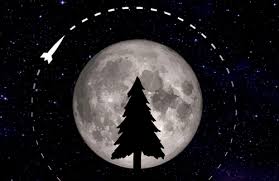
Seeds have been travelling to space since 1971 when the Apollo 14 mission was launched. The mission put two astronauts Alan Shepard and Edgar Mitchell on the moon. As they walked on the moon the third astronaut Stuart Roosa continued to orbit above in the command module. Stuart Roosa was a former US Forest Service smoke jumper (a fire-fighter who parachutes to the site of a forest fire), before becoming a military aviator and astronaut.

When Roosa was selected for the moon mission he was entrusted with another important mission—to carry hundreds of seeds of trees with him. This was part of a joint experiment of NASA and the US Forest Service which selected seeds from five different types of trees. The seeds were x-rayed, sorted and classified, and sealed in small plastic bags stored in a metal canister. Roosa, the official ‘seed ambassador’ for the project carried the canister with more than 2000 seeds in a small canvas pouch as part of his personal belongings. This was the first time that seeds were being sent into deep space and it was an experiment to study how this would affect the seeds’ health, viability and long-term genetics. The seeds under Roosa’s care successfully completed the mission to the moon, but following their return the seed bags burst open during the decontamination process, leading to fears that the experiment’s environment had been contaminated and the seeds would not be viable. Nevertheless they were sent to the Forest Service offices in several places to see if they would germinate. In fact, many did germinate and grew into viable saplings. These 450 saplings were gifted to schools, universities, parks and government offices across the United States, in suitable locations in terms of climate and soil.

The saplings grew into trees which came to be known as ‘Moon Trees’. These were planted alongside their Earth-bound counterparts in order to compare the two. Fifty years later both grew into mature trees with no discernable difference.

Subsequently the collaboration between NASA and US Forest Service has continued with more seeds traveling to space with different missions. Upon their return the space seeds have been planted, and the next generation of Moon Trees are taking root and growing in multiple places. While the seeds in space have contributed to science, the Moon Trees are playing an important role in sparking curiosity about space, fostering a deeper understanding of NASA’s missions among the new generations of students, and nurturing community connections where they thrive.

Today there is a Moon Tree Foundation which aspires to unite, inspire, and conserve by planting a Moon Tree in every corner of the world. Its mission is to inspire interest in education, science, space, conservation and peace for all mankind. Moon trees serve as a reminder to take care of our planet for future generations as “we are under the same sky, looking at the same moon.”

–Mamata

Compassion is the Answer: Dalai Lama

We live in a world that is war-worn, strife-torn, and increasingly becoming inured to the constant barrage of news and images that depict the most deplorable facets of human nature and behavior. Amidst such a depressing state of affairs, we feel helpless and downhearted; we fear that we have already reached a tipping point from where there is no way of turning back, where we seem to be hurtling towards a future which, in a sense, has no future.

There are so few today in the world who can instil a ray of light, a light that can help us navigate the seemingly impenetrable darkness that engulfs us.  In this fog of gloom and doom we yearn for some words of wisdom, a glimmer of hope, a Sherpa who can guide us through.

Who better can we turn to than His Holiness the Dalai Lama, who has dedicated his life to the cause of peace, love and compassion? As we recently celebrated the 90th birthday of this remarkable human being, it would be fitting to share some of this thoughts on love and compassion as guiding lights.

Some of my friends have told me that, while love and compassion are marvellous and good, they are not really very relevant. Our world, they say, is not a place where such beliefs have much influence or power. They claim that anger and hatred are so much a part of human nature that humanity will always be dominated by them. I do not agree.

All sentient beings, not only human beings, but birds and animals too, want to live in peace. Amongst all these beings, humans are probably the most mischievous. We have a marvellous intelligence, but sometimes it is misdirected by negative emotions. Predators such as lions and tigers have claws and fangs that equip them to hunt, kill and eat meat. However, they only prey on other animals when they need food. Human beings, on the other hand, cause trouble even when there is no justification.

Can we change this? I believe we can, because it is our essential nature to be compassionate. From the moment we’re born our mother takes care of us. Without this care we would not survive. This experience is our first opportunity to learn that compassion is the root of all happiness. However, this natural appreciation of compassion seems to fade once we go to school. We need to be reminded that good health and a peaceful state of mind are founded on love and compassion.

How can we start? We should begin by removing the greatest hindrances to compassion: anger and hatred. As we all know, these are extremely powerful emotions and they can overwhelm our entire mind. Nevertheless, they can be controlled. If, however, they are not, these negative emotions will plague us – with no extra effort on their part! – and impede our quest for the happiness of a loving mind.
 
So as a start, it is useful to investigate whether or not anger is of value. Sometimes, when we are discouraged by a difficult situation, anger does seem helpful, appearing to bring with it more energy, confidence and determination.

 
Here, though, we must examine our mental state carefully. While it is true that anger brings extra energy, if we explore the nature of this energy, we discover that it is blind: we cannot be sure whether its result will be positive or negative. This is because anger eclipses the best part of our brain: its rationality. So the energy of anger is almost always unreliable. It can cause an immense amount of destructive, unfortunate behaviour. Moreover, if anger increases to the extreme, one becomes like a mad person, acting in ways that are as damaging to oneself as they are to others.

It is possible, however, to develop an equally forceful but far more controlled energy with which to handle difficult situations.
 
This controlled energy comes not only from a compassionate attitude, but also from reason and patience. These are the most powerful antidotes to anger. Unfortunately, many people misjudge these qualities as signs of weakness. I believe the opposite to be true: that they are the true signs of inner strength. Compassion is by nature gentle, peaceful and soft, but it is very powerful. It is those who easily lose their patience who are insecure and unstable. Thus, to me, the arousal of anger is a direct sign of weakness.

So anger and hatred are always harmful, and unless we train our minds and work to reduce their negative force, they will continue to disturb us and disrupt our attempts to develop a calm mind. Anger and hatred are our real enemies. These are the forces we most need to confront and defeat, not the temporary enemies who appear intermittently throughout life.

And who creates such opportunities? Not our friends, of course, but our enemies. They are the ones who give us the most trouble, so if we truly wish to learn, we should consider enemies to be our best teacher!

 For a person who cherishes compassion and love, the practice of tolerance is essential, and for that, an enemy is indispensable. So we should feel grateful to our enemies, for it is they who can best help us develop a tranquil mind! Also, it is often the case in both personal and public life, that with a change in circumstances, enemies become friends.

You should realize that even though your opponents appear to be harming you, in the end, their destructive activity will damage only themselves. In order to check your own selfish impulse to retaliate, you should recall your desire to practice compassion and assume responsibility for helping prevent the other person from suffering the consequences of his or her acts.

So far I have been discussing mainly the mental benefits of compassion, but it contributes to good physical health as well, According to my personal experience, mental stability and physical well-being are directly related. Without question, anger and agitation make us more susceptible to illness. On the other hand, if the mind is tranquil and occupied with positive thoughts, the body will not easily fall prey to disease.

I believe that at every level of society – familial, tribal, national and international – the key to a happier and more successful world is the growth of compassion. We do not need to become religious, nor do we need to believe in an ideology. All that is necessary is for each of us to develop our good human qualities.

Ultimately, humanity is one and this small planet is our only home. If we are to protect this home of ours, each of us needs to experience a vivid sense of universal altruism. It is only this feeling that can remove the self-centred motives that cause people to deceive and misuse one another.

Much has been written about the Dalai Lama in the past few days. His birthday on 6 June is designated as the Universal Day of Compassion. What better reminder than his own words, of how compassion can be a universal guiding light. With all heartfelt wishes that we continue to be blessed by his wisdom and love for many more years to come.

Excerpts from https://www.dalailama.com/messages/compassion-and-human-values/compassion

–Mamata

The Real James Bond

Recently there was news that a woman has been appointed as the head of the British Foreign Surveillance Agency. This is the first time in its 116 year-long history. For readers of spy fiction, and even more, fans of the popular James Bond films, this may sound as a deja-vu. After all we have such a clear image of the formidable Dame Judy Dench playing this role as M, in the fictitious MI6. In many ways the intricate workings of the MI6 and its key characters have been deeply etched in several generations of Bond followers, first through the books, and subsequently through the movies. “The name is Bond. James Bond” immediately conjures up the image of the suave but tough, risk-taking, swashbuckling, gizmo-loving hero, who has been played on screen by a series of actors starting with the inimitable Sean Connery.

James Bond: a simple name that is almost synonymous with these qualities. How did this happen? The christening of Bond is a fascinating story in itself.

The creator of this character, Ian Fleming was a British Naval Intelligence Officer during World War II.  As part of his work he interacted with several spies from different countries. After the war, Fleming left the Service and decided to devote himself to writing spy novels.

He did all his writing from his winter home in Jamaica, then a British colony. He bought several acres of land and built a house mainly based on his own design. He named the house GoldenEye, named after an intelligence mission of the same name that he had overseen during his time with the Intelligence Service. This is wherehe wrote his first book Casino Royale which introduced Secret Agent 007. He named the character James Bond. This did not spring from his imagination; it was the name of an ornithologist whose books Ian Fleming, himself a birder, used to refer to while he was in Jamaica. Fleming thought that it was a perfect name for a spy as it was ‘ordinary and unromantic, but sounded masculine’. As he explained later: I was determined that my secret agent should be as anonymous a personality as possible. Even his name should be the very reverse of the kind of “Peregrine Carruthers” whom one meets in this type of fiction.

This ‘real’ James Bond was born in America but moved with his father to England when he was 14 years old, and he was educated at Harrow and Cambridge. He then returned to the United States and tried his hand at banking upon the urging of his father. But he gave this up and joined the Academy of Natural Sciences of Philadelphia as an ornithologist (self-taught). He began to focus on the birds of the Caribbean islands, undertaking long strenuous voyages on mail ships (despite being prone to seasickness), and hopping from island to island on local banana boats and tramp steamers. This is where he found his true calling. He explored the thick foliage of the islands on foot or horseback, surviving on whatever he could find. He recorded and collected bird samples. From the 1920s through the 1960s, Bond the birdman undertook more than 100 scientific expeditions to the West Indies. He collected more than 290 of the 300 bird species known to the West Indies. He wrote more than 100 scientific papers on Caribbean birds. He complied his observations in the book Birds of the West Indies. This seminal book of Caribbean bird watching was first published in 1936 and for many years remained the definitive bird watching book of the region.

It is this book that Ian Fleming, a keen bird watcher, used as a reference while he spent the winter months at GoldenEye on the north coast of Jamaica. And it is the name of the author that he gave his fictitious character. James Bond, the spy, went on to become one of the most famous names in spy fiction.

Ironically, the real James Bond did not know about this new identity for almost a decade after that. His wife found a reference to this in a magazine interview with Ian Fleming and wrote to the author. Ian Fleming admitted that he ought to have taken permission for the use of the name. To make up for this lapse, the story goes that he wrote back to ornithologist Bond with three offers: He gave Bond “unlimited use of the name Ian Fleming for any purpose he may think fit.” He suggested that Bond discover “a horrible new species” and “christen [it in] insulting fashion” as ”a way of getting back!” And he invited the Bonds to visit Goldeneye so that they could see “the shrine where the second James Bond was born.”

In 1964 the real Bonds who were in Jamaica on a research trip paid a surprise visit to Ian Fleming at GoldenEye. Ian Fleming tested his authenticity by asking Bond to identify some birds. The two went on to become good friends, although Ian Fleming died not long after.   

The ornithologist and the spy, an unusual coming together. While the James Bond franchise continues to thrive and profit, it is fitting to remember the original James Bond whose pioneering contributions to the field of ornithology and conservation have laid the foundation for all that has come after. James Bond was prophetic when he wrote in his introduction to Birds of the West Indies: “In no other part of the world … are so many birds in danger of extinction.… It is to be hoped that the island authorities will show more concern for the welfare of their birds so there may yet be a possibility to save the rare species from being annihilated. Bird sanctuaries should be created where no hunting of any kind is permitted.”

On a more personal note James Bond, the spy, entered our family in the mid-1960s. My mother was recovering from an accident and in a lot of pain. Someone (perhaps a nephew) gave her a couple of Ian Fleming books to distract her. She was soon hooked! Thereafter James Bond was ensconced on our bookshelf, and both my parents enjoyed the books. I am not sure if they saw any of the Bond movies. But I know that they would have equally enjoyed this story about the real James Bond!

— Mamata

Wandering Violin Mantis

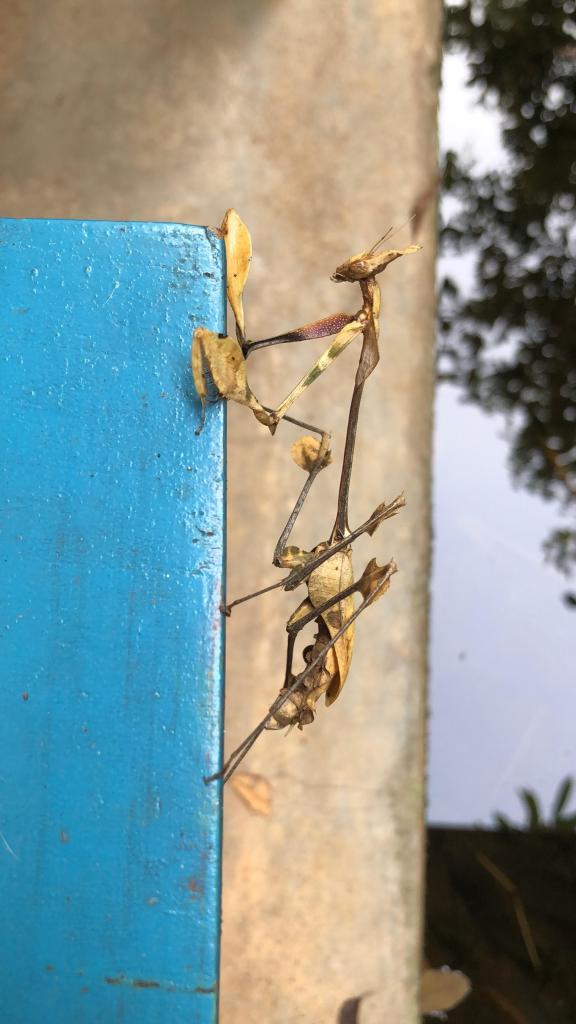
Recently my son shared a photo and asked us to guess what it was. At first glance it seems like a lovely composition of dried leaves and twigs. But a closer look revealed that this did not seem to be a random coming together of bits and pieces but a cleverly designed creature of nature. While our guesses revolved around thinking it to be some kind of stick insect, I, as usual wanted to probe deeper! To start with I asked Aditya to tell where and how he came upon this intriguing creature.

This is what Aditya shared.

The other day I was stepping out to see if the laundry was dry. As I stepped into the afternoon sunshine, over the narrow water channel circling the house — ostensibly keeping ants away but long defeated by the garden’s branches and vines that reached over and served as bridges, for not only ants but squirrels and civets too — I did a double-take of the bench by the door. This is where we spend a quiet hour every morning drinking tea and slowly waking up; by the bench is an abandoned wooden drawer set on its side, now a teapoy. From its corner hung a couple of dry leaves on a twig — the overnight cobwebs must have caught them. 

But something had made me turn and look closer, though I couldn’t say what. Perhaps it was the way the leaves dangled, defying gravity, or their neatly stacked arrangement, or simply that their brown was striking against the blue-painted face of the drawer. It took another moment, and then it was clear these were no leaves, though the disguise was commendable. The twig bobbed up and down, took a few steps along the edge of the drawer, and made for the bench. 

I recognised this bug — I had been mesmerised by it a few years before when I had encountered it just as unexpectedly in a friend’s outdoor kitchen. That’s when I had found out what it was called — the Wandering Violin Mantis — and this had tickled me especially because the kitchen belonged to a luthier and violinist, whom I was house-sitting for as he was away wandering the world. 

I called out to my partner and she rushed downstairs to see. In turns, as one of us took pictures, the other attempted to invite the mantis onto our hand. After a quick survey of the landscape with its beady eyes and a few of its legs, it climbed on. Then it was on its way, making long strides up our arms, slightly prickly and very tickly as one felt the weightless but saw-toothed limbs on the skin. The attentive head kept looking around and exploring its changing geography, as we kept twisting and turning, and giggling and marvelling at the lanky visitor. We deposited him back on the bench, where he stayed a while longer before wandering off somewhere else.

Wow! Close encounters with a Wandering Violin Mantis! While I had missed out on this first-hand experience I turned to secondary sources to find out more.

To start with my guess that it was a stick insect proved wrong. This was a mantis, which belonged to a different order (Mantodea). The name ‘mantis’ is derived from Greek, meaning ‘prophet’ or ‘diviner’, and the Wandering Violin Mantis is known scientifically as Gongylus gongylodes. Gongylus is derived from the Greek word gongylos meaning round which may refer to the shape of its appendages. This unique creature was first described by Carl Linnaeus, also known as the father of modern taxonomy.

Its common name is Wandering Violin Mantis, and it is also known as Indian Rose Mantis, Dead Leaf Mantis and Ornate Mantis. The most intriguing of the names is the first one. Look closely and one will see very long spindly legs that support the wide thorax which is shaped like the soundboard of a violin, while the long neck that ends in an arrow-shaped head resembles the neck of the violin. The thin legs that resemble dry sticks, end in large appendages. The mantis usually walks on its mid and hind legs, keeping its strong forelegs raised. Thus the moniker Violin Mantis. (I cannot find any reference to why the addition of the prefix ‘Wandering’.)

A close up of its face with its biting-chewing mouth parts demonstrates its predatory instincts. This mantid feeds exclusively on flying insects, but it is not an active hunter. The insect find a spot where it is perfectly camouflaged as dry twigs and leaves, and sits and waits for an insect to fly by, or to land nearby. With the ability to rotate its head a full 180 degrees, the mantis has a panoramic view of its surroundings. To further enhance their disguise, mantids often adopt a unique pose, tilting their body sideways and lifting their front legs. Remaining motionless, stealthily hanging upside down from a stem or sitting erect they easily pass for a twig swaying in the breeze.

In case of a flier-by, the mantis grabs it right out of the air, using its fast reflexes and remarkable accuracy to snatch its prey from mid-air. In case of an unsuspecting one that lands on a flower in search of nectar, it is efficiently snatched up by the predator. The raptorial front legs are perfect for grasping and holding the unwary prey. The mantis selects its prey wisely, avoiding insects that are too large to easily capture.

In turn the Wandering Violin Mantis is preyed upon by a variety of animals including birds, bats, spiders and lizards. I wonder how useful their camouflage is in protecting them from being spotted by these predators. I am sure that many a mantis has escaped the beady eyes looking for a meal by passing off as a sprig of dry leaves! And in case it is spotted, the mantis makes a last attempt to escape by spreading out its wings to display the brightly-coloured underside that may startle the hunter.

These masters of camouflage can be found in diverse habitats including forests, grasslands and even gardens. They are found is several parts of South and Southeast Asia, especially South India Sri Lanka, Myanmar, Thailand and Java.

Curiously these gentle and non-aggressive insects are popular as pets in the US and some other countries. Unlike other mantis species the males and females can live together (without eating each other up!). However their enclosures would require to create and maintain the temperature and humidity of their natural habitats, plenty of climbing space with foliage and sticks, and a diet of flying insects. Judging from the number of websites with tips on how to cage and keep this mantis, this seems to be a popular insect pet.

I feel sad about this confinement. Why not celebrate this fascinating creature of nature where it belongs? And feel the excitement when one has the WoW! (Wonder of Wildlife) moment of making the acquaintance of the Wandering Violin Mantis! 

— Mamata

Plastics: From Saviour to Scourge

Last week marked World Environment Day. The theme for this year was Beat Plastic Pollution. In events around the world to mark this day, much was discussed and written about the dire state of the environment due to the over-accumulation of plastic. In recent years plastics have become the bane of the environment. It is ironic that it is this material that was once hailed as a boon! The history of this ‘wonder material’ goes back to the mid-nineteenth century. 

This was a time when elephants and turtles were becoming seriously endangered due to demand for ivory and turtle shell which were used in the making of numerous things from piano keys and billiard balls, to combs. The biggest consumers of ivory were high-quality billiard balls. Between three and five balls could be made from a tusk, and at least two elephants needed to be killed to make one set of billiard balls. The increasing popularity of billiards in England as well as America, led to the slaughter of thousands of elephants. There was a serious threat to elephants, and also there was an increasing cost of ivory to make the balls.

This led to the quest for some man-made materials which could be used as substitutes. One of the earliest such attempts was to dissolve cotton fibres in nitric and sulphuric acids, and then mix these with vegetable oil. In 1862 an English chemist Alexander Parkes was the first to patent this new material with the name Parkesine. It was presented at the Great London Exposition in 1862, but it was not a commercial success.

In the meanwhile in America, Michael Phelan ‘the father of American billiards’ took out an ad in 1863 offering a sum of $10,000 for a substitute for ivory. John Wesley Hyatt, a young printer with no formal training in chemistry took up the challenge. He spent six years experimenting with various solvents. In one experiment he blended camphor with nitrocellulose and produced a hard mouldable substance that he called ‘celluloid’. He patented this in 1869, and along with his brother began to produce it in 1871, marketing it as a substitute for natural materials like ivory and tortoiseshell.  

As it turned out celluloid was not the perfect substitute for billiard balls; when two balls collided it produced a mini explosion. But the new material had a number of properties that made it attractive. It could be moulded into any form, hardened or left flexible; it was waterproof, it would not rot or corrode like metals; it was extremely durable, and it was cheap.

Celluloid was hailed as an environmental saviour. A sales pamphlet in 1878 claimed that “it will no longer be necessary to ransack the earth in pursuit of substances which are constantly growing scarcer”.

Celluloid was the first industrial plastic that would transform the world as multiple uses were found for it. It was followed by polyvinyl chloride or PVC. Since then plastics have undergone numerous stages of development. Plastic was not immediately adopted widely. But by the mid-20th century, as the benefits of this ‘trendy, clean, cheap’ material were loudly touted, plastic became ubiquitous, and took over every aspect of daily life.

The world embraced plastic with a clear conscience. The products made of plastic provided the added attraction of being easily disposable. The convenience of single- use throw-away products were extolled and countries like the United States made a whole-hearted example of this. The use-and-throw lifestyle became the aspiration of every society.

Today we are seeing the legacy of this throw-away lifestyle. The world is producing 300 million tonnes of plastic a year, a figure expected to triple by 2050. The chemical properties that have made plastic such a multi-use and durable material also makes its disposal difficult. Plastic takes a long time to degrade, in some types even thousands of years. Thus landfills are overflowing. Even the degradation of plastic is a serious environmental issue as it breaks down into microscopic particles that pollutes the oceans, land and the air. These micro-plastics are also accumulating in our bodies, the health impacts of which are not even known as yet.

The modern plastics industry relies on fossil fuels for its raw material contributing to global CO2 production. Thus the production of plastic also has an impact on climate change.

In the oceans, plastic ingestion and entanglement is harming and killing marine creatures including turtles. On land climate change is one of the factors that is changing habitats and endangering all living things from elephants to ants. Ironically, the material that was once celebrated as the saviour of these creatures is today the scourge of the environment across the globe.

 Sadly, over these decades the state of planet Earth has only deteriorated. The issues with overuse of plastic not only remain, but have been exacerbated. While there have been efforts in terms of policy initiatives, technological advances, and even public awareness these have not been able to cope with the even faster increase in plastic consumption, pollution, and waste generation. Even after decades of advocacy for Recycle, Reuse and Refuse, the picture is grim. In 2025 the world is expected to consume 516 million tonnes of plastics. And only 9% of all plastics produced as actually being recycled globally. The theme for WED 2025 ‘Beat Plastic Pollution’ spotlights the growing scientific evidence on the impacts of plastic pollution and hopes to sustain the momentum to refuse, reduce, reuse, recycle, and rethink plastics use.

— Mamata

The Potato Has Its Day

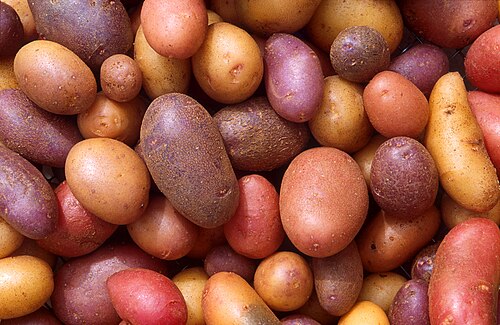
I love potatoes in all forms, from French fries to aloo tikki! I am sure that I am a member of a global club of potato fans. And worldwide it surely is, because the potato is such a versatile vegetable that it finds its place in cuisines across the globe. Used in different forms from the simply boiled and mashed to being roasted, sautéed and topped with a variety of fancy toppings, potatoes provide tasty sustenance and comfort.

Potatoes have also been generally perceived as being ‘only starch’ and children are admonished when they gorge on potatoes; and reminded that they must eat their ‘green vegetables’ that provide greater nutrition. But wait! In recent times the potato has been elevated! It is celebrated for its nutritional value as well as its role in providing food and livelihood security. It has been recognized by the United Nations for its deep historical and cultural significance, and its evolving role in today’s global agrifood systems. The United Nations has even designated a day to be observed annually as the International Day of the Potato.

The potato traces its roots way back to the Andes where it originated, and was domesticated during the Inca civilization and was revered as ‘the flower of ancient Indian civilization’. Following domestication, these early potatoes spread through Mesoamerica and became a crucial food supply for indigenous communities. It was  particularly suitable as a staple foodstuff called chuño, a freeze-dried potato product that could last years or even decades.

The Spanish invasions of the mid-1550s dwelt a blow to the Inca Empire, but gave a new lifeline to the potato. The invaders took tubers across the Atlantic, as they did with other crops such as tomatoes, avocados and corn, in what historians call the Great Columbian Exchange. For the first time in history, the potato ventured beyond the Americas; and gradually established itself on the European continent. These tubers, first grown in Spain were then sent around Europe as exotic gifts to botanists, and even prominent figures like the Pope. The potato played a role in the rise of urbanization and fueled the Industrial Revolution. By the end of the 18th century, potatoes had become in much of Europe what they were in the Andes—a staple.

The potato also gained popularity with sailors as it provided nourishment during long voyages. It is likely that these staples spread widely across the world through these voyages, taking root on different continents. In fact the potato has been called the “world’s most successful immigrant”, as its origin has become unrecognisable for producers and consumers everywhere.

Since then, the potato has shaped civilizations and diets across continents over several centuries. Ireland’s Great Famine of the 1840s was caused by the failure of the potato crop due to a fungal disease. More than half the Irish population depended entirely on potatoes for nourishment, and the wiping out of the crop led to starvation or famine-related deaths of millions, while millions emigrated to escape this. On the other hand, it was the potato that alleviated famine in China during the Qing Dynasty, securing its place as an essential crop. During World War II and subsequent conflicts, the potatoes high yield and resilience provided food security amongst shortages of other food.

Today potatoes are a key crop across diverse farming systems globally, ranging from smallholders producing diverse local varieties in the Andes, to vast commercial, mechanised farms in different continents. The potato is the world’s fourth-most important crop after rice, wheat and maize, and among the first non-grains. China, India, Russia and Ukraine are among the world’s top potato producers. About two-third of the world population consumes potatoes as its staple food.

In the light of its global reach and popularity the United Nations also felt that it was important to highlight the important role of potatoes in contributing to food security and nutrition, as well as livelihoods and employment for people in rural and urban areas the world over.  

Small-scale and family farming production of the potato, particularly by rural farmers, including women farmers, supports efforts to reduce hunger, malnutrition and poverty, and achieve food security, and relies on and contributes greatly to the conservation and sustainable use of biodiversity.

Potatoes are not just a staple food but a symbol of resilience and adaptability. The potato is resistant to drought, cold, and barren land with wide adaptability. The crop’s versatility and ability to grow in a variety of conditions make it an advantageous crop choice. Potatoes provide accessible and nutritious food and improved livelihoods in rural and other areas where natural resources, especially arable land and water are limited and inputs expensive. Potatoes are also a climate-friendly crop, as they produce low levels of greenhouse gas emissions in comparison to other crops.

In addition, there is a wide spectrum of diversity among potatoes. This provides wide genetic variation with a range of traits, including the ability to adapt to different production environments, resistance to pests and diseases, and different tuber characteristics. There are efforts to preserve indigenous knowledge and ancient technologies, while ensuring that the production of native varieties remains under local control. The 12 000-hectare potato park located in the Andes near Cusco, Peru is one of the few conservation initiatives in which local communities are managing and protecting their potato genetic resources and traditional knowledge of cultivation, plant protection and breeding.

In order to acknowledge and honour the multiple contributions of the potato, and propelled by an initiative from Peru and the Group of Latin American and Caribbean countries, the United Nations designated 2008 as the International Year of the Potato. The objective was to raise the profile of this globally important food crop and commodity, giving emphasis to its biological and nutritional attributes, and thus promoting its production, processing, consumption, marketing and trade. In addition to being a food staple, potato by products are also being explored.Potato starch is being used as a sustainable alternative to traditional plastics. These materials based on potato proteins and starch can be used for various environmentally-friendly packaging, like food containers and medicine capsules.

In order to sustain the momentum, the United Nations decided, in 2024, to mark 30 May every year as the International Day of the Potato. The day highlights the importance of the crop in the movement towards sustainable development while celebrating the cultural and culinary dimensions of the crop’s cultivation and consumption.

Nutritionists say that potatoes contain nearly every important vitamin and nutrient, except vitamins A and D, making their life-supporting properties unrivalled by any other single crop. Keep their skin and add some dairy, which provides the two missing vitamins, and you have a healthy human diet staple.

So let us join the celebration this year with guilt-free indulgence of our favourite potato dish!

–Mamata

Growing Older With Ruskin Bond

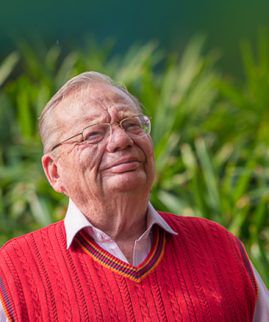
Ruskin Bond celebrated his 91st birthday on 19 May. One of India’s most well-known writers, Ruskin Bond has spent over seven decades as a prolific author, delighting readers of all ages with his simple, beautiful and ‘from the heart’ words. When many put down their tools of trade when they reach “retirement age”, Ruskin Bond celebrates every day of each advancing year with reminiscences, observations of life around him, and above all gratitude for the magic of Nature.

As he puts it: For writers, the nice thing about growing old is that it gives us more to write about—all those years of love, friendship, adventure, achievements, a changing country, a changing world, changing ways of life, history in the making. There may have been dull moments, but most of the time, something was happening—and things continue to happen today.

Many people who have been touched and inspired by Ruskin Bond’s writing have shared their memories. I feel that this is also my opportunity to pay my small tribute.

I was introduced to Ruskin Bond over three decades ago by Uncle Ken and Rusty. These were the characters in the first books that I translated. I was invited by the National Book Trust to translate two of Ruskin’s books into Gujarati. Having neither read him, nor having translated before this, but game for trying something new, I embarked on the project. I so enjoyed the madcap adventures of the eccentric Uncle Ken and the restless school boy Rusty, not just for the stories but for the simple style of writing and the lovely use of language. As a translator it was a challenge to try to retain the spirit and the form in another language.

Following this introduction I continued to follow Ruskin Bond on his wanderings and meanderings through his essays and columns. Here was someone who was not only sensitive to, and entranced by every minute detail of nature, but one who could share this evocatively through words. As an environmental educator who was trying to communicate the wonders of the world around us, and sensitize children to the intricate but fragile web of life, it was inspiring, and humbling to see how effortlessly Ruskin Bond could do just that.

Moving on, as the years went by, one could find new nuances and meaning in his words; words that also reflected the passage of time, both as it affected a human being, but also the environment of which we are all a part. With the passing years, Ruskin Bond’s prolific writing reflects his life journey.

It is the journey that fascinates him, the spirit of wandering and exploring that leads him, and the childlike joy of discovery that makes every step exciting. The adventure is not in the arriving, it’s the on-the-way experience. It is not the expected; it’s the surprise. You are not choosing what you will see in the world, but giving the world an even chance to see you.

Ruskin Bond reminds us that the journey will be much enriched when we use all our senses to the fullest. Sight, hearing, smell, taste and touch. He highlights how each one is capable of giving us joy.

The eyes are our windows to the world, the great wide beautiful world that there is for all of us to marvel at—the skies, wandering clouds, mountains, forests, rivers, the sea; the moon, the stars, the rising sun—all the wonder of creation. The eyes see it all.  

And we hear too. We hear the sounds of nature—the wind, the rain, the sound of birds. We hear the voices of our friends, our loved ones. We hear great music. There is so much to hear and enjoy.

And we smell. The fragrance of roses, of jasmine; of gardens, of wildflowers, the mountain air, the sea breeze. We smell good food—appetizing odours! We eat what smells good.

The sense of taste—we take it for granted, but life wouldn’t be much fun without it. If everything tasted the same from chocolates to fish and chips, we would take no interest in our food and would fade away due to lack of nourishment.  Our taste buds keep us going, make life worth living!

And then there’s touch. The touch of a loving hand, the feel of things, good things—your clothes, your books, your intimate belongings, your own flesh. Cold and warmth, pain and pleasure are felt by our sensitive systems. The sense of touch is felt in our brains, and it is there that all happiness resides.

Value those five senses of yours. The more you use them, the better you will be able to appreciate your life and all that the world has to offer.

Ruskin Bond reminds us to value ourselves, our time and everything from the tiniest to the largest that weaves the web of life. His words are an island of calm in turbulent seas. He does not paint the world as perfect, but urges us to look for the rays of sunshine amidst the dark clouds: The human race is destructive by nature, only too ready to go to war or to pollute and do away with seas, rivers, forests, and our natural inheritance; but now and then along comes someone who can create something beautiful, meaningful—a great painting, a piece of music, a work of literature or philosophy, something that survives the conflicts  and injustices that are the main features of human civilization, past and present. But in the darkness there is a gleam of light, and we can turn away from the ugly to appreciate the beautiful.

Simple words that have continued to offer solace, hope, and a quiet joy as I have grown older with Ruskin Bond over the decades.

Happy Birthday Ruskin Bond. As you remind us: Don’t wait for your birthday. Make today your birthday.

(Excerpts from The Golden Years: The Many Joys of Living a Good Long Life. Ruskin Bond 2023)

–Mamata

WAR AND PEACE: BERTRAND RUSSELL

The media has been bringing to our homes never-ending images of different parts of the world which are in the throes of war. The world is on the brink of what could well be the third world war. At some level people are becoming dangerously inured to the horrors through the never-ending barrage of images and reports that have almost become a part of daily sights and sounds. This in itself is frightening; are we accepting that violence (and its consequences) are an inescapable part of life? And while the world is led by egoistic power-hungry leaders, there is a rapidly declining number of people who feel helpless, even hopeless at the situation as it spirals towards a possibly irrevocable conclusion. Amidst the clamour of belligerent war cries, are some who lament that there are, today, so few voices of reason to remind the world of the precipitous path that we seem to be treading.

What does war achieve? And why do we need to seek peace?

Questions that have been asked since millennia. And answered in different ways in different periods of history. Perhaps one of the most pertinent answers came over a century ago, at a time when the sparks of what became the First World War were just beginning to fan the fire that would rage for the next four years. This was an essay titled The Ethics of War, written by Bertrand Russell in 1915. This was first published in the International Journal of Ethics 25, in January 1915.   

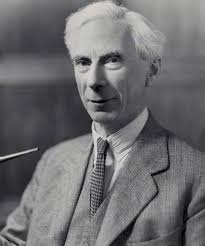
Bertrand Russell is considered as one of the greatest philosophers of the twentieth century. He was actively engaged in numerous social and political issues controversies of his time. A mathematician, educator, social critic, pacifist and political activist, Russell authored over 70 books and thousands of essays and letters addressing a wide range of subjects. He was awarded the Nobel Prize for Literature in 1950 in “recognition of his varied and significant writings in which he champions humanitarian ideals and freedom of thought. Bertrand Russell died in 1970 at the age of 97. Till the end of his life he supported free thought in religion and morals, he opposed war, nationalism and political persecution.

Bertrand Russell’s thoughts on all of the above are beautifully articulated in the essay The Ethics of War. Here are some excerpts:

The question whether war is ever justified, and if so under what circumstances, is one which has been forcing itself upon the attention of all thoughtful men. On this question I find myself in the somewhat painful position of holding that no single one of the combatants is justified in the present war, while not taking the extreme Tolstoyan view that war is under all circumstances a crime. Opinions on such a subject as war are the outcome of feeling rather than of thought: given a man’s emotional temperament, his convictions, both on war in general and on any particular war which may occur during his lifetime, can be predicted with tolerable certainty. The arguments used will be mere reinforcements to convictions otherwise reached. The fundamental facts in this as in all ethical questions are feelings; all that thought can do is to clarify and systematize the expressions of those feelings, and it is such clarifying and systematizing of my own feelings that I wish to attempt in the present article. 

At the beginning of a war each nation, under the influence of what is called patriotism, believes that its own victory is both certain and of great importance to mankind. By concentrating attention upon the supposed advantages of victory of our own side, we become more or less blind to the evils inseparable from war and equally certain whichever side may ultimately prove victorious. Yet so long as these are not fully realized, it is impossible to judge justly whether a war is or is not likely to be beneficial to the human race. Although the theme is trite, it is necessary therefore to briefly remind ourselves what the evils of war really are.

To begin with the most obvious evil: large numbers of young men, the most courageous and the most physically fit in their respective nations, are killed, bringing great sorrow to their friends, loss to the community and gain only to themselves. Many others are maimed for life, some go mad, and others become nervous wrecks. Of those who survive many will be brutalized and morally degraded by the fierce business of killing, which however much it may be a soldier’s duty, must shock and often destroy more humane instincts.

The evils which war produces outside the area of military operations are perhaps even more serious, for though less intense they are far more widespread. …The extent and consequences of the economic injury inflicted by war are much greater than is usually realized. …Thus war, and the fear of war, has a double-effect in retarding social progress: it diminishes the resources available for improving the condition of the wage-earning classes, and it distracts men’s minds from the need and possibility of general improvement by persuading them that the way to better themselves is to injure their comrades in some other country.

Of all the evils of war the greatest, in my opinion, is the purely spiritual evil: the hatred, the injustice, the repudiation of truth, the artificial conflict, where if once the blindness of atavistic instincts and sinister influence of anti-social interests, such as those of armaments with their subservient press, could be overcome, it would seem that there is a real consonance of interest and essential identity of human nature, and every reason to replace hatred by love.

It has been over a century since this impassioned plea by Bertrand Russell. Much has changed since then, but much remains the same. Let us remind ourselves of the futility of mindless violence. Let us Give Peace a Chance.

–Mamata

A Curious Herbal: Elizabeth Blackwell

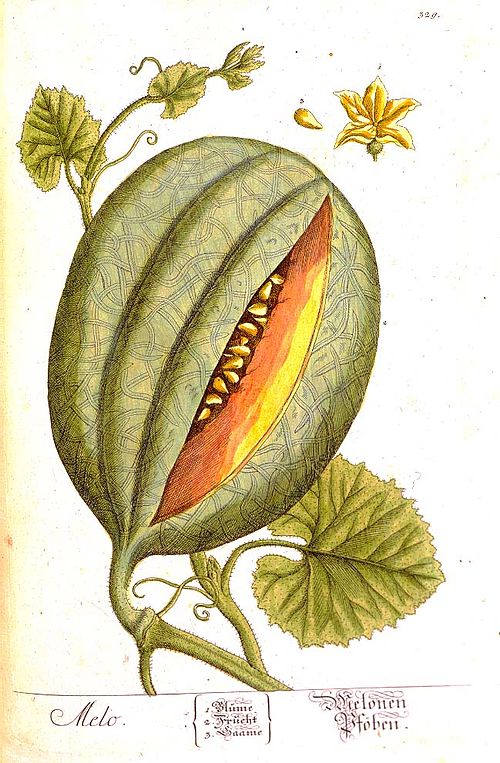
One has heard of herbal teas, herbal treatments and herbal facials, but this was the first time that I heard about a curious herbal! Of course my curiosity was piqued! I discovered that while today the word ‘herbal’ is generally used as an adjective, it is also a noun that refers to ‘a book of plants, describing their appearance, their properties and how they may be used for preparing ointments and medicines’. And thus this was the title of such a book first published in England in 1737. The book consisted of five hundred illustrations drawn, engraved and hand-coloured by Elizabeth Blackwell. This was indeed a voluminous ‘herbal’. Why the added adjective ‘Curious’? This refers to an old use of the word to mean ‘accurate and precise’.

The story of Elizabeth Blackwell herself, and how she came to create this book is itself curious and unusual.

Elizabeth Blackwell was born in 1707 in Aberdeen in Scotland. Her father Leonard Simpson was a painter and his daughter inherited his artistic talent. From a young age she loved drawing and painting, and was constantly observing and sketching the natural world around her.

Elizabeth married Alexander Blackwell a doctor and an accountant. They had to move to London when it was discovered that her husband was practicing medicine illegally. But even there Alexander’s unlawful activities resulted in heavy debts that caused him to be imprisoned. Elizabeth was left alone to fend for herself and her child.  In an age when women were not part of the work force Elizabeth drew upon her skill as a botanical artist for survival and sustenance.

In the early eighteenth century, plants were an essential resource for healthcare. Choosing the right plant to treat an ailment was an increasingly precise science, and mistaking one plant for another could have severe consequences. Elizabeth thought of creating an ‘herbal’, an illustrated reference book to help doctors and apothecaries to develop an “exact knowledge” of medicinal plants, their uses and effects in medicine. Before embarking on the project she consulted various botanists and herbalists who advised her that pictures alone would not suffice, these needed to be accompanied by descriptive and explanatory notes. Elizabeth, being trained neither in botany nor in medicine, realized that she would need these inputs from experts. 

But in order to do all this she first needed access to the plants. The Apothecaries Garden (later called the Chelsea Physic Garden) had a vast collection of medicinal plants from many parts of the world. The garden’s director Isaac Rand gave Elizabeth access to the garden. Elizabeth moved with her daughter, to some rooms close to the garden, and threw herself into making botanical drawing from the actual specimens. She began to document the garden’s many indigenous plants, as well as specimens arriving from across the British Empire. She set about not only making highly detailed, analytical drawings of plants from different perspectives and in different stages of growth within the same picture. In addition to their physical characteristics, she also included information about where and when they could be found; their names in a variety of languages; and their curative properties

Her paintings of the plants were precise, and with an artist’s eye, she described the colour and texture of plants in minute detail. She would take each set of completed drawings to her husband in prison and he drafted descriptions for each one. She also managed to get for each plant, along with its English common name, its name in Latin, Greek, Italian, Spanish, Dutch and German. This was in the days well before the Linnaean system of binomial nomenclature provided a system of universal identification. In fact Linnaeus was born in the same year as Elizabeth.

She also became known to prominent doctors and intellectuals who also helped with the supporting text. When a number of the drawings were ready, a team of nine eminent physicians, apothecaries, and a surgeon examined them, and endorsed their authenticity

Elizabeth worked non-stop. She drew, engraved, and hand-coloured each image, managing the work that would normally require several different craftsmen. She prepared four plates every week in instalments, (125 weeks) until she had produced 500 images with bullet points for the medicinal uses for each plant. Elizabeth Blackwell’s illustrations deeply impressed many English physicians, botanists, and apothecaries in mid-18th century London.

Originally published in weekly parts, the first collected volume of A Curious Herbal appeared in 1737. A Curious Herbal received an official commendation from the Royal College of Physicians. Capitalising on this support, E. Blackwell advertised her publication through word of mouth and journal advertisements. It met with moderate success. A second edition was printed 20 years later in a revised and enlarged format.

Through her industry and perseverance Elizabeth was able to pay off her husband’s debts and secure his release from prison. However her personal life continued to be challenging. Her husband Alexander got himself into fresh financial and political difficulties, and was forced to move to Sweden where he was eventually executed for conspiracy. Elizabeth never saw her husband after he left England for Sweden. But she continued to be loyal to him, even sending him a share of the royalties from her book.

She produced no more botanical works. But A Curious Herbal remains a landmark book in the field of medical botany and botanical illustration. In eighteenth century England, with no standing within London’s scientific and medical institutions, Elizabeth Blackwell managed to produce a work that became a standard reference for apothecaries. A Curious Herbal is a monument to Elizabeth Blackwell’s skill not only as a botanist and artist, but also a testament to her remarkable strength of purpose, and entrepreneurship in a male-dominated age when women were only seen as wives and homemakers.

–Mamata

Wordsmithery: Animals as Verbs

I am a logophile! A lover of words in all their forms. So I was excited when I discovered that there is a day called Wordsmith Day! What is a wordsmith and what is this day all about? The term wordsmith is derived from other words like blacksmith, goldsmith, silversmith and locksmith, all of which refer to a high level of competence and expertise in a particular technique, and who work to create something using that mastery. Wordsmith thus denotes a person who possesses a mastery of words and who can mould and craft words to form thoughts and ideas.

Wordsmith Day celebrates authors, editors, poets and other writers and their ability to weave words to create masterful word pictures. 

While I am not sure if I can count myself among the club of wordsmiths, I surely appreciate and enjoy the works of master wordsmiths, in all genres. So it was a happy coincidence that I recently came across an interesting way of comparing characteristics. This initially triggered memories of grammar periods in school when we were learning Similes. As strong as an ox. As busy as a bee. As slippery as an eel. As proud as a peacock. As slow as a sloth…

A simile is an expression which describes a person or thing as being similar to someone or something else. Usually similes combine an adjective with a noun to make the comparison, drawing upon a characteristic feature of the creature.

It is interesting that similes compare unlike things, which makes them different from usual comparisons. However there is another way of comparing. Here, the animal becomes a verb rather than a noun. I thought it would be fun to mix and match, and see how both these kinds of comparisons play out.

Ape: The simile could be ‘as clumsy as an ape’. But we also use the word to mean imitate or mimic. Another member of the menagerie performing the same action would be parrot.

Bat: ‘Blind as a bat’ is an apt description of the bat in the daytime. But the other ‘bat’ (also a noun) has a place of honour in many sports. However ‘to bat’ becomes an action word when it is used to strike a ball. And there you have the batter in action.

Dog:  As ‘loyal as a dog’ is a reassuring trait. But when that loyalty is demonstrated by faithfully following the master, it becomes a verb that indicates the action of ‘following closely and persistently’. When the dog is a hound, the action becomes somewhat distressing as in “that moneylender is hounding me day and night”.

Badger: Is an animal with a tenacious bite that is difficult to loosen. One does not usually compare anyone to a badger, but when someone repeatedly asks questions or makes demands in an annoying fashion, we can rightly demand: ”Stop badgering me!”

Fish: ‘To swim like a fish’ denotes ease and grace of moving through water. But the act of ‘fishing’ is one that pulls the fish out of water by hook (or crook). And hopefully when we describe someone as feeling like ‘a fish out of water’, we assume that person is still very much alive (though probably uncomfortable!) But we also ‘fish’ for items out of our pockets or handbags, as well as ‘fish’ for compliments.  

Slug: Along with snail, this indicates slow and lazy. But the action words are far from sluggish. When you ‘slug’ someone or ‘slug it out’, it takes speed and strength to deliver that punch in the fight. Loading a gun with bullets is also called ‘slugging’, and once fired, a bullet moves with a speed that no slug can ever dream of. ‘Slugging back’ a beer equally denotes a fast gulping action.n.   

Worm: Denotes a creature of the dirt, and may be used synonymously with creep, or louse. While a worm may burrow in the soil, its action verb, ‘to worm out’ means to extract or remove what should remain within. ‘Worming out’ such information may require a range of tactics from subterfuge to manipulation to force. While it generally denotes extraction, one can also say that someone will ‘worm’ their way in. 

While worming usually involves indirect methods, information that is ‘ferreted’ out is usually obtained by searching for it in a determined and assiduous way: a close match to the ferret’s hunting instincts and natural ability to navigate burrows to search out animals.  

Leech: There was a time when ‘to leech’ meant to heal or to cure. To leech someone was to care for their wellbeing. This referred to the time when leeches were used to drain out bad blood to remove the toxins in the body. With medical advances, these references became obsolete. Now we use ‘to leech’ to refer to the act of being parasitic, sponging, or freeloading.  

Wolf and Pig: In the old fairy tale it was the hungry wolf who huffed and puffed to bring down the houses of the three little pigs, in the hope of a tasty meal. Today too, it is hunger that drives us to ‘wolf down’ food (devour ravenously). Interestingly it is probably the same hunger that leads us to sometimes ‘pig out’, that is to gorge on something or eat greedily.   

Ram: When two rams fight for dominance, they charge at each other head-on, and smash into each other locking their strong horns. The action has evolved into a verb that evokes a smashing forceful action as in ‘the car rammed into the pillar’, or ‘that really rammed home the message’.  

Bear: Some people are as grumpy as a bear in the morning. But the description does not have much in common with the verb that denotes more responsible actions—‘to carry, to bring, to endure’. People bear children, some bear arms, others bear responsibility for their actions. We bear the weight of, and some bear the brunt of, and a tree will bear fruit. Not quite relatable to the animal at all!   

Lots of play on words! A fun way to mark Wordsmith Day on 3 May!

–Mamata