The Tree Pies Are Here!

The last couple of weeks we have been hearing a new addition to the usual morning symphony of bird calls in our garden. This new sound was different—a somewhat harsh and raucous intermittent call. The other birds fall silent while this fills the air. As we looked for the source of sound, at first we could not see anything except the familiar babblers and doves and crows going about their morning business, until a rustling among the drying leaves of the tall old palm tree caused us to look closer. Suddenly we saw a hitherto unknown bird emerge and perch on the branch. Another swoop brought its partner flying from beyond to perch next to it. The first thing that struck us was the striking colouring and long tail that set these birds apart from the more staid and dull-hued birds that usually frequented the tree.
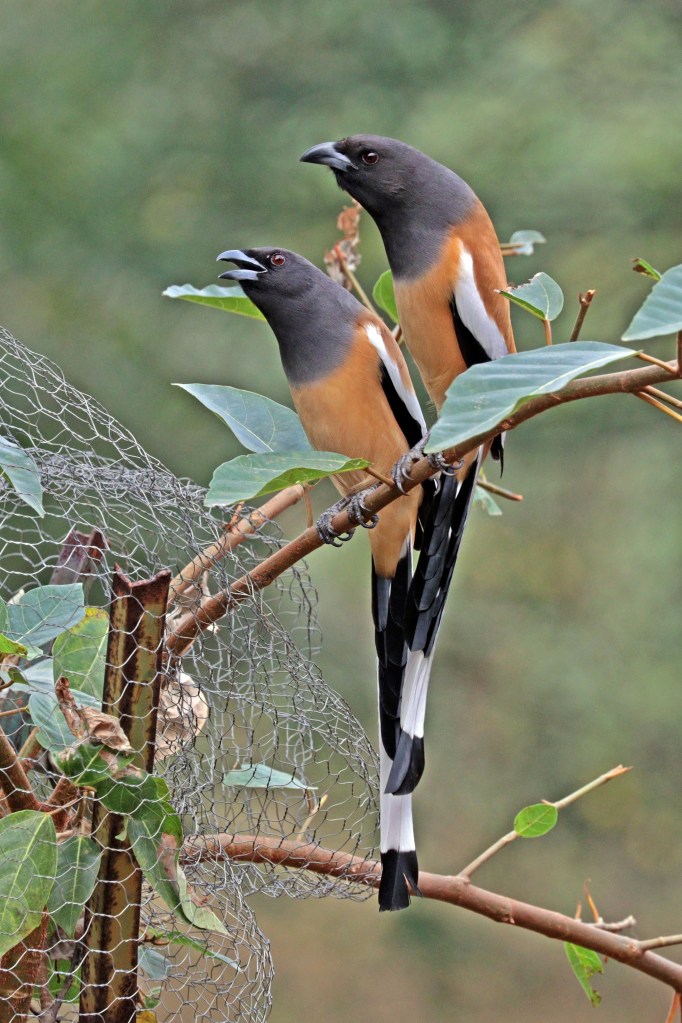
Rufous treepie
Rufous treepie

The tree-pies were in the neighbourhood! Last year they had caused a similar excitement when we had spotted them one day, but sadly that was only a one-time sighting, and we did not see them again. This time it seemed as if they were seriously prospecting the tree as a suitable site for potentially settling in to nest and breed.  

The Rufous treepie (Dendrocitta vagabunda) belongs to the Corvidae family, to which also belongs the common crow. The bird is endemic to the Indian subcontinent, and it is found in open forests, woodlands, groves and gardens in cities and villages. This species is not found elsewhere.

The body of the bird is the size of a myna, but it is elongated with a long tail which distinguishes it. The body is rust orange, with an ashy-black head and breast. The tail feathers are black interspersed with light grey, and the wing feathers are black with a white-grey band down the outside. The beak, legs and feet are black; the eyes are deep red with black pupils. The beak is slightly hooked at the tip.  With such striking colouring, the tree pie makes quite a contrast to its relative, the common crow, with its monochromatic colouring.

What this bird does share with its Corvid family kin is the attraction to shiny objects. Tree pies look for and steal shiny objects such as coins and small jewellery, and stash these in their nest. Possibly a male ploy to attract the females! No wonder then that one of the local Indian names for this bird is taka chor, literally ‘coin stealer’. The bird is also called kotri, derived from one of its calls which sounds like a screeching ‘ko-tree’.

The tree pie indeed has quite a repertoire of calls—from the loud, harsh and guttural to some which are sweet and melodious like ko-tree or bob-o-link. Thus it is confusing when one looks for the source of the squawking call, only to find a melodious tune emanating from the same place. It makes one wonder if it is one bird or several different ones calling.

The tree pie is an arboreal bird, rarely seen on the ground. It is an agile climber and hops agilely from branch to branch, or flies from tree to tree with a swift noisy flapping followed by a short glide on out stretched wings.

The rufous tree pie is an omnivorous and opportunistic feeder. Its diet includes fruits, seeds, small lizards, insects, as well as the eggs of other birds, and even small birds and rodents. In the forest tree pies often join mixed hunting groups of birds like drongos and woodpeckers; they collectively disturb insects in tree canopies and feast on them. 

Tree pies make their nests concealed in the foliage of middle-sized trees. The nest resembles that of its cousin the crow, made of thorny twigs, but it is deeper and well-lined with rootlets. It is here that 4-5 eggs are laid, and when they hatch both male and female share the parental duties.

A fortnight has passed since we heard the first harsh call of the tree pies. Since then we have been able to also enjoy the rest of their repertoire, in something like sound-surround. The soft melodious chirping coming from the foliage of the karanj tree, the bob-o-links that punctuate from the neem tree, and the kotri call from the top of the straggly palm. If we look hard enough we can also spot the tip of the long tail peeping out from the leaves, and occasionally are treated to a glimpse of its sweeping graceful flight from one perch to the other. It looks like the tree pies are here to stay this year.

–Mamata

Poppy for Remembrance

As a watcher of the BBC news channel, one thing that I have been noticing since this month began was that all the newscasters and other people who appeared on the channel have been wearing a lapel pin in the form of a poppy. This week there was also a picture of Britain’s new Prime Minister Rishi Sunak also wearing the same while flagging off the Poppy Appeal.

Why are poppies so much in the news? The crimson poppy flower has become a symbol to honour those who have fallen in battle over the years, and also symbolizes hope and gratitude. The history of this century-old tradition goes all the way back all to World War I.

 As the story goes, during World War I, after a particularly bloody battle in the fields of Flanders in Belgium, thousands of bright red flowers mysteriously appeared. These were common poppies. Interestingly, the common poppy (Papaver rheos) is technically classified a weed which can grow even in the most inhospitable of landscapes. Basically it sprouts naturally in areas where there is massive disruption of the soil and the natural environment, such as bare lands which had been disturbed by the movement of troops and battle equipment. It is believed that during the Napoleanic wars of the early nineteenth century poppies bloomed profusely around the bodies of fallen soldiers, painting the battleground blood red. The same thing must have happened at Flanders.

John McCrae, a lieutenant colonel in the Canadian Expeditionary Forces fighting in Flanders, who had just lost a close friend in the battle, was so moved by this spontaneous bloom that he wrote a poem about the flowers’ resilience and ability to grow in such inhospitable conditions. Titled In Flander’s Field, it was told from the perspective of the fallen soldiers buried beneath the poppies, and honoured the troops who lost their lives in that conflict. The opening lines of the poem:

In Flanders’ fields the poppies blow
Between the crosses, row on row,
That mark our place: and in the sky

The larks, still bravely singing, fly
Scarce heard amid the guns below.

McCrae’s poem was published in London’s Punch magazine in December 1915. It touched a chord in all those who were suffering the losses of loved ones in the war. The poem was read at memorial services, and reprinted it in many publications. Moina Michael, a professor at the University of Georgia in the United States, first came across In Flanders Field in the Ladies Home Journal and was so moved by it that she vowed always to wear a red poppy in remembrance of the lives lost in war. She found some poppies made of fabric in a store; and bought 25 silk poppies for herself and her friends. Once the war ended she herself began to make poppies out of red silk, and sell these to raise money to support the veterans returning from the war. She also lobbied for the poppy to be recognised as a memorial symbol. In 1920 the little red flower was recognized by the National American Legion as the official national emblem of remembrance.

The United States marks this memory on two days– Memorial Day is celebrated in May while 11 November marks Veterans Day. Over time, in the United States, the tradition of the poppy as the symbol of the day has been largely replaced by the yellow ribbon and red, blue and white ribbon campaigns. 

The poppy tradition however took firm root across the Atlantic, and continues to flourish. It first reached France through a French lady Madame Guerin who had seen the introduction of the poppy in America. She thought that selling poppies was a great way to raise money for children who had been affected by the war in France, and she engaged thousands of war widows in making paper poppies, and selling over a million poppies by 1921.  The Royal British Legion adopted the symbol immediately. The idea also spread to the other Commonwealth countries. The first poppy event was held on 11 November 1921.

Thus for over a century now, wearing a poppy has become a symbol of remembering the soldiers lost during World War I in many countries. The flower made of paper or fabric, is generally affixed to the left shoulder to symbolize the act of keeping those who have passed away close to one’s heart; the left shoulder is also one where military medals are worn. 

In the United Kingdom, Canada, France, Belgium, Australia and New Zealand, red poppies are worn in November, especially on 11 November. This date is marked as Remembrance Day as it commemorates the anniversary of the signing of the armistice that formally ended World War I “at the 11th hour of the 11th day of the 11th month” of 1918. This day is now an occasion to remember all those who have lost their lives in all conflicts since World War I.

While the original batch of poppies were bought from France, the first factory to produce poppies in England was set up in 1922, employing five disabled ex-military personnel. Today the Royal British Legion has a factory that employs 50 ex-servicemen all the year round to make poppies for fund-raising events. The poppy has transcended its purely commemorative status to become an object that provides financial stability for the war-affected. 

The annual Poppy Appeal flagged off by the British Prime Minister last week raises funds for The Royal British Legion to support the armed forces community who have served, or are currently serving in the armed forces, and have subsequently been affected physically, mentally or economically by war.

In an age that is even today more war-torn than ever, where young people are laying down their lives in brutal and meaningless warfare in so many parts of the world, this single flower serves as a powerful symbol not only of remembrance, but also a mark of honour, pride and support for those who still give up everything for the security and peace of nations.

–Mamata

Bridge-building Women

The recent tragedy of the collapse of the suspension bridge in Morbi in Gujarat has brought into focus a lot of information on bridges and news reports are filled with engineering terms related to bridges.   

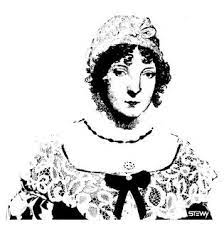
While the blame game is on about who was at fault—engineers, contractors, civic authorities, or just the uncontrollable rush of holiday makers, it is perhaps a good week to go back and understand a little about early bridges and bridge builders. And to discover that one of the first patents for a chain-suspended bridge in England was filed in 1811 by a woman! This was Sarah Guppy an engineer, inventor, campaigner, designer, reformer, writer, environmentalist and business woman, in a period when it was unthinkable that women could be anything except wives, homemakers and mothers.

Sarah was born in 1770 in a wealthy merchant family of Birmingham. It was a period when the industrial revolution was shifting the largely agrarian economy of England towards mechanized manufacture. In 1795 Sarah married Samuel Guppy, a rich Bristol merchant fifteen years older to her and settled into family life in Bristol.    

As per the societal norms of the time, women were expected to keep house and raise children. Sarah largely conformed to her role (she went on to have six children), but she was far from docile and dull. Sarah was exceptionally well-read, talented and creative; she and her husband were part of a Bristol social set that included mercantile and innovative people. Among their friends were Thomas Telford a road and tunnel engineer, and the family of Isambard Kingdom Brunel. Brunel was one of the most versatile engineers of the 19th century, responsible for the design of tunnels, bridges, railway lines and ships. He is best remembered for his construction of a network of tunnels, bridges and viaducts for the Great Western Railway (GWR). Coming into contact with such people sparked Sarah’s interest in the science and craft of engineering, and triggered in her creative mind the desire to herself invent engineering solutions.

Sarah was an early advocate of a suspension bridge in Clifton, and was engaged in preparing models of a bridge that could span the river Avon, a project that had long been debated and discussed. Her idea was to work on a way of piling foundations to create a new type of suspension bridge, and she made drawings for the same. Her son Thomas was GWR’s principal engineer, and she gave the design and plans for her bridge over the Avon to Brunel.

When her youngest daughter was just a year old, Sarah applied for a patent for a way of piling foundations to create a new type of suspension bridge. In March 1811, she obtained a patent for ‘erecting and constructing bridges and rail-roads without arches or sterlings, whereby the danger of being washed away by floods is avoided’.  What was noteworthy was that Sarah became the first woman ever to patent a bridge. Even more noteworthy that this was in a period when married women could not even own property in their own name. This included patents which were considered to be intellectual property which could have some value.

The patent had no drawings and no detailed information as to how the bridge was actually to be built. However her designs provided the blueprints for Brunel’s Clifton Suspension Bridge and Thomas Telford’s Menai Bridge. When Telford approached her for permission to use her patented invention, she reportedly waived the fees, but managed to claim credit for its design.

Sarah’s inventive mind did not stop with that. She developed a devise to prevent barnacles forming on boat hulls, and sold the contract to the British Navy. She also put forward a scheme to prevent soil erosion on railway embankments by planting willow and poplar trees. Even as she played her role as homemaker, she came up with innovations. She designed a bed that could also be used as a gym with steps and bars for exercising; and a coffee urn whose steam could be used to boil an egg and at the same time keep the toast warm. An all-in-one breakfast hotplate! She was even granted a patent for this in 1812. In all Sarah took out ten patents, a remarkable achievement.in the late Georgian and early Victorian period.  

Sarah was not just ahead of her times in her engineering prowess. She wrote and presented schemes for a wide range of issues including animal welfare, education, agriculture and horticulture. She also wrote a book for children, and founded a charity school for girls. 

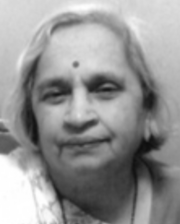
Bridging the span across continents, and across nearly a century, this is a good time to remember Shakuntala A. Bhagat—India’s first woman civil engineer. Shakuntala was born on 6 February 1933. Her father S.B. Joshi is regarded as the Father of Bridge Engineering in India. She was just 20 years old when she got her civil engineering degree from VJTI in Mumbai, the first woman in India to do so. From 1954-1956 she went to West Germany and UK for practical training, and went on to get her master’s degree in civil engineering from the University of Pennsylvania. She returned to India to join IIT Mumbai as assistant professor in 1960. She went on to become Head of the Heavy Structures Laboratory at IIT.

Shakuntala was more than an academic. She pioneered many innovative structural designs, especially for bridges. She and her husband designed and patented an innovative prefabricated modular system known today as the Quadricon Modular Bridge System. This is a series of prefabricated mass-produced modular bridge steel parts, small and lightweight enough to make transport easier for builders. They can be used in different types of bridges, different spans, traffic widths, and loads, all they had to do was change the combination of the assemblies.

Shakuntala Bhagat was awarded the Woman Engineer of the Year Award in 1993.  She passed away in 2012, a century after the first patent for a bridge was awarded to Sarah Guppy. She left behind a lasting legacy of over 200 Quadricon bridges around the world (including 69 in India) in terrains that challenge engineers even today.

Recently the Government of India announced the establishment of the Indian bridge management system to collect information on bridges. This would certainly be enriched by adding information on the pioneers who designed and built bridges.   

–Mamata

Splendid Bloomer: Silk floss Tree

In most parts of India, March is usually the month when the big trees are in bloom. In cities like Delhi which have avenues of old trees, it is a delight to see the changing colours of the blooms on different trees. October however, is the month that is marked by the spectacular blooming of the Silk floss tree.

Sometimes mistaken for the Silk Cotton tree with its flamboyant red flowers, the Silk floss tree (Ceiba speciosa), is unique in many ways. The species was originally named Chorisia speciosa in 1828. The generic name Chorisia was in honour of Louis Choris, a Russo-German painter and explorer who was one of the earliest expeditionary artists (artists who accompanied military, exploring, and trade expeditions to document the expedition through sketches and paintings). He accompanied Otto von Kotzebue, a Baltic German navigator in Russian service on several expeditions across South America and Europe, and is said to have painted nature as he saw it.  However, in 1998 the genus Chorisia was merged with the genus Ceiba (which is the Brazilian name for the tree). Speciosa means ‘beautiful’, or ‘splendid’ (Latin), alluding to its spectacular flowers. Thus, the currently accepted name for the species is Ceiba speciosa.

This grand ornamental deciduous tree is in fact native to Argentina and Brazil. With its bulging prickly trunk, exotic flowers, great height, and pods with pea-sized seeds and silky floss, this unique tree literally stands out from other trees.

The Silk floss tree begins as a young sapling with a small bulge near the base of the trunk that slowly enlarges as it grows. But the tree tapers again upwards of the bulge, reaching a height of anywhere between 50 to 70 feet, with wide-spreading branches. The immature trees have an attractive green bark, which turns grey as the tree ages, and its girth increases. The trunk and branches are characterized by the coarse sharp conical spines that cover it, but these fall off as the tree gets older. The spines not only protect the tree from climbing animals, they are also good dew collectors; they collect the moisture from the air that the drips down to the soil below, making the tree capable of surviving even in arid conditions. In dry regions, in ancient times, the presence of the ceiba trees indicated the presence of nearby water sources, which led to the establishment of human settlements where these trees grew.

It may take many years before the trees start to flower. But when they do, it is the flowers that make this tree a show-stopper. Each one as large as an open hand, the hibiscus-like flowers are usually in different shades of mauve-pink. The five petals envelope a delicate creamy-white centre. The flowers appear after the tree has shed its leaves, and they cover the branches with a profusion of blossoms that make for a spectacular sight. The nectar attracts pollinating insects such as butterflies and bees, as well as hummingbirds in their native South America.

It takes a Ceiba tree at least seven years to mature to produce its first seed pods. These woody avocado-shaped pods were called pochote by the Mayan people. The pods grow gradually, and then crack open, exposing pea-sized black seeds surrounded by flossy white fibres.  It is this component that gives the tree its common English name Silk floss tree. In Hindi it is popularly known as resham rui (literally silk cotton). In pre-Hispanic times this fibre was important for making cloth. The floss was traditionally used for stuffing pillows and mattresses as this did not cause any allergies. In the 1940s it was also used to fill life jackets because of its buoyant properties and water resistant abilities. In the 1950’s it was used to fill automobile seats and upholstery. Over time it has been replaced by synthetic fibres.

Other parts of the tree also have multiple uses; the wood from the trunk has been used to make wood pulp; the light and flexible wood is suitable for making boxes, packing material and even canoes; while thin strips of the bark can be woven to make ropes, and the seeds pressed into edible and industrial oil. 

As in all indigenous cultures, where people lived in close connect with their surroundings, this tree is associated with its share of myths and legends in its native lands. In Argentina the tree is commonly referred to as Palo Boracho, literally ‘drunken stick’ referring to its swollen trunk that tends to lean on one side.

In Bolivia this tree is called Toborochi which means ‘tree of refuge’ or ‘sheltering tree’. A beautiful legend explains why this is so.

When the world was still very new, the Aña, or spirits of the darkness, liked to abuse and kill humans. When they found out that Araverá, the beautiful daughter of a native chief, cacique Ururuti, who had married the god Colibri (Hummingbird), was pregnant and would give birth to a son, the spirits were alerted. The spirits believed the son would punish them when he grew up, so they decided to kill Araverá. With the help of a flying seat her husband Colibrí had given to her, Araverá fled from the village, but the evil spirits followed her and harassed her wherever they found her hiding.

Finally she was so exhausted that she decided to hide in the trunk of a Toborochi tree. Sheltered within, feeling secure and at peace, she gave birth to her son. The boy grew up and fulfilled the prophecy, killing the spirits and avenging his mother. But as the gods had decreed, Araverá, could never come out of hiding, and had to stay inside the tree until she died.

But as the legend goes, while forever buried in the bulging trunk of a Toborochi, Araverá does come out, in the shape of a beautiful flower that attracts hummingbirds. And thus, she keeps contact with her husband.

While the tree is indigenous in South America it is also native to Central America, where the ceiba or yaxché, is considered as the sacred tree of the Mayas, a place to withdraw for meditation. The Mayans believed that the ceiba tree connected the different levels of the universe, from the underworld to the sky. The story is told of a mythical ceiba tree that functioned as the axis or centre of the world, encompassing the three planes of the universe: the roots are Xibalba, the underworld, the trunk and branches are Cab or the terrestrial level, and the bird Quetzal, perched on top of its canopy, the sky. Once again, reinforcing the link between the flowers and the birds. The Ceiba is thus a tree of life that plays an important part in ceremonies, art and mythology.

Though far from their native lands, the Silk floss trees which have taken roots in other parts of the world, are a majestic symbol of the ancient spirit of trees of life. And nothing is a better reminder of this than the magnificent flowering of these towering trees.  

–Mamata

Saralabehn: Gandhian, Educator, Enviromentalist, Feminist

Of the many women who dedicated themselves to Gandhiji’s thoughts and practices, the name of his English disciple Mirabehn (nee Madeleine Slade) is well known. Perhaps not as much written about, but no less inspiring, is the story of his other English follower who took the name Saralabehn.

Catherine Mary Heilman was born in Shepherd’s Bush, London on April 5 1901. Her mother was English and her father was of German origin, who had come to England via France. As a child living in a bi-national and bi-lingual liberal family, When she was in her teens, Catherine was rudely shocked when her German surname led her to be stigmatized during the World War and its aftermath. Her father was wrongly jailed as an enemy, and the young Catherine was not allowed to take part in school activities, and deprived of a scholarship. At sixteen she had to leave her studies and work in an office where the hostility continued.

It was while she was in a London boarding house in 1920 that she met a group of Indians who became her friends. This is when she began to learn and understand something about the nationalist struggle that was going on in India against the imperialist colonial rule. She realised that the way her history books had presented the colonies as the “white man’s burden” was quite different from the accounts she heard from her new friends. She also learnt about the non-violent nationalist struggle that was being led by Mahatma Gandhi. She started following news of the movement as it was evolving in India, and began to empathize with his thinking and practice. As she later wrote: “For the first time in my life, I was exposed to ideas that resonated with me. Every statement uttered and every word written by this individual, Gandhi, clad in just a small dhoti, held true meaning”.  Even as her European friends warned and discouraged her from getting carried away by events that were happening in a country far away, Catherine was planning to go to India herself.

Catherine wrote to Gandhi to request permission to join his work but he was not very encouraging. She continued to explore ways of getting to India. She had no particular skills nor training, so she enrolled for a midwifery course which brought her in contact with English pacifist groups. Before she finished the course she received a letter inviting her to work at a school in Udaipur, so she transferred to a short programme in child education. In January 1932 Catherine finally reached India, and did not go back again.

She started work in Vidya Bhavan in Udaipur; work which along with teaching included manual work in fields, cleaning toilets, washing one’s own clothes and utensils. This gave her a sense of the typical chores that women did, as well as the dignity of labour. But she still did not feel that she had achieved what she had set out for—to participate in Gandhi’s Constructive Programme, which she considered to be “the true foundation of the freedom struggle”. She continued to write to Gandhiji, the man whose pull had brought her to India, but did not hear from him. In the meanwhile Catherine steeped herself in the life and culture of her new home, and at some point also took on the name Saralabehn.

In 1935 Saralabehn visited Mahila Ashram in Wardha. Gandhi was there at the time, and one morning the two finally met. Gandhiji asked her who she was and how long she was staying, and on being told ten days, he assigned her some work. Saralaben relocated to Wardha in 1936 and worked on the education of the girls in the Ashram based on the principles of Nai Talim. In 1941, when her health declined and Gandhi suggested that she move to cooler climes and concentrate on Nature Cure. There was a Gandhian Ashram in a village called Chanauda in the foothills of the Uttarakhand Himalaya and this is where she reached in August 1941.

As her physical health improved, Saralabehn began to get restless. She had her own routine which included learning how to spin Tibetan wool; she started travelling through the villages of the area and learning the local language. She also interacted with the villagers, especially the women, and began to discuss Gandhi’s ideas on Gram Swaraj or village self-reliance. She continued to be active in Gandhi’s nationwide civil disobedience movement.

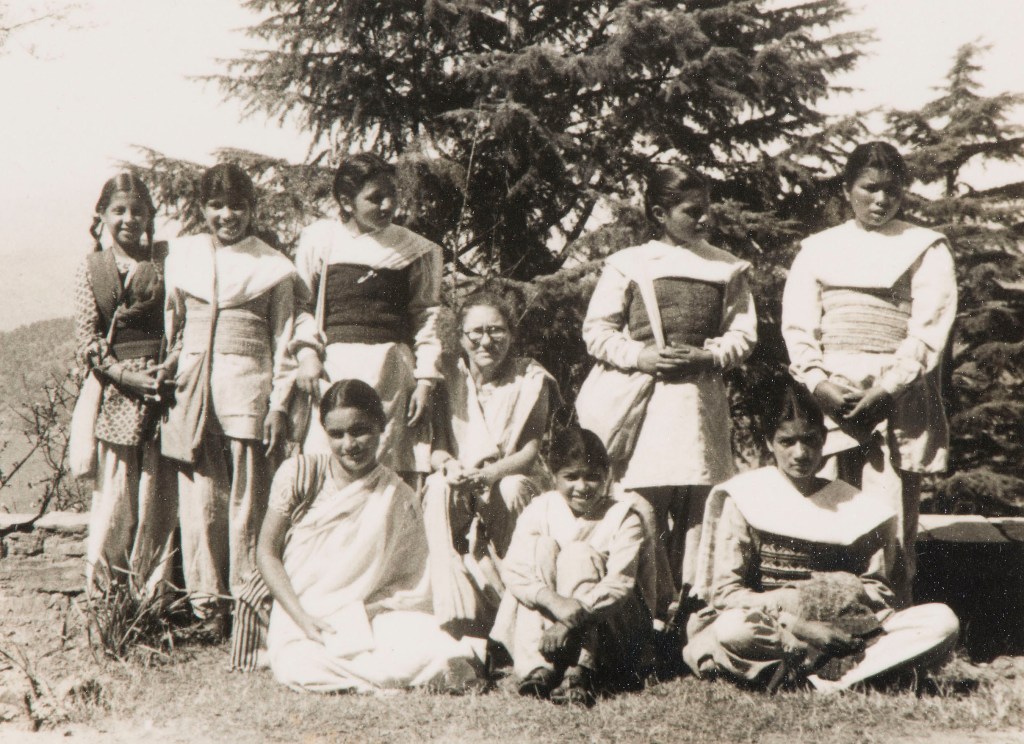
The British placed her under house arrest for her involvement in the 1942 Quit India Movement. As soon as she was released, she again devoted herself to helping freedom fighters and to further preparations for the freedom movement. Hence in 1944 she was arrested and imprisoned again. After her release Saralabehn returned to her karma bhoomi. Having lived and work in the Kumaon villages she felt that the best way to carry forward Gandhiji’s constructive programme was to establish an educational institution for the local girls.  

A local Indian Civil Service officer offered a cottage which he had named Lakshmi after his wife, for the new venture. Thus was founded the Lakshmi Ashram in 1946. Beginning with three students, Lakshmi Ashram began imparting education based on the principles of Nai Talim—education for economic self-reliance where Hands, Heart, and Head should all develop in Harmony.

As there was no local tradition of sending girls to residential schools, Saralabehn had first to gain the trust of the parents. Saralabehn designed her own syllabi and taught the first girls herself. Her curriculum included science, mathematics, Hindi, history and geography. In keeping with the applied-learning focus of Gandhian education, field work which involved close interaction with the local community and manual labour was an important component. This provided the opportunity of learning directly from villagers, especially women, as well as interactive settings for ashram students and teachers to share information about hygiene and health, as well as social, ecological, and political issues. Students also learned to spin, weave, and sew khadi.

An important step was to make the Ashram self-supporting. Saralabehn and her first students worked together to do all the chores of the Ashram. Milk and yogurt came from their own cows, and they collected fuel wood and fodder from the forest. They dined on vegetables, spices, and fruit that flourished in terraced gardens that they established on the ashram grounds, and prepared simple meals over a wood-burning hearth. They did their own housekeeping and ran a khadi shop and a homeopathic dispensary in a roadside bazaar. The aim of the all-round education and exposure was to teach girls to become self-reliant, self-confident community activists who could meaningfully contribute to the Gandhian ideal of Gram Swaraj.

Lakshmi Ashram grew to accommodate more students. Saralabehn continued to engage herself not only with its programme but also with other movements for similar causes. She journeyed to Bihar to join the Bhoodan movement, which Vinoba Bhave had initiated in 1951. In the early 1970s, she went to the Chambal Valley to work with families of surrendered bandits.

By then many of her early students had themselves taken on unconventional leadership roles, pioneering social and environmental movements especially in the Uttarakhand region. These include the famous Chipko Movement, protests against large dams and strip mining, campaigns against alcoholism, and protecting the forests and natural resources. The important role many of her students played demonstrates how a different type of education can have a powerful impact.

Saralabehn continued to live and work in her adopted country until she passed away on 8 July 1982. She was cremated at Lakshmi Ashram where she lived and worked not just as an educator but as a visionary who helped change lives of Himalayan women, and equally fought for the cause of the environment.

–Mamata

The Post Lady Always Knocks Twice

9 October is marked as World Post Day. As an extension to this, the Indian Department of Post is celebrating 9 to 13 October as National Postal Week.

The last month has been unusual in that we have had more knocks on the door by our post lady than by couriers. In the last few years one had become so used to sending and receiving letters and parcels through courier services that we had almost forgotten what an important part post offices and postal services had played in our lives. In the days of ‘life in the slow lane’ the process of hand-writing letters, finding appropriate envelopes, going to the neighbourhood post office to get stamps, and slipping the letter in the post box afforded a great sense of satisfaction. Equally wonderful was the anticipation of receiving letters of response, and other exciting missives announcing results, admission notices, job interviews, and news from near and far. We didn’t consciously realize it then, but the postal service was an integral part of our life.

The history of the postal communication in India dates back to ancient times of kings who used to convey important messages, especially wartime news, through a relay of runners on foot. During the reign of Emperor Chandragupta Maurya, trained pigeons with small cachets of letters tied to their feet were used to send communications across the vast kingdom. This system of ‘pigeon post’ continued even during the time of Emperor Ashoka. The Mughals used a system of runner services which expanded to include horses. Horses were stationed at relay posts every few miles, and the messages were passed on from horseman to horseman. During the reign of Sher Shah Suri it is believed that there were 3400 horses with riders all along the Grand Trunk Road, for conveyance of news.

Post offices, as we know them, were first established in India by the East India Company. The Company opened its first post office in 1727 and the postal service was administered with the main aim to serve their own commercial interests. The post service was opened to the public in March 1774 with the establishment of the Calcutta GPO. This was followed by the opening of the Madras GPO in 1786, and then the Bombay GPO in 1794, and the Bangalore GPO in 1800.  The Post Offices were manned by the respective District Collectors or military officers acting as ex-officio Postmasters.

In addition to managing the postal services of British India, the Post Office was involved in the transmission of correspondence between England and India. This was done by the sea route, and one way travel time was up to three months. In the 1820s Thomas Waghorn, then a naval officer with the East India Company, investigated a possible overland route between Alexandria and Suez, which could cut down the time to just over a month. It took ten years for the British Government and East India Company to be convinced of the viability of this route, which it subsequently took over.

Lord Dalhousie appointed a Post Office Commission in 1850 and the approved recommendations of Commission were framed as Post office Act XVII, 1854. Under this Lord Dalhousie recognized the Indian Post Offices as separate organization of national importance. 700 Post offices which included what were called 55 Receiving Houses were placed, for the first time, under the unitary control of a Director General, Henry Phillip Archibald Buchanan Riddell, on 1st October 1854. The Head Quarters was at Bengal, and was responsible to Home Department of the Government of India.

Roadways were at the time the main form of transporting post. The first line of postal communication by railway was opened from 18th September 1854. Mail service by steamer was introduced between Calcutta and Port Blair on 28 May 1859. And it was in India that the world’s first official “airmail” was operated on 21 February 1911 when Henri Pequet, a French pilot flew a biplane carrying 6500 pieces of mail from Allahabad to Nainital—a distance of six miles.

The Indian Postal Service has come a long way since then, to become the world’s largest postal network managing more than one-and-a-half lakh post offices. The postal department has met the challenges of India’s diverse geography, catering innovatively to remote areas. There is a floating post office in a houseboat on the Dal Lake in Kashmir; and the world’s highest post office in a small cottage in Hikkim district in Himachal Pradesh. The Nagpur Post Office is located in a large Victorian-style heritage building which accommodates the post master’s residence, a parcel hub, a postal depot, a recreation club, and a canteen. And there is a small metal post box among the tea plantations of Munnar in Kerala which has been used for a hundred years now. Known simply as Postal Number 9, the oldest postal number in the country, the post office continues to deliver mail to thousands of plantation workers. 

The Indian Postal Service does much more than delivering mail. It offers a range of other services that help reach out to people and places which do not have access to variety of institutions like banks and other agencies. The post office remits money in the form of money orders (which is the only way of sending money for many Indians). The Postal Department also offers a variety of small savings schemes. It provides life insurance coverage under Postal Life Insurance and Rural Postal Life Insurance. It also plays an important role in discharging government services such as payment of pensions to senior and retired citizens. Wages under government welfare MGNREGA are also distributed through post offices. During the COVID lockdown the red postal vans were even used to deliver medical equipment like N95 masks, medicines, test kits and ventilators across states as part of their “essential services”.

My family has had pleasant experiences with India Post in the past few years. From efficient despatch and delivery of parcels both within the country, and even overseas (all the way to New Zealand!), to the Speed Post with its online Track and Trace (that is sometimes overzealous in informing about the journey of the post), it is indeed a service that calls for respect. This year we could also avail of the home visit by Postal Staff for taking biometrics of my 97 year-old father-in-law for his Jeevan Praman (Life Certificate for continuing pension).    

No wonder then that the post office (dak khana) and the postman (dakiya) on his trusted bicycle were always a component of “village life” in stories and movies in the past. Even today, when we get message on our phone that Tinuben our post lady is on her way to deliver a speed post, we await her scooter and her knock on the door. From pigeon post to speed post, India Post has come a long way indeed!

–Mamata

Gandhiji’s Amanuensis: V. Kalyanam

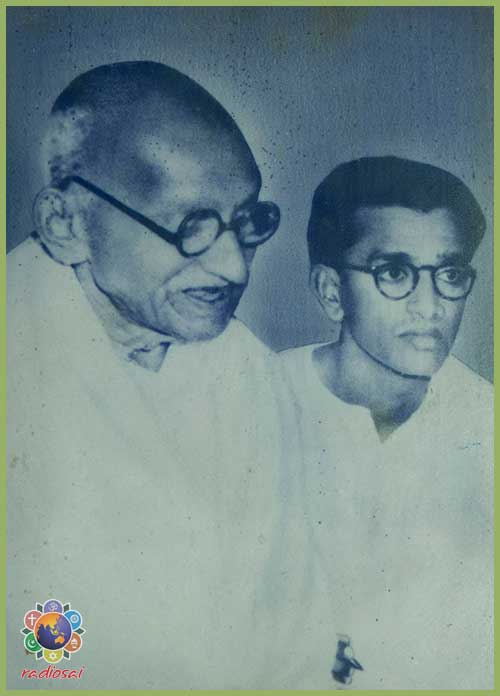
When one thinks of Gandhiji’s personal secretary, the name that immediately comes to mind is that of Mahadev Desai, also one of Gandhi’s close associates. Not as well-known is V. Kalyanam who worked as Gandhiji’s personal secretary after Mahadev Desai passed away, and remained with him until the end of Gandhi’s life. Kalyanam’s story is worth sharing.  

Like many people from South India in the early 1900s, Venkatram had moved to Delhi in 1914. This was where jobs could be found, working for the British government where the South Indian work ethic and knowledge of English were appreciated. Venkatram married Meenabal, and the young Tamil couple settled in Delhi. On 15 August 1922 a son was born to them; they named him Kalyanam.

In those days the entire apparatus of government used to work in Delhi for part of the year and move to the cooler climes of Shimla during the hot summer months. So also Venkatram’s family, with their son Kalyanam, who spent his school days shuttling between Delhi and Shimla. After school he studied at the Shri Ram College of Commerce in Delhi. Upon graduation the young man also found a job with the British government.

Kalyanam grew up as a thoroughly anglicized and faithful servant of the British, till then more or less oblivious of the growing nationalist movement in the country. Having started work, he took to reading the newspapers and found that they were full of news about a man called Mohandas Karamchand Gandhi. He wondered why this man was so adamant to free India from British rule. The Quit India movement had just started, but Kalyanam had no interest nor inclination for what was happening around the country. However on request of some South Indian friends, he agreed to help them to secretly slip some anti-British pamphlets under doors at night. Young Kalyanam had not read the pamphlets himself, but one night he was arrested by the British police and accused of treason. He ended up spending nine months in Lahore jail. After his release he returned home to find that he had lost his government job, but he found work in an insurance company. Little did he know that his life was very soon going to take him on quite another path.

During this time he was introduced to Gandhji’s son Devdas Gandhi who was also C. Rajagopalachari’s son-in-law. Young Kalyanam expressed his frustration at his secretarial job, and his love for all kinds of manual work, Devdas suggested that he go to Sevagram Ashram. Kalyanam knew nothing about the Ashram, nor did he then know about Devdas’ link to Gandhiji. But he was willing to visit what he thought was a spiritual Ashram, and luckily his boss gave him 2 months leave to do this.  Around the same time he accompanied his British Boss’s wife to a Khadi shop in Chandni Chowk. Here bought a handkerchief and towel for three rupees and a kurta pyjama for nineteen rupees. From that day onwards he never wore any western clothes.

In October 1943, Kalyanam arrived in Wardha after a two-day train journey, and presented himself to the manager of Sevagram ashram, still not knowing anything about the place. Gandhiji himself was at the time interned at the Aga Khan Palace in Pune. Kalyanam’s introduction to the very frugal and basic living conditions was an eye-opener for the city-bred boy. In addition to the common chores, everyone in the Ashram had the specific duties. As he knew good English, Kalyanam was assigned the work of segregating by language the many letters that arrived for Gandhi every day, from every part of the country and the world. The first lesson he was taught was how to open the envelopes in such a way that the unused side could be used by Gandhi for writing!

Kalyanam finally met Gandhi in Bombay when he was released from jail for medical treatment. He was introduced as “the Madrasi boy sent by Devdas.” Gandhiji was weak and ill, but he asked Kalyanam many questions. The last one was whether he could type. Kalyanam was surprised because he assumed that he was at the Ashram to do menial work that he enjoyed, and to avoid the secretarial work that he hated. But he admitted that yes, he could type, and that he was fluent in English and Hindi, as well as versed in Tamil.

Once more, Kalyanam’s life was about to take an unplanned turn. Gandhiji’s long-time and faithful personal secretary Mahadev Desai had passed away in prison in 1942; and Gandhiji saw in this young man a possible replacement. Kalyanam returned to Sevagram, and awaited Gandhi’s return on 1 October 1944. From that day on Kalyanam’s life changed. Till then he had been working in the garden and fields most of the time, but now he was assigned a new job as the Mahatma’s stenographer.  

With that he also became a part of Gandhiji’s daily routine which started at four o’clock every morning. Kalyanam’s job was to segregate the hundreds of letters by language, give each letter to Gandhi and take dictation for the replies that Gandhi personally gave for each letter. He then had to type the English letters, and give them back to Gandhi to correct. This was done from 5 to 6 every morning, except on Monday when Gandhiji observed the vow of silence. On this day he would write notes for Kalyanam, who found it hard to decipher his handwriting. Kalyanam recalled that he never saw Gandhi read a book. He did not read the daily newspapers either. It was Kalyananm’s duty to read the papers and type the important items on a piece of paper and place it before Gandhiji. His other duties included accompanying Gandhiji wherever he went and noting every word he said, replying to correspondence, scheduling interviews, preparing his English speeches and coordinating with the press. Kalyanam was on-the-job, as it were, from the time Gandhiji woke up till he went to bed at 9 pm. But as he recalled, he never felt tired as everything he did was interesting. Although it certainly did have many moments that challenged the young assistant.

One incident as recalled by him was when he was on the train with Gandhi; being his day of silence, Gandhiji drafted a note and gave it to Kalyanam to type. Kalyanam thought that this could be done when the train reached is destination. But in the evening Gandhi asked him for the letter and Kalyanam confessed that he was not carrying his typewriter. Gandhiji was not pleased. He muttered “When I send for a barber, I expect him to bring his tools.” Kalyanam somehow managed to get it typed on a typewriter belonging to some journalists who were travelling on the train.

Kalyanam remained as Gandhii’s personal secretary from 1944 till the minute  Gandhji breathed his last on 30 January 1948. Every moment of those four years were a unique learning experience for Kalyanam; and the frugal habits, discipline and commitment to a cause that were planted in those days became a way of life for him for the rest of his long life, until he passed away at the age of 99 years on 4 May 2021.

At the age of 93 years, V.Kalyanam had shared many reminiscences of his years with Gandhi with author Shobha Warrier, and these were published as a book titled His Days With Bapu: Mahatma Gandhi’s Personal Secretary Recalls. A fascinating and inspiring read. 

–Mamata

Spider Art and Science

In India this is the time of year when “spring cleaning” takes place. In the run up to Diwali, homes are thoroughly aired, dusted and cleaned, and every nook and corner cleared of dirt and cobwebs. Just as this frenzy of cleaning activity has begun, I read a news item that in one of the most famous art museums in the world, the Rijksmuseum in Amsterdam, the cleaning crew had been given an  order “No vacuum cleaners and no dusters”. They had been given special instructions not to clear, or even slightly disturb, a single cobweb inside the gallery for the last three months. In fact, the Museum Curator takes a round every week to check that all crevices and corners have adequate cobwebs!

This preparation has been the prelude to an exhibition titled “Clara and Crawly Creatures” which will open to the public from 30 September 2022. The exhibition explores how perceptions of insects in art and science have changed over the centuries. In the Middle Ages, lizards, insects, and spiders were associated with death, and with the devil in European culture, but the exhibition notes that in the 16th and 17th centuries there was a re-imagining of the role of insects after the microscope allowed artists and scientists to appreciate beauty that wasn’t always so obvious.

The exhibition prominently displays Albrecht Dürer’s 1505 painting of a stag beetle, its pincers raised. The exhibits take one through the history of how insects have been perceived over the centuries by artists and scientists who have been fascinated by the beauty and ingenuity of these small creatures. The culmination and the highlight of the exhibition is a dark room which has a huge installation by artist Tomas Saraceno– made from silk woven by four spider species that he houses in his studio in Berlin. In fact Saraceno emphasizes that it is not him, but the spiders who should be recognized as the artists.

Attention is also drawn to the uncleared cobwebs in the rest of the gallery by An Open Letter for Invertebrate Rights, written by Saraceno and placed next to one of the webs in which he makes a strong case for coexisting with creepy-crawlies rather than viewing them as pests. Saraceno, who allows spiders to thrive in his own home, suggests that it is humans who are living in the spiders’ world rather than the other way round. As he puts it: “Spiders have been on the planet almost 280 million years and we humans only 300,000. With this letter on invertebrate rights, we say: ‘Hey look, spiders have the right also to come to the museum, spiders are around you’.”

Tomas Saraceno, the person, also breaks all the traditional perceptions of ‘artist’ and ‘scientist’. Trained both as an architect and a visual artist Saraceno’s works demonstrate a stunning intermeshing of art, physics, biology, astronomy and engineering. Saraceno is also an environmental activist who is constantly exploring   new, sustainable ways to inhabit and sense the environment. In 2015, he achieved the world record for the first and longest certified fully-solar manned flight. In the quest for more sustainable ways of living he has worked closely with indigenous people as well as with renowned scientific and technological institutions.

Among all his other passions and accomplishments, Saraceno is an ardent ‘arachnophile’—an advocate for spiders and their ingenious airborne lifestyle, and spiders’ webs that inspire a lot of his work!  As he often reminds us: “Somehow, when people talk about spiders, they forget that some spiders weave webs; [in fact,] they’re very dependent upon their multifunctional webs that provide shelter, protection, food and, when vibrated, a means of communication.”

The multi-functionality of the web, as well its unique structure, can be attributed to the incredible spider silk which it produces and uses not only to spin its web but which has multiple functions. Any individual spider can make up to seven different types of silk, but most generally make four to five kinds. This is produced in internal glands, moving from a soluble form to a hardened form, and then spun into fibre by the spinnerets on the spider’s abdomen.

The sticky silk prevents the prey from slipping off the web, and is useful to wrap and immobilize the prey once it is caught. The spider used the long strands or draglines as a safety line, to keep itself connected to the web; these are also used for parachuting or ballooning to help the young to disperse and find new areas as food sources; they also act as shelter for the spider. The chemical properties of the silk make it tough, elastic and waterproof. Each strand which is finer than the human hair is believed to be five times stronger by weight than steel of the same diameter, and thus has an incredible tensile strength. No wonder then, that Tomas Saraceno can use it for his installations!

Spiders are master engineers, gifted with amazing planning skills and a material that allows them to precisely design functional webs, which they create in a mind-boggling variety of patterns. Saraceno sees the web as vital for the life of a spider. “The web is a tool for a spider to sense what’s around them—it’s part of their body, almost. Some spiders are blind, or some spiders have eyes but their vision is very bad. They also don’t have ears—they can’t hear. They feel vibrations on their web to understand what’s going on around them. I wanted to build something that allowed a human to be inside the mind of a spider.”

It is this that drove his first major show in the United States called Particular Matter(s). This included a giant spider web installation that enabled humans to experience (in a dark room) the vibrations around them, as a spider would.  

Saraceno was born in Argentina but currently lives and works in Berlin, and exhibits in different parts of the world. He is much more than an artist. He is a passionate social and environmental justice warrior. His mission, he feels, is simply to get humans to understand that they are not the top of a pyramid of power in what is called the Anthropocene era, but exist on a horizontal plane with all non-humans, to which they should be sensitized and from which they have plenty to learn. He advocates for what he prefers to call the Aerocene era in which interspecies-cooperation and clean air are required.

The exhibition that opens this week is yet another reminder of this message and its urgency. In India the first week of October is celebrated as Wildlife Week when the spotlight is usually on the more charismatic and larger mammals and birds. Tomas Saraceno’s mission to celebrate the less visible but vital members that make up the much larger proportion of ‘wildlife’ is a timely reminder that in the web of life, each and every strand is critical.

–Mamata

Cheetah Lore

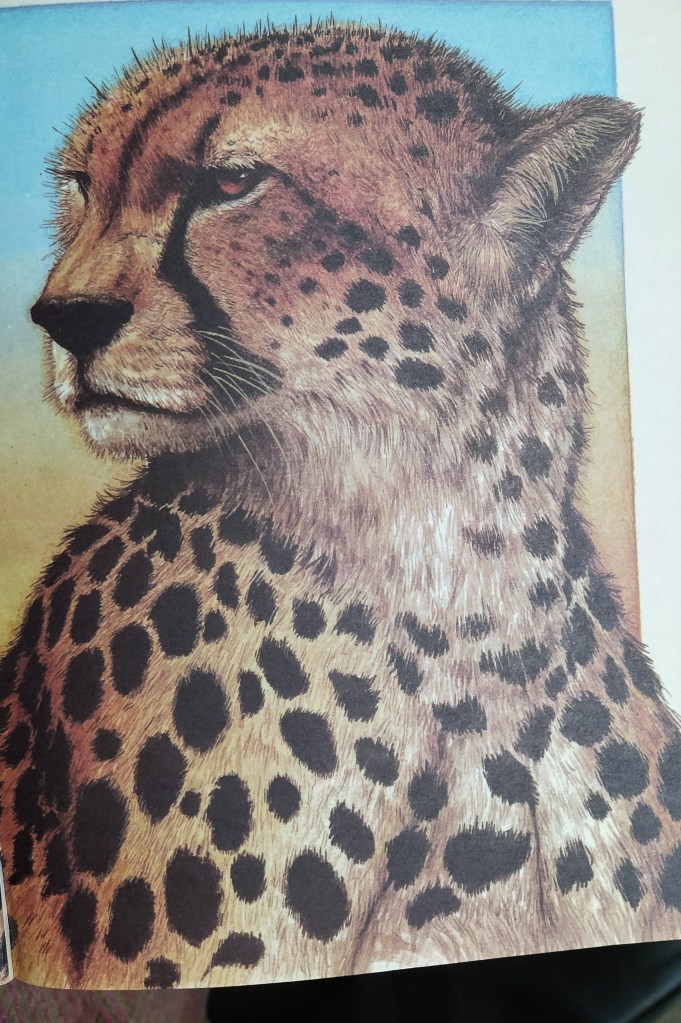
The last week’s news coverage was unusual. The faces that dominated the newsprint were not those of politicians or movie stars, but of the new celebrities in India—eight cheetahs! The beautiful face and body of this graceful animal captivated our attention. The vital statistics of the new arrivals from Namibia were shared and analysed, compared and contrasted with that of the other Big Cats.

Indeed the cheetah is a beautiful creature. With its narrow lightweight body, the cheetah is quite different from all other cats, and is the only member of its genus, Acinonyx. The cheetah’s unique form and structure—flexible spine, long slender  legs, and long muscular tail that acts as a counterbalance to its body weight, allowing it to attain the high speeds for which it is famous as the fastest animal on land.

Unlike other cats, the cheetah’s foot pads are hard and less rounded. The hard pads function like tire treads providing them with increased traction in fast, sharp turns. The short blunt claws, are closer to that of a dog than of other cats. The semi-retractable claws work like the cleats of a track shoe to grip the ground for traction when running to help increase speed.

While these characteristics are studied by zoologists, these have equally been noted by the indigenous peoples who have traditionally lived in proximity to these animals. And these have found a place in their imagination and folk lore. The Bushmen of southern Africa have a charming story about the cheetah’s speed and special paws.

How Cheetah Got Its Speed

Long long ago, the Creator designated certain special qualities to the different animals that he had created. When it came to deciding which one had the greatest gift of speed, he decided that there should be a race. He shortlisted the cheetah and the tsessebe antelope to run the final race. The race was to start from the giant Baobab tree and the two contestants were to run across the plains to a hill on the far side. The cheetah was a fast runner over short distances, but it realised that its soft paws would not be able to take the rigour of a long run. So it borrowed the sturdier set of paws from a wild dog.

The Creator himself flagged them off. The tsessebe sprang off and was away, soon leaving the cheetah far behind. But alas! Suddenly it stumbled on a stone and fell, and broke its leg.

When the cheetah caught up, it found its rival lying on the ground, in pain. All the cheetah had to do was to run ahead and win the race. Instead it stopped to help its opponent.

The Creator, on seeing this was so pleased with the cheetah’s unselfish act that he bestowed on the cheetah the permanent gift of great speed, and the title of the fastest animal on land. He also allowed it to keep the paws of the wild dog.

Along with its streamlined form, the cheetah is also distinguished by its markings of solid black spots, and especially by the distinctive black stripes that run from the eyes to the mouth. These stripes resemble the track of tears and needless to say, this feature must have led to a lot of stories told around the fireplace in the days when the desert people in South Africa lived in close harmony with their natural surroundings.

Here is a Zulu story that tells one of these tales.

Why the Cheetah’s Cheeks are Stained with Tears

Long long ago a hunter was idly sitting under a tree. While most hunters were out all day in pursuit of food, this one was different. He was lazy, and always looking for an easier way of doing things. As he lolled under an acacia tree, he saw a herd of springbok (antelopes) grazing on the grassy veldt. The hunter was daydreaming about how wonderful it would be if he could get their meat without having to chase them. Just then he noticed a movement, and saw that that there was a female cheetah close by. He noted how the cheetah was silently advancing, keeping downwind of the herd, so that they could not sense her presence. As she stalked noiselessly, the cheetah identified a springbok that had strayed from the rest. In the blink of an eye the cheetah gathered her long legs under her and hurtled forward with the speed of lightning. Even as the rest of the herd sensed danger and fled, the lone springbok did not have a chance. The cheetah’s hunt was over.

The hunter, still unmoving, observed how the mother cheetah dragged her prize to the edge of the clearing. In the undergrowth he saw that there were three cubs waiting to be fed. The hunter thought: how nice to be given a meal without having to toil for it; these cubs are lucky. The second thought that struck him was: Imagine if I had a hunter who would do the hunting for me! And further, a wicked idea dawned. If he stole one of the cubs and trained it to hunt for him, his desire would be fulfilled.

The lazy daydreamer continued to lie there as he plotted and planned how to do this. At sunset when the mother cheetah went to the waterhole, leaving the cubs concealed in a bush, he took his chance. The cubs were too young to know what was happening, nor to protect themselves. He first picked up one cub, but then got greedy and stole all three, thinking that he was getting a triple bonus! And away he went before the mother returned.

When the mother cheetah came back and found her cubs missing, she was heartbroken. She cried and cried all night. By morning her tears had left dark stains as they flowed down her cheeks. An old hunter who was passing by heard her loud crying. This wise old hunter knew the ways of the animals. When he found out what the lazy hunter had done, he was very angry. Stealing the cubs from their mother was not only wicked, it was also against the traditions of the tribe which decreed that every hunter must use only his own strength and skill in hunting. Any other way of obtaining prey was a dishonour to the whole tribe.

The old hunter returned to the village and told the elders what had happened. The villagers became angry. They found the lazy hunter and drove him away from the village. The old man took the three cheetah cubs back to their mother. But the long weeping of the mother cheetah stained her face forever.

And so the Zulu believe that even today the tear-stained cheeks of the cheetah are a reminder to the tribesmen that it is not acceptable to hunt in any way other than that what the ancestors had decreed as wise and honourable.

As we in India welcome these unique animals, let us also welcome the ancient lore and wisdom from the days when humans and animals were closely linked in more ways than one.

–Mamata

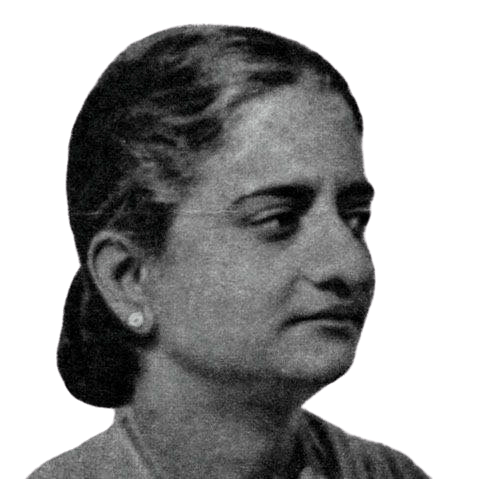
Engineering Woman Power: A. Lalitha

15 September is celebrated as Engineering Day in India to mark the birth anniversary of M Visvesvaraya, one of India’s greatest engineers who made a vital contribution to the field of engineering and education. Visvesvaraya is best known for designing one of India’s first flood protection systems, construction of dams and reservoirs, and setting up one of the first engineering institutes in the country, the Government Engineering College, now called University Visvesvaraya College of Engineering, Bengaluru.

Today there are hundreds of engineering colleges in India and tens of thousands of students, both boys and girls, compete to gain places in the best of these colleges. While the idea of a woman pursuing engineering is not uncommon today, the way had been paved by spunky pioneers who took on numerous challenges in a different time and circumstances. This is a good day to remember one of these women—A. Lalitha.

Lalitha was born on 27 August 1919 in a middle class Telugu family, one of seven siblings. Her father was himself an engineer, and fairly broad-minded, but societal norms and expectations took precedence over personal beliefs. Thus, as was the norm in those days, while Lalitha’s brothers were supported in pursuing higher studies, the girls in the family were educated only till the primary level, and then married off. Lalitha herself was married at the age of 15. But her father ensured that even in her new life she could continue to study till she completed class 10.

Sadly Lalitha’s married life was short-lived. Her husband passed away when she was just 18 years old. Lalitha had recently become a mother to a baby girl. Now she was a young widow with a four-month-old daughter, living in a society where widows were shunned and relegated to a life of isolation and austerity. This is where Lalitha’s fighting spirit led her to quietly start breaking the first of many barriers.

She moved back to her father’s house with a strong resolve to study and get a professional degree so that in future she could become self-reliant. Her father supported her decision, and Lalitha cleared the intermediate exam from Queen Mary’s College in Madras. This was the first step to moving ahead.

At the time there were women who were studying medicine. But Lalitha felt that a career in medicine would not leave her sufficient time and attention for her young daughter, who was her priority. Living in a family of engineers, this was an option that came to her mind. At that time technical education was itself in a nascent stage in India, and the idea of women entering this field was unheard of. No institute was admitting women. Once again, her father Pappu Subbarao helped to open a door for his daughter. He was a professor of electrical engineering in the College of Engineering (CEG) in Guindy, and he put up a special request to the then Principal of CEG Dr KC Chacko, that his daughter be permitted to take up an engineering course. He also put forward the appeal to the Director of Public Instruction, RM Statham. Luckily, both these officials were forward thinking and were agreeable to opening admission for a woman for the first time in the history of CEG. Lalitha applied for the electrical engineering course.

Thus Lalitha became the only girl in a college with hundreds of boys. But as accounts go, she never felt uncomfortable there. Accommodation in a separate hostel was arranged for her, while her daughter was looked after by her brother’s family; Lalitha visited her every weekend. While Lalitha was comfortable and happy in her classes, she missed having company in the hostel. Once again her father encouraged the authorities to open admissions for more women. In response to the advertisement two more women—Leelamma George and PK Thresia joined in the civil engineering course the following year.

As per the government rule then, engineering students had to put in four years of academic work and one year of practical training before they could graduate. Lalitha completed her practical training with a one-year apprenticeship at the Jamalpur Railway Workshop, a major repair and overhaul facility. 

Lalitha received her Bachelor of Engineering degree in 1943. Although they were technically junior, the three women engineers graduated together. Interestingly, the degree certificate of CEG had to replace the word He with She for their first three women graduates! 

Having already crossed several hurdles, Lalitha was ready to start a new phase of life as a professional. However she continued to give priority to her daughter Shyamala and looked for work opportunities which would not compromise her care. She accepted a job offer as an engineering assistant at the Central Standards Organisations of India, Simla. This was suitable as she was able to live with her brother’s family which offered support and care to her daughter. After two years in this job, she moved to Chennai work with her father helping him with his research which had led to several patents. This was intellectually stimulating, but financial pressures led Lalitha to find other work. She moved to Calcutta to work in the engineering department of Associated Electrical Industries. Once more her second brother and his family provided a home for her daughter. 

Lalitha got the opportunity to put all her education to practice, and gained experience and expertise. She worked on large projects, including the upcoming Bhakra Nangal Dam, which was then to be the biggest dam in India. Her tasks included the designing of transmission lines, substation layouts, and protective gear. Her brilliance and abilities began to gain national and international attention.

In 1953, the London-based Council of Electrical Engineers invited her to be an associate member. Visiting a British factory as an Indian woman dressed in a sari attracted a lot of press attention. She later became a full member. In 1964 she was invited to the First International Conference of Engineers and Scientists in New York. She was the first Indian woman engineer to attend. Lalitha subsequently became involved in several international organisations for women engineers. In 1965 she became a member of the Women’s Engineering Society of London.

Lalitha continued to work with Associated Electrical Associates (later taken over by General Electric Company) until she retired in 1977. She also lived with her sister-in-law in the same house in Calcutta for 35 years.  Throughout her career she championed the idea of women in STEM careers. Her daughter Shyamala followed in her mother’s footsteps by studying science and maths, and making a career in teaching maths. In an interview her daughter summed up the essence of her mother’s work and life: “What I take from her life is her extreme patience towards people and the quality of doing instead of just talking. She believed that people come into your life for a reason and leave when the purpose is over.”

Not long after retirement Lalitha suffered from a brain aneurysm and passed away at the age of 60, in 1979. Today as many girls take up engineering as a career, most would not know about the grit and determination of a woman who helped pave the way. A. Lalitha—a young widow, dedicated single mother, a brilliant student, a path-breaking professional clad in a sari, who did not need to wear power suits to break the glass ceiling. 

–Mamata