The Call of the Mountains: Nan Shepherd

December 11 is marked as the International Mountain Day. Mountains have always fascinated human beings not only for their sheer scale and majesty, but also as a natural element that offers a challenge, as well as a test of physical and mental strength, and the thrill of scaling the peaks. There are numerous narratives of expeditions that describe these challenges and achievements, most of these by, and about men.

The Cairngorms

A different perspective, and approach towards mountains reminds us that there is more to mountains than the thrill of conquest.

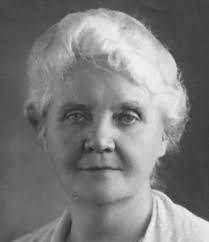
This was lyrically described by Anna (who called herself Nan) Shepherd, a Scottish poet, writer and explorer of mountains. Nan was born in February 1893, close to Aberdeen on the North East coast of Scotland. When she was one month old, her family moved to nearby Cults and lived in a house with a garden overlooking the hills. Nan continued to live in the same house almost till the end of her life. As a young girl Nan was encouraged by her father, a keen hill walker, to explore the nearby hills, and this planted in her a lifelong love for nature and the mountains. Nan was an equally avid reader, and from her early teens she would fill notebooks with passages that inspired her from the wide spectrum of her reading. After completing her schooling in 1912, Nan joined the University of Aberdeen in the first decades after women were allowed to do so. She was an outstanding student, and graduated in 1915 with an MA in literature. Following this she taught English literature at Aberdeen Training Centre for Teachers, and continued to give enthralling lectures until she was well into her eighties. She was not only an inspiring teacher but also a role model for her students, as an early feminist. She wryly described her role as “the heaven-appointed task of trying to prevent a few of the students who pass through our Institution from conforming altogether to the approved pattern.”

Although she had always enjoyed walking in the hills, Nan Shepherd became deeply engaged with climbing in the period between the two World Wars. She was thirty years old when she began her explorations in the Cairngorms in 1928. This experience was the start of a passion that came to define both her life and her writing. From then on, she sought to escape into the Cairngorms whenever her job would allow. Often she would walk alone, camping out, and wading into hidden lochs. Occasionally she was accompanied by friends and fellow walkers from the local Deeside Field Club, or by students from the university.

By the 1940s Nan had scaled some of the highest peaks in the Cairngorms, among the wildest landscapes in the British Isles. However Nan’s expeditions were not about ‘reaching the top’ but rather a spiritual journey to ‘understand herself and the world’. She became fascinated by what happened to mind and matter on this journey up and down the mountain slopes.

These experiences were reflected in her literary work. The harsh landscape, as well as the people and places she knew well, provided the background to her first three books, published while she was teaching. These novels focussed on the harsh landscape which made for a harsh way of life, and within these, complexities of women struggling with maintaining traditional roles in a dawning age which was opening up new opportunities

But Nan Shepherd never wrote for recognition. She wrote only when she felt she had something worth saying. “I don’t like writing, really. In fact, I very rarely write. No. I never do short stories and articles. I only write when I feel that there’s something that simply must be written.”

For her teaching was as, if not more, important than her writing. However she continued to document her explorations of the Cairngorms, which came together around the end of the Second World War, under the title The Living Mountain. She combined her knowledge of the mountains, her observations of their rugged beauty, and her literary skills to muse on the philosophical and spiritual offerings from mountains. She wrote of the Cairngorms as “friends” that she “visits”, and with whom her imagination is fired as if “touched by another mind.”

 Nan Shepherd completed her book in the summer of 1945, and sent her manuscript to a novelist friend. He cautioned that it may be hard to find a publisher of a book of this nature. Nan put the manuscript away in a drawer where it remained for 30 years. Towards the end of her life, Nan retrieved the manuscript from her drawer and felt that it still resonated in many ways. Given her long association with Aberdeen University, she submitted it to Aberdeen University Press. The Living Mountain was finally published in 1977.

The Living Mountain threaded together, beautifully geography, geology, history and philosophy, along with everything that she herself had experienced in the mountains that she had fallen deeply in love with. For Shepherd, the mountains were living beings, and her book describes how she nurtured her relationship with them by walking. She wholeheartedly believed that only through walking and experiencing could insight be gained. “The more one learns of this intricate interplay of soil, altitude, weather, and the living tissues of plant and insect … the more the mystery deepens.”

The Living Mountain, continues to be timeless, since its publication 30 years after Nan Shephard wrote it. It provides a rare lens into a world that has been viewed mainly through the eyes of male climbers, who focus on the challenges, and the conquests. Nan Shepherd’s lens is that of a naturalist and poet, one of contemplation, reverence, and an exploration of the profound. The book suggests that the summit should not be the organizing principle of a mountain; it urges the practice of not walking “up” a mountain, but rather “into” them, so as to explore not just the physical forms but also ourselves, peering into the nooks and crannies.

Today, mountains across the world are facing their own challenges. Climate change is melting glaciers and distorting landscapes; the surge of climbers are leaving behind manmade mountains of garbage that threaten to bury the real mountains. This is a good time to remember The Living Mountain, and a mountain lover who looked beyond the ascents to the journeys within.

–Mamata Pandya

Of Tongues: Tied and Twisted

Many of us have student-day memories of freezing up in the middle of an elocution competition, or as adults, not being able to converse comfortably when in a large group of people. We were told that had become “tongue-tied”. The dictionary defines this state as being ‘too shy or embarrassed to speak’.

More recently I was introduced to another, more literal, form of tongue tie. This is a medical condition where a tight band of tissue connects the underside of the tongue to the floor of the mouth, keeping it from moving freely. Nowadays, paediatricians usually check for this in new born babies, and a minor surgical procedure can cut the tight tissue to allow for a free movement of the tongue. While this is not a mandatory nor critical issue, sometimes this restrictive movement of the tongue could hamper the baby from proper breast feeding, and could (though not definitely) be an impediment to speech as the child begins to speak.

This was not a condition that I was familiar with, and I suspect that many adults have grown up unaware about this. At best, these were labelled as people with speech impediments, and either lived with it through their life, or were sent to speech therapists. Perhaps one of the exercises that they were prescribed, was to recite aloud some phrases that had alliteration, rhymes, and repetition. Speech therapists believe that such exercises help to strengthen the muscles that are used when we speak. The muscles of the mouth need to move in certain positions to create individual sounds. Tongue twisters help practice and strengthen these positions and muscles in order to perfect these sounds. 

Even without being guided by a therapist, many of us have childhood memories of getting our tongues in a twist with these lines:

She sells seas shells on the seashore

The shells she sells are seashells, I’m sure

So if she sells seashells on the seashore

Then I’m sure she sells seashore shells.

No wonder such lines were described as ‘’tongue twisters”. Such phrases have been part of the oral tradition in all cultures since early times. In ancient Russia travelling performers called skomorokhi would amuse crowds by reciting fast tricky lines and challenging the audience to repeat these. Most people couldn’t and their fumbling attempts raised a laugh from the others. Folklore in all languages has examples of such nonsense rhymes that need an acrobatic tongue to master.

In fact even today, performers use tongue twisters to loosen up before they are scheduled to go on stage. These help them warm up and get their mouth and tongues ready to perform in front of an audience. Tongue twisters are also used by voice actors before they are recorded.

The term tongue twister is believed to have appeared in print in the late 19th century to describe phrases that are difficult to articulate due to their use of similar but distinct sounds. In the English language these gained attention with the publication of a book called Peter Piper’s Practical Principles of Plain and Perfect Pronunciation, which included a tongue twister for every letter of the alphabet. The book was meant to help children learn the fundamentals of speech mechanics, but it attracted a lot of attention. The title itself garnered curiosity. The author of the book was John Harris, who then was the Peter Piper? The mystery was heightened with the inclusion of the rhyme:

Peter Piper picked a peck of pickled peppers.

A peck of pickled peppers Peter Piper picked.

If Peter Piper picked a peck of pickled peppers,

Where’s the peck of pickled peppers Peter Piper picked?

It turns out that this one was based on a French horticulturist Pierre Poivre. Pierrre is the French version of Peter, and Poivre is the French word for pepper. Pierre, it is believed, was exploring the viability of growing spices in the Seychelles. Thus the peppers, and the peck which was an old measure of weight.

Tenuous connections, at best, but they do add some spice to the story!

While tongue twisters are accepted as a part of speech therapy, people enjoy these just for the fun of fumbling and stumbling over words in absurd sentences. So much so that there is even a day designated as the International Tongue Twister Day celebrated on the second Sunday in November every year. And there is an International Tongue Twister Contest held at the Logic Puzzle Museum in Burlington, Wisconsin in the USA. First held in 2008, the contest has become an annual tradition. This invites everyone between the ages of ‘6 and 106 years of age’ to test their verbal dexterity. A joyful celebration of the playful side of language!

At the same time there is also serious research being carried out on this subject. A team of researchers from the Massachusetts Institute of Technology (MIT) have deemed that the most difficult tongue twister in the world is this one:

“Pad kid poured curd pulled cod”.

If one is not quite up to the challenge of cracking this one, here are some others to twist our tongues around:

“The sixth sick sheik’s sixth sheep’s sick.”

“Imagine an imaginary menagerie manager managing an imaginary menagerie.”

“A tutor who tooted the flute tried to teach two young tooters to toot. Said the two to the tutor, ‘Is it harder to toot, or to tutor two tooters to toot?’”

Don’t let these leave you tongue-tied!

–Mamata

A Fool of Fruits

This morning my sisters suddenly remembered our mother’s (who had a great sweet tooth) fondness for Mango Fool. This brought back so many memories of the many sweet dishes that we used to have at home, which included lots of sugary syrupy Indian sweetmeats, as well as the more subtle English ones such as custard and pies. Our combined memories recall that Mango Fool was some form of thick milk shake. Turns out that the real Mango Fool is a more sophisticated desert that includes mangoes, and whipped cream. And, of course, so many years later, the memory nudged me to dig deeper into investigating the curious name of this dessert.

As it turns out ‘Fools’ of the fruity variety have ancient origins and a rich history. Fruit fool is a classic English dessert. Traditionally, fools were made by folding a stewed fruit (originally gooseberries) into a creamy, sweet custard. The documented origins of the desert can be traced back to the 17th century, although it is believed that some form of this existed as far back as the 15th century.

The earliest known recipe is from the time of the Merry Monarch, King Charles II in a book called The Compleat Cook published in 1665, written by an anonymous author ‘Mr WM’. The recipe was for what he called Gooseberry Foole. The recipe included cooked, mashed, and strained gooseberries, which are beaten with sugar, butter, and eggs to form a pudding-like consistency.

Take your gooseberries and put them in a silver or earthen pot, and set it in a skillet of boiling water, and when they are coddled enough, strain them; when they are scalding hot beat them well with a good piece of butter, rose-water and sugar, and put in the yolk of two or three egg, you may put rose-water into them, and so stir it altogether and serve it to the table when it is cold.  Anonymous.  London.  1658.

The recipe endured through the ages, and was almost no change in the one included 250 years later in the Victorian era cookbook The Art Of Cookery Made Easy and Refined.

But why the name Foole? The most popular theory to explain this is that the term comes from the old French term ‘fouler’ which meant to mash or crush. And this is what the recipe demands—that the cooked fruit be crushed or pressed before being folded into the custard mixture. In those days most fruits were cooked, because people thought that raw fruits were dangerous for health.

Another theory points out to the fact that it was an unpretentious dessert which ended a meal, just as a trifle did. Fool was another term for a syllabub or trifle (something of little value). As an etymological dictionary explained Fool is ‘a reallocation of a word for something light-headed or frivolous as a light dessert’. Perhaps these desserts were literally lighter than the stodgy traditional English desserts like Sticky Toffee Pudding, Steamed Syrup Sponge, Jam Roly-Poly, and Suet Pudding.  

Whatever the theory, gooseberry remained a favoured fruit for this dessert, and the Gooseberry Fool was a popular dessert for many years. So popular that Edward Lear even incorporated it into a limerick in his A Book of Nonsense published in 1846.

There was an Old Person of Leeds,
Whose head was infested with beads;
She sat on a stool,
And ate gooseberry fool,
Which agreed with that person of Leeds.

Over time, other seasonal fruits such as strawberries, raspberries, apples, apricots, and cherries, also began to be incorporated in the recipe. Also, the custard was replaced by whipped cream which made it lighter. The combination of fresh fruit and frothy cream, served chilled, makes for a refreshing summer treat.

The ‘Fool’ part was also incorporated in the names of other desserts.

Norfolk Fool as an early type of bread and butter pudding dating back to the 17th century. It included creamy custard, dates and spices.

Westminster Fool was a sweet custard with a flavouring of rose, mace and nutmeg, poured over a penny loaf cut into six slices, soaked in sherry. (Maybe the inspiration for our own Shahi Tukra, or inspired by it!)

Boodles Fool was named after Boodle’s Club, a private exclusive gentlemen’s club founded in 1762. Ironically, in the very class-conscious British society, the club was named after its head waiter Edward Boodle! His namesake dessert featured a citrus (orange and lemon) mixture whipped with cream, poured over sponge cake, served chilled, decorated with orange slices.  

Whatever the ingredients and recipe, Fruit Fools provided for a delicious finale to a meal. Today these continue to be popular as cool summer desserts. Where my mother picked up the concept and term is a mystery lost in time, and so is the actual form of her version, but the name Mango Fool is closely associated with our childhood memories of sweltering hot Delhi summers.

–Mamata

Birdwoman Jamal Ara

12 November marks the birthday of Salim Ali the Birdman of India. Much has been written and published by, and about, Salim Ali. However very little is known about a young woman who was recognized as the first Bird Woman of India by Salim Ali himself. This was Jamal Ara, a path breaker in more ways than one.

Jamal Ara was born in 1923 in Barh, Bihar, in a conservative Muslim family. She could study only until class ten before she was married off at a young age, much against her wishes. She moved to Calcutta with her husband where a daughter, Madhuca, was born. Sadly her marriage broke down, leaving her in dire straits. Fortunately a cousin who was in the Forest Service in Bihar, came to her aid and Jamal and her daughter moved to Ranchi. As a forest officer, her cousin was posted to different forest divisions of Bihar, and Jamal often accompanied him on his trips. This sparked in her a great love for wildlife, and Jamal would spend hours observing the flora and fauna in her surroundings. The English wife of a senior forest officer encouraged her to keep notes of her observations, and helped her to hone her writing skills. As her proficiency grew, they also encouraged her to turn her notes into articles and send them for publication.

Jamal Ara spent many years doing extensive field work in what is now Jharkhand, and her study of birds in the Chota Nagpur plateau was comprehensive and detailed. She meticulously documented her observations, and wrote prolifically from 1949 to 1988.  She contributed over 60 papers and articles to the journals of the Bombay Natural History Society and Bengal Natural History Society. She could communicate equally well with a lay audience. She wrote for The Newsletter for Birdwatchers, which was popular with amateur as well as seasoned birdwatchers, and also a book for children, Watching Birds which was published by National Book Trust, and translated into many Indian languages. I remember this book as being one of my own early introductions to nature study.

Jamal Ara was a multi-faceted writer. She wrote fiction, translated stories, and worked as a journalist for a short time. She also did programmes for All India Radio. Jamal Ara was also much more than a birdwatcher. She saw birds as an integral part of a healthy ecosystem, and advocated for a balanced conservation approach, something that was not common in an age when shikar was also a popular pastime.

After such an intense involvement in ornithology, and a prolific contribution to the field, in 1988, Jamal Ara suddenly vanished from the Indian ornithology scene. Her contributions stopped, and she herself disappeared. It is believed that a series of personal losses and setbacks affected her badly. She stopped writing, and after a few years also burnt her notes and photographs. She died in 1995.

Gradually Jamal Ara’s name and contributions sunk into oblivion. She would have been lost to the history of Indian conservation if not for a young researcher Raza Kazmi, who stumbled upon a story by Madhuca Singh, a celebrated basketball coach of Ranchi who mentioned Jamal Ara, her mother, who was a great bird lover. Raza Kazmi was intrigued by this mysterious bird lover, and embarked on a search for this woman and her work. After chasing numerous leads, he finally connected with Madhuca who shared her mother’s story.

It is thanks to Raza Kazmi’s single-minded pursuit, and the publication of Jamal Ara’s story in the book Women in the Wild edited by Anita Mani published in 2023, that we can join in celebrating this enigmatic, but brilliant bird woman of India.

It is also heartening that whatever had remained of Jamal Ara’s original work has been collected and digitized as part of the Archives at NCBS, a public centre for the history of science in contemporary India. The Jamal Ara Collection has archival papers relating to her life and work from 1940s to 1980s, including correspondence, unpublished manuscripts, field diaries and notebooks, and drafts of articles.

This week, as we celebrate Salim Ali, as well as Jamal Ara, both passionate bird watchers, here are a few words from them that remind us of the simple joys of bird watching.

”A bird’s song is a sound that touches the soul; it reminds us of the beauty of nature that we must protect. For me, birds have always been the greatest source of joy and inspiration.”  Salim Ali

“Even if you are not a birdwatcher and are not even faintly interested in them you cannot barricade yourself successfully against fugitive but striking impressions that the sight of a bird invariably leaves. The impression is not altogether fleeting although the sight may have been. It persists in memory. Colour, song, manner of flight, the build or some aspect of physiognomy may have thrust itself into your consciousness and nestles there pleasantly. That is why there is no person entirely uninterested in birds. Most persons are unattentive but a few helps to their stored memories and they start taking an interest in birds. They become attentive and surprise themselves by evolving into birdwatchers.” Jamal Ara 

–Mamata

Riding High on the Waves: Women Pirates

This week Meena wrote about Bungaree the first Aboriginal man to circumvent the continent of Australia. His feat was amazing not only because he was the first to undertake the journey but also because he was from an indigenous tribe, in an era when sailors and adventurers were white men. Bungaree broke the mold in more ways than one, but always remained in the footnotes of the history of sailing.

There is another group that has been in a similar position in this context—women sailors. According to traditional sailing superstition, it was believed that having women on board ships could anger the Gods and lead to misfortune such as storms and shipwrecks. It was also felt that the presence of women on board would be a distraction to sailors and lead to fights and disruptions. In fact seafaring professions were officially barred to women until the 20th century. But maritime history has its own set of tales about spunky women who rode the waves over the earlier centuries, in many cases disguised as men, but also openly and boldly. The most fascinating of these are some of the women pirates who defied every established norm of the day.

Zheng Yi Sao: Queen of the South China Seas

Zheng Yi Sao is described as the most successful female pirate in history. Born in 1775 into humble circumstances, she married the notorious pirate captain Zheng Yi, but on her own terms. She demanded equal partnership in his pirate fleet—an unprecedented and audacious demand. Zheng Yi was agreeable, and she took on the name Zheng Yi Sao (wife of Zheng Yi).

After her husband died when she was 32, Sao took control of his pirate fleet and transformed it into an unstoppable force in the South China Sea. She knew the coastline better than any imperial admiral, using hidden inlets and storm-lashed coves to evade capture. Sao was not just a skilled seafarer, she was a brilliant and brutal administrator. Her fleet was governed by a strict code of conduct:

Loot was divided fairly, with captains receiving a smaller share than their crew to ensure widespread loyalty. Female captives were to be treated with respect, and could only be taken as wives with mutual consent. Rape was punishable by immediate execution. All plundered goods had to be presented for group inspection, all captured goods were registered, and the punishment for disobedience was often beheading. Perhaps her most revolutionary approach was for other women within her fleet. The wives and widows of pirates were encouraged to take on leadership roles, creating an unprecedented situation where women held genuine authority in a violent, male-dominated world.

Zheng Yi Sao reigned supreme with an armada of over 300 ships and a crew of 20,000 to 40,000 pirates. Her fleet successfully defeated the navy of the ruling Qing dynasty, and even the ruling government could not destroy her power. Zheng Yi Sao’s power stemmed not just from ruthlessness and brute force, she was equally a strategic planner and shrewd negotiator. Recognizing that prolonged conflict would eventually erode her power she negotiated a surrender with the government, once again, on her own terms. She secured full amnesty for herself and almost all her crew, the right to keep her accumulated wealth; military positions for many of her top commanders.

Zheng Yi Sao eventually retired with all her loot, and continued to lead a civilian life for the next several decades. However she has gone down in the annals as the most successful pirate of all times. 

Sayyida al Hurra: Pirate Queen of the Mediterranean

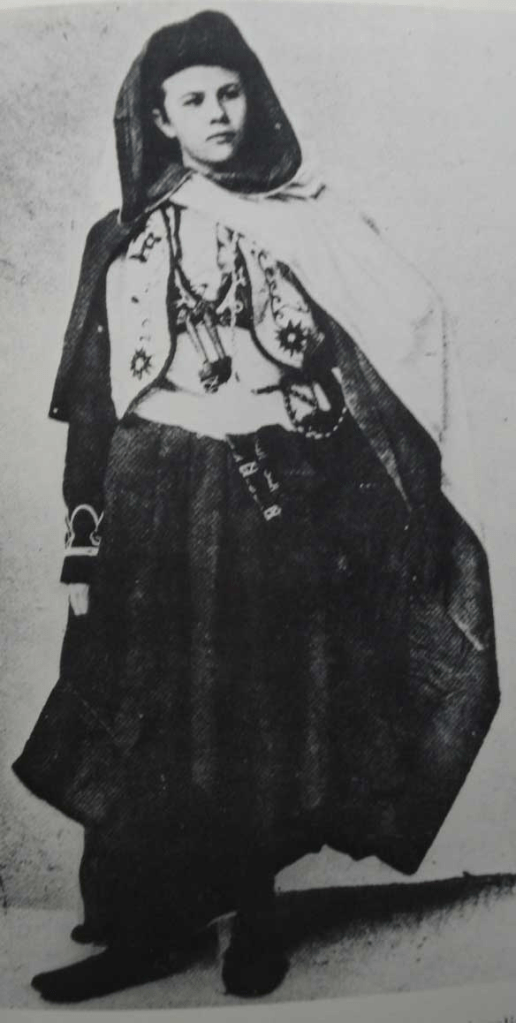
Sayyida al Hurra was not just a pirate; she was a queen, a refugee, a warrior and a power broker of the 16th century Mediterranean. She was born in 1485 in a family of Andalusian nobles, but forced to flee to Morocco. While in exile there Sayyida rose to become Governor of a vital port city on the North African coast. Once in power, she decided to avenge Spain and Portugal, not through politics or war, but through piracy. She forged a strategic alliance with Barbarossa an Ottoman admiral and pirate, and together they controlled the seas, he in the east and she in the west.

Sayyida was more than a pirate commander; she was also a skilled diplomat and ruler. She negotiated directly with European monarchs, wielding influence usually denied to women of her era. She even married the Sultan of Morocco and insisted the wedding take place in her city, making her the only woman in Islamic history to have married a reigning monarch without leaving her seat of power. Thus Sayyida established rule over both land and sea, a rarity in history.

 Laskarina Bouboulina: The Pirate Admiral of Greek Independence

Laskarina Bouboulina was born defiant. Her father was a naval captain and rebel who had been imprisoned by the Ottomans. Laskarina was born in a prison cell in Constantinople in 1771, where her mother had gone to visit her imprisoned husband. After her father’s death Laskarina and her mother moved to the island of Spetses. This was no idyllic Mediterranean village, but a haven for smugglers, sailors and rebels who had fled conventional authority. The young Laskarina grew up among pirates and ship’s captains, learning about the language of the sea and sailing ships even before she could read.

By the time she was 40, Laskarina was married and widowed twice, to powerful ship owners, and inherited their fleets and fortunes. She used these resources not just for commerce but to fight the Ottoman Empire. She became a member of Filiki Eteria a secret organisation plotting to overthrow Ottoman control over Greece. Her main role was to smuggle food, weapons and ammunition into Spetses. She used her wealth to commission the construction of Agammennon, her personal warship, considered to be one of the largest and fastest Greek warships of the revolution. She commanded the rest of her fleet from this warship. Spetses was the first island to revolt against the Ottoman Empire in 1821. Laskarina then led her fleet to begin a naval blockade of the fortified city of Nafpoli, followed by the siege of other cities.  

Throughout the battle against the Ottomans, Laskarina conducted her spirited resistance with a mix of strategy, ruthless power and charisma. She was fierce, but an inspiring leader who commanded the respect of the men who willingly joined her battle. Ironically, she was killed in a family feud.

These swashbuckling buccaneers ruled the waves, broke every rule written for women, and rewrote history at sea.

–Mamata


WASTE NOT WANT NOT: WORLD THRIFT DAY

The First International Thrift Congress was held in Milan, Italy from 26 to 31 October 1924.  It was attended by over 300 delegates from 27 countries, who shared a vision: to promote savings as a key to financial security and independence. This was a period following the First World War which was marked by financial instability, and loss of confidence in banks. Banks were adopting a variety of measures and incentives to encourage people to deposit savings in banks in order to secure some stability for future uncertainties. In fact the word savings itself originates from the early 14th century, symbolizing ‘salvat’ a way to protect oneself from life’s uncertainties.  

On the last day of the conference one of the organizers Professor Filippo Ravizza proposed that there should be an annual International Savings Day or Thrift Day, as a reminder of the importance of saving, and to foster the habit of saving. It was unanimously agreed that this should be marked on 31 October. The informal symbol chosen to represent World Savings Day was the piggy bank.

Over a hundred years later, World Thrift Day continues to remind about the value of saving. Taken in a broader context, the word ‘thrift’ implies more than just accumulating coins in a piggy bank, or money accrued in savings accounts and deposits in banks. It refers to the prudent management of one’s resources. It is the opposite of extravagance and waste. It encompasses the philosophy and practice of moderation, conserving, and economizing.

Perhaps there is no better example of a life led by these principles than Mahatma Gandhi. For Gandhiji thrift was not just a habit of saving money; it was an ethical and philosophical principle which guided every aspect of his life. For him, the most direct application of this was in the frugal use of resources in one’s daily life. While his own lifestyle reflected this in every moment of his daily routine, he also expected that the people who lived in his ashram do the same.

There are several anecdotes recalled by his colleagues and ashram inmates that illustrate this.

Kishorelal Mashruwala started working with Gandhiji from the time that Gandhiji returned to India from South Africa, and continued to be closely associated with him for the rest of his life. He recounted some incidents.

‘One of my young nephews lived with me at Sabarmati. He once tore his clothing during play and then went straight to Bapu’s room. Bapu saw the torn condition of the cloth, and when he saw my wife later he showed his displeasure at it. He said: “One need not be ashamed of clothes repaired with sewing or patches. Poverty in itself is not a matter for shame. But there is no excuse for a person to put on unmended or dirty clothes. A cloth must be repaired as soon as it is torn, and washed if it has become dirty”.

It is well known that Gandhiji never threw away a used envelope or telegraph form that was blank on the reverse. He would collect these and convert them into scribbling pads, to be used on the day of his silence, or to write drafts of his articles and important letters, or, sometimes, to write notes to be left for others, or sent to them. Mashruwala recalled this: ‘I may also mention a habit which I developed under his influence. It is that of preserving and using bits of paper written on one side, wrappers on book-post packets etc., and used envelopes. Perhaps the instinct of thrift was inherent in me, and it got encouragement by his example.’ 

Kamlaben Patel came to stay in Sabarmati Ashram with her father when she was a young girl. Every inmate was expected to participate in all tasks from cleaning, washing, cooking, and spinning; and every resource was to be used with respect and frugality. She recalled one incident.

‘One day Bapu was passing by the store when the goods were being unloaded. He stopped and enquired how much soap had come. The soap that we all used was round and white but hard as stone, and the cheapest one that was available. The next day after the women’s prayer Bapu enquired about how much soap was used by each family. From their replies it was calculated that the cost of soap for each person was from 75 paise to one rupee. Bapu proposed that the use of soap be reduced. The women frankly told Bapu that any reduction in use was not possible as the soap was used to wash thick white khadi clothes, sheets, pillow covers, and mattress covers. Bapu said that “you all know that the Ashram runs on the donations of people. We claim to be servants of the people. Three hundred people live in the Ashram, and if each one used one rupee worth of soap, what will our donors feel about 300 rupees being spent on soap every month? Even in the days when there was no soap, our clothes were clean were they not? You must consider reduction in soap use.” After a lot of discussion the women agreed to use 50 paise worth of soap each month. Bapu proposed 37 paise. The women said they would respond after more thought. The prayer meeting dispersed. The women reconvened and after considering all options, unanimously decided to inform Bapu that it was not possible to do with less than 50 paise worth of soap per person, and remain firm on this decision. After the prayer Bapu jokingly said that the women’s ultimatum was like the Viceroy’s ultimatum. He would go to Bardoli to provide an answer to the latter, but he bowed to the women’s ultimatum, and accepted their 50 paise demand.’ 

These insistencies may seem as if Gandhiji was bothering over trifles, but for him such thrift was not simply a habit of saving money, but a practice of core principles connected to self-sufficiency, non-violence and social justice.

He believed that self-sufficiency through Swadeshi was not just an economic protest against foreign goods but a practical lesson in self-reliance and dignity of labour.  He emphasized the respect for resources (material and human) that went into creating any product. He believed that wasting or careless use of any product was to disrespect the person who made it.

These were some of the pillars of Gandhiji’s concept of ‘trusteeship’, a principle that suggested that rich individuals should not see their wealth as their own to squander but as a trust held for the benefit of society, especially the poor. He believed that wealth beyond one’s basic needs should be used for the public good. 

Gandhiji believed that genuine happiness lay in contentment, not in endless satisfaction of demands. He encouraged individuals to voluntarily reduce their wants, arguing that this would lead to a more satisfying life and a more peaceful society.

These ideas are best summed up in Gandhihji’s maxim that ‘The world has enough for everyone’s need, but not for everyone’s greed’. He believed that the world naturally produces enough to satisfy the needs of every person, but insatiable wants lead to exploitation and environmental ruin.

World Thrift Day is a thus not simply a reminder of saving for a rainy day, but a promotion of a way of life that values and respects all resources and their wise use.

–Mamata

Operation Cat Drop: Borneo to Cyprus

As an environmental educator there was a popular story that we used to illustrate how everything is connected, and how one step can sometimes have a chain of unanticipated consequences that disturb the delicate balance of nature. The story goes thus:

In the early 1950s, there was a severe outbreak of malaria amongst the Dayak people in Borneo. The World Health Organization tried to solve the problem. They sprayed large amounts of a chemical called DDT to kill the mosquitoes that carried the malaria. The mosquitoes died and there was less malaria. That was good. However, there were side effects. One of the first effects was that the roofs of people’s houses began to fall down on their heads. It turned out that the DDT was also killing a parasitic wasp that ate thatch-eating caterpillars. Without the wasps to eat them, there were more and more thatch-eating caterpillars. Worse than that, the insects that died from being poisoned by DDT were eaten by gecko lizards, which were then eaten by cats. The cats started to die, the rats flourished, and the people were threatened by outbreaks of two new serious diseases carried by the rats, sylvatic plague and typhus. To cope with these problems, which it had itself created, the World Health Organization had to parachute live cats into Borneo. Operation Cat Drop as it was called, air dropped a number of cats (numbers range from 20 to 1400!) into the region. This step was visualized as the initiation of a reverse cycle that could restore the chain of predator-prey, wherein the cats would feed on the rats which were posing the public health challenge.  The story did not continue to describe the new consequences of this step.

I remembered this story when I read a recent report where the problem and not the solution has started with cats!

This is on the small island nation of Cyprus in the eastern corner of the Mediterranean where currently cats outnumber the local human population!

Cyprus has a long history associated with cats. It is believed that cats were first domesticated in Ancient Egypt. But archaeological discoveries of cat remains close to human burial sites in sites in Cyprus dating back around 9500 years ago indicate that the interactions between humans and cats may have started here much earlier. It is speculated that cats must have been introduced to the island from the mainland, and there are several stories about this. One legend states that in AD 328 Saint Helena, a Roman Empress began construction on a monastery on the island. At that time a terrible drought afflicted the area, people fled and snakes proliferated. Helena got boatloads of cats shipped over from Egypt and established them in the area to destroy the snakes. The monastery was built, but also destroyed later and subsequently rebuilt several times. But the cats remained and thrived, and established themselves as an unofficial sub-breed known as the Cyprus Cat.

There is still a monastery, St. Nicholas of the Cats, that is believed to have been founded by St. Helena and where there are some cats which are purported to be the descendants of the original cats! The monastery has a tradition of taking in any stray cat brought to them in honour of the centuries of service of the felines. Cyprus itself is an island of cat nurturers where cat food dispensaries and other cat services are a common sight. This has also added to its tourist attractions (albeit for cat lovers!).

Cyprus Cats are part of the island’s identity; they are an example of how ecology, cultural history and animal love intersect. But they are also an example of how too much of a good thing can be counterproductive.

With the passage of time, no outside interference, and favourable conditions, the cat population on the island continued to grow. Unchecked breeding, especially in urban areas has now turned into an explosion of feral cats. The cats now outnumber humans. And that is a matter of concern for the civic authorities. Given cats’ predatory nature, a larger than sustainable population has the potential to wreak havoc with the island’s ecosystem. The feral cats threaten local wildlife, they become urban traffic hazards as they scavenge for food in the populated areas, and they themselves carry threat of diseases which could spread rapidly if there is an outbreak. Without sustainable measures the situation can reach an irreversible point. And ecologists are concerned that this point is close.

In recent years there have been programmes to control the cat population through sterilization, but the numbers have now exceeded manageable limits. The civic authorities feel the effective control and management of the issue needs huge funding, as well as a concerted effort which includes the active participation of NGOs, national as well as international animal welfare organisations, volunteers, the general public, as well as the tourists.

While the parachuted cats of the Borneo story became the saviours of the moment, it would be interesting to go back and review whether the cats, in turn, impacted the ecosystem. Meanwhile the Cyprus Cats continue to challenge the fragile balance.

–Mamata

Letting Off Steam: Pressure Cookers

I recently, and reluctantly, bought a new pressure cooker, in place of my old one which has been my trusty companion over several decades and continents. The old one was an original English Prestige cooker, although over the years of replacement of its various parts (especially handles and gasket ring) with local add-ons made it a war veteran, scarred but not retired. Coincidentally, this week brought the news of the demise of TT Jagannathan who made TTK and Prestige a well-known and trusted Indian brand. In fact the Prestige pressure cooker is such a ubiquitous presence in every home, that we take complete ownership of its being uniquely Indian. 

Digester: Precursor to Pressure Cooker

In fact the origin of a utensil that could cook food at high temperature can be traced back to the 17th century in England. Its earliest form was called a Digester. It was devised by Denis Papin, a French physicist, mathematician and inventor, who had moved to England. The Digester was a large cylindrical airtight container, heated over coals to produce internal steam pressure to increase the boiling temperature to above 100 degrees centigrade. A small tube in the lid closed with a flap was held in place by a weighted rod allowing the steam to escape when the pressure became too high. This was an early version of the first safety valve, one that helped prevent the contraption from exploding. In 1679, Papin presented his invention to the Royal Society which included top scientists of the day. They were so impressed that they commissioned Papin to write a book. The book published in 1681 titled A New Digester or Engine for Softening Bones detailed his successful experiments in cooking a variety of meats and was described as a construction guide, an experiment log, and a cookbook. In 1682, Papin used his Digester to cook a full meal for the Royal Society dinner which received rave reviews. However the Digester as a cooking equipment did not really take off in England till much later. Papin moved on to Germany and continued his experiments leading to other inventions based on a similar application of the pressure of steam.

The early Digester was expensive to build and could be rather dangerous as there was the threat of explosion from too much steam pressure. It wasn’t until the addition of safety valves that effectively stopped the pressure from getting too high, and safety locks preventing the lid from flying off if opened too soon, would such a utensil become more common. Papin died in obscurity, not knowing that his Digester would one day transform into the domestic pressure cooker.

But the technology triggered other experimenters to work on similar devices. In 1919, José Alix Martínez was granted the first patent in Spain for his olla exprés (express cooking pot), which used the pressure cooker technology invented by Papin. However, the term “pressure cooker” featured in the Oxford English Dictionary in 1910. In simple terms, a pressure cooker is a sealed chamber that traps the steam generated when its contents are heated. As the steam builds up, pressure increases and drives the boiling point of water beyond 100°C. Pressure cooking reduces cooking time up to 70per cent, preserves more nutrients and vitamins, uses less energy and water, and can be used to cook a wide range of foods

Around the same time, a new invention appeared in India which used steam, though not steam pressure, to cook food. This was the creation of a Calcutta gentleman Indhumadhab Mallik.  In this, raw ingredients including meat and fish as well as vegetables dal and rice were placed in containers which were stacked in an inner container. The outer container had water, and the entire contraption was sealed and placed over a charcoal fire. The food cooked in the steam that was generated. The steam cooker was called ICMIC cooker (combining the words hygienic and economic.) The cooker became popular in Bengal and was also sold in other states under different names.

By the 1930s, the pressure cooker was making its presence felt across the world, even as high up as Mount Everest. Higher altitudes with lower atmospheric pressure meant longer cooking time and a pressure cooker helped ease the problem, making it a great help in mountaineering expeditions.

World War II led to a dip in the production of pressure cookers due to the need for aluminium for the war effort in the US and Europe. Pressure cooker companies were enlisted to create canned goods (the cans were made of aluminium) for the troops. However, there was continuing demand for pressure cookers, and some companies started making cheaper cookers with substandard materials, which caused the cookers to explode. This raised safety concerns leading to the fall in popularity of pressure cookers in Europe.

Pressure cookers arrived in India in the late-1950s. They were introduced by two companies—Hawkins and TTK Private Ltd. (which became known as TTK Prestige). But the safety issue remained a concern as there were frequent explosions. Simultaneously companies were working on innovations to prevent such mishaps.

A significant contribution in this field came from TT Jagannathan (TTJ) who joined the family business when he was in his early 20s, and took charge of TTK Prestige at a time when the company was struggling. The reports of faulty pressure cookers had severely damaged the company’s reputation. Jagannathan, an engineer from IIT Madras and a PhD in Operations Research from Cornell began experimenting with ways to increase safety in pressure cookers.  

As he recounted in his book Disrupt and Conquer: How TTK Prestige Became A Billion-Dollar Company, Mr Jagannathan saw a godown full of unsold pressure cookers on a visit to Lucknow. The dealer explained that there were increasing cases of TTK pressure cookers bursting, and that the TTK name had lost credibility. TTJ was disturbed and launched a probe into the reason for this. A pressure cooker comes with a weight valve that is meant to rise up and release the steam that is built up by the pressure inside the cooker. The valve then settles back in place. The safety plug is a back-up safety mechanism and regulates the pressure built up in the cooker if the weight valve fails. He discovered that users were unknowingly purchasing fake safety plugs to replace the original ones. These plugs were cheaper but also made of substandard material which allowed too much steam build-up, leading to exploding cookers. He realized that there needed to be a device which, even when poor materials were used, could prevent this from happening. He immediately contacted his company’s head engineer and asked him to make certain preparations. TTJ returned to Bangalore and spent a month in the lab and used his engineering knowledge to create just such a device. This was the Gasket Release System or GRS. GRS is a secondary safety feature that releases excess steam if the primary pressure valve fails, preventing a dangerous pressure build up. It works by providing a weak point in the lid where a section of the rubber gasket will be pushed out through a slot if the main pressure vent becomes blocked or fails, allowing steam to escape down and away from the user.

This safety feature set new standards across the industry, and was also adopted by other manufacturers of pressure cookers in India. Its inventor TTJ never patented it. As he said “I did it for the industry. If any pressure cooker burst, it would mean a loss for the category. The category wouldn’t grow if people had fears around safety. I didn’t want only Prestige to be safe, but all pressure cookers in the country to be safe.”

The invention, along with Prestige’s close and continuous outreach and contact with its customers has ensured that the brand is associated with quality, durability and reliability. Today the Prestige brand has introduced a wide range of kitchen appliances catering to a new generation and befitting the ‘smart kitchens’. However the name’s first association is so much with Pressure cookers that Prestige is synonymous with Pressure cooker.

–Mamata

A Moon of Many Names

This week offered a rare celestial phenomenon which also coincided with the festival of Sharad Purnima, the full moon heralding the beginning of the winter season in India. This was the appearance of the Harvest Moon. This was one of the Supermoons that are scheduled to appear this year.

The Moon’s orbit around the Earth is not circular but elliptical, meaning that the distance between the two varies throughout the year. A Supermoon is when the moon is full at its closest point to the earth, called the perigree, or within 90% of its closest point. When it is at this point, the full moon appears noticeably larger and brighter. The term Supermoon was first coined by astrologer Richard Nolle in 1979.

The recent October full moon is known as the Harvest Moon. The Harvest Moon is the name given to the full Moon that rises closest to the Autumn equinox which is usually around 22 September, but aligning with the time between late September and November. During these weeks, the full moon tends to rise earlier than usual for several nights in a row, causing the evening sky to stay illuminated for a longer time. The name dates from the time before electricity, when farmers in the northern hemisphere depended on the Moon’s light to harvest their crops late into the night. The Moon’s bright light and extended period of illumination was particularly important during fall, when harvests are the largest in America.

Over time different cultures, have traditionally given names to full moon across the lunar calendar. The cycles of lunar phases were also a method of timekeeping. For example, in many Native American tribes, names of full moons reflected what was happening in Nature at that time. For example: January: Wolf Moon named after the howling of hungry wolves lamenting the scarcity of food in midwinter. February: Snow Moon reflecting the month’s typically cold, snowy weather. March: Worm Moon after the worm trails that would appear in the newly-thawed ground. April: Pink Moon after a species of early blooming wildflower. May: Flower Moon as thanks for the abundant blooming of spring flowers. June: Strawberry Moon to reflect the time for harvesting of strawberries. July: Buck Moon for the time when male deer, which shed their antlers every year, begin to regrow them. August: Sturgeon Moon which is when this fish species appeared. September: Full Corn Moon when crops are gathered at the end of the summer season. It is often the nearest full moon to the autumnal equinox, earning the title of ‘harvest moon’. October: Hunter’s Moon which gives hunters enough light to be able to stalk prey and hunt at night. November: Beaver Moon which refers to both the time when beavers are actively building dams, and also when hunters set beaver traps. December: Cold Moon which marks the setting in of winter.

The moon and its cycles have fascinated people from time immemorial. While the Native American tribes found a close connection of these cycles with their own life and work cycles, the mystery of the moon has also been the staple of folklore and fantasy. Several Asian cultures have tales about the moon. In China and Japan one of the zodiac animals–the rabbit—also has links with the moon.

There is a popular folktale in Japan about the Moon Rabbit which is believed to have its origins in the Buddhist origin tale. As one version of the story goes:

Many years ago, the Old Man of the Moon decided to visit the Earth. He disguised himself as a beggar and asked Fox (Kitsune), Monkey (Saru), and Rabbit (Usagi) for some food.

Monkey climbed a tree and brought him some fruit. Fox went to a stream, caught a fish, and brought it back to him. But Rabbit had nothing to offer him but some grass. So he asked the beggar to build a fire. After the beggar started the fire, Rabbit jumped into it and offered himself as a meal for the beggar to eat.

Quickly the beggar changed back into the Old Man of the Moon and pulled Rabbit from the fire. He said “You are most kind, Rabbit, but don’t do anything to harm yourself. Since you were the kindest of all to me, I’ll take you back to the moon to live with me.”

The Old Man carried Rabbit in his arms back to the moon and he is still there to this very day exactly where the Old Man left him. Just look at the moon in the night sky and the rabbit is there!

The rabbit on the moon is called Tsuki no Usagi in Japanese. People imagine when they look up at the full moon that they can see the shape of the rabbit pounding rice cakes with a pestle. At Jugo-ya the Japanese mid-autumn festival, people gather to watch the full moon, and children sing a song about Usagi the moon rabbit.

There is a similar legend in Korea where the moon rabbit is known as Daltokki, and also pounds rice cakes. In Vietnam, in a similar legend, the white rabbit is named Tho Trang. All these are celebrated at the Mid-Autumn festival.

The legend has also captured the fantasy of modern artists. A Dutch artist Florentijn Hofman created a giant moon rabbit as part of a display at the Taoyuan Land Arts Festival in Taiwan in 2014. It was made of 12,000 pieces of Tyvek, a kind of high-density polyethylene fibre, and placed in the open where it looked as if it was staring at the clouds in the sky and daydreaming, as the breeze ruffled its tyvek ‘fur’.  

India too has its share of moon legends. Whatever we may imagine we see in the shadows on the moon, the sight of a full moon is always breath-taking. This year the Harvest Moon which usually occurs in September, was on 6 and 7 October, a rare occurrence. Sadly many missed a clear viewing as many parts of the country had rain or cloud cover. But not to despair, this year will still allow us to enjoy two more Supermoons—on 5 November and 4 December.  

–Mamata

Educating for Head, Heart & Hands: Gujarat Vidyapith

2 October marks the birth anniversary of Mahatma Gandhi. On this day much is written and spoken about Gandhiji’s movements to free India from the shackles of British rule. The non-cooperation movement, the Swadeshi movement, the Salt Satyagraha and other non-violent movements were all part of the nationwide stir to lead India to become an independent, self-reliant nation. Amidst all this, not much is discussed about Gandhiji’s deep thinking and initiatives in the field of education.

Gandhiji began experiments with education with younger children in the Kochrab and Sabarmati Ashrams during 1915-1920. In 1920, when he launched the non-cooperation movement, Gandhiji appealed to everyone to boycott schools and colleges imparting British colonial education propounded by Lord Macaulay. There was a huge response to this call, and thousands of students quit studies to join Gandhiji’s movement. But Gandhiji was equally concerned that the youth of the country were not deprived of education, but rather were offered an option that would provide an all-rounded education which could prepare them for the task of national reconstruction, and usher in Hind Swaraj, the India of his dream. The process towards this began with the formation of a National Education Committee which was chaired by Gandhiji. The committee felt that the path could be the establishment of what was envisioned as Rashtriya Vidyapiths (National Universities) which would promote educational institutions run by Indians for Indians outside the financial and governing control of British authorities. Five of these were established during this period. One of these, was Gujarat Vidyapith which was established by Gandhiji himself on 18 October 1920 (the only university set up by Gandhiji). Its foundation was an important event in the Satyagraha movement.

Gandhiji’s vision for the institution was to prepare a generation of dedicated, sincere, fearless, and honest students who contributed to a self-sufficient, non-violent, and egalitarian nation.

On 15 November 1920, Gandhiji launched Gujarat Mahavidyalaya, an affiliated college under the aegis of the Rashtriya Mahavidyalaya. The inaugural event was held  in the compound of Dahyabhai Mehta’s bungalow in Kochrab village at 8.30 a.m.   Dahyabhai had provided his bungalow for setting up the university. The historic photograph of the group present for this was taken by artist Ravishankar Raval who was the only one in Ahmedabad then who could operate a camera. Raval recalled the event in his memoirs. The proceedings began with a Punjabi song sung by Saraladevi Chowdhrani. It was followed by Bapu’s speech. After speeches of the registrar, and a few teachers, the event ended with the pledge “Bharat Hamara Desh Hai”. By 1923 more than 30,000 students were part of Gujarat Vidyapith.

Gandhiji was declared as the Chancellor of the University for life. Professor A T Gidwani was its founder Vice-Chancellor. After Gandhiji, the post of chancellor was held by Sardar Vallabhbhai Patel, Dr. Rajendra Prasad and Morarji Desai. Later, many more institutions, colleges and schools were affiliated to the Vidyapith.

Today Gujarat Vidyapith itself functions as a university dedicated to holistic Head, Hand, and Heart education based on Gandhian principles, whereas Gujarat Mahavidyalaya serves as a specific academic unit for students within that framework. 

Up to 1930, the languages like Gujarati, Marathi, Bengali, Sanskrit, Persian and English and the subjects like History, Arithmetic, Philosophy, Economics, Accountancy, Music, Political Science, Pharmacy, Archaeology and Indian studies were taught in Gujarat Vidyapith at graduation level. The Vidyapith stopped functioning temporarily during the civil disobedience movements of 1930 to 1935, both the students and faculty members participated actively in the freedom struggle, many of them courting arrest. Again, during 1942 to 1945, during the Quit India movement the functioning of Vidyapith came to a standstill. After the year 1945, the Vidyapith started its activities once again.

Since then Gujarat Vidyapith, as it is called, has expanded considerably. But its main objective continues to be preparing workers of character, ability, culture and dedication for the conduct of movements connected with the regeneration of country in accordance with the ideals shared by Mahatma Gandhi. According to Gandhi, the aims of education are the holistic development of the individual, encompassing the physical, intellectual, emotional, and spiritual dimensions (hand, heart, and head). Education should lead to self-reliance, cultivating character, truth and non-violence. Participation in productive work with a sense of dignity of labour should foster self-reliance through practical skills; acceptance of equality of religions; priority for the need of village dwellers in all curricula should engage individuals in service to society have been guiding principles.

The emphasis is on more than the academics (through use of mother tongue as a medium of instruction); it is the cultivation of the heart and hands. This involves regular participation in community work, social service, community prayers, simple and self-reliant living, study tours and field studies, hand spinning and training in craft work, physical exercise and training in manual work.

For more than a century Gujarat Vidyapith has nurtured generations of learners who have been inspired by the life and teachings of Gandhiji to carry forward the legacy of truth, non-violence and social change, following the path of dialogue and understanding. The Vidyapith has strived to keep alive Gandhiji’s philosophy of education which prioritizes holistic development, self-reliance and service to humanity. Character, compassion and community, and inclusivity remain its cornerstones. Today more than ever before, we need such institutions, and our young people need to be reminded that education should encompass Head, Heart and Hands.

–Mamata