
A Tree for all Reasons

The recent festival of Janamashtami brought to mind one of the few poems that I remember well from my school Hindi textbook. The first verse, roughly translates as:

Mother, if this Kadamb tree

image.jpg
Photo credit: Rekha Chhaya

Was on the bank of the Yamuna

I too would sit on its branches

And turn into a Krishna.

For years, in my mind, the Kadamb tree and Krishna were closely associated. This was reinforced by many traditional paintings depicting Krishna and his consort under the shade of what was meant to be a Kadamb tree. I did not see a real Kadamb tree till years later.

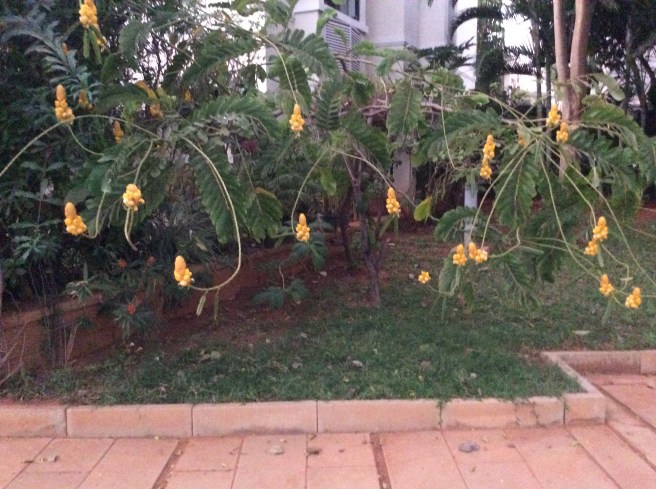
We had long wanted to plant a Kadamb tree in our little garden but felt that there would not be enough space for it to grow comfortably. A couple of years ago the huge Rain tree just outside our gate began to dry and decline. We felt that this was a good time and place to plant our Kadamb tree. Watching it grow has led us to learn more about this tree.

The Kadamb (Anthocephalus kadamba, Neolamarckia cadamba) or Burflower tree is indigenous to South and South East Asia. It is a fast-growing tree, especially in its early years, and may reach heights of 15-20 metres. The straight uniform trunk is usually smooth and grey, becoming slightly cracked as the tree ages. The trunk sends out uniform horizontal branches creating an umbrella-shaped crown, and the leaves are alternately arranged and clustered at the ends of the branches.  The light glossy green leaves are oval, and 15 to 30 cm long. They have prominent veins on top and are lightly haired underneath. The tree sheds its leaves to conserve water in areas with a long dry season, but stays evergreen where the dry season is short. The leaves are fed to cattle.

Flowering usually begins when the tree is 4–5 years old; and flowers appear between June and August.  The Kadamb flower that looks like a pom pom is, in fact, a ball of tightly-packed tiny funnel-shaped yellow-orange flowers. They have a sweet fragrance and are used for making perfumes. The flowers are offered in temples, and worn as hair adornments.

This year, with Covid on our minds, the flowers which were usually described as a resembling furry tennis ball have taken on an uncanny resemblance the Corona virus!

The flowers are followed by compound fruit that also resembles the round flower head. The fruit is made up of numerous small fleshy capsules compressed together in a ball. It is relished by monkeys, bats and birds. A single ball may contain almost 8000 seeds. When it turns orange and ripens, the small capsules split apart, releasing a burst of seeds. A single ball may contain almost 8000 seeds which are dispersed by wind and rain. So the cycle of nature continues.

The different parts of the tree are also said to have pharmacological and biological properties that have medicinal value. In traditional medicine the bark is used to cure fever and cough, and juice of the fresh bark to treat inflammation of the eyes. The plant parts are believed to be effective in curing digestive disturbances, parasitic infection, high cholesterol and triglycerides, antibacterial activity, musculoskeletal diseases, fungal infections, cancer and anti-diabetic activity, and find place in Ayurvedic preparations.

For many Indians, it is not so much the botany as the mythology of the tree that fascinates. The Krishna connection is the best known, and this tree where he is said to have rested, romanced, and played his flute, is a recurring motif in poems, stories and paintings. The tree is also referred to as Haripriya or favourite of the God.

But the Kadamb tree also features in many a lore and legend in different parts of India. It is mentioned in the epics and the Puranas as a beautiful shady tree blossoming in the rainy season. The tree lends its name to the Kadamba Dynasty which said to be the first ruling kingdom of Karnataka, with Banavasi as its capital. It was considered a holy tree by the dynasty. The Kadambotsava spring festival is celebrated in honour of the Kadamba kingdom by the Government of Karnataka at Banavasi in February every year. The Kadamba flower was the emblem of Athmallik State, an erstwhile princely state of India, now part of Odisha.

According to another belief, Goddess Durga Devi, an avatar of Devi Parvathi, loved to live amidst Kadamba trees, and her presence is sensed if the koel sings in the Kadamb forest. Hence, the name Kadamba-vana-vasini or Kadamba-vana-nilaye (one who dwells in the Kadamb forest). In Madurai in Tamil Nadu, the Kadamba tree is considered to be the sthalavruksham (tree of the place) and a withered relic of the tree is preserved at Meenakshi Temple. The tree is also associated with a local deity called Kadambariyamman and the place was once said to be a Kadambavanam (Kadamba forest).

The Kadamb is part of the folk lore of many tribal communities, and even now is associated with tribal festivals and rituals. In Madhya Pradesh the festival of Karma or Karam is celebrated with dance and songs in the bright fortnight of the month of Bhado (August-September), during the rainy season. One of its rituals consists of the worship of the Karam or Kadamba tree.  In West Bengal and Odisha, agricultural communities celebrate Kadam festival by planting Kadamb saplings. Tribal communities of Chattisgarh believe that planting Kadamba trees close to lakes, rivers and ponds, brings happiness and prosperity.

In Theravada Buddhism, it is believed that the Kadamb tree was where Sumedha Buddha achieved enlightenment.

From medicine to mythology, the Kadamb has something to offer. As I watch my young Kadamb growing fresh and tall in this rainy season, every new leaf seems to have its own tale to tell. And my friend Rekha and I, like two fond mothers, exchange notes on our respective Kadamb trees. Hers is flowering this year; I will have to wait another year.

–Mamata


Day of Star-Crossed Lovers

The 7th day of the 7th month is marked in Japan as Tanabata, the only day of the year when star-crossed lovers, Orihime and Hikoboshi,  who are separated by the Milky Way, can meet. Legend has it that Orihime was a weaver of wondrous cloth. Her father Tentei was very proud of this skill of his daughter’s.  Orihime met and married Hikoboshi, a cowherd. Once married, the much-in-love couple were so lost in each other that she would no longer weave cloth and he allowed his cows to stray all over Heaven. In anger, Tentei separated the two lovers and only after a lot of pleading did he allow them to meet on this one day—the 7th of July. (The lovers are represented by the stars Vega and Altair).

So Tanabata is in a way the Day of Star-crossed lovers.

Speaking of such lovers, my favourite pair has to be Ambikapati-Amaravathi. Lesser known that Laila-Manju or Sohni-Mahiwal (no surprise there, the story is from South India!), I think it is beautiful and tragic and poetical in equal measure.

The story goes back to the early 12th century and to the court of King Kulothunga Chola I. The king had a beautiful, intelligent, talented daughter by the name of Amaravathi.  Kambar, the revered Tamil poet graced the court of this Chola king. The King asked Kambar to teach his daughter poetry, which he used to do.

Once, when Kambar had to travel, he deputed his young, handsome and very talented poet-son to teach the Princess in his stead.

And of course the inevitable happened, and they fell in love.

Which of course was not approved by the King.

And which of course became fodder for a number of court conspiracies and intrigues to discredit Kambar by discrediting his son. One way used to discredit Ambikapathy was to cast a slur on his abilities as a poet, saying he could only write odes to the beauty of women (aka Amaravathi), and not to the glory of God.

To cut a long and complex story short, the King wanted to punish the young poet. But the daughter refused to let him punish Ambikapathy alone for a misdeed in which she insisted she had an equal part to play.

So the King set Ambikapathy a challenge. He declared that if Ambikapathy could compose 100 verses to God and sing them in court, he would allow the couple to marry.

Ambikapathy and Amaravathi were very confident that this was an easy task. However, Ambikapathy told Amaravathi not to appear before him before he had completed singing the 100 verses, as her beauty would distract him, and he would start singing about her instead. Amaravathi agreed.

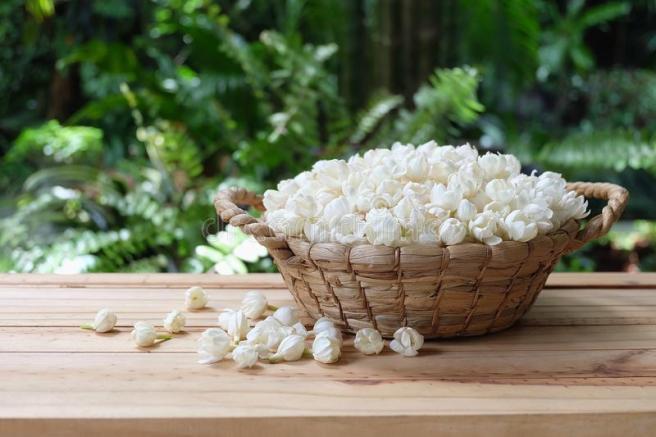
95779731-CD38-4586-A91A-2CBB675F7A0BOn the day of the challenge, Amaravathi positioned herself behind a curtain, out of sight of her lover. She had at her side two baskets. One was empty and the other had a hundred beautiful blossoms (I visualize them to be jasmine). The idea was that as Ambikapathy finished a verse, she would transfer one flower from the filled basket to the empty one. When the basket was empty, she would know that he had finished his 100 verses and she could appear before him.
And so it happened. Amaravathi opened the curtain when all the 100 flowers from one basket were transferred to the other. And he sang to her beauty.

Alas, Amaravathi had made a mistake. She had counted the traditional invocation to Goddess Sarawathi, the Goddess of Learning and Knowledge and Poetry, sung at the start any such event, as the first of Ambikapathy’s verses. So when she appeared before him, he had completed only 99, not 100 verses.

The unrelenting King had Ambikapathi killed. And Amaravathi died soon after of grief.

Alas, there is no 7th of July for Ambikapathy and Amaravathi!

Totally my favourite star-crossed lovers story!

–Meena


Anarkali At My Window

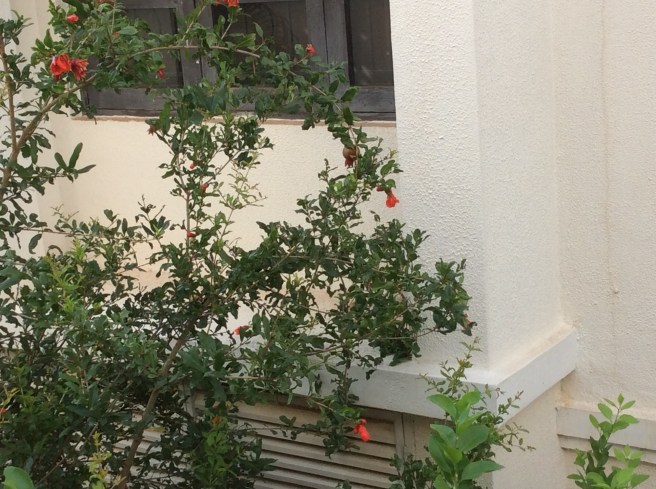
BFCA646E-31A4-47A9-AB75-B961DD704B3ELockdown has certainly make us more observant and has given us new ways of looking at things. There is a pomegranate tree whose top I can see from my window—and considering I spend eight or nine hours working in that room, it is very central to my vision! It is currently flowering, abuzz with bees, and fruits have started forming.
I have always wondered why Anarkali*, the beauty who stole the to-be Emperor Jahangir’s heart and brought him to loggerheads with his father Emperor Akbar, was called so. Was the flower so beautiful that our most famous beauty was named for it? I never did think so.

Well, my recent close encounters with the tree and flowers have given me a greater appreciation of the beauty of the flower. Bright waxy orange blossoms which stand out against the green of the leaves, and a nice shape. And bees drawn to them by the dozens, as maybe men, young and old, were drawn to Anarkali (one version is that she was part of Akbar’s harem, and that rivalry between father and son for her favours was at the heart of the dispute).

But maybe more than just the beauty of the flowers, it is the associations that the ancient fruit has, that makes the pomegranate so much part of the imagination. It is one of the few fruits which is mentioned in the texts of many religions.

Starting from ancient Greek mythology–in the story of Persephone’s abduction by Hades, lord of the underworld, the pomegranate represents life, regeneration, and the permanence of marriage.The story is that one day while out gathering flowers, Persephone was kidnapped by Hades and taken down to his kingdom. By eating a few pomegranate seeds, Persephone tied herself to Hades.

Pomegranate is mentioned in the Vedas and is an important part of Ayurveda. It is a symbol of fertility and abundance, and one of the nine fruits offered to Goddess Durga.

In Buddhism too, it is significant. The Buddha received many valuable gifts from wealthy disciples. But it is said that a poor old woman’s gift of a small pomegranate was the one that delighted him most. It is also said that he once offered a pomegranate to the demon Hariti, which cured her of her alarming habit of eating children.

It finds a place in Zoroastrianism too. In Persian mythology, Isfandiyar eats a pomegranate and becomes invincible.

In Islam, the fruit is considered a symbol of harvests, wealth, and wellness. Legend has it that each pomegranate contains one seed that has come down from paradise. Along with olive, dates and figs, it is one of the four sacred fruits in Islam.

In Judaism, it is believed that each pomegranate has 613 seeds—one for each of the Bible’s Commandments. The Song of Solomon compares the veiled cheeks of a bride to the two halves of a pomegranate.

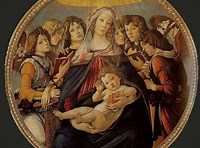
1A6133BD-4C41-49AA-BA38-4EED5DB8E6ADThe pomegranate is a symbol of resurrection and life everlasting in Christian art, and the pomegranate is often found in devotional statues and paintings of the Virgin and Child, as in Bottecelli’s ‘Madonna of the Pomegranate’ shown here.
I shall delight in the beauty of the pomegranate flowers for now. I shall try to get a few fruits before the parakeets get them all. And I shall let thoughts of all the health and prosperity they will bring me help me through the Lockdown!

–Meena

*Anar= Pomegranate. Kali= Flower


Wisely, Towards Spring

D268048C-DD39-4287-B9B7-279D6073FAE4Basant Panchami went by last week. The mustard fields of Punjab must have been a riot of yellow, but my own little shrub was beautiful too!
Basant Panchami falling 40 days before Holi, marks the transition towards spring. As always, the festival is celebrated differently in different parts of the country. In some parts of India like Bengal, and even as far afield as Indonesia, it is marked as Saraswati Puja. Apart from the fact that it is the time of flowering of many plants like the mustard which has yellow flowers, the colour yellow marks this festival because of its association with Saraswathi, Goddess of Learning.

I could not really find what the exact association of Basant Panchami with Saraswati is (being a Tamilian, I celebrate Saraswati Puja during Dusshera). But I did come across one very interesting story linking the two.

The story of Kalidasa is well known. He lived in a country with a princess renowned for her intelligence and wit. The princess set the condition that she would marry only the man who answered a series of questions she put to him. Many a man—king, prince, warrior, commoner—tried and failed. The people of the country were fed up (and a lot of male egos probably smarted). A bunch of them decided to teach her a lesson. They set up the village idiot for this. They knew the questions, and tutored him as to how to respond to them—basically not to open his mouth and exhibit his ignorance, but simply show hand signs.

The ruse worked and Kalidasa married the princess. (Actually, he was not called Kalidasa then, but acquired the name later). It did not take the princess long to figure out that her husband was a dolt. She threw him out.

Depressed, he wandered about. In most versions of the story, he went and prayed to Kali in a temple, and she blessed him with brilliance and wit and eloquence (Maybe on behalf of Saraswati? Or asked Saraswati to bless him with these attributes?). There is however a lesser known version of the story that he was kicked out of home and hearth around Basant Panchami, and on the day of Panchami, he tried to drown himself in the Ganga. Saraswati saved him and endowed him with her blessings. Thanks to which he went on to become Sanksrit’s greatest playwright, giving the world such gems as Abhijnanashakuntala , Vikramorvashi , Malavikagnimitra,  Raghuvamsha, Kumarasambhava  and Meghaduta.

So happy journey towards spring! May Basant Panchami bring wit and wisdom to all of us, as it is said to have brought Kalidasa.

–Meena

Year of the Rat

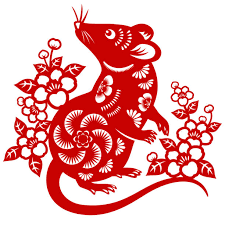
This month has been one of the start of the New Year for several different communities, especially in India, as I wrote earlier. Every culture has its own calculations, myths and legends associated with the annual cycle of time. rat.png

Last week was the Chinese New Year, and the start of the Year of the Rat. The year of the Rat signifies the first year in the 12-year cycle of Chinese zodiac. The years of the Rat include 1912, 1924, 1936, 1948, 1960, 1972, 1984, 1996, 2008, and now, 2020.

The Chinese zodiac is based on a repeating 12-year cycle, with each year signified by an animal, in the following order–Rat, Ox, Tiger, Rabbit, Dragon, Snake, Horse, Goat, Monkey, Rooster, Dog and Pig. Those born in a specific year are said to possess certain characteristics of the animal, as defined in the Chinese belief system; and their fortunes are determined accordingly. For example people born in the year of the Rat are supposed to be intelligent, charming, quick-witted, practical and ambitious. They are also likely to be timid, stubborn, greedy, devious, too eager for power, and love to gossip!

Why these animals and why this specific order?  There is an interesting legend linked to this. The story has many versions, but in essence it tells about a race. This is one version.

Once long, long ago, the Jade Emperor, one of the most important gods in traditional Chinese religion wanted to select 12 animals to be his guards. He sent his messengers to earth to invite all the animals in the world to take part in a race which would end by entering the Heavenly Gate.

Twelve species turned up at the start line: a pig, dog, rooster, monkey, sheep, horse, snake, dragon, rabbit, tiger, ox and rat.

As a reward for turning up, the Emperor named a year in the zodiac after each of these animals, but the race was to determine the order in which each animal would be placed in the zodiac, depending upon the order in which they reached the finish line.

All the animals set off on the course. On the way there was a big river that they had to cross. The Rat had got up and started early, but when it reached the river it felt helpless. But then it saw the strong Ox about to enter the water, so it used its wits and climbed onto the Ox’s head. The Ox was kind and let it ride with him. But as soon as they reached the other side, the wily rat quickly slid down and scampered to the finish line. And so the Rat came first, followed at number two by the diligent Ox.

Tiger and Rabbit were not far behind. Both were fast and competitive, but Tiger was faster and came in third. Rabbit who nimbly crossed the river by hopping on stepping stones and a floating log came fourth.

Everyone thought that the dragon with his magical powers of flight would be in front. But in fact the dragon took a detour to go ashore to help some villagers extinguish a fire. When it returned to the river, it saw that Rabbit was struggling on the log, and so the dragon used its breath to blow it to shore. The Rabbit never found out where the helpful breeze came from, but it finished before the Dragon, who came in at number five.

The Horse wasn’t far behind the Dragon and thought that sixth place was in the bag. However, it hadn’t noticed that the Snake had hitched a ride by wrapping itself around the Horse’s legs to save energy. Just as the finish line was in sight, the snake uncoiled itself and frightened the Horse. The Snake thus slyly slithered to sixth place while the horse came in seventh.

Next up were the Sheep (or Goat in some stories), Monkey and Rooster. They decided to work as a team and made a small raft to help them across the river. When they reached the other side, they dashed to the finish line. The Sheep/Goat reached first followed by the Monkey and the Rooster—ranking at number eight, nine and ten respectively.

That left the Dog and the Pig. The dog was playful and could not help splashing and enjoying itself in the river water while all the others overtook it. It landed up wet and panting to claim the eleventh rank. And where was the Pig? True to its nature, half way into the race it got hungry. So it decided to look for, and eat something to keep it going. But it ate so much that it just had to lie down and nap! When it awoke from its snooze, and made its way to the finish line, all the other animals had long crossed it. The Emperor had almost given up on it, but was happy to assign it the final space in the zodiac.

And so the 12 animals became the Emperor’s guards and were also assigned their place in the zodiac.

There is an interesting Post Script to this story which explains why the Cat is missing from the list. As the tale goes, Cat and Rat were then good friends, and both decided to join the race. But the Cat had a habit of waking up late. So, fearing he might miss the grand race, he asked the Rat to wake him up the next morning. The Rat, however, forgot his promise and left without his best friend.

Alas, when the Cat finally woke up, it was already too late, and he did not make it to the race on time. Hence, there is no year in the Chinese zodiac named after the Cat. And, this is why, until this day, the Cat will always hunt the Rat!

Here’s to the Year of the Rat!

–Mamata