It’s Still Christmas!

We are somewhere in the first quarter of the Twelvetide—the 12 days following Christmas. In the old days, December 25 was only the beginning of Christmas which started on that day, and went on till January 6th, which was considered by some to be more important than Christmas day itself! The 12 days mark the journey of the Magi, the three wise men, who set out to see the Baby Jesus on seeing the star, and ends at the feast of Epiphany, on Jan 6th, when they actually met Him.

The Christmas song ‘The Twelve Days of Christmas’ has always intrigued me as I could never make head or tail of the strange array of gifts given on each day. And I am sure that many others are confused as well. But things started falling into place after I realized that each gift was symbolic of something in Christian belief or ritual, and is linked to Twelvetide. And what exactly are these gifts?

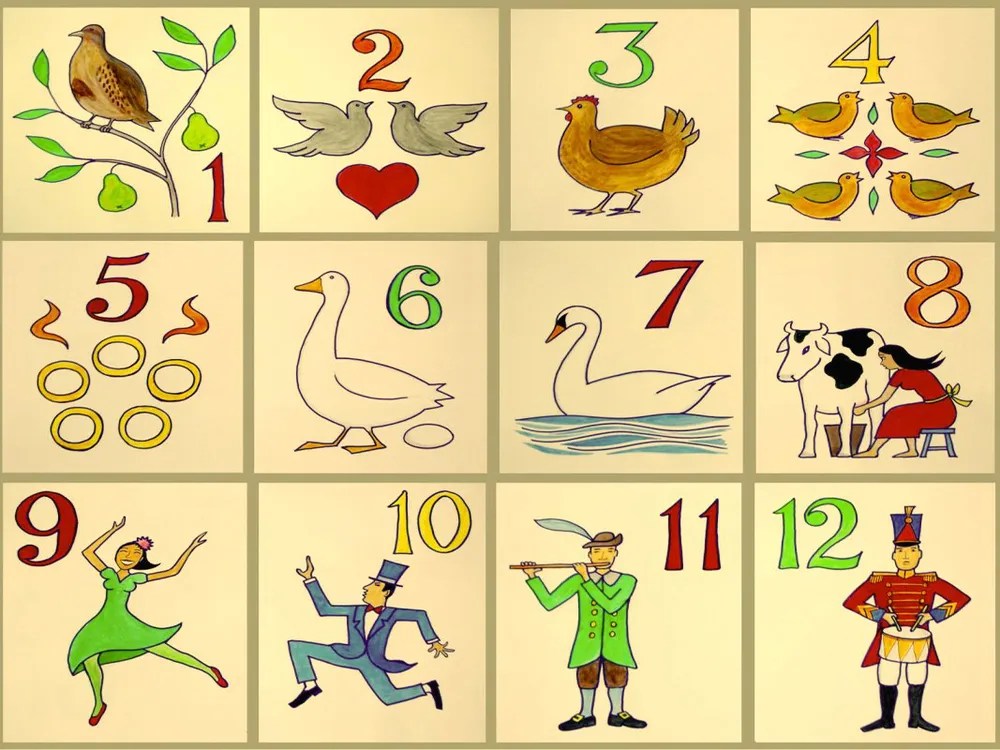
On the first day, someone’s true love gives her a partridge in a pear tree. Apparently, this symbolizes Jesus Christ himself.
12 days of Christmas

The second day brings a gift of 2 turtle doves—which stand for the Old and New Testaments.

The 3 French hens of Day 3 are the virtues of faith, hope and charity.

Particularly confusing are the gifts of the fourth day—viz, 4 calling birds. What on earth are calling birds? Well, opinion is divided. They could be blackbirds or starlings or crows! But the number 4 stands for the 4 gospels.

The 5 golden rings of the fifth day are a more conventional gift and stand of the five books of the Old Testament.

6 geese-a-laying symbolize the 6 days of creation, and this, in some weird way, seems to make some sense!

The day after that brings 7 swans-a-swimming. These stand for the seven sacraments recognized by the Catholic Church —Baptism, Eucharist, Confirmation, Reconciliation, Anointing of the sick, Marriage and Holy orders.

The intriguing 8 maids-a-milking symbolize the eight beatitudes or the sacred blessings which mark the opening of the Sermon on the Mount.

Continuing with pretty ladies, the next day brings 9 ladies dancing, which are the nine fruits of the Holy Spirit, namely love, joy, peace, forbearance, kindness, goodness, faithfulness, gentleness and self-control.

The nimbleness of the ladies is matched by 10 lords-a-leaping who come along on the tenth day. These symbolize the Ten Commandments.

The 11th day brings along accompaniments for the dancers and prancers in the shape of 11 pipers piping, who represent the 11 faithful apostles. I do feel the pipers could have come ahead of the ladies dancing.

And the last noisy day brings along 12 drummers drumming—symbolizing the 12 points of the apostle’s, i.e., the 12 points of faith that Christians believe in.

This carol was first published in 1780, but is believed to be much older.

Someone has gone to the trouble of calculating the cost of these gifts and has estimated the total for 2022 at a whopping $45,523.27. And this is when each gift is counted only once (i.e., assuming that the second day brings only the 2 turtle doves, and not another partridge in a pear tree).

Here is to the continuing spirit of Christmas—peace and joy to all our fellow-people!

–Meena
Of Ghosts and More: A Random Walk on Halloween

It is Halloween today—a holiday that in the past decade or so has gained great popularity in India too.  The name ‘Halloween’ is linked to the Christian festival of ‘All Hallows’ or ‘All saints’ which falls on November 1. It was originally a day on which the church commemorated the lives of saints and martyrs. As time went along, it added on other connotations, such as praying for souls that were believed to be not yet in heaven or making offerings to the dead.

But what is the origin of Halloween as we celebrate it today? Well, it stems from an old belief that the spirits of the dead would roam the earth until All Saints Day, and that on Halloween they would take their last chance to have revenge on people they had a grouse against. That’s the reason why people dress up—in order to disguise themselves so the spirits would not recognise them!

Halloween

Of course, now in this as in many other festivals, it is commercial interests which drive the occasion, with costumes, masks, spooky decorations etc. becoming the theme for retail stores and festival sales.

Down history, the belief in ghosts and spirits has pervaded every culture—probably in an attempt to explain death, as well as phenomena which were not easily explainable by science. Witches, ghouls and other scary creatures exist in every country but they take different locale-specific manifestations.

In an interesting attempt to map the geography of these creatures, TheToyZone has developed what it calls a Boogeyman map. They see bogeymen as ’ frightening figures found all over the world, where they’re available to enforce discipline at a moment’s notice’—in other words, mainly a means of scaring small children into behaving themselves. The whimsically illustrated map shows over a hundred such fearsome creatures, with bat wings, reptilian bodies,  ghostly tattered robes, fire-breathing creatures and googly red eyes dominating.

As it is an attempt to cover the whole world, one can forgive the map for showing only one such creature from India—the bhoot. But the richness of the Indian ‘horror’ imagination can be estimated from ‘Assamese Demonology’ a 1905 book by scholar and researcher Benudhar. This classifies ghosts, demons and spirits of Assam into several categories., and the list includes ‘aquatic spirits like baank, dote, jakh, datial, jankakharia, jal-sai, jal-narayan and jal-konwar; sylvan spirits like chamon, burha-dangoriya, alakhani, pixach, daini, peret, bhoot, khetor, markuchia, prasuta, kandh, bira, parooa, khabish and thalgiri; celestial spirits like jam, bih-karam, kalika, deo, lakhimi, apeswari and bijuli; and subterranean spirits like gooloi’. And this is just one state!

Ghosts and spirits obviously don’t exist. Then why do so many people believe they have seen them? Science offers several explanations including sleep paralysis, hallucinations, pareidolia or inattentional blindness. 

Sleep paralysis is “like dreaming with your eyes open. Baland Jalal, nueroscientist explains it thus: ‘Our most vivid, lifelike dreams happen during a certain stage of sleep. It’s called rapid eye movement, or REM, sleep. In this stage, your eyes dart around under their closed lids. Though your eyes move, the rest of your body can’t. It’s paralyzed. Your brain usually turns this paralysis off before you wake up. But in sleep paralysis, you wake up while it’s still happening.’

Hallucinations: A hallucination is a false perception of objects or events involving the senses: sight, sound, smell, touch and taste. Hallucinations seem real, but they’re not. 

Pareidolia: This is a brain phenomenon in which a person sees or hears something significant in a random image or pattern. Pareidolia is what causes peoples to see faces in inanimate objects, i.e., faces in clouds, or the form of Gods on a tree bark etc. 

Inattentional blindness: This is the failure to notice unexpected objects or events when attention is focused elsewhere. 

But it is always a battle between the rational and the irrational, and belief in spirits and the like is not likely to go away in a hurry.

So we might as well let our children enjoy scaring themselves and over-dosing on sugar!

Happy Halloween.

–Meena

Celebrating Vishwakarma, Master-Craftsman

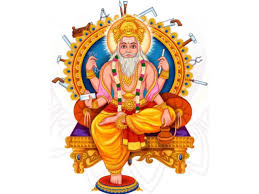
Vishwakarma Jayanthi is marked every year on Kanya Sankaranthi, which falls this year on September 17th. As per legend, Vishwakarma was a master architect and craftsman. The son of Brahma, he is supposed to have been the engineer for the creation of the world. He is also said to have built Lanka, Hastinapur and Dwarka.

Vishwakarma plays a pivotal role in the two great epics, Mahabharat and Ramayana. In the Mahabharat, the Pandavas retained him to plan and build their new capital of Indraprastha, which evoked the wonder and envy of all the other kings. One of the triggers for the Mahabharat war however was this amazing architecture. The pools of water looked like floors, and floors looked like water-bodies. Duryodhana mistaking a pool for a floor, slipped ignominiously and fell, evoking the mirth of the onlookers. He took particular exception to Draupadi’s laughing and commenting at his plight, and this was almost the last straw contributing to the breakdown of relations between the Pandavas and the Kauravas.

Vishwakarma’s work also features as a turning point in the other epic Ramayana. He is said to have built Pushpaka Vimana the flying chariot. It was built originally for Brahma, who at some stage gifted it to Kubera, the God of Wealth. But Ravana, Kubera’s half brother, stole the flying chariot, and used it for the infamous abduction of Sita. The Vimana however was also part of happy times, ferrying Ram and Sita back to India after the victory over Ravana. Ram later returned the vehicle to Kubera.

Vishwakarma has his equivalents in Greek and Roman mythology. The god Hephaestus was blacksmith to the Gods of Olympus, and made all their weapons of the gods in Olympus. He used to be worshipped in the manufacturing and industrial centres of Greece. Vulcan was the Roman God of fire and forge as well as fire and volcanoes. He was the patron of artisans and smiths, and there were several shrines dedicated to him. Vishwakarma like his peers also designed weapons, including Krisha’s Sudharshan Chakra and Indra’s Vajra.

We in India continue to remember and commemorate Vishwakarma. Vishwakarma Jayanthi is a special day for engineers, architects, mechanics, craftsmen, welders etc., and it is marked with pujas in factories and industrial estates. The prayers are for increased mastery and success in their field, as well as for safety.

As an ancient culture, excellence in engineering and the crafts were so revered that not only was there a God for this, but his achievements were enumerated and remembered. We still remember him and worship him. But ironically, we don’t seem to value the excellence he stands for. Our towns and cities are unplanned chaos—surely not Indraprastha or Hastinpur were.

In India, barely one in five persons at the workplace is skilled. We stand at 129 out of 162 countries ranked. As someone who has been involved in skill training, I am aware of some of the challenges in this sector. Critical among these are that skills except those related to IT and computers are not aspirational. To get a young person excited about being a master-electrician, master-plumber, master-anything that needs working with hands is next to impossible. In our culture, manual skills are not valued and respected—plumbers and masons feature way down in the social hierarchy. Nor are they paid in accordance to the value they bring. And sadly, career pathways don’t lead them very far.  

Nor is the skill-training we provide of very high quality, such as will lead them to excellence in their vocations. Most skill training is outdated and out of sync with what industry needs. Our ITI and other skilling institutions are bureaucratic set-ups, far behind where they should be. The faculty has no real experience on the shop floor. Nor do most students ever go into a factory or workplace during their education.

For a country which marks Vishwakarma Jayanthi with widespread events, we don’t seem to really value skills or our skilled craftspeople. Until that changes, there does not seem much point in observing yet another day.

–Meena

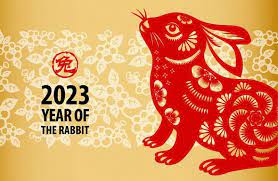
2023: The Year of the Rabbit

Three weeks ago we bade farewell to the old year, and welcomed the New Year, 2023 according to the Gregorian calendar. This month also marked the start of a new year for several different communities in different parts of India. Other parts of the world are also celebrating new beginnings. In many countries in East and Far East Asia it is the Chinese New Year that will herald 2023 as the Year of the Rabbit on 22 January this week.

The Chinese zodiac follows a 12-year astrological cycle in which a zodiac animal is assigned to each year in an ever-repeating rotation. The 12 zodiac animals are, in order: Rat, Ox, Tiger, Rabbit, Dragon, Snake, Horse, Goat, Monkey, Rooster, Dog, and Pig. Each year has an animal sign according to the 12-year-cycle. The Year of the Rabbit signifies the fourth year in the 12-year cycle of Chinese zodiac

There are several myths and legends related to the origin of this. According to one story, the legendary Jade Emperor invited all the world’s animals to a banquet, but only these twelve animals accepted his invitation. Thus he honoured them by dedicating one year on the Chinese calendar to each.

Another Chinese zodiac origin story claims that the Buddha himself called for 12 sacred animals to protect his palace. He thus organized a race that involved all animals on earth to identify the most worthy. At the end of the race, the first 12 animals to complete the race were selected as his guards. Now, they represent the 12 Chinese zodiac signs.

The most popular tale is that of The Great Race that explains the order of the animals in the zodiac has many variations, but the essence is the same.

According to legend the Jade Emperor decided that in order to determine the order in which each of these twelve animals would be placed in the zodiac, they would have to run a race, and they would be assigned their places depending upon the order in which they reached the finish line.

All the animals set off on the course. On the way to the finishing point there was a big river that they had to cross. The Rat had got up and started early, but when it reached the river it felt helpless; how could it navigate the swirling waters? But then it saw the strong Ox about to enter the water, so it used its wits and climbed onto the Ox’s head. The Ox was kind and let it ride with him. But as soon as they reached the other side, the wily rat quickly slid down and scampered to the finish line. And so the Rat came first, followed at number two by the diligently plodding Ox.

Year of Rabbit

Tiger and Rabbit were not far behind. Both were fast, but Tiger was faster and came in third. Rabbit though fast on the ground, was stumped when it reached the river; it could not swim but it used its strong legs to hop from stone to stone in the river. However at one place it slipped and fell in the water, but it grasped a floating log and hung onto it, and was tossing with the current.

Dragon who everyone thought would easily win the race because it was believed to have magical powers fell behind as it took  a detour on the way to help some villagers to  extinguish a fire. When it returned to the river it saw the rabbit clinging to the log which was being carried away by the currents. Dragon used its breath to push the log to the shore. Thus the rabbit was the fourth animal to complete the race. Rabbit never found out where the breeze that had helped it ashore came from. The helpful dragon thus came after the rabbit, to be fifth in the race.

The story goes on to describe the adventures and machinations of the other seven animals who completed the race.

2023 is the Year of the Rabbit. The Chinese zodiac assigns an animal and its attributes to each year. Those born in a specific year are said to possess certain characteristics of the animal, as defined in the Chinese belief system; and their fortunes are determined accordingly. The years of the Rabbit include 1915, 1927, 1939, 1951, 1963, 1975, 1987, 1999, 2011, and now 2023.

The rabbit is historically known as the gentlest of the 12 animals in the Chinese zodiac. The attributes also apply to the people born in the year of that animal. Thus those born in the year of the rabbit are believed to be gentlequietelegant, and alertas well as quick,ingenious,skilfulkindpatient, and very responsible. Those born under the sign of the Rabbit are known for their calm and decisive nature, which helps them to navigate difficult situations effectively. They are sometimes reluctant to reveal their minds to others and have a tendency to escape reality, but are always faithful to those around them. In the Japanese zodiac that also follows these 12 animal signs, rabbits represent fortune, moving forward and cleverness.

In addition to these traits, according to the Chinese theory of five elements, each zodiac sign is also associated with one of the five elements: Gold (Metal)WoodWaterFire, orEarth. These occur once in a 60-year cycle. According to this, 2023 is the year of Water Rabbit. Water rabbits are characterized as being gentle, amicable, able to adjust readily to different conditions, but with a firm mind set and principles.

In today’s world where there is an increasing prevalence, (indeed even positive recognition) of more aggressive traits of competitiveness, and ruthlessness, this year is a reminder of the value of gentleness, tenderness and empathy. In Chinese and Japanese cultures the sign of the Rabbit is revered as a symbol of longevity, peace and prosperity.

According to Chinese astrology, 2023 the year of the Water Rabbit will be less tumultuous than last year which was the year of the Tiger. It is predicted to be a year of Hope. This is what the world needs so badly now.

Here is to the Year of the Rabbit 2023—a year of hope, peace, and moving forward with empathy. 

–Mamata

A Sweet Welcome to the New Year!

A sweet dish popular in Karnataka, but not too well-known in other parts of the country, is Hayagreeva. Intensely sweet and very rich, the major ingredients are ghee, chana dal and jaggery. How can you go wrong with that?

One should indulge a bit in the New Year, so here is urging everyone to make it during the week (before guilt catches up!).  I shall leave the recipe for you to look up—it is easily available (as what is not, these days?).

I would rather get into the Who, How, Why?

Few of us would associate the name ‘Hayagreeva’ with a sweet. Let alone the sweet, in fact not many may even be aware of Hayagreeva the god. So let’s start at the very beginning.

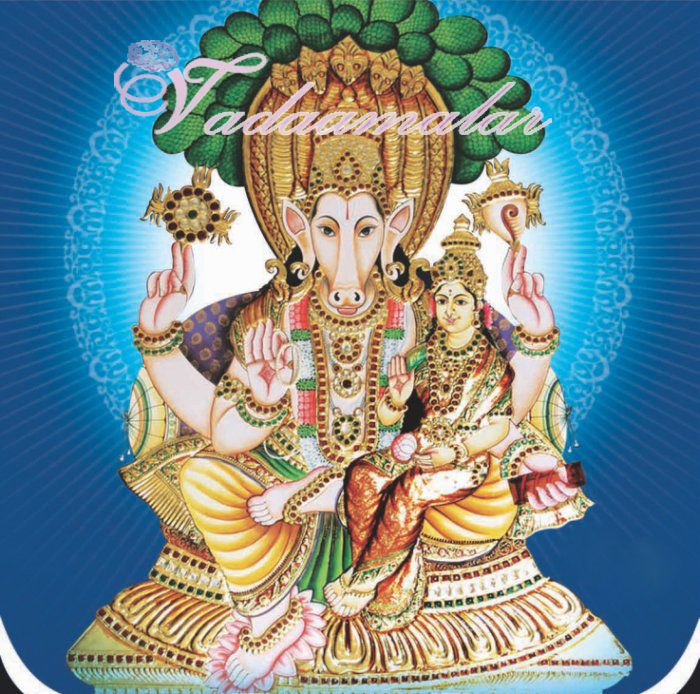
 Hayagreeva is an avatar of Vishnu. Hayagreeva means the ‘horse-necked one’, and that is how this avatar is depicted, with a human body and a horse’s head, and a brilliant white in colour. He is shown clothed in white garments and seated on a white lotus. Hayagreeva represents knowledge and wisdom, and the triumph of knowledge over the evil forces of passion and darkness. He is shown as having four hands. One of these is in the gyana mudra—giving of knowledge, while another holds books. The third and fourth hold a conch and discus, the traditional items associated with Vishnu.

So how does the transition from the name of a God to the name of a sweet happen? Many centuries ago there was a devout disciple of Hayagreeva called Vadiraja Thirtha (1480 to 1600 AD). He was a renowned philosopher and a great scholar, who translated many works of Madhavacharya from Sanskrit to Kannada. He served as the pontiff of the Sodhe Mutt in Karnataka. He was particularly devoted to the Hayagreeva avatar of Vishnu.

It is said that Vadiraja Thirtha would make a sweet by cooking chana dal and jaggery (the two items most beloved to horses) in ghee, and place the dish on a tray on his head. The Lord Hayagreeva would emerge out of his statue in the temple in the form of a horse, and partake of the prasaada. He would spend time playing and dancing for his bhakt, and then go back into the idol.

And thus the tradition of hayagreeva as an offering to the gods was born.

There is another interesting story associated with Hayagreeva. It is said that a goldsmith was once trying to make a statuette of Ganesha. But every time he did this, the head kept taking the shape of the head of a horse. The artisan tried many times, but it was always thus. The goldsmith got frustrated and started to hit the statue with a hammer to break it. But however hard he tried, he could inflict no damage to the idol. That night, in his dream, Lord Hayagreeva himself appeared, and told him to give the statue to a holy man whom he would meet the next day.

And sure enough, Vadiraja Thirtha met the goldsmith the next day. Lo and behold, he knew about the statue and asked the goldsmith about it. He of course gave it to him, and Shri Vadiraja consecrated it and started worshipping it.

May your New Year be as sweet as the hayagreeva!

–Meena

Scarecrows Forever

For as long as humans have cultivated crops, they have had to worry about keeping birds away from the fields. Not that birds don’t play a huge positive role in agriculture. They do—by pollinating some species, and by eating pests and rodents which destroy crops.

But the damage they do to crops is considerable too. A government of India report has identified 63 species of birds that are responsible for the bulk of this damage in India. Cereals seem particularly attractive to birds, with 52 bird species feasting on these crops. 14 bird species enjoy pulses, while 15 species like oilseeds. Fruit crops attract 23 species.

Traditionally in India, children or others who could not put in hard labour in the fields were deployed to guard crops with the help of slings. They took up a vantage highpoint among the crops and aimed at the birds—hopefully only scaring them and not injuring them. Scarecrows were also put up.

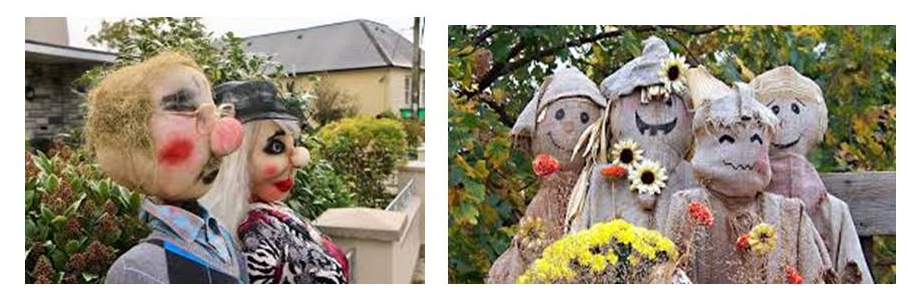
Across the world, maybe because there were not so many children or people to deploy, the use of scarecrows was more widespread. Scarecrows are decoys, usually made of straw or farm waste and fabric, made to look somewhat human and dressed in human clothes. They often have loose sleeves and pants, which move in the wind and scare the birds.

But the scarecrow is not really effective for too long. Once the birds get used to the scarecrow, they barely spare it a glance. In fact, they often use it as a perch!

So agriculturists have gotten innovative too, and come out with many ingenious ways to scare birds, including:

  1. Using shiny, reflective objects: Birds are bothered by the reflection of light from these and keep away. Farmers hang old CDs, aluminium cans, small mirrors or just plain metallic wrapping paper.
  2. Hanging balls: Round colourful garden balls are hung from trees, fences, etc.  Large eyes are often painted on them to mimic predatory birds. Birds get confused and try to avoid them.
  3. Balloons: Large floating balloons too, especially with eyes painted on them, work effectively.
  4. Predator images: Placing objects in the shape of birds’ natural predators– cats, owls, and larger birds of prey—does deter birds. But like with scarecrows, they will get used to these too. So these ‘predators’ need to be moved around frequently. Or they need to be hung from somewhere so that they move. One particular variation of this marketed in some countries is an owl than can be hung, which not only swings around in the wind, but also emits owl-like sounds every now and then.
  5. Sound-based repellents: Birds can hear in the 1-4 kHz range, a range human ears can’t hear too well. Electronic pest control devices take advantage of this by creating sound deterrent-devices that emit distress calls and predator growls in this range, which confuse birds and scare them away. 

Experts agree that no matter which the method deployed, the key is change. Birds quickly recognize that these objects don’t actually harm them, and are emboldened to flock to the fields. So the trick is to keep changing the position of the bird-scarers and add new ones frequently.

There are of course less kind ways to scare away birds.  The use of dogs and predatory birds which attack birds, drones which chase them, letting off cannons or fire crackers, firing plastic projectiles, and use of lasers are among these methods.


But of all these methods, the one that has been around the longest and plays a big part in our imaginations, stories, myths and films is the scarecrow. The most famous one of course is the Scarecrow in search of brains, who plays an important part in ‘Wizard of Oz’.  The Scarecrow is also one of the villains in the contemporary Batman trilogy.

Scarecrows
Scenes from Scarecrow Festivals

Scarecrows also figure in myths and legends of old—for instance, there is a story about a scarecrow in ‘Kojiki’, the oldest surviving book in Japan, dating back to about 712 A.D. A scarecrow called Kuebiko figures in this. He is a god who cannot walk, but knows everything that is happening.  

Several villages and towns in England have Scarecrow festivals.US and Canada also have their share. Many of these are of fairly recent origin. Phillipines is the latest entrant, with the Province of Isabela starting a festival a few years ago.


So even as newer methods of scaring birds emerge—from electronic, to laser, to drone–the fascination with scarecrows continues!

–Meena

Cheetah Lore

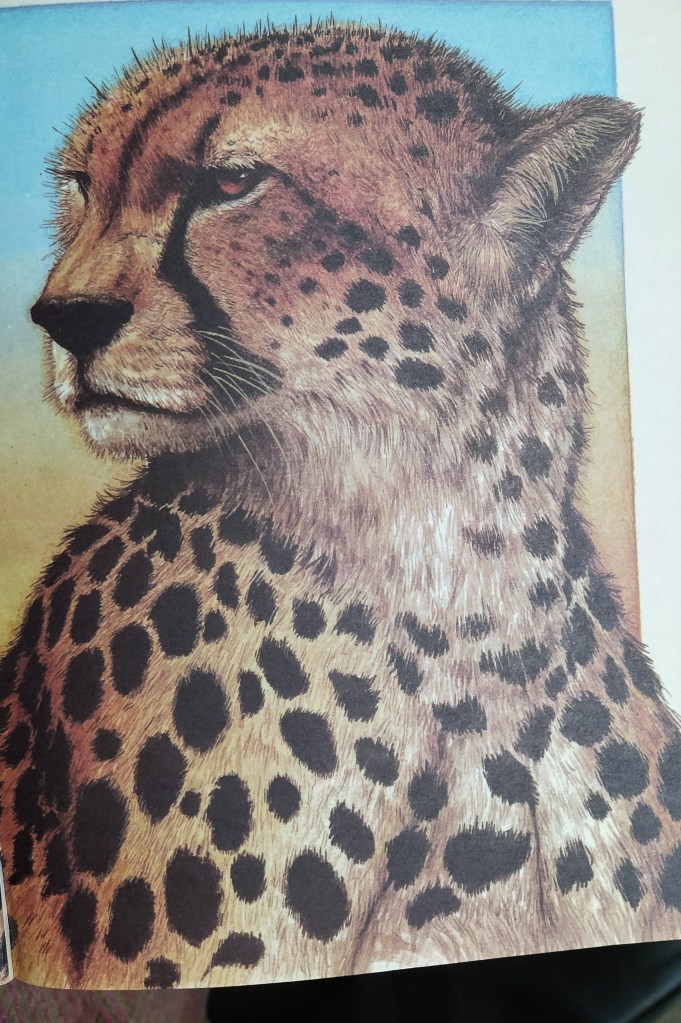
The last week’s news coverage was unusual. The faces that dominated the newsprint were not those of politicians or movie stars, but of the new celebrities in India—eight cheetahs! The beautiful face and body of this graceful animal captivated our attention. The vital statistics of the new arrivals from Namibia were shared and analysed, compared and contrasted with that of the other Big Cats.

Indeed the cheetah is a beautiful creature. With its narrow lightweight body, the cheetah is quite different from all other cats, and is the only member of its genus, Acinonyx. The cheetah’s unique form and structure—flexible spine, long slender  legs, and long muscular tail that acts as a counterbalance to its body weight, allowing it to attain the high speeds for which it is famous as the fastest animal on land.

Unlike other cats, the cheetah’s foot pads are hard and less rounded. The hard pads function like tire treads providing them with increased traction in fast, sharp turns. The short blunt claws, are closer to that of a dog than of other cats. The semi-retractable claws work like the cleats of a track shoe to grip the ground for traction when running to help increase speed.

While these characteristics are studied by zoologists, these have equally been noted by the indigenous peoples who have traditionally lived in proximity to these animals. And these have found a place in their imagination and folk lore. The Bushmen of southern Africa have a charming story about the cheetah’s speed and special paws.

How Cheetah Got Its Speed

Long long ago, the Creator designated certain special qualities to the different animals that he had created. When it came to deciding which one had the greatest gift of speed, he decided that there should be a race. He shortlisted the cheetah and the tsessebe antelope to run the final race. The race was to start from the giant Baobab tree and the two contestants were to run across the plains to a hill on the far side. The cheetah was a fast runner over short distances, but it realised that its soft paws would not be able to take the rigour of a long run. So it borrowed the sturdier set of paws from a wild dog.

The Creator himself flagged them off. The tsessebe sprang off and was away, soon leaving the cheetah far behind. But alas! Suddenly it stumbled on a stone and fell, and broke its leg.

When the cheetah caught up, it found its rival lying on the ground, in pain. All the cheetah had to do was to run ahead and win the race. Instead it stopped to help its opponent.

The Creator, on seeing this was so pleased with the cheetah’s unselfish act that he bestowed on the cheetah the permanent gift of great speed, and the title of the fastest animal on land. He also allowed it to keep the paws of the wild dog.

Along with its streamlined form, the cheetah is also distinguished by its markings of solid black spots, and especially by the distinctive black stripes that run from the eyes to the mouth. These stripes resemble the track of tears and needless to say, this feature must have led to a lot of stories told around the fireplace in the days when the desert people in South Africa lived in close harmony with their natural surroundings.

Here is a Zulu story that tells one of these tales.

Why the Cheetah’s Cheeks are Stained with Tears

Long long ago a hunter was idly sitting under a tree. While most hunters were out all day in pursuit of food, this one was different. He was lazy, and always looking for an easier way of doing things. As he lolled under an acacia tree, he saw a herd of springbok (antelopes) grazing on the grassy veldt. The hunter was daydreaming about how wonderful it would be if he could get their meat without having to chase them. Just then he noticed a movement, and saw that that there was a female cheetah close by. He noted how the cheetah was silently advancing, keeping downwind of the herd, so that they could not sense her presence. As she stalked noiselessly, the cheetah identified a springbok that had strayed from the rest. In the blink of an eye the cheetah gathered her long legs under her and hurtled forward with the speed of lightning. Even as the rest of the herd sensed danger and fled, the lone springbok did not have a chance. The cheetah’s hunt was over.

The hunter, still unmoving, observed how the mother cheetah dragged her prize to the edge of the clearing. In the undergrowth he saw that there were three cubs waiting to be fed. The hunter thought: how nice to be given a meal without having to toil for it; these cubs are lucky. The second thought that struck him was: Imagine if I had a hunter who would do the hunting for me! And further, a wicked idea dawned. If he stole one of the cubs and trained it to hunt for him, his desire would be fulfilled.

The lazy daydreamer continued to lie there as he plotted and planned how to do this. At sunset when the mother cheetah went to the waterhole, leaving the cubs concealed in a bush, he took his chance. The cubs were too young to know what was happening, nor to protect themselves. He first picked up one cub, but then got greedy and stole all three, thinking that he was getting a triple bonus! And away he went before the mother returned.

When the mother cheetah came back and found her cubs missing, she was heartbroken. She cried and cried all night. By morning her tears had left dark stains as they flowed down her cheeks. An old hunter who was passing by heard her loud crying. This wise old hunter knew the ways of the animals. When he found out what the lazy hunter had done, he was very angry. Stealing the cubs from their mother was not only wicked, it was also against the traditions of the tribe which decreed that every hunter must use only his own strength and skill in hunting. Any other way of obtaining prey was a dishonour to the whole tribe.

The old hunter returned to the village and told the elders what had happened. The villagers became angry. They found the lazy hunter and drove him away from the village. The old man took the three cheetah cubs back to their mother. But the long weeping of the mother cheetah stained her face forever.

And so the Zulu believe that even today the tear-stained cheeks of the cheetah are a reminder to the tribesmen that it is not acceptable to hunt in any way other than that what the ancestors had decreed as wise and honourable.

As we in India welcome these unique animals, let us also welcome the ancient lore and wisdom from the days when humans and animals were closely linked in more ways than one.

–Mamata

Sweet Offerings

Meena’s biscuit trail led me to look into the history and story of what is perhaps one of the favourite pan-Indian sweets—the modak or laddoo. This seemed appropriate in a week marked by the preparing, offering and the partaking of this sweet for Ganesh Chaturthi.

The connection between the elephant-headed God and his love for modaks can be traced back to ancient lore and legends. One story goes thus. One day, Anasuya, the wife of the ancient rishi Atri invited lord Shiva, his wife Parvati, and their baby son Ganesha for a meal. Shiva was ready to start eating but Anasuya said that the adults could eat once the Bal Ganesha was fed. She laid out a sumptuous spread, and Ganesha immediately started to partake of the goodies. He ate and ate everything that was before him, but just did not seem to have had enough. His parents and hostess looked on in wonder. Anasuya then went in and brought a single piece of sweet and offered it to the seemingly ever-hungry Ganesha. As soon as he ate it, Ganesha let out a loud burp. At last, he was sated! At exactly the same time, by now  the very-hungry Shiva also burped 21 times. Parvati was curious to know what this wonder sweet was that seemed to have satisfied the hunger of both father and son. Anasuya told her that it was a modak. Thereafter Parvati expressed her wish that all devotees of Ganesha should offer him 21 modaks. This tradition has carried on to this day.  

While the traditional modak recipe is said to have its origins in Maharashtra, modaks  are prepared across India in a variety of ways, and are known by various names– mothagam or kozhukattai in Tamil, modhaka or kadubu in Kannada, or modakam or kudumu in Telugu. Modaks are made both by steaming, and by frying. Their traditional recipe includes fillings of grated coconut and jaggery with a hint of cardamom or nutmeg, encased in a covering made of flour.

Churma laddoo

While in several parts of India, modak refers to the steamed and stuffed version, in some states like Gujarat the word modak and laddoo are synonymous. The word laddoo is used to refer to the spherical sweet primarily made from flour, ghee, and sugar or jaggery. Laddoos themselves have a long history, both in lore as well as in the culinary culture of India.

An interesting folktale traces the origins of what may have caused the difference between laddoo and modak. The story goes that Ganesha’s maternal grandmother Queen Menavati used to indulge her grandson by feeding him with laddoos that she made. As he grew, his appetite for the sweet was insatiable. Grandmother could not keep up with his endless capacity to gobble them down, especially as making  laddoos is a laborious and time-consuming process, as each ball has to be individually moulded and set . She thought that by making a similar stuffed sweet that could be steamed together in larger numbers would hasten the process. Her grandson was equally delighted with this variation. And thus came about the steamed modaks, and Ganesha’s moniker Modakpriya—lover of modaks.

The history of laddoos can be traced back a long way. The term ladduka first finds mention in the Mahabharata. Sushruta Samhita the classical Sanskrit text on medicine and surgery also has references to laddoos. It is believed that Indian physician, Sushruta, used ladoos as an antiseptic to treat his surgical patients. In the 4th century BC, he used a concoction of ingredients like sesame seeds, jaggery and peanuts which had nutritional properties, to make laddoos which provided strength and energy. Even today new mothers and pregnant women are given laddoos with special additional herbs and seeds to boost their immunity, and improve lactation. Old texts also mention laddoos being carried during long journeys, and wartime because of their long shelf life.  

The wonderful diversity of culinary traditions across India has led to a mouth-watering array of ‘speciality’ laddoos made with different ingredients. Over the years, people from different communities started experimenting with the ingredients and replaced them with whatever was readily available in their region. Other elements like geography, weather and diets of communities also play a significant role. For example laddoos with gond (edible gum) are eaten in winter as they are believed to give warmth and energy. The Sankranti festival in Gujarat is incomplete without the variety of laddoos made from seasonal ingredients like sesame, peanuts and jaggery. 

From the besan laddoos which are common to several states, the boondi or motichur laddoo that is originally said to hail from Rajasthan and Uttar Pradesh, churma laddoo from Gujarat and Rajasthan, coconut ladoo and rava laddoo from the southern states, the Assamese black sesame laddoo–each region-specific laddoo has its distinct identity, and has specific associations with the local traditions and culture.

The laddoo also has associations with celebrations. While traditionally the partaking of laddoos is a part of certain festivals, the distribution and sharing of laddoos is an important part of any happy or auspicious occasion—an engagement, a wedding, the birth of a baby, exam results, a new job appointment. All “good news” was heralded by sending and receiving a box of laddoos.

Times are changing though. In urban areas, the time-honoured tradition is now being represented by boxes of designer chocolates, and gift hampers with imported goodies. Celebrity chefs are conjuring up fusion recipes for old sweets to create innovative desserts. And yet, for many of us, there is sense of nostalgia and comfort that the very word laddoo or modak brings. For me it evokes memories of my mother-in-law’s literal labour of love in making trays full of churma laddoos coated with poppy seeds, family feasts where these were consumed with gusto, and the wonderful feeling of being happily replete before sinking into a deep siesta. A modak by any name tastes just as sweet!

–Mamata

Animal Tales

Since the beginning of human history, people and animals have lived in close contact. Animals are an integral part of our lives. The relationships vary: animals may be domesticated for work; they may be loved as pets; they may be hunted as food; they may be admired and envied for their strength or other qualities; they may be. But even beyond these relationships, animals fascinate humans and so the numerous myths and stories, the worship of animals, and their symbolism.  

In last week’s post marking International Tiger Day, we saw a few myths, stories and legends about tigers. While there are many tiger-stories, it is not just tigers, but many, many animals and birds—real and imaginary who feature in these tales.

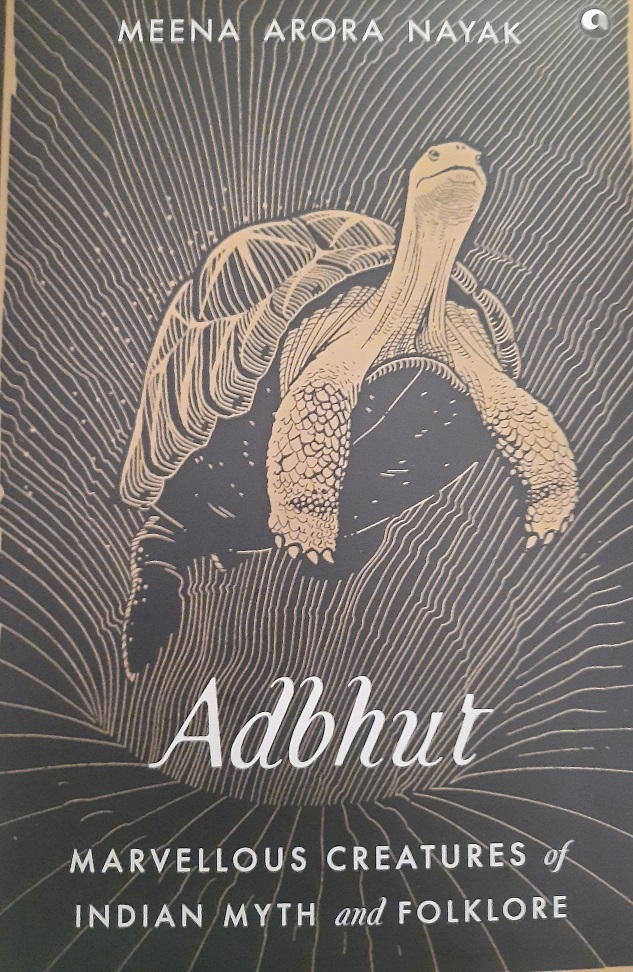
The book ‘Adbhut: Marvelous Creatures of Indian Myth and Folklore’ by Meena Arora Nayak, provides an overview of many of these. The book compiles 55 stories, drawing from all religious and cultural traditions.

The book is organized into different sections: Creatures of the Sky; Creatures of the Sea; Creatures of the Earth; Other Creatures of Air, Water and Land—Worms, Insects, Reptiles and Dragons; and Creature of Amalgam.

The last two are less familiar categories, so here are a few fascinating stories drawn from these sections of the book:

Bhramari the Beehive Goddess: Aruna was a daitya who had received a boon from Brahma, giving him immunity from death by war, weapons, man or woman, biped or quadruped or a combination thereof. To circumvent these conditions, Goddess Adi Shakti took the form of Bhramari, and her body became a beehive from which swarms of bees emerged. The bee swarms attacked and destroyed the daityas, who had no weapons against them. And at the end of the mission, all the bees merged into the Goddess’ form.

Shamir the Stone-cutting Worm: Shamir the worm was just the size of a grain of barley, but his gaze is so sharp that it could cut through stone, iron and even diamond. It is believed that the Shamir was used by Moses to engrave the names of the twelve tribes of Israel on the breastplate of a priest. After this, Shamir disappeared. It was with great difficulty that King Solomon found him and brought him to help build the First Temple in Jerusalem. The King did not want to use any tools to cut the stones because the use of such tools symbolized violence. He therefore used the shamir to cut the stones.

Nariphon the Plant Women: Both Hindu and Buddhist traditions talk about these. The mythical mountain of Meru stands in the midst of thick forests. The trees in this forest bear not fruits but beautiful young women. They emerge from the pods feet first, hanging from the trees on stems attached to their heads. They are about eight inches long. It is believed that in the last incarnation of Buddha before he was born as Siddhartha Gautama, he was so generous that his people banished him, his wife Maddi and children, to the jungle so the kingdom did not go bankrupt. Indra is said to have created Nariphon so that the eyes of itinerant sages would be drawn to these exquisite little creatures rather than to Maddi.

An interesting book which gives insights into the fascinating relationships of humans and animals, and reminds of the close bonds between humans and other animals. While not told in a story-telling style, it does indicate how our love, fears, imagination all come into play in the creation of myths and legends. The book lends itself to creative illustrations, and one wonders why only the back and front covers have them.

–Meena

Paper Tigers

29 July is International Tiger Day. The day was first launched at the Saint Petersburg Tiger Summit in Russia in 2010 and is observed annually to remind the world about the decline of the global tiger population, and to encourage efforts for tiger conservation. On this day we will see many reports and statistics about tigers and their falling/growing population, and many conferences and seminars will be held on research and studies on tigers.

This is perhaps a good time to look at the tigers that roam not the forests, but that have also populated the pages of language and literature. The tiger has been a dominant character in folklore and mythology in many cultures.  

Perhaps China is the richest country in myths, representations, traditions, and legends related to tigers. Tigers have been a Chinese cultural symbol which has inspired story tellers, singers, poets, artists, and craftspeople for over 7000 years. In Chinese folklore, tigers are believed to be such powerful creatures that they are endowed with the ability to ward off the three main household disasters: fire, thieves and evil spirits. A painting of a tiger is often hung on a wall inside a building, facing the entrance, to ensure that demons would be too afraid to enter. Even in modern- day China, children wear tiger-headed caps, and shoes embroidered with tiger heads to ward off evil spirits; they are given tiger-shaped pillows to sleep on to make them robust. During the year of the Tiger, children have the character Wang painted on their foreheads in wine and mercury to promote vigour and health.

The tiger has equally captivated the people of the Indian subcontinent since time immemorial – feared and revered at the same time. These majestic beats and the lives of the people, especially those that live in close proximity to the tiger and its habitat, have long been intertwined, giving rise to several myths and legends surrounding them. Tiger lore has been interwoven with gods and legends, giving it a mythical status.

According to stories from Indian mythology, the tiger is believed to have powers to do everything from fighting demons, to creating rain, keeping children safe from nightmares, and healing. Humans are often attributed as having tiger characteristics. The consecration ceremony of a king in ancient times required the king to tread upon a tiger skin, signifying the King’s strength.

Songs, proverbs, and sayings in most Indian languages feature tigers as part of their treasury of folk lore and literature. Tigers appear in many stories in the Panchatantra.

A popular belief among many tribes in the Northeast of India is that the cosmic spirit, humans, and tigers are brothers. There are many folk tales based on this theme, with local variations. The belief that the tiger is a human’s brother has meant that the people of these tribes would rarely kill a tiger. There are traditional rituals performed even today to honour and worship the tiger.  

In more recent times, tigers were introduced to non-Asian audiences through the writings of Englishmen who had lived in colonial India by authors such as the famous hunter-turned-conservationist Jim Corbett. His books like The Man Eaters of Kumaon were perhaps some of the early depictions of human-tiger conflict.

In the culture of the West, where they are not found in the wild, tigers have nevertheless sparked the imaginations of writers, and have become popular fictional characters in stories, films, cartoons, songs, and even advertisements. Perhaps the best recreation of the fearsome tiger is Shere Khan of the Jungle Book fame.

Anthropomorphized tiger characters in children’s books have won their place in millions of hearts. There is boisterous and exuberant, Tigger, who is a one-of-a-kind friend in the world of Winnie the Pooh. He eagerly shares his enthusiasm with others—whether they want him to or not, and steals our heart.

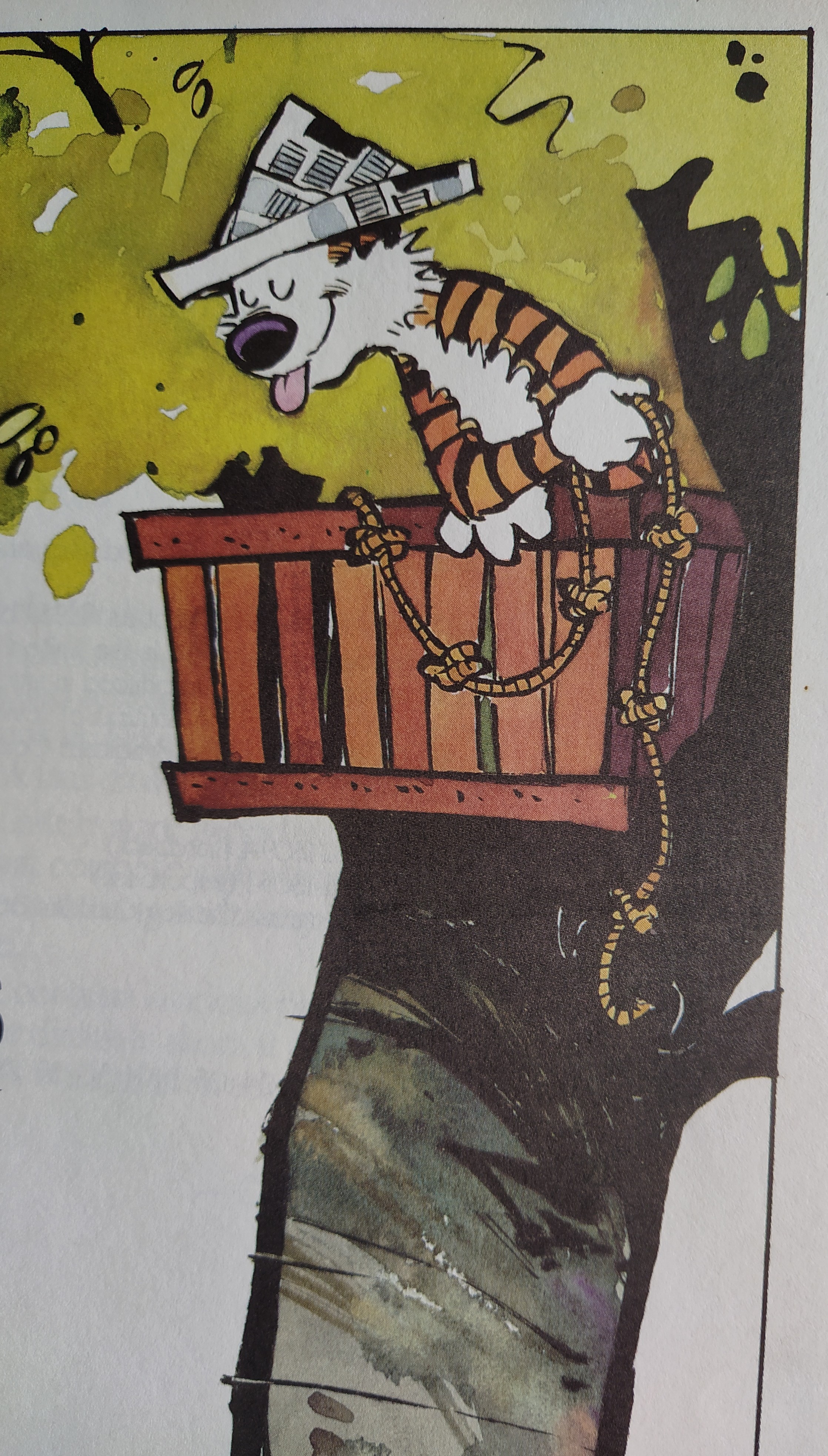
Calvin and Hobbes

And we have the imaginary stuffed tiger Hobbes in the cartoon strip Calvin and Hobbes, who is very real to the irrepressible six-year-old Calvin—a faithful companion in all the capers, sometimes a comforting friend, sometimes a savage beast. The two friends have deep philosophical conversations, ruminating on how best to find meaning in their lives, the essence of which is what all of us are seeking.

Other than literature, tigers have permeated our language through numerous aphorisms, proverbs and sayings. Here are a few ‘tigerisms’.

Paper tiger: Someone who at first glance seems to be in charge but who, on closer examination, is completely powerless.

Tiger economy: A dynamic economy usually referring to of one of the smaller East Asian countries, especially that of Singapore, Taiwan, or South Korea.

Tiger mom: A particularly strict mother who makes her children work very hard in school to achieve success.

Catch a tiger by the tail: Try to control something that is very powerful; have a difficult problem to solve.

A tiger cannot change its stripes: You can’t change your true nature, even if you pretend or claim otherwise.

Eye of the tiger: Determined and focused

A new-born calf has no fear of tigers: A Chinese saying that means that the young are brave, but often due to inexperience.

As tigers in the wild continue to be threatened and pushed towards extinction, International Tiger Day is also an occasion to celebrate the power of words that keep the tiger alive and vibrant in the pages that they also inhabit.

Some beautiful words by Ruskin Bond capture this spirit.

Tigers Forever

May there always be tigers

In the jungles and tall grass

May the tiger’s roar be heard.

May his thunder

Be known in the land.

At the forest pool by moonlight

May he drink and raise his head

Scenting the night wind.

May he crouch low in the grass

When herdsmen pass.

And slumber in dark caverns

When the sun is high.

May there always be tigers

But not so many that one of them

Might be tempted to come into my room

In search of a meal!

Ruskin Bond

–Mamata