The Storyteller Who Saved Silent Valley: A Tribute to Prof MK Prasad

For those of us who started working on environment-related issues in the ‘80s, ‘Silent Valley’ was one of the success stories which was held up to us as an example of how arguments based on good science, people’s power, and unrelenting campaigning could save the world. Or some part of it.

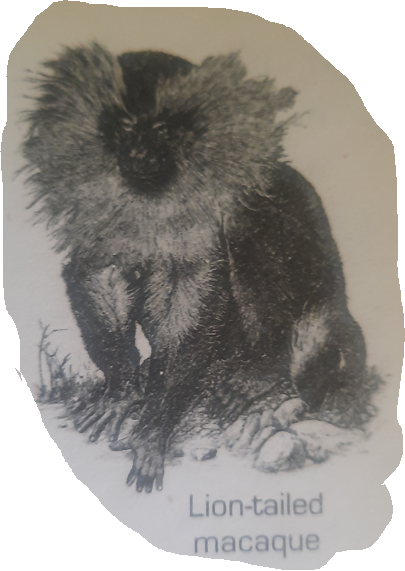
For those who have forgotten what this was about, hydroelectric dams were proposed on the River Kunthipuzha, which would have involved the submergence of the forests of Silent Valley, a biodiversity rich habitat, home to many, many unique species of flora and fauna, including the rare and unique lion-tailed macaque which is endemic to the Western Ghats.

Kerala Sasthra Sahithya Parishad (KSSP), a people’s science movement, led the campaign against the project under the leadership of Prof. MK Prasad. They published well researched techno-economic and socio-political assessment reports of the proposed project. The campaign by KSSP evoked a huge response from citizens at large, as well as eminent scientists and environmentalists like Romulus Whitaker of the Madras Snake Park, Dr. Salim Ali (who was probably the first to flag the issue), Dr. MS Swaminathan etc. The renowned poet Sugathakumari was at the forefront of the movement, and her poem “Marathinu Stuthi” (“Ode to a Tree”), was a rallying call for the people.

In an early and unique victory for the environmental movement in India, the then-PM, Mrs. Indira Gandhi finally weighed in, and the project was halted. Subsequently, the area was declared a National Park.

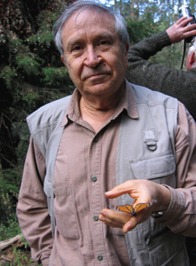
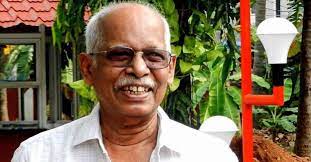
Prof MK Prasad
Prof MK Prasad

The story is one of the amazing dedication and hard work of a large number of people. But Prof. MK Prasad’s was a symbol of the movement. Prof MKP as he was fondly referred to, was a botanist who spent his life in academics. He taught botany, was Principal of Maharaja’s College, Eranakulam, and Pro-Vice Chancellor, Calicut University.

But he was not confined to classrooms, and believed passionately in taking science to the people. He was an environmental and science activist all his life, and a founding member of KSSP. His distinction as a scientist supported his environmental activism, which no one could dismiss as woolly-headed.

He was a member of the Governing Council of Centre for Environment Education for many decades and we at CEE were fortunate to have him as a teacher, guide, and mentor. Never for him the exalted distance of a Board Member. He was always interested in the minutest details of our projects and lives, and was happy to spend any length of time chatting with us. Prof Prasad passed away last week due to COVID. Here are a few poignant memories which bring him to life.

Prof Prasad, my mentor and a dear friend. It seems a little presumptuous to call this stalwart my friend, but as unassuming as he was, he truly was that. I’d scold him when he sat next to me during the Governing Board meetings, when lesser mortals like us were let in, because he would chatter away irreverently while serious matters were being discussed. He guided me through the challenge of trying to break into the ivory towers of higher education, and when things didn’t work, he’d say our efforts were “before their time”. That, always accompanied by his naughty smile, had become his code word. He also treated me as his unofficial research assistant, which I enjoyed.  He would call to ask me to find out about things that often I knew nothing about, and it was always great learning. Will miss you, Sir!

Kiran Chhokar.

When I think of Prof Prasad, I can see him walking down the corridors of ASCI where we held our Steering Committee meetings in Hyderabad. As always, he is dressed in a half-sleeved shirt, has no smile on his face – but his kind, sharp eyes are twinkling! I am immensely grateful for all his advice and guidance to the school environmental education project. But more importantly, I feel blessed to have spent some time with such a stalwart. His greatness and his humble demeanour co-existed so well! 

Something I found remarkable in him and so distinct from my generation is that he always gave a considered, detailed response to every request for advice. He never rushed to give an immediate response. Sometimes, he would respond the next day – probably after mulling over the issue. 

On one of his first visits to ASCI, I told him that there was a National Park (the KBR National Park) close by and he could probably take a stroll there in the evening. When I met him the next morning, he gave me a gentle, but proper scolding about my recommendation. I learnt my lesson – one does not present KBR as a ‘National Park’ to the person who saved the Silent Valley National Park! 

Kalyani Kandula

While I was working at the Centre for Environment Education (CEE), Ahmedabad,  I had the good fortune of knowing Professor Prasad. I have known him for many years now.  At Governing Council meetings held at CEE often I would sit next to him and would be very inspired by his valuable suggestions, critical comments and review of many projects CEE was handling. He would not mince his words. A gentle soul, very down to earth and a great inspiration to many. Professor Prasad in fact attended my sister’s wedding in Kerala. My father Dr.S.M.Nair and Professor Prasad shared a great professional and personal bond. 

Meena Nair

Some weeks after CEE’s office in Pune was started, Prof MKP dropped by. He was in Pune for some other work. Though it was a single person office and I a relatively junior staff member, Prof MKP was interested to see how I was settling in and getting on. When I told him that Amma (my mother in law) would have been happy to meet him, considering his association with KSSP, he just said that he would be happy to come over for coffee. So we did that, and Amma (and I) was very touched by the gesture. Later Prof Prasad and I went to meet Prof Pisharoty and I just felt blessed to listen to their conversation.

Sanskriti Menon

For me, he was the quintessential story teller. We would invite him to come and speak in various training programmes we organized—those for Forest Officers, for Environmental Educators from around South and Southeast Asia, for NGOs, for school and college teachers. Of course his sessions had to be around the Silent Valley Campaign. I must have sat through his sessions a dozen times if not more. But the passion, involvement and detail with which he told the story of the campaign inspired not only every new batch of trainees who had never heard it before, but equally, us the organizers who had heard it and read about it and discussed it ad-infinite. Such was the power of his passionate storytelling! And not just the Silent Valley–he had done so many interesting things, met so many interesting people, been so many interesting places–he could keep an audience engaged for hours!

Thank you Sir, for inspiring us. We are comforted by the knowledge that you are looking down at us with a twinkle in your eye!

–Meena

Another old piece on Dr. Pisharoty at : https://wordpress.com/post/millennialmatriarchs.com/43

High Flyers: Women in Aviation

Last week was Sankranti and all eyes were turned to the skies as the colourful kites soared and dipped, drifted and sailed with the breeze. Also in the sky were the avian kites, riding the thermals. From time immemorial, humans have gazed up and dreamed of soaring the skies too. The same week there was a news item about a young Belgian-British teenager who flew her single-seater Shark ultralight plane around the world in 150 days. 19 year old Zara Rutherford thus became the youngest woman to circumnavigate the world solo. One of the objectives of her mission, she says was to infuse young women and girls worldwide with the spirit of aviation. 

In the day and age when women are soaring high in all spheres, it is interesting that she feels that more women need to take to the skies. And even more interesting that India has a fair share of women, who have made their dreams of flying come true, not only today, but almost hundred years ago.

Google Doodle honouring Sarla Thukral on her 107th birthday on 8 August 2021

Sarla Thukral was the first Indian woman to fly an aircraft. Born in 1914 in Delhi, she later moved to Lahore, in what was then British India. At the age of 16 she married an airmail pilot PD Sharma who came from a family of fliers. The young bride was also smitten by the aviation bug, and encouraged by her husband, she started flying lessons. Having completed 1000 hours of flying time she earned her flying license, and did her first solo flight in a Gypsy Moth, a small, double winged plane at the age of 21, dressed in a sari. She was preparing to become a commercial pilot but the Second World War broke out, and civil aviation training was suspended. Tragically, around the same time she also lost her husband in an air crash. Sarla was grounded, but not her creativity. She took up with equal passion her love for the arts. She started studying fine arts and painting at Lahore’s Mayo School of Arts. She returned to Delhi after Partition, where she continued to paint. She married RP Thakral in 1948. She also started designing jewellery and clothes and set up a successful business which she ran till she passed away in 2008.

Sarla—high flier, in the sky and on the ground! And an inspiration for many young girls in India who have over the years taken to the skies.

One of the concerns expressed by young Zara is that there is still a big gender gap in the field of aviation in many western countries. Globally, according to the International Society of Women Airline Pilots, around 5 percent of pilots are women. In India, the share of women pilots is significantly higher – at over 15 percent, more than twice as high as in most Western countries, including the United States and Australia. According to one report India has a total of 17,726 registered pilots out of which the number of women pilots is 2,764.

We have, in the last few years, always experienced a surge of pride when we hear a woman’s voice introducing herself as the pilot on a commercial flight. Even more uplifting is the increasing number of women who are flying shoulder-to-shoulder with men in the armed forces.

Women pilots have been flying transport aircraft and helicopters in the three Forces for a long time. As far back as 1994, when many people had reservations about allowing women pilots in the Indian Air Force, Gunjan Saxena, along with Srividya Rajan, defied convention, and took up the challenge; they were two of the 25 young women to form the first batch of women IAF trainee pilots. The Kargil War of 1999 was a real test of the true grit of these women. They fearlessly flew helicopters in the combat zone, and into hostile territory to drop supplies, evacuate injured soldiers and spy on enemy positions. Gunjan and Srividya’s contribution in this critical war effort was highly commended, and an inspiration for many young women who dreamed of a career in uniform.

In October 2015, the Indian Air Force opened the fighter pilot stream to women. The first three female pilots to be inducted in the fighter squadron in June 2016 were Avani Chaturvedi, Bhawana Kanth and Mohana Singh.  These young women, were fuelled by the sense of adventure as well as the spark of contributing to the defence of our country.

Today the Indian Air Force has 111 women pilots who fly transport planes and choppers, and 10 women fighter pilots.

As Bhawana Kanth said “It is not the right time for it now, it has always been the right time for women to become fighter pilots.”

Last year Flight Lieutenant Bhawana Kanth on 26 January 2021, became the first woman fighter pilot to be take part in the Indian Air Force’s (IAF’s) tableau at the Republic Day parade at Delhi’s Rajpath.

This year, as we mark the many strides forward that our Republic has made, and salute with pride the accomplishments of its citizens, let us put our hands together for all the young women who dare to dream, and who make their dreams come true. Soar high, sisters and daughters, and may even the skies not be your limit.

–Mamata

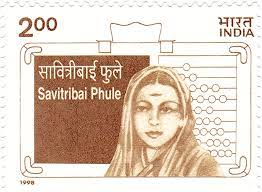
First Lady Teacher: Savitribai Phule

I have often written in this space about ‘women warriors’. Women who have dreamed, and have made their dreams a reality, even in the face of adversity and opposition. These remarkable women are to be found in every age, and in every part of the world. And they continue to inspire, as well as to remind that what we take for granted today, was fought for, and achieved, by someone before us. One of these is the right of girls to education. This is a good week to remember a woman who paved the path for this—Savitribai Phule.

On 3 January 1831, a girl child was born in Naigaon village in Maharashtra. She was named Savitri. Her parents Lakshmi and Khandoji Neveshe Patil were Malis (traditionally vegetable growers and sellers), an economically and socially backward community. A girl child in such a community meant that she was not sent to school. The story goes that one day her father caught her leafing through the pages of an English language book and he was incensed; believing that only upper class males had this privilege. But this planted the seeds of the resolve in the young girl that she would, one day, learn to read and write.     

Savitri was married off at the age of nine. Her husband, Jyotirao Phule, also from the same community, was only 13 years old himself, and he was studying in class three. But fate may have decided that this couple would one day change the way of things.

Savitribai entered her husband’s house as an illiterate child. Jyotirao, a man ahead of his times, believed that girls had an equal right to education. He himself began teaching his young wife at home, in the face of great disapproval from the family and the community. His friends Keshav Bhavalkar and Sakharam Paranjpe also contributed to her education. Perhaps it is these early mentors who inspired in Savitri the resolve to become a teacher herself. Jyotirao supported Savitri’s journey from becoming literate to getting higher education outside the home. She enrolled for teacher training programmes, first in Ahmednagar in an institution run by Cynthia Farrar who was one of the first unmarried American women sent overseas as a missionary, and who lived and worked in India from 1827 until her death in 1862. Savitri also trained at the Normal School in Pune. She was now ready to embark on her life’s mission of educating and empowering girls.

After completing her training she started teaching girls in Maharwada Pune. Not long after that, in 1848, Jyotirao and Savitri, along with Sagunabai, a revolutionary social reformist, opened a school for lower-caste girls in Bhidewada in Pune. The curriculum included traditional western mathematics, social studies and science, as well as vocational training. Savitribai was the teacher. It is believed that she was the first Indian woman teacher. The school had only nine students to begin with, and it was a struggle to keep them in school. Savitribai offered stipends as incentive, and held parent teacher meetings to encourage and support the parents.

In a time when it was not at all common to send girls to school, this was in itself a bold step. Opening a school for lower-caste girls invited huge backlash, especially from orthodox high castes. The Phules were undeterred and determined. Over the next few years, they opened a series of schools in the Pune area for girls and for lower-caste boys and girls. This raised more hostility, which even manifested itself in throwing of stones and dung at Savitri as she walked to school. It is said that she used to carry with her two sarees, so as to change out of her soiled clothes after she reached school. Jyotirao and Savitri, who until 1849, had lived with Jyotirao’s father, had to move away due to the strong opposition from the local community. But the couple courageously continued with their mission; going on to set up 18 such schools in the region.

It is believed that when they had to leave their home, the young couple was given refuge in the home of Usman Sheikh. His sister Fatima held the same views on education as Savitri and had also studied at the same teacher training institute. She started teaching with Savitribai, and is believed to be the first Muslim woman teacher of the nineteenth century. She continued to teach at the Phule’s schools all her life. The two women shared a long friendship based on mutual respect and synergy.

Education was not the only cause that drove Savitribai. Supporting Jyotirao’s strong crusade against the practice of Sati, child marriage, untouchability and other social evils, she also worked tirelessly for freeing women of many of the social fetters that bound them. She spoke up against the practice of widows having to shave their head. The Phules opened a care centre for widows, rape victims and their children, and girls who escaped female infanticide and sati. The Balhatya Pratibandhak Griha provided a refuge for them to live, and raise their children, in safety and dignity. Later the Phules adopted a boy from here as their son.

Savitribai expressed her views not only by her actions but also through her words. She wrote poems extolling education as a means to a life of dignity. One of her poems in Marathi with the title Go, Get Education urges “Sit idle no more, go, get education, end the misery of the oppressed and forsaken. You’ve got a golden chance to learn, so learn and break the chains of caste.” Her first anthology of poems Kavya Phule was published in 1854.

In 1897 the bubonic plague broke out around Pune. Savitribai and her adopted son Yashwant set up a clinic to take care of affected patients. While tending to the patients, Savitribai herself caught the infection, and succumbed to it on March 1 1897.

Savitribai’s life was a tale of true grit and perseverance, and she was a pioneering crusader for equality and justice, especially for women. Today she is described as “India’s first feminist icon”. An article in the Oikos Worldviews Journal sums up her contribution thus ‘Indian women owe her. For in today’s world, whether an Indian school girl reading English, an Indian woman who reads, an Indian woman who is educated, or an educated international desi woman, her education as an Indian female grows from the garden planted by Savitribai Phule’.

–Mamata

Biju Patnaik, the Daredevil Maverick

A chance occurrence can reveal the depths of one’s ignorance in a particular field. For me, the latest such was a linkedin post that I read about Shri Biju Patnaik. I realized that that I hardly knew anything about him. The extent of my knowledge could be more or less captured in the following bullets:  that he was a freedom fighter; that he had been CM of Orissa/Odisha for a few terms; that he opposed the Emergency; that he had done a lot for the development of his State; that the Bhubaneswar Airport is named after him, and there is a large, imposing statute of him outside the airport; and that his son has been the CM of the State for so long that I quite forget any other CM.

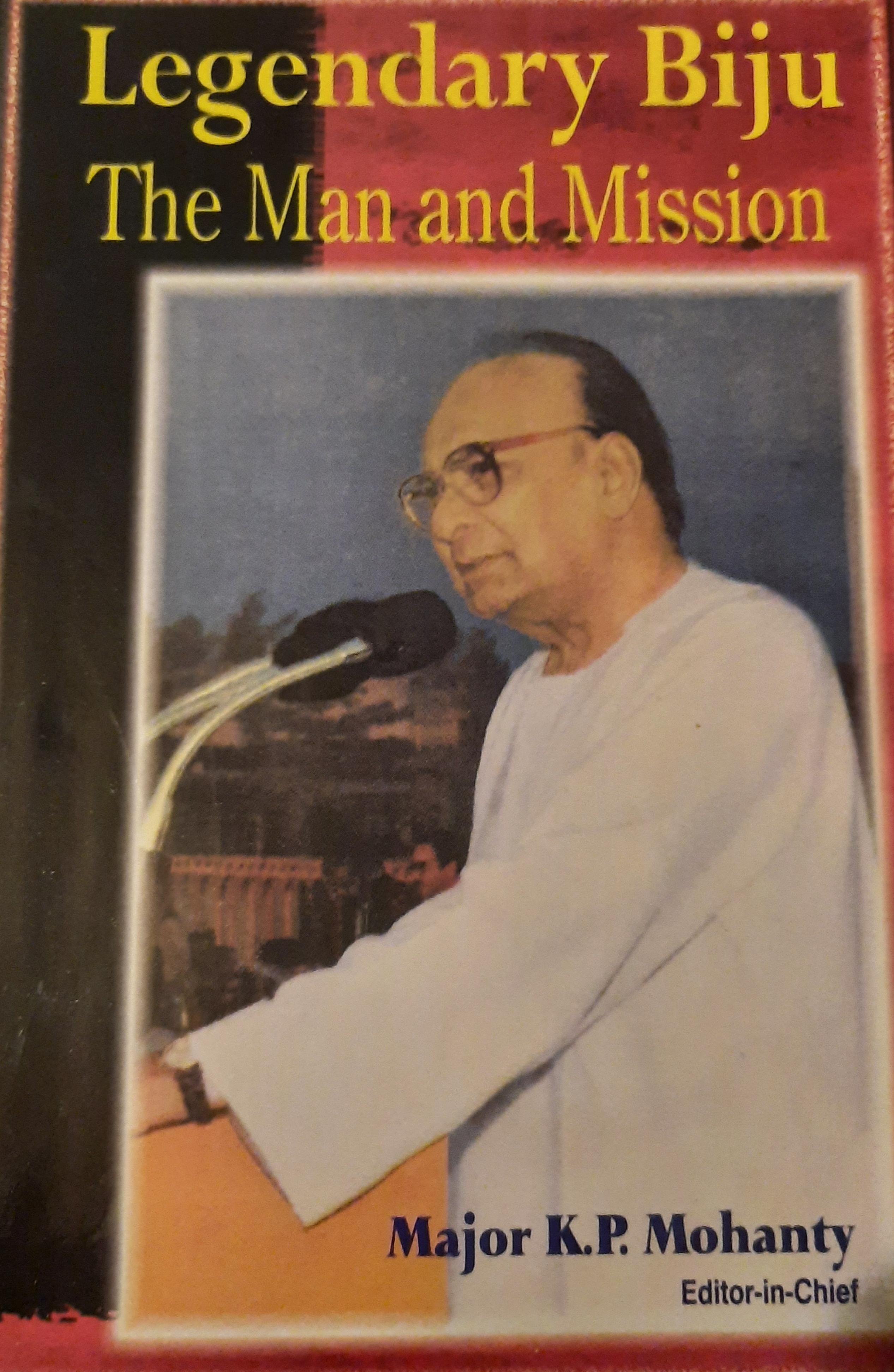
Appalled at my ignorance, I set out to find a good biography. There was hardly anything available. I finally ordered one called ‘Legendary Biju: The Man and Mission’. edited by Maj. KP Mohanty, which seemed the most promising of the slim pickings.

Biju Patnaik
Biju Patnaik

I won’t go into the merits of the book, except to say that I am grateful that Maj. Mohanty and other friends and admirers of the great man put this book together, so that someone like me can get glimpses of him.

Born in 1916 in a well-off family, Biju never followed the conventional route. Daredevilry and adventure were his defining characteristics. The highlight of his school days was when he cut school to go and see an aeroplane which had landed near his town. Just looking at the plane, a very unusual sight in those days, filled him with excitement and he determined to become a pilot. The fact that the guards posted around the plane chased him away and would not let him get near it, only strengthened his resolve.

When he grew older, he with three friends undertook to ride from Bhubaneshwar to Peshawar on cycles. He joined Ravenshaw College, only to drop out so that he could get trained as a pilot. And he became a flying ace.

There are several tales of his derring-do as a pilot which sound more the stuff of fiction and film than real life.

After qualifying as a pilot, he joined a private airline, but ‘somehow or the other sneaked into the Royal Airforce’. This was at the height of World War II. Stalingrad was surrounded by the Nazis, and Red Army did not have enough weapons to hold the city. The fall of Stalingrad would have meant that the Nazis would be able to march to Moscow, and things would get really serious for the Allies. It was Biju Patnaik to the rescue! He flew 27 sorties and dropped arms and ammunition into the besieged city, which helped the Red Army defend it, and force the Germans to retreat. This was an important milestone in WW II.

During the Quit India movement, Biju Babu continued to in the service of the British—in fact, he was pilot to Lord Wavel, the Viceroy of India, and most trusted by him. But all the time, he was pinching secret papers and files which he had access to, and passing them on the freedom fighters. He  dropped political leaflets to Indian soldiers fighting under British command in Burma. He flew several leaders of the Freedom Movement, including Aruna Asaf Ali the intrepid freedom fighter, clandestinely. He was finally caught and imprisoned by the British. A secret agent more daring than James Bond!

Post-Independence, there were many occasions when his courage and skill as a pilot were called to the service of the nation. India was supporting the Indonesian Freedom Movement, which was fighting the Dutch colonizers. At one stage, Nehru with whom Biju Patnaik was very close, wanted the Indonesian leaders to attend the first Inter-Asia conference, and present their case at the world stage and garner support for their cause. The colonial masters were not keen that the freedom movement leaders go out of the country, and stopped all air and sea routes. But Biju Babu flew a secret sortie, brought the leaders to address the conference, and then dropped them back.

When the Pakistan Army attacked Srinagar in late 1947, the situation for India was really bad. There were just not enough troops or weapons in J&K for the country to hold and defend it. The only way was to fly them in. But it was not clear whether the Airport was still in Indian hands or had been taken over by the attackers. The Indian Airforce expressed their inability to land under the circumstances. One again, Biju to the rescue! He landed in Srinagar Airport, took over the control tower, ensuring that our Airforce places could land. And that turned the tide of history.

He had a role to play in Nepal too. When there was struggle between the Ranas who were the rulers, and freedom fighters of Nepal, India supported the freedom fighters, but could formally do nothing to interfere in the internal affairs of a neighbor. But Biju Patnaik went ahead and dropped 15,000 guns into Nepal to aid the anti-royalists!

And these were just his exploits as a pilot. But he was so much more. Apart from being an industrialist, he was of course a politician on the national stage, the CM of Orissa, a man credited for many significant development projects there.  (Hopefully, I can briefly cover some of these in a subsequent blog).


‘Maverick’ and ‘Daredevil’ are two terms which recur through the book. And for sure he was both of those. ‘Controversial’ could be added too. In his time, he was accused of corruption, of mis-administration and of encouraging lawlessness by asking people to take law into their hands and beat up corrupt officials (when he himself was CM!).

There is a crying need for scholarly biography, one which is accessible to the intelligent reader. It is the least that India can do to honour and remember this remarkable individual. They don’t make them in this mould any more!

–Meena

Looking Ahead With Hope

2021. What a year it has been. A year of bewilderment and bereavement. A year of being confined, and yet feeling adrift. A year of feeling connected by a common enemy, and yet feeling utterly alone, and helpless.

A year when we looked for even the faintest glimmer of hope at the end of what seemed like an endless dark tunnel. And then, as that glimmer grew brighter, the world strained at the leash, eager to be out and about. A demonstration of human resilience and, above all, of hope.

Much has been written how this period led us to look within, to discover in our deep recesses the strength that we did not know we possessed, or the value of bonds that we were often too busy to nurture. It led humanity to introspect, and we turned to the thoughts of wise men who saw the larger picture much before we did.

Two of these wise men, passed away this week, both on 26 December–Archbishop Desmond Tutu at the age of 90, and EO Wilson who passed away at the age of 92. Two persons that have inspired me, and about whom I have written earlier in this space.

Both very different, one a spiritual leader who was also an activist for human rights, and the other a world renowned scientist who devoted his life to studying the natural world, but who was also an activist, inspiring others to care for the natural world, as he did.

Both sharing a very similar world view and vision for the future of humanity.

This is a good time to recall some words of wisdom from these visionaries.

Edward Osborne Wilson or EO as he was called was not just the world’s foremost authority on the study of ants (a myrmecologist) but one of the founding fathers of, and leading expert in socio-biology and biodiversity

Tributes to EO Wilson describe him as “a true visionary with a unique ability to inspire and galvanize. He articulated, perhaps better than anyone, what it means to be human”.

“His gift was a deep belief in people and our shared human resolve to save the natural world”.

“A relentless synthesizer of ideas, his courageous scientific focus and poetic voice transformed our way of understanding ourselves and our planet”.

Alongside a distinguished academic career EO Wilson was a passionate naturalist who continuously drew attention to the fragility of the biosphere and advocated for its protection and nurture. He saw hope in the youth as the stewards of our planet.

His mission and vision was beautifully articulated in a Commencement Address that he gave in 2011 at the University of North Carolina.

“This is the time that in order to do that so we will have to evolve a better world order than the one we have now, which I like to call our Star Wars Civilization. I mean we have stone-age emotions, medieval institutions and godlike technology. In the case of emotions they evolved in pre-history over millions of years. In the case of our institutions, especially within religions and ideology, we are in constant conflict. And in the case of our technology, we are seeing things going almost beyond the control of our imagination. These three stanchions of current civilization explain why we are constantly in trouble. They are dangerous. They are very serious problems for the rest of life and, ultimately, with that ourselves. And today we are still (far) from even at the margin of solutions.

Ours is above beyond all an exponential world, changing faster than at any period of history before. We are now in the early period of an overwhelmingly techno-scientific civilization, connected literally person to person. The accumulated knowledge of the world is already at the zettabyte level — that’s a one followed by 21 zeroes of bytes. It is growing faster and faster by the digital revolution in communication, which is changing everything—all that we know, all that we need to quickly learn, all that we need to understand in order to survive as a species. The trajectory of history can only be dimly foreseen. It will consist of shocks and surprises. This country and the rest of the world needs university-trained young people prepared not only by knowledge itself but by the capacity to find new knowledge in order to respond quickly to unexpected needs and crises, challenging all the various professions, and in public affairs, and in simple, everyday life. And, with it all, to think upon and understand the meaning of humanity and yourselves and your lives. So, go forth. Think. Save the world.”

Today, EO Wilson’s words from a decade ago are resounding more true than ever before. And his call for humanity to see itself as part of a larger interconnected universe is even more urgent than it ever was. It echoes Archbishop Tutu’s constant reminder that “It does help quite a lot to see yourself as part of a greater whole.”

Desmond Tutu was an early member of The Elders an international non-governmental organisation of public figures including statesmen, peace activists and human rights advocates who were brought together by Nelson Mandela in 2007. The Elders offered to use their collective experience to work on solutions for seemingly insurmountable global issues and conflicts.

For Desmond Tutu the magic mantra that could guide these solutions was “Ubuntu”– a Zulu proverb that says: “I am a person through other people. My humanity is tied to yours.” Archbishop Tutu felt that Ubuntu was the essence of being human. “Ubuntu speaks particularly about the fact that you can’t exist as a human being in isolation. It speaks about our interconnectedness … We think of ourselves far too frequently as just individuals, separated from one another, whereas you are connected and what you do affects the whole world. When you do well, it spreads out; it is for the whole of humanity.”

“You can think about others who are in a similar situation or perhaps even in a worse situation, but who have survived, even thrived. It does help quite a lot to see yourself as part of a greater whole.”

Desmond Tutu’s life was fraught with numerous challenges and hardships, but his resilience stemmed from his ability to find joy even in the grimmest of situations. But he also warned that Joy was never unadulterated. “Discovering more joy does not, I’m sorry to say, save us from the inevitability of hardships and heartbreaks. In fact, we may cry more easily, but we will laugh more easily, too. Perhaps we are just more alive. Yet as we discover more joy, we can face suffering in a way that ennobles rather than embitters. We have hardship without becoming hard. We have heartbreak without being broken.”

“Much depends on your attitude. If you are filled with negative judgment and anger, then you will feel separate from other people. You will feel lonely. But if you have an open heart and are filled with trust and friendship, even if you are physically alone, even living a hermit’s life, you will never feel lonely.”

When we see others as separate, they become a threat. When we see others as part of us, as connected, as interdependent, then there is no challenge we cannot face—together.”

We have lost two wise men who, both from their own perspective, saw the interconnectedness of everything, and had an unerring faith in the power of connections.

Let their words continue to light our way as we look ahead with hope, to the new year.

–Mamata

Magnolia Lady Janaki Ammal

Whenever I write a piece about plants, one of the things that interests me is how the plant got its botanical name. In many cases the nomenclature includes the name of the scientist which was associated with the discovery or study of the plant. Most of the names are western. It was a pleasant surprise to learn about a plant that is named after an Indian botanist, and that too a lady! This plant is a variety of the magnolia and is named Magnolia kobus Janaki Ammal.

The story of Janaki Ammal herself is fascinating and inspiring. And her contribution to plant sciences covers a wide and impressive range of achievements.

Edavaleth Kakkat Janaki Ammal was born on 4 November 1897, in Tellicherry (now Thalassery) in Kerala. Her father, Dewan Bahadur EK Krishnan, was a sub-judge at Tellicherry in what was then the Madras Presidency. He had a large family consisting of 19 children from two wives, and Janaki grew up amidst numerous siblings, in a home environment which had a well-stocked library, that included scientific and literary journals, and a well-tended garden. Her father had a keen interest in natural sciences and kept abreast with developments in the sciences. He also wrote two books on the birds of the North Malabar region. From an early age Janaki herself had an avid interest in the natural environment, and a scientific temperament.

It is this that decided her further academic studies after she finished school in Tellicherry. At a time when women (including her sisters) were married off at a young age, Janaki chose to move away from home in pursuit of higher education. She obtained a Bachelor’s degree from Queen Mary’s College, Madras, and an honours degree in botany from the Presidency College. After graduating, she taught for three years at the Women’s Christian College in Madras. It was then that she was awarded the prestigious Barbour Scholarship for Asian women to study in the United States. She travelled to America to join the University of Michigan as a Barbour Scholar in 1924 and earned her Masters of Science degree in 1925. She continued her work which focussed on plant cytology and breeding of hybrid plants to earn her doctorate in 1931. She was the first Indian woman to receive this degree in botany in the US.

Returning with a doctorate from the US, Janaki returned to teaching as a professor of Botany at the Maharaja’s College of Science in Trivandrum, from 1932-1934. She then joined as a geneticist at the Sugarcane Breeding Institute in Coimbatore. At the time, India was importing sugarcane. Although India also produced a lot of sugarcane, it was not as sweet as the imported one. The Sugarcane Breeding Station at Coimbatore had been set up to carry out research to improve the quality of sugarcane grown in India. The work of two scientists there, CA Barber and TS Venkataraman, especially in cross-breeding different varieties was so successful that in just five years the production of sugarcane doubled in India.

Ammal joined these scientists at the research institute in 1934, and started her research in sugarcane. Her cytogenetic research of sugarcane, and her experiments with cross-breeding and hybrids led to a better understanding of sugarcane breeds, in turn leading to better cross-breeds of sweeter variety. It also helped analyse the geographical distribution of sugarcane across India. Janaki faced many professional and personal challenges as a highly educated unmarried female scientist in a male-dominated institute where, despite the “science”, a patriarchal and traditional mind set prevailed with respect to gender and caste. 

In 1935, she was selected as one of the first Research Fellows of the Indian Academy of Sciences set up by the Nobel laureate CV Raman.

In 1940 Janaki went to England and joined the John Innes Horticultural Institution in London as an assistant cytologist. England had just declared war on Germany; Janaki worked through the bombings and blackouts, often, it is reported, diving under her bed at night as London was bombed, and going to her lab in the morning to clear the broken glass and debris from the previous night’s bombing, while she continued to focus on her research.

Janaki worked closely with the geneticist Cyril Dean Darlington for five years. The two collaborated to write the Chromosome Atlas of Cultivated Plants, which is a key text for plant scientists even today. Unlike other botanical atlases that focused on botanical classification, this atlas recorded the chromosome number of about 100,000 plants, providing knowledge about breeding and evolutionary patterns of botanical groups.

In 1946, she joined the Royal Horticultural Society in Wisley in a paid position as a cytologist. Janaki became the Society’s first salaried woman staff member. There, she studied the botanical uses of colchicine, a medication that can double a plant’s chromosome number and result in larger and quicker-growing plants. One of the results of her investigations was a magnolia shrub with flowers of bright white petals and purple stamens. This was named Magnolia kobus Janaki Ammal in her honour, and continues to bloom in Wisely even today.

Janaki returned to India in the early 1950s at the request of the then Prime Minister Jawaharlal Nehru. Her brief was to “improve the botanical base of Indian agriculture”.

She was appointed supervisor in charge of directing the Central Botanical Laboratory in Lucknow. In this capacity, she would reorganize the Botanical Survey of India (BSI), originally established in 1890 to collect and survey India’s flora, under the supervision of Britain’s Kew Gardens.

It was during this period that Janaki found herself looking beyond pure research and realising that in the race for increasing food grain production, the country was losing vast tracts of forests and valuable indigenous plant species. She was also distressed that despite Independence the system of plant collections and research remained colonial in mind set and practice. She was also keen to revitalize and indigenize botanical surveys.  After spending decades applying her research skills to improving the commercial use of plants, she began using her influence to preserve indigenous plants under threat. She began to speak of the value of indigenous cultures and the important role of women in preserving and cultivating local plants, which were being threatened by mass production of cereals. 

Janaki was among the pioneers that foresaw and warned of the threats to the fragile ecosystems in the race for ‘development’. She continued to speak out about this till the end of her life. At the age of 80 she vociferously opposed the proposed hydroelectric plant in Silent Valley in Kerala that would have threatened the unique biodiversity of a pristine evergreen tropical forest. Her voice as an eminent national scientist was respected, and was contributory to the scrapping of the proposal.

Janaki Ammal continued her distinguished public career in many important government postions: She headed the Central Botanical Laboratory at Allahabad. She worked as an officer on special duty at the regional research laboratory in Jammu and Kashmir and had a brief spell at the Bhabha Atomic Research Centre at Trombay. In November 1970 Janaki decided to settle down in Madras where she worked as an Emeritus Scientist at the Centre for Advanced Study in Botany, University of Madras. Her research work continued unabated, with special attention on medicinal plants and ethnobotany. She continued her research at the Centre’s Field Laboratory at Maduravoyal near Madras and kept on publishing her work until her demise in February 1984.

A lifetime of pioneering work by a woman well ahead of her times. But whenever she was asked about her life, all she had to say was “my work is what will survive”. An unassuming woman who lived a simple Gandhian life, married to her work, and her first and life-long love for plants. A brilliant mind who made her own choices and forged her own path in her pursuit of knowledge. A trial blazer who “sweetened the nation and saved a valley”—Janaki Ammal.

–Mamata

An Unusual Biography Brings a Colossus to Life: ‘Growing up Karanth’

Shivarama Karanth. A name that many of us have heard. One of those names many of us know we should hold in awe, maybe without quite knowing why.

He was a great writer, no?

He was involved with theatre, right?  

Wasn’t he an environmentalist?

He was into politics?

For many, it was his dramatic mane of hair that comes to mind on hearing the name.

Shivarama Karanth was all of the above, and much more. A Renaissance man, if ever there was one. A Jnanpith awardee, awardee of Sangeet Natak and Sahitya Adademy fellowships. A Padma Bhushan, who was bold enough to return the award as a protest against the Emergency. A man who came under the spell of Mahatma Gandhi and joined the Freedom Movement, but branched out from Gandhiji’s fold as he did not agree with his economic ideology. A doyen of Kannada literature. The reviver of Yakshagana in a modern format. A writer whom Ramachandra Guha has called ‘Rabindranath Tagore of Modern India’ and ‘one of the finest novelists-activists since independence’.

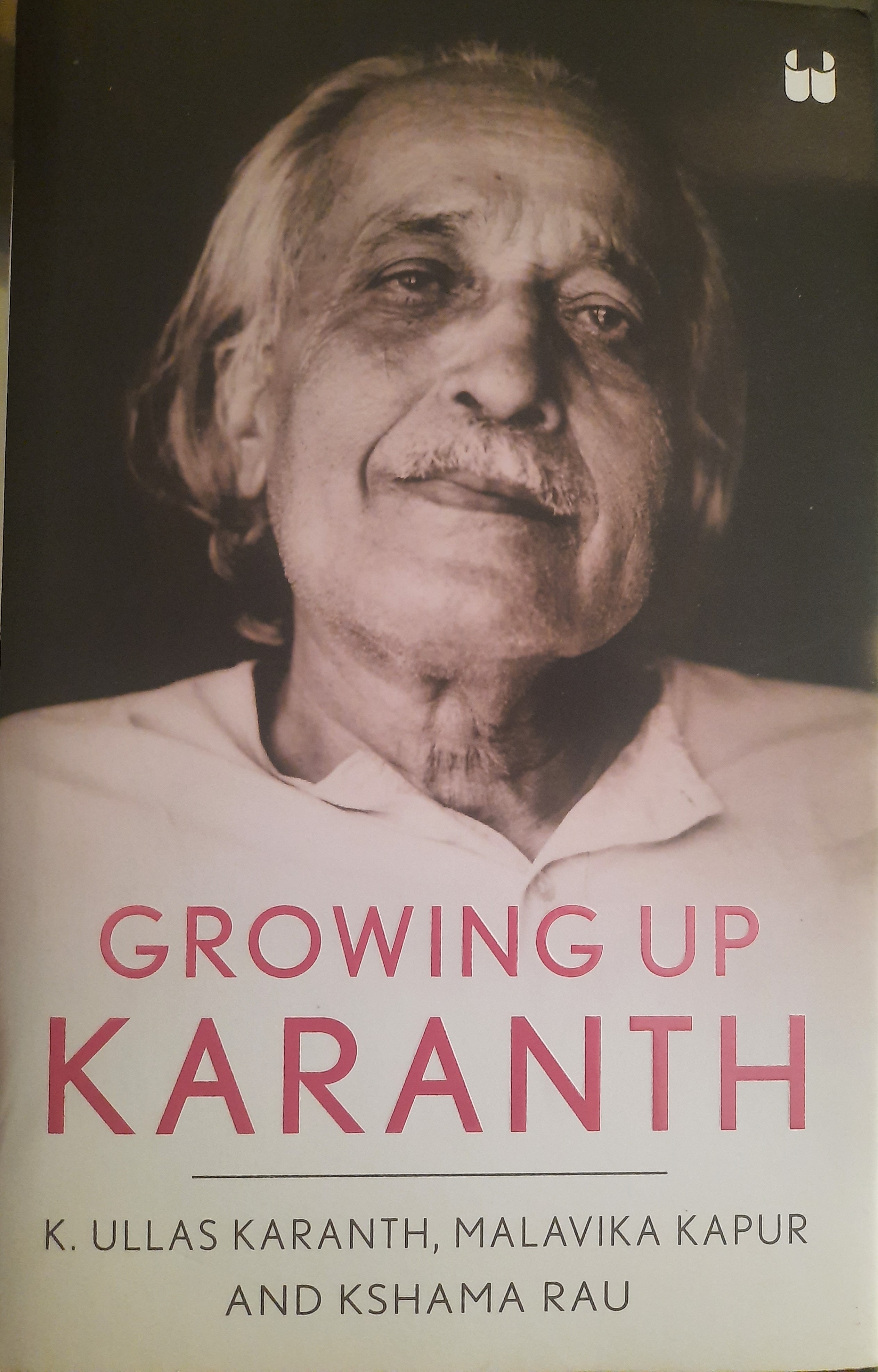
It is not in my place to even try to talk about his work and achievements. So I will confine myself to talking about a new biography of his that has come out. ‘Growing up Karnath’ (Westland), is a biography written by his three children: Ullas Karanth (an internationally-renowned environmentalist); Malavika Kapur (an academic who headed the Clinical Psychology Dept at NIMHANS) ; and Kshama Rau (a well-known Odissi dancer who runs her own dance school).

Shivarama Karanth
Biography of the legendary Shivarama Karanth

It is the format of the biography which makes it special. It has a few chapters by each of the authors, recalling their memories of their mother and father, and their relationship with their parents. And then a few chapters written jointly by the three of them, giving a perspective of their father after they had left the family-fold.

This gives space for a very intense, intimate and emotional story—from seeing the famous achiever as a father who spun magical and impromptu night-time tales on any topic that the child chose to give him; to one who made paper dolls and costumes; to one who was quite capable of losing his temper and scaring the wits out of a young boy—one gets an insider’s view.

At one level, it is a very sad story. The wonderful mother, Leela Karanth, independent beyond imagination for her times, who actually proposes to Shivarama Karanth, a man many years her senior, and marries him in spite of many obstacles, who sacrifices her many talents to support her husband’s achievements, who takes many bold steps to ensure her family’s well-being, succumbing to depression and mental illness which eat up the last two-and-a-half decades of her life. The amazing father, Shivarama Karanth, a man of a million talents who in his later years, cut himself off from his children and those close to him, under the influence of an outsider.

At another level, it is a story of joy. The joy of the wonderful relationship and the unusually-equal marriage of Leela and Shivarama Karanth; the father who let each of his children flower in whichever field they chose; the warm grandfather. The joy of the Renaissance Man to whom everything was a subject of enquiry, exploration and study; one who was as comfortable thinking about problems scientifically, as writing about them in verse; one to whom there was no boundary between one art form and another. The joy of creation, activism, and art. Of passionately-held ideologies and beliefs.

At yet another level, it is an expression of gratitude of the three authors. To their awesome parents of course, but also to the people who were part of their parents’ lives; who supported them at various stages, in various ways; who contributed in some measure to Shivarama Karanth becoming the giant he was. And that is a very touching aspect of the book.

The candour and the openness with which each of them writes is something that is amazing. It must have been an emotionally demanding experience, while at the same time a catharsis of sorts. We readers can only thank them for digging deep and throwing up their father and family to the public gaze, to help us understand the legendary Karanth as a man, with his amazing achievements and his very human failings.

However, I miss one thing in the book. While it gives a glimpse of Shivarama Karanth’s achievements, it still does not give me proper understanding of the depth and width of his work. There are of course references to some of his works and also a bibliography of his writing. But the magnitude of the work did not hit me hard enough to awe me to the extent it should: over 40 novels, half a dozen books on science, a dozen children’s books, biographies, travelogues, books on architecture, plays….. And his writing is only part of his work. His environmentalism, his revival of Yakshagana, his activism. Though one catches glimpses, one cannot get one’s teeth into any of it. But maybe this is an unfair comment. There are other biographies, and his own autobiographies to do that. The authors themselves make it clear in their foreword that ‘In large part, this book is our tribute to Tata (as they called their father) and Amma, celebrating the gifts they gave us while we were ‘growing up Karanath’. And this the book does in full measure.

And the other comment would be that there are naturally some overlaps because we have three authors, talking about the same people and the same incidents. But that is a minor issue.

Overall, a book worth the time you will spend on it, to get introduced to one of the Makers of Modern India.

–Meena

PS: Thanks Krithi Karanth for the book and the world it has opened to me!

Ada Lovelace: STEM Pioneer

Every Wednesday my newspaper carries a special page about Tech news which has stories about young techies, and especially about women who have made a mark in the field of computer technology. In recent years, there has been a lot of discussion about encouraging girls to engage with STEM, and inspiring stories about women in the 20th and 21st century who have excelled in these fields.

Not many can imagine that one of the pioneers of computing science was born over two hundred years earlier, and that she was a woman! This was Ada Lovelace, a computing visionary who recognised the immense potential of computers. Augusta Ada Byron was born in London on 10 December1815. She was the only child of George Gordon or Lord Byron, the brilliant but eccentric English poet, and Annabella Milbanke, a highly intelligent and educated woman with a flair for mathematics. 

The marriage between the poet Bryon and the “princess of parallelograms” as he called his wife, was tempestuous and short. A month after Ada’s birth, Annabella Byron moved their daughter out of their London house, and away from Lord Byron’s influence. Annabella was afraid that Ada would inherit her father’s ‘poetic’ temperament and erratic traits, and kept her daughter away from the “imaginative” arts, bringing her up in a strict regimen of science, logic and mathematics, as well as music.

Ada’s father Lord Byron himself left Britain forever when Ada was a baby, and he died in Greece when Ada was eight years old. Ada never knew him. Ada herself was largely brought up by her maternal grandmother and servants, and educated by private tutors. She suffered long spells of bad health right from childhood, and through her life.

Ada was fascinated with machines from an early age and devoured the scientific magazines of that time. But she was equally imbued with her father’s imagination. When she was twelve years old, Ada wanted to fly. But she did not stop at dreaming; she methodically studied birds and feathers and experimented with different materials that could serve as wings, and even wrote an illustrated guide recording her research, called ‘Flyology’. She was reprimanded by her mother who saw this as a fanciful project.

In 1833 Ada, as a debutante to London’s high society, attended a party where she was introduced to Charles Babbage who was a renowned mathematician. Babbage spoke to her about his new invention–a tower of numbered wheels that could make reliable calculations with the turn of a handle. He called this the “Difference Machine”. A few days later, Lady Byron took Ada to his home to see him demonstrate the device in his drawing room. Ada was very intrigued by the incomplete prototype. She initiated a correspondence with Babbage about its potential, and her own mathematical studies. This was the beginning of a close and lifelong friendship. Babbage was then a 40-year-old widower and Ada a young debutante, both with very divergent personalities, but the two corresponded and exchanged ideas for many years. Babbage recognised, and encouraged, her potential; in 1839 he wrote to her “I think your taste for mathematics is so decided that it ought not to be checked”.

Babbage spoke highly of Ada’s mathematical powers, and of her peculiar capability, which he described as being higher than that of any one he knew. On one occasion he called her “The Enchantress of Numbers”.

At the age of 19 Ada was married to an aristocrat, William King; and they had three children. In 1838 William King was made Earl of Lovelace, and his wife Ada became Lady Ada King, Countess of Lovelace. But she became generally known as Ada Lovelace.

Along with being a wife and mother Ada continued her independent pursuit of mathematical knowledge. She became friends with one of the finest female mathematicians of her time, Mary Somerville, who discussed modern mathematics with her, set her higher-level mathematics problems, and talked in detail about Charles Babbage’s difference engine. In 1841 she was given advanced work by Professor Augustus De Morgan of University College London. She also continued to learn advanced mathematics through correspondence with Mary Somerville. All the time, she kept Babbage’s difference engine in mind.

Babbage began a new project that he called the “Analytical Engine’. He envisaged this as large heavy machine with thousands of cogwheels that could perform more functions with greater accuracy. Ada Lovelace served as the key interpreter of the project. On a trip to Turin to promote his work, which required considerable financial support, Babbage met a mathematician named Luigi Federico Menabrea, who agreed to write a paper on the machine. It was published in a Swiss academic journal in October, 1842. Ada translated the paper from the French, but also added her own copious and detailed notes, addressing difficult and abstract questions that the paper threw up. While the original paper was about 8000 words, Ada’s annotated English version came to twenty thousand words.

In her paper she clearly described how Babbage’s device would work, with references and illustrations from the silk-weaving Jacquard loom which wove patterns using a set of punched cards which issued instructions to the machine. As she wrote “We may say most aptly that the Analytical Engine weaves algebraic patterns just as the Jacquard loom weaves flowers and leaves”.

She explained how Babbage’s machine could perform a similar function using as sequence of punched cards, or what could be called “machine code”. In her paper, she included the world’s first published computer program, or algorithm – this was the Bernoulli number algorithm, and thereby became what may be considered as the first computer programmer.

Ada Lovelace broke new ground in computing, identifying an entirely new concept. She realized that an analytical engine could go beyond numbers. This was the first ever perception of a modern computer – not just a calculator – but a machine that could go beyond the field of mathematics and contribute to other areas of human endeavour, for example composing music.

Ada’s translation, along with her notes, was published in 1843 with the title “Sketch of the Analytical Engine, with Notes from the Translator”.

Ada Lovelace died of cancer at 36, in 1852. It was more than a hundred years before her notes were discovered, The “Analytical Engine” remained a vision, until Lovelace’s notes became one of the critical documents to inspire Alan Turing’s work on the first modern computers in the 1940s. In 1979, the U.S. Department of Defense named a new computer language “Ada” in her honour.

Today as many more young women enter the field of computer science and technology, it is time to remember Ada Lovelace, a pioneer and path breaker of her time. And to celebrate the power of Imagination. In 1841 she wrote: Imagination is two things: The Combining Faculty which seizes points in common, between subjects having no apparent connection and The Discovering Faculty which penetrates into unseen worlds around us, the worlds of Science.

–Mamata

Stories: The Magic Wand

This week saw children making the headlines. November 14 is celebrated as Children’s Day in India, to mark the birthday of India’s first Prime Minster Jawaharlal Nehru. The day is marked by events that engage children in activities dear to them—of which playing and stories remain all-time favourites.

This year the Gujarat government has recognised the immense value of stories for children and has declared that 15 November will be celebrated as Children’s Stories Day or Balvarta Din.

15 November marks the birth anniversary of Gijubhai Badheka, one of Gujarat’s best known children’s storytellers and educationists, who had been called the Brahma of Children’s Literature. In Gujarat his name is synonymous with a rich treasure of stories for children. Generations of children have grown up with these tales, told and retold by parents and grandparents.

Born in 1885 Gijubhai started his professional life as a Pleader in a district court. In the early 1920s he got deeply involved in the upbringing of his own son. Under the influence of the thinking of Madam Montessori he started experiments in child-centred education, when he joined the Dakshinamurti educational institutions in Bhavnagar. His vision and passion for experimenting in his field led to the setting up of the Dakshinamurti Balmandir—a pre-primary school in 1920. It is in the early says of his interactions with the children here that he realised the importance of stories for children as a means of learning. He started collecting stories for children, writing them, and telling them. He believed that stories were the magic wand that transformed children in many ways.

There was, at that time, not much literature in Gujarati which was specifically written for children. It was Gijubhai who established the child as an individual, and created a special space, and resources for the child, in literature.

As he wrote in his seminal work in Gujarati, on the art and craft of stories titled Vaarta nu Shastra: By calling a story a children’s story does not make it one. Children’s stories are those that children get a special type of enjoyment from. Children like short and simple stories. Reflections of what happens around them, behaviour of birds and animals, small rhymes that can be easily remembered and repeated—these are the characteristics of children’s stories.

But at the time there were no stories available that would fit this bill. Gijubhai delved   into the treasure chest of folk literature. He asked all the teachers and teacher trainees of Dakshinamurti to start collecting folk stories that were still being told in homes, in villages, and in fields, and pick those that would be suitable for children.

As he wrote in Vaarta nu Shastra “If you seek folk literature you will have to leave the city and go to the villages, and from villages, move into the forests and fields. When the toothless grandmother finishes her chores, and rubbing tobacco on her gums, starts to tell stories to the gaggle of children, there springs the magic of folk tales. You will find folk literature in every village chaupal; children will be spreading it freely from galli to galli, and grandmothers will be distributing the prasad in their homes.

Gijubhai and his colleagues went out as seekers of stories and returned with a rich repertoire of tales, songs, rhymes, riddles and sayings. He then retold these for children with his characteristic short sentences, word play, rhyme and dialogues.

And so every morning he told the children a story. In the afternoon the children would enact the stories. Soon they became so adept that they did not need to memorise the words; the rhymes flowed naturally and if they forgot in between, they made up the words as they went along. As he wrote: If you collect a group of children and tell them a story, they will tell you ten more.

Gijubhai’s search for folk tales crossed the boundaries of language and country. He explored and discovered gems in the literature of different countries, and found incredible variety, as well as similarities. He localised and transformed these stories so that they were steeped in the sounds and colours of Gujarat, and over time they became not only Gujarati but uniquely ‘Gijubhai’s stories’.

Gijubhai’s stories are simply told tales with a mixture of prose and rhyme. There is a lot of dialogue and reiteration. The repetition of rhymes makes for lively storytelling in  which listeners can also join in. Many stories follow a sequence of cause and effect, leading to a chain reaction which is reinforced in verse. Children love the repetitive rhymes. Several stories have improbable characters and plots. Children love the absurd, fanciful and nonsensical.

Gijubhai told delightful tales of familiar animals and birds. In many, the animals talk and act in human ways while also reflecting each animals typical characteristics. The stories reflect a deep symbiotic relationship between animals and people with the two often trying to outwit each other. With equal panache Gijubhai told stories of common folk with common trades (tailor, potter, barber, shopkeeper), as well as kings, queens and princesses.  The characters reflect basic human traits—greed, envy, proving physical or mental prowess. Many stories follow the classic fairy tale style, opening with ‘once upon a time’ and ending with ‘happily ever after’. They capture the rustic flavour and pace of the days when travel meant walking from one village to another, and long-distance meant a bullock cart journey; and many encounters and adventures happened en route.

Several generations and a hundred years later, children today may not relate as closely to the settings and the pace of the narrative, and yet, the quirks and foibles of the characters; the silly and the absurd, the funny and the fantastic still touch a cord in the child, and indeed in the child in every one of us.

The initiative to celebrate Gijubhai and his stories by designating a Children’s Stories Day is a welcome one. In a time when children are so hooked into the digital world, perhaps even adults need to be reminded of the simple joys of storytelling. In the words of Gijubhai:

To My Fellow Storytellers

Here are the stories. Tell these to your children. They will listen with ardour and joy, over and over again. Remember, tell these stories beautifully; tell them as stories should be told—tell them with involvement. Read them out if you like. Choose a story that will suit your children’s age and interest.

Don’t tell the stories to bestow knowledge; don’t tell the stories as an objective narrator. Immerse yourself in the stories and take your children with you into the total experience.

You will discover that stories are a magic wand. If you want to build a bond with your children, start with stories.

–Mamata

Gandhi’s Women Warriors: M.S. Subbalakshmi

‘Warrior’ is a word far from the image of M.S., the doyen of Carnatic music, and the personification of spirituality, goodness and gentleness to people across the country and the world. The one who voiced the message of world peace at the UN on the occasion of its 50th anniversary through Kanchi Shankaracharya Shri Chandrasekarendra Saraswathi’s composition, which starts with ‘Maithreem Bhajatha Akila Hrith Jeththreem’—meaning,Serve with Friendship and Humility which will conquer the Hearts of Everyone; and ends with ‘Shreyo Bhooyaath Sakala Janaanaam’—meaning,  May All People of this World be Happy and Prosperous.

But she was indeed a warrior active in the Freedom Movement.  Along with her husband Sadasivam who participated in the first Satyagraha launched by Gandhiji in 1920, she was passionately committed to India’s Independence. She attended several Congress Sessions in the thirties and forties and sang at many of them. Her husband Sadasivam also used to sing at the start of local political meetings–usually songs by the fiery Tamil poet Bharatiyar–to enthuse the crowds and fill them with patriotic fervour. But after he got married to MS, he never sang publically!

MS Amma and Sadasivam were close to Gandhiji, Rajagopalachari, and many other freedom fighters, and were iconic in the South as symbols of the freedom movement.

Gandhiji recognized her ability to raise money for the freedom struggle through her music. She gave several concerts to do this. In 1944, she gave a series of five concerts to raise resources for the Kasturba Memorial Fund. Gandhiji wrote her a letter to thank her for this, signing it in Tamil.

Gandhi MS.Subbalakshmi
Gandhiji’s Letter to MS Subbalakshmi. Google Arts and Culture

In 1947, a few months prior to Independence, M.S Amma received a message from Gandhiji to record one of his favourite bhajans ‘Hari tum haro..’ and send it to him. In keeping with her characteristic humility, Amma did not feel she could do justice to the bhajan as she was unfamiliar with it, and suggested to Gandhiji that someone else should sing it. Gandhiji replied that he would rather have her recite it, than have anyone else sing it! So she did the recording and sent it on immediately. Not long afterwards, Gandhiji passed away. After the announcement of this news on All India Radio, they played her rendition of the bhajan. It is said that M.S. fainted at this point.

She was the first musician to be awarded the Bharat Ratna, and was the first Indian musician to get the Ramon Magsaysay award.

Her generosity and charity saw her support to many other causes through her lifetime.  The Tamil Isai movement—the movement to promote Tamil songs in Carnatic music–was one she was passionate about, and raised a lot of money for.  Her manifold awards included huge cash prizes, most of which she donated. She is said to have given over 200 concerts for charity, and raised over a crore of rupees  (in the sixties and seventies!). The royalties from her recording of Venkatesa Subrabhatam, which rings out every morning in every South India town and village, were written over to the Veda Patasala of the Tirupati Temple. Royalties from many other recordings were given to several other charities. In fact, so deep was her charitable instinct that it depleted her personal wealth considerably, necessitating considerable modification of her lifestyle.

But in the spirit of any of Gandhiji’s warriors, it was others before self for M.S. Amma!

–Meena