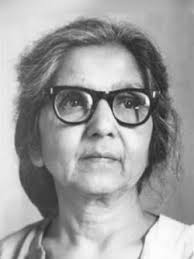
WAR AND PEACE: BERTRAND RUSSELL

The media has been bringing to our homes never-ending images of different parts of the world which are in the throes of war. The world is on the brink of what could well be the third world war. At some level people are becoming dangerously inured to the horrors through the never-ending barrage of images and reports that have almost become a part of daily sights and sounds. This in itself is frightening; are we accepting that violence (and its consequences) are an inescapable part of life? And while the world is led by egoistic power-hungry leaders, there is a rapidly declining number of people who feel helpless, even hopeless at the situation as it spirals towards a possibly irrevocable conclusion. Amidst the clamour of belligerent war cries, are some who lament that there are, today, so few voices of reason to remind the world of the precipitous path that we seem to be treading.

What does war achieve? And why do we need to seek peace?

Questions that have been asked since millennia. And answered in different ways in different periods of history. Perhaps one of the most pertinent answers came over a century ago, at a time when the sparks of what became the First World War were just beginning to fan the fire that would rage for the next four years. This was an essay titled The Ethics of War, written by Bertrand Russell in 1915. This was first published in the International Journal of Ethics 25, in January 1915.   

Bertrand Russell is considered as one of the greatest philosophers of the twentieth century. He was actively engaged in numerous social and political issues controversies of his time. A mathematician, educator, social critic, pacifist and political activist, Russell authored over 70 books and thousands of essays and letters addressing a wide range of subjects. He was awarded the Nobel Prize for Literature in 1950 in “recognition of his varied and significant writings in which he champions humanitarian ideals and freedom of thought. Bertrand Russell died in 1970 at the age of 97. Till the end of his life he supported free thought in religion and morals, he opposed war, nationalism and political persecution.

Bertrand Russell’s thoughts on all of the above are beautifully articulated in the essay The Ethics of War. Here are some excerpts:

The question whether war is ever justified, and if so under what circumstances, is one which has been forcing itself upon the attention of all thoughtful men. On this question I find myself in the somewhat painful position of holding that no single one of the combatants is justified in the present war, while not taking the extreme Tolstoyan view that war is under all circumstances a crime. Opinions on such a subject as war are the outcome of feeling rather than of thought: given a man’s emotional temperament, his convictions, both on war in general and on any particular war which may occur during his lifetime, can be predicted with tolerable certainty. The arguments used will be mere reinforcements to convictions otherwise reached. The fundamental facts in this as in all ethical questions are feelings; all that thought can do is to clarify and systematize the expressions of those feelings, and it is such clarifying and systematizing of my own feelings that I wish to attempt in the present article. 

At the beginning of a war each nation, under the influence of what is called patriotism, believes that its own victory is both certain and of great importance to mankind. By concentrating attention upon the supposed advantages of victory of our own side, we become more or less blind to the evils inseparable from war and equally certain whichever side may ultimately prove victorious. Yet so long as these are not fully realized, it is impossible to judge justly whether a war is or is not likely to be beneficial to the human race. Although the theme is trite, it is necessary therefore to briefly remind ourselves what the evils of war really are.

To begin with the most obvious evil: large numbers of young men, the most courageous and the most physically fit in their respective nations, are killed, bringing great sorrow to their friends, loss to the community and gain only to themselves. Many others are maimed for life, some go mad, and others become nervous wrecks. Of those who survive many will be brutalized and morally degraded by the fierce business of killing, which however much it may be a soldier’s duty, must shock and often destroy more humane instincts.

The evils which war produces outside the area of military operations are perhaps even more serious, for though less intense they are far more widespread. …The extent and consequences of the economic injury inflicted by war are much greater than is usually realized. …Thus war, and the fear of war, has a double-effect in retarding social progress: it diminishes the resources available for improving the condition of the wage-earning classes, and it distracts men’s minds from the need and possibility of general improvement by persuading them that the way to better themselves is to injure their comrades in some other country.

Of all the evils of war the greatest, in my opinion, is the purely spiritual evil: the hatred, the injustice, the repudiation of truth, the artificial conflict, where if once the blindness of atavistic instincts and sinister influence of anti-social interests, such as those of armaments with their subservient press, could be overcome, it would seem that there is a real consonance of interest and essential identity of human nature, and every reason to replace hatred by love.

It has been over a century since this impassioned plea by Bertrand Russell. Much has changed since then, but much remains the same. Let us remind ourselves of the futility of mindless violence. Let us Give Peace a Chance.

–Mamata

A Curious Herbal: Elizabeth Blackwell

One has heard of herbal teas, herbal treatments and herbal facials, but this was the first time that I heard about a curious herbal! Of course my curiosity was piqued! I discovered that while today the word ‘herbal’ is generally used as an adjective, it is also a noun that refers to ‘a book of plants, describing their appearance, their properties and how they may be used for preparing ointments and medicines’. And thus this was the title of such a book first published in England in 1737. The book consisted of five hundred illustrations drawn, engraved and hand-coloured by Elizabeth Blackwell. This was indeed a voluminous ‘herbal’. Why the added adjective ‘Curious’? This refers to an old use of the word to mean ‘accurate and precise’.

The story of Elizabeth Blackwell herself, and how she came to create this book is itself curious and unusual.

Elizabeth Blackwell was born in 1707 in Aberdeen in Scotland. Her father Leonard Simpson was a painter and his daughter inherited his artistic talent. From a young age she loved drawing and painting, and was constantly observing and sketching the natural world around her.

Elizabeth married Alexander Blackwell a doctor and an accountant. They had to move to London when it was discovered that her husband was practicing medicine illegally. But even there Alexander’s unlawful activities resulted in heavy debts that caused him to be imprisoned. Elizabeth was left alone to fend for herself and her child.  In an age when women were not part of the work force Elizabeth drew upon her skill as a botanical artist for survival and sustenance.

In the early eighteenth century, plants were an essential resource for healthcare. Choosing the right plant to treat an ailment was an increasingly precise science, and mistaking one plant for another could have severe consequences. Elizabeth thought of creating an ‘herbal’, an illustrated reference book to help doctors and apothecaries to develop an “exact knowledge” of medicinal plants, their uses and effects in medicine. Before embarking on the project she consulted various botanists and herbalists who advised her that pictures alone would not suffice, these needed to be accompanied by descriptive and explanatory notes. Elizabeth, being trained neither in botany nor in medicine, realized that she would need these inputs from experts. 

But in order to do all this she first needed access to the plants. The Apothecaries Garden (later called the Chelsea Physic Garden) had a vast collection of medicinal plants from many parts of the world. The garden’s director Isaac Rand gave Elizabeth access to the garden. Elizabeth moved with her daughter, to some rooms close to the garden, and threw herself into making botanical drawing from the actual specimens. She began to document the garden’s many indigenous plants, as well as specimens arriving from across the British Empire. She set about not only making highly detailed, analytical drawings of plants from different perspectives and in different stages of growth within the same picture. In addition to their physical characteristics, she also included information about where and when they could be found; their names in a variety of languages; and their curative properties

Her paintings of the plants were precise, and with an artist’s eye, she described the colour and texture of plants in minute detail. She would take each set of completed drawings to her husband in prison and he drafted descriptions for each one. She also managed to get for each plant, along with its English common name, its name in Latin, Greek, Italian, Spanish, Dutch and German. This was in the days well before the Linnaean system of binomial nomenclature provided a system of universal identification. In fact Linnaeus was born in the same year as Elizabeth.

She also became known to prominent doctors and intellectuals who also helped with the supporting text. When a number of the drawings were ready, a team of nine eminent physicians, apothecaries, and a surgeon examined them, and endorsed their authenticity

Elizabeth worked non-stop. She drew, engraved, and hand-coloured each image, managing the work that would normally require several different craftsmen. She prepared four plates every week in instalments, (125 weeks) until she had produced 500 images with bullet points for the medicinal uses for each plant. Elizabeth Blackwell’s illustrations deeply impressed many English physicians, botanists, and apothecaries in mid-18th century London.

Originally published in weekly parts, the first collected volume of A Curious Herbal appeared in 1737. A Curious Herbal received an official commendation from the Royal College of Physicians. Capitalising on this support, E. Blackwell advertised her publication through word of mouth and journal advertisements. It met with moderate success. A second edition was printed 20 years later in a revised and enlarged format.

Through her industry and perseverance Elizabeth was able to pay off her husband’s debts and secure his release from prison. However her personal life continued to be challenging. Her husband Alexander got himself into fresh financial and political difficulties, and was forced to move to Sweden where he was eventually executed for conspiracy. Elizabeth never saw her husband after he left England for Sweden. But she continued to be loyal to him, even sending him a share of the royalties from her book.

She produced no more botanical works. But A Curious Herbal remains a landmark book in the field of medical botany and botanical illustration. In eighteenth century England, with no standing within London’s scientific and medical institutions, Elizabeth Blackwell managed to produce a work that became a standard reference for apothecaries. A Curious Herbal is a monument to Elizabeth Blackwell’s skill not only as a botanist and artist, but also a testament to her remarkable strength of purpose, and entrepreneurship in a male-dominated age when women were only seen as wives and homemakers.

–Mamata

Money, money, money….

Well, it’s what makes the world go around for sure! But some people love money for reasons other than what it can buy.

Bangalore has one such lover of money—Rezwan Rajak, the world’s biggest collector of Indian paper money. And fortunately, he has chosen to share this passion. No, not by giving away the notes, but by setting up a museum!

Rezwan is the co-founder and Managing Director of the Prestige Group (there is a good chance you resident of a Prestige property if you live in Bangalore!). His passion for collecting Indian paper money started when he was 13 or 14. He came across some old currency notes from British India, which no longer were legal tender (think de-mo!) and were stamped ‘Refused payment’. The story behind these intriguing notes goes back to partition. Apparently, when partition happened, the new country of Pakistan did not have currency notes of its own. So for the initial period, they used the notes from undivided India, with their own stamp on them. . So the notes said ‘Reserve Bank of India’ but had an additional over-printing of ‘Government of Pakistan’.  While these were accepted in Pakistan, they were not in India. Some smart people in India of course tried to scratch off the Pakistan stamp and use them here. But the banks had a record of the notes printed for Pakistan and refused payment, in fact stamping these notes with ‘Payment refused.’

From this, to the world’s largest collection! The Museum of Indian Paper Money has over 700 specimens of Indian paper currency collected by Rezwan Razak over the decades. And the fascinating stories that go with them! For instance, there are specimens of notes of Hyderabad state which were printed in England and were being transported by sea. The ship sank with the notes and a million pound worth of gold. After 12 years, bounty hunters after the gold salvaged the ship’s cargo inlcuding the currency, and the notes were still intact in their vault.

All the currency notes printed after Independence, as well as notes from the princely states of India are displayed. There are beautifully designed Portuguese-India notes which were used in their territories, which Razak values very highly for their aesthetic appeal. There are also French-India notes.

Also on view are tokens which 36 princely states were permitted to print when metal for minting coins ran out during World War II. They look like stamps or the platform tickets which those of an older generation will be familiar with.

Another fascinating set of items on display are the prisoner of war money-coupons. During WWII, prisoners of war of various nationalities were housed in India. They could do voluntary work during this time, for which they were paid. But the payment could not be in real money as then they could use this to bribe the jailers. So coupons which looked like currency notes, but were stamped ‘Prisoner of War’ were given to them as payment. These were used to buy luxuries in jail like post-cards, chocolates, etc.

And so on and on….

India also has  the Reserve Bank of India (RBI) Monetary Museum in Mumbai. This displays about 1,500 items including coins dating back to the 6th century BC, and covering the Indus Vally period, the Gupta period, the Kushana empire, coming right up to notes and coins of modern times.  

But Razak’s museum, housed in Prestige Falcon Tower, Bangalore, the corporate headquarters of the Group, is different because it is a result of what the collector himself refers to as: ‘… a hobby which became a passion which has in turn become an obsession.’!

Sadly however, physical money may soon completely disappear with almost all transactions moving to electronic payments.  These museums become even more precious in this context!

–Meena

Musa Sapientum: The Fruit of Wise Men

On 10 April 1633, the window display of the shop in London attracted huge crowds. It displayed a hitherto unknown, and unnamed item. The displayer Thomas Johnson, a herbalist, botanist and merchant described it thus: The fruit which I received was not ripe, but greene. This stalke with the fruit thereon I hanged up in my shop, were it became ripe about the beginning of May, and lasted until June. Each of them (the fruit) was the bignesse of a large beane some five inches long and an inch and a half in breadth. The stalk is short and like one’s little finger. They hang with their heads down, but if you turn them up, they look like a boat. The husk is easily removed. The pulp is white, soft and tender and ate somewhat like a musk melon.

What was this fruit that he so described? Hard to believe, but this was the banana! How, and from where a bunch of this mysterious fruit reached the shop remains a mystery in itself, but it is believed that most people in England had not seen a banana even by the end of the 19th century when regular imports started from the Canary Islands.

And yet, it is believed that bananas were among the oldest cultivated fruit. They probably originated in the jungles of Malaysia, Indonesia or the Philippines and some parts of India where they grew in the wild. Modern edible varieties of the banana have evolved from the two species–Musa acuminata and Musa balbisiana and their natural hybrids, originally found in the rain forests of S.E. Asia.

During the seventh century AD their cultivation spread to Egypt and Africa. The fruit may have got its name from the Africans, as the word is derived from ‘banan’ the Arab word for ‘finger’.  A cluster of bananas is called a ‘hand’.

Bananas were first introduced to the Western world when Alexander the Great discovered them during his conquest of India in 327 B.C. The fruit spread through Africa and was eventually carried to the New World by explorers and missionaries. Bananas started to be traded internationally by the end of the fourteenth century.

However it was not until the late mid-1800s that bananas became widespread on the North American continent. The first enterprise to import bananas into the US was the Boston Fruit Company.

Carl Linnaeus, the 18th century Swedish botanist whose work led to the creation of modern-day biological nomenclature for classifying organisms was the first person to successfully grow a fully flowered banana tree in the Netherlands.

The development of railroads and technological advances in refrigerated maritime transport subsequently enable bananas to become the most traded fruit in the world.

Today bananas are grown in more than 150 countries, and it is widely believed there are more than 1,000 types of bananas produced and consumed in the world. The most common and commercialized type is the Cavendish banana which makes up around 47 of global banana production. This is a high-yielding variety which is also less damage-prone and more resilient in case of natural disasters.

Although we generally describe it as a banana ‘tree’, technically this is not a tree. Bananas, botanically, are considered to be big herbs, because they do not have a woody stem or trunk which is one of the characteristics of a tree. Instead they have a succulent stalk or pseudostem which begins as a small shoot from an underground rhizome and grows upwards as a single stalk with a tight spiral of leaves wrapped around it. Banana leaves are extensions of the sheaths.

To add to the confusion, the banana ‘fruit’ as we call it, is botanically a berry! While we associate berries with small, squishy fruit that is picked off plants, the botanical definition refers to any fruit that develops from a flower containing a single ovary, has a soft skin and a fleshy middle, and contains several seeds. Bananas tick off all these boxes and are thus technically berries!

The botanical kin of bananas include tomatoes, grapes, kiwis, avocados, peppers, eggplants and guavas. Botanically all berries!

Bananas have long been high on the list of ‘super foods’, endorsed from all schools of health from Ayurveda to the newest ‘wellness’ trends. Its versatility was noted even by Linnaeus who envisaged its numerous medicinal values. The banana is literally ‘wholesome’ from A to Z! It is the panacea for all ills from acidity and anaemia, through cramps, depression, mood elevation, PMS, stress relief, and more, all the way to bringing in some zing to tired bodies and minds! Even the banana peel with its blend of acids, oils and enzymes has multiple uses from healing wounds to polishing shoes!

And the banana is a wonderful example of Nature’s perfect packaging. The artful positioning of the individual bananas to form a beautiful cluster or ’hand’ arrangement which can be hung; the tamper-proof skin that protects the soft and perishable flesh within; the nifty top opening that allows for an easy peeling back; and after all that, a covering that does not add to the litter but silently biodegrades to merge back into the soil. No wonder its botanical name is Musa sapientum: the fruit of wise men.

In India the mango always lays claim to being the king of fruits; the solid trustworthy banana is taken much for granted, as it does not make a dashing seasonal appearance and compete for awards of the most varieties and the best of them all. And yet this is the comfort food that is usually on hand, and one that almost every person can afford. It certainly was my father’s favourite, and now is the favourite of his great grandson who endorses Daddy’s maxim of Sabse Achchha Kela (banana is  bestest!)

Why this sudden paean to the banana? Well, I discovered that in America, the third Wednesday of April is celebrated as National Banana Day every year (reason for this undiscovered). I decided to join the celebrations this year!

Bananas were first brought to the United States in 1876, for the Philadelphia Centennial Exhibition. The exotic fruits were wrapped in foil and sold for 10¢ apiece (roughly $1.70 in today’s dollars).

While the mango always lays claim to being the king of fruits, the solid trustworthy banana is taken much for granted, as it does not make a dashing seasonal appearance and compete for awards of the most varieties and the best of them all!

The Banana was my father’s favourite fruit. He always used to say “sabse achha kela!” “Banana is the best”. So true…The scientific name for banana is musa sapientum, which means “fruit of the wise men.”

–Mamata

A Maharaja and his Art come to Town

Like many of my fellow citizens, I am not a great fan of rajas, maharajas and their ilk. Nevertheless I love one Maharaja. The Air India Maharaja of course!

And the Maharaja has come to my neck of the woods (Bangalore), bringing with him a part of his famed art collection. Yes, the National Gallery of Modern Art (NGMA) here is hosting close to 200 pieces from the Air India art collection for six months.

Air India’s was one of the largest corporate art collections in India, estimated to have been worth over Rs. 350 crores about eight years ago. The collection has been built over almost seven decades and comprises close to 4000 works. It spans across modern and contemporary paintings, folk art and miniatures, as well as sculptures, textiles, photographs and antique clocks.

The collection started in the 1940s, propelled by JRD Tata, who wanted all of Air India’s booking offices across the world to represent India. Bobby Kooka and Jal Cawasji were mainly responsible for selecting and buying the art pieces. They would not only buy paintings from established artists, they would also visit student exhibitions and pick up paintings. Many of these would be used to make calendars, post cards etc. There was another interesting way of acquiring paintings—the transportation service contract. In exchange for the works of artists, Air India would give them international air tickets! Many an artist, including MF Hussain found this offer irresistible!

There were specially commissioned art works too. For instance, in the days when smoking in the air was quite normal, the airline commissioned Salvador Dali to design a special ashtray to be given to first class passengers. This was in 1967. 500 limited edition pieces were made of an ashtray comprising a shell-shaped centre with a serpent twined around its perimeter, supported by two surrealist elephant-heads and a swan.  Dali asked for a baby elephant as payment, and got it too!

When the Tatas controlled Air India, the art works were carefully documented, displayed, stored and issued out from the Mumbai office to various domestic and international offices. After the merger with Indian Airlines in 2007 however, things went awry. The collection was moved to Delhi and there was no real ownership. There were scandals with one of Jatin Das’ works allegedly disappearing. Moreover, the works were not properly stored or cared for.

When Air India was re-privatized a few years ago, it was decided that the collection would go to the NGMA, where it could be taken care of professionally. A further decision was taken that the collection would not just stay in one location, but would travel across the country and to other countries as well.

It is as part of this that the collection has now come to Bangalore, where it is being displayed at the NGMA building which itself is a sight. Called the Manickyavelu Mansion, it belonged to Manickyavelu Mudaliar, a mining baron, who himself bought it from the Wadiyars of Mysore.  Mudaliar who came from a poor family made it big thanks to his forays into manganese and chrome mining. But the fortune did not last long and the mansion was taken over by the City Improvement Trust Board.  In 2000, it was leased out to the Ministry of Culture. So today the imposing mansion with grand rooms and a scale quite fitting to a national museum, set in serene green grounds with century old trees, is the Southern Headquarters of the NGMA.

So if you are in Bangalore, ensure you drop into the gallery to see the Air India exhibition. You will see works by Anjolie Ela Menon, B. Prabha, Arpana Caur, MF Hussain, Jatin Das and Raza, among others.

And one room is devoted to the Braille versions of these works. The paintings and the information about them are done in Braille and hopefully will be enjoyed by many.

A special exhibition indeed!

–Meena

Colours of Childhood: Crayons

A recent weekend spent with a toddler revived the memories and joys of crayons. While playthings and pastimes have changed considerably, especially in this digital age, there are some that continue to retain their charm. Crayons are among these.

Opening a fresh box of these colourful sticks neatly lined up with their wrappers, has been a special feeling, over generations. The distinctive smell from the paraffin used in their making, equally triggers memories, long after childhood. According to a Yale University study the scent of Crayola crayons is among the 20 most recognizable scents to American adults; coffee and peanut butter are numbers 1 and 2!

The attractive colours and the smell almost triggers an urge to bite into one. And, certainly, most toddlers are often more interested in tasting the colours, rather than drawing with them!

What makes crayon? A crayon (or wax pastel) is a stick of pigmented wax used for writing or drawing. Wax crayons differ from pastels, in which the pigment is mixed with a dry binder such as gum arabic, and from oil pastels, where the binder is a mixture of wax and oil.

While these wax sticks as we know them date back a few hundred years, the technique of using wax with colours was a method known to Ancient Egyptians who combined hot beeswax with coloured pigment to fix colour into stone. Ancient Greeks and Romans used wax, tar and pigment to decorate ship bows and for drawing. The first crayons, used for marking, appeared in Europe, and were made with charcoal and oil, and hence were in a single colour—black.

Crayons in their more recognizable form were invented in the United States in 1903. They were developed by a company called Binney and Smith who were originally manufacturers of red iron oxide for painting barns and lamp black which had a number of applications including making rubber tyres black.

In the early 1900s the company moved on to making marking crayons for commercial use. These were used as waterproof markers in factories but they contained toxic substances and were not suitable to be used by children. The company then entered into the school market with slate school pencils and dustless chalk. Here they saw that there was potential for the use of colouring tools for educational use in the classroom. Based on feedback from schoolteachers Edwin Binney and his wife Alice developed wax crayons. They mixed waxes, talcs and pigments to form non-toxic sticks which were wrapped in paper, making these safe and mess-free. They put these on the market in 1903 under the brand name Crayola. The name was created by Alice as a blend of craie, the French word for chalk and ola from oleaginous (oily paraffin wax). Ola was also a popular ending for products at that time. The first boxes had 8 coloured crayons (red, orange, yellow, green, blue, violet, black, and brown), and sold for 5 cents, in yellow-and-green boxes which were labelled ‘school crayons’. For the next 45 years, the colour mix and the colour names remained unchanged.
While later many companies began manufacturing crayons, the word Crayola became synonymous with crayons and continues to be so to this day.

For the first forty years, each Crayola crayon was hand-rolled in paper wrappers with distinctive labels and names. Automated wrapping started only in the 1940s. Over the next hundred years Crayola introduced packs of 16, 24, 32, 48, 64, and 96 crayons. There have been over 400 Crayola colours created since the crayons were launched. The company now manufactures 120 standard crayon colours. In addition, there are specialty crayons like metallic, gel and glitter crayons.

The history of naming the colours is a reflection of the changing times and perceptions. While the set of 8 colours remained unchanged for the first 45 years, by 1949, with 48 colours in the box, the palette included colours with more imaginative name such as thistle, periwinkle, carnation pink, bittersweet, cornflower, melon, salmon, and spring green. With the addition of new crayons taking the number up to 64 the colours included Copper, Plum, Lavender, Mulberry, Burnt Orange, and Aquamarine. The psychedelic spirit of the 1970s was reflected with the addition, in 1972, of fluorescent colours: Chartreuse, Ultra Blue, Ultra Orange, Ultra Red, Hot Magenta, Ultra Green, Ultra Pink, and Ultra Yellow.

The 1990s saw the retirement of eight old shades and their replacement with new ones–Cerulean, Vivid Tangerine, Jungle Green, Fuchsia, Dandelion, Teal Blue, Royal Purple, and Wild Strawberry. The decade also reflected the response to cultural sensitivities. In 1999, the name Indian Red was changed to Chestnut because educators believed that children would think the name represented the skin colour of American Indians rather than the reddish-brown pigment found near India.

In 1993, to mark its 90th birthday Crayola invited the public to name 16 new Crayola crayon colours. Some of the winning suggestions included Asparagus, Macaroni and Cheese, Timber Wolf, Cerise, Mauvellous, Tropical rainforest, Denim. Pacific Blue. Granny Smith Apple, Shamrock, Purple Mountains Majesty, Tickle Me Pink, Wisteria and Razzmatazz. The last name was the suggestion of 5 year-old Laura Bartolomei, who was declared the younger Crayola colour winner.

In 2000 Crayola’s first online consumer poll to name the favourite Crayola colour was held. Blue emerged as the all-time favourite, and six shades of blue made up the list of top ten colours!

Crayola marked its 100th anniversary by once again inviting crayon users to contribute names. With increasing diversity in schools and growing awareness of being ‘politically correct’, in 2020 Crayola introduced a new line of 24 colours named Colors of the World to reflect the multicultural skin tones of people around the world.

Thus Crayola remained on top of the game by always being dynamic, responsive, and participatory to reflect the signs of the times, as it were. Crayola continues to be synonymous with crayons, not only in the USA, but now across the world. I remember when we were children, and our local palette limited to the standard box of 12 colours from Camel or Camlin, our great dream was to be gifted with multi-layered jumbo box of Crayola crayons by a relative coming from the USA!

Today perhaps the choices of art materials and techniques have increased, but the fascination with crayons certainly has not decreased! There are Crayola crayon collectors who are always searching for samples of rare or discontinued colour pieces. And America celebrates National Crayon Day on 31 March every year, to celebrate the colourful history of these simple sticks that have provided generations of children with hours of creative fun.

–Mamata

Broken Frames, Broken Lives

Today, each one of us harbours doubts and fears about the rapid rise of Generative Artificial Intelligence (Gen AI), smart robots, driverless cars etc., especially whether these will take away jobs from people and give them to machines.

This has happened with every new technology since the industrial revolution. Maybe the time of maximum anxiety around technology and jobs was in the late 1700s to early 1800s, a time when quite a few people in the UK depended on the cotton, wool and silk industries for their livelihoods. This was based on the labour of framework knitters, who like some of our weavers even today, worked in their own homes. Though the hours were long and they got small wages, they were at an equilibrium. 

In the early 1800s, there were around 30,000 knitting-frames in England. But change had already started to set in. Change of fashion (men moving from stockings to trousers) and increasing exploitation of weavers by the middlemen were two major factors. But perhaps the most important was the mechanization and wide-frame machines that were coming in to make production faster. Production moved from homes to factories with this mechanization.

As more and more people lost their livelihoods, anger and frustration boiled over, and mill-owners and the new machines were targeted. The scale of the sabotage that occurred in England between 1811 and 1816 was beyond anything seen before.  In the peak three months of the riots, 175 of these new frames were broken per month! The people involved in these riots and destruction called themselves ‘Luddites’. The origin of the name is not quite clear, but some said it was after Ned Ludd, a legendary weaver who in 1770 was supposed to have smashed such machines.

Governments then, as today, were heavy-handed. Their response to the riots was to pass the Frame-Breaking Bill in the House of Commons in February 1812. The Bill was drastic– it proposed transportation or the death penalty for those found guilty of breaking stocking or lace frames. Not everyone was happy with the draft Bill– in the House of Lords, the poet and social campaigner Lord Byron argued against it saying that it was placing the value of life at “something less than the price of a stocking-frame”.  But such passionate appeals did not help, and the Bill was passed.

The Government would have expected all such riots to stop after the Bill. But exactly the opposite happened. The riots actually became more violent and rioters started using arms. The logic was that if they were going to be punished by death or deporatation for breaking frames, then they might as well do something that really deserved such drastic measures. A popular rhyme at the time was “you might as well be hung for death as breaking a machine”. A few mill owners were in fact killed. Government response also got harsher and several Luddites were hanged.

The climax of the Luddite Rebellion took place at midnight on Friday 28 June 1816. Sixteen men raided the factory of Heathcoat and Lacy at Loughborough, with around 1000 sympathisers cheering them on.  They destroyed nearly all of the fifty-five lace-frames.  Subsequently eight men were sentenced to death and two were transported.

The protests died down after that. Mechanization marched on, and the thousands who were involved in their traditional occupation lost out.

Technology will come. But how do we make the changes so we can reduce the negative impacts? How do we make the world a more inclusive place? Surely we cannot let history repeat itself!

–Meena

Photo-credit: historicalbritain.org/

A Woman of Many Parts: Sarojini Naidu

In a week when women are being celebrated, and their achievements extoled, it is fitting to remember that in every era of history, in every part of the world, there have been women who have broken boundaries and glass ceilings, and have excelled in numerous fields. This is a good week to celebrate a woman who combined seemingly contrary abilities, and played a significant role in several fields of endeavor. This is Sarojini Naidu.

Textbooks traditionally describe Sarojini Naidu as the Nightingale of India. But she was far more just a singer of songs. A poetess, patriot, fierce nationalist and freedom fighter, politician, eloquent orator, inspirer of masses, perfect hostess, and a feminist and firebrand leader in every sphere.

Sarojini was born on 13 February 1879 in a Bengali Brahmin family, the eldest of eight siblings. Somewhat of a prodigy, she entered the University of Madras at the age of 12; she composed 1000-line poems at 13. After graduating in 1895 with the highest rank, she was awarded a scholarship by the Nizam of Hyderabad, and she spent three years in England, studying at King’s College London, and later at Girton College in Cambridge. During this period she also became involved with the suffragist movement in England. She returned to India in 1898 and married Dr M Govindarajulu Naidu whom she had met in England, (the inter-caste marriage attracted opposition) when she was 19. By the age of 25, Sarojini was mother to four children. Her first major collection of poems was published when she was 26. She had literary fame, and a comfortable lifestyle in Hyderabad where she played the perfect hostess.But this was hardly a deterrent to what was to be an extremely active political life.

Sarojini and Gandhiji shared a special relationship. She had first met him in 1914 in London just as the First World War had broken out. That was the start of a long and close bonding between the two. Sarojini was one of the few who could joke about, and with, Gandhi (she nicknamed him Mickey Mouse!). The two exchanged witty repartees, and reproaches, which were totally free from malice. She could stand up to Gandhi and never hesitated to speak her mind. Yet she remained one of his staunchest supporters all her life, and revered him as a guru.

Sarojini Naidu was drawn to Gandhi’s non-cooperation movement and in 1924 travelled across the world to spread the word about the movement. She was a sought after public speaker. In 1925 she became the first Indian President of the Indian National Congress. She was a front-line participant in the Independence movement. Her participation in the Salt Satyagraha and the Quit India Movement was deemed as ‘anti-British activity’ and she was imprisoned several times for this.

Sarojini Naidu believed that the nationalist cause could not be separated from the movement for women’s rights. She helped establish the Women’s Indian Association along with Annie Besant and a few others, in 1917, which championed women’s right to vote. The same year, along with Annie Besant she went to London to represent the case for women’s franchise before the Joint Select Committee.

She was elected to the Constituent Assembly that drafted the Constitution of India. After India achieved independence on 15 August 1947, Sarojini Naidu was appointed governor of the United Provinces, making her the first woman governor in the country. She remained in the post until she passed away on 2 March 1949.

Sarojini Naidu’s contribution to the freedom movement and to the early years of our new republic was marked by her total dedication combined with her boundless energy and multi-faceted brilliance. This was summed up thus by her fellow freedom fighter Jawaharlal Nehru: She began life as a poet, in later years when the compulsion of events drew her into the national struggle, she plunged into it with all the zest and fire she possessed…. whose whole life became a poem and a song and who infused artistry and grace in the national struggle, just as Mahatma Gandhi had infused moral grandeur to it.

Despite her active political life Sarojini’s literary output was also prolific. She published several volumes of poetry, and held ‘salons’ which attracted an array of intellectuals. She led a hectic and productive life despite suffering from a variety of ailments throughout her life. Her zest for life was undiminished till the end, when she passed away at the relatively young age of 70.   As she wrote to her youngest child a few years earlier: One is not so concerned with a long life as with a ‘merry one’—merry as the sum of worthwhile, rich, full, interesting, and who can say that mine has not been and is not in that sense ‘merry’ as well as long?

On a more serious note, several years earlier when she was in Yervada jail, Sarojini wrote to her daughter Padmaja Naidu: In the course of a long and most variegated life I have learned one superlative truth…that the true measure of life and oneself lies not in the circumstances and events that fill its map but in one’s approach and attitude and acceptance of those things.

An inspiration, and a role model indeed!

–Mamata

Famous Women on the Wall: Happy Women’s Day

This week we celebrate International Women’s Day.

It was in 1911 that IWD started being marked. A couple of decades after that was when something called the ‘Famous Women Dinner Set’ was commissioned. This was a set of 50 dinner plates depicting famous women down history.

Kenneth Clark (Baron Clark), the art-historian and museum director, commissioned these. (Those of an older vintage may remember the BBC serial ‘Civilization’ which discussed Western art, architecture and philopsophy. Though made in 1969, it was broadcast in India in the late ‘70s or early ‘80s, and was one of the most popular art-history programmes in the world.)

Coming back to the dinner-plates, the artists given the commission were Vanessa Bell and Duncan Grant, of the famous Bloomsbury Group. This was the name given to a group of English writers, philosophers and artists who met between 1907 and 1930 in the Bloomsbury  district of London, the area around the British Museum , and discussed matters of art and philosophy.

It is said that Kenneth Clark got the idea of commissioning a special dinner service when he was dining off a historic blue-and-gold Sèvres service, originally made for Catherine the Great.

Kenneth and his wife did not interfere in any aspect of the creative work—what form or shape it would take, what pieces it would consist of, or even what it should portray.

In 1933 the work was completed, and after showing it to the Baroness, the artists presented the set of 50 plates to Kenneth Clark, who was probably quite surprised to see the result if his commission, because he thought he would be getting’…a wide ranging set of decorative crockery that included everything from soup tureens to mustard pots’

Picture from https://www.charleston.org.uk/event/famous-women-dinner-service

Vanessa and Duncan had selected 50 famous women down history—twelve each from four categories: Women of Letters (e.g George Eliot, Charlotte Brontë, 10th-century Japanese poet Murasaki. Virginia Woolf and Elizabeth Barrett Browning); Queens (including Catherine the Great, the Queen of Sheba, Elizabeth I, and Victoria); Beauties (among whom were Pocahontas and Helen of Troy); , and Dancers and Actresses (including Sarah Bernhardt, Ellen Terry and Greta Garbo). That made 48 women. The last two plates portrayed the artists Vanessa Bell and Duncan Grant. The artists had hand painted beautiful portraits of their subjects on Wedgewood plates.

Though he was initially a bit confused with the dinner service, it seems that Baron Clark quite grew to like his plates. It is said that he used to select specific plates from the service for use for particular guests, depending on their interests, or to poke fun at their sensitivities.

The dinner set, after being sold and re-sold disappeared from view for some decades, but later re-surfaced. They are now housed in the Charleston Museum in the UK—the original home of Vanessa Bell.

Another major work of art involving women and dinner is ‘The Dinner Party’, a 1979 installation by Judy Chicago. This is a dinner table arranged with place settings for 39 mythical and historical women. They are seated around a triangular table. Though controversial, this is considered a classic of feminist art.

In India we do have portraits (paintings and photographs) of women. But they are outnumbered by artistic works down the ages which put females at the centre—the oldest probably being the Harappan Girl, going back to 1750 BC or thereabouts. From there, to all the art in temples, to Raja Ravi Verma and his goddesses and mythical women, to the controversial portrayals of MF Hussain, to women painted by Amrita Shergill, Anjolie Ela Menon, Arpana Caur, Bharathi Kher and others, which are all classics today.

May many more artists immortalize real women in their art. It is an apt tribute.

Happy Women’s Day!

–Meena

And thanks to all our readers on this, the anniversary of our blog! And all those whose encouragement and support keeps it going!

Be Prepared! World Thinking Day

A recent mention of World Thinking Day to be marked on 22 February set me thinking! This was the first time I had heard about such a day, and I was curious about what lay behind it. There I discovered an unusual link to a collective that was very much a part of my life in my primary school days. This was the Scouts and Guides.

The history of this global movement goes back more than a hundred years. Robert Baden-Powell a military officer who had been in the Boer War organized an experimental camp in 1907 on Brownsea Island off the southern coast of England. The idea was to immerse young boys in activities aimed at developing in them various outdoor skills, chivalrous behavior and good citizenship. This was inspired by the military “scouts” in the army who were sent out to gather information, learn survival skills, and be prepared to help others.

Baden-Powell’s idea was that boys should organize themselves into small natural sub-groups of six or seven under a boy leader. They would be trained in all skills that would be required in camping–tracking and reconnaissance, mapping, signalling, knotting, and first aid.

The camp was a success. Following this, and based on his ideas for training boys, Baden-Powell published a book Scouting for Boys. The book became one of the bestsellers of the twentieth century. Thousands of boys began to join the Boy Scouts movement. To become a scout, a boy would promise to be loyal to his country, help other people, and in general obey the scout law, which was a simple code of chivalrous behaviour.

In 1909 Baden-Powell organized a Boy Scout rally in London. It was here that a small group of girls ‘gate crashed’! The girls had been secretly following the activities that their brothers did, and they demanded that there be something similar for girls. This was radical in a period when girls were expected to be docilely engaged in domestic tasks and ‘ladylike’ activities such as needlework and art. Baden-Powell was encouraging. He asked his sister, Agnes Baden-Powell, to help him with a girls’ organization and she became the first President of the Girl Guides. Working together, the two outlined programme ideas for girls, and later produced The Handbook for Girl Guides. Visitors to Britain were impressed by this and took the idea back to their own countries. By 1910 Guiding had started in Canada, Denmark, Finland and South Africa. Within the next two years it spread to Ireland, Holland, Sweden and the United States. The movement continued to spread across the world. The girls who joined acquired many skills. During World War I they made important contributions to war efforts including growing food, working in hospitals, factories and soup kitchens.

The First World Conference held in England, in 1920 was a historic occasion that gave representatives of the Girl Guiding and Girl Scouting world the opportunity to meet and exchange ideas and experiences and shape the future and direction of the Guiding and Scouting World. As the Movement grew and expanded, country representatives began to feel that it was time to create something more solid and binding and the idea of forming a world association was proposed after the 4th World Conference in 1926. The delegates from across the world also decided to create a special day for guides and girl scouts. They selected the joint birthday of Lord Baden-Powell, the founder of the scout and guide movement, and his wife Olave as appropriate to mark such a day. This was 22 February, and the day was to be called Thinking Day.

The World Association of Girl Guides and Girl Scouts (WAGGGS), was formed when Delegates from 26 countries met at the Fifth International Conference in Hungary in 1928. Its Secretariat was to be located in London.

The World Association of Girl Guides and Girl Scouts grew to become the largest voluntary Movement dedicated to girls and young women in the world, representing millions of girls and young women from 152 countries. Through innovative non-formal education programmes, leadership development, advocacy work and community action, the movement has empowered girls and young women to develop the skills and confidence needed to make positive changes in their lives, in their communities and countries.

India was not far behind in this movement. The Girl Guiding Movement was started by Dr Cullen in 1911. The Boy Scouts had been established in 1910. But at the time India was under colonial rule, and no Indian boys and girls were included in the movement till 1916. A number of different Guiding and scouting Associations were formed in the following years. In 1928 the All India Girl Guide Association was admitted as a founding member of the World Association of Girl Guides and Girl Scouts (WAGGGS). 1951 On 15 August 1951, the All India Girl Guide Association merged with the Bharat Scouts and Guides. Following the merger, the Girl Guide Association ceased to be a member of WAGGGS.

In the 1960s and 1970s Girl Guides and Boy Scouts were part of the extra-curricular school activities. I clearly remember that as a Bulbul (as the younger guides were called in India) I struggled with learning how to tie different kinds of knots. My dark-blue Bulbul uniform with epaulets, scarf, and a brown leather belt stayed with me for many years. I am not sure if Bulbuls still have a place in the myriad of extra-curricular activities that schools offer. Today the educational system advertises that it trains children in ‘life-skills’ and ‘global citizenship’. To my mind, Girl Guiding introduced these a century ago, along with the attributes of being a good human being. The essence of these are encapsulated in its Motto: Be Prepared. And elaborated in the nine points of Guide Law: A Guide is trustworthy; A Guide is loyal; A Guide is a friend to all and a sister to every other guide; A Guide is courteous; A Guide is a friend to animals and loves nature; A Guide is disciplined and protects public property; A Guide is courageous; A Guide is thrifty; A Guide is pure in thought, word and deed.

As we approach the centenary of World Thinking Day, 22 February is a good day to reflect on these simple but powerful tenets. It is also a day to celebrate friendship, sisterhood, and empowerment, as also to take action to speak out for the millions of girls who, even today, do not have an equal voice, nor the opportunity to Be Prepared. 

–Mamata