New Superfood: Popcorn

What is a whole grain high in dietary fibre, contains protein, vitamins and minerals, is low in fat and sugar, contains no cholesterol, is gluten-free, and helps boost heart health? Among the ever increasing list of ‘super foods’ is, what sounds an unlikely candidate. It is popcorn!

The snack that is commonly associated with brimming buckets in movie theatres and the overflowing bowls within easy reach of couch potatoes has been generally labelled as ‘junk food’. The fluffy crunchy nibbles have more to their history than their addictive aroma and innumerable flavours.

While the most common association of popcorn is with all things quintessentially American, the roots (literally) of its mother grain do not lie there. When we use the word ‘popcorn’ it usually refers to puffed kernels of corn. The word, in fact, refers to a whole grain, which belongs to a group of seeds that come from crops that include barley, millet, oats, rice, and wheat. Popcorn is a strain of maize characterized by especially starchy kernels with hard kernel walls, which help internal pressure build when placed over heat.

This was one of the first variations of maize cultivated from teosinte, a wild grass, in Central America about 8,000 years ago. The popcorn variety of maize was domesticated by Pre-Columbian indigenous peoples by 5000 B.C.E. It is believed that the first use of wild and early cultivated corn was popping. Early Spanish invaders to the Central and South America recorded their discovery of this multi-use maize. Ceremonies of the Aztec Indians involved the use of popcorn, not only as food but also as adornments, in ceremonial head dresses and, necklaces, and as offerings to their gods.

There is also evidence to indicate that the Native Americans also knew of, and consumed this form of popcorn maize. In the early 1600s European explorers who began travelling to the New World recorded that the Iroquois Native Indians in the Great Lakes region popped corn with heated sand in a pottery vessel and used it to make popcorn soup, among other things.

The folklore of some Native American tribes told of spirits who lived inside each kernel of popcorn. The spirits were quiet and content to live on their own, but grew angry if their houses were heated. The hotter their homes became, the angrier they would become, shaking the kernels until the heat was too much. Finally, they would burst out of their homes and into the air as a disgruntled puff of steam.

What is the science behind the pop? A kernel of popcorn contains a small amount of water stored inside a circle of soft starch. The soft starch is surrounded by the kernel’s hard outer surface. As the kernel heats up, the water expands, building pressure against the hard starch surface. Eventually, this outer layer gives way, causing the popcorn to explode. As it explodes, the soft starch inside the popcorn becomes inflated and bursts, turning the kernel inside out. The steam inside the kernel is released, and the popcorn is popped, hot and ready to eat.

The discovery of the exploding kernel may have reached the early colonial settlers to the new World, who were probably the earliest European-American popcorn makers. They tried several methods of popping corn—throwing kernels into hot ashes, cooking popcorn in kettles filled with hot lard or butter, or cooking over an open fire in a wire box with a long handle. By the mid-1800s popcorn became a favourite snack. But it remained largely a home-grown crop used for family consumption. 

In the 1820s it began to be commercially sold throughout the Eastern United States under the name Pearl or Nonpareil. By the 1840s the popularity had spread across the continent. By 1848 the word ‘popcorn’ was included in John Russell Bartlett’s Dictionary of Americanisms. It would be another few decades before the large-scale production of popcorn became possible. This happened when a Chicago entrepreneur named Charles Cretors built the first commercial popcorn-popping machine. Starting with a peanut roasting machine, Cretors went on to develop a machine powered by steam that ensured even heating, and popping, of popcorn kernels. One of the first such machines for popping corn appeared in 1885. Since the machine was mobile, and could mass-produce popcorn without a kitchen, the invention also increased the amount of people who had access to popcorn and thus, the popularity of the snack in America.

Popcorn really caught on during the 1890s. Street vendors, pushing steam or gas-powered poppers, became a common sight at circuses, fairs, and parks. By 1900, the enterprising Cretors introduced a horse-drawn popcorn wagon, and initiated a massive popcorn wave.  In fact, there was really only one entertainment site where the snack was absent: the theaters. Theatre owners felt that the buttery snack would stain their carpets, and the crunching would be a noisy distraction; this was still the age of silent films. Talking movies made their debut in 1927, greatly increasing movie-going audiences, and also customers for in-house snacks. As theatres were still hesitant to install popcorn machines, business for street vendors boomed. They brought their popcorn machines and sold just outside the theatre. Some theatres banned popcorn inside, which increased its attraction! 

The theatres had practical reasons for the not installing popcorn machines. They lacked proper ventilation, which would lead to a build-up of smoky popcorn odours. However, with increasing demand for popcorn they initially leased ‘lobby privileges’ to vendors who could sell there for a daily fee, and whose business continued to boom. Until the theatre owners finally realized the kind of profits that they were missing by not having their own popcorn machines, and went on to make and sell popcorn in the lobby. This proved to be timely; as America plunged into the Great Depression in the early 1930s, movies and a bag of popcorn was all that most families could afford for entertainment. Thus when many businesses collapsed the movie-popcorn combination thrived. And as they say, that was the turning point. Ever since, and up till this day, movie theatre lobbies are inextricably linked with the smell of hot popcorn, in many parts of the world!  

The advent of television in the 1950s made a big dent in movie-going and popcorn consumption. That is until people started making popcorn at home, leading once again to a surge in consumption. The introduction of the microwave, and micro-waveable popcorn was as significant a milestone in its history as was Charles Cretors’ first commercial popcorn-popping machine.  

America continues to be the largest consumer of popcorn in the world. So deeply is this snack entrenched in their lives that Americans have declared a National Popcorn Day to be celebrated on January 19 every year, and a National Popcorn Lovers Day on 14 March. Today popcorn is a favourite snack across the world. From the utterly butterly delicious plain popcorn, to a variety of flavoured ones, everyone has their favourite. Surely a good reason for all popcorn lovers to celebrate!

As a huge popcorn fan myself, cheers to happy Popcorn Lovers Day!

–Mamata

A DAY TO REFLECT

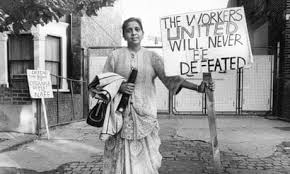
It is March 8, and the newspaper pages are dominated by a plethora of “offers” especially for women. There is much on offer–from designer clothes to jewelry, from cosmetics and ‘make-overs’, to a day of indulgence at a spa or fancy restaurant, and even special health check-ups, all cleverly designed to “celebrate the woman in you!” This day follows on the heels of Valentines/Galentines Day which was all about ‘sugar and spice and all that’s nice’ to make every woman feel special. Tucked away between the gloss and glamour, are stories of ‘women of substance’ and women achievers who overcame many odds to get where they are today. These women certainly inspire a few, but they are quite out-shadowed by the ‘influencers’ with their countless followers.

In all the razzmatazz, not much is remembered about the origins and intent of the day that is today marked as International Women’s Day. The day, ironically had socialist origins and then became a marker of the movement for women’s rights to equality and dignity.

In its official history, the spark was ignited by a march in New York City on February 28 1908 by thousands of women garment workers who were striking to protest poor working conditions and wages. The march was spearheaded by the Socialist Party. However the history of the struggle for women’s rights can be traced further back to 1848 when two American women ‘activists’ Elizabeth Cady Stanton and Lucretia Mott who were attending the World’s Anti-Slavery Convention in London, were outraged at the denial of official recognition to several women delegates because of their sex. On return to America they organized the nation’s first women’s rights convention in New York. The resulting Declaration of Sentiments and Resolutions which detailed the inferior status of women, demanded civil, social, political and religious rights for women. This triggered the American women’s rights movement.

The concept of a day to register women’s voices crossed the Atlantic and reached Europe around 1911. Clara Zetkin, a German communist and advocate for women’s rights, including the right to vote, proposed that the day become an international event at an International Conference of Working Women in Copenhagen in 1910. She believed that if women across the world were synchronised in pressing for their demands, then their collective voice would be too hard to ignore. Her proposal was unanimously backed by the 100 women from 17 countries who were at the conference. The first International Women’s Day was celebrated in 1911, in Austria, Denmark, Germany and Switzerland with rallies campaigning for women’s rights to work, vote, be trained, to hold public office and end discrimination. At the time, celebration was not tied to a particular date.

It was in 1917, that on the last Sunday of February, Russian women, led by Alexandra Kollontai, began a strike for “Bread and Peace” in response to the death of over 2 million Russian soldiers in World War 1. Opposed by political leaders, the women continued to strike until four days later the Tsar was forced to abdicate. As a direct consequence of the marches and demands for universal suffrage in which thousands took part, the provisional Government granted women the right to vote in 1917. Thus Russian women got the right to vote a year before Britain and three years before the United States. Interestingly it was New Zealand that was the first country to grant women the right to vote in 1893.

The date the women’s strike in Russian commenced was Sunday February 23 as per the Julian calendar then in use in Russia. This day matched March 8 on the Gregorian calendar in use elsewhere. And thus the date became associated as a milestone marker in the movement for women’s rights.

In the years that followed, different countries embarked on different paths towards granting women their rightful rights, starting from the right to vote, and embracing equality of access to other opportunities and avenues for growth and development. Ironically, this day is not highlighted in the United States, because of its associations with its Socialist roots and later with communist Russia. However the United States marks the entire month of March as Women’s History Day.

It is only in 1975 that the United Nations marked International Women’s Day for the first time. In December 1977, the General Assembly adopted a resolution proclaiming a United Nations Day for Women’s Rights and International Peace to be observed on any day of the year by Member States, in accordance with their historical and national traditions.

Today, more than a century after the day was marked, there have been many more milestones in the journey of women for their rightful status in all spheres of life—personal, professional, social and political. Every generation has had its challenges and these have thrown up the challengers who have often made it their life mission to carry forward the torch. We have often written about these feisty women in this space.

At the same time, even as women are breaking new glass ceilings, it is still a far cry from becoming ‘a woman’s world’. Women and children are bearing the brunt of war in many parts of the world; women are the most directly affected by the ravages that climate change is wreaking across the globe; women in many countries are at the receiving end of extremist religious beliefs, and women are still fighting for the right to make their own decisions about their own bodies, and minds. There are many new avenues and media to reach out, raise voices, and come together. The same media have the potential to become toxic, to denigrate, to divide and even to destroy. 

Perhaps today is a good day to reflect on this, even as we reminiscence about the women who have made our road to this point less rocky, who have led the first ascents to the seemingly inaccessible peaks, women who have led quiet revolutions at home, in the work place and in society. Let these true women of substance be our role models and inspirations, not just today but every day.

For the Matriarchs, this day marks the starting point of our own journey of sharing thoughts, angst, wild ideas, and laughter. It has been five years of a beautiful celebration with friends, known and unknown. We are truly grateful, and celebrate all our fellow travellers.

–Mamata and Meena

In the century since it was first established, International Women’s Day has come to be marked just as frequently with celebration as it is with protest, but the day’s legacy remains steeped in the struggle for women’s rights — an element that has gained renewed relevance in recent months, particularly as the #MeToo movement has taken on global dimensions.

Image: UN.org

We Got The Blues!

Majorelle blue

Last year we visited Morocco. And of course, one of the highlights of the Marrakesh stay was a visit to the Jardins Majorelle. It is named after the person who created it–Jacques Majorelle, a famous French furniture designer who fell in love with Morocco in general and Marrakesh in particular, and spent most of his life there. He was inspired by the colours and designs of the country. He bought land on the outskirts, and commissioned a Cubist Villa to be built there, which he painted in a particular shade of blue which he developed inspired by the blue tiles widely used in that part of the country. The colour now carries his name, and is trademarked as Majorelle Blue. And as an afterthought, it is also called Moroccan Blue! (I wonder if Marrakesh craftspeople and tile makers whose ancestors must have developed the colour get any benefit from the use of the trademark?!?)

Another artist who added his name to blue was Yves Klein. Over ten years starting 1947, he created what is referred to as the purest blue.  This ultramarine blue is called International Klein Blue.

There is something special about blue. It is invariably voted the most popular colour in American and European polls. It is an ancient colour, associated with the Gods (in India, Krishna and Rama are blue, and Shiva’s throat is blue), and with royalty in many parts of the world. But in many languages, it is one of the last colours to be named! Which seems strange, considering the sky and the seas are some of the vastest expanses human eyes see.

Blue is associated with feelings of calmness and relaxation, as well as stability and reliability. Of course, it is also associated with sadness, which is why we talk about ‘feeling blue.’ Offices are often done up in blue because research has shown that people are more productive and creative when working in blue rooms. In branding and advertising, blue is often used to market products and services which are associated with hygiene(sanitizers and disinfectants), air and sky (airlines and airports), water and sea (cruises, mineral water).

But it is supposed to be a very unappetizing colour! Blue is the least common one amongst the foods we eat. It is said to suppress the appetite, and some diets even recommend eating off blue plates when you are trying to reduce your food intake.

Blue is also a fairly uncommon colour in nature–even the few animals and plants that appear blue don’t actually contain the colour!.

In ancient times, this was one of the most expensive colours to produce, which is why only the royalty and the rich wore it. In India however, it has been in use for over 5000 years, thanks the blue dye derived from the Indigofera Tinctoria (Indigo). Our Indus Valley ancestors dyed their clothes with this.  

This has also been one of the most costly pigments for painters and hence the colour was used only for important subjects. During the Renaissance, the Virgin Mary was the most important subject painted and most art from that time shows her wearing blue.

In pottery however, it has been a mainstay for centuries. Samples of pottery decorated with blue glazes going back to the ninth century are thought to have originated in Iran, developed by craftsmen of Basra. From here, it spread to China, where blue and white decoration was widely used in Chinese porcelain starting from the 14th century. All these glazes used cobalt to give the blue colour.

From here blue pottery spread to Europe, specially the Delft in the Netherlands. And of course, our very own Jaipur pottery is popular too.

Think blue, think calm! Eat off blue, stay thin!

–Meena

And see https://wordpress.com/post/millennialmatriarchs.com/1288

An Extra(ordinary) Day!

When we were in school it was a great novelty to know, or know of, someone who was born on 29 February. There was much banter and joking about celebrating a birthday only once in four years, and therefore being that much younger than others born in the same year! This was about as much as we knew about the phenomenon that was called Leap Year.

Many leap years later, when I realized that this Thursday happens to be the 29th of February, curiosity prompted me to dig a little deeper into the why and how of Leap Years.

My first discovery was that there was a fair amount of solid science, as well as history, behind how this extra day came to be added to the calendar every four years. 

A regular calendar year as per the Gregorian calendar that is most widely followed, normally has 365 days. This is an approximation of time that it takes the Earth to orbit the sun. In reality it takes approximately 365.25 days (more precisely 365 days, 5 hours, 48 minutes and 46 seconds) for Earth to complete a full orbit around the sun. It would be hard, practically, to add a quarter of a day into a calendar every year. Thus while we follow a 365 day calendar for three years, the quarters add up to a full day every fourth year, which is when the extra leap day is added to February, the shortest month of the calendar, making it a 29-day month. In other words, leap years keep the calendar lined up with the Earth’s actual orbit.

This addition is important because it helps to adjust the Gregorian calendar to the solar calendar, so that we remain in sync with the seasons, marking the spring and autumn equinoxes at the same time each year. Put simply, these additional 24 hours are built into the calendar to ensure that it stays in line with the Earth’s movement around the sun. If this difference was not accounted for, then every year the gap between a calendar year and a solar year would widen by over five and a half hours, and over millennia it would shift the timing of the seasons. It has been calculated that in around 700 years the summer in the Northern Hemisphere would begin in December instead of June. 

In other words, the insertion of an extra day is rooted in a complex combination of time-keeping, astronomy and their alignment through mathematics. Interestingly, the insertion of days in a calendar, (known as intercalation) has been tried across civilizations, in an attempt to ensure compatibility between that the lunar and solar schedules, so as to maintain consistency with the seasons. The ancient Egyptian calendar was composed of twelve 30-day months with 5 days appended at the end of every year. In the Chinese calendar, an extra month is added every three years when a “double spring” is celebrated. In the Hindu and Hebrew calendars also, a month is added every three years or so, following the moon’s 19-year cycle of phases.

And then of course is the addition of the “leap day” in the Gregorian calendar every four years. But why the name “leap day” and “leap year?”

The name “leap” comes from the fact that from March onward, each date of a leap year moves forward by an extra day from the previous year. Normally, the same date only moves forward by a single day between consecutive years. For example, March 1, 2023 was a Wednesday, and in a normal year, it would fall on a Thursday. But in 2024, it will fall on a Friday. At the same time, during leap years, January, April and July start on the same day. This year it is a Monday.

The “leaping” of days and years while not scientifically understood by a lot of people was curious enough to generate unusual responses. Over the years, a variety of customs began to be associated with this day. Interestingly, several of these are associated with romance and marriage.

According to lore, in fifth century Ireland, St. Brigit lamented to St. Patrick about the fact that men always did the proposing while women were not permitted to propose marriage to men. Thus St. Patrick designated a day when tables could be turned, but ensured that this would not occur too frequently! This was to be 29 February, once every four years. Thus St. Patrick designated the only day that does not occur annually, February 29, as a day on which women would be allowed to propose to men, and called it Ladies Privilege day. While St. Brigid is usually associated with fertility, care for living things and peace-making, she may also be one of the earliest feminists! There was also a condition attached that if a lady’s proposal was refused, to compensate for her disappointment, the woman would have to be given a gift of silk gloves, a gown or a coat.

The tradition crossed the Irish Sea and reached England and Scotland, and onwards to parts of Europe. In some places, Leap Day became known as Bachelor’s Day. In Scotland the Ladies Privilege tradition was made a law by Queen Margaret in 1288, with the added caveat that women had to wear a red petticoat when proposing!

In Denmark the man who refused a proposal had to give the proposer twelve pairs of gloves, perhaps to help her hide her embarrassment that she was not wearing an engagement ring.  In Finland, the rebuffed lady was to be given a gift of fabric to make a skirt.

Quite the reverse in Greece where it is traditionally believed to be unlucky to get married during a leap year, especially on leap day, because it was feared that it would end in divorce.

In Reggio Emilia, a province in northern Italy, a leap year is commonly known as l’ann d’ la baleina or the ‘whale’s year’. Italians in this region believe that whales give birth only during leap years. In Scotland leap year is considered unfavourable for farmers, as per the old rhyme “Leap year was never a good sheep year.”

And in France, the tradition on this day, is to read a satirical newspaper called La Bougie du Sapeur (Sapper’s Candle). Named after a French comic book character supposed to have been born on a leap day, the newspaper was first published on Leap Day in 1980, and is only published on this day every Leap Year. This is the world’s least frequently published newspaper ever, but the highest selling French paper in a single day. In 2020 it sold 200,000 copies! Perhaps it may break its own record this year.

And last but not the least, the day marks a 4-in-1 celebration for all Leaplings–people born on 29 February. There is an Honor Society of Leap Year Day Babies, an exclusive club indeed. And Leaplings have the added privilege of choosing whether to celebrate their birthday on 28 February or 1 March for the interim three years!

Happy Leap Day to all!

–Mamata

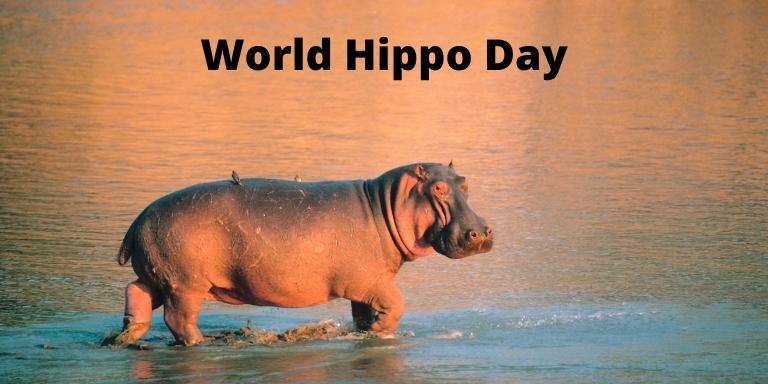
Hippo Day is a Thing!

February 15 is marked as Hippo Day.

And come to think of it, why not? After all, hippos are the third largest land animals on Earth (after elephants white rhinos). Males can measure around 3.5m long and stand 1.5m tall, and weigh in at up to 3,200kg.  That’s a weighty reason to allocate a day for them!

On Hippo Day, here is an interesting story.

Hippo
Credit: Animalia Facts

A hippo can eat up to 35kg of grass in one night. And it is this ability to munch down herbage in quantities, and their very bulk, that led to a strange development in the US in the 1910s. Senator Robert F. Broussard, who represented Louisiana, brought a House Resolution for large-scale import of hippos to the US. No, not as a curiosity or to keep in zoos. But to solve two problems that America was facing at that time.

The first was the widespread proliferation of water hyacinth. First brought in as an ornamental water plant from the Amazon, the hyacinth spread madly, and within two decades, had overtaken waterways across the South of the US, threatening water trade routes. Several ways to get rid of the weed were tried—from breaking plants up, to dredging them, to setting them on fire. But nothing stopped the weed. 

The second problem was the steeply rising prices of meat, making it unaffordable for many. The fundamental reason is not clear—it could have been the rising prices of grain, cattle shortages or profiteering by meatpacking companies. Or a combination of all of these. But there were people in the US who seriously feared that they would be forced into vegetarianism which they saw as a disaster. (It was a different time, wasn’t it?)

Senator Broussard and some friends came up with the completely out-of-the-box and bizarre idea of importing hippos to solve this twin crisis. Their claim was that the hippos would happily chomp their way through the hyacinths. And that their flesh would be a great source of meat and protein for the Americans!

And so they moved the “American Hippo Bill” in 1910! Ex-President Teddy Roosevelt was among its supporters.

The House Committee before which the Bill was presented asked some very sensible basic questions: Could hippos be domesticated? Could they be contained? Would they eat the water hyacinth? Is their meat edible? Broussard and his colleagues answered with a resounding ‘yes’ to all the questions.  

But the answers, we know today, are ‘No’ in each and every case. Hippos are not domesticable. They are known to kill about 500 people every year.  They are extremely strong and heavy, and it would be almost impossible to contain them with even the strongest fences. And they are very unlikely to have made water hyacinth a serious part of their diet. They feed mainly on grasses and would not have taken to this weed which is very low in nutritive value. And though hippo meat is eaten, it is not widely consumed.

There would have been other serious negative ecological impacts of introducing hippos into the waterways too—their heavy treading in water bodies would stir up the mud, and their poop would add to the organic load in the water, and would completely disturb the dynamics and lead to algal blooms and other problems.

Fortunately sense prevailed in the House Committee and they vetoed the Bill. Else, who knows what the American landscape would be like today!

And now for some Hippo Trivia to celebrate Hippo Day

We think of hippos as African animals, but nearly 5.9 million to 9,000 years ago, India was home to the hippopotamus. These entered Eurasia from Africa, and later diversified into South Asia before going extinct.

They can hold their breath and walk under water for up to 5 minutes.

Hippos may look bulky, but they are quite athletic, and run at speeds of up to 30kmph!

A group of hippos is called a bloatOther terms for a hippo group include thunder, herd,  sea, school,  pod,  dale,  crash, and  siege.

Happy Hippo Day!

–Meena

See also:

Homes for Hippos: https://wordpress.com/post/millennialmatriarchs.com/4830

Beware the Kiboko: https://wordpress.com/post/millennialmatriarchs.com/2707

A Week of Celebrations

Just as the January festivities that heralded the New Year have waned, the early days of February have their own set of celebrations. From Galantines Day and Valentines Day, to Basant Panchami, to the Chinese New Year, this is a week that celebrates new beginnings.

Meena has written about the history of the first two days. The third day, Basant Panchami falls on the fifth day of the Hindu month of Magha. This year this happens to be on 14 February. This auspicious day, marks the first day of spring in the Indian seasonal almanac. This is also the day to pay homage to Saraswati, the goddess of learning, music, arts and wisdom. Homes are decorated with marigold flowers and rice flour rangoli, special food is cooked and distributed to family and neighbours after the traditional puja to invoke year-long blessings of the Goddess for knowledge and progress. Yellow is the colour that marks this celebration of spring—from wearing yellow clothes to the myriads of marigold ornamentations.

Celebrations of another spring festival in another part of the world also commenced this week with joy and fervor. This is the Chinese New Year, which like Basant Panchami, is determined by the lunar calendar. These celebrations, which last for 16 days, commenced on 10 February this year. The Chinese Spring Festival was originally a ceremonial day to pray to gods for a good planting and harvest season. As in all agrarian societies, the entire year was dependent on a good harvest. People also prayed to their ancestors, for their blessings. Even today, Chinese New Year heralds a time of renewal, prosperity, and festivity, not just in China, but for Chinese communities across the world. Celebrations symbolize fresh beginnings and a renewal of familial ties, and it is customary for family members from far and wide to travel to meet up for reunions and gatherings.

The Chinese zodiac follows a twelve-year cycle with each year assigned to an animal. The twelve animals are arranged in this order: Rat, Ox, Tiger, Rabbit, Dragon, Snake, Horse, Goat, Monkey, Rooster, Dog, and Pig. 2024 is the Year of the Dragon according to this zodiac. The dragon holds significant cultural importance in Chinese folklore. The Chinese people deeply cherish the dragon which is believed to represent strength, wisdom and good fortune. The dragon, this year’s Chinese zodiac sign represents power, magic, and the pursuit of one’s desires. Each animal in the zodiac is thought to influence the personality traits and fate of those born that year. Individuals born in the Year of the Dragon are thought to be blessed with good luck.

As in all traditional societies, there are a number of customs that mark the special days. Unlike most festivals which are preceded by a special round of ‘spring cleaning’, in the run-up to Chinese New Year’s day, traditionally bathing was not allowed on this day, as also sweeping  throwing of garbage, a few days prior to this day. This is to make sure that all the good luck is not swept or washed away! On the other hand there is a designated day before the New Year which is dedicated to cleaning so as to sweep the bad luck away and make room for the good. A delicate balance indeed! There are a few other taboos during the New Year period, once again to guard against any ‘seeping changes’. No cutting of hair or nails, no use of sharp objects, no breaking no swearing, cursing or saying unlucky words like ‘death’ or ‘sickness’.

While Indian spring festival is marked by the exuberance and cheer of yellow, it is red that marks the heralding of a new year in China. Houses are decorated with red lanterns, strings of red chilli peppers (real or fake), and red decorations on walls and doors. Red clothes are also a part of the Spring Festival wardrobe. It is believed that the colour red will help to deter evil and demons. Children traditionally receive money in red packets or pockets are they are called. These symbolize the transfer of good fortune from elders to the youngsters. The practice has its origins in folklore.

As the legend goes an evil spirit named Sui would appear on New Year’s Eve and pat the heads of sleeping children three times. This would make the children sick. One couple was playing with their child at bedtime with some coins and left the coins on red paper near the child as it slept. That night when the sprit Sui came it was frightened away by the coins glinting on the red paper. Thus began the tradition of giving children coins in red covers on New Year’s Eve, to guard against evil spirits and for their good health and fortune through the year. The tradition continues to this day.

The other tradition which is closely linked to the celebrations is the bursting of crackers, just as Diwali celebrations are marked in India. This one too has a legend attached. Another mythical beast named Nian who preyed on people and livestock, used to visit villages on New Year’s Eve, forcing people to hide in fear in their houses or escape to the mountains. There are two versions of the story. In one, a young boy burst crackers and scared away the monster. In another, a beggar took refuge in an old woman’s house and promised to save her from the monster. He pasted red papers on the doors and windows and burst crackers at midnight, both of which frightened away the monster. Thus bursting of firecrackers at midnight on New Year’s Eve and again on New Year’s morning has continued to be a tradition associated with this festival.

Ironically, due to safety reasons and air pollution concerns, the Chinese government has banned firecrackers in many cities in China. However there has been a lot of public pressure to allow people to celebrate an ages-old tradition of welcoming the New Year with the sound and light of firecrackers.

On another note, the Chinese government is hoping that the declining fertility rate and falling population numbers which has reached worrisome levels will get a boost with a flood of new babies born in the Year of the Dragon. According to the traits associated with the Chinese zodiac children born in this year will be imbued with strength, intelligence, confidence, and success. Thus it is hoped that parents will hope to conceive and deliver dragon babies in this year!

Whatever the mode of celebration, spring marks new beginnings, hope and freshness. Celebrating red and yellow every day of the year.

–Mamata

On A Musical Note: Of Earworms and Mondegreens

Who hasn’t, at some time or the other, had a song or piece of music stuck in their heads, which just won’t go away! You get up in the morning, and suddenly you find yourself humming a tune. It follows you around the house, to the office, on the drive back home. It serenades you inside your head through dinner. And sometimes it is still there when you wake up in the morning!

This is what is called an earworm. Extremely irritating, but nothing to worry about. It happens to most of us at some time in life. A recent study of American college students found that 97% had experienced an earworm in the past month. Other studies have found similar results.

And don’t worry how long an earworm troubles you. Though the typical length is 10 to 30 minutes, research shows that for about 20% folks, the earworm lasts an hour or more. And some unlucky folks have been stuck with one for a year or even longer!

The term earworm comes from the German “ohrwurm,” which  is defined as a “cognitive itch” or “the inability to dislodge a song and prevent it from repeating itself in one’s head”. Several terms have been coined for this, including stuck song syndrome, sticky music, musical imagery repetition, intrusive musical imagery etc. The semi-official term is ‘involuntary musical imagery’, or INMI.

It has been a serious area of study since 1885, and scientists hope to get insights into the functioning of the brain. Several major universities have been undertaking studies into the phenomenon.

Sufferers try various ways to get rid of an earworm– by thinking of another song, singing the earworm song all the way through to its end, or taking up other tasks that require focussed concentration. But trying to get rid of an earworm may be counter-productive. One study has found that the harder people fight to quiet an earworm, the longer it tends to harass them!

Something that is not irritating to you, but may be to others if you sing, is a mondegreen. A mondegreen is a word or phrase in a song or poem that you get wrong–the result of mishearing something recited or sung. Incorrectly heard lyrics are called mondegreens.

The origin of the word itself is from an instance of such mishearing. In a column by journalist Sylvia Wright in the 1950s, she wrote about a Scottish folksong The Bonny Earl of Morray that she had listened to. Wright misheard the lyric “Oh, they have slain the Earl o’ Morray and laid him on the green” as “Oh, they have slain the Earl o’ Morray and Lady Mondegreen.” And ever since, such mishearings have been referred to as mondegreens!

The scientific explanation goes as follows: Hearing is a two-step process. First sound waves make their way through the ear and into the auditory cortex of the brain. On receiving the signal, the brain tries to make sense of the noise.  Mondegreens occur when, somewhere between the sound and the sense-making, communication breaks down. You hear the same sound as another person, but your brain doesn’t interpret it the same way.

Sometimes we may just mishear something because it is noisy, the phone signal is weak, or there are other extraneous factors. Or it may be because the speaker is speaking in an unfamiliar accent or is mumbling.  So the sound becomes ambiguous and our brain tries its best to resolve the ambiguity—and gets it wrong.

Another common cause of mondegreens is the oronym–word strings in which the sounds can be logically divided in different ways. This is similar to what we call sandhi vichhed in Sanskrit—the process of analysing and separating compound words into their component parts. Oronyms result in a wrong parsing of sounds when context or prior knowledge is missing.

Yet another reason could be letters and letter combinations which sound alike, and without a context, we can go wrong, and one sound can be mistaken for the other. An example often given to illustrate this is, :“There’s a bathroom on the right” being heard as “there’s a bad moon on the rise”.

When we hear a sound, a number of related words are activated all at once in our heads. These words could be those that sound the same, or have component parts that are the same. Our brain then chooses the one that makes the most sense. In this choosing, we are more likely to select a word or phrase that we’re more familiar with. An oft cited example is that if you’re a member of a boat crew, you’re far more likely to select “row” instead of “roe” from an ambiguous sentence. If you’re a chef, the opposite is likely.

Some mondegreens become the word!  For instance, the word orange was such a widespread mispronunciation of “a naranj” (from Persian and Sanskrit), that it became the official name of the fruit! One can think of any number of place-names which the English mangled, for instance!

Bollywood songs of course have their share of mondegreens. Though not systematically documented, some common ones identified include:

From the song Hawa Hawai (Mr. India):Bijli girane mai hoon aayi’ being heard as ‘Bijli ki rani mai hoon aayi’; and from the song Banno (Tanu weds Mannu) ‘Banno tera swagger laage sexy’ being heard as ‘Banno tera sweater laage sexy’.

Raghu has these examples from his childhood (which he attributes to the poor sound quality of radio transmissions of those times):

Hearing ‘Yeh manzar dekh kar jaana’ (from the film Around the World) as ‘Yeh mandir dekh ke kar jaana’ (could be a jingle for a recent event!); and ‘Ahsan tera hoga mujh par’ (from the film Junglee)  as ‘Ahsan tera ho gaa mujh par’!

The only request: If you have a mondegreen, don’t sing the song aloud. You may give someone a more than usually horrible earworm!

–Meena


Mules: More Than Just Beasts of Burden

The mule has always borne the brunt of uncomplimentary analogies. Stubborn as a mule, mulish behavior… a synonym for obstinate, pig-headed, refractory, headstrong, wilful, and generally self-willed. This uncomplaining beast of burden has hardly received its fair share of credit. And yet, over centuries it is these silent plodders and sloggers that have been the backbone of many military campaigns.

Mule trains were also the primary means of transporting goods across difficult mountainous terrains, especially in Central Asia. They were ideal pack animals to accompany the trading caravans. In Mughal India Emperor Akbar popularized the use of mules in place of oxen which were commonly used then. He kept stables for mules and expected his officers to keep a certain number of mules. The British were not as impressed with the local mules and imported large numbers of these sturdy workhorses from South Africa and Argentina.

The tables were turned during World War II. By this time the British army was beginning to phase out Animal Transport Companies which used to be an integral part of the army. But the conditions in France where the war was raging required transportation of supplies to remote areas where mechanized vehicles could not reach. Thus the decision was taken that each division in the British Expeditionary Force in France should have an animal transport company made up of mules. 2700 mules were shipped from Bombay to Marseilles; they reached without any losses and successfully operated in France through the bitterly cold winter conditions.

What makes the mule such a sturdy animal? But even before exploring that, what makes a mule?   

A mule is a cross between two species of equine: the horse or pony (Equus caballus) and the domestic donkey (Equus asinus). The word ‘mule’ is generally used for the cross of male donkey and female horse. The cross between a female donkey and male horse, is known as a ‘hinny’. Usually mules do not breed naturally, but are specifically bred. Properly-bred mules are handsomely rugged creatures, larger than donkeys, but more solid than horses, giving them a distinctly different look.

The hybrid of horse and donkey makes for a sturdy combination. Mules are stronger than horses (weight for weight), and have tremendous stamina and resilience. They can sustain on frugal diets. They are exceptionally sure-footed, and have very hard hooves, which enables them to successfully negotiate difficult terrains. Their hide is thicker than that of horses so they can wear a harness and carry heavier loads for longer stretches. They can withstand extremes of temperature, and are relatively less prone to lameness and illness.

The stubborn temperament that makes for the many analogies is in fact more than just a mule being mulish! The obstinacy is a manifestation of a mule’s talent for self-preservation. A mule instinctively follows the path of great care when treading on uncertain terrain. It will instinctively balk when its feel its life is threatened. In looking after itself, it also takes care of the cargo it is laden with, and therefore can be trusted to deliver its cargo, including humans, safely.

The mule’s reputation for obstinacy and bad-temper is not a manifestation of its thick skinned appearance, but on the contrary an indication of its wary nature. A mule is very defensive until it trusts a person, and will kick out as a protective measure, not an act of aggression. Whatever the case, mules kick fast, hard and accurately, and hence are best kept at a safe distance till they are comfortable with what they need to do. The mule cannot be forced to do anything, but must be persuaded to cooperate! And till this happens, the tug of war between man and mule will continue, as will the “stubborn as a mule” epithet.

Mules are highly intelligent, perhaps even more than horses. They are very quick to learn, and have an instinctive grasp of a situations. They just need the right handling. A badly trained and handled mule can be a real problem. A well-trained and handled mule can be obliging, kind, patient, persevering, calm, tolerant, sensible, loyal, affectionate, even playful. Not words usually associated with its legendary truculence!  

Little wonder then that mules have continued to be an important component of the Indian Army. They are invaluable at high altitudes where the road connectivity is very bad, and the terrain impassable in the severe winters. The mules are the lifeline for the army, carrying essential supplies of food, construction material, and arms and ammunition to remote border posts. A mule can carry a load of 100 kg and can cover a distance of 40 km in a day. Mules are often described as the unsung heroes of the Indian Army.

The Indian Army has more than 6000 mules who tirelessly carry out these challenging missions. The mules are divided into 15 units. They are categorized on the basis of the loads they carry. The mules assigned the task of carrying heavy arms and ammunitions are part of the Mule Artillery, while other supplies ranging from food and water, to medicine is transported by the Mule General Service. Each mule has one or two handlers, depending on the load and terrain. There is also a nursing staff with them as they move from place to place. They are fed a fixed ration of 2.55 kg of barley, I kg of chana and 7 gm linseed per day.

Pedongi: A celebrated mule

The recognition of the critical role of mules has been largely overlooked by the army. However, there are some legends shared about exceptional mules and their feats. Perhaps the best known one is that of Pedongi, a mule who carried out her duties in the 1971 war unfazed by the crossfire. She was part of an Animal Transport column captured by the Pakistani army, but managed to escape and cross the border back to an Indian post, carrying Pakistani munitions on her back. Pedongi was honoured by the Indian Army for her bravery, and continued to serve at high altitudes for many years. Pedongi entered the Guinness World Records as the longest serving military mule when she died in 1998. Her contribution continues to be remembered in the Central Army Service Corps officer’s mess lounge which has been named Pedongi in her memory.

Recently there is news that the Indian Army plans to disband its entire Army Transport fleet by 2025 and replace it with drones–unmanned systems that would carry loads in high-altitude areas. It has already reduced its numbers of mountain artillery mules and plans to retire the general service mules. The retired mules will receive commendation cards for their service with the Indian military. The retirement of mules will also mark the end of unique links between man and beast that have contributed to the security of our nation for over a century.  Truly the end of an era!

–Mamata

Fighting the Disease, Fighting the Stigma: Marking Leprosy Day

Humanity spent a few years in fear of Covid. A few decades were spent in fear of AIDS. But millennia have been spent in fear of leprosy.

Leprosy is oft-mentioned in texts of yore. In Hindu mythology, it is often the result of a curse. Samba, son of Krishna and Jambavati, was cursed with the disease by his own father for constantly harassing his stepmothers (even otherwise, he seems to have been a pretty painful character). Later, when Krishna learnt that Samba was himself led into the misdemeanor by Narada, he wanted to take back the curse, but could not. Krishna advised Samba to pray to the Sun God for a cure. Samba did so—in fact, the Sun Temple at Konark and Multan (the temple does not exist and its exact location is unknown, but may have been in present-day Pakistan) are supposed to have been built by him. As a result of his devotions, he was cured.

The tale of Reunka is a fairly typical misogynistic one. She was the devoted wife of Sage Jamadagni, cursed with leprosy by her husband for a momentary lapse—for a moment being attracted to the Gandharva King. She was advised to bathe in Jogala Bhavi a nearby lake, and was cured. But sadly, when she returned home, her husband was still furious, and commanded his sons to kill her. The first four refused and were cursed by their father to die, but the fifth, Parashuram (yes, he who was an Avatar), obeyed his father. Jamadagni, pleased with Parashuram, granted him a boon. Good sense prevailed and Parashuram begged for the revival of his mother and brothers. A repentant Jamadagni is supposed to have foresworn anger, and lived happily with his wife ever after.

Leprosy also plays a key role in the Mahabharatha. Shantanu, father of Bhisma, Chitrangada and Vishitravirya came to the throne because his elder brother Devapi had leprosy. If it had not been for Shantanu’s attraction first to Ganga and then to Satyavati, the Mahabharat war may never have taken place.

Islamic and Biblical references to leprosy also abound, and Jesus is supposed to have cured the disease with his touch.

Through the ages, leprosy was feared as a curse of the Gods, and the only salvation was a boon from them. The social ostracism and rejection by friends and family was as much a suffering as the disease itself.

Gandhiji Leprosy
Gandhiji viewing what is presumed to be Mycobacterium leprae

In the last few centuries, many brave souls have worked hard for the relief of these sufferings. Gandhiji was at the forefront of the fight against the fear of leprosy. Pictures of him tending to Shri Parchure Sastry, a learned man whom Gandhiji respected very much, are often seen. Sastry even made his home in Sewagram with the agreement of all the Ashram inmates.

Vinobha Bhave was another Gandhian leader who worked in this field. He and Manoharji Diwan established Kushthadham (Leprosy Centre) at Dattapur in 1936.

And of course, the selfless work of Baba Amte and his wife Sadhantai, is legendary. He was a Gandhian and active in the freedom struggle. But how he came to leprosy work is interesting. He encountered a leprosy patient one day, and it is the fear and revulsion he felt that led to deep introspection, and the decision to devote his life to this work. He not only wanted to help the patients, but also create a society free of “Mental Leprosy”, ie., the fear and misunderstandings associated with disease. He founded three ashrams for patients and devoted his life to them. The Gandhi Peace Prize and the Ramon Magsaysay award were only a few recognitions of his service.

Dr. Noshir Antia is another individual who contributed enormously to the rehabilitation of leprosy patients. He is known as the father of Plastic Surgery in India and established the first department in the country devoted to this—the Tata Department of Plastic Surgery at the J.J. Hospital in Mumbai. . His interest in this subject began when he saw the disfigurement of leprosy patients, and started to pioneer surgical techniques for correcting these. Apart from surgery, he also started research facilities to study the disease and fought against the discrimination against the sufferers of this disease, and for their rehabilitation. Dr. Antia passed away in 2007, but his legacy continues not only through the generations of doctors and surgeons trained by him, but also through the NGO he founded—the Foundation for Research in Community Health

World Leprosy Day is observed on the last Sunday of January. In India, with a slight tweak, and to mark Gandhiji’s contribution in this field, it is observed on 30 January, coinciding with his death anniversary.   

The theme for the day this year is “Beat Leprosy” which calls attention to the dual objectives of the day: to eradicate the stigma associated with leprosy and to promote the dignity of people affected by the disease.

As Vinobhaji put it, the critical thing is to beat mental leprosy—the fear of leprosy. And our experience of recent diseases has shown us that fear is not the way to react to any disease. Scientific understanding and empathy are!

–Meena

Two books which may be of interest:

‘Autobiography of a Doctor’ is Noshir Antia’s tale of his life.

‘Covenant of Water’ by Verghese Abraham has leprosy, its treatment and the social discrimination as an important theme.

Window to the World: National Geographic

They were probably our first glimpse of the wonders of the natural world. As children we eagerly awaited the arrival of the yellow cover magazines with their breathtaking pictures. My father, a lover of maps found a wealth of meticulous cartography in the maps that often accompanied the magazines. The glossy pages with fantastic photographs were the hallmark of the National Geographic Magazine. The magazine has maintained the same level of excellence for the last 136 years!

This month marks the important milestones that led to the launch of this enduring visual record of the world. This began with the founding of the National Geographic Society. The journey started in early January 1888 when a small group of gentlemen prominent in the scientific and intellectual circles of Washington DC received an invitation that read: Dear Sir: You are invited to be present at a meeting to be held in the Assembly Hall of the Cosmos Club, Friday evening, January 13, at 8 o’clock, for the purpose of considering the advisability of organizing a society for the increase and diffusion of geographic knowledge.

On the given date, 33 gentlemen who were sufficiently intrigued by the invitation to brave the fog and rain, gathered at the Cosmos Club. The guiding spirit leading the discussion was Boston lawyer Gardiner Greene Hubbard, supported by explorers John Wesley Powell and Adolphus Greely, as well as geographer Henry Gannett. The topic of discussion was the organization of a society for the increase and diffusion of geographic knowledge. One week later on 20 January the second meeting had twice the original number of participants, who agreed to incorporate themselves as a geographical society, and just one week later the Certificate of Incorporation of the National Geographic Society was formally signed on 27 January 1888. Interestingly, the average age of the founding group was around 40 years, and half of these were in their late 20s to 30s, several working for the US Geological Survey or the US Coast and Geodetic Survey. And, they were all male. Ironically, only one member was a journalist, and there is no photograph of any of the three occasions that led to the birth of the iconic magazine. National Geographic Magazine started publication in October 1888 as the official journal of the National Geographic Society.

The original issues were all text articles. The magazine began the transition from a text-oriented publication to including pictorial content with its January 1905 issue which had several full-page pictures of Tibet. By 1908 more than half the magazine’s pages were photographs.  

One of the founding objectives of the non-profit Society was to fund science and exploration across the planet. The first scientific expedition supported by the Society was to survey and map the Mount St. Elias region in North America, which led to the discovery of Mount Logan, Canada’s highest peak. Initiated in 1890, and led by explorer Israel Russell, this marked the beginning of thousands of explorer-led National Geographic expeditions. Significant among the early expeditions supported by the National Geographic Society were Robert Peary’s which was the first to reach the North Pole in 1909, and expeditions (1912-1915) to excavate Machu Pichu the lost city of the Incas in the Peruvian Andes. Since the first expedition, the Society has provided more than 15,000 grants to explorers to work across the world.

The earliest natural-colour underwater pictures were taken by the National Geographic staff photographers in 1926. The magazine continued to bring to the readers hidden deep sea treasures with a series of articles by Jacques-Yves Cousteau in the mid-1950s, including the deepest undersea photos from 25,000 under the sea in 1956. From deep sea to outer space, the National Geographic Society flag was carried by John Glenn on the first US orbital space fight in June 1962; and it reached the moon with the Apollo 11 astronauts in July 1969. The exploration of forest ecosystems also got Society support, with funding to Jane Goodall and Dian Fossey’s intensive work with chimpanzees and mountain gorillas in the African jungles. Over the decades, the Society has continued to support explorations in varied ecosystems, and in all spheres from ocean depths to outer space. The discoveries of these incredible missions are shared through the National Geographic Magazine, opening windows and vistas to millions of armchair travellers across the globe. The excellence of standards of journalism and photography are backed with the passion and commitment of documenting the wonders of history, science, anthropology and nature, while also bringing to the fore serious environmental and human rights issues.

The National Geographic Magazine has continued to inspire generations for over a century, reaching out to 60 million readers worldwide each month, including 40 local-language editions. Keeping step with changing times and technology, in January 2001 National Geographic Channel was launched on cable and satellite television in the United States. The channel has expanded the scope of visual storytelling. Nat Geo continues to provide new digital experiences to find new ways of documenting the world and allowing readers to interact with content. In a rapidly changing world, the Society has stayed true to its original mission ‘to pursue and celebrate exploration, scientific excellence, education, and unforgettable storytelling’. National Geographic has remained a vibrant, relevant, world-class brand at the forefront of exploration and knowledge. However, the changing times are making their mark felt even here. Until 2015, the magazine was completely owned and managed by the National Geographic Society. Since 2019 the Walt Disney Company has taken over controlling interest. In June 2023, National geographic announced that it will focus on digital publication and subscribers. The magazine also laid off all of its staff writers, shifting to an entirely freelance-based writing model. Starting 2024, the hard copy will no longer be available on newsstands, while old subscribers will receive hard copies till their subscription runs.

Truly the end of an era. And a time to revisit the family collection of National Geographic Magazines (dating back to the mid-1950s) and enjoy the nostalgic savour of rediscovering the wonders of the world.   

–Mamata