Cough, cough…

For the past few weeks, I was plagued by a cough. I am assured by sources that it is very good for me to cough—for instance, the Cleveland Clinic says ‘A cough is a natural reflex that is your body’s way of removing irritants from your upper (throat) and lower (lungs) airways. A cough helps your body heal and protect itself.’

I am yet to be convinced!

There are apparently many ways of classifying coughs.  One is related to how long they last. Acute coughs are those which start suddenly and last a few weeks. Sub-acute ones follow infections, and last for a month or two. Chronic coughs persist longer than 2 months. And Refractory coughs are chronic coughs which don’t respond to treatment.

Another way of classifying them is in terms of whether or not they produce mucous. Dry coughs are those which do not. Productive or wet coughs bring up phlegm or mucous.

Some coughs come on at night, and are called nocturnal or night-time coughs. Others are day-time coughs.

Some types of coughs produce distinctive sounds and indicate the underlying condition: e.g., the whooping cough where the cough sounds like a ‘whoop’ is a specific infection. A barking cough may be an indicator of croup. And when coughing is accompanied by wheezing, it may be associated with some infections or with asthma.

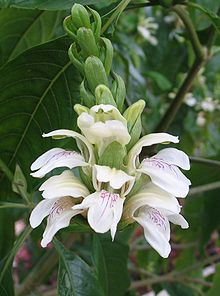
Vaska plant
Vasaka plant, native to the Indian subcontinent, forms a basis for many cough syrups

And what about treatments? Well, you can take a cough syrup, a lozenge or rub on something.

Of cough syrups also, there are different types: Suppressants or antitussives do their job by blocking your cough reflex. These are for dry coughs and that itch in the throat. Then there are Expectorants, which thin mucous and phlegm, making it easier for them to be coughed out.  There are also combination cough syrups which typically combine expectorants with decongestants and an antihistamine.

Rub-ons or topical applications include trusted household names like Amrutanjan.which has a nature-based cold relief balm. Such products usually have menthol and camphor, and applying them to the throat offers a soothing sensation in the area and relieves some of the associated pain. 

Cough drops are the tablets we keep in our mouth, which soothe our throats and give us relief from coughing. These are used to temporarily help relieve symptoms such as sore throat, throat irritation, or cough. They work by providing a cooling feeling and increasing saliva in the mouth. Home remedy equivalents are sucking on cloves or cardamoms.

There are research studies which show that actually, not many of these store-bought medications really work any better than home remedies. The good old haldi-doodh (now fashionably called Golden Latte) is a tried and tested way to soothe the throat. A kada or decoction of tulsi, black pepper, cloves and assorted spices is often effective. Ginger tea with lemon is a sure winner.

Gargling is also an effective way to manage coughs. A salt water gargle creates a sort of osmosis effect and the salt concentration draws fluids and bacteria from the mouth, Salt water gargles neutralize swelling, and pain, and help soothe the throat region. The salt water breaks up mucus and irritants in the throat. Gargling with a salt water mixture also helps neutralize the throat acids, which helps to suppress bacterial growth.

Steam inhalations help too–they help to soothe and open their nasal passages when they have a cold or sinus infection. The warm, moist air is thought to loosen mucus and relieve symptoms.

I hope you don’t have a cough. But if you do, you are probably in good company—in the US, it is apparently the top reason people see a doctor – over 30 million visits a year.

–Meena

The Best Kind of Nut is a Coconut

When there are myths and stories about the origins of an animal, tree, bird or anything in nature, we can be sure that the particular thing has played a huge part in human lives and society down the ages. The coconut is one such. There are stories from across the world about the origins of the coconut. Even in India, there are at least 4-5 popular stories about this. Not to mention stories from West Africa, China, Malaysia, etc.

Coconuts are an integral part of our lives in India—from the morning chutney for the idli, to the oil we swear by for hair growth, the refreshing and safe drink we give convalescents, to the coir mattresses we sleep on—they touch our lives in so many ways. Coconuts are a must for a visit to a temple, for a housewarming, a puja, or to launch a new vehicle.  

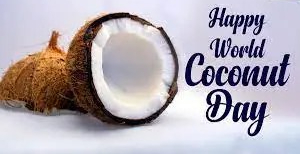
Coconut Day

I didn’t know till recently that there was a World Coconut Day, marked on Sept 2nd every year. Nor did I know that there was something as grand and formal as The International Coconut Community (ICC), an intergovernmental organization of coconut producing countries organized in 1969 under the aegis of the United Nations Economic and Social Commission for Asia and the Pacific (UN-ESCAP). Their mission is to ‘To promote, coordinate and harmonize all activities of the coconut industry which sustains the lives of millions of small farmers.as well as those engaged in production, processing and marketing of coconut products.’ The ICC Secretariat is located in Jakarta, Indonesia and is headed by an Executive Director. The ICC has 20 member-countries from Asia, the Pacific, Africa, South America and the Caribbean’s. India is of course one of them.

World Coconut Day commemorates the foundation of Asian and Pacific Coconut Community (APCC), an intergovernmental organization of coconut producing countries.

The coconut certainly deserves all this. It is a tree which provides food, fuel, medicine, cosmetics, building materials, and much more. In the South Seas, there is a saying that ‘he who plants a coconut tree plants food and drink, vessels and clothing, a heat source, habitation for himself, and a heritage for his children’. Importantly, it forms part of the livelihood basket of lakhs of small landholders—98 per cent of coconut holdings are with small and marginal farmers.

India is among the largest producers of coconuts in the world with Tamil Nadu, Kerala, Karnataka and Andhra Pradesh being the major contributors. We produce over 19 million nuts a year, accounting for over 31 per cent of the world’s production. We also account for 66 per cent of the world’s exports, and send our coconuts to over 140 countries.

There is also R&D going on into development of a range of new coconut-based medical products. In the world of healthcare, a number of products from sterilizing agents to fungicides to anti-itch products are being developed. The fashion industry too has taken to developing new products based on coconuts. There is also considerable research in the direction of developing several food-related products like coconut skimmed milk, coconut milk powder, coconut cream, coconut vinegar, coconut jaggery and palm sugar, and we may expect to see many such new products hitting the market soon. There is also on-going effort to make coconut shell charcoal and activated carbon.

So let’s join in the celebration of the ubiquitous coconut that we take so much for granted. Drink tender coconut-water, eat a coconut burfi, make a curry with a coconut gravy, or throw a coconut themed party. Just a way to say thank you to a tree that gives us so much—health, beauty, taste, shelter, sound sleep, and importantly, livelihoods to so many!

–Meena

Jumbo Symbol

As we celebrate our 76th Independence Day, here is a look at a creature which is inextricably tied to the image of India—the elephant.

Though the tiger is our national animal, and lions stand proud on our national symbol, it is the elephant which is associated in popular imagination with India. Elepehants have traditionally been associated with the wealth, grandeur and ceremony of kingly India. Even today, people from foreign lands imagine elephants strolling the streets of the country.

A constant and less-than-flattering reference is to the Indian economy as an elephant. To quote former RBI Governor Dr. Duvvuri Subbarao, ‘In development economics parlance, the East Asian economies — Taiwan, Korea, Singapore, Hong Kong — are referred to as the tigers. The next generation of fast growing Asian economies — Thailand, Philippines, Malaysia, Indonesia — are referred to as the cubs. China is called the dragon. All these countries delivered a growth miracle in the last 40 years. ‘

‘India is referred to as an elephant because it is a strong animal with enormous potential but it moves at a lumbering pace. The hope is that it will start dancing and deliver the next growth miracle.’ (Knowledge at Wharton).

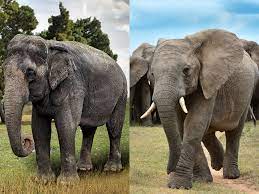
But coming back the elephant itself. Though elephants are so central to the imagination of India, ironically, one sees the image of the African elephant all around—from ads celebrating India and Indian products, to calendar art, to even textbooks and school charts.

The two are different at a very fundamental biological level. Asian elephants belong to the genus Elephas, species maximus, and African elephants to the genus Loxodonta, species africana. The two cannot interbreed and produce viable offspring.

Elephant
Coutesy: Britannica

Physically, the African elephant is significantly taller and heavier than our Asian ones. Another obvious difference is that Asian elephants have small ears, while their African cousins have much larger ears, which cover their shoulders. All African elephants have tusks, while only male Asian elephants have tusks. (Artists seem to like depicting large ears and longs tusks on all the elephants they draw, which may be the reasons for the predominant image of African eles even in our media!). The trunk of the Asian elephant has one finger at the tip, while the African elephant has two fingers– this means that the way they pick up things is different—our elephants will curve their trunk around the object, while the African jumbo will hold the object between its two ‘fingers’, much as we would hold something between finger and thumb. Our elephants have two humps on the forehead, while African eles have one.

Importantly, Asian elephants are tameable, while African elephants are not. This is why in India, elephants have played such a large part in our lives—whether in religious ceremonies, in cultural processions, as royal symbols, as transport or war animals.  

Thought still on the endangered list, conservation efforts seem to be paying off in India, with numbers reportedly on the rise, standing at about 28,000 this year, and elephant-bearing states vying with each other to report higher numbers. Project Elephant, launched in 1992, was critical in focussing attention on conservation of elephants and their habitats. Now, it has been merged with Project Tiger, based on the thinking that both animals inhabit the same habitats in some places. Only the future will tell if this is a good move, given that different issues confront the two majestic animals in different locations, and the move may take away the focussed attention on each of these.

On the economic front, bodies like the World Economic Forum think that ‘India’s economy is an elephant that is starting to run.’

As we wish our elephants to do well on World Elephant Day (August 12), we also hope, on Independence Day, that the Indian economy does well and all Indians attain a better quality of life.

Happy Independence Day!

–Meena

Homes for Hippos

Hippos hit the news every now and then. And in the past weeks, they have been a topic of some discussion in India, thanks to a request from the Colombian Government for us to provide a home to some of the ‘cocaine hippos’ that have become feral there. Actually, it is quite unfair to call them ‘cocaine hippos’—it is not like they snort cocaine. Their ‘fault’ is that they (or their parents/grand-parents) were owned by the infamous cocaine smuggler Pablo Escobar.

Pablo Escobar was a Colombian druglord, who was called the ‘King of Cocaine’, due to his monopoly of the cocaine trade into the US. He was the founder of the Medellin Cartel, and the wealthiest criminal ever, with his wealth being estimated at $ 30 billion in 1993, when he was killed at the age of 44, by the Colombian National Police.

Every aspect of Escobar’s life was larger-than-life. Like the emperors of old, he set up a menagerie at Hacienda Napoles, his huge ranch east of Medellin, and kept giraffes, elephants, ostriches, and other exotic species there. Four hippos—three males and one female–were part of this menagerie.

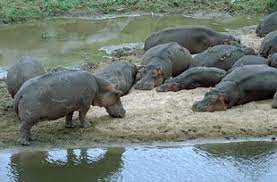
When he was killed, authorities did not quite know what to do with these animals, and just left them in the estate—where not unexpectedly, they multiplied. In about 25 years, there were close to a 100 individuals (the number may stand at over 150 today). A single hippo can eat over 35 kg of grass and other green plant material in a day, posing a threat to local biodiversity. Being large and heavy animals, they stomp the ground and compact it as they move over the same area day after day. They defecate in the water, and end up polluting rivers and water bodies.

Hippos
Pic: Encyclopedia Britannica

Efforts to curb the population explosion have not met with success. About 15 years ago, the local government tried culling the animals, but this led to protests across Colombia and was thankfully stopped. A sterilization programme is in place, but the hippos breed faster than local experts can find, catch and castrate them (We can’t even manage it with stray dogs, what to talk of hippos!).

Hence the plan to ship the hippos to various countries which are ready to receive them. Mexico has agreed to take 10 of them. Colombia has approached India to house 60 of the animals at the ‘Greens Zoological Rescue and Rehabilitation Kingdom (GZRRC)’, being created by Reliance Industries in Jamnagar, Gujarat. The plan has not met with enthusiasm by any wildlife expert. Housing them in zoos is an expensive proposition.  Hippos are native to Sub-Saharan Africa, not India, and definitely cannot be released into the wild. (However, based on a small fragmented tooth unearthed in Madhya Pradesh, researchers claim that India was home to hippopotami nearly 5.9 million to 9,000 years ago. The hypothesis is that they entered Eurasia from Africa, and then diversified in South Asia before going extinct. But even if they ever were native here, they haven’t been for many millennia.)

There is no doubt Colombia has a problem. Apart from destroying vegetation and biodiversity, hippos are also a threat to humans. They are known to be very aggressive, and can chase people on land, as well as capsize boats in the water. They sometimes raid fields and come into conflict with humans.

And it is also true that a safe home must be found for the hippos—they are only living their life as they were meant to. How can they help it if someone uprooted them from their home and brought them to a new continent?

But bringing them to India definitely does not sound like a good idea. The recent import of cheetahs should serve as a cautionary tale. We need to protect our biodiversity and trying to introduce non-native (at least in human memory) species is not going to help either our diversity or the introduced species.

–Meena

Charming Worms

Aristotle called them the ‘intestines of the earth’. Cleopatra declared them to be sacred and forbade Egyptian farmers from removing them from the land. Japanese religious lore has a story about them. Certain of the Shinto gods decided to create the world’s creatures from living clay; formulating, in turn, animals, birds, fish and insects. At each stage their creations asked: ‘What shall we eat?’ When they created Man, he was told to eat everything. Then, the gods noticed some small clay scraps that had been dropped and decided to create worms, which they instructed to live underground and eat soil – although they could come to the surface from time to time in search of anything they found edible.

These creatures are what we call earthworms. Archaeological evidence suggests that worms have been around for 600 million years. These underground creatures hardly made news or were subjects of serious scientific research. It was Charles Darwin who studied earthworms for 39 years, who reaffirmed the value of these lowly creatures when he said, “It may be doubted whether there are many other animals in the world which have played so important a part in the history of the world than the earthworm. Worms are more powerful than the African Elephant and are more important to the economy than the cow.”

Darwin’s observations, investigations, conclusions and pronouncements were published in 1881, six months before his death under the title The Formation of Vegetable Mould through the Action of Worms. Darwin estimated that an acre of mid-19th-century arable land, the result of centuries of gentle pummelling and fertilisation by farm animals and traditional toil by countrymen, contained 53,000 earthworms. He further calculated that, over the course of a year, the worms moved 15 tons of soil to the surface – a process known to agrology as bioturbation.

Many years later, in more recent times, when much of the soil surface has been degraded from the onslaught of chemicals and industrial agricultural processes, scientists have once again recognized that the presence and activities of earthworms have a dramatic effect on the soil habitat.

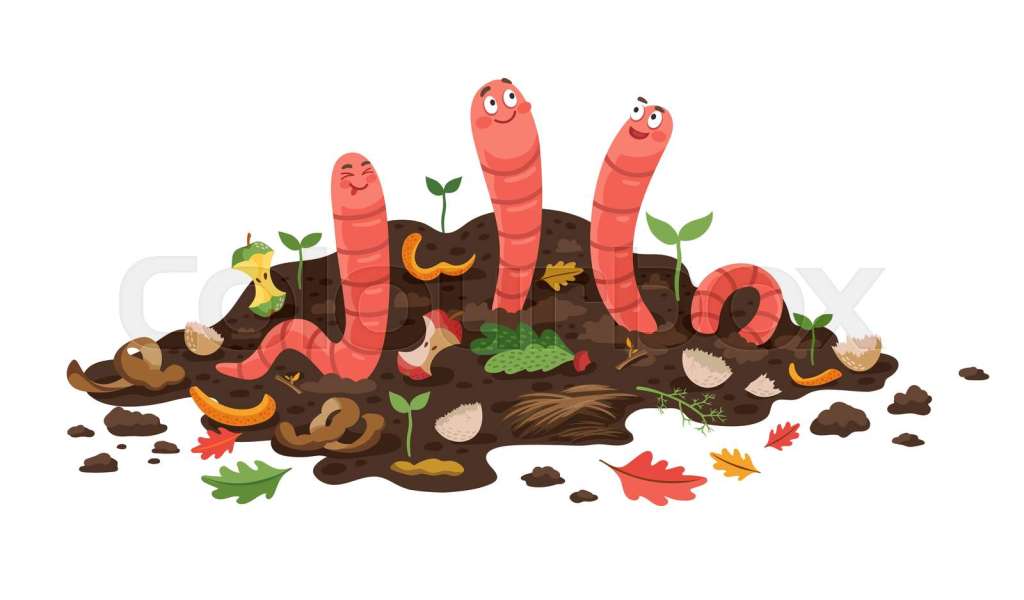
While eating the soil, the earthworm absorbs the nutrients it needs and casts off the rest. Under ideal conditions, earthworms are believed to eat and digest their entire weight in castings in a mere 24 hours. The nutrient content of the castings, which have gone through the earthworm’s digestive system, was found to have 5 times more soluble nitrogen, 7 times the soluble phosphorus, 11 times the soluble potassium, and 3 times the soluble magnesium plus a smaller amount of calcium. Most earthworms also mix the plant litter and organic matter into the soil, increasing the speed at which they decay and release nutrients into the soil. In these ways, earthworms recycle nutrients from dead plants and other soil organisms so that they can be used again.

Earthworms are also incomparable builders of soils. Their means of travel thorough the soil — pushing, tunnelling and eating their way through all kinds of organic matter. soil opens it up for the benefit of aeration and water seepage. The underground burrowing systems that they create increase the amount of water and air that reaches the plant roots and other soil organisms, helping their growth. Soil that has a good population of earthworms is always easier to work and plants seem to thrive in it. Thus earthworms have been given new sobriquets such as “farmers’ friends’ and ‘ecosystem engineers’.

Earthworms are getting their due. One of the quirky celebrations of these usually hidden-from-sight creatures is a festival held in some parts of England–the Festival of Worm Charming. While we know of snake charming and snake charmers, this one is certainly not part of a regular vocabulary.

Traditionally worm charming, worm grunting and worm fiddling refer to methods of attracting earthworms from the ground, mainly through creating vibrations on the ground.

Darwin was perhaps the first to study earthworm sensitivity or otherwise to light, warmth and sound. His experiments included placing lamps, candles and hot pokers close to them, blowing tobacco smoke over them, sounding a tin whistle and playing a piano close by and having his son play a bassoon loudly. He observed that it was only vibrations that caused them to become active.

Scientific experiments apart, using vibrations to bring worms to the surface has been traditionally used by fishermen to collect worms as bait. In recent years, this activity has taken the form of a competitive sport.

An International Worm Charming festival is held every year June in Devon in England. As with all competitions, this one has its rules and etiquette. 

The aim of the competition is to “charm” the earthworms to come to the surface of the soil by creating vibrations on the ground. Traditionally this was done by sticking a rod called a ‘stob’ (like a pitchfork) in the dirt and smacking it with a simple rod known as a ‘rooping iron’. This competition allows different ways of creating the vibrations—tapping the soil with feet, “twanging” the ground with a fork in the soil, but strictly no digging.

The wormers are given a 3×3 meter square of land to fiddle, grunt, and charm their way to championship glory by collecting more worms than anyone else.

Each teams comprises 3 members: a Charmerer, a Pickerer and a Counterer.

Once all teams have found their plot everyone is allowed to begin “Worming Up”. This is doing whatever you need to do to get the worms out of the ground without digging, forking or pouring harmful liquids onto plots.

“Worming Up” lasts for 5 minutes after which the competition really gets underway.

 15 minutes are allotted to all teams to get as many worms charmed out of the ground.

Any team or competitor caught cheating will be publicly humiliated and almost certainly disqualified.

The International Judges’ decision is final.

All worms must be returned unharmed to the ground after the competition.

The Worm Master presides over the Festival. The Official Cheat tempts entrants by offering them worms so that they can cheat. Old Father Worm Charming offers advice and guidance to would be worm charmers. Finally, there’s the International Judge who is the rule of law in all things to do with arbitration in worm charming disputes.

What a way to spend a sunny summer’s day! While India is known as the ‘land of snake charmers’, this festival may well lead England to be known as the ‘land of worm charmers’!

–Mamata

A Windy Day

Is it windy outside? Not really! Then why this piece? Well, it is in anticipation of Global Wind Day, a worldwide event that is marked annually on 15 June. It is ‘ a day for discovering wind energy, its power and the possibilities it holds to reshape our energy systems, decarbonise our economies and boost jobs and growth.’

Fair enough!  Today, winds are gaining huge importance because of their potential to add to the basket of energy sources—a clean energy source that will help mitigate climate change challenges. It is because of this promise that wind power has grown rapidly since 2000, Global installed wind generation capacity has increased by a factor of about 100 in the past two decades. In 2021, the total wind generation capacity globally was 830 Giga Watts. India is proudly at Number 4 position in the world, with an installed capacity of 40+ GW. And there is still a long way to go, with estimated potential for wind in India being 200 GW.

Just to double back, what is wind? Put simply, it is the the movement of air relative to the surface of the Earth. Winds play a significant role in determining and controlling climate and weather.

And how is electricity produced from winds? Basically, it is by converting the kinetic energy of air in motion into electricity. Wind rotates rotor blades of a turbine, which converts kinetic energy into rotational energy. This rotational energy is transferred by a shaft to the generator, thereby producing electrical energy.

Windmills
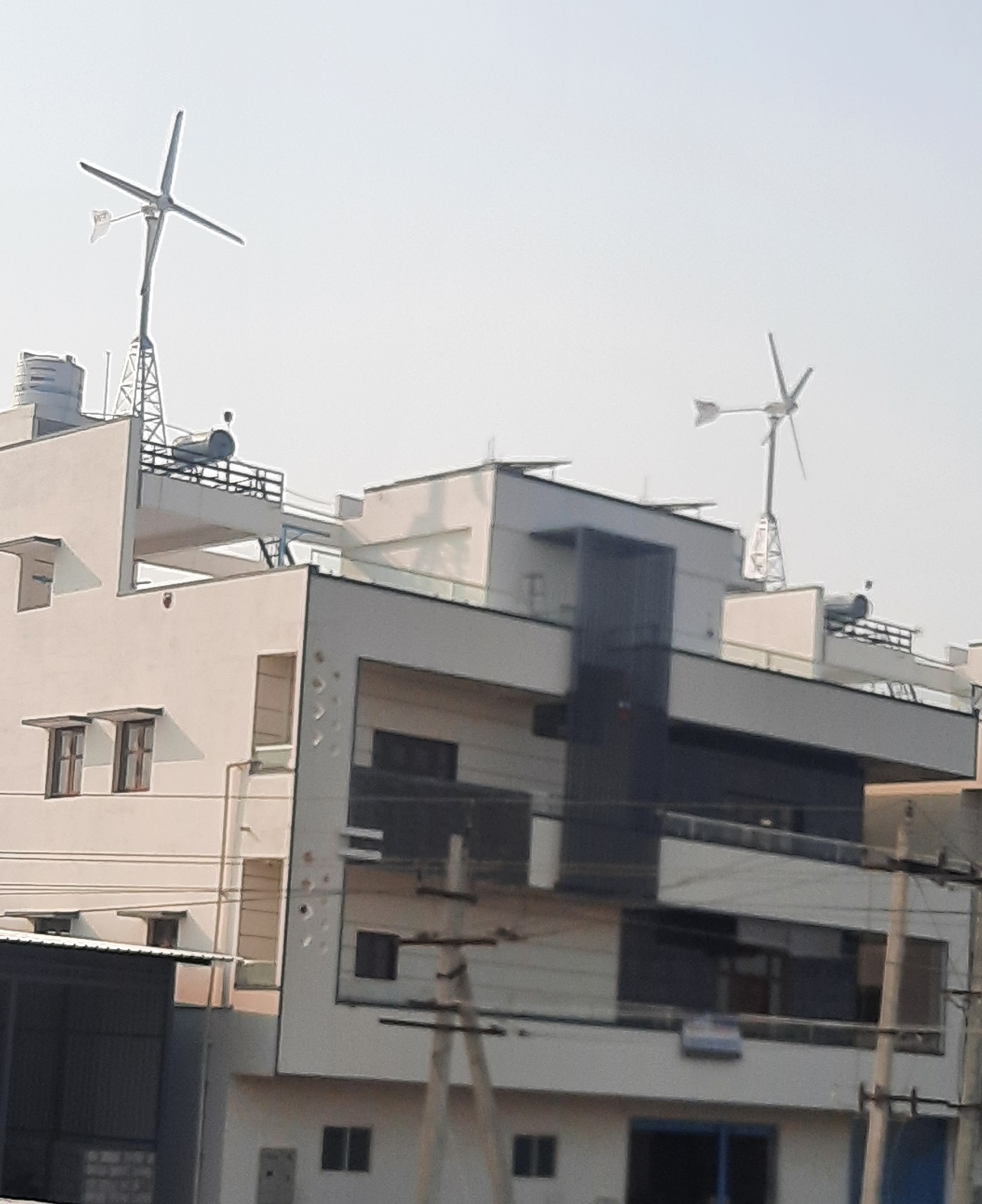
Domestic windmills are not common but I saw this somewhere near Mandya, Karnataka

So yes, wind is a harbinger of hope for the future.  Though maybe not without its own issues. Wind energy can obviously be produced only where the winds are strong and fairly sustained through the year—and there are not too many places like that in the world. Through the day and through the year, wind intensity changes, so that wind energy is not generated throughout—it is an intermittent source.  And of course, winds can be unpredictable, so the generation cannot be assured.  Wind turbines are noisy and also change the landscape drastically. Wind energy potential is highest in remote places, which makes investment in transmission lines and related equipment essential. They also have impacts on local biodiversity and even migratory birds. While the cost of producing wind energy has come down in the last few years, and it is a competitive source, technology and R&D have to progress further so that costs may be brought down.

India has committed to producing 140 GW of wind energy as part of its climate ambitions.

But for us in India, winds are not important just for their energy potential.  Lives and livelihoods here have always centered around the monsoon winds—which bring or don’t bring us our rains. The monsoon–a periodic wind in the Indian Ocean and southern Asia—is our lifeline. The summer monsoon usually happens between April and September and bring us our heavy rains. The winter monsoon, which lasts from October to April don’t bring much rain as far as India is concerned. The English word monsoon comes from the Portuguese monção, but ultimately from the Arabic  (mawsim, “season”). 

So all the more reason to understand the role of winds in our lives, and mark Global Wind Day!

And a fun fact to end with:

Ramakkalmedu, also called God’s Own Hill-station, in Idukki district, Kerala, is the windiest place in India and one of the windiest places in Asia. Throughout the year the wind speed here is around 35 km/hr. Located at a height of about 3500 feet, the place is home to–what else–a wind energy farm with a capacity of 12.5 MW!

–Meena

Planet Ocean Explorer: Jacques Cousteau

8 June is celebrated as World Oceans Day. Oceans cover the majority of the earth. In fact, it has often been said that our home should be called Planet Ocean rather than Planet Earth. But compared to terrestrial ecosystems, oceans are still less studied and understood. Scientists are continuing to explore and discover unimagined treasures in the marine world.

One man who understood before others did, how critical our Water Planet is to our survival and who dedicated his life to learning what lay deep in the marine waters, and opened up these hidden treasures for the world, was Jacques Cousteau.

Jacques-Yves Cousteau was born on June 11, 1910 near Bordeaux, in France. He learned to swim when he was just four. When he was 10 his family moved to New York for two years. It was at a summer camp that Jacques first learned how to go diving and snorkelling. He continued to snorkel after the family moved back to the Mediterranean city of Marseilles in France.

In 1930, at the of age 20, Jacques Cousteau passed the tough exams for the French Naval Academy where he trained for two years before spending a year at sea. In 1933, he was commissioned as a second lieutenant and spent most of the next two years sailing the world’s seas. In 1935, Cousteau started training to become a naval aircraft pilot. He had almost completed his training when, in 1936, he was involved in a near-fatal car crash. His right side was paralyzed and he had multiple fractures in his arms. This ended his dream of a career in flying. Cousteau underwent months of physical therapy, and spent a lot of time swimming in order to strengthen his fractured arms. He was not satisfied with skimming the surface of the water, he was curious to know what lay deep below. He started diving deeper with a pair of improvised swimming goggles and was amazed to discover the beauty of the sea-floor. He decided that he would make diving his life’s work. He also re-joined the navy as a naval gunnery instructor.

As he attempted deeper dives, Cousteau was frustrated about the limited amount of time that he could remain submerged. The only equipment available for divers then was the Self-contained Underwater Breathing Apparatus (SCUBA) that had been invented in 1926.  In 1943, Cousteau met Emil Gagnan a French engineer and together they experimented to develop a device which had compressed air cylinders that would enable divers to remain underwater for a longer time. Thus the diving regulator or aqualung was born, co-invented and patented by Gagnan and Cousteau. Cousteau immediately incorporated the new device into SCUBA apparatus. It gave him exactly what he needed. He could dive freely and stay under longer without the previous cumbersome equipment.

After the war ended, Cousteau began underwater research for the French Navy. In addition to this he also used the new equipment for underwater archaeology work to study the wreck of sunken ships.

In 1951, Cousteau took scientific leave from the Navy and began his own sea expeditions. Cousteau shared his plans to make undersea film documentaries with wealthy British philanthropist Thomas Loel Guinness. Guinness bought an old car ferry and leased it to Cousteau for a token 1 franc a year. Cousteau named the ship Calypso. Cousteau and Calypso would, not too far in the future, become popular names for TV audiences all over the world. But before the ship could become functional, it needed equipment and crew. Cousteau begged for government grants and pleaded with manufacturers for free equipment.

To raise more money, Cousteau and Frédéric Dumas co-authored a book The Silent World, about their pioneering adventures in SCUBA diving. Published in 1953 the book was an instant hit, and has continued to sell; to date it has sold over 5 million copies. In 1956, Cousteau released his first colour movie documentary, also called The Silent World. This was the first time that common people had a peep into a hitherto unimagined underwater world. Today we have access to incredible footage of the marine environment through numerous channels, and with the help of highly sophisticated technology. Cousteau’s film was the first to bring glimpses of this world onto TV screens. The film won the Academy Award for Best Documentary in 1957.

Cousteau’s film inspired a lot of people to take up deep sea diving and explore the ocean depths. This also led to a rise in the demand for SCUBA equipment, especially the aqualung.

Cousteau officially retired from the French Navy in 1956 with the rank of Captain. He continued to make underwater documentaries, exploring different facets of the marine environment. His films, and his pioneering work, won many awards. Jacques Cousteau became a familiar name for TV audiences in the 1960s and 1970s.

His work also created a new kind of scientific communication. The simple way of sharing scientific concepts, which characterized his books and films, was soon employed in other disciplines and became one of the most important characteristics of modern TV broadcasting.

Cousteau was more than an inventor, explorer and documenter of the oceans. He inspired generations of marine biologists, teachers, explorers, divers and others for whom the oceans became a personal and professional passion. He was also an activist, and advocate for respectful protection and conservation of the ocean and its resources. In 1973, along with his two sons and Frederick Hyman he created the Cousteau Society for the Protection of Ocean Life. The Cousteau Society continues its mission of exploring the seas, establishing protected areas for endangered species and advocating for the silent world which cannot advocate for itself.

Cousteau believed that people protect what they love. And he made it his life’s mission to create that love for Planet Ocean. Jacques-Yves Cousteau died age 87 of a heart attack on June 25, 1997 in Paris.

When Cousteau first discovered and shared the wonders of the ocean in the 1950s, plastic waste was relatively manageable. Today the oceans are threatened as never before with the issue of plastic pollution with an estimated 8 million tonnes of plastic entering the ocean annually. It is estimated that by 2050, there will be more plastic than fish in the ocean.

The theme of the recently celebrated World Environment Day (5 June) was Beat Plastic Pollution. The theme of World Oceans Day (8 June) is Planet Ocean. This is a good week to remember Cousteau who gave us the first glimpse of this wondrous planet. 

–Mamata

Don’t Stick Out!

That is surely the mantra of the Stick Insect! Known for one of the most effective camouflage strategies in Nature, the stick insect resembles the twigs among which it lives. It belongs to the order Phasmatodea, which includes the other master camouflaguer, the leaf insect. In fact, the name Phasmatodea derives from the Greek word phasma, meaning an apparition, phantom, or ghost.

The order Phasmatodea has over 3000 species in all—but how can one be sure, when many of them may be so well-hidden that they are impossible to detect!  India has about 150 of these species. These creatures are related to grasshoppers, crickets, and mantises.

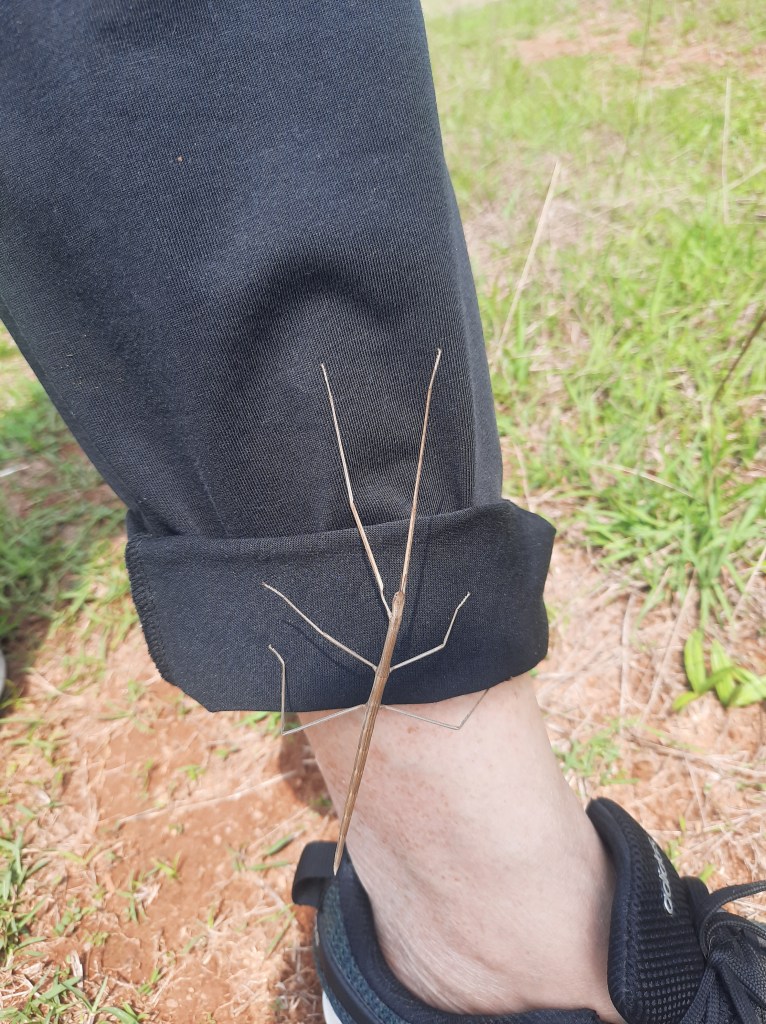
We were recently in the Western Ghats, where we encountered a beautiful Stick Insect. About 6 inches in length from the forward-legs to the tip of the body, it rode on a friend’s leg for a part of our walk through the wilderness.  Going by stick insect standards, it was a only a moderately sized one, given that these insects range in length from the half-inch-long Timema cristinae of North America, to the 13-inch-long Phobaeticus kirbyi of Borneo. The latter measures over 21 inches with its legs outstretched, making it one of the world’s longest insects. Female stick insects are normally larger than their male counterparts. They are usually brown, green, or black, but some are brightly-coloured or striped. Some have wings. All continents except Antarctica have stick insects, though they are most abundant in the tropics.

The stick insect, also called the walking stick, spends most of its time up on trees, munching on leaves. When it senses a predator such as a bird approaching, it practically freezes, blending with the twigs and branches around it. In fact, studies suggest that some species have honed the ability to mimic the motion of twigs swaying in the wind to deceive even particularly observant predators. Stick insects are largely nocturnal and spend most of their days lying motionless on or under plants, and only coming out at night to feed. Unfortunately, the stick insects’ defences are not effective against bats which hunt by echo-location rather than sight, and these may be their most dangerous predators.

Even though their camouflage is extremely effective against most predators, they have several other tricks up their sleeves. Some species have evolved to release foul-smelling chemicals to deter predators, while others can secrete a liquid that temporarily blinds their enemies.  Even if a predator spots a stick insect, it usually grabs a leg, which is the most prominent part of the insect. But that doesn’t bother our insect too much, because many of the species can detach the leg and scramble away—only to grow back the lost limb later.

And these master-tendencies start even at the egg stage! The females of some species lay eggs that look like plant seeds. This puts off carnivorous insects from eating the eggs!

Some of the stick insect species are today endangered, and the numbers of some are falling—thanks largely to habitat destruction and pesticide use. Another threat to these gentle insects is collection for the pet trade. Carausius morosus, the ‘common’ or ‘Indian’ or ‘laboratory’ stick insect, which has its origins in India, is one of the species of Phasmatodea often kept as pets by schools and individuals.

Alas, however well a creature has evolved to protect itself against natural threats, there is little protection against humans!

–Meena

.

International Day of Action for Rivers: A Detour to Dawki

Pollution, mining, deforestation, physical impediments created by man—a host of challenges confront India’s rivers. But a bright spot in all this is the Dawki or Umngot River in Megalaya. In the 2021 listing of the cleanest rivers of the world, Dawki made it to Number 4, behind only the Thames (England), Tara River (Montenegro-Bosnia Herzegovina), and St. Croix (USA). An incredible achievement by any standards.

Dawki river

I had the good fortune to visit Megalaya recently and Dawki was an essential part of the itinerary. Reality is not far from the numerous idyllic pictures on the internet (one from the Meghalaya Tourism site reproduced here!). It is indeed glass-like, a clear green to greeny-blue, with visibility right to the bottom of the river, going down to about 50 feet in parts. The boat-ride on the river was one of the most soothing experiences.

Pic: https://www.meghalayatourism.in/

Much of what is good in the Northeast, including how well the Dawki is maintained, can be attributed to community participation in the safegaurding and nurture of community resources. If only these mindsets and practices could be replicated in other parts of the country! (But actually, I am more worried about the wrong mindsets and practices from other parts of the country reaching the Northeast!).

An interesting part of the experience was that the ghat from where one takes the boat-ride is bang on the Indo- Bangladesh border. In fact, only a line of small stones separates the two countries! There is active commerce between the two sides, with hands reaching out to take goods and receive money (Indian currency acceptable). I tasted a number of pickles from a vendor on the other side. And of course the photo-op of the place is pics of people straddling the border or line of stones! The border is manned by the BSF on our side, who keep a sharp lookout  for cross-border movement especially as evening falls.

But getting back to rivers and river quality.  Water quality can be defined as the physical, chemical and biological characteristics of water. Parameters that are frequently sampled or monitored for water quality include temperature, dissolved oxygen, pH, conductivity, Oxidation-Reduction Potential, and turbidity.

Of these, dissolved oxygen or DO is considered the most important indicator of water quality of rivers, lakes etc. The higher the DO, the better the water quality. Lower Dissolved Oxygen means that there is not enough oxygen in the water to support fish and other aquatic life. Low DO is a result of excess growth of algae in water. Such growth happens where there is an excess of phosphorus and nitrogen going into the water. These chemicals come into the waterbodies through discharges from wastewater treatment, agricultural run-off (from the use of pesticides and fertilizers) and storm water runoff.

Rivers are our lifelines, and quality of the waters in our rivers is an area of major concern both in India and across the world. It is to focus attention on this that an International Day of Action for Rivers was declared in 1997. This was at the initiative of International Rivers Network, Narmada Bachao Andolan (India), and Biobio Action Group (Chile), and is marked on March 14 every year.

On this day dedicated to saving, celebrating, and creating awareness about the importance of rivers, let’s think about our rivers and how our actions impact them. What will it take to have some more Indian rivers join a lonely Dawki on the list of the cleanest rivers of the world?

–Meena

Wrap it up!

On Saturday, our 4 year-old neighbour celebrated his birthday. I was my foster grandchild’s ‘plus one’.

It was a lovely affair—games, fun, frolic and yummy kiddy-eats.

And of course gifts of various sizes and shapes. What united them all was that they were beautifully wrapped in metres of gift paper—shiny, animal printed, cartoon printed, etc. etc.

And the birthday boy, as would any 4-year old, quickly ripped open the packages eager to see what was inside. And the sad pile of paper at his side grew and grew and grew.

Which got me wondering about the waste the practice of gift-wrapping produces.

I fully appreciate how beautiful wrapping adds to the allure and attraction of the gift. How a well-wrapped gift is elegance itself. In fact, countries like Italy and Japan have taken this to the level of a fine art, so that one would rather look at the gift and not open it at all!

But…

….the waste!

Wikipedia informs us that ‘In Britain, it is estimated that 226,800 miles of wrapping paper is thrown away annually at Christmas. In Canada, 6 million rolls of tape are used and discarded yearly for gift wrapping at Christmas.’ There are no statistics that I could easily find for other countries, but of course, with the US being the largest consumer of wrapping paper, the waste there must be in multiples of these figures.

The global market for wrapping paper is estimated at about $ 17.3 billion and growing at a compounded rate of 7.4%. It makes up 2-3% of the world’s paper and paper board market. India and other countries with growing middle classes are expected to be high-growth markets for this product. It is estimated that total sales of gift paper in India will reach about $ 443 billion in 10 years.

I am not sure how much paper all this translates into, but surely sounds like a lot. And most of it is thrown out with the garbage the morning after.

We are assured by many industry sites that gift wrapping paper is sustainable, being made of recycled paper. But making recycled paper in beautiful colours and printing complex designs on them, embossing them, adding gold and silver touches—all of these take energy and release pollutants. And then they go straight into the dustbin. And let’s not forget the increasing trend of shiny, metallic and plastic wrapping paper which are surely not environmentally benign either in the production or disposal. Not to talk about the tape, ribbons, decorative flowers and bows that we put on the gifts.

As we worry about our climate goals and Sustainable Development Goals, this, to my mind, must find a place in our worrying. It’s not as big and visible as fashion and clothing to catch international attention and set off movements towards sector-sustainability. But it surely warrants some thought.

Environmentally conscious people do use alternatives, from unwrapping gifts carefully so as to reuse the paper, to getting creative and making beautiful wraps with newspapers or waste papers, to using bottles and jars for some items, to popping them into a reusable gift bags without wrapping them, to deploying reusable decorative boxes. The Japanese tradition of furoshiki stands out in this—it is the art of using reusable fabric to create beautiful gift wrapping.

But I think society itself has to change its attitude. If it continues to place more value on style than substance, the trend of increasingly fancy wrapping will continue upwards, as disposable incomes increase and societal norms of what is expected grow more and more elaborate.

It is quite the thing these days to say ‘No gifts please’ on invites. But that’s not always possible. No child wants a gift-less birthday party!* Maybe we could make a start by saying ‘No gift-wrapping please’?

–Meena

* My friend Alka did try this once. She specified that kids should not bring gifts for her son’s birthday. Only to get a call from an anxious 10-year old, enquiring if no-gifts also meant no return-gifts! She assured him it did not, and the attendance at the party was 100%.