WASTE NOT WANT NOT: WORLD THRIFT DAY

The First International Thrift Congress was held in Milan, Italy from 26 to 31 October 1924.  It was attended by over 300 delegates from 27 countries, who shared a vision: to promote savings as a key to financial security and independence. This was a period following the First World War which was marked by financial instability, and loss of confidence in banks. Banks were adopting a variety of measures and incentives to encourage people to deposit savings in banks in order to secure some stability for future uncertainties. In fact the word savings itself originates from the early 14th century, symbolizing ‘salvat’ a way to protect oneself from life’s uncertainties.  

On the last day of the conference one of the organizers Professor Filippo Ravizza proposed that there should be an annual International Savings Day or Thrift Day, as a reminder of the importance of saving, and to foster the habit of saving. It was unanimously agreed that this should be marked on 31 October. The informal symbol chosen to represent World Savings Day was the piggy bank.

Over a hundred years later, World Thrift Day continues to remind about the value of saving. Taken in a broader context, the word ‘thrift’ implies more than just accumulating coins in a piggy bank, or money accrued in savings accounts and deposits in banks. It refers to the prudent management of one’s resources. It is the opposite of extravagance and waste. It encompasses the philosophy and practice of moderation, conserving, and economizing.

Perhaps there is no better example of a life led by these principles than Mahatma Gandhi. For Gandhiji thrift was not just a habit of saving money; it was an ethical and philosophical principle which guided every aspect of his life. For him, the most direct application of this was in the frugal use of resources in one’s daily life. While his own lifestyle reflected this in every moment of his daily routine, he also expected that the people who lived in his ashram do the same.

There are several anecdotes recalled by his colleagues and ashram inmates that illustrate this.

Kishorelal Mashruwala started working with Gandhiji from the time that Gandhiji returned to India from South Africa, and continued to be closely associated with him for the rest of his life. He recounted some incidents.

‘One of my young nephews lived with me at Sabarmati. He once tore his clothing during play and then went straight to Bapu’s room. Bapu saw the torn condition of the cloth, and when he saw my wife later he showed his displeasure at it. He said: “One need not be ashamed of clothes repaired with sewing or patches. Poverty in itself is not a matter for shame. But there is no excuse for a person to put on unmended or dirty clothes. A cloth must be repaired as soon as it is torn, and washed if it has become dirty”.

It is well known that Gandhiji never threw away a used envelope or telegraph form that was blank on the reverse. He would collect these and convert them into scribbling pads, to be used on the day of his silence, or to write drafts of his articles and important letters, or, sometimes, to write notes to be left for others, or sent to them. Mashruwala recalled this: ‘I may also mention a habit which I developed under his influence. It is that of preserving and using bits of paper written on one side, wrappers on book-post packets etc., and used envelopes. Perhaps the instinct of thrift was inherent in me, and it got encouragement by his example.’ 

Kamlaben Patel came to stay in Sabarmati Ashram with her father when she was a young girl. Every inmate was expected to participate in all tasks from cleaning, washing, cooking, and spinning; and every resource was to be used with respect and frugality. She recalled one incident.

‘One day Bapu was passing by the store when the goods were being unloaded. He stopped and enquired how much soap had come. The soap that we all used was round and white but hard as stone, and the cheapest one that was available. The next day after the women’s prayer Bapu enquired about how much soap was used by each family. From their replies it was calculated that the cost of soap for each person was from 75 paise to one rupee. Bapu proposed that the use of soap be reduced. The women frankly told Bapu that any reduction in use was not possible as the soap was used to wash thick white khadi clothes, sheets, pillow covers, and mattress covers. Bapu said that “you all know that the Ashram runs on the donations of people. We claim to be servants of the people. Three hundred people live in the Ashram, and if each one used one rupee worth of soap, what will our donors feel about 300 rupees being spent on soap every month? Even in the days when there was no soap, our clothes were clean were they not? You must consider reduction in soap use.” After a lot of discussion the women agreed to use 50 paise worth of soap each month. Bapu proposed 37 paise. The women said they would respond after more thought. The prayer meeting dispersed. The women reconvened and after considering all options, unanimously decided to inform Bapu that it was not possible to do with less than 50 paise worth of soap per person, and remain firm on this decision. After the prayer Bapu jokingly said that the women’s ultimatum was like the Viceroy’s ultimatum. He would go to Bardoli to provide an answer to the latter, but he bowed to the women’s ultimatum, and accepted their 50 paise demand.’ 

These insistencies may seem as if Gandhiji was bothering over trifles, but for him such thrift was not simply a habit of saving money, but a practice of core principles connected to self-sufficiency, non-violence and social justice.

He believed that self-sufficiency through Swadeshi was not just an economic protest against foreign goods but a practical lesson in self-reliance and dignity of labour.  He emphasized the respect for resources (material and human) that went into creating any product. He believed that wasting or careless use of any product was to disrespect the person who made it.

These were some of the pillars of Gandhiji’s concept of ‘trusteeship’, a principle that suggested that rich individuals should not see their wealth as their own to squander but as a trust held for the benefit of society, especially the poor. He believed that wealth beyond one’s basic needs should be used for the public good. 

Gandhiji believed that genuine happiness lay in contentment, not in endless satisfaction of demands. He encouraged individuals to voluntarily reduce their wants, arguing that this would lead to a more satisfying life and a more peaceful society.

These ideas are best summed up in Gandhihji’s maxim that ‘The world has enough for everyone’s need, but not for everyone’s greed’. He believed that the world naturally produces enough to satisfy the needs of every person, but insatiable wants lead to exploitation and environmental ruin.

World Thrift Day is a thus not simply a reminder of saving for a rainy day, but a promotion of a way of life that values and respects all resources and their wise use.

–Mamata

Operation Cat Drop: Borneo to Cyprus

As an environmental educator there was a popular story that we used to illustrate how everything is connected, and how one step can sometimes have a chain of unanticipated consequences that disturb the delicate balance of nature. The story goes thus:

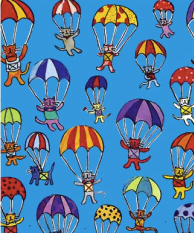
In the early 1950s, there was a severe outbreak of malaria amongst the Dayak people in Borneo. The World Health Organization tried to solve the problem. They sprayed large amounts of a chemical called DDT to kill the mosquitoes that carried the malaria. The mosquitoes died and there was less malaria. That was good. However, there were side effects. One of the first effects was that the roofs of people’s houses began to fall down on their heads. It turned out that the DDT was also killing a parasitic wasp that ate thatch-eating caterpillars. Without the wasps to eat them, there were more and more thatch-eating caterpillars. Worse than that, the insects that died from being poisoned by DDT were eaten by gecko lizards, which were then eaten by cats. The cats started to die, the rats flourished, and the people were threatened by outbreaks of two new serious diseases carried by the rats, sylvatic plague and typhus. To cope with these problems, which it had itself created, the World Health Organization had to parachute live cats into Borneo. Operation Cat Drop as it was called, air dropped a number of cats (numbers range from 20 to 1400!) into the region. This step was visualized as the initiation of a reverse cycle that could restore the chain of predator-prey, wherein the cats would feed on the rats which were posing the public health challenge.  The story did not continue to describe the new consequences of this step.

I remembered this story when I read a recent report where the problem and not the solution has started with cats!

This is on the small island nation of Cyprus in the eastern corner of the Mediterranean where currently cats outnumber the local human population!

Cyprus has a long history associated with cats. It is believed that cats were first domesticated in Ancient Egypt. But archaeological discoveries of cat remains close to human burial sites in sites in Cyprus dating back around 9500 years ago indicate that the interactions between humans and cats may have started here much earlier. It is speculated that cats must have been introduced to the island from the mainland, and there are several stories about this. One legend states that in AD 328 Saint Helena, a Roman Empress began construction on a monastery on the island. At that time a terrible drought afflicted the area, people fled and snakes proliferated. Helena got boatloads of cats shipped over from Egypt and established them in the area to destroy the snakes. The monastery was built, but also destroyed later and subsequently rebuilt several times. But the cats remained and thrived, and established themselves as an unofficial sub-breed known as the Cyprus Cat.

There is still a monastery, St. Nicholas of the Cats, that is believed to have been founded by St. Helena and where there are some cats which are purported to be the descendants of the original cats! The monastery has a tradition of taking in any stray cat brought to them in honour of the centuries of service of the felines. Cyprus itself is an island of cat nurturers where cat food dispensaries and other cat services are a common sight. This has also added to its tourist attractions (albeit for cat lovers!).

Cyprus Cats are part of the island’s identity; they are an example of how ecology, cultural history and animal love intersect. But they are also an example of how too much of a good thing can be counterproductive.

With the passage of time, no outside interference, and favourable conditions, the cat population on the island continued to grow. Unchecked breeding, especially in urban areas has now turned into an explosion of feral cats. The cats now outnumber humans. And that is a matter of concern for the civic authorities. Given cats’ predatory nature, a larger than sustainable population has the potential to wreak havoc with the island’s ecosystem. The feral cats threaten local wildlife, they become urban traffic hazards as they scavenge for food in the populated areas, and they themselves carry threat of diseases which could spread rapidly if there is an outbreak. Without sustainable measures the situation can reach an irreversible point. And ecologists are concerned that this point is close.

In recent years there have been programmes to control the cat population through sterilization, but the numbers have now exceeded manageable limits. The civic authorities feel the effective control and management of the issue needs huge funding, as well as a concerted effort which includes the active participation of NGOs, national as well as international animal welfare organisations, volunteers, the general public, as well as the tourists.

While the parachuted cats of the Borneo story became the saviours of the moment, it would be interesting to go back and review whether the cats, in turn, impacted the ecosystem. Meanwhile the Cyprus Cats continue to challenge the fragile balance.

–Mamata

Celebrating Artful Elephants

August 12 is marked as World Elephant Day. And it is also Ganesh Charurthi time. So an appropirate time to talk about elephants.

The Asian Elephant is an endangered species, with less than 50,000 left in the wild across the world. And hence the importance of marking this day as a way of raising awareness about elephants and the dangers that threaten them.

What we see is what we grow to love and respect. And hence the importance of all the depictions of elephants we see around us—from sari borders to sculptures in ancient temples to the life-sized sculptures made from invasive weeds found in the Nilgiris, crafted by indigenous communities. Each and every one of them is an opportunity for education about our biodiversity and this magnificent species.

One can understand the ubiquitousness of elephant imagery in India—after all we hold about 60 per cent of the numbers. But interestingly, it is Taiwan which was well-known for elephant imagery all over its public parks and schools, in the form of Elephant Slides.

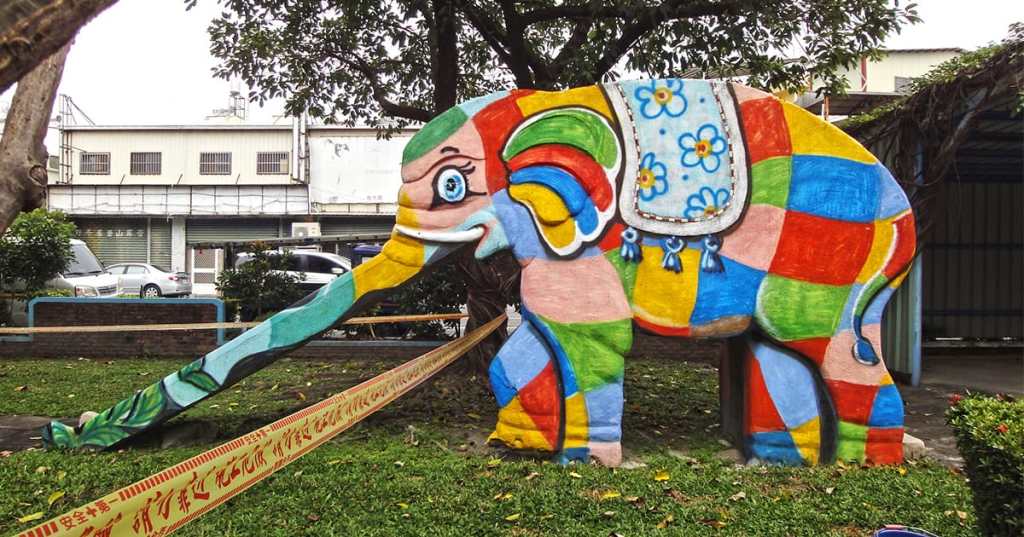
These are the whimsical, solid, painted playground fixtures affectionately known as “Grandpa Elephant”— and they hold fond memories for a generation of Taiwanese kids, now grown.

The elephant slide was a fixture of childhood in Taiwan from the 1960s through the 1980s. Found in schoolyards and public parks, these slides were typically made from china-mosaic or concrete, with a stairway or ladder up the back and a gently curved trunk functioning as the slide.

Many bore motivational slogans etched into the sides: “Strengthen your body to build the country.” Even in play, the messaging was patriotic. But for kids? It was all about the joy of scrambling up that broad back and riding the trunk like it was the gateway to an imaginary world.

Now, with safety codes tightened and tastes modernized, many of these eleslides have disappeared. But a movement to preserve and honour them has taken root, led by artists, writers, and nostalgic grown-ups determined to keep these gentle giants from fading away completely.

A Concrete Revival

Writer Yu Chiu-ling and designer Hsiu Pi-cheng have been at the forefront of this effort. Yu founded the Facebook group “Find Our Elephant Friends,” a digital scrapbook of elephant slide-sightings across the island. Hsiu has documented over 400 slides, many tucked away behind schools or community centres, quietly waiting to be remembered.

Their work isn’t just about playground preservation — it’s about cultural memory. About honouring the handmade, the imperfect, and the deeply local.

Elephants Across Borders

Asian elephants range across. Bangladesh, Bhutan, Cambodia, China, India, Indonesia, Laos, Malaysia, Myanmar, Nepal, Sri Lanka, Thailand, and Vietnam. Strangely, there have never been elephants in Taiwan in the wild in recorded history. While elephant fossils have been found on the island, indicating their presence in prehistoric times, there is no evidence to suggest that elephants lived in Taiwan during the period of human history documented by archaeology and literature. 

But Taiwan does have the most emotionally iconic version of the elephant slide!  You will also find their cousins in parks across Japan, Thailand, Vietnam, and parts of Eastern Europe. From Soviet-era concrete sculptures to candy-coloured cartoon versions in Tokyo suburbs, the idea of turning a beloved elephant into a playmate has clearly crossed cultures. But sadly, no ele-slides in India!

Unfortunately today, both real elephants and their concrete urban renderings are endangered. One is fighting for survival in an increasingly human-dominated world. The other is quietly disappearing with changing times.

Elephants have always symbolized memory, strength, and gentleness.

Let’s protect the real ones. And let’s remember the playful ones, too.

Happy Ganesh Chaturthi!

–Meena

PIC: https://www.thisiscolossal.com/wp-content/uploads/2023/07/pi-og.jpg

Nature’s Libraries: Where the Wild Data Lives

National Librarian’s Day is celebrated on August 12th every year to commemorate the birth anniversary of Dr. S.R. Ranganathan, the “Father of Library Science in India”.

When we say “library,” most people imagine rows of books, a quiet reading room, and perhaps a stern librarian at the desk. But in the language of library science, a “library” is defined less by its shelves and more by its functions — acquiring, organising, preserving, and making knowledge accessible.

By that definition, the world is full of libraries that hold no books at all. Some store bird calls. Others archive satellite images. Some collect DNA sequences. In fact, they are not physical spaces at all. Many are vast online repositories where scientists and citizens alike can deposit, discover, and use data.

On this Librarians’ Day, let’s explore how these nature and biodiversity depositories perform the same core functions as traditional libraries — only their collections are wild, living, and often invisible to the naked eye.


Acquisition: Gathering the Wild

Libraries begin by collecting materials. In biodiversity repositories, this might mean researchers uploading recordings to Macaulay Library (Cornell Lab of Ornithology) or Xeno-canto, which crowdsource bird calls from around the world.

  • Example: iNaturalist “acquires” photographs and species observations from millions of contributors.
  • Example: GBIF (Global Biodiversity Information Facility) harvests species occurrence data from institutions and citizen scientists alike.

Just as a public library acquires books from publishers and donors, these nature libraries acquire data from field biologists, monitoring equipment, and enthusiastic amateurs.


Organisation: Making Sense of the Collection

Without organisation, a library is just a warehouse. And hence the focus on developing classification systems. Dr. S.R. Ranganathan primarily used and developed the Colon Classification (CC) system. The Dewey Decimal system is the widely prevalent one used in most libraries across the world.

Biodiversity data portals however are based on the Linnaean system of classification and organize living organisms based on evolutionary relationships. This involves classifying organisms into hierarchical groups like kingdom, phylum, class, order, family, genus, and species. This is.

  •  Example: BOLD (Barcode of Life Data System) and GenBank organise genetic sequences by species, geography, and collection method.
  • Example: ITIS (Integrated Taxonomic Information System) standardises names so scientists worldwide speak the same language.

The result? You can search for a frog by its Latin name, its genetic barcode, or the location where it was found — just like you can search for a book by title, author, or subject.


Preservation: Guarding the Record

One of a library’s noblest duties is preservation — ensuring the information remains available for future generations. In biodiversity repositories, this may involve:

  • Storing acoustic recordings (bat calls, whale songs) in durable digital formats.
  • Archiving satellite imagery in systems like NASA Earthdata and Global Forest Watch for long-term environmental monitoring.
  • Keeping herbarium records in Tropicos and long-term forest data in ForestGEO.

Like rare manuscripts in acid-free folders, these data are preserved against loss, decay, and obsolescence.


Access: Opening the Doors

Libraries thrive when they are accessible. Many biodiversity repositories are open access — anyone can explore them. And importantly, contribute to them.

  • eBird lets birdwatchers view migration patterns and personal checklists.
  • FishBase offers species profiles for students, fishers, and marine scientists alike.
  • OBIS (Ocean Biogeographic Information System) gives marine biologists open access to ocean species occurrence data.
  • Merlin helps users identify birds by their calls.

Some repositories, like Wildlife Insights or certain ethnobotanical databases, may have restricted access for sensitive data — similar to a library’s rare books section.


Dissemination: Spreading Knowledge

A library doesn’t just keep information — it shares it. Biodiversity repositories publish datasets for conservation planning, scientific research, and education.

  • Movebank shares animal movement data for migration studies.
  • TRY Plant Trait Database supports climate change modelling.
  • The Digital Himalaya Project disseminates ethnographic and ecological knowledge, bridging science and tradition.

Why These Libraries Matter

By meeting the same functional standards as a traditional library — acquisition, organisation, preservation, access, and dissemination — biodiversity depositories are not just “like” libraries, they are libraries. Their collections may be recordings instead of novels, or genetic codes instead of encyclopaedias, but the principles are identical.

In a time of rapid environmental change, these libraries are our collective memory-keepers for life on Earth. They store the songs of rare birds, the paths of migrating whales, the genetic fingerprints of endangered plants, and the traditional wisdom of communities who have lived with nature for centuries.

So this Librarians’ Day, remember: the guardians of knowledge are not only in buildings with books. They are also in digital sound archives, genetic databases, satellite imagery vaults, and underwater biodiversity surveys. Wherever knowledge is collected, cared for, and shared — there, you will find a library. Dr. Ranganathan, I am sure,  would have been excited to explore the new realms of libraries and library science!

–Meena

There are a wide range of data depositories and libraries related to nature and biodiversity across different domains—ranging from sounds (like bat and bird calls) to genetics, species observations, satellite imagery, and more. Here is a list of some of these depositories, which Chat GPT has been kind enough to put together!


🦇 Acoustic and Sound Libraries

  1. Bat Call Library – Region-specific databases like EchoBank or ChiroVox.
  2. Macaulay Library (Cornell Lab of Ornithology) – Massive archive of bird sounds, videos, and photos.
  3. Xeno-canto – Open-access database of bird calls and songs from across the world.
  4. AmphibiaWeb – Includes some amphibian vocalization data.
  5. BLB (British Library Sound Archive – Wildlife Section) – Historical and contemporary recordings of animals.

🌍 Species Observations and Biodiversity Portals

  1. GBIF (Global Biodiversity Information Facility) – Gigantic open-access database of species occurrence data from around the world.
  2. iNaturalist – Crowdsourced species observations with photos, locations, and identification support.
  3. India Biodiversity Portal – India-specific citizen science portal on biodiversity with species pages, maps, and observations.
  4. eBird – Global birdwatching database with detailed observation checklists and trends.
  5. OBIS (Ocean Biogeographic Information System) – Marine species occurrence data.

🧬 Genetics and Taxonomy

  1. BOLD (Barcode of Life Data System) – DNA barcoding records of species.
  2. GenBank – Nucleotide sequences, often used for genetic identification of species.
  3. Encyclopedia of Life (EOL) – Species information including taxonomy, distribution, and media.
  4. ITIS (Integrated Taxonomic Information System) – Authoritative taxonomic info, mainly for North America.

🛰️ Remote Sensing and Environmental Data

  1. MODIS / NASA Earthdata – Satellite data on vegetation, land cover, fires, etc.
  2. Global Forest Watch – Forest cover, loss, and gain data based on satellite imagery.
  3. NOAA Climate Data Records – Atmospheric, oceanic, and climate-related datasets.

🐾 Camera Trap and Movement Data

  1. Movebank – Open-access database for animal movement (GPS collar) data.
  2. Wildlife Insights – Global camera trap image database, AI-assisted.
  3. PanTHERIA – Ecological and life-history data of mammals.

🌿 Botanical and Ecological Datasets

  1. TRY Plant Trait Database – Global plant trait data.
  2. Tropicos (Missouri Botanical Garden) – Botanical information with herbarium specimen records.
  3. ForestGEO (Smithsonian) – Long-term forest monitoring data across the globe.

🌊 Marine and Aquatic Life

  1. FishBase – Comprehensive fish species database.
  2. SeaLifeBase – Same as FishBase but for all non-fish aquatic life.
  3. Reef Life Survey – Citizen science marine biodiversity data.

📚 Literature and Traditional Knowledge

  1. Digital Himalaya Project – Ethnographic and ecological archives.
  2. Ethnobotanical Database – Plant use in indigenous and traditional medicine.

PIC: wildlifedata.org/

DESIGN GURU ASHOKE CHATTERJEE: A TRIBUTE ON HIS 90TH BIRTDHAY        

Ashoke Chatterjee (AC) does not like to be called ‘design guru’. But it is really not possible to come up with a better title for this piece on him. For though not a designer, his influence on design and design education in India has been immense. After all, he was Executive Director of India’s first and leading design school, the National Institute of Design (NID) from 1975 to 1985; a Senior Faculty Advisor for Design Management and Communication from 1985-1995, and Distinguished Fellow at NID from 1995 till his retirement in 2001.

AC played a critical role in conceptualizing the meaning of design in the Indian context. In 1977, he brought together UNIDO and International Council of Societies of Industrial Design (ICSID) members, designers, design-educators and others from across the world to the NID campus at Ahmedabad for a 2-day symposium. The meeting ended with the historic Ahmedabad Declaration which embodies the value of humanism in design. The core of the statement affirms:

  • ‘Its firm conviction that design can be a powerful force for the improvement of the quality of life in the developing world;
  • Its firm belief that designers must have a clear understanding of the values of their own societies and of what constitutes a standard of life for their own people;
  • That design in the developing world must be committed to a search for local answers to local needs, utilising indigenous skills, materials and traditions while absorbing the extraordinary power that science and technology can make available to it;
  • That designers in every part of the world must work to evolve a new value system which dissolves the disastrous divisions between the worlds of waste and want, preserves the identity of peoples and attends the priority areas of need for the vast majority of mankind’.

AC has lived this spirit and has helped designers and design-students across the country imbibe this spirit. He made it a fundamental principle of design education that students needed to understand that design is not restricted to contributing to business profits but also includes contribution made to the livelihoods of artisans, farmers, and the marginalized; and that designers must grapple with social issues. He was one of the early votaries of sustainability and brought this understanding to the education of designers.

As AC is always the first to aver, he is not a designer. He went to Woodstock School, after which he took an Economics degree at St Stephens College, New Delhi. Following this, he did his MBA at Miami University in Ohio, USA. He was with the International Monetary Fund in Washington DC, where he worked as a communications specialist, the Indian Tourism Development Corporation etc., before finding his home in NID and Ahmedabad.  He has advised, and advises, several national and international agencies including INTACH, Water Supply and Sanitation Collaborative Council (Geneva), the Gujarat Ecology Commission, the Government of Rajasthan Department of Health.  He served for many years as honorary president of the Crafts Council of India.

We have had the good fortune to regularly interact with AC over the decades. He was a not-infrequent visitor to the Centre for Environment Education where we worked for many decades, and each occasion brought its laughter, learning and a warm sense of having a caring mentor. He has been on the Governing Council (GC) of CEE from the early years, and as a local GC member, was invited for brainstorming, meetings, events, certificate-distributions and what have you—and if he did not have any prior commitments, he would attend.  He generously served on the advisory committee of several large projects that CEE was involved in, and brought his wisdom to bear not only on the content and design, but also on stakeholder management. As programme leaders, we would often be called into the GC meetings to make presentations on our projects; the butterflies in our tummies would settle when we met his twinkling eye, and he nodded ever-so-slightly to us. And after the presentation, he would sometimes pass us a little chit saying that we had done a good job. That truly made our day!

Ashoke Chatterjee played a key role in the National Drinking Water Mission, which in the late 1980s was tasked with ‘providing safe drinking water to all villages, assisting local communities to maintain sources of drinking water in good condition, and for specific attention for water supply to scheduled caste and scheduled tribe communities.’ AC prepared a road map on the communications aspect of this initiative, without which the gains could neither have been attained nor sustained. He worked closely with CEE in developing communication and education on fluorosis, a disease endemic to large parts of Gujarat.

With all his commitments, AC writes too. Dances of the Golden Hall on the art of Shanta Rao, and Rising, on empowerment efforts among deprived communities in rural Gujarat, are among his well-known books. His latest work (with Harji Malik), in English and Hindi, is titled Learning Together at Jawaja and chronicles the 50-year journey of the Jawaja project.

There is never a meeting with AC when we don’t come away feeling enriched—both as professionals and as human beings.

THE RURAL UNIVERSITY, JAWAJA

One of the criticisms against academic institutions is that they are far removed from every day realities and seldom contribute in solving real-life challenges. The Jawaja project undertaken by IIM Ahmedabad in partnership with the National Institute of Design (NID), Ahmedabad is an early exception. Ashoke Chatterjee was a key part of this.

It was in 1975 that Ravi Matthai, IIM-A’s legendary first fulltime director, set out on a journey to see how corporate management principles could be used to solve the major problem facing India–poverty. Ravi Matthai had stepped down as Director in 1972, and could now devote time to such a project.

The decision was taken to work in Jawaja, a drought-prone district of Rajasthan, consisting of about 200 villages and a population of 80,000. There seemed very little scope for development there, given the arid landscape and lack of water and other physical resources. But Prof Ravi Matthai had a different perspective, because he saw people as the biggest resource.

As the project team understood the area better, they found that the area had a 300-year tradition of leather-craft. The communities there were also skilled at weaving. And so the project decided to build on these skills to develop sustainable livelihoods for the communities there. Prof Matthai roped in NID to join hands with IIM-A, to work on livelihoods and empowerment of the communities in Jawaja. Thus along with Ashoke Chatterjee, his counterpart in NID, he started the journey which involved many faculty from both institutes.

The idea was to connect traditional artisans with contemporary disciplines of management and design, and knowledge institutions which had this knowhow. There were some important basic principles underpinning the effort. The first and foremost was that the relationship was one of mutual respect and learning—after all, even as the communities learnt new skills, the faculty of the institutions were learning how their knowledge could be put to use in solving social problems. Another important aspect was to see how much of the value chain could be controlled by the artisans and communities themselves, so that their incomes could be enhanced. The idea was to innovate and design new products which would have new markets, so that the traditional value chains could be broken and the craftspeople could play a greater role in more areas. The focus was also on working in groups, to give greater resilience and strength to the efforts.

The process was, by design, a gradual one, moving from basic products which did not need very high quality craftsmanship, such as leather school bags and woven floor mats, to higher value ones like office supplies, trendier bags, and high-end furnishings.

The challenges were, of course, many. Apart from the need to design new products which would use the old skills, technologies and equipment, another major concern was quality control.

To quote Ashoke Chatterjee on the subject: The Jawaja project was one experiment which integrated many aspects of craft: heritage, culture, social structure, design vocabulary and NID’s design inheritance. But it was not a craft project; it was development defined as self-reliance for those who have been the most dependent in our society. Ravi Matthai explained self-reliance thus: Can people do something for themselves tomorrow that others are doing for them today and they should be released of that dependence? Ultimately, Jawaja taught us that the whole is about people and you have to attend to people first and last or else nothing you do will be sustained.

The depth of AC’s understanding of craft traditions in India, and his humanity are reflected when he says: Jawaja provided a benchmark in crafts: first focus on and understand the community before we intervene in crafts. Who are the people? What are their earnings? What are their aspirations? What is in it for them? Before we start giving people lectures about their ancient traditions, ask what’s in it for them to stay in the tradition? In the case of Jawaja, many of the heritage problems for leather workers were things they wanted to run away from. Their caste elders told them they must not be identified as leather workers; they must have some other identity. When they stopped flaying animals they were left stranded without an identity. We often look at tradition and heredity as some exquisite artefact, but for them it was centuries-old discrimination.

The Jawaja project was an educational experiment-in-action based on the idea that development activities must be a vehicle for learning. The enduring success of the bold experiment is seen even today at several levels.

The first was the creation of self-reliant institution of crafts people–the Artisans’ Alliance of Jawaja and its associations. These started to manage all links of the value chain in Jawaja, from raw material procurement, finances, bank dealings, design and technology know how, and marketing processes. These are active even today, and continue to innovate, produce and market products which are highly valued.

The second is the impact of the project on the larger development scene. It was the learning from running this grassroots education and empowerment project that the idea of setting up a specialized institution for education in rural management came up, and the Institute of Rural Management (IRMA), Anand, was born. This was given shape by Prof Ravi Matthai and two other professors who had been with IIM-A—Dr Kamla Chowdhry and Dr.Michael Halse.

The Jawaja experiment’s widespread legacy is that it influenced development sector thinking on how to approach community-based livelihood interventions in a spirit of mutual respect and learning.

–Meena

From: Inspirations: Individuals and Institutions That Defined India’s Sustainability Journey. Mamata Panday, Meena Raghunathan.Bookwell Publications. 2025.

See also: The Jawaja Project https://millennialmatriarch464992105.wordpress.com/wp-admin/post.php?post=3624&action=edit

Pic: NID site

Waxing Moon? Waning Moon?

We usually think we know what we need to about the Moon. After all, we see it almost every night—peeking between clouds, trailing us on evening walks, or gleaming quietly over exam-season all-nighters. But ask most adults how to tell if the Moon is waxing or waning, or what phase it is in, and you’re likely to get a sheepish shrug.

Moon Day (July 20) is a good time to find out more—because the Moon is more than just a pretty face.

The Moon’s Phases

As we know, the Moon doesn’t shine on its own. What we see is sunlight reflecting off its surface. As the Moon orbits Earth once every 27.3 days, the portion we see illuminated changes depending on the relative positions of the Sun, Earth, and Moon.

But because Earth is also moving around the Sun, the complete lunar cycle (from New Moon back to New Moon) takes about 29.5 days. This is called a synodic month.

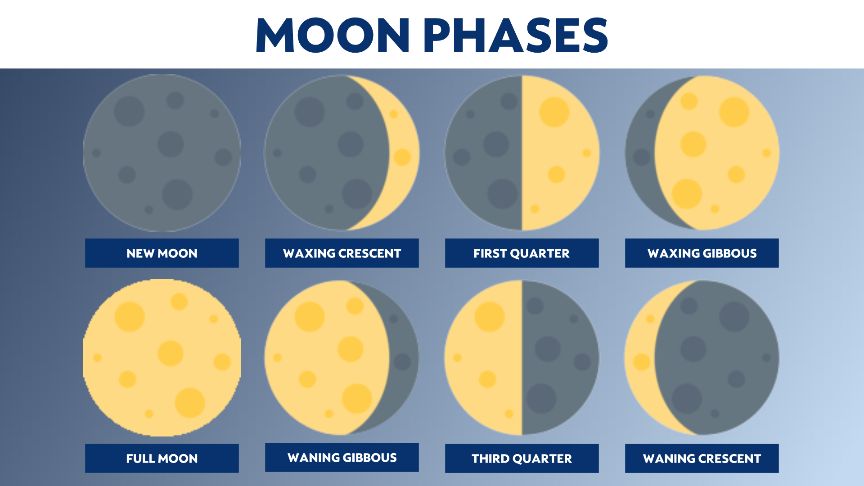
During this period, the Moon goes through eight distinct phases:

  1. New Moon – The Moon is between Earth and Sun; its illuminated side faces away from us.
  2. Waxing Crescent – A sliver appears on the right side (Northern Hemisphere). “Waxing” means it’s growing.
  3. First Quarter – Half of the Moon is visible—right half lit.
  4. Waxing Gibbous – More than half is lit, increasing toward full.
  5. Full Moon – The entire face is illuminated. Earth is between the Sun and Moon.
  6. Waning Gibbous – The light begins to shrink; left side remains lit.
  7. Last Quarter – Half again, but this time the left half.
  8. Waning Crescent – Only a small sliver remains on the left.

And then the cycle begins again.

What Does “Gibbous” Mean?

“Gibbous” comes from the Latin gibbosus, meaning hump-backed or bulging. It refers to the Moon when it’s more than half but not fully illuminated. A nearly full Moon—either on its way there (waxing) or just past (waning). So:

  • Waxing Gibbous = swelling toward full.
  • Waning Gibbous = shrinking after full.

Waxing or Waning?

If you are following the progress of the moon night after night, you will know if it is waxing of waning. But would you know if you just happened to glance up one night? Indeed there are ways to tell. In the Northern Hemisphere:

  • If the right side is lit, the Moon is waxing.
  • If the left side is lit, the Moon is waning.

This holds true whether you’re looking from a balcony in Bengaluru or walking through a park in Boston. But here’s where it gets interesting:

The Moon is Universal—but Not Identical

The same Moon is seen all over the world—but not always in the same orientation. If you’re in the Southern Hemisphere, everything flips:

  • Waxing appears with left side lit.
  • Waning shows up with right side lit.

In fact, a person in the Southern Hemisphere sees the Moon “upside down” compared to someone in the Northern Hemisphere. For example:

  • When it’s a First Quarter Moon in India, the right half of the Moon is illuminated.
    In Australia, it’s still the First Quarter—but they see the left half lit.
  • When it’s a Waxing Crescent in New Delhi, it appears on the right side.
    In Cape Town, that same sliver appears on the left side.

It’s the same phase, same Moon—but reality shifts, depending on where you stand!

Once we learn to read the Moon, it becomes a kind of nightly compass. It connects us to the rhythm of the Earth, of time itself. And yes, it’s also fun to casually identify a “waning gibbous” and enjoy the raised eyebrows from unsuspecting friends.

So the next time someone asks, “Is it waxing or waning?”—you’ll know. And if you’re feeling generous, you might just pass on that little rhyme:

🌒 “Right is bright, it’s waxing with might.”
🌘 “Left is lit, it’s waning a bit.”

–Meena

Picture source: https://spectrumnews1.com/wi/milwaukee/

The Curious Case of Poop-Eating Plants

Poop. Not a subject of polite conversation. But with a six-year-old granddaughter, this is an integral part of my daily discussions—stories and jokes which feature poop, farts, and belches, and I thought nothing could get me.

But poop-eating plants did! This is one of those bizarrely strange tales from the natural world that makes me marvel at how much we don’t know.

The next time someone tells you that plants only need sunshine, nutrients from the soil and water, its time to pop out the word coprophagy. That’s the term for poop-eating. Most often it’s associated with animals—rabbits, dung beetles, and sometimes dogs. But it turns out that some plants may also be participants in this less-than-dainty buffet. Not many, mind you. It’s an exclusive club.

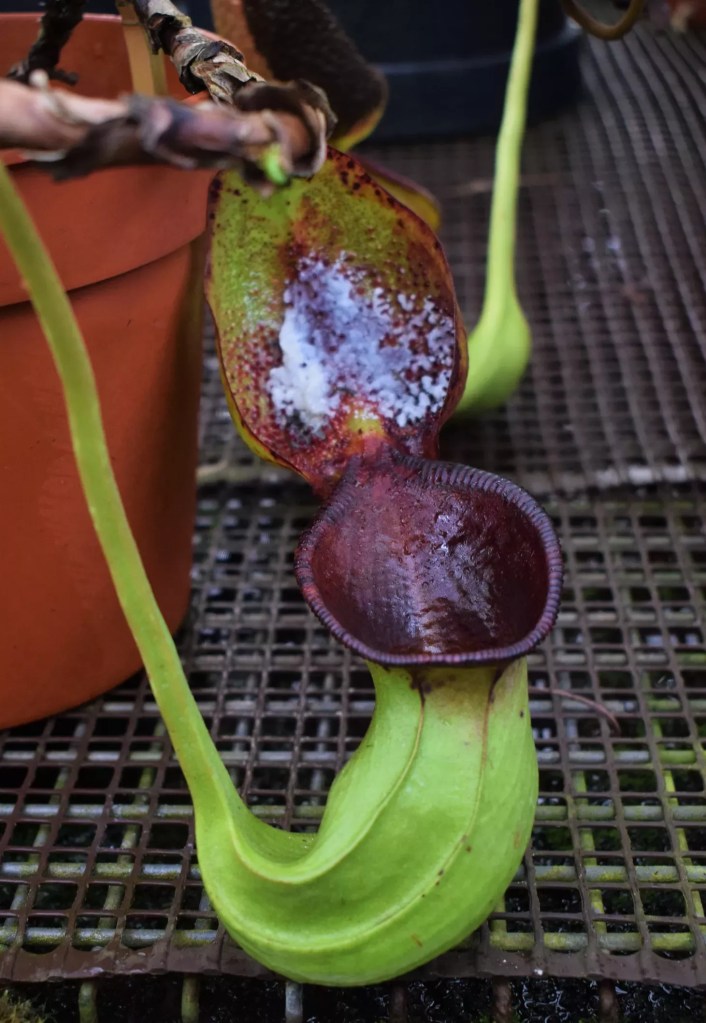
The pitcher plant (genus Nepenthes) is a frontrunner in this strange category. While most carnivorous plants are famous for trapping insects, some tropical species of Nepenthes have found an alternative nutrient source—bat poop. In places like Borneo, bats roost conveniently above the pitchers, and their droppings fall right in. Scientists call it a “nutritional mutualism.” The bats get shelter; the plant gets dinner. Apart from bat-poop, plants are known to eat the poop of tree shrews, lizards, and even of birds. These flowers even resemble toilets—all the better to catch the poop as it falls.

These plants don’t actually chomp up poop. Rather, they have evolved to extract nutrients from faeces, often via mechanisms like sticky leaves, enzymes, and old-fashioned decomposition. Some even form alliances with fungi or microbes to get the job done.

But why on earth would a plant choose poop? It’s a matter of efficiency. Poop, especially from animals like bats and tree shrews, is rich in nitrogen and phosphorus—two nutrients that are vital for plant growth but maybe in short supply in nutrient-poor soils where many of these carnivorous plants grow. Insects provide these too, but poop is like a ready-made fertilizer packet, no hunting required. Poop offers a shortcut—already digested, already broken down. Though the comparitive nutritive values have not been rigourously tested, it is believed that poop is more nutritious.The bats roost above the pitchers, do their business, and the plant simply absorbs the nutrients through specialized enzymes or microbes that help break things down. Also, insects are scarce on tropical peaks above 2,200 meters, so poop provides a good alternative source.  In fact, scientists are finding that some carnivorous plants are evolving from eating bugs to eating poop! Some pitcher plants have even evolved shapes and scents to attract the animals specifically for their droppings!

Are there any Indian coprophagic plants?

Yes indeed! North East India is home to several species of pitcher plants or Nepenthes. Recent studies suggest that some species in the Nepenthes family (including those found in Southeast Asia) are more than happy to lap up the occasional faecal nutrient.

The Western Ghats, another biodiversity hotspot, also hosts a variety of unusual plants, including some that partner with fungi to decompose animal droppings in the soil. While not technically “eating” poop in the way a pitcher plant might, these interactions are still part of the larger cycle of nutrient recycling—with poop part of this circle of life.

So, the next time you see a lovely green pitcher in a botanical garden or on a damp forest trek in the North East, give it a respectful nod. It might be doing more than just sitting pretty. It might be part of a brilliant, bat-poop-powered system we’re only just beginning to understand.

Well, I know that after this story, Botany is definitely going to be my granddaughter’s favourite subject! Who knew botany could be this…entertainingly gross?

–Meena

Picture: http://www.kew.org/read-and-watch/poo-plants

Plastics: From Saviour to Scourge

Last week marked World Environment Day. The theme for this year was Beat Plastic Pollution. In events around the world to mark this day, much was discussed and written about the dire state of the environment due to the over-accumulation of plastic. In recent years plastics have become the bane of the environment. It is ironic that it is this material that was once hailed as a boon! The history of this ‘wonder material’ goes back to the mid-nineteenth century. 

This was a time when elephants and turtles were becoming seriously endangered due to demand for ivory and turtle shell which were used in the making of numerous things from piano keys and billiard balls, to combs. The biggest consumers of ivory were high-quality billiard balls. Between three and five balls could be made from a tusk, and at least two elephants needed to be killed to make one set of billiard balls. The increasing popularity of billiards in England as well as America, led to the slaughter of thousands of elephants. There was a serious threat to elephants, and also there was an increasing cost of ivory to make the balls.

This led to the quest for some man-made materials which could be used as substitutes. One of the earliest such attempts was to dissolve cotton fibres in nitric and sulphuric acids, and then mix these with vegetable oil. In 1862 an English chemist Alexander Parkes was the first to patent this new material with the name Parkesine. It was presented at the Great London Exposition in 1862, but it was not a commercial success.

In the meanwhile in America, Michael Phelan ‘the father of American billiards’ took out an ad in 1863 offering a sum of $10,000 for a substitute for ivory. John Wesley Hyatt, a young printer with no formal training in chemistry took up the challenge. He spent six years experimenting with various solvents. In one experiment he blended camphor with nitrocellulose and produced a hard mouldable substance that he called ‘celluloid’. He patented this in 1869, and along with his brother began to produce it in 1871, marketing it as a substitute for natural materials like ivory and tortoiseshell.  

As it turned out celluloid was not the perfect substitute for billiard balls; when two balls collided it produced a mini explosion. But the new material had a number of properties that made it attractive. It could be moulded into any form, hardened or left flexible; it was waterproof, it would not rot or corrode like metals; it was extremely durable, and it was cheap.

Celluloid was hailed as an environmental saviour. A sales pamphlet in 1878 claimed that “it will no longer be necessary to ransack the earth in pursuit of substances which are constantly growing scarcer”.

Celluloid was the first industrial plastic that would transform the world as multiple uses were found for it. It was followed by polyvinyl chloride or PVC. Since then plastics have undergone numerous stages of development. Plastic was not immediately adopted widely. But by the mid-20th century, as the benefits of this ‘trendy, clean, cheap’ material were loudly touted, plastic became ubiquitous, and took over every aspect of daily life.

The world embraced plastic with a clear conscience. The products made of plastic provided the added attraction of being easily disposable. The convenience of single- use throw-away products were extolled and countries like the United States made a whole-hearted example of this. The use-and-throw lifestyle became the aspiration of every society.

Today we are seeing the legacy of this throw-away lifestyle. The world is producing 300 million tonnes of plastic a year, a figure expected to triple by 2050. The chemical properties that have made plastic such a multi-use and durable material also makes its disposal difficult. Plastic takes a long time to degrade, in some types even thousands of years. Thus landfills are overflowing. Even the degradation of plastic is a serious environmental issue as it breaks down into microscopic particles that pollutes the oceans, land and the air. These micro-plastics are also accumulating in our bodies, the health impacts of which are not even known as yet.

The modern plastics industry relies on fossil fuels for its raw material contributing to global CO2 production. Thus the production of plastic also has an impact on climate change.

In the oceans, plastic ingestion and entanglement is harming and killing marine creatures including turtles. On land climate change is one of the factors that is changing habitats and endangering all living things from elephants to ants. Ironically, the material that was once celebrated as the saviour of these creatures is today the scourge of the environment across the globe.

 Sadly, over these decades the state of planet Earth has only deteriorated. The issues with overuse of plastic not only remain, but have been exacerbated. While there have been efforts in terms of policy initiatives, technological advances, and even public awareness these have not been able to cope with the even faster increase in plastic consumption, pollution, and waste generation. Even after decades of advocacy for Recycle, Reuse and Refuse, the picture is grim. In 2025 the world is expected to consume 516 million tonnes of plastics. And only 9% of all plastics produced as actually being recycled globally. The theme for WED 2025 ‘Beat Plastic Pollution’ spotlights the growing scientific evidence on the impacts of plastic pollution and hopes to sustain the momentum to refuse, reduce, reuse, recycle, and rethink plastics use.

— Mamata

Libraries Take Wing

How often we randomly pick up a feather as we walk along. And wonder which bird it could belong to.

A feather library is where we can turn to for help in such a situation. These are digital or physical collections of bird feathers, used for research and education. They are an invaluable resource for understanding bird species, identifying feathers, and gathering data on bird health and natural history. These libraries are important tools for the study and conservation of bird species, offering insights into bird morphology and helping in the identification of feathers found in the wild.

There are not too many across the world. Some of the established ones include:

1. The Feather Atlas created by the U.S. Fish and Wildlife Service is a comprehensive image database of North American birds and covers about 438 species. It can be browsed by bird order, family, or species. It has an open identification tool in which one can fill in details about feather patterns, colors, size, and position, which can help you identify the bird your feather belongs to.

2.Featherbase (Germany) has been created by a working group of German feather-scientists and other collectors worldwide who have come together and contributed their personal collections. It holds close to 8000 specimens from over 1,000 bird species, with a focus on European and African birds. The collection includes high-resolution images and detailed anatomical information, and has supporeted studies in forensics, conservation, and biodiversity monitoring. It is rigorously classified and offers options of various languages so that birders from across the world can use it.

3. Found Feathers (iNaturalist Project) is a citizen science initiative where users contribute observations of feathers they find. The project encourages the collection of feather length and placement data, enhancing the database’s utility for researchers and birders. There are over 2,00,000 observations from across the world.

Special among these is India’s Feather Library. This pioneering initiative is the first of its kind in India and the world, dedicated to documenting, identifying, and studying the flight feathers of Indian birds. It is the passion project of architect Esha Munshi, a dedicated bird watcher who has seen over 1500 bird species across the world, and veterinarian Sherwin Everett who works in a bird hospital in Ahmedabad. They have created the library with the aim of having all feather-related data under one roof, fostering collaboration and advancing the collective understanding of Indian birds. In the short span of time since inception on Nov 15, 2021, 135 species have been documented.

The process is rigorous. They collect feather specimens from dead birds at rescue centres to establish a primary database of bird species. They then make detailed notes on the flight feathers, taking into account the number of Primaries, Secondaries, Tertials (Wing Feathers), and Rectrices (Tail Feathers), along with basic details such as overall length, bill length and width, leg lengths, etc. Then they stretch out one wing and fan the tail in both dorsal and ventral views to document the exact number of feathers, unique characteristics, colour, pattern, and size etc. The physical collection is housed at the National Centre for Biological Sciences (NCBS) in Bangalore.

The database is open to all and provides easy access.

Kudos to the dedication and passion of people like Esha and Sherwin who through their efforts help support avian research, conservation efforts, and educational outreach. And make a better world.

Happy Environment Day!

–Meena

Prickly Love

May 10 is celebrated as Cactus Day in the US. It is “a day dedicated to recognizing and appreciating the unique and fascinating world of cacti. This day also serves as a reminder of the many cactus species facing extinction and the need for their conservation, especially in their natural habitats.” Cacti are flowering plants that produce seeds. They are able to bloom every year, but they will produce an abundance of flowers in response to heavy rains. The family Cactaceae comprises many species of flowering plants with succulent (water-storing) stems.

It is entirely appropriate that it is a day marked in the US. Because 1749 out of the known 1750 species of cacti are native to the Americas! In other words, cacti were not originally found in any other part of the world.

I have to admit, this kind of blew my mind. All of us, from the time we are children, when asked to draw deserts or make an exhibit around the theme, have always generously populated our deserts with our own versions of cacti.

But cacti occur naturally only in the Americas–from Patagonia in South America, through the US, to parts of Canada. Anywhere else we see them, they have been taken by humans.

There are however equivalents in other parts of the world. There are the Euphorbs, tamarisks, saltbrushes etc. in Africa, and succulent and spinifex grasses in Australia. In India we have khejri, thoor, acacias etc. all of which grow in our deserts. But these are not cacti. All them have various adaptations to dry conditions like small or no leaves, spines, thick stems and deep roots. But they differ from cacti in that they do not have areoles. The presence of a structure called the areole is what sets cacti apart from all other plants. Areoles are round or elongated, often raised or depressed area on a cactus which is equivalent to a bud and from which spines, flowers, stems, or roots grow.

Cacti were introduced to Europe by, no surprises, Christopher Columbus. In 1493, on his second voyage to the Americas, he brought back a specimen of the prickly pear—the first time a cactus was seen in Europe. It caught the fancy of botanists, horticulturists and the public, and led to widespread cultivation of these plants.

They came to India with the Europeans, most likely sometime in the 16th or 17th century. In recent times, there has been much interest in these plants. They are much prized for their dramatic looks and are a feature in every balcony garden and indoor succulent-tray.  At a commercial level, the dragon fruit, cultivated widely across the country and now found in roadside fruit stands everywhere, is a cactus. Known  as pitaya or pitahaya, it is native to southern Mexico, Central America, and parts of South America. It is a climbing cactus species. The fruit is low in calories, rich in antioxidants and is said to have many other wonderful properties. But frankly, I am yet to get used to the bland taste!

For a few years now, our Central Arid Zone Research Institute (CAZRI), and ICARDA, an international organization, have been experimenting with cultivation of cacti, with a view to using it as fodder. Cacti as a fodder crop is seen as having the potential to help in the widespread shortage of green fodder, particularly during the summer months in many parts of the country. While still in experimental stages, it is thought to have some possibility.

India also has large and scientifically significant cacti collections. The National Cactus and Succulent Botanical Garden and Research Centre is located in the city Panchkula, the satellite town of Chandigarh. It is spread over seven acres and houses over 2500 species of cacti and succulents. The Regional Plant Resource Centre at Bhubenehswar has Asia’s largest collection of cacti. This Centre has created 200 new varieties and hybrids of cacti by breeding, growth manipulation, etc.

We said at the start that all except one cactus species was native to the Americas. The one exception is Thipsalis baccifera also know as the mistletoe cactus, which occurs naturally not only in the Americas, but also Africa, Madagascar, and close home in Sri Lanka. Scientists are still figuring out the how and why of this exception.

So look at cacti with new eyes. Love them, but don’t hug them!

-Meena