Sandow in our Lives

The end of the year is a time of going back in time and re-living memories.

And one of the enduring memories for those of us who grew up in the  1950s, 60s and 70s, is the word Sandow. It was a part of everyday lives—an integral part of the pencil box, a dirty grey rubber that erased pencil marks.

For us in India, “rubber” was the term for eraser, a usage inherited from British English and reinforced through colonial schooling. A child did not “borrow an eraser”; they asked for a rubber. And the most trusted rubber of all in our times was the Sandow.

These erasers were made of natural vulcanised rubber, not vinyl or plastic as most modern erasers are. They were firmer, slightly gritty, and erased by abrasion — scraping graphite off paper rather than gently lifting it. They left dark crumbs behind and wore down slowly. A new Sandow rubber meant clean pages. A worn one told the story of errors made and lessons learnt.

Where did Sandow rubbers come from?

The earliest Sandow erasers were almost certainly manufactured in Britain and exported to India during the late nineteenth and early twentieth centuries through British stationery suppliers. During the colonial period, Indian schools depended heavily on imported notebooks, inks, slates and erasers.

Stupid Toy Day (December 16) is a celebration of the wonderfully useless things from childhood—rubber chickens, yo-yos, slinkies, and strange plastic objects that made no sense but brought endless joy. From ridiculous toys to unsettling antique dolls that now star in creepy museum contests, this post reflects on how toys—whether silly or sinister—stay with us long after childhood ends. A nostalgic look at why useless never really meant unimportant.

After Independence, Indian factories began manufacturing erasers using similar formulations and — crucially — the same name. By the 1950s, most Sandow erasers sold in India were produced locally. However, the word “Sandow” was never firmly trademarked in India, allowing multiple manufacturers to use it freely. Over time, it became not a brand but a category. “Sandow rubber” simply meant “the regular school rubber.”

Sandows were not the only erasers available. There were white, scented rubbers, with a gel-like coloured top. But alas, most of us never possessed one, given they were about four or five times more expensive!

And a Strongman called Sandow

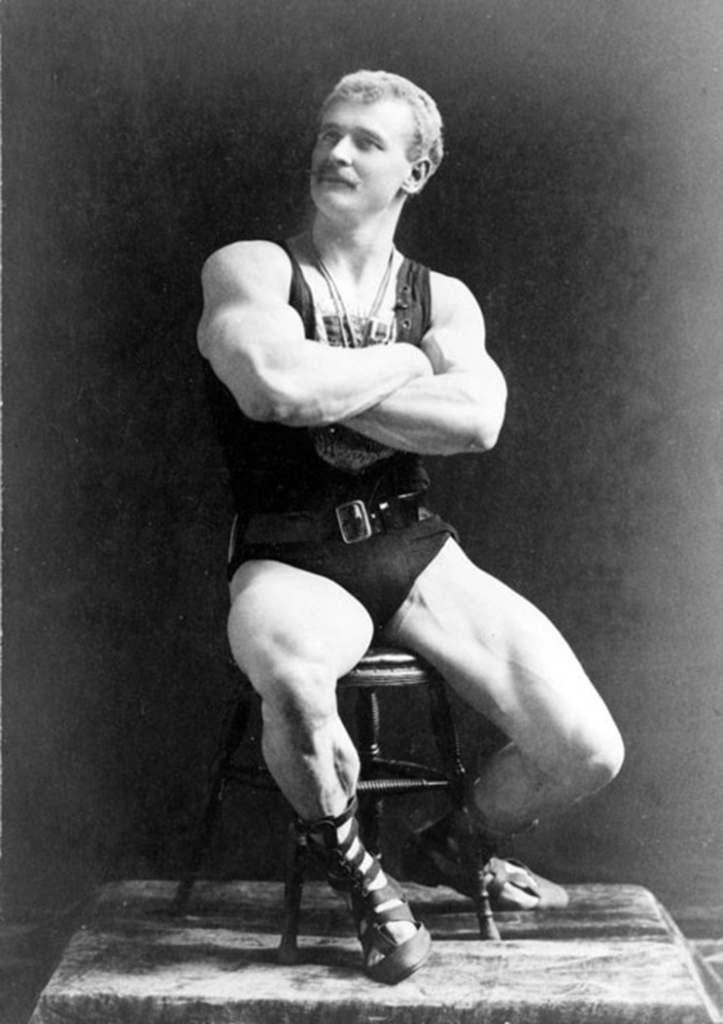
Another Sandow (though of older vintage) was part of our childhoods too. He lived on barbershop calendars and tattered posters: a muscular European strongman frozen in permanent flex.

Eugen Sandow (1867–1925) was a Prussian-born showman, athlete and entrepreneur who became the world’s first international bodybuilding celebrity. He toured Europe, Britain and America performing feats of strength before royal families and packed audiences.

Sandow was much ahead of his time, and would have done great in the current days, surely becoming a hero of Insta reels, posing as he did to deliberately display his muscularity. He was also a businessman. He published training manuals, endorsed health products, sold exercise equipment, and promoted physical culture as moral discipline. King George V even appointed him “Professor of Scientific and Physical Culture” in Britain — a title that further elevated his image as a respectable authority on fitness.

In India, encounters were through his images — black-and-white posters, calendar art, tins, and labels that travelled through imperial trade routes. But nevertheless, his name was well known, whether with urban kids or rural youth.

Were the rubber and the strongman officially connected?

There is no evidence that Sandow ever licensed his name to an eraser manufacturer. No contract, no advertisement, no endorsement exists in any reliable archive.

However, the naming may have had a connection. The two existed at around the same time, and the name ‘Sandow’ symbolised durability, strength and European modernity. Calling an eraser “Sandow” suggested that it would last, work hard and not fail easily. In an era with loose branding laws, borrowing famous names for product credibility was common.

Today…

Now, erasers come in neon colours and cartoon shapes. Eugen Sandow is remembered only by historians and fitness professionals. But for those who grew up in that older India, the word still carries a double image: fingers dusted with graphite, and a chest forever flexed on fading paper.

Sandow was never just an eraser.
And Sandow was never only a man.

Both were a part of our simple, innocent youth!

–Meena

Photocredit: Wikipedia for Mr. Sandow

ebay for the Vintage Tin advertising the eraser

Educating for Head, Heart & Hands: Gujarat Vidyapith

2 October marks the birth anniversary of Mahatma Gandhi. On this day much is written and spoken about Gandhiji’s movements to free India from the shackles of British rule. The non-cooperation movement, the Swadeshi movement, the Salt Satyagraha and other non-violent movements were all part of the nationwide stir to lead India to become an independent, self-reliant nation. Amidst all this, not much is discussed about Gandhiji’s deep thinking and initiatives in the field of education.

Gandhiji began experiments with education with younger children in the Kochrab and Sabarmati Ashrams during 1915-1920. In 1920, when he launched the non-cooperation movement, Gandhiji appealed to everyone to boycott schools and colleges imparting British colonial education propounded by Lord Macaulay. There was a huge response to this call, and thousands of students quit studies to join Gandhiji’s movement. But Gandhiji was equally concerned that the youth of the country were not deprived of education, but rather were offered an option that would provide an all-rounded education which could prepare them for the task of national reconstruction, and usher in Hind Swaraj, the India of his dream. The process towards this began with the formation of a National Education Committee which was chaired by Gandhiji. The committee felt that the path could be the establishment of what was envisioned as Rashtriya Vidyapiths (National Universities) which would promote educational institutions run by Indians for Indians outside the financial and governing control of British authorities. Five of these were established during this period. One of these, was Gujarat Vidyapith which was established by Gandhiji himself on 18 October 1920 (the only university set up by Gandhiji). Its foundation was an important event in the Satyagraha movement.

Gandhiji’s vision for the institution was to prepare a generation of dedicated, sincere, fearless, and honest students who contributed to a self-sufficient, non-violent, and egalitarian nation.

On 15 November 1920, Gandhiji launched Gujarat Mahavidyalaya, an affiliated college under the aegis of the Rashtriya Mahavidyalaya. The inaugural event was held  in the compound of Dahyabhai Mehta’s bungalow in Kochrab village at 8.30 a.m.   Dahyabhai had provided his bungalow for setting up the university. The historic photograph of the group present for this was taken by artist Ravishankar Raval who was the only one in Ahmedabad then who could operate a camera. Raval recalled the event in his memoirs. The proceedings began with a Punjabi song sung by Saraladevi Chowdhrani. It was followed by Bapu’s speech. After speeches of the registrar, and a few teachers, the event ended with the pledge “Bharat Hamara Desh Hai”. By 1923 more than 30,000 students were part of Gujarat Vidyapith.

Gandhiji was declared as the Chancellor of the University for life. Professor A T Gidwani was its founder Vice-Chancellor. After Gandhiji, the post of chancellor was held by Sardar Vallabhbhai Patel, Dr. Rajendra Prasad and Morarji Desai. Later, many more institutions, colleges and schools were affiliated to the Vidyapith.

Today Gujarat Vidyapith itself functions as a university dedicated to holistic Head, Hand, and Heart education based on Gandhian principles, whereas Gujarat Mahavidyalaya serves as a specific academic unit for students within that framework. 

Up to 1930, the languages like Gujarati, Marathi, Bengali, Sanskrit, Persian and English and the subjects like History, Arithmetic, Philosophy, Economics, Accountancy, Music, Political Science, Pharmacy, Archaeology and Indian studies were taught in Gujarat Vidyapith at graduation level. The Vidyapith stopped functioning temporarily during the civil disobedience movements of 1930 to 1935, both the students and faculty members participated actively in the freedom struggle, many of them courting arrest. Again, during 1942 to 1945, during the Quit India movement the functioning of Vidyapith came to a standstill. After the year 1945, the Vidyapith started its activities once again.

Since then Gujarat Vidyapith, as it is called, has expanded considerably. But its main objective continues to be preparing workers of character, ability, culture and dedication for the conduct of movements connected with the regeneration of country in accordance with the ideals shared by Mahatma Gandhi. According to Gandhi, the aims of education are the holistic development of the individual, encompassing the physical, intellectual, emotional, and spiritual dimensions (hand, heart, and head). Education should lead to self-reliance, cultivating character, truth and non-violence. Participation in productive work with a sense of dignity of labour should foster self-reliance through practical skills; acceptance of equality of religions; priority for the need of village dwellers in all curricula should engage individuals in service to society have been guiding principles.

The emphasis is on more than the academics (through use of mother tongue as a medium of instruction); it is the cultivation of the heart and hands. This involves regular participation in community work, social service, community prayers, simple and self-reliant living, study tours and field studies, hand spinning and training in craft work, physical exercise and training in manual work.

For more than a century Gujarat Vidyapith has nurtured generations of learners who have been inspired by the life and teachings of Gandhiji to carry forward the legacy of truth, non-violence and social change, following the path of dialogue and understanding. The Vidyapith has strived to keep alive Gandhiji’s philosophy of education which prioritizes holistic development, self-reliance and service to humanity. Character, compassion and community, and inclusivity remain its cornerstones. Today more than ever before, we need such institutions, and our young people need to be reminded that education should encompass Head, Heart and Hands.

–Mamata

Follow the Child: Maria Montessori

Montessori is a word much-used today in early education and there is an explosion of what are self-described ‘Montessori’ schools. These are often housed in modern buildings, equipped with a surfeit of the latest ‘equipment’, and accordingly charging high fees. Perhaps not many of the parents who rush to book admission for their child in such a school, almost as soon as it is born, may know much more about Montessori than the name.

The original story behind the schools, and the name that distinguishes these schools is very different. It is the story of Maria Montessori an educator, scientist, physician, innovator, philosopher, feminist and humanitarian.

Maria Montessori was born on 31 August 1870 in Chiaravalle, Italy, the only child of Alessandro and Renilde Montessori. Her parents moved to Rome when she was five years old. A curious, strong-willed girl, Maria, from a young age took paths that defied the norms of her times. After completing high school, instead of going in for teaching, a conventional occupation for girls at the time, she applied to medical school but was refused admission. So she enrolled in the university where she studied physics, mathematics and natural sciences; and reapplied to medical school. She was eventually admitted in 1890, one of the first women in medical school in Italy. In the face of many obstacles because of her gender, Maria qualified as a doctor in 1896. She was also beginning to get involved in the movement for women’s rights.

As a practising doctor Maria became known not only for her skills in treating patients but equally for working with the poorest, and the respect she showed to patients of all social classes. She also joined as a volunteer for a research programme at the psychiatry clinic of the University of Rome, where she became deeply interested in the needs of children with learning disabilities. She went on to become co-director of a new institution called the Orthophrenic School which focussed on such children. During her work here she became convinced that instead of writing off such children as ‘retarded’, they needed the right support. This theory was radical for that time. She also travelled to London and Rome to learn more, and when she came back she spent hours in developing and experimenting with materials and methods, using ideas from the founders of kindergarten, Froebel and educators Itard and Seguin. Her experiments began to show positive results.

Maria continued her academic pursuits with studies of educational philosophy and anthropology, and from 1904-1908 she was a lecturer at the Pedagogic School of the University of Rome. During this period Rome was in economic decline, leading to widespread poverty and the growth of many ghettos. One such was an area called the “Quartiere di San Lorenzo” which was known as the shame of Italy. Here children of desperately poor parents who were out all day trying to earn a living, were left to their own devices in unsanitary and chaotic conditions. These children ran wild, destroying property, and indulging in anti-social behaviour. The authorities were looking for a solution to this huge problem. Maria was offered the opportunity to work with these children, using the materials that she had been developing when she was working with children with special needs. Maria took up the challenge.

As Dr Montessori recalled later: “One room was set aside for this purpose, resembling in every way a children’s prison. It was hoped that a person would be found with enough social courage to tackle the problem. I in my capacity of medical officer of hygiene was approached to take an interest in the work. Having considered the situation I demanded that at least the commonest aids in hygiene, food and sanitation be made available. On the 6th of January 1907 this room was inaugurated to collect the 50 children

But while everyone had had the idea that by giving houses and sanitation, the people would be purified, no one had taken in consideration the children; no one had thought to bring toys or food for them. When the children, ranging between the ages of 2 to 6 entered, they were dressed all alike in some thick, heavy, blue drill. They were frightened and being hindered by the stiff material, could move neither arms nor legs freely. Apart of their own community they had never seen any people. To get them to move together, they were made to hold hands. The first unwilling child was pulled, thus dragging along the whole line of the rest. All of them were crying miserably.”

Thus opened the first Casa de Bambini (Children’s House). A pioneering experiment in working with 50 poorest of poor and illiterate two to six-year-old children. Maria began with using the activities and materials that she had developed at the Orthophrenic School. She closely observed the children with a scientist’s approach, noting which ones engaged them and discarding the ones that did not. Her observations led her to realize that children who were placed in an environment where activities were designed to support their natural development had the power to educate themselves. As she said when recalling the opening of the first Casa di Bambini: “I don’t know what came over me but I had a vision and inspired by it, I was enflamed and said that this work we were undertaking would prove to be very important and that someday people would come from all parts to see it.”

The results that followed were so surprising that working for children soon became her life’s work. As she later wrote: “In order to follow them, I changed my whole life. I was nearly 40. I had in front of me a doctor’s career and a professorship at the university. But I left all because I felt compelled to follow them and to find others who could follow them, for I saw that in them lay the secret of the soul.”

By 1909 Maria gave her first training course in her new approach to around 100 students. Her notes from this period provided the material for her first book published that same year in Italy, appearing in translation in the United States in 1912 as The Montessori Method, and later translated into 20 languages. The rest, as they say is history. The experiment at Casa di Bambini grew into a movement. Montessori societies, training programmes and schools sprang up all over the world. Dr Montessori herself travelled across the world, giving talks. But through her life she emphasized: “It has nothing to do with any educational method of the past, nor with any educational method of the future. It stands alone as the contribution of the child himself. Perhaps it is the first of its kind, which has been built by him step by step. It cannot have come from an adult person; the thought, the very principle that the adult should stand aside to make room for the child, could never have come from the adult.”

Today as young parents are faced with choices of educational institutions, and inundated with invitations from expensive Montessori schools, and toys and equipment, it is a good time to recall that the roots go back to very opposite circumstances. And remember Maria Montessori’s words: “Anyone who wants to follow my method must understand that he should not honour me but follow the child as his leader.”

–Mamata

Celebrating Artful Elephants

August 12 is marked as World Elephant Day. And it is also Ganesh Charurthi time. So an appropirate time to talk about elephants.

The Asian Elephant is an endangered species, with less than 50,000 left in the wild across the world. And hence the importance of marking this day as a way of raising awareness about elephants and the dangers that threaten them.

What we see is what we grow to love and respect. And hence the importance of all the depictions of elephants we see around us—from sari borders to sculptures in ancient temples to the life-sized sculptures made from invasive weeds found in the Nilgiris, crafted by indigenous communities. Each and every one of them is an opportunity for education about our biodiversity and this magnificent species.

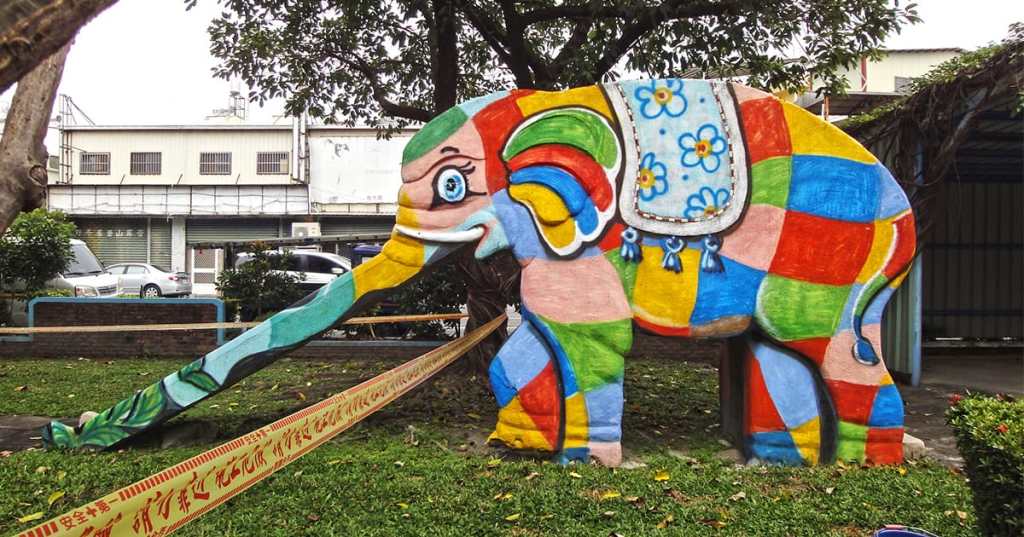
One can understand the ubiquitousness of elephant imagery in India—after all we hold about 60 per cent of the numbers. But interestingly, it is Taiwan which was well-known for elephant imagery all over its public parks and schools, in the form of Elephant Slides.

These are the whimsical, solid, painted playground fixtures affectionately known as “Grandpa Elephant”— and they hold fond memories for a generation of Taiwanese kids, now grown.

The elephant slide was a fixture of childhood in Taiwan from the 1960s through the 1980s. Found in schoolyards and public parks, these slides were typically made from china-mosaic or concrete, with a stairway or ladder up the back and a gently curved trunk functioning as the slide.

Many bore motivational slogans etched into the sides: “Strengthen your body to build the country.” Even in play, the messaging was patriotic. But for kids? It was all about the joy of scrambling up that broad back and riding the trunk like it was the gateway to an imaginary world.

Now, with safety codes tightened and tastes modernized, many of these eleslides have disappeared. But a movement to preserve and honour them has taken root, led by artists, writers, and nostalgic grown-ups determined to keep these gentle giants from fading away completely.

A Concrete Revival

Writer Yu Chiu-ling and designer Hsiu Pi-cheng have been at the forefront of this effort. Yu founded the Facebook group “Find Our Elephant Friends,” a digital scrapbook of elephant slide-sightings across the island. Hsiu has documented over 400 slides, many tucked away behind schools or community centres, quietly waiting to be remembered.

Their work isn’t just about playground preservation — it’s about cultural memory. About honouring the handmade, the imperfect, and the deeply local.

Elephants Across Borders

Asian elephants range across. Bangladesh, Bhutan, Cambodia, China, India, Indonesia, Laos, Malaysia, Myanmar, Nepal, Sri Lanka, Thailand, and Vietnam. Strangely, there have never been elephants in Taiwan in the wild in recorded history. While elephant fossils have been found on the island, indicating their presence in prehistoric times, there is no evidence to suggest that elephants lived in Taiwan during the period of human history documented by archaeology and literature. 

But Taiwan does have the most emotionally iconic version of the elephant slide!  You will also find their cousins in parks across Japan, Thailand, Vietnam, and parts of Eastern Europe. From Soviet-era concrete sculptures to candy-coloured cartoon versions in Tokyo suburbs, the idea of turning a beloved elephant into a playmate has clearly crossed cultures. But sadly, no ele-slides in India!

Unfortunately today, both real elephants and their concrete urban renderings are endangered. One is fighting for survival in an increasingly human-dominated world. The other is quietly disappearing with changing times.

Elephants have always symbolized memory, strength, and gentleness.

Let’s protect the real ones. And let’s remember the playful ones, too.

Happy Ganesh Chaturthi!

–Meena

PIC: https://www.thisiscolossal.com/wp-content/uploads/2023/07/pi-og.jpg

Nature’s Libraries: Where the Wild Data Lives

National Librarian’s Day is celebrated on August 12th every year to commemorate the birth anniversary of Dr. S.R. Ranganathan, the “Father of Library Science in India”.

When we say “library,” most people imagine rows of books, a quiet reading room, and perhaps a stern librarian at the desk. But in the language of library science, a “library” is defined less by its shelves and more by its functions — acquiring, organising, preserving, and making knowledge accessible.

By that definition, the world is full of libraries that hold no books at all. Some store bird calls. Others archive satellite images. Some collect DNA sequences. In fact, they are not physical spaces at all. Many are vast online repositories where scientists and citizens alike can deposit, discover, and use data.

On this Librarians’ Day, let’s explore how these nature and biodiversity depositories perform the same core functions as traditional libraries — only their collections are wild, living, and often invisible to the naked eye.


Acquisition: Gathering the Wild

Libraries begin by collecting materials. In biodiversity repositories, this might mean researchers uploading recordings to Macaulay Library (Cornell Lab of Ornithology) or Xeno-canto, which crowdsource bird calls from around the world.

  • Example: iNaturalist “acquires” photographs and species observations from millions of contributors.
  • Example: GBIF (Global Biodiversity Information Facility) harvests species occurrence data from institutions and citizen scientists alike.

Just as a public library acquires books from publishers and donors, these nature libraries acquire data from field biologists, monitoring equipment, and enthusiastic amateurs.


Organisation: Making Sense of the Collection

Without organisation, a library is just a warehouse. And hence the focus on developing classification systems. Dr. S.R. Ranganathan primarily used and developed the Colon Classification (CC) system. The Dewey Decimal system is the widely prevalent one used in most libraries across the world.

Biodiversity data portals however are based on the Linnaean system of classification and organize living organisms based on evolutionary relationships. This involves classifying organisms into hierarchical groups like kingdom, phylum, class, order, family, genus, and species. This is.

  •  Example: BOLD (Barcode of Life Data System) and GenBank organise genetic sequences by species, geography, and collection method.
  • Example: ITIS (Integrated Taxonomic Information System) standardises names so scientists worldwide speak the same language.

The result? You can search for a frog by its Latin name, its genetic barcode, or the location where it was found — just like you can search for a book by title, author, or subject.


Preservation: Guarding the Record

One of a library’s noblest duties is preservation — ensuring the information remains available for future generations. In biodiversity repositories, this may involve:

  • Storing acoustic recordings (bat calls, whale songs) in durable digital formats.
  • Archiving satellite imagery in systems like NASA Earthdata and Global Forest Watch for long-term environmental monitoring.
  • Keeping herbarium records in Tropicos and long-term forest data in ForestGEO.

Like rare manuscripts in acid-free folders, these data are preserved against loss, decay, and obsolescence.


Access: Opening the Doors

Libraries thrive when they are accessible. Many biodiversity repositories are open access — anyone can explore them. And importantly, contribute to them.

  • eBird lets birdwatchers view migration patterns and personal checklists.
  • FishBase offers species profiles for students, fishers, and marine scientists alike.
  • OBIS (Ocean Biogeographic Information System) gives marine biologists open access to ocean species occurrence data.
  • Merlin helps users identify birds by their calls.

Some repositories, like Wildlife Insights or certain ethnobotanical databases, may have restricted access for sensitive data — similar to a library’s rare books section.


Dissemination: Spreading Knowledge

A library doesn’t just keep information — it shares it. Biodiversity repositories publish datasets for conservation planning, scientific research, and education.

  • Movebank shares animal movement data for migration studies.
  • TRY Plant Trait Database supports climate change modelling.
  • The Digital Himalaya Project disseminates ethnographic and ecological knowledge, bridging science and tradition.

Why These Libraries Matter

By meeting the same functional standards as a traditional library — acquisition, organisation, preservation, access, and dissemination — biodiversity depositories are not just “like” libraries, they are libraries. Their collections may be recordings instead of novels, or genetic codes instead of encyclopaedias, but the principles are identical.

In a time of rapid environmental change, these libraries are our collective memory-keepers for life on Earth. They store the songs of rare birds, the paths of migrating whales, the genetic fingerprints of endangered plants, and the traditional wisdom of communities who have lived with nature for centuries.

So this Librarians’ Day, remember: the guardians of knowledge are not only in buildings with books. They are also in digital sound archives, genetic databases, satellite imagery vaults, and underwater biodiversity surveys. Wherever knowledge is collected, cared for, and shared — there, you will find a library. Dr. Ranganathan, I am sure,  would have been excited to explore the new realms of libraries and library science!

–Meena

There are a wide range of data depositories and libraries related to nature and biodiversity across different domains—ranging from sounds (like bat and bird calls) to genetics, species observations, satellite imagery, and more. Here is a list of some of these depositories, which Chat GPT has been kind enough to put together!


🦇 Acoustic and Sound Libraries

  1. Bat Call Library – Region-specific databases like EchoBank or ChiroVox.
  2. Macaulay Library (Cornell Lab of Ornithology) – Massive archive of bird sounds, videos, and photos.
  3. Xeno-canto – Open-access database of bird calls and songs from across the world.
  4. AmphibiaWeb – Includes some amphibian vocalization data.
  5. BLB (British Library Sound Archive – Wildlife Section) – Historical and contemporary recordings of animals.

🌍 Species Observations and Biodiversity Portals

  1. GBIF (Global Biodiversity Information Facility) – Gigantic open-access database of species occurrence data from around the world.
  2. iNaturalist – Crowdsourced species observations with photos, locations, and identification support.
  3. India Biodiversity Portal – India-specific citizen science portal on biodiversity with species pages, maps, and observations.
  4. eBird – Global birdwatching database with detailed observation checklists and trends.
  5. OBIS (Ocean Biogeographic Information System) – Marine species occurrence data.

🧬 Genetics and Taxonomy

  1. BOLD (Barcode of Life Data System) – DNA barcoding records of species.
  2. GenBank – Nucleotide sequences, often used for genetic identification of species.
  3. Encyclopedia of Life (EOL) – Species information including taxonomy, distribution, and media.
  4. ITIS (Integrated Taxonomic Information System) – Authoritative taxonomic info, mainly for North America.

🛰️ Remote Sensing and Environmental Data

  1. MODIS / NASA Earthdata – Satellite data on vegetation, land cover, fires, etc.
  2. Global Forest Watch – Forest cover, loss, and gain data based on satellite imagery.
  3. NOAA Climate Data Records – Atmospheric, oceanic, and climate-related datasets.

🐾 Camera Trap and Movement Data

  1. Movebank – Open-access database for animal movement (GPS collar) data.
  2. Wildlife Insights – Global camera trap image database, AI-assisted.
  3. PanTHERIA – Ecological and life-history data of mammals.

🌿 Botanical and Ecological Datasets

  1. TRY Plant Trait Database – Global plant trait data.
  2. Tropicos (Missouri Botanical Garden) – Botanical information with herbarium specimen records.
  3. ForestGEO (Smithsonian) – Long-term forest monitoring data across the globe.

🌊 Marine and Aquatic Life

  1. FishBase – Comprehensive fish species database.
  2. SeaLifeBase – Same as FishBase but for all non-fish aquatic life.
  3. Reef Life Survey – Citizen science marine biodiversity data.

📚 Literature and Traditional Knowledge

  1. Digital Himalaya Project – Ethnographic and ecological archives.
  2. Ethnobotanical Database – Plant use in indigenous and traditional medicine.

PIC: wildlifedata.org/

Redshirting: A Parenting Trend

My grandnephew was born on June 1. When the time came for him to be admitted to class 1 the school informed that as per rules, a child should have completed 6 years of age to be eligible for starting school. This child missed the mark by one day, and hence he had to continue in kindergarten until the next year. While this child’s parents were not unduly bothered by this, several parents in similar circumstances are greatly bothered by the fact that their child was obliged to “waste a whole year” just because of the difference of one day. In ‘the race’ as it were, for the child to be always ahead, many parents today start the child on the long journey of education that lies ahead, with an anxiety of ‘being left behind’. They are concerned that the child will be older than its peers (albeit by a few months) and that this will be a continuing concern right through its education. Some parents even resort to a variety of tactics to convince the school to relax the rule, especially in cases where the child ‘misses out’ by just a couple of days.

But if we really think about it, what exactly is the child ‘missing out’ on? An early start to the rigidity of a timetable, stress of homework and the structure of a prematurely heavy academic schedule? As compared to continuing another year of the relatively more relaxed environment of pre-school? How much of a difference will this make 17 years down the line?

This race in India and, I suspect, many other countries starts where there are pre-schools that take children in even as early as one and a half years. Parents are keen that children enter the ‘system’ as it were, asap!

I recently read about an opposite take on this approach. This approach, that has adherents in the United States, advocates postponing a child’s entrance into preschool or kindergarten. This is in cases where the child meets the official enrolment age requirement but it is the parents’ decision to postpone its school entrance.

This approach is called Redshirting.

Redshirting is different from ‘holding a child back’. It is based on the judgement of a parent, who needs to gauge whether the extra year will give a child more time to mature in emotional, social and physical areas. It is anticipating that this will compensate for baseline learning difficulties as a school may not be able to give a single child the necessary attention and support. It is also incumbent upon the parents that they have the requisite wherewithal to be able to provide this attention and support.

There has been much debate on whether or not redshirting has positive or negative long-term effects on the child. The reasoning is, that holding the child back a year means that the child may be physically stronger and bigger than its peers when in first grade. Looking ahead, it may also provide the child with an advantage in athletics when it reaches high school. But at this early stage all this would be mere speculation, or simply wishful thinking!

In terms of academics some research has shown that delaying kindergarten can give a child a temporary boost as compared with its peers, as it is a year older and (presumably) more mature. This may also give the child a competitive advantage. But research has shown that this advantage disappears by the first or second grade. What is does not seem to cover is the other advantages of peer learning and socialization that kindergarten offers.

However this delay may be a sensible choice for a child who has a genuine requirement, such as a special need, physical or intellectual, or lacks the emotional maturity to handle a more structured kindergarten environment. It is proven that brain development between the ages of five and six is very significant. In such cases coming into school with an extra year of development may be helpful for the child.

Research supports the idea that early education is critical to developing young students’ learning and social-emotional skills and also crucial to their long-term academic success. However it is controversial whether delaying a child’s entry to school helps or hinders this process.  

More intriguing is the term itself. Why ‘redshirting’? The origin can be traced back to sports, particularly college sports, where redshirting refers to the practice of student-athletes sitting out a year of competitive play to extend their eligibility or develop their skills. The term is said to have originated in the late 1930s at the University of Nebraska, where Warren Alfson, a player, wore a red practice jersey without a number, as Nebraska’s team colour was red. This practice of wearing a red shirt during practice to differentiate from players who were competing became associated with the concept of redshirting. 

Interestingly ‘redshirting’ became a popular trend following the publication, in 2008, of Malcolm Gladwell’s bestselling book Outliers. Based on data from the ages of the players for the Canadian Hockey League, the book claimed that the players who were born in the first four months of the year, and thus older than the other team members, were more likely more likely to be identified as talented and ultimately more likely to play professional hockey. Following from this Gladwell argued that the same principle extends to children who are older than their classmates, in that they may have an academic advantage.  

In a sports-crazy society like America, some parents reason that by holding the child back for a year, it will potentially be physically stronger and larger than its peers once it reaches high school, providing it with an advantage in athletics.

It is difficult to prove either way. Redshirting may have benefits for some children, but it is not a guarantee for any future advantage; it may even go the other way. Personally I find it rather difficult to make sense of this trend. And wonder if being a year younger or older than your classmates is likely to have such profound and life-changing consequences. What does ring true is this observation: ‘America is living on a calendar of age; age determines when we can start school, drop out of school, drive, vote, work, consume alcohol, buy tobacco. Age, by society’s standards determines individuals’ readiness, maturity, and ability to handle certain situations. America has let age define an individual’s experience and progression beyond just celebrating another year of life.’

–Mamata

Casting a Spell

The Indian-American domination of a peculiarly American phenomenon—the Spell Bee—is something that intrigues me no end. Not to say Indian-Americans don’t excel in many pursuits out there, but these kids winning the national level spelling competitions year after year after year after year is quite something.

The American tradition of spelling competitions may have started with the Puritans. By the mid-18th century, spelling competitions were common across the country. In 1750, Benjamin Franklin apparently recommended their use in a proposal for a school. Spelling challenges were quite the rage with both adults and children in the 19th century. Mark Twain apparently mentions ‘spelling fights’ in Adventures of Tom Sawyer!

The use of the term ‘bee’ for these competitions started in the mid 1870s. It is an unusual usage of the word, as ‘bee’ usually refers to a community activity with a shared goal—like quilting bees or knitting bees.

English, with words from various sources and a variety of languages, probably peculiarly lends itself to this pastime. Afterall, I don’t think there can be much confusion how 99% of words are spelt in Tamil or Kannada or Oriya– languages with phonetic writing systems do not have so much confusion in spelling. Moreover, because English has borrowed words from many languages through its history, the result is a diverse vocabulary with inconsistent spelling patterns which are carried over from the mother-languages.

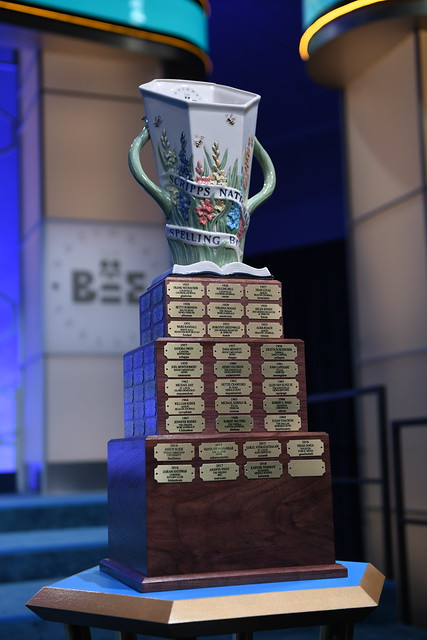
In the US, the National Spelling Bee, as we know it today, was established in 1925. The Louisville Courier-Journal was the first sponsor, who saw it as a way to foster interest in spelling and language. 

The E.W. Scripps Company acquired the rights to the National Spelling Bee in 1941. This company was started by E.W. Scripps who founded The Penny Press, a daily newspaper in Cleveland. Today, the company is involved in investigative documentaries and enterprise journalism with the purpose to ‘…advancing understanding of the world around us.’

The Spell Bee has been held annually, in late May or early June since its inception, except for a few years during World War II and in 2020 due to COVID-19.  It has evolved over time, beyond just spelling, encompassing vocabulary development and broader language knowledge. 

The first winner of the Spell Bee, in 1925, was Frank Neuhauser of Louisville, whose winning word was “gladiolus”. The next year saw a girl winning for the first time– Pauline Bell, also of Louisville, who spelt the word “cerise”. (Incidentally, girls won nine consecutive competitions from 1932 to 1940.)

Now coming to winners of Indian origin. 30 of the last 36 competitions have been won by them. Which is surely not a chance thing. Before 1999, there were only two spelling bee winners of Indian-American descent—Balu Natarajan in 1985, with the word “milieu”, and Rageshree Ramachandran in 1989 with “elegiacal”.  Nupur Lala opened the floodgates in 1999 winning with “logorrhoea,” and there has been no looking back since then! This year of course we celebrate Faizan Zaki, a 13-year-old Indian-American student from Texas, who won with the word ‘éclaircissement”

Rebecca Sealfon who won in 1997 against Prem Murthy Trivedi, has done some analysis on the subject of Spell Bee competitors, and tells us that children practice for about 500 hours in the years in which they compete; some hire ex-competitors as coaches; and they typically and unsurprisingly relax by playing word games like Scrabble or Boogle. Some try to learn every word in the dictionary. She further tells us that double ‘ll’ words are the ones which have tripped up a large number of contestants, along with the words ‘metastasize’ and ‘metonymy’.

Since I don’t know many of these words, and would certainly not be able to spell them, I can only express my wonder at these sub-14 year olds who can.

Kudos to all of you! You have cast a spell on me!

–Meena

Pic: https:spellingbee.comblogscripps-cups

Be Safe!

Last week on April 28th, we marked World Day for Safety and Health at Work. This day has been observed since 2003, when the International Labour Organization (ILO) declared it an occasion to stress the prevention of accidents and diseases at work. It is an opportunity to raise awareness of how to make work safe and healthy, and of the need to raise the political profile of occupational safety and health.

India especially needs all the focus it can give on this. We have seen horrific accidents in tunnels, mines and building sites. Last year saw 240 significant workplace accidents being reported in manufacturing, chemical, pharma, mining and energy sector operations. And these are only the reported accidents—it would be safe to say that many  go unreported. These accidents resulted in over 400 lives being lost and about 850 serious injuries.

We in India deal in large numbers and hence these may not look very serious. The gravity of the situation hits a bit harder when we see from ILO statistics that per 1,00,000 workers, India sees about 117 fatalities, compared to  China’s figure of 7, Brazil’s 7.4, Malaysia’s  14.6, Canada’s  5, etc.

In our everyday lives, we see indifference to safety all around us.  Metro rail construction, overbridge construction, electrical and mobile tower repairs—we never see proper safety measures , or the use of harnesses or personal protective equipment. When an electrician or TV dish installer comes home, their daredevil feats raise the blood pressure.

What to talk of others, we ourselves are not 100% perfect when it comes to donning helmets on two wheelers or seat belts in cars. (I must plead guilty here myself). There seems to be a feeling that ‘it can never happen to me.’ In fact, I recall a colleague conducting surveys about safety measures with those handling hospital waste. The general response was ‘Oh, we have been doing this for years without gloves and masks. Nothing has happened to us. Nothing will. All this just interferes with our work and slows us down. So we don’t really want to wear these things.’

We cannot afford this level of indifference. At one level, is tough laws are needed.  Of workplace safety laws, we have aplenty. We have the Factories Act, 1948, Mines Act, 1952, Dock Workers (Safety, Health and Welfare) Act, 1986, and the Building and Other Construction Workers (Regulation of Employment and Conditions of Service) Act, 1996.

However, the new Occupational Safety, Health and Working Conditions Code, 2019 brought in a few years ago is controversial in that some feel it dilutes safety provisions. “The new occupational safety and health law has severely weakened the inspectorate system, prioritizing ease of doing business over labour rights and worker safety. Inspectors can no longer conduct unannounced inspections, take immediate legal action against violators, or verify compliance effectively due to self-certification and private audits,” to quote Sanjay Vadhavkar, executive committee member of IndustriAll.

While India is good at making laws, their implementation is definitely not as strict as needed. Factory inspectors and traffic cops are equally easy to get by with a little gratification. Never mind that we are talking lives here.

The answer probably lies in education. Children educated about the hazards of fireworks are transforming how Diwali is celebrated. Maybe an equally serious focus on risk, hazard and safety can make a difference. If we catch them young and teach them young, maybe our factories, mines and roads will be safer.

–Meena

Reach for the Sky: Recalling Interactions with Dr. Kasturirangan

Last week, India and the world of science lost a doyen: Dr. Kasturirangan who in the decade till 2003, led the Indian Space programme as Chairman of the Indian Space Research Organisation, as Chairman of the Space Commission and as Secretary to the Government of India in the Department of Space. During this period, India saw the launch of PSLV, our indigenously developed launch vehicle; the testing of Geosynchronous Satellite Launch Vehicle (GSLV); and IRS satellites among others.

Before that, as the Director of ISRO Satellite Centre, he headed the development of the Indian National Satellite (INSAT-2) and the Indian Remote Sensing Satellites (IRS-1A & 1B) as well as scientific satellites. He was Project Director of BHASKARA-I & II. He was also the Project Director for India’s first two experimental earth observation satellites, and subsequently was responsible for overall direction of the first operational Indian Remote Sensing Satellite, IRS-1A.

It was in his time as ISRO chief that Chandrayaan-1 was conceived.

I am proud to say that I had the chance of a few personal interactions. However, not in the context of high-science and technology!

As everyone in the country knows, Dr. Rangan was deeply involved in education, and obviously had a passion for science education (what we today call STEM). It was in this context that I had the chance to interact with him. He was the Chairman of the Board of Governors of the Vikram A. Sarabhai Community Science Centre (VASCSC), where I serve as a member. VASCSC was the result of Dr. Vikram Sarabhai’s vision of enabling the country’s top scientists to contribute to science education. The institution was started in 1966 as a facility where people concerned about the quality of science education could come together to try new ideas and methods of science teaching.

The institution has deep programmatic and emotional links with the various institutions associated with Dr. Sarabhai, the father of India’s space programme.  Dr. Kasturirangan was an obvious choice to chair it!

When very busy people take on yet another committee or chairmanship, it is often really only ornamental. With the best of intentions, they lack the time or mind-space to get deeply involved.

Not so with Dr. Rangan. He ensured to attend VASCSC Board meetings, sometimes in person, otherwise by Zoom. He was there on the dot even for Zoom meetings. He was completely clued in and asked sharp questions about the Action Taken Report. He had a prodigious memory and made quick decisions. He was always supportive of the programmes and publically appreciative of the management and staff for their innovative initiatives and their commitment. He never allowed himself to be distracted with anything else during the course of the meetings, and ensured everyone had their say. It was a humbling experience as well as a learning for all of us.

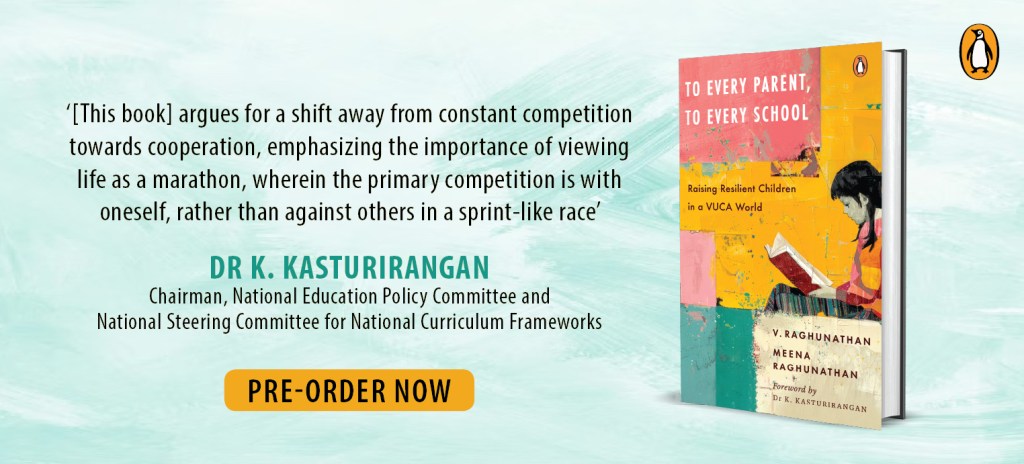
Raghu and I count it as a privilege that he consented to write the Foreword for our book: TO EVERY PARENT, TO EVERY SCHOOL: RAISING RESILIENT CHILDREN IN A VUCA WORLD (Penguin India). Even after he agreed, we were apprehensive: would he find the time to do it within the publisher’s deadline, given the enormous calls on his time? But we need not have worried. The write-up was with us a few days before the date we had indicated! And what a gracious Foreword it was!

These were people cut from a different cloth. They dedicated their lives to their mission. They wore their myriad achievements lightly. They were courteous to one and all. They listened. Nothing was too small for their attention. And they cared.

Grateful for the opportunity to interact with such inspirations.

–Meena

Father of the Library Movement: PN Panicker

The last few days, newspapers have been carrying a number of pieces promoting the joy of reading physical books, in an age when the printed word is rapidly being buried under the digital avalanche. As a person who has never abandoned the physical avatars, these reminders of the very different experience of physically turning the pages of a ‘real’ book make me smile! All this hype culminated with the announcement of National Reading Day on 19 June.

I have written frequently about books, and was aware of a couple of international days of books, and reading. However this was the first time that National Reading Day was taking up so much column space. I was naturally curious to know more about this day. And I discovered that there is much more behind this day than reading. It is the story of a man with a mission, who laid the foundation of the library movement in India.

Puthuvayil Narayana Panicker was born on 1 March 1909 to Govinda Pillai and Janaki Amma at Neelamperoor in Kerala. As a youth he used to read the daily newspapers to groups of illiterate people of different ages. He began his career as a teacher, but moved beyond his designated duties to set up the Sanadanadhramam Library in 1926, in a small room provided by the local cooperative society in his village. This was the first step in what was to become beginning of a life-long passion and mission with a simple but powerful message: Vayichu Valaruku meaning Read and Grow.

Panicker held Mahatma Gandhi in very high esteem; and like him, felt that illiteracy was a curse and a shame. He believed in a holistic approach to human resources development, the foundation of which was literacy. Towards this, Panicker initiated a literacy movement across the state. He also believed that libraries could provide a stable scaffolding for encouraging and sustaining the literacy movement. He made the literacy movement into a cultural movement where people could feel the emotional connect with the library in their village or town, just as they connected with their place or worship or school or college. Libraries created by this movement later became the nerve centres of local social and cultural activities; children would come and read, older people would gather to meet and discuss issues relevant to them. When he visited a leprosy sanatorium at Nooranad, the inmates requested him to set up a library there. The library was established as LS Library on 1 July 1949. It was one of the first libraries in the district and housed a unique collection including over 25000 books and rare palm-leaf manuscripts. It was extensively used by the sanatorium residents as well as visiting researchers and scholars.

Panicker led the formation of Thiruvithaamkoor Granthsala Sangham (Travancore Library Association) in 1945 with 47 rural libraries. The slogan of the organization was Read and Grow. He travelled to Kerala villages proclaiming the value of reading and succeeded in bringing some 6000 libraries in his network. The Travancore Library Association expanded to become Kerala Granthasala Sangham (KGS) in 1956.  KGS was awarded the UNESCO Nadezha K. Krupskaya Literacy Prize in 1975.

Panicker was the General Secretary of Sangham for 32 years, until 1977, when it was taken over by the State Government and it became the Kerala State Library Council.

In 1977 Panicker founded the Kerala Association for Non-formal Education and Development (KANFED) with the objective to help universalize education by stepping up propaganda for it, and by the institution of non-formal education activities supplementary to the formal education system. This led to the establishment of institutes for research and training in all aspects of non-formal education, publishing houses for the production of literacy materials, and centres for the eradication of illiteracy.

These were operationalized through Committees which were set up in all districts of the state at Block and Panchayat levels to organize, conduct and supervise literacy centres; Regional Resource Centres were set up to store books, teaching aids and other materials necessary for adult education and make them available at all literacy centres.  

Primers for beginners, and books and periodicals and other useful material such a maps and wall charts for neo-literates were prepared through workshops for young writers, and published. The Primers included Alphabet Primer, Science Primer, Health Primer, as well as Primer for Women, Prier for Agriculturists, and Primer for Tribals. There were books on agriculture and animal husbandry; books on health and hygiene, and books for neo-literates. There were also biographies of inspiring national and international personalities, as well as books describing civic institutions, rights and duties, and promoting scientific temperament.

Resource material for adult literacy workers, instructors, project officers and organizers was supported and supplemented with seminars, workshops and training.  Plans for monitoring and evaluation of the literacy centres were also included.

Panicker’s vision and the state-wide mission of KANFED played a significant role in Kerala’s successful literacy movement–the Sakshara Keralam Movement. The first 100 percent literate city in India, and first 100 percent literate district have been from Kerala. Kerala was also the first state to attain 100 percent primary education. Some of the oldest colleges, schools and libraries of the country are also situated in Kerala.

In addition to literacy centres, Panicker also took keen interest in promoting Agricultural Books Corners, The Friendship Village Movement (Sauhrdagramam), and Reading Programmes for Families.

The life-long crusader for literacy and libraries passed away on 19 June 1995. Since 1996, this day is marked as Vayanadinam (Reading Day) in Kerala. It is a reminder to encourage the movement to promote a culture of reading, to inculcate the habit of reading and promote book-mindedness among school children, youth as well as the underprivileged population of the country. The Department of Education, Kerala also observes Vayana Varam Week (Reading Week) from June 19 to June 25 in schools across the state.

The Department of Posts honoured PN Panicker by issuing a commemorative postage stamp on 21 June 2004.

In 2017 PM Narendra Modi declared June 19, Kerala’s Reading Day as National Reading Day in India. The following month is also observed as National Reading Month.

The PN Panicker Foundation continues the mission to enhance lives and livelihoods through various targeted initiatives ranging from education, skill development, health, and need based programmes with the efficient use of technology. In keeping with the need of the hour, it is supporting digital learning in rural areas and has established thousands of home digital libraries across the state. PN Panicker’s vision continues to guide and inspire the new generations.   

–Mamata