‘Tis the Season to Rejoice. And Make Santas!

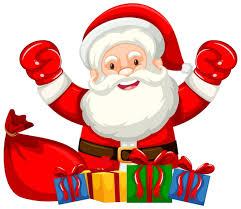
With a 5-year old to entertain, I am always looking for suitable activities. And Christmas brings not only joy but a host of Santa crafts too. Like Ganesh, Santa lends himself to being rendered in paper, board, foil, plastacine, with balloons, with cotton wool….you name it. The ability to cut out circle-ish shapes is the main criterion for being able to undertake Santa-crafts. My house is currently filled with good, bad and indifferent renditions of Santa!

Santa

As a corollary, I was curious to learn about Santa sculptures. I did not recall seeing any statues of this beloved character. And they seem to be surprisingly few in number—or at least, they don’t seem to be well documented.

But there is one very well-known sculpture—famous in some eyes, infamous in others!

This is the piece by the American artist Paul McCarthy. Always controversial, McCarthy works in several media—performance, sculpture, painting, installation and ‘painting in action’. He is an analyst and commenter on mass media, consumerism, contemporary society and the hypocrisy, double standards and repression of American society. His objective is to showcase everyday activities and the mess they create.

In 2001, the city of Rotterdam commissioned McCarthy to create a Santa to be placed at the prominent Schouwburgplein square near De Doelen, the city’s orchestra building. He was paid 180,000 euros, a very reasonable amount for a large sculpture by such a prominent artist.

McCarthy delivered the bronze sculpture—and controversy started. Santa was supposedly holding a pine tree in his hand. But many saw the object in his hand as having sexual overtones, and the statue gained the nickname of Butt Plug Gnome.

There were protests by the people of Rotterdam who refused to allow the sculpture to be installed in Schouwburgplein. City officials then tried to install it in Rotterdam’s main shopping street, but this plan also met with resistance. It was four years before McCarthy’s sculpture was set up and unveiled in the city’s Museum Park. It stayed at that spot for three years. However, thanks to general discontent about its highly-visible location, it was moved to a less prominent location within the Museum Park itself.

It was only on November 28, 2008 that the sculpture, which was intended by the artist to critique the consumer culture that surrounds Christmas,  and  is supposed to depict the king of instant satisfaction, symbol of consumer enjoyment, found a permanent home in the Eendrachtsplein Square in Rotterdam.

Another well-known statue of Santa which again has a complicated story is in Turkey. The original Santa was St. Nicholas who was born in 270 AD, in Patara, a small town in Antalya province in modern-day Turkey. He accepted the Christian faith and became the bishop of the nearby town of Demre. The story goes that he used to be so upset by poverty and unhappiness that he used all his wealth to combat it. He dropped bags gold coins down chimneys and gave nuts and fruit to good children, and often helped to look after the sick and elderly—one can see the linkages with activities associated with present-day Santa. Various generations of Santa statues stood in Demre for many years.  But in 2008, the then-standing statue was removed during some construction work by city officials, and has not been replaced despite protests. Authorities say they will re-install the statue when they find an appropriate spot for it!

Nearer home, there are less controversial, though also less permanent Santas. India’s well-known sand artist Sudharshan Patnaik has made sand sculptures of the beloved figure for the holiday season over the last few years.  Last year he created a giant 1.5 tonnes , 60-feet wide sand-and-tomato Santa Claus on Gopalpur Beach. Before this, during Covid in December 2020, he created a giant three-dimensional sand installation of two Santas holding a mask, carrying the message of wearing masks.

May this holiday season bring peace, health and happiness to all!

Meena


Be a Sport!

This month games have been in the news. From cricket dominating the headlines, to Meena’s pieces on the importance of play for the all-round development of children. Toys are perhaps the first objects that children interact with as they learn how to ‘play’. Beginning with supporting the development of psycho-motor skills, toys also encourage imagination and creativity.  As the child explores and discovers, in its own way, the toy becomes way more than what it was formally designed for. Toys can become the central characters in a gamut of games and make-belief adventures. The child’s interactions with toys also begin to lay the foundation of the sense of ownership (“my doll, my truck”), which also lends itself to possessiveness when the same toy is ‘snatched’ ‘begged’ or ‘coveted’ by another child. 

It is at this early stage then, that the field of games introduces other instincts such as ownership and competiveness, often leading to conflict. This is where the concepts of ‘sportsmanship’ are also planted (or not planted), well before the child graduates from toys and imaginary play to more formal games, and then on to sports.  

A game is described as a physical or mental recreational activity involving one or more players, defined by a goal that the players try to reach, and some set of rules to play it.

A sport is a physical activity carried out under an agreed set of rules, with a recreational purpose: for competition or self-enjoyment, or a combination of these.

The two terms have also spawned two related terms—sportsmanship and gamesmanship.

Gamesmanship refers to the strategic manipulation of the rules and the spirit of the game to gain an advantage over opponents. While not necessarily breaking the rules, players who engage in gamesmanship employ tactics that push the boundaries of fairness. This may include exploiting loopholes, distracting opponents, engaging in unsportsmanlike conduct, or using psychological tactics to gain an edge. While gamesmanship may be within the confines of the rules, it can undermine the principles of fair play and the spirit of the game.

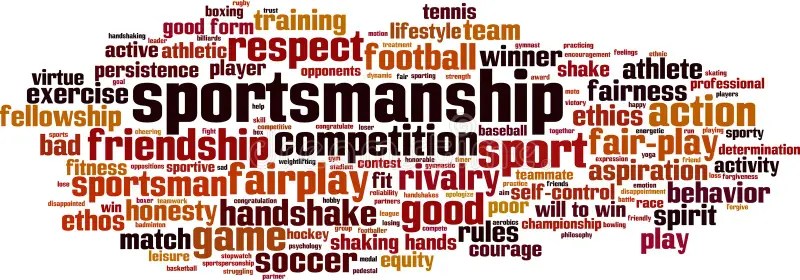
Sportsmanship refers to the values and behaviours exhibited by the players that uphold the spirit of fairness, self-control, respect for rules, opponents and authority, and integrity. Sportsmanship fosters positive relationships among players, promotes teamwork and healthy competition, encourages accepting victories and defeats with grace, and thereby enhances the sports experience.

Poor sportsmanship, while not exactly using manipulative tactics, includes unethical behaviour such as intentionally injuring opponents, taunting or insulting players, or disrespecting officials and fans. 

We teach children the importance of sports, but sadly do not pay enough attention to also inculcating the values of sportsmanship from an early age.  We send them to coaching classes to hone their skills in a sport—from tennis to football to hockey. Large academies are set up that identify budding players and rigorously mould them to become “champions.” These instil in the young minds the yen to be winners always, to be the best, the fastest, and the strongest at all times. They also laden them with highest of expectations. The aspiring champions carry on their young shoulders the burden to always meet these expectations, at any cost, including personal burn-out and breakdowns.

This expectation balloons manifold in the eyes of spectators of team games. It manifests itself in the fanatic fandom of a favourite team. This is what buoys the playing teams and fuels the culture, and indeed, the enormous business of spectator sports. Support and encouragement of one’s favoured team is necessary, even desirable in sports. But when this balloon bursts, leading to a mass wave of intense negative feeling, it is certainly not sportsmanship. What we have forgotten in our love for ‘our team’ is that it is more than one team that makes a sport a sport, that that it calls for dignity and grace to acknowledge that we cannot always be the winner.

Participation in sports develops important skills, but this needs to be combined with developing the values and behaviour of sportsmanship. Even as we coach our young minds and bodies to excel in sports, it is important to remember that they also need coaching in sportsmanship. This involves engaging also with their hearts and emotions. It means emphasising respect for the opposing team in every circumstance—win, lose or draw, on or off the field. It means extending goodwill not only to one’s own team mates and coaches, as well as the others who support the players in many ways, including the spectators.  

While healthy competition is an important ingredient of a competitive sport, unsportsmanlike conduct cannot justify the end—winning at any cost. Competing with honour and fairness need not be a dampener to the skills and excellence of players. Rather a game well played to the best abilities of both teams enhances not only the quality of the game, but the ambience within which it is played. 

As the curtains fall on the mega spectacle of World Cup cricket, let us remind our children (and indeed ourselves) that the true spirit of sportsmanship means that it doesn’t matter what the outcome of the game is, it is not just about winning or losing; it is also about empathy, about the person or people you are competing against; they deserve to be shown the same respect you would show them outside of sport. Sportsmanship centres on three vital life-skill components of Respect, Losing with Dignity, and Winning with Humility. Let this principle be the guiding factor in the long game of life, as in the many games that we play in many fields.

Be a sport! May the best one win!

–Mamata

A Cry for Children

This week Meena wrote about Children’s Day in India which is celebrated on 14 November each year, marking the birth anniversary of Jawaharlal Nehru. It is in this same week that another children’s day is celebrated. This is Universal Children’s Day which is celebrated on 20 November every year to mark the date when the United Nations General Assembly adopted, in 1989, the Convention on the Rights of the Child.  

There had been previous discussions about children in the international community. Declarations on the rights of the child had been adopted by both the League of Nations (1924) and the United Nations (1959). Also, specific provisions concerning children had been incorporated in a number of human rights and humanitarian law treaties. However amidst global reports of children bearing the brunt of grave injustice in many forms–from health and nutrition, to abuse and exploitation, it was felt that there was a need for a comprehensive statement on children’s rights which would be binding under international law.

In response to this the UN initiated a process of consultation which led to the drafting of a comprehensive document keeping the child as the focus in all realms—civil, political, economic, social and cultural. The Convention on the Rights of the Child was adopted by the UN General Assembly on 20 November 1989 and entered into force in September 1990.The Convention is the most rapidly ratified human rights treaty in history; more countries have ratified the Convention than any other human rights treaty in history. Three countries, the United States, South Sudan, and Somalia, have not ratified the Convention.

The Convention outlines in 41 articles the human rights to be respected and protected for every child under the age of eighteen years.

The articles can be grouped under four broad themes:

Survival rights: include the child’s right to life and the needs that are most basic to existence, such as nutrition, shelter, an adequate living standard, and access to medical services.

Development rights: include the right to education, play, leisure, cultural activities, access to information, and freedom of thought, conscience and religion. The term ‘development’ includes not only physical health, but also mental, emotional, cognitive, social and cultural development.

Protection rights: ensure children are safeguarded against all forms of abuse, neglect and exploitation, including special care for refugee children; safeguards for children in the criminal justice system; protection for children in employment; protection and rehabilitation for children who have suffered exploitation or abuse of any kind.

Participation rights: encompass children’s freedom to express opinions, to have a say in matters affecting their own lives, to join associations and to assemble peacefully. Children have the right to be heard and to have their views taken seriously, including in any judicial or administrative proceedings affecting them. As their capacities develop, children should have increasing opportunity to participate in the activities of society, in preparation for adulthood.

The Convention establishes in international law that States Parties must ensure that all children – without discrimination in any form – benefit from special protection measures and assistance; have access to services such as education and health care; can develop their personalities, abilities and talents to the fullest potential; grow up in an environment of happiness, love and understanding; and are informed about and participate in, achieving their rights in an accessible and active manner.

Even as the world will be reminded of the Convention on the Rights of the Child this week, this year is tragically one where these very rights are being destroyed minute by minute. More than one hundred children are killed every day in the ongoing war in Gaza and the West Bank. Thousands more are believed to be buried under the rubble of entire townships razed to the ground. Hundreds are dying in hospitals which are being ruthlessly attacked from the air and ground, including premature babies who have not even yet had a chance to take a breath on their own.

Never before in history have so many children faced the horrors of relentless violence, hunger, thirst, displacement, and so many as yet untold terrors. What will be the future of those who do survive this new holocaust?

Which of the Rights listed above will we have the courage to place before them? How can the world appease them, and our own consciences, with a flourish of the Convention on the Rights of the Child?  

In the words of Ghassan Kanafani, eminent Palestinian activist, essayist, novelist, who was killed by a car bomb in 1972 at the age of 36 years.

I wish children didn’t die.

I wish they would be temporarily elevated to the skies until the war ends.

Then they would return home safe, and when their parents would ask them: “where were you?”

They would say: “we were playing in the clouds.

How much longer? How much further?

–Mamata

New Master Craftsmen

Last week Meena wrote about Master Craftsmen. From Vishwakarma, the  legendary master architect and craftsman and an era when manual skills were highly respected and valued, to the present day when such skills are not as highly valued, as a result of which skilled craftspeople are increasing hard to come by.  

In an age when manual work, with attention to the minutest detail and quest for perfection is often eclipsed by industrialized mass production, there is a small and surprising band of new-age Vishwakarmas. This is the league of Lego enthusiasts who spend hours and days (and considerable manual dexterity) putting together little blocks to create mind-boggling structures.

Nathan Sawaya is considered to be the first artist to use Lego bricks in fine art. A high-powered attorney, he would come home and build with Lego bricks as a way to relax. Eventually he gave up his law career to dedicate himself to Lego art. Today his sculptures which range from a 20-foot-long Tyrannosaurus Rex skeleton to a tiny tree consisting of one brown piece on the bottom and one green piece on the top, are exhibited in galleries.

A Chinese artist Ai Weiwei recreates classic paintings using Lego bricks. Among these is the famous painting by French painter Claude Monet called Water Lilies. Weiwei has recreated this as a 15-metre-long art piece using 650,000 Lego blocks.

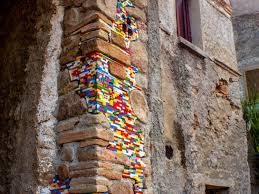
Other artists around the world have used Lego blocks on many occasions to pass a message of social awareness, or simply to entertain the imagination. Street artist Jan Vormann fills in cracks and crevices in damaged walls with Lego building blocks. He calls this ‘art meets functionality approach to repairs’ Dispatchwork. Today there is a worldwide network of people inspired by him who contribute to this creative repair approach.

Lego is usually associated with a children’s hobby kit. It is considered the epitome of an educational toy, and Lego sets have long gained a place at the top of the list of the world’s most popular toys. 

Interestingly the simple interlocking block-shaped toys that we know today as Lego bricks were the invention of a Danish master carpenter and joiner named Ole Kirk Christiansen. In 1932 when Europe was in the throes of the Great Depression, Christiansen opened a small woodworking shop in the village of Billund, with his son Godtfred who was just 12 years old, to manufacture stepladders, and ironing boards from left-over wood. They soon expanded their products to include wooden toys like simple yo-yos, trucks and ducks on wheels, made out of birch wood. In 1934 they gave their business the name Lego, a contraction of the Danish words leg godt meaning ‘play well’.

The company soon built its reputation as a high-quality toy manufacturer and business spread. The company itself grew from only six employees in 1934 to forty in 1942. The product line also expanded to include clothes hangers, a plastic ball for babies, and some wooden blocks.

It was in 1947 that the company made the move that would define its future.  Lego bought a plastic injection-moulding machine, which could mass produce plastic toys. By 1949, Lego was using this machine to produce about 200 different kinds of toys, which included a plastic fish, a plastic sailor, and small plastic bricks which had pegs on top and hollow bottoms, allowing children to lock the bricks together and create structures which simple wooden blocks could not. The ‘automatic binding bricks’ as they were called, were the predecessors of the Lego toys of today. In 1953, the automatic binding bricks were renamed Lego bricks. In 1957, the interlocking principle of Lego bricks was born. But these bricks were not too sturdy, and they did not stick firmly to each other.

In the meanwhile Lego had been working on a stud-and-tube design that facilitated the bricks to snap together firmly. They obtained a patent for this in 1958. This was the game-changer. The new system gave children the chance to build something sturdy, without it wobbling, or coming undone. Lego also made sure that new bricks were always compatible with old ones. In fact Lego has not changed the design of its bricks since 1958 when they got a patent for what is called the “universal system” so that each piece is compatible with all other pieces, regardless of the year or set it belongs to.

As the interlocking blocks grew in popularity, it was observed that children used the bricks in innumerable different ways to create more than just single structures. This led to the Lego Sets which had additional components like vehicles, street signs, bushes etc. to create streets and cities. The landmark addition of the wheel (around brick with a rubber tyre) in the 1960s brought in numerous new possibilities. With the production of 300 million tiny wheels per year, Lego out-manufactures the world’s biggest tyre manufacturers! The younger children were roped in to Lego-land with the launch of the larger Duplo bricks for pre-schoolers. 

The 1970s saw more additions to Lego sets–miniature figures (referred to as a minifig) with moveable arms and feet to populate the Lego towns; castles and knights to create a medieval world; pirates to sail on high seas, and astronauts to ride into space, and almost everywhere that a child’s imagination could take it.

The introduction of the immensely popular themes like Star Wars and Harry Potter contributed to the soaring sales, making this a multi-billion dollar industry. However it is heartening to find out that Lego has a strict policy regarding military models. They do not make products that promote or encourage violence. According to the company “Weapon-like elements in a Lego set are part of a fantasy/imaginary setting, and not a realistic daily-life scenario.”

Despite the scale and volume of production, there is no compromise on quality. The process used to mould the bricks is so accurate that only 18 out of one million bricks fails to meet quality standards. The original founder Ole Christiansen believed strongly in the values of creativity, individuality and, above all, quality. The Lego Group’s motto, “Only the best is good enough” was created in 1936, and is still used today.

Today there is a large international AFOL (Adult Fan of Lego) community. One of the challenges in the Lego world is to become a “master builder”. Coincidentally one of the most expensive Lego items is the Taj Mahal set which has over 6000 pieces to construct the Taj Mahal. Where centuries ago master craftsmen toiled with slabs of marble to create this magnificent timeless edifice, today the new master craftsmen work with plastic bricks to create its replicas.

–Mamata

Be a Sport

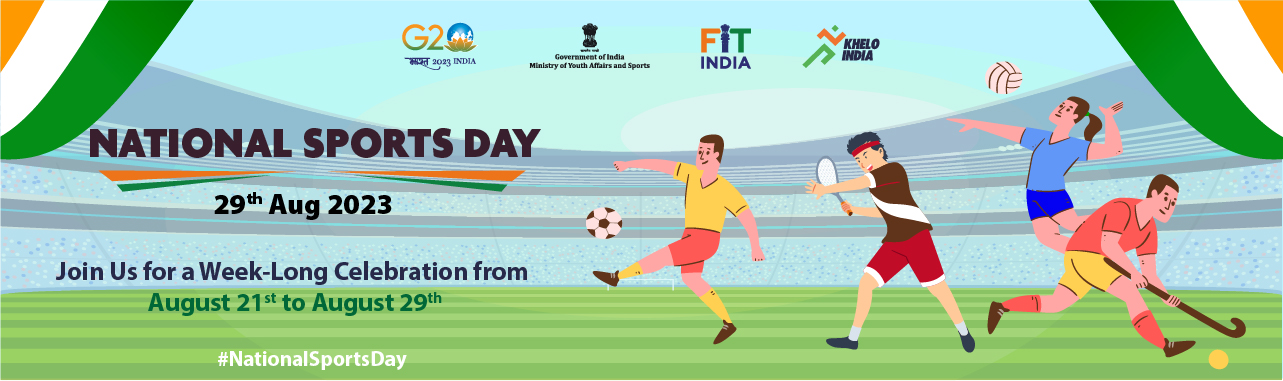
Last week on 29th August, we marked National Sports Day in India. August 29 is the birth anniversary of the legendary hockey player Major Dhyan Chand, and there could be no more fitting day than this to mark our commitment to sports.

sports

I know little about sports. Just enough to wish that we could do a little better on the world scene; just enough to wish young people across the country could access good sports facilities and meet their potential; just enough to wish that there was not so much bureaucracy, bias and barriers in sports.

On the occasion, I thought I would look at where we stood viz a viz other countries in sports. The Olympic tally and other such statistics are of course known to all. But during my exploration I found very interesting statistics on a site* which evaluated countries on their ‘sportiness’. That looked interesting, so I got to exploring it. I would not have thought I would find India anywhere in the top-half of the table. To my amazement, I found we ranked 16th out of 134 countries, with a total score of 48.66/100, compared to top-ranking Germany’s 72.4%.

While the initial reaction was to celebrate, somehow it didn’t sound quite right. So I looked a little more closely at the data behind the ranking. The methodology considers 10 parameters to arrive at the results. These are:

  • Olympic medals
  • Winter Olympic medals
  • Elite sports ranking
  • Sports participation rate
  • Gym membership per 100k population
  • Health and fitness mentioned as hobby
  • Playing sport mentioned as a hobby
  • Watching sports mentioned as a hobby
  • Fitness apps
  • Fitness spends

I can pick a lot of holes in the methodology. The foremost is the choice of parameters which explains why India could be ranked so high–you will understand what I mean when we break down our standings in each parameter:

We stand 48th place in Olympics medals.

We have won no medals in the Winter Olympics. (Of course we can question this as a criterion, given that hotter countries do not have the same opportunities as colder ones in these sports).

We rank 37th in elite sports ranking.

Our sports participation rate is a dismal 13%, among the lowest of all the countries in the study.

Our gym memberships also rank among the lowest in the table. (Again, it may not be a fair measure given the lower incomes in developing countries and hence lesser ability to spend on this.)

How then when we score so low on these parameters, do we rank a high 17th?

The factors that follow will explain the anomaly:

A whopping 43% per cent cite health and fitness as their hobby, way higher than the sportiest nation Germany. Only Sweden, Austria and South Africa rank higher than us. Well, one can claim anything. And these are just what people say in a survey, without any proof of what they do in this regard.

Intriguingly, 35% say that they play sports as a hobby, just 2 per cent lower than top-ranking Germany. Now, from my lived experience, I would never suspect that there were so many people in our country who played for a hobby. Given the statistics on sports participation, as well as lack of sports facilities, who and where are all these people who claim to be playing? Did the survey reach out to rural areas, or was it confined to a few cities? What age groups did it consider?

The parameter of how many people watch sports as a hobby is much more believable—we stand among the top 3 or 4 in the table with a whopping 48 per cent of Indians being serious sports-watchers. This is one of the major factors which tilts the results in our favour.

So in sports as in many other facets, we are ‘watchers’ rather than ‘doers’. Yes, if we were to go by TRPs of cricket match telecasts, sure India should count as a seriously sporty nation. But when it comes to taking sports seriously, or even to making health, fitness, sports and games a part of our culture and lifestyles, there is such a distance to walk.

So a good time to think about what it would take to really make us a sporting nation.

And also a lesson to closely look behind rankings and gradings before jumping to conclusions!

–Meena

PS: Confession: I don’t play sports at all. But I do walk and cycle regularly. Forgive me, I am a product of my generation.

*(https://us.myprotein.com/thezone/motivation/which-are-the-worlds-sportiest-countries/)

Jumbo Symbol

As we celebrate our 76th Independence Day, here is a look at a creature which is inextricably tied to the image of India—the elephant.

Though the tiger is our national animal, and lions stand proud on our national symbol, it is the elephant which is associated in popular imagination with India. Elepehants have traditionally been associated with the wealth, grandeur and ceremony of kingly India. Even today, people from foreign lands imagine elephants strolling the streets of the country.

A constant and less-than-flattering reference is to the Indian economy as an elephant. To quote former RBI Governor Dr. Duvvuri Subbarao, ‘In development economics parlance, the East Asian economies — Taiwan, Korea, Singapore, Hong Kong — are referred to as the tigers. The next generation of fast growing Asian economies — Thailand, Philippines, Malaysia, Indonesia — are referred to as the cubs. China is called the dragon. All these countries delivered a growth miracle in the last 40 years. ‘

‘India is referred to as an elephant because it is a strong animal with enormous potential but it moves at a lumbering pace. The hope is that it will start dancing and deliver the next growth miracle.’ (Knowledge at Wharton).

But coming back the elephant itself. Though elephants are so central to the imagination of India, ironically, one sees the image of the African elephant all around—from ads celebrating India and Indian products, to calendar art, to even textbooks and school charts.

The two are different at a very fundamental biological level. Asian elephants belong to the genus Elephas, species maximus, and African elephants to the genus Loxodonta, species africana. The two cannot interbreed and produce viable offspring.

Elephant
Coutesy: Britannica

Physically, the African elephant is significantly taller and heavier than our Asian ones. Another obvious difference is that Asian elephants have small ears, while their African cousins have much larger ears, which cover their shoulders. All African elephants have tusks, while only male Asian elephants have tusks. (Artists seem to like depicting large ears and longs tusks on all the elephants they draw, which may be the reasons for the predominant image of African eles even in our media!). The trunk of the Asian elephant has one finger at the tip, while the African elephant has two fingers– this means that the way they pick up things is different—our elephants will curve their trunk around the object, while the African jumbo will hold the object between its two ‘fingers’, much as we would hold something between finger and thumb. Our elephants have two humps on the forehead, while African eles have one.

Importantly, Asian elephants are tameable, while African elephants are not. This is why in India, elephants have played such a large part in our lives—whether in religious ceremonies, in cultural processions, as royal symbols, as transport or war animals.  

Thought still on the endangered list, conservation efforts seem to be paying off in India, with numbers reportedly on the rise, standing at about 28,000 this year, and elephant-bearing states vying with each other to report higher numbers. Project Elephant, launched in 1992, was critical in focussing attention on conservation of elephants and their habitats. Now, it has been merged with Project Tiger, based on the thinking that both animals inhabit the same habitats in some places. Only the future will tell if this is a good move, given that different issues confront the two majestic animals in different locations, and the move may take away the focussed attention on each of these.

On the economic front, bodies like the World Economic Forum think that ‘India’s economy is an elephant that is starting to run.’

As we wish our elephants to do well on World Elephant Day (August 12), we also hope, on Independence Day, that the Indian economy does well and all Indians attain a better quality of life.

Happy Independence Day!

–Meena

Raiders of the Lock Art

Art thefts make the headlines fairly frequently (as do movies and OTT series on the theme). They have a long history—the first art heist probably dates back to 1473 when Polish pirates boarded a ship and stole  Hans Memling’s a painting called ‘The Last Judgement’. They took it back to their country, where even today, it is displayed at the National Museum in Gdańsk. Italy has, since the 15th century been trying to get the painting back!

Patriotism and national feeling were also behind the theft of the Mona Lisa in 1911 from the Louvre. Vincento Peruggia, a handyman at the Museum, along with two compatriots, spent the night in a closet there, and quietly walked away with the painting in the morning. Peruggia thought that the painting was an important part of Italy’s heritage stolen by Bonaparte, and wanted to get it back to the homeland. He hid the painting for over two years, trying all the while to sell it to a buyer who would help in the repatriation. It was no easy task, because the theft had gained international notoriety and everyone was on the lookout for the painting. Finally, after 28 months, a dealer whom Peruggia approached called the police, and the painting was recovered and Peruggia jailed. In fact, it is this theft which is supposed to have catapulted the Mona Lisa to the fame and popularity it enjoys today—few had really bothered about it before this incident.

The biggest art heist in terms of monetary value is the theft of several paintings of incalculable value from the   Stewart Gardner Museum, Boston. The stolen works, still missing, include a Vermeer, a Rembrandt, and a Monet among others, and are valued at about $500 million.  

Another art-theft that caught the popular attention was the one where the thief was dubbed ‘Spiderman’. Vjeran Tomic entered the Musée d’Art Moderne de la Ville in Paris several times without being noticed, by spraying acid on a window. On the final visit, he stole several artworks, including a Picasso and a Modigliani. He was finally caught.

The point of art thefts is a little difficult to decipher, because the stolen works are usually well-known and even if there are people willing to buy them, they can hardly be displayed, as they would soon be recognized.  Of course there are some people who steal art for ‘noble’ reasons, like Peruggia who wanted to restore his country’s heritage. Or there may be others who are happy to pay in the millions and billions, and take enormous risks to enjoy the paintings in very private situations. Or maybe just the idea of outwitting complex security measures gives some a kick.

At least paintings are not too large and heavy, especially if the thief at some stage takes them out of the frame, and are therefore relatively easy to move and hide.

But that cannot be said of stolen public art. One of the most famous of such thefts is that of a Barbara Hepworth sculputre, Two Forms (Divided Circle), from its plinth in South London’s Dulwich Park. The bronze standing at 93 x 89 x 23 inches was installed in the Park in 1970, and disappeared overnight on 19–20 December 2011. While the art piece was valued at about £500,000, the thieves probably stole it to sell as scrap—for which they would likely have got £750!

Lock
The Lock standing proud before it was stolen

Not at this scale, but our own Bangalore (and we personally) suffered such a loss last month. Raghu is an avid collector of locks, and seven of the locks from his personal collection were blown up in bronze, and placed on the kerbside of a large bank located on MG Road. The idea was to add an element of aesthetics and interest which could be viewed and enjoyed by all passers-by. Alas, on a night in June, one of the seven bronzes disappeared! And will probably be sold for scrap. A loss to the Bank, to us who love and cherish the locks, and to the general public.

Many curators and security specialists have thought through how thefts of public art can be prevented. Stephen Feeke, curator at the New Art Centre,  a gallery and sculpture park in Wiltshire, offers common sense solutions—for instance, flood-lighting to deter thieves and vandals;  securely gating and fencing the perimeter; and blocking access for vehicles, as a bronze sculpture is far too heavy to carry off without a car. Others suggest high-tech measures like using forensic coding that might allow the metal to be traced.

But many are united in that there must be an outcry and voices must speak out against these thefts, which are not only a personal loss to the owners, but a loss for the public for whom this may be the most accessible form of art.

Lady Lock did not have Lady Luck on her side the night she was stolen, but let’s hope our cities do more for their public art.

–Meena

Desperately Seeking Women-Power

The Global Gender Gap Report 2023 is out, and the news is not good for us in India. Well, if you are an untiring optimist who insists on seeing a glass with some drops of water in it as half-full, you will stop me and scold me. For after all, India’s ranking in the list of 146 countries which have been studied, has gone up 8 places, so that we stand at 127th, up from 135th last year.  

But for me, as I go through the report, I don’t know see how we can take any comfort from this. Even if we are to view ourselves in a comparative light, we need to pause and consider that Nicaragua and Namibia rank at 7th and 8th, compared to our 127!

The report measures gender gap on four major dimensions:  Economic Opportunities, Education, Health, and Political Leadership.

The first bucket, to quote the report ‘contains three concepts: the (labour) participation gap, the remuneration gap and the advancement gap’. The second bucket of Educational Attainment ‘captures the gap between women’s and men’s current access to education through the enrolment ratios of women to men in primary-, secondary- and tertiary-level education’. The Health and Survival sub-index provides an overview of the differences between women’s and men’s health by looking at sex ratio at birth, and the gap between women’s and men’s healthy life expectancy. The last bucket of Political Empowerment measures the gap between men and women at the highest level of political decision-making through the ratio of women to men in ministerial positions, and the ratio of women to men in parliamentary positions.

Courtsey UN Women Insta

If we look at India in terms of these dimensions, less than 30 per cent of women participate in the labour market. Women make up 89 per cent of workers in informal sector, which means they are probably underpaid, do not have job security or any other benefits, and work in unsafe, unhealthy and unregulated conditions. Less than 2 per cent firms in India have female majority ownership, and less than 9 per cent have females in top management positions.

Close to 30 per cent women report having faced gender violence in their lives.

We rank 117th in terms of percentage of women in Parliament and 132nd in terms of women in ministerial positions.

That is underwhelming in terms of performance and overwhelming in terms of the task ahead. A practical way to start may be by looking at the factors that are measured to arrive at the rankings. This can probably help a government, an organization and a community and a family work out specific plans and targets.

To get into the details of the employment and economic opportunities segment, the factors include:  labour-force participation (including unemployment and working conditions); workforce participation across industries; representation of women in senior leadership; gender gaps in labour markets of the future (including STEM and AI related occupations); gender gaps in skill of the future.

What might that mean for a government? Well, maybe setting targets or incentives/disincentives for public and private sector for employment of women? Importantly government must ensure workplaces, public spaces and transport safe, so that women are able to travel and work without fear. To a large extent, government does walk the talk on gender positions? Many of our Ministries and Departments are headed by women-bureaucrats; the largest public sector bank has been headed by a woman; we have women heading government research labs and scientific institutions, playing a part in our space and nuclear programmes, now full-fledged in the armed forces, etc. But doing this even more aggressively will set an example to the private sector.

What might that mean for a corporation? That they move forward from celebrating Women’s Day to taking a hard look at their policies, systems and culture to see how they can become truly inclusive employers.

What might it mean for educational and training institutions: That they don’t, by action or inaction, deny girls opportunities; that they counsel and encourage them to take up STEM courses and careers.

What does it mean for communities? That they examine their conscious and sub-conscious biases, and understand how these affect their actions; that they make the community safe for girls and women.

And most importantly, what does it mean for a family? That they don’t discriminate against girl-children; that they provide them opportunities; that they don’t belittle their aspirations and abilities; that they don’t deny them their rights; that they help them fight their battles and give them a winner’s mindset.

It’s a long, hard journey. If we aspire to be at least in the top half rather than the bottom half of the ranking,the journey has to begin with every individual—in our hearts, minds and actions, today.

–Meena

https://www.weforum.org/reports/global-gender-gap-report-2023

The Ship has Sailed

Last week I was reminiscing on my parents’ sojourn in London, and the similarities it held with the sojourn of an ex-PM (Dr. Manmohan Singh) and his family in the UK, around the same time.

Surprisingly, the similarities did not end there. Both families made their way back by sea, on the SS Chusan, a ship of the P&O Company (but at different times).

These days, one thinks of sea-travel in terms of expensive luxurious cruises. But I suspect that in the early ‘60s, it may have been comparative in price to the cost of air-tickets, with the added advantage that it was a great 2-week holiday, with the novelty of the shipboard experience and the possibility of seeing a few new countries on the way.

And indeed the shipboard experience was something that was special. As the book ‘Strictly Personal’ by Damam Singh, a memoir of the lives of Dr. Manmohan Singh and Mrs. Gurcharan Singh says, ‘The SS Chusan offered virtually all the comforts of the cruise. The ship had 464 first-class and 541 tourist class cabins that had only recently been fitted with air-conditioning.’

Of course the first days were horrific with sea sickness for some of the passengers, but the organized fun and frolic was something my parents had probably never experienced before. (I too was there, as evidenced by photographs, but can remember nothing!).  My brother however remembered a penny being pulled out his ear by a magician who was part of the shows put up for kids. There were a variety of shows, music, dancing and games for all age groups. For all of us, as for Mrs. Gurcharan Singh ‘it was like a fifteen-day carnival.’

Many aspects of shipboard life were very formal. For instance, children were not allowed into the dining rooms.  Dr. Manmohan Singh recalls: ’At mealtimes, we could not take Kiki into the dining room. We had to leave her in the nursery, and she used to cry and cry.’ I was quite a happy child, so my parents did not have this problem.

SS Chusan
Being coached by my brother on the deck to run a race!

The SS Chusan was rather a special ship. It was the last and largest ship built for the P&O Company’s Far Eastern Service. It was eqipped with the latest (for the time!) marine technology, and was the first ocean-going passenger ship to be fitted with anti-roll stabilizers (imagine how many more people would have been sea-sick without that!). She was launched in 1949, and was decommissioned in 1973.

Incidentally, P&O stands for ‘The Peninsular and Oriental Steam Navigation Company’, which originally started in 1840. It is, even today, Britain’s biggest cruise line. But today, it declares that ‘We are a holiday company’—as different as can be from the services of yore used by middle-class professionals to commute from UK to India!

And if you have wondered why the names of ships are prefixed with some cryptic letters, well, these indicate the purpose or distinguishing characteristic of the boat. ‘SS’ stands for Steam Ship, or in more recent times, for ‘Single-screw ship’ which refers to the method of propulsion of the ship. Other prefixes include: FB for Fishing Boat; TS for Training Ship; RMS for Royal Mail Ship; MV for Merchant Ship; RV for Research Vehicle, etc.

I still wonder at the shared experiences of Indian families who went to the UK in the early ‘60s. Alas, there was no social media which could have helped them connect and share their experiences, learn from each other and make life a bit easier.

If that had been, who knows, we might have been old family friends of the ex-PM!

–Meena

It Begins With an Idea

It began with an idea. Meena mailed to say “why don’t we start a blog?” I was all agog, but cautious. “A blog? What do we know about blogging?”  We were two people who shied away from anything “too techy”, and equally from opening up our thoughts and broadcasting them far and wide. How would we deal with a new medium of communication, and more important, what would we communicate? And why would anyone be interested in what we had to say? But somewhere the spark was kindled. After all we had been writing partners for decades. We had written as part of our work as environmental educators, then, while we had some freedom about how to write something, the “what to write” was often a given. But that had been a while ago.

“Let’s think about it” I countered. “We need time to get our act together, as they say.” But Meena said, “No if we procrastinate, it won’t happen. It is Women’s Day next week, a perfect day to launch into a new space for a new time”. And before we could retreat, the die was cast. And so it was that the Millennial Matriarchs joined the blogosphere!

With the flurry of writing and posting our first pieces, came the panic. We had, in our enthusiasm, decided that each of us would write two pieces a week. But before we wrote anything, we needed to have something to write about! There began the continuous challenge of getting “ideas” for what to write about.

That took us back to the very notion of an idea. There are plural definitions of idea: Any conception existing in the mind as a result of mental understanding, awareness, or activity. A thought, conception, or notion. An impression. An opinion, view, or belief. A plan of action; an intention. A groundless supposition or fantasy.

These opened up a broader canvas for us. This was reflected in the sub title: Musings on Life and Times: Views, Reviews, Previews, Interviews…and Advice.

Indeed that became our guiding spirit, week after week. We discovered, day-after-day that ideas for writing lurked everywhere—newspaper items, things around us, books that we read, people we met, places we visited, conversations we had, birds and animals, changing seasons, history, folklore, festivals, and sometimes just a flight of fantasy! These had always been there, now we were more finely tuned to the potential and possibilities of pulling these out, looking deeper into them, making connections, and putting these in words. And every time this happened, it was an Aha Moment!

An idea comes, and you see it, and you hear it, and you know it…Ideas are beautiful gifts. And if you catch an idea that you love, that’s a beautiful day. And you write that idea down so you won’t forget it. And that idea that you caught might just be a fragment of the whole. Thinking about that small fragment will bring in more, and they’ll come in and they’ll hook on. And more and more come in, and pretty soon you might have a script. (David Lynch)

 We were looking at the world around us with a different lens. Even as the seasons changed, or we heard about an encounter or event, we were subconsciously filing away the raw material. The great fun then was the process of researching the topic or theme, compiling possibly useful information and then, making the connections. These were skills to be developed and honed. 

A book titled A Technique for Producing Ideas by James Webb Young published in 1939 discussed how the highest importance in the production of ideas involves developing a habit of mind which leads to a search for relationships between facts.  

Every really good creative person…whom I have ever known has always had two noticeable characteristics. First, there was no subject under the sun in which he could not easily get interested — from, say, Egyptian burial customs to modern art. Every facet of life had fascination for him. Second, he was an extensive browser in all sorts of fields of information.

Gathering raw material in a real way is not as simple as it sounds. It is such a terrible chore that we are constantly trying to dodge it. The time that ought to be spent in material gathering is spent in wool gathering. Instead of working systematically at the job of gathering raw material we sit around hoping for inspiration to strike us. When we do that we are trying to get the mind to take the fourth step in the idea-producing process while we dodge the preceding steps.

The book lays down some principles: The first principle is that an idea is nothing more nor less than a new combination of old elements. The second important principle involved is that the capacity to bring old elements into new combinations depends largely on the ability to see relationships. To some minds each fact is a separate bit of knowledge. To others it is a link in a chain of knowledge. It has relationships and similarities. It is not so much a fact as it is an illustration of a general law applying to a whole series of facts.

What you do is to take the different bits of material which you have gathered and feel them all over, as it were, with the tentacles of the mind. You take one fact, turn it this way and that, look at it in different lights, and feel for the meaning of it. You bring two facts together and see how they fit. What you are seeking now is the relationship, a synthesis where everything will come together in a neat combination, like a jig-saw puzzle.

In many ways this process has gradually become a habit of mind for us. It has fine-tuned our antennae to try and catch any “idea” that can transform into a piece, and to put it through the permutations and combinations, to twirl the bits in the kaleidoscope as we watch them form and re-form new patterns and. Oliver Wendell Holmes said: A mind once stretched by a new idea never regains its original dimension. We are grateful for this opportunity to continuously explore and discover, and, we hope, to share some of that excitement.

This week, as we complete five uninterrupted years of Millennial Matriarchs (two pieces every week) we feel that we are at the third stage of what Arthur C. Clark wrote: New ideas pass through three periods: 1) It can’t be done. 2) It probably can be done, but it’s not worth doing. 3) I knew it was a good idea all along!

But even a good idea cannot survive in a vacuum. The writer cannot do it alone. The unread story is not a story; it is little black marks on wood pulp. The reader, reading it, makes it alive: a live thing, a story. (Ursula K le Guinn)

This is with gratitude to all our readers who have been gracious enough to join us on our journey, and who have shared our ideas.  

P.S. Coincidentally, while we began this blog as a celebration to mark International Women’s Day on 8 March, we find that this month is significant for another reason. March is celebrated as International Ideas Month! This month is all about realizing the value of an idea, no matter how fantastical or far-fetched it may seem at first. As the founders urge: If there is something you have been mulling over for a while, an idea you have not really thought of making it a reality, then this month is the time to get it rolling!

–Mamata and Meena