‘Down in the Dumps’ Day

No, let me hasten to clarify that there is no such Day. But there is indeed a World Toilet Day which is observed on 19th November every year, and ‘celebrates toilets and raises awareness of the 4.2 billion people living without access to safely managed sanitation’. The Day is about taking action to tackle the global sanitation crisis and achieve Sustainable Development Goal 6: Water and Sanitation for all by 2030.

Well, if we were to ‘celebrate toilets’ as urged in the mission, I would advocate for  a lovely little book called ‘Toilets of the World’ by Morna Gregory and Sian James, and published by Merrell Publishers.

The book begins with a very brief History of Toilets which is followed by a continent-wise round-up of interesting toilets. The beautiful colour plates are themselves an education of how creative photographers can make art out of not conventionally photogenic items!

Here are some interesting nuggets of information from the book.

  • The oldest known flush toilet is that of the palace of Knossos on the island of Crete, dating back to 1700 BC.
  • Solid waste generated by astronauts in space is compressed into round, flat discs and brought back to earth. NASA’s toilet engineers refer to them as ‘people patties’.
  • Toilets on board ships are referred to as ‘heads’.

And here are some toilets mentioned in the book which caught my attention for their ‘extreme’ qualities:
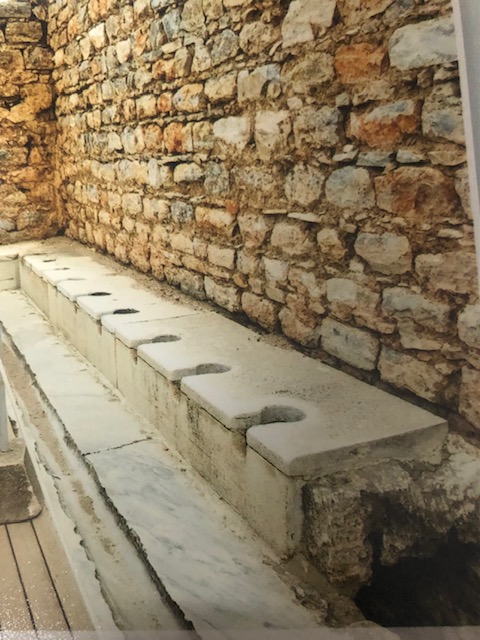
Public Toilet, Ephesus, Turkey. About 200 AD.

Keith Siding Road, Crandon Wisconcin: Someone as part of their garden decorations has put up an outhouse with the sign ‘Up North Rest Stop’. The door of the facility is open, and on the toilet sits a life-like lady in full view of the road, using the facilities!

Incahuasi Island, Bolivia: In the middle of 12000 sq. km. salt desert is a toilet carved from the trunk of dried cactus, with the needles removed to allow for comfortable seating.

30-Gold Store, Kowloon: This gold washroom put up in his shop by a Hong Kong jeweler is down in the Guinness Book of Records as the most expensive washroom. Fixtures, sinks, toilet brushes, toilet paper holders, all are made of gold.

Ancient Roman City, Ephesus, Turkey: Built around 200 AD, these communal pay-and-use marble latrines were for men only, and were a place for social gatherings and where many business deals were struck. Slaves used to come in early to literally warm the seats so that their masters did not feel the chill of the marble on their bottoms. There are many other yucky details, which I will refrain from sharing. (The picture is from an unforgettable family trip there.)

For more interesting information on toilets, the place to visit would of course be the unique Sulabh International Museum of Toilets at  New Delhi, which, to quote the museum website ‘has a rare collection of facts, pictures and objects detailing the historic evolution of toilets from 2500 BC to date. It provides a chronological account of developments relating to technology, toilet related social customs, toilet etiquettes, prevailing sanitary conditions and legislative efforts of different times. It has an extensive display of privies, chamber pots, toilet furniture, bidets and water closets in use from 1145 AD to the modern times. It also has a rare collection of beautiful poems related to toilet, their usage.’

In India, where close to half the population does not have a toilet at home, and where no ‘nudge’ or carrot or stick or government slogan seems to work towards reducing open defecation, every day has to be Toilet Day, and every person a Toilet Warrior!

Let’s get Vocal for Local Toilets!

–Meena

PS: I had borrowed this book from a dear friend David Foster and hope to meet him soon to return it.

PPS: Photo credit: Ashok Seshan
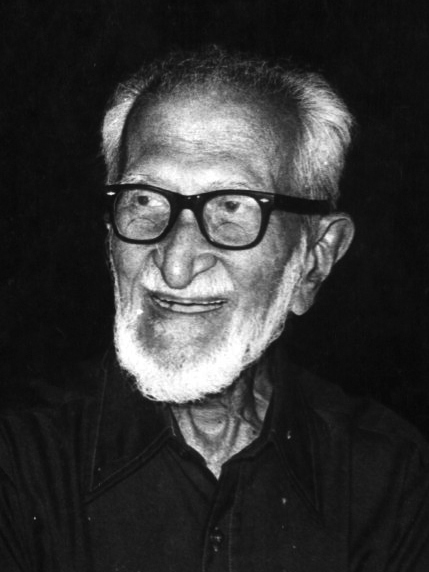
Birdman

When Meena and I joined CEE, both with non-natural-history backgrounds, we were often told to refer to “the book”. The Book of Indian Birds was our first introduction to birds, and more interestingly, to the Birdman of India, Salim Ali. Over the years as we developed environmental education material, “the book” was one of our trusted references. Some years later when we edited a book on stories of inspiring wild-lifers, it was a given that we would open with a piece on Salim Ali.

Born on 12 November 1896, Salim Ali lost his parents when he was very young. He grew up in a large loving family with uncles, aunts, cousins, relatives and friends in Khetvadi, which is now part of the overcrowded area around Charni Road in Mumbai. None of the relatives were very interested in birds, except as part of tasty meal. Favourite among the cousins’ pastimes was going out with an airgun to shoot small birds in the countryside around which they lived. This was still an era when hunting and shooting were considered a ‘manly’ sport.

When Salim Ali was nine his uncle presented him with an airgun, which became his prized possession. He became quite an expert at using it, and loved to show off his prowess. When they could not go out, the cousins practised shooting at house sparrows. It was during one of these domestic hunting prowls that Salim, then nine years old, began to observe a female sparrow that was nesting in a hole in one of the stables. He also noted down his observations of how every time he shot the male sparrow that came to the nesting female, another one took its place. Primarily, this was to keep a record of how many male sparrows he felled, rather than a note on the behaviour of the birds. But the observations were so mature, and the notings so meticulous, that 60 years later they were reproduced in The Newsletter for Birdwatchers, more or less as originally written.

During the summer vacations the family moved to Chembur, which was at that time surrounded by forests rich in flora and fauna. One memory of those vacations that Salim carried with him all his life was that of the dawn song of the Magpie Robin that he heard while still tucked in bed.

As a schoolboy in the early 1900s Salim was an average student, but he enjoyed outdoor sport, of which his favourite was sport shooting of birds. He dreamed of becoming a great explorer and hunter, and his reading consisted mainly of books on natural history, hunting expeditions and travel.

It was another family vacation hunting incident that led him to a new dimension of birds; and ignited his first scientific interest in birds that was to grow and develop into a lifetime passion.

The 10-year-old Salim felled a sparrow.  Just as the bird was going to be turned into a tasty morsel, he noticed that it had an unusual yellow patch on the throat, almost like a “curry stain” as he remembers it. Intrigued, he carried the dead bird back to show his uncle—the shikari of the family. Uncle agreed that the bird was somewhat unusual and felt that it might be interesting to find out more about it.

Now this uncle was also one of the earliest Indian members of the Bombay Natural History Society (BNHS). He asked Salim to take it to the BNHS along with a letter of introduction to Mr Millard who was its Honorary Secretary. The young boy Salim was very nervous about having to meet a foreigner face-to-face. He fumbled with the dead sparrow wrapped in a paper packet as he walked through the rooms of the BNHS with showcases displaying a fascinating collection of natural objects.

He found that Mr Millard was a gentle man who not only identified his specimen as a yellow-throated sparrow but also showed him similar stuffed specimens from his collection. He also gave him some books which Salim was to read again and again over the next sixty years.

This was Salim Ali’s first contact with the BHNS—an institution that was to play such an important part is shaping his life and his career. The incident with the yellow-throated sparrow opened up a whole new world. Salim decided that he wanted to know everything he could about birds. But as he later wrote “I contracted the germs of ornithology at a time when the disease was practically unknown among Indians, and nature conservation was a phrase only rarely heard”.

After doing a BSc in zoology, Salim looked for employment that could use his education as well as support his passion. But in those early years, there were no jobs to be had for an aspiring naturalist in India. Facing unemployment, Salim went to Burma to work in the family timber and mining business. On return he tried for a job in the Zoological Survey of India, but found that his educational qualifications were not adequate. The best he could get was the job of a guide in Bombay’s Prince of Wales Museum. With no further prospects, he went to Germany where he trained under Professor Stresemann, an acknowledged ornithologist, whom Salim Ali considered his guru. However on return, he was still looking for suitable employment.

It was then that he hit upon an idea. He offered to the BNHS that he would carry out ornithological surveys in what were then the numerous princely states. These regions were rich in avifauna, but largely unexplored and undiscovered, and many of the princely rulers were eager to have this recorded. Salim Ali offered his services for free provided his travel and camping expenses were met. This arrangement suited all the parties. And so for the next two decades Salim Ali roamed every corner of the subcontinent, studying and recording birds in the field. The conditions were tough, the terrain often remote and difficult, but it was a dream come true for the avid bird watcher. Salim Ali recalls these decades as the best years of his career.  

In those days there were hardly any illustrated books on Indian birds that would help with identifying birds as well as providing accurate information about bird behaviour. Throughout his travels Salim Ali spent hours in observation of birds and making detailed notes on his observations. Many years later, these acute observations and meticulous notes grew into The Book of Indian Birds that would remain the bible for Indian birdwatcher for decades to come.

Salim Ali the sparrow-hunter became India’s most widely respected Birdman. When asked about what it takes to be a birdwatcher, he explained that bird watching by nature was a most peaceful pursuit. But the excitement lay in searching out clues, and following them up, step by step, to prove or disprove one’s hunch. As he wrote “with the richness and variety of bird life in India, exciting discoveries are awaiting to be made by any birdwatcher who has the requisite enthusiasm and perseverance”.

Salim Ali was not only a great ornithologist. His life and work in natural history have inspired a whole generation of Indians towards environmental conservation—including us matriarchs. 

–Mamata

Winter Is Coming….

Unlike the Starks, I don’t need to worry about endless nights and freezing cold; or White Walkers and scary creatures breaking through the Wall.

But I do have to worry about keeping my skin moisturized.

I am bewildered when I go into a shop these days, with the multiplicity of choices. When we were young, there was a default setting. It was cold cream—in fact, Ponds Cold Cream. It was used on face, on arms, legs or any other exposed parts of the body. For particularly recalcitrant dryness, there was Vaseline, also used on chapped lips. There was the weekly ‘oil bath’ in Tam households wherein til oil was mercilessness massaged into the skin till it saturated every pore, and then washed away with shikai powder or besan.

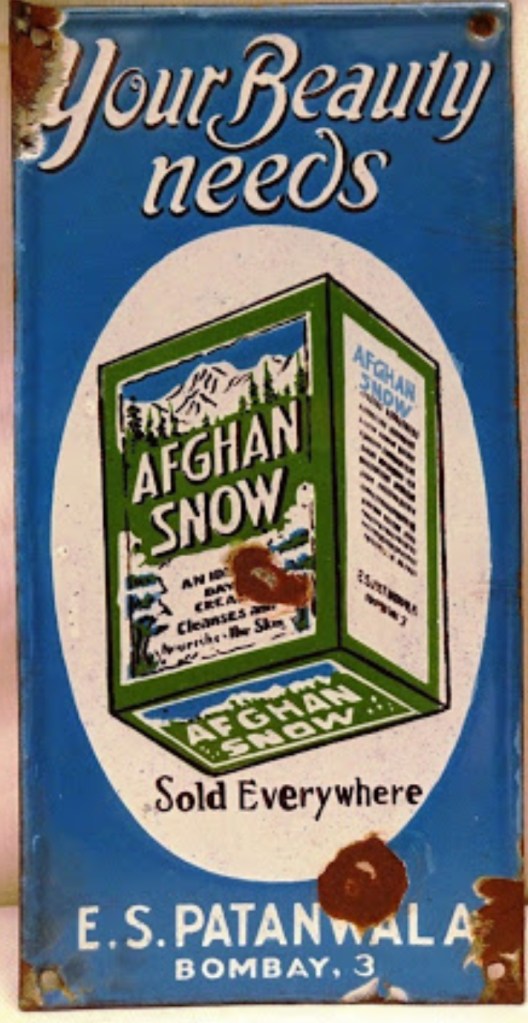
We were simple and naïve. We didn’t even know there were other types of creams and lotions and potions. There was one dream product though, that our hearts yearned for. But seldom did we get our hands on it. I am not sure why—was it very expensive? Or was it that it was a ‘frivolous’ beauty cream and not a ‘useful’ moisturizing cream? (I saw a recent article mentioning  Afghan Snow as a fairness cream, but I don’t have any memory of it being billed in those days as such). Whatever the reasons middle-class mothers of those days had, I do remember the longing of my young heart for Afghan Snow.

I am not sure if it is still available, but I do remember the light, sparkly, ethereal look of the cream. It came in a blue glass bottle and had a lovely gentle smell. It was the most exotic thing that we knew in terms of cosmetics.

Recently, trying to figure out a bit more about this, I unearthed the fascinating Atmanirbhar story behind this product.

Ebrahim Sultanali Patanwala, originally from Rajasthan, made his way to Mumbai in the early 20th century. He found work with a perfumer and quickly picked up the techniques of blending perfumes. Soon he branched out and set up as an entrepreneur. His first product was a hair oil called ’Otto Duniya’ which met with quite some success, enabling him to set up his own lab and offices.

Messrs. E.S.Patanwala was established in 1909. The company sold oils and perfumes—both those they made, and imported ones. He developed quite a clientele among the Britishers as well as Indian royalty. This did not content him and he took himself off to Europe to learn more. He knew little English, but his earnestness and desire to learn opened doors for him. He connected with Leon Givaudan of Switzerland, at that time the world’s biggest manufacturer of aromatic chemicals. With the training and mentorship he got in Europe, he developed the formula for what was to become one of India’s most popular cosmetics—a cream.

He came back to India and set up a factory in Byculla to make the cream itself, but imported the glass bottles from Germany and the labels from Japan. Around that time, King Zahir of Afghanistan was visiting India and wanted to meet some Indian entrepreneurs. Patanwala was one of them, and he presented the King a hamper of his products included the new, as-yet-unnamed cream. The King is supposed to have opened the bottle, been charmed by the look and perfume, and made the remark that it reminded him of the Snow of Afghanistan. The enterprising Patanwala immediately asked if he could name the cream as Afghan Snow, and the King agreed, and product was launched in 1919 (making it more than 100 years old!)

The product was extremely popular, but ran into some rough weather during the Swadeshi Movement. Because the bottle and labels looked (and were) imported, people thought it was an imported product and listed it as one of the items to be boycotted. Patanwala sent a letter to Mahatma Gandhi, telling him that the product was wholly indigenous and manufactured in Byculla. Mahatma Gandhi then wrote in his newspaper about Afghan Snow, saying that it was a mistake to boycott it, and that he was appreciative that such a good product was being made in India, and that he personally endorsed it.  

I yearn even more for the product now that I know the story! What I would not give for a dark blue glass bottle full of beautifully-perfumed, light frothy shiny white snow, promising to transport me into a fairy tale!

Even more, I yearn for biographies of these amazing people who broke so many barriers, who did so many pioneering things, and who made products whose name still evokes so many memories a hundred years down the road! How they succeeded and why they did or did not sustain.

–Meena

Mamitu and Emaye: Women Warriors

This year the term ‘frontline warriors’ has become deeply embedded in the vocabulary around the world.  As we show our respect and appreciation for these tenacious, dedicated health workers, here is a much older story of two remarkable women who saved and changed the lives of thousands of others. The story spans over 60 years, and starts from two different places.

It begins in 1959 when a young doctor couple in Australia, Reginald and Catherine Hamlin, saw an ad in The Lancet looking for gynaecologists in Ethiopia.  With the zeal to do something useful, the idealistic couple flew across the oceans and continents to land in a tiny airport in Addis Ababa. They had plans to stay for 3 years, but they never went back.

Among the many gynaecological and obstetrics cases that they treated, the most common and most horrendous was a childbearing injury known as obstetric fistula. The condition is caused when prolonged labour opens a hole in the birth canal, leaving many women incontinent. For Ethiopian women, the injury often led to their being rejected by their husbands and ostracized by their communities.

When the Drs. Hamlin arrived in Ethiopia, there was little or no treatment available for such patients anywhere in the country, causing of thousands of women to barely survive, with life-threatening and life-changing injuries. Poring through medical books, journals and drawings of operations by other experts, the young doctors developed innovative surgical techniques to repair the damage.

One day in 1963, a 16 year-old girl was brought to them from a distant village, carried for twelve hours through mountainous terrain, on a primitive stretcher made from eucalyptus branches, and then on a bus to Addis Ababa. She had been in labour for four days, and her baby had died. She was in excruciating pain, and close to dying.

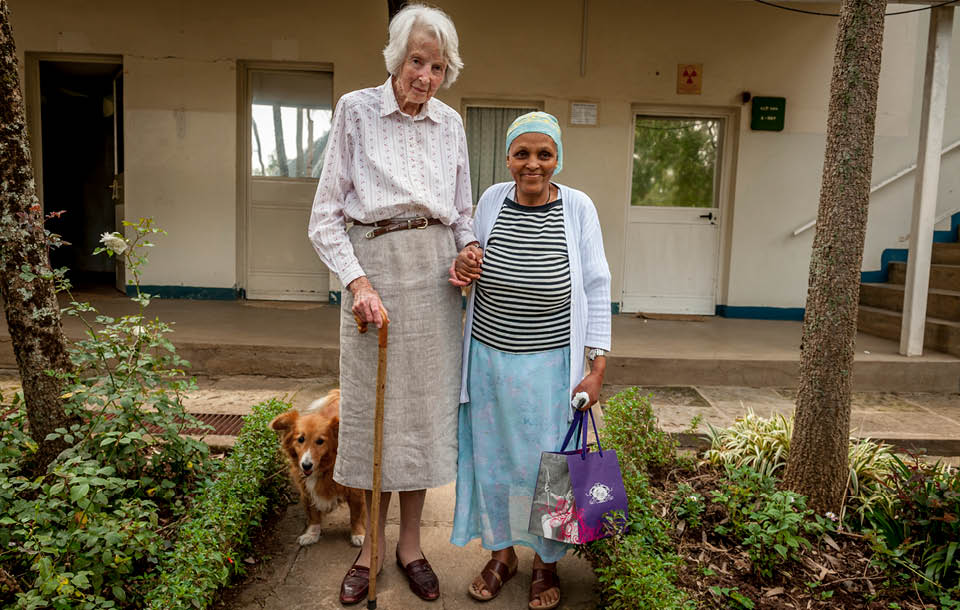
Her name was Mamitu Gashe. She was illiterate and terrified. She had never left her village, nor seen white people before; in her delirium she thought that they were angels. The agony, and the trust of the girl immediately touched the hearts of the doctors. Her injuries were the worst they had handled. It took months of repairs and treatment to heal her ravaged body. By then the innocence and indomitable spirit of Mamitu had created a special bond between the patient and her saviours.

As she gradually started her road to recovery, the young girl did not know how to show her gratitude to her doctors. Even while she was still in hospital, she started helping with chores like sweeping and changing sheets. Then as she regained her strength and confidence, Mamitu started to greet and comfort new patients, remembering her own terror when she first came. She refused to go back to her husband and village, and declared that she would stay and help the doctors. They in turn treated her like a daughter. She started calling them Emaye (mother) and Abaye father).

Over the next ten years Mamitu worked shoulder to shoulder with the Hamlins, helping out in the operating theatre, and then assisting in their operations; initially sewing up at the end of the surgery but progressing to learn all the steps in an operation. She learned to operate on fistulas by placing her hands over the surgeon’s and tracing her intricate incisions as she worked to save the women. In 1987, at the age of 40, Mamitu began operating on her own. She still could not read nor write, or speak English, but she had the gift of dextrous fingers, and just the right touch. Under the training and guidance of the Hamlins, Mamitu went on to be recognised as one of the finest fistula surgeons in the world. In 1989 she won the Gold Medal for surgery from the Royal College of Surgeons in London.

Emaye Catherine and Mamitu Source:https://hamlin.org.au/

In 1993 Reginald passed away, but Catherine continued with her life’s mission, with Mamitu by her side. In 1995 they built another new hospital, one of a series that had started with their first in 1975–Addis Ababa Fistula Hospital. Today an estimated 60,000 women have been treated, and cured, by the Hamlins’ hospital and clinics. 

Mamitu and her Emaye were inseparable companions for 57 years. In the later years, Mamitu became the caregiver of the one who once gave her a new life and purpose. The two were finally separated in March 2020, when Catherine Hamlin, passed away, aged 96. Seven months later, the still-grieving Mamitu has recently returned to the operating theatre. Now 74 years old Mamitu carries on her parents’ legacy, and continues to be a formidable frontline warrior.

–Mamata

Reading ‘Judgmentally’

India has its fair share of Book Fests and Lit Fests. Some generic, some specific to a genre or a language. A well-known one among these is the Bangalore BizLitFest—as the name suggests, an event devoted to the Business Literature genre.

The 6th edition of this Fest, held online (of course) this year, concluded this weekend. While I have attended this Fest over the years, this time I had a special role—as one of the panel of judges to pick the best Business Book of the Year. This award was instituted in 2017, by the family of the universally-known academic Prof CK Prahalad (of ‘Bottom of Pyramid’ fame). The CK Prahalad Best Business Book Award is given to ‘the most original, impactful and thought-provoking business book written by an Indian author’.

It never ceases to amaze me how many contenders there are every year!  The competition process is a multistage one. Out of the business books published in the previous calendar year, a longlist of the top 25 is made based on ratings and reviews. Of these, the five which get the top ratings and number of reviews on Amazon, Goodreads and Flipkart in the first six months of the current  year are shortlisted. And a jury selects from among these, using two major criteria: Originality of theme, and second, Potential of the book as a game-changer, inspiration and influencer.

I was in the distinguished company of Prof Rishikesha Krishna (IIM-B), Manish Sabarwal (Teamlease), Narayan Ramachandran (formerly Morgan Stanley, writer, social entrepreneur) in the Jury Panel.

The five shortlisted books were:

Saying No to Jugaad: TN Hari, MS Subramanian

Bridgital Nation: N Chandrasekaran with Roopa Purushottaman

How I Almost Blew It: Sidharth Rao

The CEO Factory: Sudhir Sitapathy

Big Billion Startup: Mihir Dalal.

The unanimous winner was Mihir Dalal’s Big Billion Startup, the story of Flipkart.

For me, there were two levels of learning through the process:

Each book was a fascinating journey and provided enormous learning! Four of them were the story or stories of specific enterprises or entrepreneurs told so as to offer lessons to any manager or entrepreneur. Bridgital Nation was different in that it provided a broader framework of using IT to solve the nation’s problems.

At the second level, I realized that reading as a judge was a different ballgame from just reading. One has to read much more consciously, comparing and contrasting, articulating what works and what does not work. One has to be aware of content and style. Whether the ‘lessons’ are coming out clearly. And whether it will work for the audience it is meant for. While I have graded student essays and evaluated children’s fiction, judging business books was a new experience of reading ‘judgmentally’!

One comment I have on the books is that most mention dozens of names. While completely necessary to acknowledge and bring out the contribution (or otherwise) of all concerned in the making of the company, it is quite confusing for the reader who does not know any of these people. At times, I found myself going back and forth to figure out who a person was, more than even in a Russian novel!

All in all, a very interesting experience, and I thank BBLF for it.

Look forward to the next edition in Sept/Oct 2021!

–Meena

The Madness in the Method

A recent piece by one of my favourite columnists bemoaned the fact that there is increasingly reduced use of physical dictionaries because of instant and easy access to online dictionaries.

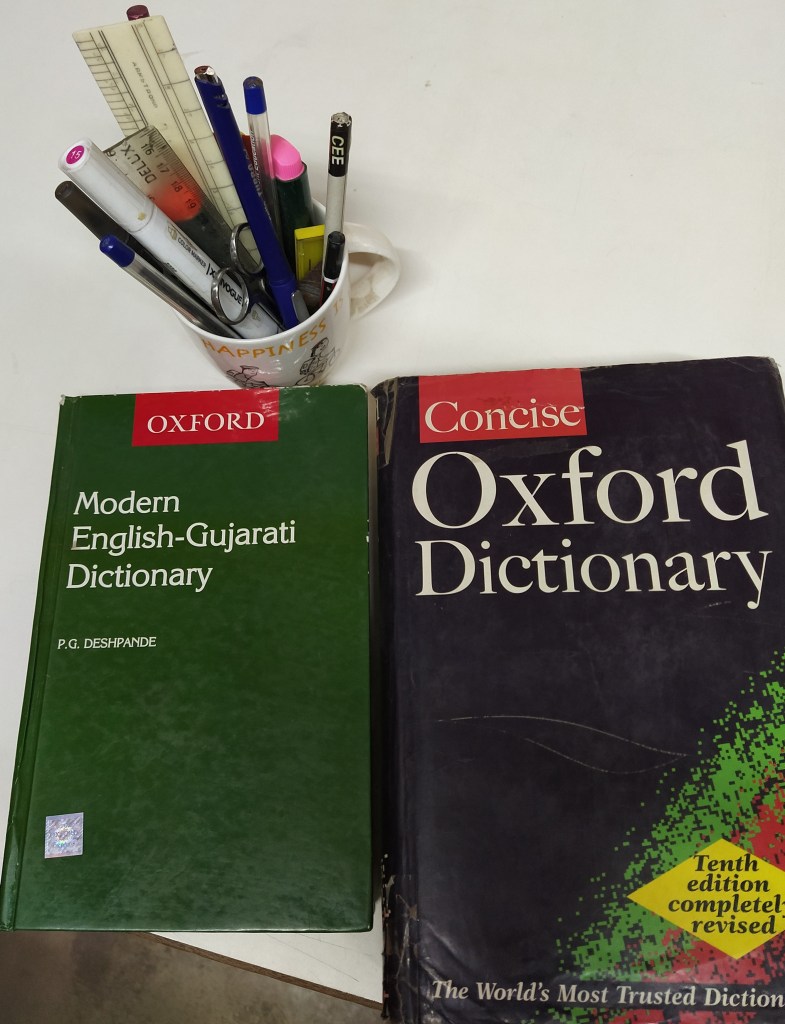
It made me feel a bit guilty as I have begun to succumb to the same short cut, but I still keep my trusty Concise Oxford Dictionary and my bilingual dictionary within hand’s reach on my table, and yes, I do look up words from these tomes. As my erstwhile colleagues may recall, the COD was a permanent fixture on my desk at work. This old friend continues to give me a sense of familiar comfort, as well as continuity in my work and play with words.

While COD is the friendly go-to dictionary, it is the Oxford English Dictionary or OED, which is widely regarded as the accepted authority on the English language. The OED today, is an unsurpassed guide to the meaning, history, and pronunciation of 600,000 words, past and present, from across the English-speaking world. It contains not only not only present-day meanings, but also the history of individual words from over 1000 years of the English language, traced through 3 million quotations from a wide range of sources, from classic literature to cookery books.

What is equally fascinating is the history of the early development of the OED.

Until the 19th century, the English language did not have a complete dictionary. In 1857 the members of the Philological Society of London decided that it was time for a complete re-examination of the language, and embarked on an ambitious project to compile a comprehensive compendium of the English language.

The new dictionary was planned as a four-volume, 6,400-page work that would include all English language vocabulary from the Early Middle English period (1150 AD) onward, plus some earlier words if they had continued to be used into Middle English. It was estimated that the project would be finished in approximately ten years. However, no one realized the full extent of the work, or how long it would take to achieve the final result. After the first grand announcement, the project took a while to take off. And five years after it was launched the editors had only reached as far as the word ‘ant’.

Then in 1879 James Murray a little known school teacher and philologist was given the editorship of this challenging project. His first task was to advertise in all the leading newspapers of the day that the project was looking for ‘volunteers’ in the English-speaking world to send him quotations which would show how the meanings of words had changed over time.

This early experiment in crowdsourcing attracted many volunteers. The most prolific and systematic contributor was a man called Dr William Chester Minor. He regularly sent in meticulously detailed slips tracing the etymology of words, accompanied by relevant examples and quotations. The return address on his letters read simply: Broadmoor, Crowthorne, Berkshire.

For almost a decade, Murray assumed that his favourite volunteer was a reclusive doctor of literary tastes with a good deal of leisure. Then, by chance, Murray discovered that Minor was a murderer who had been committed to the Broadmoor Criminal Lunatic Asylum, which was less than 40 miles from Oxford where Murray was based. In 1891, ten years after they had started corresponding, Murray visited Broadmoor and met Minor. This was the start of a close friendship between the two men that continued for the next twenty years. And one that enriched the OED immeasurably.

Minor’s own story was tragic, as well as inspiring. Born in America, he qualified as a surgeon and joined the Union Army just before the Battle of Gettysburg in 1863. After being released from the Army, Minor left for London in 1871 with his books and paints in the hopes of starting a new and more peaceful life. However the war experiences left deep scars on the sensitive and clever young man. He became delusional and paranoid. In one such moment he unintentionally shot a man and killed him.

Minor’s ‘insanity’ plea helped him to avoid going to prison. But he was incarcerated in the Broadmoor mental asylum in 1872. He was a well-behaved, quiet, scholarly inmate. With the approval of the asylum authorities, and using his US army pension he managed to accumulate and build a library of rare and antique books in his cell. It was this collection that provided the useful information about nearly 10,000 words, and examples of their usage, which he shared with Murray. The subsequent close friendship between the two which was marked by a common love for words and their history, scholarship, mutual respect and drive, was crucial in the compilation of the OED–the last word on words for over a century.

Murray acknowledged Minor’s invaluable contribution when in 1899 he said “we could easily illustrate the last four centuries from his quotations alone.” Murray also petitioned tirelessly for the release of his friend arguing that a mental asylum was no place for a man of his intellectual calibre. Sadly, Minor’s mental condition deteriorated. Finally he was released, and died in obscurity at his home in 1920.

The two men who gave half their lives to a project of unprecedented historical and cultural importance, did not live to see the publication of their magnum opus. It took roughly forty years for the first edition of the Oxford English Dictionary to be completed.

So it was, the story that made the words, rather than the words that made the story!

–Mamata

A-Rated History

I am living in 40 BC. Or the 13th, or 15th, or the 18th century. Really depends on which series I am watching at the moment. And my favourite ones are all set way, way back.

And boy, am I learning! Whether it is the Roman Empire, or the Mongols, or the Medicis, or South America, here is the most interesting way to get a feel of the time, the place, the world-changing events. Fully of course realizing that as per reviews (and my own shaky knowledge of history), these series range in accuracy from about 80% (Boilvar), to about 30% (Marco Polo). But I suppose it is up to me to read more authentic scholarly accounts and get my facts straight. I have started on Marco Polo: The Travels. But that, I suppose is not really very factual either. Marco Polo and his co-author have reports on the most fantastical things, whose authenticity is very much in doubt. But nevertheless the television series got me eager to read it.

The point I am coming around to is that this may be the best way to get young people interested in history. Just as David Attenborough and Jacques Cousteau used television and film to bring nature into the house, and thus awaken a whole generation to interest in the environment, here is an opportunity to do the same with history.

And there are several, several such popular serials which can lend themselves to this. My question is: why are they made such that the 13 and 14-year olds who I really feel would be inspired by them, cannot watch them? I understand the Romans had their orgies, the Mongols their harems, and all of them their bloody wars and brutality. But is there no way to bring them into the family room to be family watching? Surely, there can be a way to avoid so much frontal nudity, explicit sex and the level of gore that is shown. Creative film-making is about that!

This is not a plea for censorship. It is to only reiterate that more than soap-value, these topics have educational value. And as an educator, it saddens me when the opportunity is missed. Billions of dollars and so much creative talent spent. But no teacher dealing with these topics in classroom can prescribe these as required watching. Because of the nudity, sex, strong language, drug use and violence, they are not rated for this age group.

If producers feel that their core audience is not this age group, and only putting in a lot of this will bring in the audience and generate revenues, maybe expurgated student-friendly versions available in the daytime?

There MUST be a way around. Surely technology can find a fix!

–Meena

UN at 75: 24 October–UN Day

Way back when we were at school, there used to be a competition on UN Awareness for middle and high school students. I can’t recall much about it, but I do know a few basic things about the UN, which I am sure come from preparing for these tests. If I search hard enough, I may even find a certificate or two in my old papers.

No doubt the UN and the international order are in a shambles. To take just the example of the Corona crisis, the world should have been looking to the UN system and WHO in particular for balanced medical opinions, sage policy guidance, clear action guidelines, and strong leadership for international cooperation. We haven’t seen much of that.

But that is not to say that the UN does not have a major role to play. In fact, in an increasingly complex and interconnected world, it HAS to pull up its socks and take charge. And just to remind ourselves of the UN, its role and functions, here is a quick primer— I might have put together something like this to prepare for my competition tests all those decades ago.

Warning: Beyond the first 500 words, it is probably of interest only to those preparing for such exams!

The United Nations is an international organization founded in 1945, when representatives of 50 countries met in San Francisco at the United Nations Conference on International Organization, to draw up the United Nations Charter. This was signed on 26 June, 1945 by representatives of the 50 countries. Poland which was not present at the Conference, signed it later and became one of the original member states. The UN officially came into existence on 24 October 1945, when the Charter was ratified.

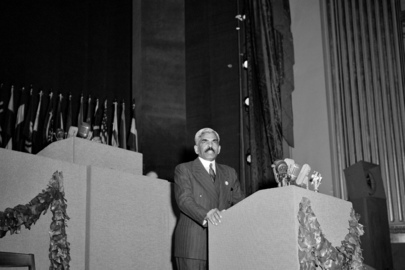
Interestingly, while in principle, only sovereign states can become UN members, four of the original members—India, Belarus, the Philippines and Ukraine– were not independent at the time of their admission. Giriaj Shankar Bajpai, the Indian Agent-General, signed the original Declaration by United Nations in 1942, while Sir A. Ramaswamy Mudaliar, who headed the Indian delegation to the Conference, signed the Charter itself on behalf of India.

Sir Ramaswamy Mudaliar addressing the UN

So technically, India was a founding member of the UN despite it being a British colony. Along with India, other British colonies Canada, South Africa, New Zealand and Australia were given independent seats in the United Nations General Assembly at that stage itself. The UN is currently made up of 193 Member States. 

The basic mandate of the UN is to:

  • Maintain International Peace and Security
  • Protect Human Rights
  • Deliver Humanitarian Aid
  • Promote Sustainable Development
  • Uphold International Law.

The main organs of the UN are the General Assembly, the Security Council, the Economic and Social Council, the Trusteeship Council, the International Court of Justice, and the UN Secretariat.  All of these were established when the UN was founded. In addition, it has many programmes, funds, and specialized agencies.

Here is a quick look at some UN agencies we often hear about. And some, frankly, that I never knew existed!

Programmes and Funds

UNDP: United Nations Development Programme works to eradicate poverty, reduce inequalities and build resilience so countries can sustain progress. UNDP plays a critical role in helping countries achieve the Sustainable Development Goals.

UNEP: United Nations Environment Programme acts as a catalyst, advocate, educator and facilitator to promote the wise use and sustainable development of the global environment.

UNFPA: United Nations Population Fund is the lead UN agency for delivering a world where every pregnancy is wanted, every birth is safe, and every young person’s potential is fulfilled.

UN-Habitat: United Nations Human Settlements Programme has the mission to promote socially and environmentally sustainable human settlements development and the achievement of adequate shelter for all.

UNICEF: Works to save children’s lives, to defend their rights, and to help them fulfil their potential, from early childhood through adolescence.

WFP: World Food Programme aims to eradicate hunger and malnutrition.  It is the world’s largest humanitarian agency. Every year, the programme feeds almost 80 million people in around 75 countries.

UN Specialized Agencies

FAO: Food and Agriculture Organization leads international efforts to fight hunger.

ICAO: International Civil Aviation Organization develops standards for global air transport and assists its 192 Member States in sharing the world’s skies to their socio-economic benefit.

IFAD: International Fund for Agricultural Development focusses exclusively on rural poverty reduction, working with poor rural populations in developing countries to eliminate poverty, hunger and malnutrition; raise their productivity and incomes; and improve the quality of their lives.

ILO: International Labor Organization promotes international labor rights by formulating international standards on the freedom to associate, collective bargaining, the abolition of forced labor, and equality of opportunity and treatment.

IMF: International Monetary Fund fosters economic growth and employment by providing temporary financial assistance to countries to help ease balance of payments adjustment and technical assistance.

IMO: International Maritime Organization has created a comprehensive shipping regulatory framework, addressing safety and environmental concerns, legal matters, technical cooperation, security, and efficiency.

ITU: International Telecommunication Union is a specialized agency for information and communication technologies. It is committed to connecting all the world’s people.

UNESCO: United Nations Educational, Scientific and Cultural Organization focuses on helping improve education worldwide to protecting important historical and cultural sites around the world.

UNIDO: United Nations Industrial Development Organization promotes industrial development for poverty reduction, inclusive globalization and environmental sustainability.

UNWTO: World Tourism Organization is responsible for the promotion of responsible, sustainable and universally accessible tourism.

UPU: Universal Postal Union is the primary forum for cooperation between postal sector players.

WHO: World Health Organization is the directing and coordinating authority on international health with the objective of attainment by all peoples of the highest possible level of health.

WIPO: World Intellectual Property Organization protects intellectual property throughout the world.

WMO: World Meteorological Organization facilitates the free international exchange of meteorological data and information and the furtherance of its use in aviation, shipping, security, and agriculture, etc.

World Bank: It focuses on poverty reduction and the improvement of living standards worldwide by providing low-interest loans, interest-free credit, and grants to developing countries for education, health, infrastructure, and communications, among other things. There are several specialized agencies as part of the World Bank Group.

Other Entities and Bodies

UNAIDS: Joint United Nations Programme on HIV/AIDS (UNAIDS) leads and inspires the world to achieve its shared vision of zero new HIV infections, zero discrimination and zero AIDS-related deaths.

UNHCR: United Nations High Commissioner for Refugees protects refugees worldwide and facilitates their return home or resettlement.

UNIDIR: United Nations Institute for Disarmament Research generates ideas and promotes action on disarmament and security.

UNITAR: United Nations Institute for Training and Research is a training arm of the United Nations System, and has the mandate to enhance the effectiveness of the UN through diplomatic training, and to increase the impact of national actions through public awareness-raising, education and training of public policy officials. 

UNOPS: United Nations Office for Project Services helps people build better lives and help countries achieve peace and sustainable development.

UNRWA: United Nations Relief and Works Agency for Palestine Refugees contributes to the welfare and human development of Palestine refugees.

UNSSC: United Nations System Staff College is the learning organization of the United Nations system. It designs and delivers learning programmes for staff of the UN system and its partners.

UNU: United Nations University has the mandate to conduct “research into the pressing global problems of human survival, development and welfare.”

UN Women: It merges and builds on the important work of four previously distinct parts of the UN system, which focus exclusively on gender equality and women’s empowerment.

Related Organizations

CTBTO: Preparatory Commission for the Comprehensive Nuclear-Test-Ban Treaty Organization promotes the Comprehensive Nuclear-Test-Ban Treaty and the build-up of the verification regime so that it is operational when the Treaty enters into force.

IAEA: International Atomic Energy Agency, is the world’s centre for cooperation in the nuclear field. The Agency works with its Member States and multiple partners worldwide to promote the safe, secure and peaceful use of nuclear technologies.

IOM: International Organization for Migration works to help ensure the orderly and humane management of migration, to promote international cooperation on migration issues, to assist in the search for practical solutions to migration problems and to provide humanitarian assistance to migrants in need, including refugees and internally displaced people.

OPCW: Organization for the Prohibition of Chemical Weapons is the implementing body of the Chemical Weapons Convention (CWC), which entered into force in 1997. OPCW Member States work together to achieve a world free of chemical weapons.

UNFCCC: UNFCCC Secretariat (UN Climate Change) was established in 1992 when countries adopted the United Nations Framework Convention on Climate Change (UNFCCC) and is tasked with supporting the global response to the threat of climate change.

WTO:  World Trade Organization is a forum for governments to negotiate trade agreements, and a place where member governments try to sort out the trade problems they face with each other.

ITC: International Trade Centre is the only development agency that is fully dedicated to supporting the internationalization of small and medium-sized enterprises (SMEs). 

–Meena

Main source: https://www.un.org

Sankofa

A few days ago my niece asked if, in India, we had a concept or symbol similar to that of Sankofa. This was a new word for me, and as I love to do, I immediately wanted to find out more. What I discovered was beautiful and meaningful.

The concept of Sankofa is derived from King Adinkera of the Akan people of Ghana in West Africa. The word Sankofa is derived from three words in the Akan language: San (return), Ko (go), Fa (look, seek and take). Translated literally it would mean ‘go back or return, and look’. In the Akan dialect this concept is expressed as “se wo were fi na wosan kofa a yenki which means “it is not taboo to go back and fetch what you forgot.”

This reflects the strong belief of the Akan that the past serves as a guide for planning the future. While the Akan believe that there must be forward movement and new learning as time passes, they caution that as the march ahead proceeds, it is the wisdom in learning from the past which ensures a strong future.

Sankofa bird

Visually and symbolically, Sankofa is depicted as a mythical bird with its feet firmly planted forward, or sometimes flying forward (to represent looking or moving ahead), with its head turned backwards (looking to the past). The Sankofa bird is always shown with an egg in its mouth, or as turning back to take an egg off its back. The egg represents the ‘gems’ or knowledge of the past upon which wisdom is based; it also signifies the generation to come that would benefit from that wisdom. Thus, the bird graphically demonstrates the Akan belief that the past serves as a guide for planning the future.

The depiction of the bird as bending its neck with effort, to reach back for the abandoned but precious egg signifies the diligence and effort required to pay due reverence to the past, and give it its proper place in the current scheme of events.

Sankofa teaches us that in order to move forward we must go back to our roots. That does not mean that we remain in the past, but rather we use the lessons and wisdom from that knowledge, and use it to make the best of the present, and a better future. It is a way of looking to the past with the understanding that both the good and the bad have formed the present situation. The concept emphasises the value of learning not only from the good things, but also from the bad things and mistakes of the past so as not to repeat these in the future.

 Sankofa embodies the spirit and attitude of reverence for the past, reverence for one’s ancestors, reverence for one’s history, and reverence for one’s elders. All indigenous cultures across the world have traditionally acknowledged and revered their elders who are regarded as the fount of knowledge, based on experience and wisdom, who can help guide the way. Sadly, in this century there has been an increasing trend to shrug off their wisdom as ‘old wives tales’. Why go to the grandparents when Google Guru has all the answers you need? An interesting contemporary initiative reminds us of the value of this wisdom. 

In July 2007 Nelson Mandela marked his 89th birthday by forming a Council of Elders dedicated to finding new ways to resolve some of the world’s long-running crises, reduce conflict and despair, and foster peace. In his words “They will support courage where there is fear, foster agreement where there is conflict and inspire hope where there is despair.”

The Elders were visualised as individuals who had “earned international trust” and “a reputation for inclusive, progressive leadership”, but no longer held public office, and were independent of any national government or other vested interest.

The original Elders included India’s Ela Bhatt; Kofi Annan, the former UN secretary-general; Jimmy Carter, the former US president, and Desmond Tutu, the retired South African archbishop. Other members were former Norwegian prime minister Gro Harlem Brundtland; Mandela’s wife Graca Machel, a children’s rights campaigner; former Irish president Mary Robinson, and Muhammad Yunus, founder of Grameen bank, the pioneering micro-credit institution.

A inspiring initiative and much-needed recognition of the need for collective wisdom of the past experience to guide the future of a world besieged with conflict, chaos, and confusion.

Sadly today, across the world, there is a dangerous trend of going back to the past, not so much to learn from it but to choose selectively from it in order to perpetuate what seems convenient to suit the political agenda or religious climate. Alternately there is also the inclination to erase all traces of the past, and build the future on a brand-new slate.

Sankofa is a gentle reminder that if even in our arrogance we overlook the gems from the past, when we come to our senses we should be humble enough to retrace our steps and make amends. As the popular saying goes, those who do not know history are doomed to repeat it.

There is no shame in going back to our roots. That is Sankofa, simple yet profound.

Thank you Suparna, for introducing me to Sankofa.

You can’t connect the dots looking forward; you can only connect them looking backwards. So you have to trust that the dots will somehow connect in your future. Steve Jobs

–Mamata

Wash ‘Em Clean

One of our favourite childhood books was a delightfully illustrated Russian book called Wash ‘Em Clean. It was a funny poem about a little boy who would not wash and bathe, and how he was converted to cleanliness.

Instilling the habit of proper hand hygiene has been one of the great challenges through the ages.

On 15 October, in 2008, over 120 million children in more than 70 countries around the world washed their hands with soap. This marked the first Global Handwashing Day, founded by the Global Handwashing Partnership as a way to raise awareness about the importance of washing hands. Since then, this day is celebrated annually to reiterate the simplicity and value of clean hands. The theme for this year is Hand Hygiene For All.

Ironically, in just over a decade since then, a single Handwashing Day is not enough. Handwashing is making daily headlines across the world as, possibly, the most effective protection from Covid 19.

Interestingly this was the very message that was sought to be promoted as far back as 1847 by Dr. Ignaz Semmelweis, a German-Hungarian physician and scientist. Armed with a doctorate from the University of Vienna and a Master’s degree in midwifery, Semmelweis joined as Director of the maternity clinic at the Vienna General Hospital in Austria.  At that time a mysterious infection known as ‘childbed fever’ was leading to high mortality rates in new mothers in maternity wards across Europe. Semmelweis was determined to understand what caused this rampant infection, and he began to closely observe the practices of the doctors on duty.

Until the late 1800s surgeons did not scrub up before and after surgery, or even wash their hands between patients; causing infections to be transferred from one patient to another. In fact, even after dissecting corpses, doctors and medical students went straight to the maternity wards to examine women who had recently delivered, without first washing their hands. Semmelwies deduced that it was the doctors who were transmitting infections to the patients. In maternity wards these infections led to the new mothers dying from puerperal fever or ‘childbed’ fever as it was called.

This was in the era before antibiotics (and before the recognition that germs are the agents of infectious disease).

Dr Semmelweis immediately instituted a strict regimen wherein all medical staff had to wash their hands between patient examinations. This seemingly simple step was the most difficult to implement. His peers were very sceptical, some were openly hostile; how could he dare to claim that the doctors were killing their patients? His own staff rose against him. He was labelled a madman because of his fanatic insistence on hand washing.

But the results of his ‘lunacy’ spoke for themselves–before hand washing was instituted in May 1847, his clinic’s mortality rate was 18.3%. By July, the rate had dropped to 1.2%, and it was zero the next year. But despite the clear link between cause and effect, most doctors did not change their practices.

Instead, in the face of opposition from a large part of the medical fraternity, the doctor  was dismissed from his post, and he moved to Budapest. At the age of 47 he was committed to a mental asylum, and died there only 14 days later.

Semmelweis never published an explanation of the logic behind his theory.  His experiments with hygienic practices were only validated some years later when Louis Pasteur expanded on the germ theory of disease. This was taken further by Joseph Lister a British surgeon. Based on his observations as a surgeon, Lister also deduced that a high number of post-operative deaths, which were attributed to ‘ward fever,’ were caused not by the surgery but by infections spread by germs from unwashed bed linen and surgical instruments, as well as lack of hand hygiene among doctors. Lister saw this as the cause, as well as the solution, to the problem. He started using carbolic acid to wash hands and to sterilize instruments, as well as to dress wounds. He experimented successfully with these techniques, and, unlike Semmelweis, went on to publish everything he discovered in a medical journal The Lancet in 1867. He became known as the father of antiseptic surgery.

That was a hundred and fifty years ago; but how much have things changed even now?

Here are some shocking facts.

Most patients and their families believe that a hospital is the safest place in terms of hygiene. But the Centers for Disease Control (CDCs) in America estimate that 1 in 25 patients pick up an infection while hospitalized. In 2011 there were more than 700,000 health care-related infections at intensive-care hospitals, and about 10 per cent of the infected patients died during their hospitalization. One of the major contributors to the spread was low hand-washing compliance among the attending doctors and nurses.

The well-known author and surgeon Dr Atul Gawande wrote an eye-opening essay in 2004. Titled On Washing Hands the essay endorsed that hand washing non-compliance was a major factor in spread of infection. But it also explained why this seemingly simple measure is, in practice, very complicated due to the sheer volume of interactions between a medical caregiver and a patient. For example, in a regular 12 hour shift a nurse would have up to 100 occasions on which hand washing is required. Given the tremendous pressure of time and patients, he accepts that the kind of hand washing that would be effective would mean that one-third of the medical staff’s time would be spent on washing.  While this is not realistic, he urges that even a small increase in compliance would mean saving at least a few more lives that are lost to infection.  

From Semmelweis to Gawande, the crusaders for hand washing have been spreading the message for almost 200 years. In this year of the Corona, never before has hand washing been more critical and more imperative. Handwashing is not just for doctors. Every one of us can save lives—especially our own, by becoming fanatical about hand washing.

Let’s put our hands together to applaud the super power of soap and water.

–Mamata