If last week was about boring bees, this week it is about beautiful bees—bees in art, bees and art.
Bees have been depicted in art through the ages, the oldest known been a Spanish cave painting dating back 15,000 years. These insects also have great symbolic value—variously standing for peaceful coexistence, teamwork, industriousness. In some cultures, they are symbols for fertility and healing. In Hindu mythology, Kamadev’s sugarcane bow is strung with a row of bees, thus symbolizing the sting of love.
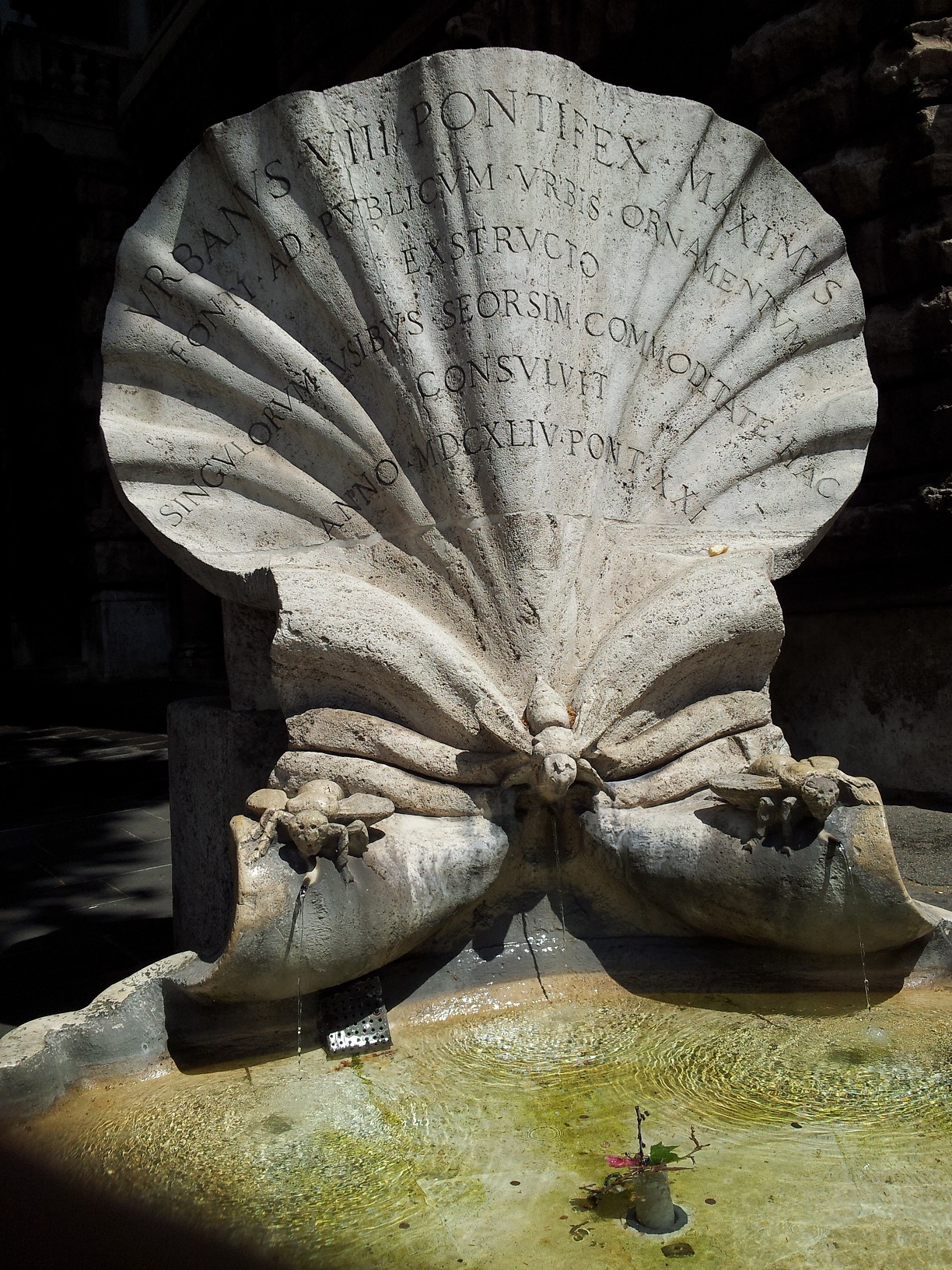
One of the most popular works depicting bees has to be the Fontana delle Api, or Fountain of Bees in Rome. In a city replete with fountains, this one stands out for its elegance and creativity. Built in 1644, it prominently features bees because it was commissioned by Pope Urban VIII, who belonged to the Barberini family, whose symbol was the bee. The 3-bee symbol of the family was also immortalized with St. Peter’s Basilica in the Vatican, in the Baldacchino sculpture.
Fountain of Bees, Rome
Napoleon did his part for bees—they were one of his imperial symbols. His red coronation robes were embroidered with gold bees. It was not just the beauty of bees which captured Napoleon’s imagination. He consciously used this symbol as a rejection of the fleur-de-lis, which was the symbol of the previous regime of the Bourbons. His use of bees started a rage, and they were used as decorative symbols on everything, from porcelain to textiles.
Coming to contemporary arts, in something called bee sculpture, artist Tomas Libertiny collaborates with bees and bee keepers, to re-create famous sculptures in beeswax. He makes 3-D replicas of the originals—from the Nefertiti bust to Micaheangelo’s sculptures—and creates a wire frame of the same shape. He gives these frames to beekeepers, who encourage bees to build their hives on these. In a matter of months (or years if it is a large and complex structure), the bees build in the desired shape. Not a simple process though—Libertiny compares it to doing bonsai, with the constant need for adjusting, trimming and building the growth in the desired shape. The result is a beautiful and very durable piece of art made of beeswax.
The Hive is a huge immersive exhibit at the Kew Gardens. It is a huge structure made of metal. It reflects the activity of a real bee hive in the Kew. An accelerometer (a device which detects vibrations) is placed in the real hive. It picks up the vibrations of the bees and transmits them to the metal hive in real time. There are 1000 LED lights in the structure, which light up in tandem with these vibrations. There are also recorded sounds from hives to add an audio dimension. It is the closet a human can safely get to being in a beehive!
Then there are artists for bees. The Good of the Hive initiative of artist Mathew Willey has made it a mission to depict 50,000 bees in murals and installations across the world, towards raising awareness of the role of bees in our lives, and the threats they face. The number 50,000 is chosen because that that is the number of bees which can sustain a healthy colony. Louis Masai Michel is another artist with a similar mission.
On the one hand there are humans celebrating bees in art. On the other, there are bees exhibiting a developed sense of art recognition! There is a fascinating experiment concerning bees and art conducted by scientists in Australia. Bees were shown 8 paintings, four by the French artist Claude Monet, and four by Australian Indigenous artist Noŋgirrŋa Marawili. The scientists placed a small blue dot at the centre of each painting. The ones on the painting by Monet had a bitter quinine drop in it. The ones by Marawili had a drop of sugar solution. After letting the bees interact with these paintings for some time, the scientists replaced the paintings with two new paintings which the bees had not seen, one by Monet and one by Marawili. The bees made a beeline for the painting by Marawili! In other words, they were able to distinguish the styles of the two artists, and knew which painting would yield the sugar!
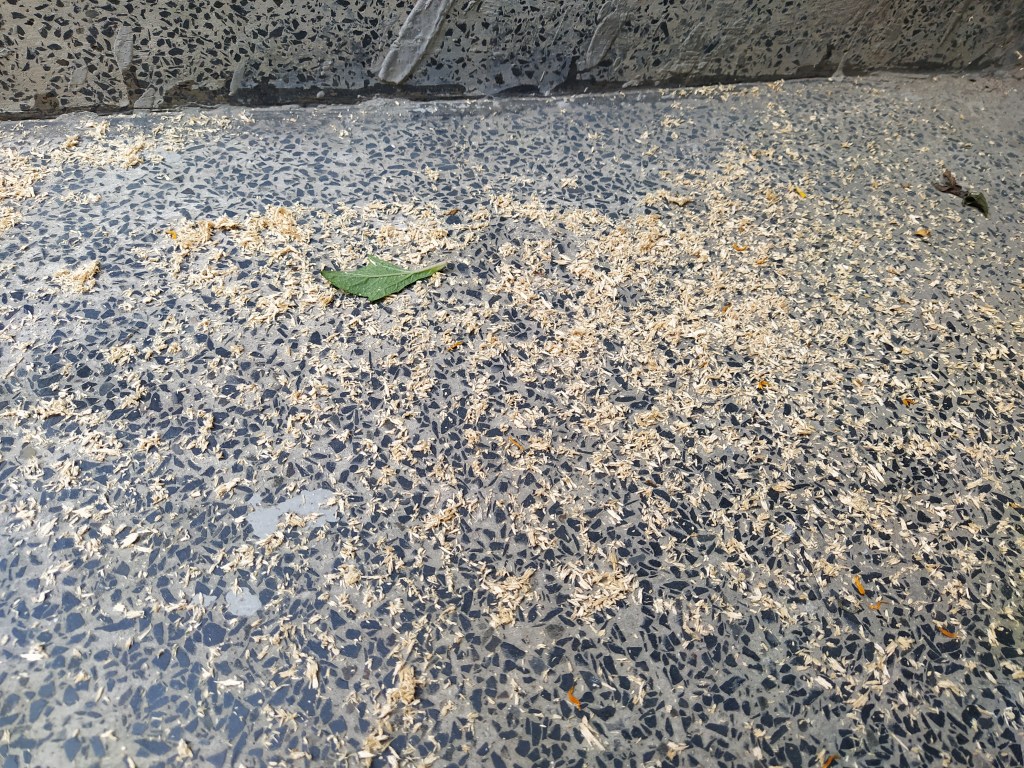
Every few months when we step out onto our little sit-out deck in the morning, we find pockets of sawdust strewn on the floor. Initially we thought that it was termites that had started eating away at the old wooden pergolas over the deck. But a general check could not reveal any other tell-tale signs of termites. So we continued to be baffled about what was responsible for this.
One morning as we sat there we saw a large black bumble bee flying about the pergolas, and then quite mysteriously disappearing somewhere into the wooden beam. A closer examination revealed a hole in the wood, and it seemed to be the one into which the bee had vanished. So now we had a possible suspect, but as yet no confirmation of the link between the sawdust and the bee. The next time there was sawdust, we checked the wood just above it and sure enough we found a neat hole. The next step was to find out if a bumble bee could also be a boring bee!
Some preliminary research confirmed one suspicion—that the drilling in the wood was indeed the work of a bee. But it also refuted the supposition that this was a bumble bee. What we discovered was that this was a bee called the Carpenter Bee, and also many interesting facts.
To start with, of course, the name. Carpenter bees are aptly named for their habits of drilling into wooden surfaces such as logs and tree branches, or in urban areas, wood used for construction. They drill a neat hole in the wood and tunnel into the wood in order to make their nest and lay their eggs. In a couple of hours the carpenter bee can drill a hole a few inches deep, leaving beneath the debris of sawdust.
Source: en.wikipedia.org
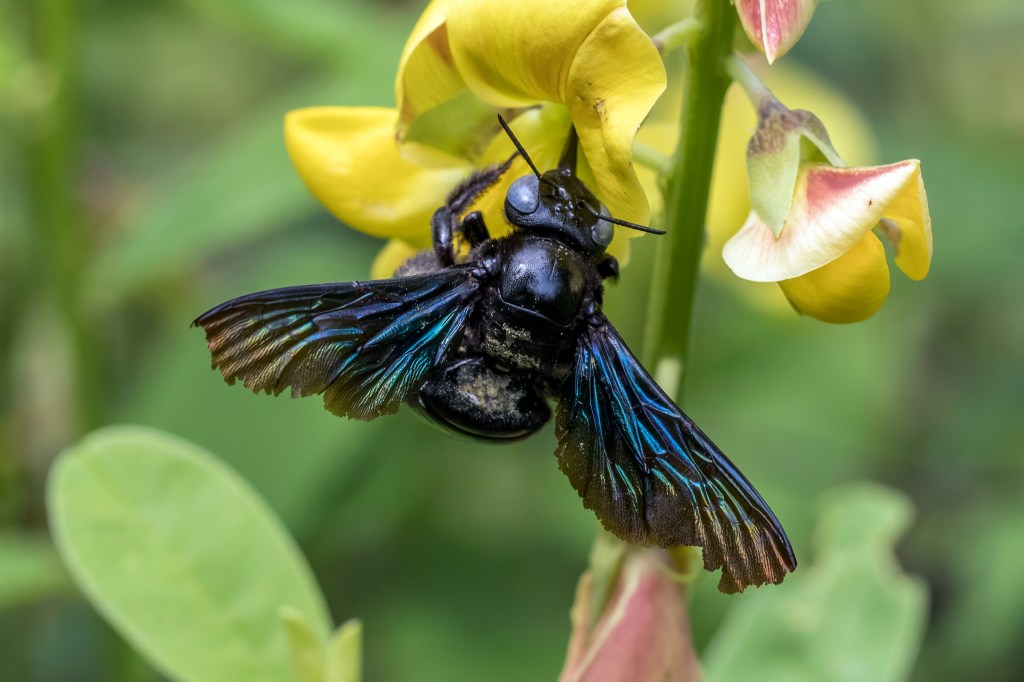
Carpenter Bees (Xylocopa latipes) are one of the largest bees we have here in India. They are big and black with an intimidating appearance. Their wings shine in the sunlight with metallic blue, green and purple colours. The male and the female are more or less similar, but the male has hairier legs.
Carpenter bees do indeed resemble bumblebees, but while bumblebees usually have a hairy abdomen with black and yellow stripes, carpenter bees typically have a shiny, hairless abdomen. The two bees also have different nesting habits–bumblebees nest in an existing cavity often underground (e.g., in abandoned rodent burrows), whereas carpenter bees tunnel into wood to lay their eggs.
Another distinguishing feature of Carpenter bees is that they are solitary bees, unlike most other honeybees and bumblebees that live in colonies and are known as social insects. The honeybees make hives, while carpenter bees excavate and make well structured tunnels in wood. They vibrate their bodies as they rasp their mandibles against the wood.
After boring a short distance, the bee makes a right angle turn and continues to make a tunnel extending about 30-45 centimetres, parallel to the wood surface. Inside the tunnel, five or six cells are constructed. Each cell houses a single egg, and each one is provided with a wad of pollen collected from flowers, which could serve as nourishment for the larva when the egg hatches. Each cell is then sealed with regurgitated wood pulp and saliva. The larvae feed on the high protein and calorie pollen beebread, and enter hibernation, before they turn into adult bees and emerge from the tunnel. Adult females can live up to three years and can produce two generations of offspring per year, though they never see their offspring!
What an amazing feat of insect architecture was going on, hidden from us, in the single beam of wood right over our head, as we sipped our morning tea!
Equally impressive is the contribution of these bees to the cycle of nature. Carpenter bees typically visit large open-faced flowers which have a lot of pollen as well as nectar. They use vibrations to release the pollen from the flower’s anthers, and are described as buzz pollinators. As they feed on nectar from many flowers, the pollen from the flowers sticks to the underside of the abdomen and the legs, which is transported from flower to flower as they flit and settle to feed, playing a vital role in pollination.
Curiously while I have seen the bee hovering around the wooden beams, I have yet to see one buzzing around the flowers. So the next step in my tracking the bee’s journey still remains incomplete. Even the drilling seems to happen after dusk, as the saw dust appears only in the morning, when the bee appears to be rather ominously hovering around, guarding the entrance to its nesting tunnel, and then flying off into the sunlight.
Interestingly, despite their intimidating appearance, it seems that the males are harmless and do not sting. Female carpenter bees can inflict a painful sting but will seldom do so — unless they are handled or bothered by people– another difference between these solitary bees and other bees and wasps that inflict dangerous stings.
While carpenter bees are have their own place in nature, when they start their drilling activities in wood in houses and gardens, they can become pests. As they hollow out the wood, this can lead to the deterioration or collapse of wooden structures. With our already old and weather-worn wooden beams starting to become favoured nesting sites for Carpenter bees, we had to look for ways to stop these boring buzzers. Research indicated that one option was to inject chemical insecticides or pesticides into the holes. We could not bring ourselves to do this.
We then read that these quiet-loving bees do not like vibration or noise around their nests, but seeing as they were happily drilling right next to our large and loud wind chime, this was obviously not bothering them.
Another thing that these bees are said to be very sensitive to is citrus scents near their nest, and spraying citrus oil into the holes was a recommended way to foist them off. We have arrived at our version of this by plugging the new holes with wedges of lemon. We think that this is playing some part in preventing their access, so one battle at a time is won. But this has certainly not deterred their efforts at drilling new holes; so if the hollowed-out beam collapses on our heads one fine morning, the bees would have won the war!
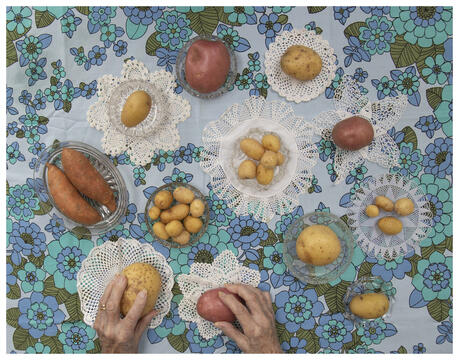
I am an unabashed and unapologetic potato-worshipper. I was therefore thrilled to learn about a competition called the Potato Photographer of the Year. The inaugural edition of the competition was held in 2020, and the results of the 2021 competition were just announced. And I could see the love and appreciation for the vegetable in the superbly imaginative prize-winning entries. Poems for the eyes!
The Potato Photographer of the Year competition has an eminent panel of judges including photography-great Martin Parr. The prizes will not make your fortune, and come to about £2000 worth of stuff, including a lens kit, camera case, backpack, coveted (by photographers) subscriptions, and a photography workshop. But the good part, apart from celebrating the potato, is that all entry fees (£5 per single entry) are donated to the Trussell Trust, a food bank charity that aims to end food poverty in the UK.
One of the winners of the Potato Photo Competition 2021!
Prosaically, the potato (Solanum tuberosum) is a tuber. It is an annual plant of the nightshade family. It is native to the Peruvian-Bolivian Andes and is one of the world’s main food crops. It is a great source of Vit C, protein, thiamin, and niacin.
Potatoes were domesticated and cultivated in South America by the Incas as early as 1,800 years ago. Spaniards who invaded South America transported them and introduced them into Europe during the second half of the 16th century. By the end of the 17th century the plant was a major crop in Ireland, and by the end of the 18th century it was being grown in significant quantities in continental Europe, particularly Germany, and in the west of England. The Irish economy became dependent on the potato, and the disastrous failures of the Irish crops in the mid-19th century because of late blight, and the resulting Irish Potato Famine had huge impacts in terms of human life, the economy and demographics.
The potato reached India in the late 16th-early 17th centuries, most likely aboard Portuguese and Dutch ships. Today, India ranks as the world’s third largest potato producing nation—with about 4.9 crore tonnes grown here in 2017. Potato is not only a staple, but a cash crop that provides significant income for farmers, through domestic sales and exports.
Though the potato reached India through the Portuguese and Dutch, it initially remained confined to the Malabar cost. It was the British who were responsible for its spread. The East India Company wanted to replace local vegetables which they thought were of low quality, with superior vegetables, viz, potato—basically because they wanted to have a reliable source for this food which had become part of their staple. So they aggressively evangelized and promoted it in every which way, including giving out the seeds and plants to farmers for free. Apart from a source to supply their own tables, the British also pushed the potato as a panacea for several ills in India. The 1838 records of the Agricultural and Horticultural Society of India states that through growing European-introduced crops such as the potato, “happiness till now unknown in India, will be diffused abroad.” Similarly, the East India Company records that growing potatoes would help “alleviate the Miseries” in India caused by frequent failures of rice crops. So the potato is indeed part of our troubled colonial past.
But to imagine a present without potatoes, I do not want to do!
While the Potato Photographer of the Year celebrates visual depictions of the tuber, the vegetable does not seem to have found much favour from wordsmiths. Poems eulogizing the potato are few and far between. One that I liked was Potatoes by Lucy Adkins.
But names of Indian potatoes are pretty poetic! Kufri Jawahar, Kufri Chandramukhi, Kufri Sutlej, Kufri Bahar, Kufri Anand, Kufri Ashoka, Kufri Pukhraj, Kufri Sindhuri, Kufri Jyoti, Kufri Megha, Kufri Lauvkar and Kufri Swarna are a few. (Kufri, I think must come from the place in Himachal which is a major potato growing area, and the location of Research Station of the Central Potato Research Institute).
Long live the potato, and may we find ways for all our senses to celebrate it!
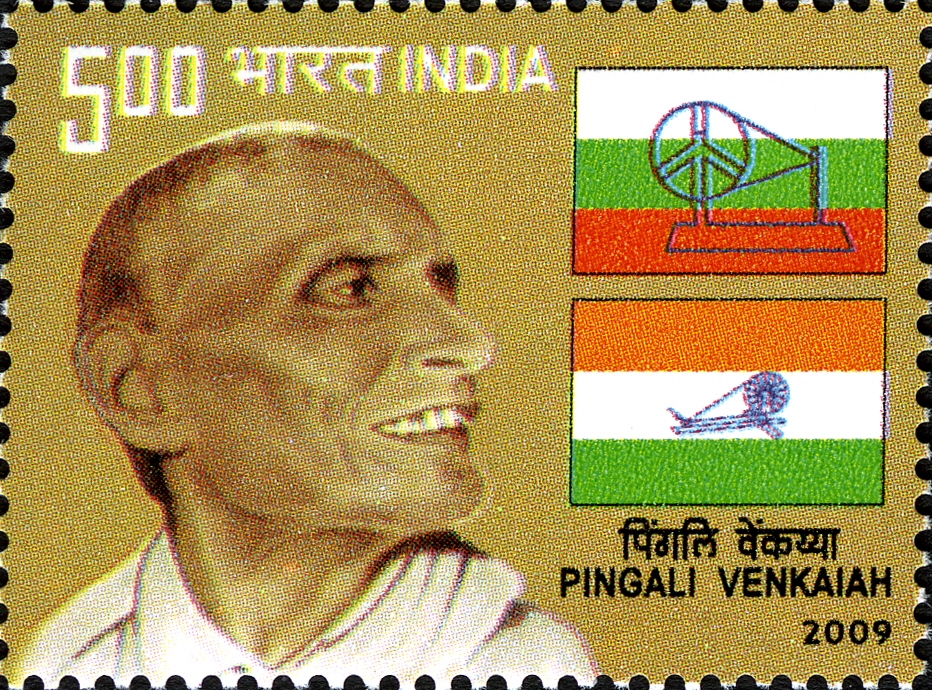
A young boy, very far from home, was fighting an alien war, on foreign land as part of an imperialist army. His name was Pingali Venkaiah. He was a soldier in the British Indian Army fighting for the British in the Anglo Boer war in South Africa, at the end of the 19th century. Around the same time, another young man in South Africa was starting his experiments with what was to become a lifelong crusade for truth, justice and freedom. His name was Mohandas Karamchand Gandhi.
When the Boer War broke out in 1899, while Gandhi’s sympathies were with the indigenous Boers, but as a member of the British crown colony of Natal he felt that he needed to contribute to the British efforts. Gandhi set up an Ambulance Corps of 1100 volunteers, out of whom 300 were free Indians and the rest indentured labourers. Gandhi’s task was to instil in this motley group a spirit of service to those they regarded as their oppressors. Gandhi’s corps placed a significant role as stretcher bearers, carrying the wounded out from the battlefield.
At some time during this period, the 19-year-old Pingali met Gandhi, who had already become known for his mission for justice. He must have seen Gandhi as described by the Pretoria News: Gandhi was stoical in his bearing,cheerful and confident in his conversation and had a kindly eye. Pingali was deeply impressed and influenced, and a bond was formed between the two; a bond that would endure half a century.
Inspired by Gandhi, and the strong urge for freedom from colonial rule, Pingali, on his return from Africa, became a member of the secret revolutionary units fighting against the British Raj and spent time in Eluru. At the same time he began to seriously pursue his interest in agriculture, especially the farming of cotton. He spent a lot of time in experimenting with cotton cultivation. He imported Cambodian variety of cotton seeds from America and crossed them with Indian seeds to create an indigenous hybrid variety of cotton seeds. He acquired a piece of land in the nearby Chellapalli village and planted these seeds. The fine variety of cotton that grew from these, came to the notice of the local British officers during an agricultural exhibition in 1909. The Royal Agricultural Society of London offered him an honorary membership. He became locally famous as ‘Patti (cotton) Venkaiah’.
Along with agriculture Pingali continued to pursue his academic interests, especially in languages. This took him to Lahore to study Sanskrit, Urdu and Japanese in the Anglo Vedic School. He became fluent in all the languages, and in 1913, gave a full length speech in Japanese that earned him the moniker of ‘Japan Venkaiah’.
Pingali joined the railway services as a guard and was posted to Bangalore and Bellary. During those years, Madras was reeling under the plague epidemic. Seeing the plight of those suffering, he quit his job and went there to work for a short time as an inspector of the Plague Disease Eradication Organization.
Pingali continued his commitment to the freedom movement. He attended the sessions of the Indian National Congress. At the Calcutta session in 1906, Pingali’s patriotic sentiments were deeply hurt at seeing the English Union Jack being hoisted. He returned from the session with a new passion—a national flag for India. He started by researching the flags of different countries, even while pursuing his numerous other interests and occupations. In 1916 he published a book titled ANational Flag for India which included thirty designs for the flag. From 1916 to 1921, at every session of the Indian National Congress, Pingali raised the issue of the need for a national flag. Gandhi liked the concept, but his vision was that of a flag that would “stir the nation to its depth”, a flag that “represents and reconciles all religions”.
It was in 1921, at the meeting of the Congress at Vijaywada that Pingali showed Gandhi his book with designs of the flags. Gandhi appreciated Pingali’s hard work and persistence. In an article in Young India titled Our National Flag he wrote: “We should be prepared to sacrifice our lives for the sake of our National Flag. Pingali Venkaiah who is working in Andhra National College Machilipatnam, has published a book, describing the flags of the countries and has designed many models for our own National Flag. I appreciate his hard struggle during the sessions of Indian National Congress for the approval of Indian National Flag. When I visited Vijaywada, I asked Mr Venkaiah to prepare a two coloured flag with red and green colours along with a Chakra symbol and obtained it within three hours from him. Later we had decided to include the white colour, also the colour that reminds of truth and non violence”.
Source: en.wikipedia.org
Pingali worked overnight to make a fresh design that would reflect Gandhiji’s vision. The flag, as Pingali Venkaiah designed it, became the blueprint for what would, eventually, become the national tricolour of India. And earned its creator another title: ‘Jhanda Venkaiah’ or Flag Venkaiah.
In 1931, the flag was officially adopted by the Indian National Congress with some changes in design. Pingali Venkaiah’s nationalist mission was fulfilled, but he continued to be a part of Gandhiji’s mission for Swaraj until India gained her Independence on 15 August 1947, when India’s own flag was proudly hoisted, as the Union Jack came down.
After 1947, Pingali Vekaiah withdrew from active politics and settled down in Nellore. He had always had a keen interest in geology, and a sound knowledge of the precious and semi-precious stones in that region. He now seriously embarked on yet another area of study—gemology. He soon became an expert in the field, writing research articles, advising the Government of India and conducting field trips. Thereby adding another title to his repertoire—‘Diamond Venkaiah’.
A humble unassuming man of amazing versatile talents, Pingali Venkaiah lived his life following his inspiration Gandhiji’s motto of simple living, high thinking. So much so that his last days were spent in utter penury. While the young Republic proudly raised its tricolour as the symbol of its growing stature and strength, the man who had dreamed and designed this very symbol was increasingly forgotten.
But for Pingali Venkaiah this flag signified the highest fulfilment of his life. As he wrote in his will, his final wish was that his body be covered with the tricolour before he was put on the pyre, and then be removed and hung on a tree branch. Pingali Venkaiah died on 4 July 1963, and his wish was fulfilled.
This month all Indians have cheered as our tricolour was raised high by our young Olympians. This week we will hold our heads high as we salute our Nation. A good time to also remember the generation of Indians that fought and sacrificed so much to give us these proud moments. And to recall Gandhiji’s words: The national flag is the symbol of non-violence and national unity to be brought about by means strictly truthful and non-violent.
As we approach Dr. Sarabhai’s birth anniversary (12 August), time to pay tribute to a great visionary, scientist and institution-builder.
His role in the nation’s space and atomic energy programmes, in creating institutions like ISRO, PRL, IIM-A, ATIRA is well known, as was his zeal for the planned use of science and technology in the development of a newly-independent India are known. His passion for science education however, needs to be more widely discussed.
Dr. Sarabhai was keenly aware that creating a scientific temper and promoting scientific thinking among the population was fundamental in our progress as a nation. He felt that science teaching needed to be innovative to achieve this, and also that the best scientists should engage with young minds, and inspire them towards science. His own background of being home-schooled in a very open learning environment, where exploring and innovating were the key, may have been the foundation of his conception of science education.
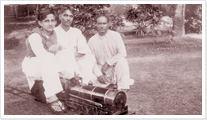
Vikram Sarabhai as a boy, with his model train
It was in this background that in 1963, Vikrambhai got scientists of the Physical Research Laboratory (PRL) involved in a project called ‘Experiment for Improvement of Science Education’, to take science to citizens. These early efforts were institutionalized in 1966, with the creation of an institution called the Community Science Centre (CSC), whose foundation stone was laid by Dr. Sarabhai’s guru, the Nobel Laureate, Sir CV Raman. The famous lecture ‘Why the Sky is Blue’ was delivered by Sir Raman at the Centre on this occasion.
CSC was the trailblazer in the country, and the country’s active Science Centre/ Science Museum movement owes a lot to the pioneering work of this institution. CSC was re-named Vikram A. Sarabhai Community Science Centre (VASCSC) after the passing away of Dr. Sarabhai.
To quote VASCSC’s website, ‘The core of the Centre’s philosophy is to take school and college students out of the rigid framework of textbooks and encourage them to think, explore and create. Over the years, the Centre has combined formal and non-formal techniques to formulate many innovative methods to give students a better understanding of Science and Mathematics, which not only make the process of learning enjoyable but also sustained and long-lasting.’ It aims to bring teachers, students, research workers, administrators and the community together for a better appreciation and understanding of science.
VASCSC has been the pioneer of several innovative science education programmes, including interactive science exhibitions, open laboratories, math-lab, science playgrounds. These are today the backbone of many a science education programme in the country. The educational kits and materials developed by it are of a very high quality.
A landmark initiative of VASCSC was the Science Express, done for the Department of Science (DST), which ran for several years. This was an innovative science exhibition mounted on a 16-bogey train, specially designed by the Indian Railways. Launched in October 2007 by DST, Science Express covered over 1,22,000 km across the country, receiving more than 1.33 crore visitors at its 391 halts, over 1,404 days. It has thus become the largest, longest running and most visited mobile science exhibition, probably in the world and has created several records in its wake’ (DST). The exhibition has six entries in the Limca Book of Records.
Mrs. Mrinalini Sarabhai wrote of Dr. Sarabhai: ‘‘He often said that on retirement he would like to spend time with young children talking to them about science.’ Sadly Dr. Sarabhai died young, so he could not fulfill this dream. But the initiative he started at the CSC has indeed contributed to the vision of transforming science-education in India
–Meena
I am privileged to be a member of the Governing Council of VASCSC.
It is butterfly season again. After a few hot, dry months, it is a treat to see so many different kinds of butterflies fluttering and flitting among the flowers and leaves. Butterflies have inspired art and poetry; and they have also been the subject of the scientific study by lepidopterists. The distance between the art and the science has always been distinct, starting from primary school where children learn about the life cycle of butterflies in Science class and draw and paint these colourful creatures in the Art class.
It is amazing to know that nearly four centuries before there was a woman who successfully and brilliantly combined the art and the science to produce some of the most groundbreaking work on butterflies and other insects. This is her inspiring story.
Maria Sibylla Merian was born in 1647 in Frankfurt at a time when scientific study of life was still in its infancy. Her father was an engraver and publisher, who died when Maria was a baby. When she was three years old, Maria’s mother married Jacob Marrel who was a renowned still-life painter. He encouraged young Maria’s interest in collecting live insects and also taught her the art of flower painting. As she grew, so did her passion for both these hobbies—which became lifelong commitments.
Women of Maria’s class and era collected butterflies as a hobby. Their catches were displayed as pinned specimens. Maria was driven by a different approach. She was not interested in dead specimens. She was fascinated by live insects and wanted to understand not just the insects and their life stages; but also their habits and habitats, the plants that they associated with and fed on, and their interactions with other species.
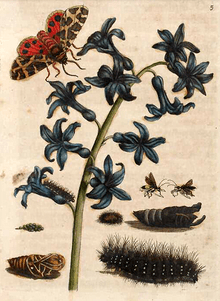
From the age of 13 she started collecting caterpillars and raising silkworms. She observed how they changed form at different stages, until they developed into butterflies or moths. She not only kept meticulous records and notes of her observations, but also detailed drawings of the process. She often painted by candlelight as she awaited the moment when the caterpillar made its cocoon, or a butterfly emerged from one. She painted caterpillars feeding on their host plants and being fed upon by their predators.
She publishing her first book of illustrations at age 28; this was followed by a two-volume set on caterpillars (published in 1679 and 1683) that showed the metamorphosis and host plants of 186 species.
Maria Merian was the first person to document the life cycle of butterflies. At that time it was widely believed that life originated spontaneously from inanimate matter. For example, that flies arose from rotting meat; other insects, including butterflies formed from mud, and that raindrops produced frogs. Maria’s observations and documentation opened up a new dimension.
This was also an era when most women did not have the opportunity of going to university. Maria was far from a being an academic scientist, nor did she have the freedom to devote all her time and energy to this pursuit. At the age of 18 she married her stepfather’s apprentice, and had two daughters. The marriage was not a happy one, and she left her husband, taking both her daughters, to live in a religious community; eventually getting a divorce. For many years she brought up her daughters as a single mother, supporting the family by teaching paining to daughters of wealthy families; and still making time for her art and scientific studies. By then she had moved to the Netherlands, where she spent the rest of her life.
For the first fifty years of her life, Maria observed and documented hundreds of European insects, from caterpillars to spiders. She became well known for her work; collectors and art dealers would frequently come to her and show her insect dead specimens for her to observe.
But in 1699, at the age of 52, she embarked on one of the first purely scientific expeditions in history. She sold 255 of her paintings to finance the trip. Her goal was to illustrate new species of insects in Surinam, a South American country which had been recently colonised by the Dutch. After two months of dangerous travel, accompanied by her 20-year-old younger daughter, she reached Surinam.
For Maria Merian this was an entomologist’s paradise. She was itching to collect and paint everything she saw. But the Dutch planters of the island were not willing to accompany the two women into the forests to collect insects. So she forged relationships with enslaved Africans and indigenous people who agreed to bring her specimens and who shared with her the medicinal and culinary uses of many plants. Merian and daughter spent two years in Surinam before Maria’s failing health from frequent bouts of malaria, forced then to return to the Netherlands.
But the compilation of all her work in documenting and illustrating flora and fauna in Surinam resulted in a book titled Metamorphosis insectorum Surnamensium. It was written in Latin, the international language of science, with 60 stunning copperplate engravings that brought the exotic world of the rainforest to the damp drawing rooms of Europe. The book became well known in scientific and artistic circles.
Merian’s eldest daughter, Joanna, subsequently made the journey to Surinam and would send her mother new specimens and paintings until Merian’s death, at the age of almost 70, in 1717.
For a woman of her time, with no university education, Maria Merian’s meticulous scientific and artistic work earned her respect. Karl Linnaeus, famous for developing a system for classifying life, referred heavily to her illustrations in his species descriptions. The grandfather of Charles Darwin, Erasmus Darwin, cited Merian’s work in his book The Botanic Garden.
Merian also published works in German and Dutch, which allowed lay readers unprecedented access to scientific discoveries, arguably making her one of the earliest science communicators.
Merian was also proved to be a successful businesswoman. She sold her drawings and engravings to finance the printing of her own books, which she would later sell. This financial security also allowed her the freedom her to pursue her interests and ideas.
In the 1800’s, by which time university-trained academics laid stake to “biological knowledge” there was a trend to discredit Maria Merian and her work. As she had no formal scientific training she was written off as a woman with a hobby who painted beautiful – but entirely unscientific – pictures of butterflies. Although her work continued to inspire and influence generations of artists, her contributions as a scientist were largely forgotten. It is only in more recent years that her scientific work has been revisited and revived.
Maria Sibylla Merian was a pioneering naturalist, who also managed a successful career as an artist, botanist, and entomologist. Merian studied the behaviour and interactions of living things at a time when taxonomy and systematics (naming and cataloguing) were still at a nascent stage. She laid the groundwork for the fields of entomology, animal behaviour and ecology. She was the first ever to show the interaction between species, food chains, and the struggle for survival in nature. And how environment affects development and behaviour. She captured the ecology of species, centuries before the term even existed.
At a time when other scientists were trying to make sense of the natural world by classifying plants and animals into narrow categories, Merian looked at their place within the wider natural world. She searched for connections where others were looking for separation.
Today when there is so much talk of encouraging women in STEM, it is more than worthwhile to remind ourselves of this inspiring woman who not only successfully combined her artistic and scientific work, but also pioneered fields of study that we erroneously believe to have more recent origins.
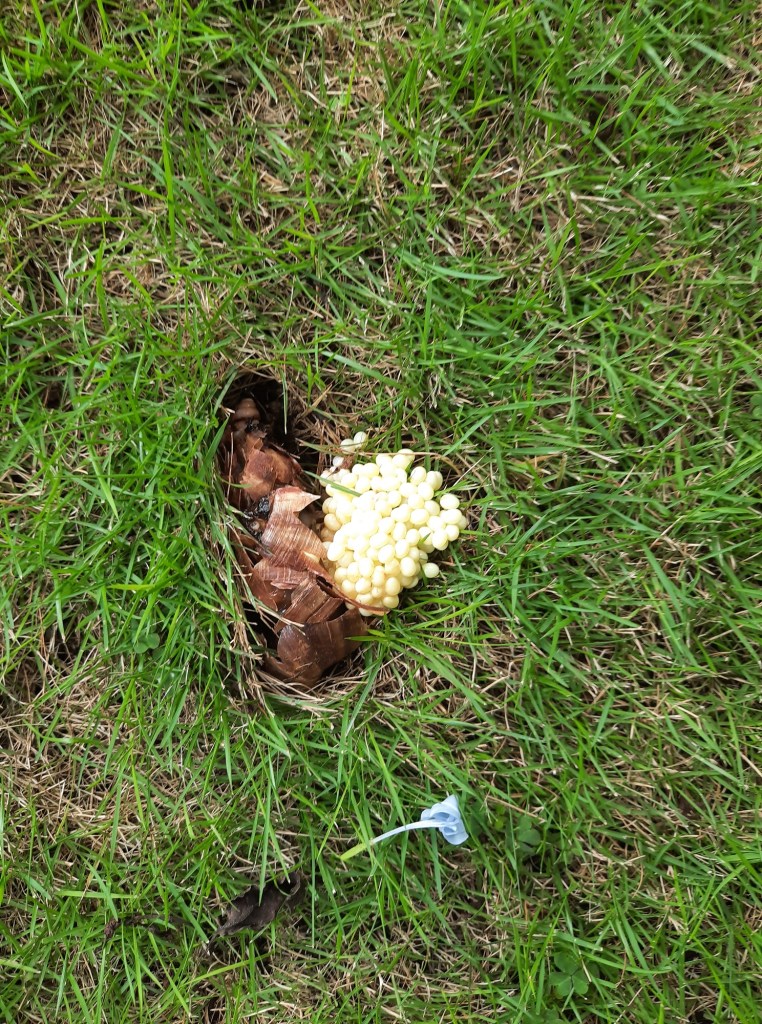
As I was walking along in my colony the other day, on a patch of grass I saw a gory sight. Someone had stepped on a snail. It was crushed. And beside it, I saw a yellow outgrowth. I couldn’t figure out what that was: for a moment I thought that the snail had been dead for a few days maybe, and some kind of mushrooms or fungi had grown there, thanks to the nutrients available. That didn’t seem too plausible. So my next idea was that in fact the accident was very recent, and these were the snails innards. But a closer look revealed that small yellow balls made up the outgrowth. So the final conclusion (borne out by web-searches) was that the crushed snail had been pregnant, and the eggs had come out and lay beside the dead father/mother.
Father/mother? What does that mean? Well, if you remember your high-school biology, most snails are hermaphrodites–which means that they have the reproductive organs of both males and females. In theory therefore, they have the ability to self-fertilize. However, they don’t usually do that. They mate in the “traditional way.” As a result, both of the partners lay eggs. Each clutch has about 200 eggs on average, and each snail may lay 5-6 clutches per year.
And this high reproductive ability is a cause of great concern. Because the crushed specimen was a Giant African Land Snail, one of the most invasive species ever. A native of East Africa (mainly Kenya and Tanzania), today the snail has spread across almost the whole world, an active and aggressive pest. Given the rate of its reproduction the snail spreads like a wildfire. It is extremely adaptable, and eats about 500 species of plants, and hence poses a threat to both agricultural crops and native plants wherever it goes. Not only does it eat the plants but it is also a vector for plant pathogens, thus causing further damage to agricultural crops and native plants. It carries the rat lungworm parasite and can transfer it to humans, causing meningitis. And once entrenched, the snails are almost impossible to get rid of. Some states of the US have spent millions of dollars to eradicate the creatures, but with limited success.
But coming back to snails in general. Well, snails are gastropod mollusks, which means they are related to both octopuses and slugs. There are some species adapted to living on land—the land snails, and there are aquatic snails, which live in either fresh water or the sea. All snails carry shells into which they retreat when threatened by predators, or in unfavorable weather. They hatch out of the eggs with small shells, which grow as they grow. The shells are made of calcium carbonate, and they keep adding more of it to the edges of the shells till they are adults. They don’t have legs, but move thanks to the muscular movement of their bodies, and aided along by the mucous they secrete which helps them to reduce friction and slide along. And moving along at snail’s pace means maintaining an average speed of about half-an-inch per second. They can’t hear, but their sight is good and sense of smell even better. They live for 3-7 years. While most species are hermaphrodite, there are some which are not and have distinct males and females.
Well, we do know that snails are a delicacy in some parts of the world. But lesser known is that in places in the UK, snail-racing is a sport! Snail shells are also sometimes incorporated in jewelry. Certain varieties of snails, especially the Muricidae family, produce a secretion that is a natural dye. In ancient times, purple and blue dyes were made from these snails, and were very expensive and prized. There was also belief that snails had medicinal properties, especially for bronchial problems, tuberculosis, etc., and some of these uses are still being investigated. And not to forget, snail slime may well be a part of that anti-aging cream or moisturizer you just bought!
Coming back to my crushed snail.
I know the person who stepped on him/her did so unknowingly.
And that if that clutch of eggs had hatched, we would have hundreds of more pests to ruin our gardens.
But still I cannot but feel a little sad, at the memory of the crushed body and the doomed eggs.
“Tiger moms’, ‘helicopter parenting’; ‘authoritative parenting or authoritarian parenting’; ‘permissive parenting’ or ‘uninvolved parenting’… In the last decade or more there has been a lot of discussion and debate around ‘parenting styles’. In nuclear families with both working parents, and one or two children, there seems to be a situation where parents are overly conscious about “parenting” in order to give the “best of everything possible” to their children. Paradoxically, this is now beginning to show somewhat alarming outcomes.
I recently read a thought-provoking book titled The Coddling of the American Mind: How good intentions and bad ideas are setting up a generation for failure. The book’s primary intent is to understand the phenomenon of rising intolerance on college campuses in America. In order to do this the authors attempt to go back to the contemporary practices of child-raising that impact psyche and behaviour of these children as they reach adulthood. Although these premises are based on a study of trends and theories in the Unites States, it was surprising and disturbing that a lot of this applies also to some sections of parents in India.
One of the chapters in the book looks at the changes in parenting styles in America over the last five decades or so. Parents of children born in the nineteen fifties were strongly influenced by Dr Benjamin Spock who taught that “children should be permitted to develop at their own pace, not pushed to meet the schedules and rules of adult life.” Spock encouraged parents to relax and let children be children. Children growing up in the fifties, and through the sixties and seventies roamed freely around their neighbourhood and played without adult supervision. Unsupervised time had many positives in terms of child development—joy, independence, problem solving, and resilience.
But starting from the 1980s, and gaining strength in the 1990s, there was shift in thinking about child upbringing, moving away from Spock’s “permissive parenting” to a new model of “intensive parenting.” Which is what sociologist Annette Lareau describes as “concerted cultivation”. Parents using this style see their task as cultivating their children’s talents while stimulating the development of their cognitive and social skills. They fill their children’s calendars with adult-guided activities, lessons and experiences, and they closely monitor what happens in school. They talk with their children a great deal using reasoning and persuasion, and they hardly ever use physical force or physical punishment.
The main converts to this were educated middle class parents who were reading about new theories of ‘early stimulation’ (such as babies who listened to Mozart would become smarter) and who felt that they needed to give their children every possible advantage in the increasingly competitive race to get into a good college.
Cultivation of such conditions for children requires that parents make a concerted effort to plan their children’s time. Children have after school activities like music lessons, team sports, tutoring and other structured and supervised activities. Younger children have ‘playdates’. Children are overscheduled, over parented and over monitored.
The race for getting the child into a good college begins even before the child starts school. A telling example of the change in expectations are two checklists of reference indicators for parents to check whether their child is ready for first grade.
Checklist in 1979
–Will your child be six years six months or older when he begins first grade and starts receiving reading instruction?
–Does your child have two to five permanent or second teeth?
–Can your child tell, in such a way that his speech is understood by a school crossing guard or policeman where he lives?
–Can he draw and colour and stay within the lines of the design being covered?
–Can he stand on one foot with eyes closed for five or ten seconds?
–Can he tell his left hand from his right?
–Can he travel alone in the neighbourhood (four to eight blocks) to store, playground, or to a friend’s home?
–Can he be away from you all day without being upset?
–Can he repeat a simple eight or ten word sentence, if you say it once?
–Can he count eight to ten pennies correctly?
–Does your child try to write or copy letters or numbers?
A Checklist from a school, circa 2015, had about thirty items on it, mainly academic standards. This included the expectation that the six-year-old child should be able to:
–Identify and write numbers to100.
–Count by 10’s to 100, 2’s to 20 and 5’s to 100.
–Interpret and fill in data on a graph.
–Read all kindergarten-level sight words.
–be able to read books with five to ten words per page.
–Form complete sentences on paper using phonetic spelling (i.e. journal and story writing).
Kindergarten in the 1970s was devoted mostly to social interaction and self-directed play with some instruction in art, music, numbers and the alphabet. Kindergarten today is much more structured and sedentary with children receiving direct instruction to academic subjects—known as ‘drill and skill’ method of instruction.
In recent years, in addition to over parenting, protective parenting has grown into ‘paranoid’ parenting. Parents want to keep their children ‘safe’ from anything that they perceive might harm them—food, activities, people, words…This is creating a cult of safetyism, where children grow up believing that the world is full of danger.
The authors believe that such parenting, has adverse, rather than supportive effects on children. Overprotected children are also shielded from the small but necessary challenges and risks that they need to face on their own. The children grow up with a sense of fear, anxiety and distrust. They are denied the necessary opportunities to develop important ‘life skills’ such as self-directed learning, cooperation, negotiation, compromise, dispute resolution, decision making, and perspective taking.
Free outdoor play, a critical component of growing up that develops these skills is increasingly missing from children’s lives today. Studies in America have found that compared to previous generations, children growing up in the second decade of the 21st century are spending hardly any time in outdoor activities, especially free play; they spend less free time with friends and more time interacting with parents, and much more time interacting with screens.
This is perhaps almost as true now for most other parts of the world. Indeed, much more so in the last year and a half of the pandemic lockdowns. Even while the current conditions deny children many vital experiences and opportunities, it would be important to remember that even well-intentioned over parenting can harm rather than help our children. Children are naturally ‘antifragile’, their brains require a wide range of inputs from their environment in order to configure themselves for these environments. Like the immune system they must be exposed to challenges and stressors (within limits and appropriate to their age) to build resilience as they grow. Overprotection makes them weaker and less resilient later on. Given that risks and stresses are unavoidable parts of life, we may indeed be preparing our children better to cope with these, not by over-protecting them, but by helping them to develop their innate abilities to grow and learn from challenging experiences. As the authors write, you cannot teach your child antifragility directly but you can give your child the gift of multiple experiences they need to become resilient, autonomous adults.
Prepare your child for the road. Not the road for the child.
…is a book by William Crooke, first published in 1906. It fully lives up to its sub-title ‘Being Discursive Notes on Various Subjects Connected with India.’
William Crooke served in the Bengal Civil Services. He spent 25 years in active service in India.
Aside from his duties in this service, his major contribution was in research and documentation as an ethologist and folk-lorist, deeply studying traditions, practices and stories of many parts of India. His contribution to the study and documentation of ethnology and folklore is acknowledged by scholars across the world.
He published several academic papers and edited journals.
As well as this, he wrote books–a huge output including:
A Rural and Agricultural Glossary for the N.W. Provinces and Oudh.
An Ethnographic Handbook for the N.W.P. & Oudh. Allahabad.
An introduction to the popular religion and folklore of northern India.
An introduction to the popular religion and folklore of northern India, in 2 volumes
The tribes and castes of the North-western Provinces and Oudh, in 4 volumes.
The North-Western Provinces of India: their history, ethnology, and administration.
Things Indian: being discursive notes on various subjects connected with India
Natives of northern India. A Rural and Agricultural Glossary of the NW Provinces and Oudh.
I have not read any of his other works, but ‘Things Indian’ which has been on my bookshelf for many years, which I just picked up, is a testimony to his scholarship. And also, to a fairly (for the time) non-judgmental perspective on things Indian, written with understanding, empathy and appreciation.
The book covers topics as diverse as Agriculture and Bazaar, Camel and Curry, Polo and Precious stones, Wine and Wood carving.
He records such practices as: ‘When a widower marries again, his second wife wears an amulet, which she calls the ‘crown of the co-wife.’ Or the annual game of tug–of-war of the Khasis in Assam in which ‘..one side represents the village and the other a gang of demons…with the intention being that the evil spirits may lose and quit the neighbourhood.’ Or that ‘Opprobrious names are often given to a baby after its parents have lost elder children, in the belief that, when the child bears a ridiculous name, it is less liable to be attacked by the Evil Eye or other uncanny influence.’ (My grandmother suffered thus, named Picchamma (pichhai=begging in Tamil), following as she did two siblings who died at birth).
He refutes sanctioned colonial wisdom in many instances, for example when he says: ‘Much ill-informed criticism has been directed against the methods of the India farmer’, and goes on to counter many criticisms of farming methods by quoting the logic and reasons given by farmers which he agrees with. He pays respect to the weaving of India, saying ‘it is impossible to discuss the numberless products of the Indian loom’, and laments how the introduction of aniline dyes have brought down the quality of dyed products.
He notes with delight that in kathputli performances ‘..all well-known members of native society and, in particular, the Sahib and the English lady are freely satirized.’
By quoting a report on the contents of the stomach of a gharial shot at the time, which consisted of ‘About a dozen large bunches or pellets of hair, probably human; sixty-eight rounded pebbles; one large ankle-rink; twenty-four fragments of Churis or glass bangles; five bronze finger-rings; a sliver neck-charm; a gold bead; thirty small red coral beads’, he tries to dispose of the belief of the time that gharials did not prey on humans.
Eclectic in his choice of topics, the book is a delightful browse—with both solid documentation and gems of quaint information. And a tribute to a curious and meticulous mind.
Sure, Crooke was part of the colonial machinery. But to make a distinction—there were those among them who contributed in various ways, going beyond the call of duty. He was one of them.
–Meena
An allied reading is ‘Beyond the Call of Duty’, V. Raghunathan. Harper-Collins.
Last week I wrote about the Spelling Bee in America and how the Merriam-Webster Dictionary is the official reference for spellings for this prestigious competition. The challenge for participants in the competition is to know the spellings and meanings of the 7000+ words in the dictionary. But how many know the story about the man behind those words—Noah Webster?
This story begins on a farm in West Hartford, Connecticut where Noah Webster was born on October 16 1758, a time when America still belonged to England. His father farmed the land, and from the time Noah was a young boy, he helped out with agricultural chores; but his mind was restless and he was eager to use it in different ways. Having taken in all that the local school had to offer, and encouraged by his teachers, Noah, aged 16, entered Yale, one of the best colleges in the country then. His father took a loan on the farm to support his education. But when he graduated, his father gave Noah eight dollars and told him that henceforth he was on his own.
The 19 year-old graduate, with a farm loan to pay back, needed to start earning immediately; so he started teaching in a school. The conditions were pathetic. . Children of all ages were crammed into one-room schoolhouses with no desks or basic supplies, untrained teachers, and a few old school books from England which pledged allegiance to King George. This was also a time when the east coast of America was in the throes of the Revolutionary War against the British. Noah strongly felt that his students should be learning about their own country from American textbooks, in a vocabulary that they identified better with.
In October 1781 after King George’s soldiers were defeated, Americans effectively won their independence. And Noah Webster decided that “I will write the second Declaration of Independence. An American spelling book.”
Noah felt that there was no reason why the newly independent people should continue to spell the way they did in England, where words were often spelt very differently from the way they sounded phonetically. Also within America itself the same word was often spelt in different ways (mosquito, moskito, miscitoe, misqutor, muskeetor…). Noah felt that Americans should spell every word in the same way, every time, everywhere. He felt that this would lead to creating a true United States of America.
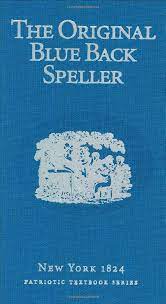
For two years, Noah taught school all day and worked at night on this dream textbook. In 1783 he published this under the title A Grammatical Institute of the English Language. He wanted that his “speller” should look different from other books on the shelves and told his printers to put a blue cover on it. And that is what the book became popularly known as–The Blue-Back Speller. The book not only taught spelling, but also listed important American dates, towns and states. Noah Webster had created the first American textbook! For over 100 years, Webster’s book taught children in America to read, spell and pronounce words. It was the most popular American book of its time, selling nearly 100 million copies. But Noah did not mint money from its sales—while originally the book cost 14 cents, he received one penny for each copy sold, the rest went to the printer.
At the time Samuel Johnson’s 1775 Dictionary of the English Language, introduced by the British, was considered the authoritative English language resource by most Americans. But there was a section of the population that wanted its own national dictionary for the newly declared free states of America. In 1806 Noah Webster took the first step towards this when he published A Compendious Dictionary of the American Language which had 40,600 words.
But he was not satisfied; he continued to work on this project with the aim of creating a reference that would overthrow Samuel Johnson’s dictionary. To accomplish this, Webster learned to read and understand more than 20 languages including Arabic, Sanskrit, and Welsh; and he travelled to France and England to research early dictionaries and books on the origins of words and language.
Noah Webster embarked on this project in 1807, and was still working on it 17 years later. At that point he felt he needed to refer still more books and visit more libraries, so in 1824 he set sail for Europe. He completed his magnum opus by penning the last word Zygomatic, in a shaky hand, in 1825. He then meticulously proof read the two thousand pages that he had complied over 20 years.
Noah was 70 years old when the first edition was printed in 1828 under the title An American Dictionary of the English Language. It included 70,000 words, definitions, and explanations of words’ origins. In doing so, Noah Webster also created a lexicon of “American” words and spellings.
The idea of reforming spelling had taken hold of him as early as 1789 when he had written in an essay: The omission of all superfluous or silent letters; as in bread. Thus bread, head, give, breast, built, meant, realm, friend, would be spelt, bred, hed, giv, brest, bilt, ment, relm, frend. Would this alteration produce any inconvenience, any embarrassment or expense? By no means. On the other hand, it would lessen the trouble of writing, and much more, of learning the language; it would reduce the true pronunciation to a certainty; and while it would assist foreigners and our own children in acquiring the language, it would render the pronunciation uniform, in different parts of the country, and almost prevent the possibility of changes.”
It took several decades for these early ideas to fructify. In his dictionary Noah Webster did simplify the original English spellings, he took out excess letters, like the ‘u’ in colour and honour, the extra ‘l’ in traveler, the ‘e’ on ax and the ‘ough’ in plow. He also reversed the ‘re’ in theater and center and the ‘k’ in musick. He introduced new words from different sources. From Native Americans came words like wampum, moccasin, canoe, moose, toboggan and maize; from Mexico came hoosegow, stampede and cafeteria; from the French came prairie and dime, while cookie and landscape came from the Dutch. Existing words were combined to make new ones, for example, rattlesnake, eggplant and bullfrog. He also added American words that weren’t in English dictionaries like skunk and squash. Only some of the changes that he wanted didn’t make it, like bred for bread, wimmen for women, dawter for daughter and tung for tongue!
Noah Webster accomplished much more than compiling and creating words. Not only did he fight for an American language, he also fought for copyright laws, a strong federal government, universal education, and the abolition of slavery. In the 1780s he pioneered one of the first workmen’s compensation insurance programmes and helped found the antislavery group the Connecticut Society for the Promotion of Freedom. In between fighting for these causes, he wrote textbooks, edited magazines and worked to advance copyright laws. He went on a national lecture tour and wrote numerous essays promoting education reform and other cultural concerns. He helped found Amherst college, and helped to establish the Federalist newspaper The American Minerva.
Webster had his idiosyncrasies. He counted houses and churches when he travelled through towns, recording his findings in his diary. While travelling across the American territories in 1785 and 1786, he tallied 20,380 houses in 22 cities. He kept records of practically everything he did and made copious notes in the margins of anything he read. He assumed that every word he wrote would be interesting to someone in the future. He kept copies of letters he wrote to public figures and even kept their replies. By the time he was in his 70s, he had volumes of notes, letters, essays, and diaries that he stored and saved. These he willed to his son-in-law!
When Noah Webster died in 1843, he was an American hero.
In 1847 (four years after his death), George and Charles Merriam gained the rights to Webster’s work and published their first edition of the Merriam-Webster dictionary. Noah Webster’s was a pioneer in many fields, but his name will always be synonymous with the Webster’s Dictionary.


 Millennial Matriarchs