The Dolls of Dusshera

Dusshera is celebrated in a myriad ways across the country. In Tamil Nadu, Karnataka, Andhra Pradesh and Telangana, it is marked with a beautiful display of dolls called golu (with state-specific variations of the name).

Dolls
Navratri Golu

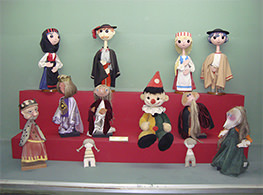
Golu is an elaborate set-up wherein dozens of dolls are exhibited for the period of the nine days. Traditionally ladies and children would visit each other’s houses in the evenings (nowadays, it has become more inclusive with men joining in too). The displays would be praised, the new dolls and arrangements oohed and aahed over; those who could sing would be persuaded to do so; and then they would depart with vatalai-paaku (paan and betel nut),  sundal (legume soaked-boiled and tempered with mustard, chilly, curry leaves and coconut), and maybe a coconut, fruit, flowers and a blouse piece. Nowadays, the party favours run into sophisticatedly-packed lamps, candles or agarbatti; organic cosmetics; millet-based snacks and sweets, etc.

The dolls in the golu display are arranged in steps—the ideal is nine, but smaller odd numbers are also acceptable. Some super-extravagant displays go up to eleven, but this is not usual. What exactly the standard nine steps represent is not quite clear: The steps to moksha? The nine nights of the festival? Three steps for each of the Goddesses Lakshmi, Parvati and Saraswathi?

Whatever the number of steps, the convention is to place the major Gods and Goddesses on the top-step. While the details of the displays differ from family to family, often Ganesha, Vishnu, Shiva, Parvati, Lakshmi, etc. are on the top step. On the step below this, some people display the eight forms of Lakshmi, and then come the avatars of Vishnu.    

Below come the humans, with a hierarchy. On the step closest to the Gods are the sages and saints: Sankaracharya, Meerabai, Sai Baba etc., as also revered leaders from Mahatma Gandhi to Netaji Subhas Chandra Bose.

And below these are normal people—shopkeepers, doctors, musicians, kings, queens; and thematic displays. These thematic displaysiare where most households put their creative energies, and these scenes could range from agricultural scenes, to weddings, processions, etc. Often a contemporary note is struck with displays of cricket matches, the launch of Chandrayaan—the imagination being the only constraint. Somewhere in all this would be animals, fruits and vegetables, etc. And below on the floor would be gardens, ponds, zoos, airports and other outdoor scenes. Somewhere in the display, marapaachies—traditional wooden man and woman dolls—must find a prominent place.

While this is a puja essentially celebrated by women, the putting up of the golu is an enterprise involving the whole family. The complex exercise—from taking down the steps or ladder from its storage place, to assembling it, to choosing the themes and dolls, doing the lighting, to creating elaborate structures like ponds and lakes and parks—requires all hands onboard. It is also customary for families to buy a few new dolls for the display every year. So while golus may have dolls which may be a century-old, there are also the latest fashions, including sometimes the newest Barbies!  

I have of course been seeing golus for many decades now, but have taken it for granted that it is how Tamilians celebrate Navartri, never questioning why the occasion was marked with a display of dolls. It is only recently that I learnt the story and significance behind the doll display. Dusshera marks the triumph of Devi Durga over the wicked, demonic  Mahishasura who had the boon that he could not be killed by any male—human or divine. The Gods had sent many an army to fight this buffalo-demon, but he had decimated all of them. Things were getting really serious and the Gods were at their wits’ end. And that was probably the dawn of woman-power! The Gods and Goddesses all came together to create the Goddess Durga, imbuing her with all their powers. And she went out, fought the demon in a bloody battle for 10 days, finally defeating and killing him on Vijayadashami.  Once the Gods and Goddesses had given Durga their powers, they became lifeless and powerless. It is to honour them that they are represented as statues or dolls in the golu, and they are contributions are acknowledged in the 10-day celebration.

This Navaratri, may good once again prevail over evil, and may woman-power be a force for good in the world.

Happy Dusshera!

Meena

Nobel Peace Laureate: Bertha von Suttner

The Nobel Peace Prize for 2023 has recently been awarded to Narges Mohammadi for her fight to promote human rights and freedom for all, especially in the context of the oppression of women in Iran. Her brave struggle has come with tremendous personal costs. She becomes the 18th woman to be awarded this prize since the first Nobel Peace Prize was awarded in 1901.

The first woman recipient of the Nobel Peace Prize was Bertha von Suttner who was awarded in 1905. The trajectory of her life, from aristocracy to advocacy, is indeed interesting. She was born in 1843 in Prague which was then a part of the Hapsburg Empire. As Countess Bertha Kinsky von Wchinitz she grew up in a family with a military history. Her father died before she was born, and she was brought up by her widowed mother in less than affluent circumstances; tutored by a cousin in languages and music, and reading voraciously. At the age of 30 she decided to move away and earn for herself, taking on a position with Baron Suttner’s family in Vienna as teacher-companion to his four daughters. It is here that the Arthur the youngest son of the family and Bertha fell in love. However the family was strongly opposed to their marriage. Thus Bertha left for Paris where she became secretary and housekeeper to Alfred Nobel. The two became close friends and remained so, corresponding frequently. It is believed that Bertha played a significant role in inspiring Alfred Nobel to establish the Peace Prize.

Bertha however returned after a short stay in Paris to elope with Baron Arthur von Suttner, even in the face of his family’s opposition. The young couple moved to the Russian Caucasus (what is Georgia today) where they lived for nine years earning a living by giving language and music lessons, and eventually as journalists who wrote about the increasing ethnic conflicts in Russia and Central Europe. During this time Bertha also wrote several novels, including Es Lowos, a description of their life together. Her writing began to reflect her thoughts about conflict and peace.

In 1885, following reconciliation with Arthur’s family, the couple moved back to Austria, and then Paris. It is here that they learned about the International Arbitration and Peace Association in London, and similar groups in Europe that were engaged in promoting the ideal of arbitration and peace in place of armed force. It is then that Bertha’s work started to move away from the purely literary. Wanting to contribute in her own way to the growing peace movement, Bertha wrote a novel, based on careful research, in which the heroine suffers all the horrors of war. The book Die Waffen nieder (Lay Down Your Arms) was published in 1889. This book, criticizing many aspects of the times, was among the first to foretell the results of exaggerated nationalism and armaments. The pacifist novel made a tremendous impact across the world. It was published in 37 editions and translated into 12 languages before World War I.

Bertha von Suttner transitioned from being simply an author to a peace activist. She became an active leader in the peace movement, devoting a great part of her time, her energy, and her writing to the cause of peace – attending peace meetings and international congresses, helping to establish peace groups, recruiting members, lecturing, corresponding with people all over the world to promote peace projects. She supported the foundation, in 1889, of the Inter-Parliamentary Union, a global inter-parliamentary institution which was the first permanent forum for political multilateral negotiations. In 1891 she helped form a Venetian peace group; initiated the Austrian Society of the Friends of Peace, of which she was for a long time the president, and attended her first international peace congress. She also took on the editing of the international pacifist journal Die Waffen nieder! (Lay Down Your Arms!), named after her book, from 1892 to 1899.

After her husband’s death in 1902, Bertha moved back to Vienna. She worked as a writer, travelled, and gave lectures. 1904 she was invited to address the Third International Congress of Women in Berlin. She continued to campaign for peace, and argued that a right to peace could be, and should be, international law. She dedicated her life to peace and disarmament and used her position as a writer, journalist, feminist, lecturer, and political activist to promote the belief that peace is a solution that is both necessary and obtainable. At the dawn of the 20th century, few could write or speak about peace and disarmament with greater authority than Bertha von Suttner.

On 10 December 1905 Bertha von Suttner became the first woman to be awarded the Nobel Peace Prize as a recognition for her life-long fight for peace.

Bertha continued her active dedication to the cause even as she grew older and frailer with cancer. She passed away on 21 June 1914, just a week before the assassination of Archduke Ferdinand and his wife in Sarajevo, the spark which triggered World War I. In the hundred years since, the world has witnessed the horrors of two world wars. And today, violence and war mark every continent on earth. In this period, several women have followed in Bertha’s footsteps, as they fight the continuing battles against violence and oppression in different parts of the world.

Just as this year’s Nobel Peace Laureate was announced, we are seeing the ravages of wars in Gaza, and Ukraine, which may well plunge the world into a cataclysmic situation. A time, surely, to recall the words of Bertha von Sutter: One of the eternal truths is that happiness is created and developed in peace, and one of the eternal rights is the individual’s right to live. The strongest of all instincts, that of self-preservation, is an assertion of this right, affirmed and sanctified by the ancient commandment: Thou shalt not kill.

–Mamata

You’ve Got Mail!

On October 9th, the world marked World Post Day, to commemorate the establishment of the Universal Postal Union in Bern, Switzerland on this day in 1874. Designated by the UN , ‘the purpose of World Post Day is to create awareness of the role of the postal sector in people’s and businesses’ everyday lives and its contribution to the social and economic development of countries.’ Emphasizing the importance of postal services, the UN says, ‘Post offices play a crucial role in fostering cohesive, inclusive, connected communities. Presently, over five million postal employees are entrusted with a variety of essential and personal items, from messages, gifts and goods, to money and medicines.’

India’s history of postal services long precedes 1874, with the East India Company opening its first post office in 1727. This was essentially used for the company’s own posts. The postal services were later taken over by the British Government and the services opened to the public. Many of the princely states as well as the Portuguese, Dutch and other colonial powers also ran their own postal services.

Taj Westend Postbox
India’s oldest functional post box at Taj Westend, Bangalore. Still cleared everyday except Sundays and holidays!

For many people today, posts and post offices don’t seem very relevant. I visit the post office more for investing money in some of schemes offered by them—they are safe and offer a decent interest rate. I haven’t posted a letter in decades, and in fact am suspicious of the few post boxes I see—are they ever cleared, I wonder. I do receive magazines and bulk posts, which are obviously not posted but given in at the post office. The one service I do occasionally use is the Speed Post service—takes about as long as non-premium couriers, and costs a lot less (to the extent that some courier companies use speed-post services to get their packages over the long distance, while they just do the collection and final delivery!).

But the postal service is obviously still very important in our country, going by the numbers. Even today, we have over 1, 55,000 post offices, and Inda’s Dept. of Posts has the most widely distributed postal network in the world. Close to 13.5 crore registered posts and over 30 crore speed posts have traversed the country during the year.

But the non-postal services of the post offices seems even more significant. They act as Aadhar updation centres, as Passport Seva kendras, as a means of paying utility bills and for distribution of direct benefit transfers. Apart of course from the various savings schemes and banking activities.

Yeoman service indeed.

But that is not to say that there is not tremendous scope for improvement, which is obvious even to the layest of lay-people. For instance, I subscribe for a weekly magazine, but I am lucky if I get 3 of 4 issues in any given month. And even then, the deliveries are bunched up—the postman may deliver 2 or 3 together because he can’t be bothered to come every week. So obviously some lacuna in monitoring systems.

And often I end up opting for couriers rather than speed-post for various reasons. The courier will come to my doorstep to pick up the package. And then there are the other flexibilities—speed posts will be accepted and delivered during working hours, on working days. But my packages get ready at the 12th hour, and the post offices shut by then. And so couriers are the only way to go.

And a visit to the post office is an activity for which you need to set aside at least a couple of hours.  Forms for any of the schemes are to be filled manually, and take 10-15 minutes to fill. Nor are they very clear, which means they often have to be re-done. The IPPB app is confusing and takes getting used to. The password expires ever so often and constantly needs to be reset. (That being said, I sincerely appreciate the patience of the postal staff in dealing with the dozens of people and scores of questions. )

India’s postal services definitely need to be re-imagined for tomorrow. We are the technology capital of the world, but it does not seem that adequate thought has gone into using technology in this sector.

But the amazing network created into the remotest parts of the country has the potential for providing the backbone for citizen services that can touch everyone, especially those in under-served areas.

So with three cheers for India Post!

–Meena

Invited Invaders: Invasive Alien Species

In the last couple of weeks a previously unheard of name has been making news. This is Conocarpus, and the news is that the Government of Gujarat has imposed a ban on the plantation of Conocarpus trees in both forest and non-forest areas. This has come not long after there was praise for the lush greenery that lines the riverfront of the Sabarmati river in Ahmedabad which was made possible by the large-scale plantation of Conocarpus as part of the riverfront development plan. Similar plantations have been done in several cities of Gujarat in the past few years. This has also been the case in some other states. Several municipalities in Telangana planted these fast-growing trees on both sides as well as between the roads to increase greenery. The Pune Municipal Corporation planted these in some public parks. Conocarpus erectus trees have been a popular choice in recent years for beautification of public spaces, as well as residential societies. It is only more recently that researchers have drawn attention to the adverse health and environmental impacts of these trees, raising concerns.

Ironically these trees, which are greening urban landscapes are botanically mangrove plants that grow in tropical or coastal mangroves. They are not native to India, but are indigenous to North and South America, as well as parts of Africa. They began to be widely planted in urban areas because of their ability to grow quickly, and their thick foliage. Now research is indicating that there is more harm than good done. Conocarpus trees have a high-water demand, which is easily met in their natural habitat. But when these are planted in arid areas, their deep root systems compete with nearby plants for water, and also significantly impact local water resources. The roots can damage drainage systems and underground telecommunication lines. The non-indigenous species can outcompete native flora and disrupt natural ecosystems and local biodiversity. They are also a threat to human health as their pollen can trigger allergic reactions causing cough, cold and asthma.

And so the not-too long ago welcomed visitor is beginning to raise concerns. The story is not new. India has seen several examples of such ‘invited invaders’. Meet some of these, who have come to stay.

Prosopis juliflora a thorny, evergreen shrub/small tree which is native to northern South America and Central America, was introduced to India during the nineteenth century in order to halt the further expansion of the Thar Desert in north-western states and to meet the fuel wood crisis of peninsular India. Most of the Indian states and union territories introduced this species in their provinces in order to overcome the local fuel wood demands. This exotic cousin of local Prosopis species (especially Prosopis cineraria) quickly gained a roothold and spread rapidly wherever it grew, developing impenetrable shrubby thickets of thorny branches which could injure humans and domestic animals. The impact on local biodiversity was also evident in the Protected Areas where the plant was introduced, especially in Keoladeo Ghana and Ranthambore National Parks in Rajasthan, where the introduction turned into an invasion that drastically reduced the grassland habitat and threatened the continued survival of the grassland species of birds (especially the Great Indian Bustard) and other animals like the Desert fox. The spread of the shrub reduced the foraging area for wild and domestic animals, affecting the food pyramid all the way up to the tiger—the keystone species. By the time the deleterious effects of the well-intentioned introduction were realized, the alien invasion had become uncontrollable in scope and scale.  

Parthenium hysterophorus is an erect fast-growing herbaceous plant native to the area surrounding the Gulf of Mexico, North, Central and South America and the West Indies. It is a weed commonly known as bitter weed, carrot weed, broom bush and, in India as congress grass.

It is believed that the seeds of the weed entered into India during the 1950s along with the wheat grains received from the United States under the US PL 480 scheme. Since its introduction, the weed has invaded different habitats in India including agricultural lands, bunds of wetland, watercourses, community land, urban areas, overgrazed pastures, industrial areas, playgrounds, sides of the road and railway tracks and the fringes of the reserve forests and other protected areas. Today it has spread over millions of hectares of land across the country. The invasion has been global as the weed has been reported from more than 20 countries across five continents.

Due to its harmful effects on humans, livestock and to biodiversity, P. hysterophorusis was declared as the most dangerous terrestrial weeds of our times. As it spreads, the weed releases chemicals that alter the natural chemical composition of the soil which affects the productivity of crop plants and other native plants. The weed also impacts human health causing respiratory problems including asthma and bronchitis, watering eyes, as well as skin inflammation and eczema.

 Lantana camara, popularly known as wild sage, is a thorny and multi-stemmed deciduous shrub, which produces clusters of small attractive tubular multi-coloured flowers. The plant is a native of South and Central America and the Caribbean islands. The plant was widely introduced in the 19th century in tropical parts of Africa, Asia and Oceania as an ornamental and hedge plant. In India Lantana was introduced around 1807 as an ornamental plant at the then Royal Botanical Garden in Kolkata. In due course of time, the noxious weed managed to escape from the introduced sites and invaded several thousand hectares, including protected areas such as national parks and sanctuaries. Today the plant is believed to have been naturalized in nearly 60 countries and several island nations.

Lantana: Pretty Spreader

Studies have established that the uncontrollable spread of Lantana has had harmful impacts on the ecosystem. It disturbs the natural succession cycle of native vegetation, altering the floral composition of the local ecosystem, leading to the gradual elimination of native floral diversity. Apart from wild flora, the biochemical properties of the plant also adversely affect cash crops such as coffee, cotton, tea, rice and sugarcane among others.  Considering the vast impacts on the ecosystem, biodiversity and range extension ability, IUCN’s Invasive Species Specialist Group (ISSG) has declared the weed as one among 100 of the world’s worst invasive species

Water hyacinth (Eichhornia crassipes) is a floating aquatic invasive plant species native to Amazon basin of Brazil, which has drastically invaded into many tropical and subtropical countries of Latin America, Caribbean, Africa and Southeast Asia. Invasion of this species causes huge loss to aquatic biodiversity and provides home to several disease-causing vectors

The rapidly growing plant was introduced into several parts of the world, including India, at the end of the nineteenth century for ornamental purposes. In due course of time, water hyacinth found its way into natural inland water bodies such as lakes, rivers, reservoirs and rural ponds. In most of the wetlands of Africa and India, this species is still spreading even after a century of its initial introduction.

Invasion of this species causes huge loss to aquatic biodiversity. It spreads rapidly spread within a short period to form dense impenetrable mats across the water surface, preventing the entry of sunlight and also limiting water access for humans and wildlife. The proliferation of the weed in the wetlands slowly alters the density and diversity of the floating and submerged native aquatic plant species, ending in their extinction. The dense vegetation serves as a breeding ground for several vectors such as mosquitos, flies, and snails, which can transmit diseases like cholera, malaria, and filariasis. The invasion affects water transport, fishing, leads to disruption of hydroelectric operations, blockage of the natural water tributaries and irrigation and flooding systems causing flooding. Due to its vast impacts on the local economy, biodiversity and human health, the weed has been recognized as one of the 100 most dangerous invasive species, and the top ten worst weeds.

The IUCN defines invasive alien species as animals, plants or other organisms that are introduced by humans, either intentionally or accidentally, into places outside of their natural range, negatively impacting native biodiversity, ecosystem services or human economy and well-being. Today as the world faces numerous challenges from not just biological invasions, the threat of these invasions continues to grow as the movement of people and goods around the world increases opportunities to transport species to new environments. At the same time, climate change is making areas more hospitable to new species. Invasive alien species are one of the biggest drivers of biodiversity loss and species extinctions. Such invasions also put human health, food security and livelihoods at risk, as highlighted in the United Nations Sustainable Development Goal 15.

–Mamata

Washoku: The Harmony of Food

Continuing with the theme of food that Meena introduced this week. She urged gratitude for those who produce the food that sustains us all, and that we ponder on our relationship with food. Nothing expresses this sentiment better than the Japanese word kansha which refers to appreciation toward those who cultivate, harvest, and prepare food.

And nothing encapsulates the intricate relationship with food than the Japanese concept of washoku: the harmony of food.

My first introduction to the importance of balance in diet was through the classic book Totto Chan, an engaging memoir that tells about an ideal school in Tokyo during World War II, which combined learning with fun, freedom, and love. In the story the headmaster asks the parents to include in their children’s lunch boxes “something from the ocean and something from the hills.” This meant food from the sea (fish and seaweed) and food from the land (meat, grain and vegetables). This simple guideline ensured a nutritious and balanced diet that could be put together economically and easily in Japan.

Many years later when I visited Japan, the first thing that struck me about Japanese food was the delicacy and aesthetic with which it was presented. This was a visual demonstration of the principle of balance and harmony as small portions of each item were arranged so as to create a perfect composition of colour and form on the equally beautiful serving plates. The act of partaking from this palette of shades and forms was in itself a reverential and delicately synchronised process, which respected as well as celebrated the gift of food.

It was only some years later that I discovered that this harmony in Japanese cuisine is created by the nuanced combination of five essential elements: Goshiki (five colours), Go-Ho (five cooking methods), Gomi (five flavours), and Gokan (five senses).

Goshiki: Every meal should include each of the five colour groups. These are: Red (aka) which include tones of orange, purple, crimson etc., and Yellow (kii) including golden and ochre tones. These are warming colours said to stimulate the appetite. Green (ao) also includes blue, which is said to refresh. White (shiro) which includes tones of silver or ivory provides a sense of cleanliness. Black (kuro) including very dark tones like eggplant skin or shiitake mushrooms. A serving of a Japanese meal will include components that provide these colours, which are further enhanced with decorative leaves and flowers. The colours help give visual cues to the different nutrients included in the meal and including each colour group ensures nutritional diversity.

Go-Ho: In an earlier time when the ordinary Japanese people had limited food resources for daily meals, they brought variety by cooking the same ingredients in different ways.The tradition continued to become a principle of a Japanese meal which would include five modes of cooking.

Simmering (niru) anything cooked in a boiling liquid

Steaming (musu) any steamed dish, most often rice.

Grilling (yaku) including broiling, searing, roasting to create layers of flavours.

Frying (ageru) food is deep fried in oil

Cutting (nama) is a very important element especially in food that is eaten raw (sashimi or pickles). This requires skillful knife control and adroit fingers.

Gomi: The Japanese believe that by including five flavours in each meal, the craving for any one flavour is minimized through the balance. The flavours are: Sweetness, Sourness, Saltiness, Bitterness and Umami. While it is known that the human tongue can distinguish the first four flavours, the fifth, umami, is difficult to explain. It comes from the umami component of kelp (glutamic acid) and was discovered by Japanese scientists more than a hundred years ago. The word was coined in 1908 by Japanese chemist Kikunae Ikeda from the words umai (delicious) and mi (taste). In 2002 it was scientifically proven that our taste buds has receptors for umami, that translates from the Japanese as a ‘’pleasant savoury taste’.

These five flavours are provided largely by the five staple ingredients of every Japanese kitchen: Sato (salt), Shi (sugar), Su (rice vinegar), Se (soy sauce), and So (miso).

Gokan: The Japanese believe that in order to truly savour the five flavours, it is not just the tongue, but all five senses that come into play. Thus eating is not just a taste experience. It must begin with the sense of sight that takes in the attractive presentation of the food; the sense of sound which takes in the sounds from the surroundings (preferably nature) and evokes anticipation of the experience. The sense of smell enhances the gustatory experience, and the sense of touch does justice to the variety of textures that one puts in the mouth.

Food for the Japanese is thus as much about experience as it is about sustenance. The emphasis on simplicity of ingredients and cooking techniques, and seasonality of ingredients also makes the food nutritionally balanced. Washoku has been one of included in UNESCO’s Representative List of the Intangible Cultural Heritage of Humanity. It is described as a social practice based on a set of skills, knowledge, practice and traditions related to the production, processing, preparation and consumption of food. It is associated with an essential spirit of respect for nature that is closely related to the sustainable use of natural resources. 

The recently popular series of documentaries on Blue Zones, the five places in the world where people live the longest, healthiest lives, included the Okinawan diet of Japan. While the segment did not go into the depths of the many principles of Five that make the Japanese cuisine what it is, it did add another interesting principle of hara hachi bu, an ancient mantra that reminds people to stop eating when their stomachs are 80% full. A gentle reminder that moderation and mindfulness are also key to the healthy consumption of food.

Japanese food has gained popularity in India in the last few years. This surprises me as this is so different from most Indian cuisine which is usually a rich mixture of multiple spices and flavours. However for most people here, Japanese food usually means Sushi. Perhaps it is time to learn more about, and appreciate the breadth and depth of this Oriental cuisine.

–Mamata

With Gratitude for Every Morsel of Food…

The recurrent theme in the last few days has been FOOD.

First, the passing away of Dr. MS Swaminathan, the father of India’s Green Revolution at the age of 98. Today, we have forgotten the first few decades after Independence, when hunger was a reality for many in our country. At Independence, hardly 15 percent of agriculture was under irrigation. The food grain production was 50.8 million tonnes. Agricultural methods, tools and equipment, were centuries if not millennia old, and were grossly insufficient to feed the country’s growing population. On top of that, the vagaries of nature, which saw floods and droughts disrupting cultivation. Food insecurity and shortages were common, and two severe droughts 1964–65 and 1965–66 led to major food shortages and famines. We were dependent on food imports to feed our people, and many people doubted the survival of us as a nation, when we could not even fulfil this basic need.

It is this dismal scenario that pushed people to look for solutions that would make us food secure and food sufficient. And the hero of the hour was Dr. MS Swaminathan. Swaminathan, a student of zoology, who was a witness to the tragedy of the Bengal Famine of 1943 and frequent food shortages, decided to devote his life to improving this situation. And that is what he went on to do just this. He joined the Indian Agricultural Research Institute soon after Independence, and from there went on to do research and post-doctoral work in the subject. At IARI, he learnt about the work of Dr. Norman Borlaug in Mexico, where he had developed a dwarf variety of wheat which yielded more grain, and at the same time had stalks strong enough to hold the weight of the grains. Dr MS saw this as a beacon of hope and worked with Dr. Borlaug to develop improved crop varieties suitable for India. He also worked on fertilizers suitable for our conditions, as well as more efficient farming techniques. This laid the foundation for our Green Revolution, and paved the way for India not only to becoming self-sufficient in food, but becoming a grain basket for the world. Today, our food grain production is estimated at a record 330.5 million tonnes (MT).

The Green Revolution though the saviour, was however not without its flip-side. It needed increased amounts of chemical pesticides and fertilizers thus reducing the soil fertility and quality in the medium term; these crops needed more water; and it led to monocultures based on specific crops and varieties, leading to erosion of agri-biodiversity. Dr. Swaminathan recognized these issues, and for many years led the movement for what he termed ‘the Evergreen Revolution’ which focussed on more environmentally sustainable ways of increasing productivity of the land.

As a part of Centre for Environment Education, we were fortunate to have opportunities to meet and interact with this giant. He came to our campus maybe a few times a year, as Chairman of our sister-institution VIKSAT, and also as guide and mentor to many of our projects and initiatives. I had the good luck to work under his guidance when CEE was putting together Government of India’s official submissions to the World Summit on Sustainable Development, and he was one of the advisors to the process.

And coming to the other food-related events:

Oct 2 marks the birthday of Gandhiji, who believed that farmers, farming and rural India had to be at the core of any development in India. He summed it up with his statement: “To forget how to dig the earth and tend the soil is to forget ourselves. “

It also marks the birth anniversary of Lal Bahadur Shastri, our second Prime Minister, who gave the nation the slogan ‘Jai Jawan, Jai Kisan’, seeing soldiers and farmers at the same level when it comes to ensuring the nation’s security.

And Sept 29 also marks the observance of UN’s International Day of Awareness of Food Loss and Waste. The goal of this day is to raise awareness on the importance of the problem and its possible solutions, and to promote global efforts and collective action towards meeting

And Sept 29 also marks the observance of UN’s International Day of Awareness of Food Loss and Waste. The goal of this day is to raise awareness on the importance of the problem and its possible solutions, and to promote global efforts and collective action towards meeting Sustainable Development Goal Target 12.3, which aims to halve per capita global food waste at the retail and consumer level by 2030, and reduce food losses along the food production and supply chains.

No more appropriate time to ponder on our relationship to food, those who produce it, and how we interact with it. And lets not forget: the prevalence of undernourishment–the share of people who lack regular access to sufficient calories– is increasing, with as many as 828 million people undernourished in 2021.

With gratitude to all the farmers and farm workers; the policy-makers who understand their importance and respect them for their contribution; those who work on the science of it; and those who cook it.

We owe every mouthful to you all. And may we never forget it.

–Meena

Lighthouses: Beacons of the Coastline

As the country gears up for Diwali, the Festival of Lights, India recently celebrated its first Lighthouse Festival. This is the first time that the spotlight is on lighthouses in India. The festival which was flagged off at Goa’s historic Fort Aguada, is aimed at rejuvenating the rich maritime history of 75 iconic lighthouses of the country, and promoting lighthouses as tourism destinations.

In a country which is so rich in the wide range of world-renowned monuments, spanning different eras and styles of architecture, there has not been much attention on lighthouses as heritage structures. Although there are nearly 200 lighthouses dotting the coast of India, not much is known about them, nor are they high on tourists’ itineraries. However the history of lighthouses in India is long and interesting.

The building of lighthouses in India is generally attributed to the colonial rule. The British, as well as the Portuguese and Dutch who ruled some of the coastal parts of the empire developed and constructed lighthouses at strategic points along the coastline. But India’s maritime history goes back much further, and where ships sailed, there must have been systems to guide them. There are sources that indicate that lighthouses also existed long before.

It is believed that lighthouses were built in India in the 3rd century BC by Emperor Asoka who was a contemporary of Ptolamy II, the Egyptian king who built the famous lighthouse—the Pharos of Alexandria which is the first known lighthouse, constructed between 300 and 280 BC. This was one of the Seven Wonders of the Ancient World.

The first known lighthouse in India was at Puhar Port in Kaveripatnam, an ancient South Indian port city. The famous Tamil writer Illango Adigal of 5-6 century AD in his book Silappadhikaram (one of Tamil literature’s Five Great Epics) had explained in detail about the beautiful lighthouse on the Bay of Bengal coast, and the numerous ships anchored at Puhar port, which was doing brisk business those days.

After the invasion of the Indian subcontinent by the Portuguese, Dutch and the English, trade and commerce through sea increased several folds, and over a period of time, lighthouses were built all along the coastline of the Indian subcontinent to guide the seagoing vessels as they approached the coast. These lights were maintained by the local rulers and port authorities.

As ports became busier, the need was felt for more navigation lights. At Colaba, the entrance to Bombay, the chief seaport of the time, the light was provided by a moored light vessel off the coast in 1842. In 1847, first lighthouse was constructed on Colaba point with a revolving light that gave a bright flash every two minutes. The next lighthouse to be constructed was at Karachi port in 1851. This was followed by a lighthouse on Piram Island in the Cambay Gulf, and then on the north mouth of the river Tapti, which was called the Hazira lighthouse. In 1856 a number of other lighthouses were constructed at important points along the western coastline of India. Among these was the lighthouse at Fort Aguada in Goa, which was the venue of the recent Lighthouse Festival.

The construction of lighthouses continued further south along the Malabar Coast through the nineteenth century. A similar exercise was also under way along the eastern coastline from Calcutta down to Madras. As the number of lighthouses increased, it became essential to establish an authority to control and maintain these lights. After detailed discussions and consultations, it was decided to constitute a Lighthouse Department in British India (with jurisdiction extending from Aden to Rangoon). The Governor General of British India gave approval to the Lighthouse Bill on September 21, 1927, and the Lighthouse Department was constituted. To commemorate this, every year 21 September is celebrated as Lighthouse Day in India.

Initially the department had control of 32 lighthouses. Today India has nearly 200 lighthouses, some of which are centuries old, which continue to be regulated by the Lighthouse Act of 1927. These range from the ancient now crumbling edifices; those painted with traditional red and white stripes, to imposing modern steel structures. Only a few of the original structures remain, some have been repaired as heritage structures, while several new automated towers have come up. Many are equipped with modern radar infrastructure, and equipment to collect weather data. The lighthouses are administered by the Directorate General of Lighthouses and Lightships, under the Ministry of Ports, Shipping and Waterways of the Government of India.

For many of us lighthouses are something that we associate with stories of smugglers, shipwrecks and rescues, or one of the many sights that we may take in as part of a seaside holiday. My own association with lighthouses stems back to the adventures of Enid Blyton’s Famous Five; and the rotating light that arched through the night sky on our summer holidays in Diu. But there is a serious global community of lighthouse lovers who study lighthouses. The scientific study of lighthouses and signal lights, their construction and illumination is called Pharology or pharonology. The term has its roots in the ancient Greek pharos (meaning lighthouse) and logos (discourse). Pharos was also the name of the famed lighthouse of Alexandria. These lighthouse enthusiasts or pharologists, not only study and document lighthouses around the world, they also work to promote the cause of lighthouses and light vessels. They are members of the World Lighthouse Association, and share their passion through the Lighthouse Digest.

D Hemachandra Rao, a retired engineer of Chennai turned his hobby into an ‘epic lighthouse yatra’ by journeying across India to visit and document every functional and non-functional lighthouse on the Indian coastline. Starting when he was in his mid-seventies, Rao travelled extensively along India’s coastline, sharing his descriptions and pictures of his findings through his Facebook Timeline. Known as the Lighthouse Man, Hemachandra Rao passed away in June 2022 at the age of 82, leaving behind a rich legacy in the form of a Maritime Heritage Museum that he set up in his house in Chennai. The museum includes hundreds of photographs of the lighthouses that he had visited.

Mr Rao believed that lighthouses had relevance even in the age of satellite technology. He said “the small light, coming from distance, still navigates the humble fishermen… even today we hear stories of fishermen coming to the shores safe led by the small light”.

There is no fog so dense, no night so dark, no gale so strong, no mariner so lost but what its beacon light can rescue. It beckons through the storms of life. It calls, ‘This way to safety; this way to home’. Thomas S Monson

–Mamata

Cough, cough…

For the past few weeks, I was plagued by a cough. I am assured by sources that it is very good for me to cough—for instance, the Cleveland Clinic says ‘A cough is a natural reflex that is your body’s way of removing irritants from your upper (throat) and lower (lungs) airways. A cough helps your body heal and protect itself.’

I am yet to be convinced!

There are apparently many ways of classifying coughs.  One is related to how long they last. Acute coughs are those which start suddenly and last a few weeks. Sub-acute ones follow infections, and last for a month or two. Chronic coughs persist longer than 2 months. And Refractory coughs are chronic coughs which don’t respond to treatment.

Another way of classifying them is in terms of whether or not they produce mucous. Dry coughs are those which do not. Productive or wet coughs bring up phlegm or mucous.

Some coughs come on at night, and are called nocturnal or night-time coughs. Others are day-time coughs.

Some types of coughs produce distinctive sounds and indicate the underlying condition: e.g., the whooping cough where the cough sounds like a ‘whoop’ is a specific infection. A barking cough may be an indicator of croup. And when coughing is accompanied by wheezing, it may be associated with some infections or with asthma.

Vaska plant
Vasaka plant, native to the Indian subcontinent, forms a basis for many cough syrups

And what about treatments? Well, you can take a cough syrup, a lozenge or rub on something.

Of cough syrups also, there are different types: Suppressants or antitussives do their job by blocking your cough reflex. These are for dry coughs and that itch in the throat. Then there are Expectorants, which thin mucous and phlegm, making it easier for them to be coughed out.  There are also combination cough syrups which typically combine expectorants with decongestants and an antihistamine.

Rub-ons or topical applications include trusted household names like Amrutanjan.which has a nature-based cold relief balm. Such products usually have menthol and camphor, and applying them to the throat offers a soothing sensation in the area and relieves some of the associated pain. 

Cough drops are the tablets we keep in our mouth, which soothe our throats and give us relief from coughing. These are used to temporarily help relieve symptoms such as sore throat, throat irritation, or cough. They work by providing a cooling feeling and increasing saliva in the mouth. Home remedy equivalents are sucking on cloves or cardamoms.

There are research studies which show that actually, not many of these store-bought medications really work any better than home remedies. The good old haldi-doodh (now fashionably called Golden Latte) is a tried and tested way to soothe the throat. A kada or decoction of tulsi, black pepper, cloves and assorted spices is often effective. Ginger tea with lemon is a sure winner.

Gargling is also an effective way to manage coughs. A salt water gargle creates a sort of osmosis effect and the salt concentration draws fluids and bacteria from the mouth, Salt water gargles neutralize swelling, and pain, and help soothe the throat region. The salt water breaks up mucus and irritants in the throat. Gargling with a salt water mixture also helps neutralize the throat acids, which helps to suppress bacterial growth.

Steam inhalations help too–they help to soothe and open their nasal passages when they have a cold or sinus infection. The warm, moist air is thought to loosen mucus and relieve symptoms.

I hope you don’t have a cough. But if you do, you are probably in good company—in the US, it is apparently the top reason people see a doctor – over 30 million visits a year.

–Meena

New Master Craftsmen

Last week Meena wrote about Master Craftsmen. From Vishwakarma, the  legendary master architect and craftsman and an era when manual skills were highly respected and valued, to the present day when such skills are not as highly valued, as a result of which skilled craftspeople are increasing hard to come by.  

In an age when manual work, with attention to the minutest detail and quest for perfection is often eclipsed by industrialized mass production, there is a small and surprising band of new-age Vishwakarmas. This is the league of Lego enthusiasts who spend hours and days (and considerable manual dexterity) putting together little blocks to create mind-boggling structures.

Nathan Sawaya is considered to be the first artist to use Lego bricks in fine art. A high-powered attorney, he would come home and build with Lego bricks as a way to relax. Eventually he gave up his law career to dedicate himself to Lego art. Today his sculptures which range from a 20-foot-long Tyrannosaurus Rex skeleton to a tiny tree consisting of one brown piece on the bottom and one green piece on the top, are exhibited in galleries.

A Chinese artist Ai Weiwei recreates classic paintings using Lego bricks. Among these is the famous painting by French painter Claude Monet called Water Lilies. Weiwei has recreated this as a 15-metre-long art piece using 650,000 Lego blocks.

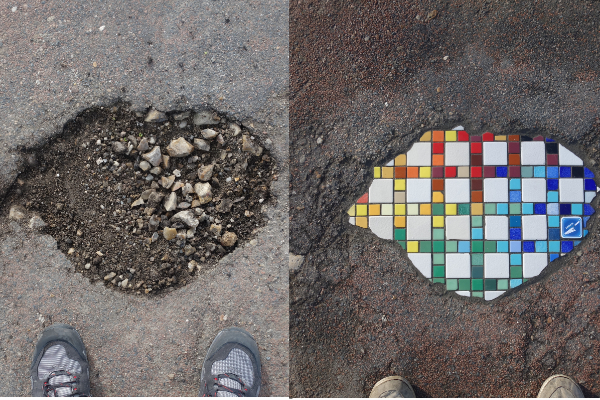
Other artists around the world have used Lego blocks on many occasions to pass a message of social awareness, or simply to entertain the imagination. Street artist Jan Vormann fills in cracks and crevices in damaged walls with Lego building blocks. He calls this ‘art meets functionality approach to repairs’ Dispatchwork. Today there is a worldwide network of people inspired by him who contribute to this creative repair approach.

Lego is usually associated with a children’s hobby kit. It is considered the epitome of an educational toy, and Lego sets have long gained a place at the top of the list of the world’s most popular toys. 

Interestingly the simple interlocking block-shaped toys that we know today as Lego bricks were the invention of a Danish master carpenter and joiner named Ole Kirk Christiansen. In 1932 when Europe was in the throes of the Great Depression, Christiansen opened a small woodworking shop in the village of Billund, with his son Godtfred who was just 12 years old, to manufacture stepladders, and ironing boards from left-over wood. They soon expanded their products to include wooden toys like simple yo-yos, trucks and ducks on wheels, made out of birch wood. In 1934 they gave their business the name Lego, a contraction of the Danish words leg godt meaning ‘play well’.

The company soon built its reputation as a high-quality toy manufacturer and business spread. The company itself grew from only six employees in 1934 to forty in 1942. The product line also expanded to include clothes hangers, a plastic ball for babies, and some wooden blocks.

It was in 1947 that the company made the move that would define its future.  Lego bought a plastic injection-moulding machine, which could mass produce plastic toys. By 1949, Lego was using this machine to produce about 200 different kinds of toys, which included a plastic fish, a plastic sailor, and small plastic bricks which had pegs on top and hollow bottoms, allowing children to lock the bricks together and create structures which simple wooden blocks could not. The ‘automatic binding bricks’ as they were called, were the predecessors of the Lego toys of today. In 1953, the automatic binding bricks were renamed Lego bricks. In 1957, the interlocking principle of Lego bricks was born. But these bricks were not too sturdy, and they did not stick firmly to each other.

In the meanwhile Lego had been working on a stud-and-tube design that facilitated the bricks to snap together firmly. They obtained a patent for this in 1958. This was the game-changer. The new system gave children the chance to build something sturdy, without it wobbling, or coming undone. Lego also made sure that new bricks were always compatible with old ones. In fact Lego has not changed the design of its bricks since 1958 when they got a patent for what is called the “universal system” so that each piece is compatible with all other pieces, regardless of the year or set it belongs to.

As the interlocking blocks grew in popularity, it was observed that children used the bricks in innumerable different ways to create more than just single structures. This led to the Lego Sets which had additional components like vehicles, street signs, bushes etc. to create streets and cities. The landmark addition of the wheel (around brick with a rubber tyre) in the 1960s brought in numerous new possibilities. With the production of 300 million tiny wheels per year, Lego out-manufactures the world’s biggest tyre manufacturers! The younger children were roped in to Lego-land with the launch of the larger Duplo bricks for pre-schoolers. 

The 1970s saw more additions to Lego sets–miniature figures (referred to as a minifig) with moveable arms and feet to populate the Lego towns; castles and knights to create a medieval world; pirates to sail on high seas, and astronauts to ride into space, and almost everywhere that a child’s imagination could take it.

The introduction of the immensely popular themes like Star Wars and Harry Potter contributed to the soaring sales, making this a multi-billion dollar industry. However it is heartening to find out that Lego has a strict policy regarding military models. They do not make products that promote or encourage violence. According to the company “Weapon-like elements in a Lego set are part of a fantasy/imaginary setting, and not a realistic daily-life scenario.”

Despite the scale and volume of production, there is no compromise on quality. The process used to mould the bricks is so accurate that only 18 out of one million bricks fails to meet quality standards. The original founder Ole Christiansen believed strongly in the values of creativity, individuality and, above all, quality. The Lego Group’s motto, “Only the best is good enough” was created in 1936, and is still used today.

Today there is a large international AFOL (Adult Fan of Lego) community. One of the challenges in the Lego world is to become a “master builder”. Coincidentally one of the most expensive Lego items is the Taj Mahal set which has over 6000 pieces to construct the Taj Mahal. Where centuries ago master craftsmen toiled with slabs of marble to create this magnificent timeless edifice, today the new master craftsmen work with plastic bricks to create its replicas.

–Mamata

Celebrating Vishwakarma, Master-Craftsman

Vishwakarma Jayanthi is marked every year on Kanya Sankaranthi, which falls this year on September 17th. As per legend, Vishwakarma was a master architect and craftsman. The son of Brahma, he is supposed to have been the engineer for the creation of the world. He is also said to have built Lanka, Hastinapur and Dwarka.

Vishwakarma plays a pivotal role in the two great epics, Mahabharat and Ramayana. In the Mahabharat, the Pandavas retained him to plan and build their new capital of Indraprastha, which evoked the wonder and envy of all the other kings. One of the triggers for the Mahabharat war however was this amazing architecture. The pools of water looked like floors, and floors looked like water-bodies. Duryodhana mistaking a pool for a floor, slipped ignominiously and fell, evoking the mirth of the onlookers. He took particular exception to Draupadi’s laughing and commenting at his plight, and this was almost the last straw contributing to the breakdown of relations between the Pandavas and the Kauravas.

Vishwakarma’s work also features as a turning point in the other epic Ramayana. He is said to have built Pushpaka Vimana the flying chariot. It was built originally for Brahma, who at some stage gifted it to Kubera, the God of Wealth. But Ravana, Kubera’s half brother, stole the flying chariot, and used it for the infamous abduction of Sita. The Vimana however was also part of happy times, ferrying Ram and Sita back to India after the victory over Ravana. Ram later returned the vehicle to Kubera.

Vishwakarma has his equivalents in Greek and Roman mythology. The god Hephaestus was blacksmith to the Gods of Olympus, and made all their weapons of the gods in Olympus. He used to be worshipped in the manufacturing and industrial centres of Greece. Vulcan was the Roman God of fire and forge as well as fire and volcanoes. He was the patron of artisans and smiths, and there were several shrines dedicated to him. Vishwakarma like his peers also designed weapons, including Krisha’s Sudharshan Chakra and Indra’s Vajra.

We in India continue to remember and commemorate Vishwakarma. Vishwakarma Jayanthi is a special day for engineers, architects, mechanics, craftsmen, welders etc., and it is marked with pujas in factories and industrial estates. The prayers are for increased mastery and success in their field, as well as for safety.

As an ancient culture, excellence in engineering and the crafts were so revered that not only was there a God for this, but his achievements were enumerated and remembered. We still remember him and worship him. But ironically, we don’t seem to value the excellence he stands for. Our towns and cities are unplanned chaos—surely not Indraprastha or Hastinpur were.

In India, barely one in five persons at the workplace is skilled. We stand at 129 out of 162 countries ranked. As someone who has been involved in skill training, I am aware of some of the challenges in this sector. Critical among these are that skills except those related to IT and computers are not aspirational. To get a young person excited about being a master-electrician, master-plumber, master-anything that needs working with hands is next to impossible. In our culture, manual skills are not valued and respected—plumbers and masons feature way down in the social hierarchy. Nor are they paid in accordance to the value they bring. And sadly, career pathways don’t lead them very far.  

Nor is the skill-training we provide of very high quality, such as will lead them to excellence in their vocations. Most skill training is outdated and out of sync with what industry needs. Our ITI and other skilling institutions are bureaucratic set-ups, far behind where they should be. The faculty has no real experience on the shop floor. Nor do most students ever go into a factory or workplace during their education.

For a country which marks Vishwakarma Jayanthi with widespread events, we don’t seem to really value skills or our skilled craftspeople. Until that changes, there does not seem much point in observing yet another day.

–Meena