Merry Christmas with Amigurumi

Tis the season of good cheer and brotherhood.

Of celebrations and togetherness.

Of Christmas trees and ornaments.

And this last is what we are talking about today.

Photocredit: amigurumi.com

The tradition of decorating trees with ornaments is thought to have originated in Germany in the 1800s.  An enterprising gentleman by the name Hans Greiner began making glass ornaments called baubles for hanging on trees. These were the first mass-produced Christmas ornaments and were a huge commercial success.  Woolworths was the first company to import these types of decorations into the United States in 1890, from where  the custom spread to other parts of the world.

Common ornaments include globe ornaments, angels, egg ornaments, figurines, snowflakes, icicles and stars. They are made from a variety of materials, including glass, plastic, porcelain, metal, wood, and expanded polystyrene

A trend that has been popular in recent years is amigurumi Xmas ornaments. If like me, you haven’t a clue what this is, amigurumi is the art of creating crocheted or knitted stuffed creatures and objects, which has its roots in Japanese culture.

While the exact origins are not clear, it is believed to have developed from multiple influences over time. Japan has a long history of hand-made dolls and toys, such as “temari” (decorative balls made from thread) and “daruma” dolls. Amigurumi probably grew from these traditions. During the Meiji period (1868-1912), European knitting and crochet techniques were introduced to Japan and became popular. Japanese crafters combined these techniques with their traditional doll-making skills to create amigurumi,which comes from the Japanese words “ami” meaning crocheted or knitted, and “nuigurumi” meaning stuffed doll.  

Amigurumi grew more popular in Japan in the post-World War II era. As the country’s economy grew stronger, it led to increased income and leisure time, and a resurgence in crafting hobbies. It was during this time amigurumi gained recognition as a distinct art form.

A major impetus to the growth of this craft was the rise of “kawaii” culture. This Japanese aesthetic emphasizes cuteness and adorableness—think Hello Kitty.  Amigurumi lends itself to the creation of cute, whimsical, and anthropomorphic designs and hence appealed to the kawaii aesthetic.

Internet and social media brought amigurumi international attention and today, amigurumi enjoys a global following including in its use as Xmas ornaments. Amigurumi angles, cherubs, stars, elves and reindeers decorate trees across the world. Many people take pride in crocheting or knitting figures either on their own or with the help of popular amigurumi kits which include patterns, instructions, wools and needles.

A popular Xmas tree ornaments also rendered in crochet, which we are not very familiar with in India, is the Christmas Pickle. This is an American tradition. A decoration in the shape of a pickle is hidden on a Christmas tree, with the finder receiving an extra gift. It is also thought that he or she will enjoy good fortune for the next year. (While for us Indians, a pickle brings thoughts of mangoes and limes, in the West, it is often a cucumber, and that is what Christmas Pickle ornaments represent).  

The origin of the Pickle ornament is not known. Americans think it came from Germany, but Germans have no clue about this tradition. But here is one story: During the American Civil War, Bavarian-born Private John C. Lower had enlisted in the Pennsylvania Infantry. He was captured in 1864 and taken to the prison camp. On Christmas Eve he begged a guard for a pickle because he was starving. The guard provided the pickle, which Lower later credited for saving his life. After returning to his family in Bavaria, he began a tradition of hiding a pickle on their Christmas tree each year.

Even if it is not true, it is surely a story that captures the Christmas spirit!

Christmas wishes, Peace and Goodwill among all!

–Meena

The Ultimate Flower-Clock

Wouldn’t it be beyond-beautiful if we had a clock which did not tell time by mundane numbers and needles, but by a particular flower blooming? Imagine if you peeped out of the window and you could look at this clock, and tell if it was 12 noon, or 1 pm or 2 pm by the flower that was blooming!

This was the kind of clock that Carl Linnaeus dreamed of.  Linnaeus’s flower clock or Horologica Floræ is a garden-plan thought up by Linnaeus that would take advantage of plants that open or close their flowers at particular times of the day, to accurately indicate the time.

As most of us would remember from school-biology, Linnaeus was the Swedish naturalist who laid down the principles for defining genera and species of organisms, and created a uniform system for naming them (the binomial nomenclature). His book, Systema Naturae (The System of Nature) consisted of only 11 pages but laid the foundations of taxonomy. It presented a hierarchical classification or taxonomy, of the three kingdoms of nature: stones, plants, and animals. Each kingdom was subdivided into classes, orders, genera, species, and varieties. All modern classification systems in biology have their roots in the Linnaean classification system which is based on similarities—for instance, Linnaeus grouped together organisms that shared obvious physical traits, such as number of legs or shape of leaves.

The Linnaean system of classification consists of a hierarchy of groupings, called taxa (singular, taxon). Taxa range from the kingdom to the species. The kingdom is the largest and most inclusive grouping. It consists of organisms that share just a few basic similarities. Examples are the plant and animal kingdoms. Then come the phylum, then the class, order, family, genus, and finally the species–the smallest and most exclusive grouping. It consists of organisms that are similar enough to produce fertile offspring together.

Linnaeus greatest contribution to science was his method of naming species. This method, called binomial nomenclature, gives each species a unique, two-word Latin name consisting of the genus name and the species name. An example is Homo sapiens, the two-word Latin name for humans, literally meaning “wise human.”

But if Linnaeus saw order in the natural world around him, he saw beauty too. In around 1748 he started thinking about the flower-clock. It builds on the fact that there are species of plants that open or close their flowers at set times of day. In his publication Philosophia Botanica, he gives 46 examples of flowering plants that are open during particular parts of the day. He brought together 43 of these under the heading Horologium Florae, or Floral Clock, arranging them in a time sequence from 3 am to 8 pm. The time at which each flower opens and closes is given in whole and half hours.

To give you a glimpse, here are a few rows from Linnaeus’ table:

Botanical nameCommon nameOpening timeClosing time
    
Tragopogon pratensisGoat’s-Beard3 a.m.
Cichorium intybus L.Chicory4–5 a.m.
Reichardia tingitana (L.) RothFalse Sow thistleby 6 a.m.10 a.m.
Taraxacum officinale WeberDandelion5 a.m.8–9 a.m.
Crepis alpina L.Hawk’s beard5 a.m.11 a.m.
Hieracium umbellatum L.Hawkweed6 a.m.5 p.m.

Though Linnaeus worked for years on this, the observations and hence selection and organization of flowers were not complete.  Linnaueus’ son Carl the Younger was given the task for completing the table so that the clock could be built. Unfortunately, Linnaeus the Younger’s floral clock was never completed, and his observations on the opening and closing of flower have not been found among his surviving papers.

Alas, no one has actually built such a clock, and it is not even clear that it is possible.  There are many practical issues to overcome. For instance, it would only function for part of the year since plants don’t flower through the year; the time shown would be indicative at best since blooming times are in a range and would vary with specifics like weather and other atmospheric conditions; many of the plants that Linnaeus observed and selected were wildflowers from Sweden and may not be found in other places, or would behave differently in other places. And then, the clock may not work at all in some seasons, if there are not enough flowers which bloom then.

Well, in this digital age, there are some ingenious people who have created an app based on the idea. They have selected 24 flowers, one for each hour that would normally flower at that time of the day or night. Floræ – Linnaeus’ flower clock app is free on appstore for Apple and iPhone.

So maybe we have make do with that, till some genious actually builds the Horologica Floræ to blow our minds!

–Meena

https://www.countrylife.co.uk/nature/curious-questions-what-is-linnaeuss-flower-clock-259032

Wikipedia

Wikimeida Commons (Picutre)

Colours of the Year

This is the time of year to look back upon the months gone by, of the highlights and the nadirs that marked the passage of time. Of the many exercises that have become a regular part of this stock-taking is the announcement of the Words of the Year by different dictionaries. Meena has just described the history, as well as the process for this selection.

There is another announcement that is perhaps not as much noticed. That is the one of the Colour of the Year. This selection is not the outcome of as long, and oftentimes, as participatory a process that the different dictionaries undertake prior to the announcement of the Word of the Year; and perhaps its history does not date as far back. The Colour of the Year is declared by the Pantone Company which is best known for its Pantone Matching System (PMS). This is a colour order system used in a variety of industries including graphic design fashion design product design and printing. Today Pantone has become the worldwide standard for selecting communicating and matching colours.

Pantone began as a commercial printing company of the Levine brothers, two advertising executives in 1950, in New Jersey. In 1956 the Levine brothers hired Lawrence Herbert who used his knowledge of chemistry to systematically order and simplify the company’s stock of pigments and production of coloured inks. By 1962, Herbert was running the ink and printing division, and was able to buy out the original owners. He renamed the company Pantone which was a combination of the words Pan (meanng All) and Tone (meaning colour).

The company’s primary products include the Pantone Guides, which consist of a large number of small (approximately 6×2 inches or 15×5 cm) cardboard or plastic sheets, printed on one side with a series of related swatches of colours in different shades and tones. Pantone colours are described by their allocated number (For example, PMS 130). The samples are bound into a deck that opens out into a fan.   

The idea behind the PMS is to allow designers to “colour match” specific colours when a design enters production stage, regardless of the equipment used to produce the colour. This system has been widely adopted by graphic designers and reproduction and printing houses. The standardization of colours is very helpful because different manufacturers in different locations can all refer to the Pantone system to make sure colours match.  

The idea of declaring a Colour of the Year was initiated by the Pantone Colour Institute in 1999 as a way to mark the entry into a new millennium, and in keeping with Pantone’s belief that colour “has always been an integral part of how a culture expresses the attitudes and emotions of the times”.

The colour selected each year was envisaged as one that captured a moment in time, tapped into collective values, and heralded the year ahead. It was also meant to reflect people’s changing attitudes and aspirations. Thus it is not randomly selected but an outcome of research that finds its way into discussions by representatives from various nation’s colour standards groups. These are at secret meetings hosted twice a year by Pantone in a European capital. The colours are chosen after two days of deliberations. With a database of thousands of colours at their fingertips, Pantone’s challenge is to narrow down a colour family and explore within it to find a hue that best expresses a widespread feeling. As the company says “We don’t simply come up with our thoughts about it; we look into our research and see what people are telling us they’re looking for.” The results of the meeting are published in Pantone View, which fashion designers, florists, and many other consumer-oriented companies purchase to help guide their designs and planning for future products.

Pantone’s Colour of the year 2024 was Peach Fuzz which was described as a light, delicate shade between pink and orange. The soft hue expresses the desire to nurture kindness, compassion, and connection. All of this helps foster a peaceful future and everlasting cosiness.

In 2024 more than ever before the world needed to be reminded of these qualities which alas were sadly lacking.

However continuing its hopeful optimism Pantone has just announced its colour for the Year 2025. It is a shade of brown that is called Mocha Mousse which, as the company reminds us, is all about thoughtful indulgence. The warm shade reflects a desire for nourishment in every facet of our lives, especially through simple pleasures like morning coffee, a chocolate treat, or taking a walk. And it’s not solely about treating ourselves but also the possibility of sharing those sweet moments with others. 

While fashion designers and architects play around with the colours of the year, for every one of us, Nature is the best reminder that every colour has its own shade and season. All we need to do is look around and marvel at its unmatchable palette.

And who better to remind us of this than the gentle author Ruskin Bond.

The Colours of Life are Everywhere

Colours are everywhere,

Bright blue the sky,

Dark green the forest,

And light the fresh grass;

Bright yellow the lights

From a train sweeping past,

The flame tree glow

At this time of year,

The mangoes burn bright

As the monsoon draws near.

A favourite colour of mine

Is the pink of the candy-floss man

As he comes down the dusty road,

Calling his wares;

And the balloon-man soon follows,

Selling his floating bright colours.

It’s early summer

And the roses blush

In the dew-drenched dawn,

And poppies sway red and white

In the invisible breeze.

Only the wind has no colour;

But if you look carefully

You will see it teasing

The colour out of the leaves.

And the rain has no colour

But it turns the bronzed grass

To emerald green,

And gives a golden sheen

To the drenched sunflower.

Look for the colours of life –

They are everywhere,

Even in your dreams.

–Mamata

Word of the Year

Come the end of the year, and we see various lists, rankings, selections ,’ Best of..’,  ‘..of the Year’, and what have you. For me, the most interesting of these is the Word of the Year, or WOTY.

Word of the Year is what is considered the most important word(s) or expression(s) in the public sphere during a specific year. It is supposed to capture the zeitgeist of the year gone by. There is no THE Word of the Year. There are several Words of the Year, assessed and declared by several bodies—dictionaries, learned societies, etc.

The tradition started in German when the first Wort des Jahres was selected in 1971. The word was aufmüpfig, meaning rebellious or insubordinate.

The first English WOTY was declared by the American Dialect Society’s in 1990, and was bushlips, meaning insincere political rhetoric (from Bush’s ‘read my lips’ comment). The American Dialect Society (ADS) is a learned society, not connected to any commercial interest, and their WOTY is picked by vote of independent linguists, though anyone can nominate a word at any time of the year. As appropirate for a seriously academic institution, ADS really gets into the issue, defining several categories apart from overall WOTY, including: Most useful/Most Likely to Succeed WOTY; Political WOTY; Digital WOTY; Informal WOTY; Acronym/Initialism of the Year; AI-related WOTY; Most Creative WOTY; and Euphemism of the Year. While all other organizations declare WOTYs at the end of the given year, ADS comes out with it’s in the beginning of the next year.

As we have seen from the newspapers, several other organizations also pick their own WOTYs, using different methodologies. Here is a look at some of the popular ones and how they are selected:

Oxford WOTY

‘The candidates for the Word of the Year are drawn from evidence gathered by our extensive language research program, including the Oxford Corpus, which gathers around 150 million words of current English from web-based publications each month. Sophisticated software allows our expert lexicographers to identify new and emerging words and examine the shifts in how more established words are being used.

Dictionary editors also flag notable words for consideration throughout the year and use other sources of data to identify contenders.

We regularly take into account the many suggestions sent to us via social media.

The final Word of the Year selection is made by the Oxford Languages team on the basis of all the information available to us.’ (https://corp.oup.com/word-of-the-year/)

Cambridge WOTY

‘The candidates for the Word of the Year are drawn from evidence gathered by our extensive language research program, including the Oxford Corpus, which gathers around 150 million words of current English from web-based publications each month. Sophisticated software allows our expert lexicographers to identify new and emerging words and examine the shifts in how more established words are being used.

Dictionary editors also flag notable words for consideration throughout the year and use other sources of data to identify contenders.

We regularly take into account the many suggestions sent to us via social media.

 The final Word of the Year selection is made by the Oxford Languages team on the basis of all the information available to us.’ (https://dictionary.cambridge.org/editorial/word-of-the-year)

Dictionary.com

‘Dictionary.com’s Word of the Year and short-listed nominees capture pivotal moments in language and culture. These words serve as a linguistic time capsule, reflecting social trends and global events that defined the year. The Word of the Year isn’t just about popular usage; it reveals the stories we tell about ourselves and how we’ve changed over the year. And for these reasons, Dictionary.com’s 2024 Word of the Year is demure.’ (https://www.dictionary.com/e/word-of-the-year)

Merriam-Webster WOTY

‘When the Word of the Year was started in 2003, Merriam-Webster determined which words would appear on the list by analyzing page hits and popular searches to its website. For example, the 2003 and 2004 lists were determined by online hits to the Merriam-Webster Online Dictionary and Online Thesaurus and to Merriam-WebsterCollegiate.com.

In 2006 and 2007, Merriam-Webster changed this practice, and the list was determined by an online poll among words that were suggested by visitors to the site. Visitors were requested to vote for one entry out of a list of twenty words and phrases. The list consisted of the words and phrases that were frequently looked up on the site and those that were submitted by many readers.

From 2008 onwards, however, user submissions have not been a deciding factor, and the list has been composed only of the words which were looked up most frequently that year. Merriam-Webster said that the reason for the change was that otherwise ordinary words were receiving so many hits that their significance could not be ignored.’ (https://www.merriam-webster.com/wordplay/word-of-the-year)

The Oxford WOTY 2024 is brain rot, which is ‘any Internet content deemed to be of low quality or value, or the supposed negative psychological and cognitive effects caused by it’.

The Cambridge WOTY for the year is manifest, meaning ‘to speak your dreams into existence. It’s also associated with the practice of visualizing goals to achieve them’.

And stop press! Merriam-Webster has just declared polarization as its WOTY. While polarization means division into two sharply contrasting group, Merriam-Webster’s editor at large clarified further that in the context of their choice. “Polarization means that we are tending toward the extremes rather than toward the center.”

If only we could ‘manifest’ ‘brain rot’ and ‘polarization’ away, wouldn’t that make for a great 2025!

–Meena

A Brush With History

A survey in America in 2003 asked people which of the following inventions would be the hardest to live without: the automobile, the personal computer, the cell phone, the microwave, and the toothbrush. The more recent inventions trailed the list; the century-old automobile came in second, and the five-century-old toothbrush came in first!

This week Meena took a walk through the history of walking sticks. Continuing a look at things that aid, and starting at the head rather than the legs, here’s looking back at the object that we start and end our day with—the toothbrush!

But cleaning teeth did not wait till the discovery of the toothbrush. From the earliest times, people used to chew on a piece of twig until it softened and became frayed. This process helped to not only reach crevices where particles hid, but also released juices in the mouth which performed the task that toothpastes do now (not to mention the regular work out for the jaws!) Twigs from aromatic shrubs or trees were also built-in mouth freshening!  Even today neem and babool twigs continue to be used by many. While one end of the twig was frayed by chewing, the other end could be niftily carved into a toothpick to pick at the more stubborn bits wedged between the teeth.  

Such tooth cleaning tools date back to 3500-3000 BC, to early Babylonians and Egyptians. Toothsticks these have been discovered as part of burial artifacts in Egyptian tombs, to enable the departed persons tooth cleaning routine even in the afterlife.

Different cultures had other cleaning techniques. Some used a rag dipped in sulfur oil or a saline solution to wipe teeth. Another practice was to just rub baking soda (sodium bicarbonate is still an ingredient in toothpastes) directly onto the teeth.

The transition from a ‘make your own bristles by chewing’ implement to the toothbrush in its early form as we know it is believed to be the invention of the Chinese in the 15th century. Using a piece of bone or bamboo, they attached, at right angles to this, stiff coarse bristles from the back of a hog’s neck, and voila! You could reach the difficult to reach crevices in the mouth, and also actually brush your teeth rather than chew with them.  

News of this nifty device reached Europe via commercial travellers during the middle ages. But it was difficult to replicate because the Siberian hog’s hair which was ideally stiff and coarse was not available; and the horsehair used as a substitute was not stiff enough.

The story goes that an Englishman named William Addis who was jailed for inciting a riot spent his time in prison experimenting with alternatives to cleaning teeth by the prevalent method of rubbing them with a rag covered in soot and salt. Addis carved a handle out of a small bone, drilled holes into it, and inserted tufts of boar bristles which were held in place by glue. He had found his replacement for the soot and rag!

After his release Addis began importing coarse boar bristles from the cold climates of Siberia and northern China. His design and the combination proved so successful that, in 1780 he founded a company called Addis to mass produce these brushes, and became a very wealthy man. The company continues to be in the brush business till today.

The expanding market gave rise to innovations in design and material. The single or double row of bristles gave way to a three-row brush with serrated bristles, and Meyer Rhein patented this design in 1844. The Chinese civil war in the latter 1800s, and later the Japanese invasion of China made it increasingly difficult to procure the boar bristles. The invention of a nylon, new synthetic material in the mid-1930s provided a timely alternative to natural bristles. This invention began a new phase in the history of the toothbrush with Dr West’s Miracle Tuft Toothbrush in 1938, the first such toothbrush with nylon bristles. And the rest, as they say is history.

While the material of the handle and the bristles continues to be plastic and nylon, today toothbrushes come in a mouth-boggling range of shapes and sizes. Handles that are straight, angled, and contoured with a variety of grips; and bristles ranging from hard to extra-soft offer something to fit every tooth. While the fundamentals of their design have not changed since the time of the Egyptians and Babylonians, today toothbrushes, like all products are marketed with labels such as ‘ergonomically designed’ to ‘dentist endorsed’.  

Even more heavily dentist-endorsed are the mouth-watering choices in toothpastes. We have come a long way from sooty rags as mouth-cleaning agents. It is believed that mouth cleaning and freshening agents were in use even before the invention of toothbrushes. Ancient Egyptians, Greeks, Romans, as well as people in China and India used a variety of ingredients to keep teeth and gums clean, as well as for whitening teeth and freshening breath. These included powdered charcoal and bark, as well as a powder of ox hooves, ashes and burnt eggshells which added abrasiveness. The Chinese added mouth-freshening components such as ginseng, herbs, mints and salt.

Before the 1850s these mouth cleaners were in powder form. Early versions of these in paste form contained soap, and in the 1850s chalk was included in the composition. During the 1850s, a new toothpaste in a jar called a Crème Dentifrice was developed; in 1873 Colgate started the mass production of toothpaste in jars. The late 1880s saw another breakthrough in toothpaste manufacturing with the invention of toothpaste tubes; making it easier to carry, and to use.  Colgate introduced its toothpaste in a tube similar to modern-day toothpaste tubes in the 1890s. Today toothpaste is always associated with the tube.

The formula of toothpaste underwent changes over time. Soap, which was initially used in toothpaste, was later replaced by other ingredients like sodium lauryl sulphate (which continues to be an ingredient in most toothpastes). This transition led to gentler toothpaste options and a wider variety of flavours.

In the second half of the twentieth century modern toothpastes were developed to help prevent or treat specific diseases and conditions such as tooth sensitivity. Fluoride toothpastes to help prevent decay were introduced in 1914. Toothpastes with very low abrasiveness were also developed, and helped prevent the problems caused by overzealous brushing. Each of these is heavily advertised and endorsed by professional ‘oral health specialists’. The new trend in toothpastes is the return to natural organic ingredients to replace the chemical components. Perhaps a return to its origins, albeit in ‘brand’-new avatars!

–Mamata

Walking Stick: Symbol of Status, Symbol of Renunciation

The walking stick may be one of the most ancient tools ever invented (or should we say ‘discovered’??!!). I can imagine my ancient-ancestress in Africa, 300,000 years ago, stopping to cut a branch and smoothen it, to help her trek and clamber over hills and rocks.

Walking sticks obviously began as mobility aids, in that they help with balance and mobility issues; reduce the risk of falling; help those recovering from injuries and those who experience pain in their hips or knees. But of course, they were also used for self-defence. Having a two-in-one is always great–my ancient grandmother would have used hers to shoo away wolves or hyenas.

What began as a very functional item would soon have become a thing of beauty and pride– my ancestress-grandmother may have spent the evenings chipping at her stick and carving wonderful designs on it.

Down the ages, these sticks became a symbol of power, authority and status. Ancient images show kings, religious leaders and authority figures holding them.

But walking sticks really came into their own in the 17th and 18th centuries, when they became an essential part of the wardrobe of fashionable men in Europe. The cult is thought to have started with Louis XIV. This royal king was conscious of his height—he was 5’4”, and so used heels (red and high). And to help him balance, he used a walking stick. Heels and walking sticks became the rage in the French court, and then spread to the rest of Europe and to England. They became prized possessions  and an oft-exchanged gift between kings and courts.

And of course, befitting the importance given to these objects, they began to be made of precious material and extravagantly decorated. The knobs or handles were carved individually, made of gold, silver, ivory, tortoise shell, or painted porcelain, and studded with precious stones or inlaid with mother of pearl. Shapes ranged from lions to dogs to rams to fantastical creatures. Louis XIV had a stick whose eagle knob was set with twenty-four diamonds!

And no one who could afford it was content to have just one.   Voltaire, the French philosopher-writer owned eighty sticks, though he considered himself a man who did not follow fashion.  Count Brühl of Dresden, owned three hundred canes to match his three hundred suits, and had a snuff-box to match each cane! Queen Victoria had a room full of canes, gifted to her from across the world, though she used only one–one of great historic value which had been presented to King Charles II. The head was made of “An idol which graced the temple of an ill-fated Indian prince… an exquisitely wrought affair in ivory… The eyes and forehead are jewelled and on the tongue is the rarest of rubies.”

But if walking sticks were a symbol of worldly power, they were also the symbol of spirituality. They were among the few possessions of monks–Hindu, Jain and Buddhist.  A staff is part of our image of Swami Vivekananda. And of course Gandhiji! It was with the help of his lathi that Gandhi strode across the country, and walked 241 miles in 24 days to protest the British monopoly on salt in India.

There is a very interesting story about Gandhiji and his lathi. In the 1920s and 30s, Ghorghat village in Bihar made and supplied lathis all across north India, and these were essentially used by the British forces on protesting unarmed Indians. When Gandhiji visited Ghorghat in 1934, the villagers wanted to gift him a lathi. He agreed but put a condition—that they would not sell them to the British anymore. It is a symbol of those times and of Gandhiji’s influence that the villagers readily agreed to give up a means of their livelihood. Gandhi accepted their gift. Ever since, the village celebrates ‘lathi mahotsav’ to commemorate the gifting of a lathi to the Mahatma.

Walking sticks started losing their image as a fashion-accessory around the middle of the last century, but great are the advancements of walking sticks as mobility aids. So now it is about function and not art!

Well, we, especially men, may have lost a fashion accessory. But with better and more functional walking sticks on the market, senior-life is surely better!

–Meena

Ruby Bridges Walk

Last week my grandnephew went on a Ruby Bridges Walk with his schoolmates in California. The seven-year old also gave a stirring little speech about why Ruby Bridges was special. This was the first time that I was hearing about Ruby Bridges and I was immediately curious to know more. As I discovered, her story is indeed inspiring.

Ruby Bridges was only six years old when she made history as the first Black child to enter an all-white school in the southern state of New Orleans in America. This was not as far back as the 19th century but as recent as 1960. America was far from being an integrated society. There was blatant racism and discrimination based on the colour of the skin, and segregation, both by law and custom was the norm. Both socially and politically, African Americans were relegated to the status of second-class citizens. Restaurants, schools, businesses and other parts of the community especially in the Southern states were segregated at that time.

In 1954, as an outcome of the Brown vs. Board of Education case, the Supreme Court ruled that separating children in public schools on the basis of race was unconstitutional. This milestone decision signalled the end of legalized racial segregation in the schools of the United States. However, the implementation of this was not as smooth; states struggled to put integration into practice.

Ruby Bridges was born on September 8, 1954, the year of this landmark ruling. Her parents were at the time working as sharecroppers in Tylertown, Mississippi. Two years later her family moved to New Orleans in Louisiana for better prospects. When Ruby started kindergarten the state still had segregated schools; the school board and the state’s lawmakers defied the court order and resisted school desegregation, until a federal court ordered Louisiana to desegregate and ruled that schools were to allow both Black and white students to attend.

The city of New Orleans responded by creating entrance exams for African American students to see whether they could compete academically. Ruby was one of the only six students (all girls) who passed the test, and was eligible to attend the so-far all-white William Franz Elementary School. Of the other five eligible children two families opted to keep their children at their old school, and three were transferred to another school. Ruby was the only one to be joining William Frantz School. Her parents needed to take a big decision, knowing that it would be difficult in many ways. Ruby’s father was hesitant to send his daughter, but her mother believed that it was important for the family to take that step — not just for Ruby herself, but for the children who would come after her. Also she was keen that Ruby should get the educational opportunities that generations of her family had been denied.

A judicial order dictated that New Orleans schools be integrated by November 14, 1960, so that would be six-year-old Ruby’s first day at school. Many years later Ruby recalled how, on that day, her mother dressed her in a new outfit and told her to behave herself, and not to be afraid. She told her that there would be a lot of people outside, but that she would accompany her to school. As it turned out, the scene was a lot different. There were crowds of people all the way to school, shouting insults and throwing things, to protest against the integration. Young Ruby innocently thought that this was not unusual, as she was familiar with the crowds and noise that marked the Mardi Gras festival in New Orleans. But this was not a festive crowd. The threat was so acute that four federal marshals had to escort Ruby and her mother to school, not just on November 14, but every day of the school year. The atmosphere in the school remained largely hostile. Angry white parents protested and some even withdrew their children from the school. Several teachers also resigned as they refused to teach Black students. For a six-year old going to a strange school accompanied by officers of the law, Ruby showed remarkable courage, marching like a little soldier.

Ruby was the only student in her class for the whole school year, she ate lunch alone and had no friends. But she never gave up attending school, and never missed a day. She was lucky to have Barbara Henry, who had recently moved from Boston, to be her teacher. She took classes as if she were talking to a whole class, and remained Ruby’s friend, support and mentor all through this year. When Ruby returned the next year for second grade, more African-American students had joined the school. Ruby was the pioneer who single-handedly paved the way for this.

The family too had to bear the consequences. Her father lost his job as a gas station attendant, and her sharecropping grandparents were turned off their land. Even the grocery store where the family shopped turned them away. But inspired by their daughter’s courage and perseverance, the family retained its dignity even in the face of such blatant discrimination.

Ruby Bridges continued to study at the William Frantz School until she graduated. She was followed by more Black children whose path was clearer and less difficult than hers had been. After graduation Ruby became a travel agent and had the opportunity to travel widely. She also raised a family of four sons. She continues to support her old school, helping with creating new programmes and championing its causes in all ways. Following severe damage in the 2005 Hurricane Katrina she got the school placed on the National Register of Historic Places, which guaranteed its restoration and preservation.

Ruby had not realized, at the age of six years that she was a path-breaker who helped break many barriers; but she grew up to be a life-long activist for racial equality. Over time she became an icon for desegregation. In 1999 she established the Ruby Bridges Foundation which stands for the “values, tolerance, respect, and appreciation of all differences”. She wrote about her early experiences in a book Through My Eyes. She was awarded the Presidential Citizens Medal in 2001. Even today, Ruby Bridges continues to strive for an end to racism.

A few years ago students in California who heard her story felt that there needed to be a way to commemorate Ruby’s pioneering efforts. They proposed this to the State legislature which decided that the state of California would mark November 14 as Ruby Bridges Walk to School Day every year. Thus this day is an annual day of dialogue where students discuss and take part in their own forms of activism to end racism and all forms of bullying. India celebrates Children’s Day on 14 November. Perhaps Ruby’s story is a reminder that many forms of discrimination and bullying affect our children even today. 20 November is also an important date as it is the date in 1959 when the UN General Assembly adopted the Declaration of the Rights of the Child. It is also the date when the UN General Assembly adopted the Convention on the Rights of the Child in 1989. A good week to remember Ruby Bridges’ assertion that “All of us are standing on someone else’s shoulders. Someone else that opened the door and paved the way. And so, we have to understand that we cannot give up the fight, whether we see the fruits of our labor or not. You have a responsibility to open the door to keep this moving forward”.

Thank you Manzil for introducing me to Ruby Bridges!

–Mamata

Of Blasted Bunions and Cussed Cuboids

I was not born with beautiful feet. And they grew to a pretty unfeminine 6.5 size. I could have still lived with that. But then in my 30s, my right foot also started blooming a bunion. For those who do not suffer with this affliction, it is a word you may not even have heard. But for those of us who suffer, it an everyday reality. When will it start aching? Has it started growing again? Will I find a decent pair of footwear which accommodates the wretched bunion? Has anyone come out with yet another horrific torture-instrument that promises to solve the problem? And does it work? These are the questions we ask ourselves each day.

What is a bunion? Hallux valgus as it is called in medical terms, is ‘a bony bump that forms on the joint at the base of the big toe. It occurs when some of the bones in the front part of the foot move out of place, causing the tip of the big toe to get pulled toward the smaller toes and forcing the joint at the base of the big toe to stick out.’

Actually, bunions are not that uncommon. Experts estimate that about a third of the population of the US is thus afflicted. And why do they happen? Well, it is not a single reason. A combination of factors —family history, abnormal bone structure, increased motion and shoe choice — can cause them. When something puts extra pressure on the big toe joint over a long period– usually years–that can push the joint out of its natural alignment and toward the other toes, leading to bunions.  Some of the causative factors are beyond our control, but some things which we can take care of include the type of shoes we wear (narrow, pointed shoes are a no-no); the way we walk (what is called foot mechanics—though not easy, it may be possible to modify our gait so it more balanced); and how long we stand (avoid standing for extended periods of time).

And in yet another blow against the female gender, women are more prone to this! 30 per cent women versus 13 per cent men report this condition. And it is ageist too—people over 40 are more prone to it.

And can bunions be treated? Well, footwear change is recommended (but where do I go, I only wear open toe flats?); bunion pads and taping (of not too much use, believe you me); orthotics–shoe inserts that support your feet (these can help); icing and physical therapy (definitely help). If the pain and swelling are intense, painkillers or steroids are prescribed (fortunately I am not there yet). Surgery is the last resort in very severe cases, but not often resorted to for various reasons.

There are also a number of ‘correctors’ available which physically separate the toes and try to change the alignment of the big toe. These look like medieval torture instruments and have been of dubious utility to me.

Well, if there is any solace to be taken from the fact that very glamorous people have bunions, we can list several such. From Oprah Winfrey and Victoria Beckham, to Kate Middleton and Meghan Markle, from Uma Thurman to Naomi Campbell, the list is pretty long. And considering that they and their feet have to be in the glare of public and media view, we can count ourselves lucky that we can be more casual about our footwear and feet.

I had reconciled myself that I would face pain from time to time, and that I would never be able to wear dainty shoes. But then along came the cuboid! What is this very geometric sounding thing? Cuboid syndrome is a condition caused by an injury to the joint and ligaments surrounding the cuboid bone. The cuboid bone is one of the seven tarsal bones in the foot. It causes pain on the lateral side of the foot — the side of the little toe. A person often feels pain around the middle of the foot, or at the base of the fourth and fifth toes. So while the bunion hurts on the inner side of my foot, the cuboid hurts on the outside of the same foot.

And not to talk of my plantar fasciitis. The plantar fascia is a band of tissue, called fascia, that connects your heel bone to the base of your toes. It supports the arch of the foot and absorbs shock when walking. Plantar fasciitis typically causes a stabbing pain in the bottom of your foot near the heel. 

So all in all, I am definitely not Happy Feet!

I wonder why shoe-makers are not taking note of this huge market. If 30 per cent of the population suffers from bunions, surely many of them are yearning for comfortable footwear which is also half way decent looking. There is a pretty big market opportunity waiting!

Incidentally, Bunion is a cartoon strip by George Martin that was syndicated in newspapers throughout Britain and abroad (Canada, Sweden, etc.) in the 1960s and 1970s. Good to know someone found ‘Bunion’ funny!

–Meena

In solidarity with all sufferers of foot-pain, especially my bunion-sister Mamata!


A Day for Donkeys: Vautha Fair

For an animal that is usually the brunt of jokes, or the joker on the animal pack, this is the one occasion when the donkey is in the limelight. The Donkey Fair revolves around donkeys, and marks an important event in the local calendar of Gujarat. Held annually at Vautha, the fair goes back hundreds of years, and even today attracts large crowds.

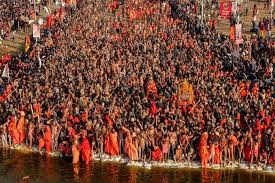
The event occurs on the full-moon night of the lunar month of Kartik (October-November), which begins after Diwali. Kartik Purnima is considered as an auspicious day and is celebrated by different communities in India in different ways. A common ritual is taking a holy bath in a river. As per Hindu mythology, it is believed that this is the day on which Hindu Gods came down to earth to take a dip in a river, and even today, those who take holy dips in rivers receive the blessings of all gods, and their sins are washed away.

One such site is at Vautha in Gujarat, located near Dholka, about 50 km from  Ahmedabad. Vautha is located at the confluence of the rivers Sabarmati and Vatrak. The confluence is also called sapta sangam, which means the meeting of seven rivers. It is at Vautha that the Vatrak river merges with the smaller rivers Meshwo, Hathmati, Shedhi, Majum and Khari with the Vautha, which in turn merges with the Sabarmati.

The history of the fair goes back almost five hundred years. There are many local legends associated with it. One legend attributes the fair’s origins to the time when the sage Vashishta is believed to have performed a yagna at the confluence of the rivers. Another one claims that Vautha is one of the sites that the Pandavas stopped by at during their exile.

Legend also has it that Kartikeya or Kartik, the son of Lord Shiva and the Goddess Parvati visited this site on this full moon night. To mark this, an annual fair dedicated to Kartikeya is held on Kartik Purnima. Thousands of pilgrims from all castes and communities and professions throng here for a holy dip, and the festive atmosphere is highlighted by a fair.

The fair is a vibrant event with numerous stalls selling local food, handicrafts, and lots of other attractive ware. It is enlivened by music and local theatre performances and folk dances. There are rides and varied exciting activities. This is a major social and cultural event that villagers from far and near look forward to all year.

What makes this fair unique is that this is the major animal trading fair in Gujarat where the main animals traded are donkeys, although there is also some trade in camels, horses and goats. It is believed that this is an auspicious time for buying and selling animals.

Farmers and traders from all over India bring donkeys to the fair. The animals are painted with coloured patterns and make for an attractive sight. However the buying and selling is serious business. Donkeys are closely examined to verify breed, build, fitness and health. Scrutiny of the teeth is an important part of the process. There is usually an auction to boost to competition and the prices which can range from 7,000 to 17,000 rupees or more.  

Several different breeds of donkeys make their way to this auction. Each has its own characteristics and uses. Halari donkeys from Saurashtra are white in colour and of docile temperament. They are used as pack animal during pastoralist migration, being able to walk 30-40 km a day; and also to pull carts. Kuchchhi donkeys from Kuchchh are grey, white, brown or black in colour. They are sturdy and can carry 80-100 kg and pull 200-300 kg on carts. They are used as pack animals during migration, and also for weed removal on farms. Sindhi donkeys from Barmer and Jaisalmer districts of Rajasthan are brown in colour can carry 1000-1500 kg and are used as pack animals to transport water, soil, earthenware, construction material, and fodder; as well as for pulling carts and for ploughing by small and marginal farmers. There are also donkeys from Marwad as well as other local breeds from other parts of India.

While thousands of donkeys continue to be brought and traded at this largest donkey fair, studies indicate that there is a steady decline in the donkey population in India. Increasing mechanization has replaced the need for donkeys for transporting material and as pack animals. This is also a factor for replacing donkeys in farm work. Traditional donkey-raising and herding families are moving to new occupations as demand for donkeys is going down, and the cost of maintaining the animals rises. There are also no specific government schemes or policies that promote the animal or its welfare. Donkeys are being abandoned when they are too old or feeble for hard labour. Even in Ladakh which has a tradition of donkey rearing, there is a decreasing role for donkeys in local occupations and uses. A donkey conservation park has been opened here in collaboration with communities where stray or abandoned donkeys are kept with dignity.   

In the meanwhile the donkeys still have their day at Vautha. And this year it falls on 15 November.

–Mamata

Grammarly yours…

A title itself which will be grist to the mill for the “Grammar police”, a term for people who feel compelled to correct other people’s grammar, often in public. Of course, I would rather be pulled up by the grammar police than the “Grammar nazi”—a term which originated in the 1990s to describe someone who is overly critical of others’ grammar, spelling, typos, and other writing or speech errors.  Grammar nazis are obsessed with formal grammar rules. 

The world of grammar is a contentious one, with some debate or the other making the headlines. The latest is Germany’s outrage about the increasing influence of English on their grammar. The kerfuffle is about what is called the ‘idiot’s apostrophe’ (a translation from the German Deppenapostroph).

What is this intriguing thing? Well it stems from a basic difference between the grammar of the two languages. Unlike English, German does not traditionally use apostrophes to indicate the genitive case or possession. So in German, the correct form for a shop named after its owner, say Kareena or Paul, is ‘Kareenas Kirana’ or ‘Pauls Dry-cleaning’. And this is how it has been for centuries.

However in English, as we know, the correct form is ‘Kareena’s Kirana’ or Paul’s Dry-cleaning’. And for the last several years, thanks to the influence of English, slowly the general usage in Germany has shifted from ‘Kareenas Kirana’ to ‘Kareena’s Kirana’. Which was OK with the general public.

But now the new edition of the Council for German Orthography’s style guide—the official set of rules for the use of grammar has endorsed this shift, saying ‘Kareena’s Kirana’ is perfectly acceptable. Which has set the pedants and scholars up in arms, as they see it as a dilution of the rules of their language due the pernicious influence of a foreign tongue. The controversy continues to rage there!

We in India are rather free in our misuse of apostrophes, though not quite in this way. What we often see is what is called the English greengrocer’s apostrophe, when an apostrophe before an ‘s’ is mistakenly used to form the plural of a noun (e.g., “a kilo of potato’s”). Look closely at emails you receive, menus, or local ads, and you will find plenty of examples.

It is not just the apostrophe which is at the root of grammar-controversies. The Oxford comma is a case in point. The last comma in a list of three or more things is called the Oxford comma (or the serial comma). For example, in She bought peanuts, soap, and candles, there is a comma between each item listed. The comma before and is the Oxford comma. Not everyone agrees on whether to use the Oxford comma. In this case, the comma can be deleted without changing the sense of the sentence. But there are cases when things may get confusing without it. For example, in the sentence I love my dogs, chikko, and cheese, the Oxford comma makes it clear that all three items are separate. This one could be confusing if the Oxford comma were left out: I love my dogs, chikko and cheese, might mean that the speaker’s dogs are named Chikko and Cheese. Which would also of course imply that the writer is not strong with capitalization! But there is a point there, and doing away completely with Oxford commas does not seem a good idea.

Some people have proposed that we should have Grammar Czars–benevolent dictators who would hand down rulings on ambiguous grammatical rules. The GC’s decisions would be final. All would abide by the GC’s decisions, upon penalty of death (or being banned from social media for periods ranging from a month to a year!).

In the meantime, let us enjoy the creativity of grammatical mistakes, mis-spellings and confusions arising from misunderstanding of words.  I love my neighbourhood ‘Karim Puncher Shop’. But surely an ad for a new housing society which I saw some years ago in Hyderabad, which proudly called for subscribers for ‘Mildew Apartments’,  takes the cake!

–Meena