Looking Out, Looking Within

We ushered out the last year with a resolve to be more giving. To give not only of our material wealth, but equally of ourselves, in whatever form and scale is best suited for each one of us. We resolved to strive towards a deeper purpose, defined by connection. As the New Year dawns, let us consider what this purpose and connection could really be. And for this let us look back at words of wisdom from the past.

Bertrand Russell reminds of our mortality but also that life is not lived by the length of years but by the depth of living.

Make your interests gradually wider and more impersonal, until bit by bit the walls of the ego recede, and your life becomes increasingly merged in the universal life. An individual human existence should be like a river — small at first, narrowly contained within its banks, and rushing passionately past rocks and over waterfalls. Gradually the river grows wider, the banks recede, the waters flow more quietly, and in the end, without any visible break, they become merged in the sea, and painlessly lose their individual being.

Today we live in an age of uncertainty on every front, and are constantly bracing for an imagined catastrophe. Two millennia before this ‘age of anxiety’, Roman Stoic philosopher Seneca counselled about ‘groundless fears’ about the future that keep us from living fully in the present.

What I advise you to do is, not to be unhappy before the crisis comes; since it may be that the dangers before which you paled as if they were threatening you, will never come upon you; they certainly have not yet come.

Accordingly, some things torment us more than they ought; some torment us before they ought; and some torment us when they ought not to torment us at all. We are in the habit of exaggerating, or imagining, or anticipating, sorrow.

And thus we wallow in our imagined sorrows, and impending gloom and doom scenarios. We become increasingly obsessive about ourselves and our interests, and our perceived threatened security. But Soren Kierkegaard, the existentialist philosopher reminded us a century and a half ago:

The unhappy person is one who has his ideal, the content of his life, the fullness of his consciousness, the essence of his being, in some manner outside of himself. The unhappy man is always absent from himself, never present to himself. But one can be absent, obviously, either in the past or in the future. This adequately circumscribes the entire territory of the unhappy consciousness. The unhappy one is absent… It is only the person who is present to himself that is happy.

So what is the formula for happiness? Something as simple as kindness, as Leo Tolstoy reminds us:

Nothing can make our life, or the lives of other people, more beautiful than perpetual kindness.

The kinder and the more thoughtful a person is, the more kindness he can find in other people.

Kindness enriches our life; with kindness mysterious things become clear, difficult things become easy, and dull things become cheerful.

You should respond with kindness toward evil done to you, and you will destroy in an evil person that pleasure which he derives from evil.

Kindness is for your soul as health is for your body: you do not notice it when you have it.

Kindness is a beautiful act of communication. Speech is another. In these times of instant, truncated communication, often expressed through insta images and emojis, are we in danger of reducing human communication to mere exchange of information? In our frenetic texting, are we forgetting that the heart and soul of a message is a relationship between the sender and the receiver? This comes alive through the power of the spoken word. 

Ursula K. Le Guin reminds us:

Speech connects us so immediately and vitally because it is a physical, bodily process, to begin with. Not a mental or spiritual one, wherever it may end… The voice creates a sphere around it, which includes all its hearers: an intimate sphere or area, limited in both space and time.

Sound is dynamic. Speech is dynamic — it is action. To act is to take power, to have power, to be powerful. Mutual communication between speakers and listeners is a powerful act. The power of each speaker is amplified, augmented, by the entrainment of the listeners. The strength of a community is amplified, augmented by its mutual entrainment in speech.

This is why utterance is magic. Words do have power. Names have power. Words are events, they do things, change things. They transform both speaker and hearer; they feed energy back and forth and amplify it. They feed understanding or emotion back and forth and amplify it.

This year, let us remind ourselves to converse with, and among each other, and not at each other.

And as we continue to seek the elusive “happiness” in the year ahead, may the wisdom of Bertrand Russell once more be our template:

Shift focus from self-absorption to cultivating interests beyond oneself; avoid excessive self-analysis; develop a healthy balance of effort and acceptance; engage in meaningful work; foster deep meaningful relationships; develop a sense of humour, and find contentment in spontaneous participation in life’s stream rather than battle the currents and eddies.  

May this year allow us all this and more, enriching our lives in more ways than one.

Happy New Year 2026!

–Mamata and Meena

A New Year, and the Quiet Power of Giving

The start of a new year is not only a fresh beginning for our personal goals, but also invites a pause to reflect on what really matters. In spite of the wars, the violence and the turmoil there are parts of the 2025 story which are happy, especially the story of how we in India give back.

The recent India Philanthropy Report 2025 — a collaborative effort between Bain & Company and Dasra — offered a thoughtful snapshot of giving across the country. It didn’t just measure how much was donated; it shed light on how giving is changing in character. According to the report, private philanthropy — gifts from individuals, families, and organizations — reached an estimated ₹1.31 lakh crore in FY 2024 and is poised to accelerate rapidly over the next several years.

The EdelGive Hurun India Philanthropy List 2025 also reminds us that India’s giving spirit is alive at the very top levels. Leading philanthropists collectively donated more than ₹10,000 crore last year, with figures rising dramatically over the past few years.

Families are reshaping India’s philanthropic landscape. Where giving might once have been an occasional gesture, it is increasingly becoming a way of life — woven into the rhythms of how families think about purpose and legacy. More than a third of philanthropic households now include intergenerational or next-gen givers whose influence is helping steer funds toward ecosystem building, climate action, and gender equity — areas that were once sidelined in favour of more traditional charitable causes.

This evolution of giving reveals something profound. That there has always been generosity is not to be debated But now generosity in India is becoming more intentional. It’s not just about supporting the familiar or the immediate. It’s about recognizing that the greatest impact often comes from building capacity — strengthening systems, forging partnerships, and investing not just in charity, but in change makers themselves.

Philanthropic journeys are no longer ad hoc, isolated one-off donations, but rather, they are long term commitments. Families — both established and newly affluent — are hiring dedicated staff to manage their giving portfolios, thinking in terms of grant-making and strategic partnerships, and using data and collaboration to guide decisions. It’s a shift from charity to investment. From transactions to transformation.

The sheer breadth of causes gaining traction — education, healthcare, climate resilience, gender equity — reflects a maturing sense of social responsibility.

But I suspect that giving in India is truly underestimated. The true pulse of generosity extends far beyond headline gifts. It lives in the young alumni who pledge to fund scholarships that unlock opportunity. It lives in the professionals who commit a portion of their income to social causes they care about. It lives in the quiet choices families make to support education of their staff, to step in during health emergencies, to support NGOs.

Not just money. I am inspired by an 80 year old who volunteers at government hospitals to help less empowered patients to navigate the system and his 75 year old wife who gives free tuitions; a post graduate student who takes government school students on nature trails over the weekends; a retired professor who motivates college students to undertake plantation drives.

Each one of us is doing it. But it does not get reflected in the statistics, because it often flows through informal channels. If we could count all this, I think the figures would skyrocket far beyond the official ones.

As we step into 2026, perhaps the most hopeful thing isn’t just that giving is growing in size. It’s that we are recognizing that giving in its many forms, isn’t just a response to crisis; it’s a part of how we build the future we want to see.

So if your New Year asks you to think about what you can do, consider what you can givee, not just in money, but in time, attention, skills and compassion. Everyone of us can make a greater difference to the possibility of a better tomorrow — for all of us.

Here’s to a year of deeper giving, rooted in purpose, and defined by connection.

–Meena & Mamata

A Christmas Post Script

Merry Christmas!

Meena wrote about the Advent Calendar that marked the daily countdown to this day. This tradition has changed over the years to reflect the age of consumerism and commercialization of all things, especially festivals. However, it is heart-warming to find out about a fairly new tradition that transforms this individual household practice into a community celebration.

Pohutukuwa New Zealand’s Xmas Tree

A small village on the Devon Cornwall border in England has started a Living Advent project. As part of this, instead of windows opening out in paper or packages, these are displays in real windows. One day at a time, in the month leading up to Christmas, a window of one house in the village lights up at 17.00 GMT, to reveal a display. The themes are varied and left up to the imagination of the house-owners of the window. The displays are made with great enthusiasm by equally varied ‘designers’,, from children, to senior citizens to professional artists. The result is a warm feeling of being part of a community effort that is enjoyed by all. The idea is catching on. Another village in Cornwall has planned that to take this beyond the window dressing to actually opening up the doors. As part of this, every day one house will open its doors to invite people to a shared meal, a concert, an exhibition, a poetry reading or carol singing, all with a Christmas theme. What a wonderful way to truly celebrate the spirit of the festive season.

That brings us to Christmas day. After the festivities of Christmas Eve, in many parts of the world, this is a day for sumptuous lunches, opening gifts and spending time with family. This is the scenario that is commonly associated with this day.

However, there are many traditions associated with this festival that make for interesting celebrations in different parts of the world. The traditions vary dramatically from place to place, shaped by landscape, history, values and climate. This is a good day to learn about some of these.

Celebrating Spiders: While stars and tinsel decorations are the most common Xmas decorations, in Ukraine it is a spiderweb! Delicate webs are crafted from paper and wire, decorated with spangles and sparkles, and wrapped around the Christmas tree. The practice is associated with a folk tale about a poor woman who had found a pine cone and planted it in the floor of her home. The tree grew well, but when Christmas came, the family could not afford Christmas ornaments. A spider decorated her Christmas tree in the night and the family woke in the morning to find it glittering with silvery webs, and from that day forward, her family was never in need again. Even today, along with the crafted webs, it is considered to be good luck to find a real spider or web on a tree, and these are not swept away during this period. And tiny spiders called pavuchkys maybe be spotted among the tree ornaments.

The Good Witch: If spider webs are reminiscent of Halloween there is a tradition in Italy which is equally so. Christmastime is witching season in Italy. A good witch called Le Befana flies on her broomstick to visit households on 5 January, and stuffs children’s stockings with small goodies to mark the end of the festive season. Why so late? The legend is that Le Befana was housekeeper to the three Magi. So devoted was she to her work that she did not accompany them to the manger, but chased after them later with gifts for baby Jesus. She continues to chase, after Christmas, with her belated gifts!

The Krampus: If Le Befana is a not a wicked witch, the Krampus certainly is a towering hairy monster. A mythic Alpine creature, half goat, half human with goat horns and long tongue, Krampus is the alter ego of St Nicholas who rewards good children with goodies. Krampus is said to visit children on 5 December and punish naughty children with birch rods, or presents of  lumps of coal. Even today the Krampus is a popular part of Christmas celebrations in many Alpine countries including Germany, Austria and Bavaria, when men dressed as Krampus race through the streets.

The Gifting Goat: In Sweden it is Gavle Goat that is the giver of presents. Legend has it that the Norse God Thor’s chariot was driven by two goats, leading to the association of goats with a bountiful harvest. These were later associated with the elves who rode with Santa to deliver presents. Now cities in Sweden erect a tall goat structure made of wood or straw on the first day of advent to signify the spirit of Christmas, and small straw goats are given as gifts.  

Rotten Potatoes: In Iceland it is not goats but the 13 Yule lads that visit homes on 13 nights leading to Christmas. Children place their shoes by the window each night, and receive gifts depending on how they have behaved round the year. Good behaviour is rewarded with sweets, while the less angelic ones find rotten potatoes in their shoes!

While most Christmas traditions are associated with cold snowy climes, we often forget that for half the world, Christmas is a summer celebration! And celebrations are appropriately sunny and outdoorsy.

In South Africa it’s time to picnic in the balmy sunshine with barbeques on braais (charcoal grills).  

In Australia it’s time for the tradition of a family Christmas cricket match. Everyone, old and young plays, and participates, with lots of food, and loads of fun.

In Venezuela people roll up to attend the Christmas mass. Yes literally, following the tradition to arrive at Church on roller skates. Children sleep early so as to get up before dawn, and adults often skate through the night to reach for the early morning Mass. It is a beautiful tradition that signifies not just the destination and the ritual, but also the sense of traveling together and arriving at a common meeting place.

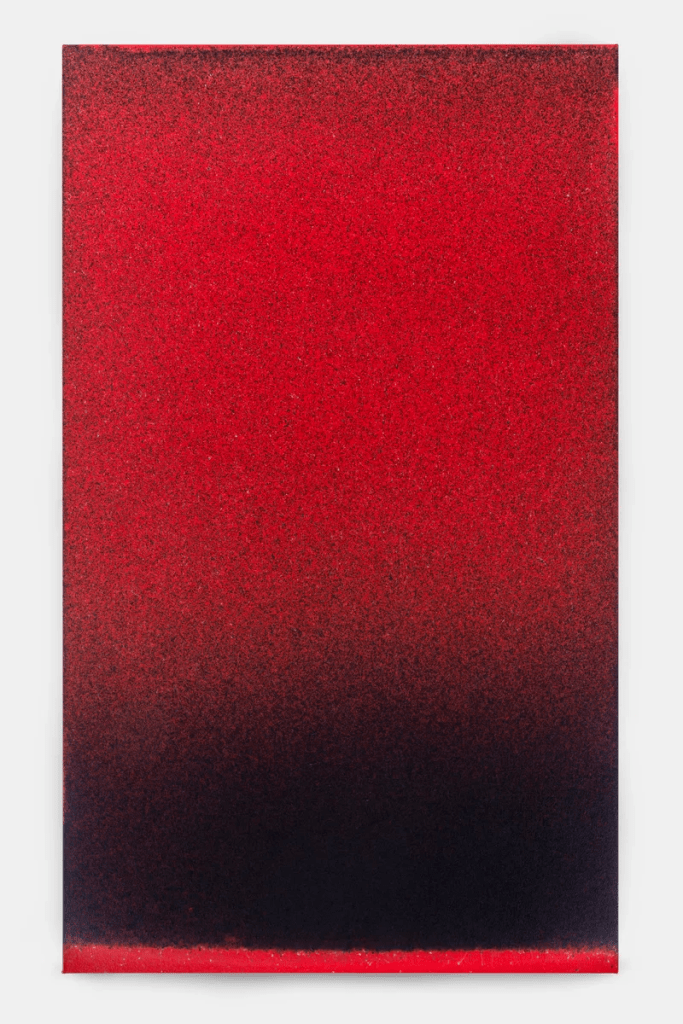
In New Zealand, it is not the temperate fir tree that symbolizes the spirit of Christmas but a native tree that flowers with fiery red tufts in December. This is the Pohutukawa tree. It has been associated with Christmas in New Zealand since at least 150 years, when a Maori leader Eruera Patuone included it in his table decorations for a Christmas feast. The tradition continues and it this tree that evokes the Christmas spirit for New Zealanders.

Today as the world celebrates Christmas in so many different ways, these traditions remind us that the very spirit of Christmas lies in the shared joy of celebrating love, hope, compassion, and peace for all humankind.

–Mamata

Trending for Christmas: Advent Calendars, Elves on Shelves

Time was when December was a time of plum cakes, rose cookies, carols, visiting malls decked up for the festivals, meeting and greeting friends. But of the last few years,  two unlikely stars dominate the Christmas season: the Advent calendar and the Elf on the Shelf. One ancient, one very new—both now deeply embedded in how we count down to Christmas.

A brief history of Advent calendars

The idea of Advent itself is old—older than Christmas trees. Advent, from the Latin adventus meaning “coming,” marks the four weeks leading up to Christmas in the Christian calendar, a time traditionally associated with reflection, anticipation, and restraint.

In 19th-century Germany, families found little ways to help children visualise this waiting period. Chalk marks appeared on doors. Some households lit one candle a day; others hung up devotional images. By the early 1900s, the first printed Advent calendars were produced—simple paper sheets with numbered windows, behind which lay Bible verses or illustrations.

From chocolate to collectibles

Somewhere in the late ‘40s, after the Second World War, when food shortages eased and printing techniques improved, Advent calendars with edible treats became widespread.Behind each window of the Advent calendar waited a tasty treat—a chocolate, a sugar plum, a sweet treat. What began as a teaching aid slowly transformed into something sweeter, more enticing, and with a marketing twist par excellence.

Today’s Advent calendars have undergone a full-blown glow-up. No longer confined to children—or to chocolate—they now house everything from artisanal teas and scented candles to skincare serums, craft beers, cheeses, socks, and even whiskies and dog treats. Luxury brands release limited-edition calendars months in advance, triggering waiting lists and re-sale markets.

This boom is no accident. The modern Advent calendar aligns perfectly with contemporary consumer psychology: daily rewards, unboxing pleasure, scarcity, and the gentle justification of indulgence because it’s the festive season. The whole month of December becomes a ritualised month of consumption—measured, paced, and delightfully guilt-free. And of course, culminating in the frenzy of consumerism, eating and drinking on Christmas day.

Ironically, this commercialisation has expanded the calendar’s appeal. Many adults who do not observe Advent religiously still cherish the countdown. Waiting, once an exercise in patience, is now sweetened—literally and figuratively.

Enter the Elf: Mischief, manufactured

If Advent calendars evolved slowly over centuries, the Elf on the Shelf arrived fully formed—and at speed. Introduced in 2005, The Elf on the Shelf: A Christmas Tradition was a book created by Carol V. Aebersold and her daughter Chanda Bell.

Neither Aebersold nor Bell were established writers at the time. It was a self-published book which went on to become a tradition–giving hope to all us children’s writers who wait in vain to hear from our publishers!. The book-and-doll set was released through their own company and initially sold through small gift shops and boutiques. Crucially, it was conceived not just as a story, but as a complete ritual-in-a-box: a narrative, a character, a rulebook, and a physical object, all bundled together. Only after it caught on—fuelled by word of mouth and parental enthusiasm—did it enter big-box retail and global markets. The story existed to support the ritual, and the ritual supported the product. Marketing genius!

Performance Pressure

The elf’s premise is simple. A magical scout elf arrives in early December, observes children’s behaviour, reports back to Santa, and relocates every night within the house—often leaving behind evidence of mild mischief. Children wake to surprise; parents stay up late staging scenes.The elf reflects a broader shift in how we experience Christmas: from shared tradition to curated spectacle, from inherited ritual to designed experience.

Unlike Advent calendars, which invite quiet participation, the elf demands performance. Parents become set designers, prank engineers, and continuity managers. Social media has amplified this, turning domestic whimsy into a seasonal arms race of elaborate elf escapades.

For some families, this is joyful creativity. For others, it’s exhausting.

And while children adore it, for many households, the elf reverses the equation, becoming less a surveillance tool and more a test for parents– putting pressure on the parents for performance, rather than on the children for good behaviour!

Why these traditions endure—side by side

At first glance, Advent calendars and elves on shelves seem worlds apart. One is rooted in centuries-old religious practice; the other is barely two decades old and unapologetically commercial. Yet they serve the same essential function: they make waiting visible.

Commercialisation is undeniable, but it isn’t the whole story. Families adapt these trends, soften their edges. Some replace chocolate with notes of kindness. Others ditch the elf’s moral policing and keep only the silliness.

Christmas Cheer

Tradition, after all, has always been fluid. So let us welcome all manifestations, old and new. But not forget the spirit of the season: JOY AND GOODWILL TO ALL!

Merry Christmas!

-Meena

Toy Story

Meena’s piece on ‘stupid’ toys resonated deeply as I was recently observing my young grandchild ‘play’ with endless possibilities offered by a discarded cardboard carton and corrugated packing material. From basement parking, a hideaway for stashing precious knicks and knacks, to becoming a bumpy road in a ‘rough road-smooth road’ scenario, the original contents of the package became irrelevant in the light of the child’s imagination, in which a host of exciting make-believe objects took on mind-boggling avatars.

Toys that adults may decry as “stupid” afford hours of enjoyment to a child. A toy is described as an object for play, especially for children, or a miniature replica of something real. Toys could be broadly classified on the basis of the material used, like wooden toys, clay toys, cloth toys etc., or the kind of play that they are used in like pulling toys, rattles, dolls and mechanical toys.

The fascination for such objects is as old as humankind is. The earliest toys were made from materials found in nature such as stones, sticks and clay. Anthropologists have found evidence of such toys dating as far back as there is a record of human life. Such toys have been unearthed at the sites of most of the ancient civilizations.  

India has a long and rich tradition of such toys. The origins can be traced back to the Indus Valley Civilization. A wide range of toys have been discovered during archaeological excavations at different sites in Mohenjo daro and Harappa. These include clay figurines, dolls, carts and wheeled animals, as well as whistles shaped like birds, and toy monkeys which could slide down a string. These were made from locally available material, and many of these have lived on through the centuries, with some changes but retaining their essence. Today these are described as indigenous or ‘folk toys’.

India still has a living culture of indigenous toys. Traditionally these were linked with fairs (melas) and festivals where the artisans would themselves sell their own products.  These toys usually fall in two broad categories—static toys and dynamic toys.

Static toys are those that are basically representational like dolls, figures of animals and birds, and models representing themes of everyday life. Many static toys often become decorative items, while others take on ritualistic associations. These include dolls and figurines of gods and goddesses, people, animals, birds and themes related to our day-to-day environment. They are in a variety of materials, clay, wood, metal, leaves, bamboo, or paper, often using established craft techniques.

Some of these figurines are a key element of the Dussera display in homes in the Southern states during Sankranthi or Navratri. Known as Golu (Kannada), Bommala Koluvu (Telugu) or Bommai Kolu (Tamil) these elaborate displays include a great variety of such dolls collected over generations.

The tradition of making these dolls continues in several parts of India. Colourful Channapatna wooden toys are made by a few families in Channaptna town close to Bangalore and Mysore, who continue a generations old tradition, where the designs and techniques are passed on by word of mouth from parents to children.

Kondapalli toys, lightwood toys painted in vibrant colours are made by artisans in Kondapalli close to Vijaywada in Andhra Pradesh, depicting rural life, mythology, and daily life scenes.

Thanjavur toys from Tamil Nadu are roly-poly bobble headed toys made from papier mache or terracotta.

Asharikandi putola are traditional terracotta figurines of deities, animals and everyday objects, handcrafted by craftsman in a village in Assam called Asharikandi.

Almost every state in India has similar traditions and craftspeople who make such toys, but these are being eclipsed by the surge in mass produced toys, usually made of cheap plastic and often using harmful synthetic colours.

As distinct from Static toys, Dynamic folk toys create movement, change form, and make sounds. Such sensory stimuli are direct and clearly understood—which is the object of the toy. They illustrate simple themes derived from our physical environment. These toys provide simple entertainment and amusement for young children. They are simple in construction, but the design of these toys is based on the application of one or more basic principles of physics—the laws of mass and gravity, centrifugal force, simple mechanics, sound and magnetism. These toys are low cost, made of simple, everyday used materials like paper, cardboard, bits and pieces of wood, bamboo, metal sheets, wire, etc. Most of these are ephemeral in nature, lasting a few hours or days. Their themes are often humorous: a wrestler boxing, two men fighting, a joker dancing, an acrobat somersaulting, a sparrow chirruping and flying, a frog croaking, a bee humming, a horse galloping. All these themes fascinate young children.

Traditionally, such toys were associated with fairs and festivals where one could find vendors selling flutes and whistles, spinning paper wind-wheels, moving puppets, chirruping birds in motion, striking bamboo snakes, crawling paper snakes, rattles and drums, optical illusion toys, and more.

It is visiting such local melas that sparked in Sudarshan Khanna the curiosity to understand more about these objects that were simply considered as “child’s play”. Sudarshan Khanna embarked on a lifelong engagement with folk toys to become a pioneer in toy research and design. Among one of the first batches to graduate from the National Institute of Design in Ahmedabad, and later as faculty there Sudarshan Khanna attended mela after mela, collecting, researching and documenting indigenous toys. He was fascinated that the makers of these toys were not formally trained engineers nor designers but they understood the mechanisms and design processes perfectly. Their products were usually eco-friendly, and always child friendly! These observations led him to encourage his ‘official’ design students to also work on toys as products, while he headed the Toy Innovation Centre at NID, one of the very few centres that offered formal programmes in toy making and design. Sudarshan Khanna’s documented work and his workshops and talks have contributed significantly to the revival in interest and conservation of folk toys.

Also a reminder that toys do not necessarily need to be ‘state-of-the art’ products, ordered online, and delivered packed in endless layers. Merry Christmas!

–Mamata

Stupid Toy Day? Makes No Sense!

Every year on December 16, the internet celebrates something most households have tripped over, stepped on in the dark, or quietly wished would disappear: the “stupid toy.” Officially, it’s called Stupid Toy Day—a day devoted to toys that serve no obvious purpose, promise no educational outcomes, and stubbornly resist all attempts at being “enriching.” They do not teach coding. They do not build emotional intelligence. They simply… exist.

A “stupid” toy, as the internet defines it, is not broken or unsafe. It’s just inexplicable. It does one odd thing. It refuses to justify itself. It looks faintly ridiculous. Pet Rocks. Rubber chickens. Slime. Talking dolls that say things no one programmed on purpose. Lights that flash for no reason at all.

And honestly? That’s exactly why I think there is no such thing as a stupid toy. Because anything that gives joy to a child and it wants to spend time playing with, is a good toy! Whether store-bought, found at home or contrived from the most mundane things, whatever floats a child’s boat, is a toy. Entire generations have grown up playing with objects that contributed nothing measurable—and yet somehow contributed enormously to childhood.

The thing about calling a toy stupid is that the word never really belongs to the object. It belongs to the adult standing next to it and judging it.

When parents complain about “stupid toys,” they rarely mean toys that fail the child. They mean toys that fail them. Too loud. Too sticky. Too impossible to clean. Too bright. Too many pieces. Too much glitter. Too much slime. Too much mess. Too much noise. Too much… joy, possibly, expressed in a form that requires major clean-ups. Seems to me, most “stupid” toys are simply inconvenient toys. Toys which seem pointless to an adult.

AN ARVIND GUPTA TOY

But to my mind, there is one category of toys that are stupid. A toy becomes exponentially more “stupid” the minute it costs a small fortune. A plush animal that costs as much as a phone. A doll with a wardrobe bigger than yours. A remote-controlled something that breaks in three days. High price and low value—what could be stupider?

Brian Sutton-Smith’s work on toys and play is powerful. In Toys as Culture, he argues that toys don’t live in one neat category like “fun” or “education.” They exist in overlapping worlds—family, technology, education, and marketplace. Toys can be consolation, security and companionship. They can be tools, machines, friends, achievements. They are not just objects; they are emotional support.

A glitter jar might look like a mess waiting to happen.
To a child, it might be the universe in a bottle.

A noisy toy might feel like an assault on adult nerves.
To a child, it might be power.

A useless toy might be, in truth, a deeply useful one—the kind that absorbs loneliness, invents stories, and makes space for imagination.

We forget that children do not play with toys to improve themselves. They play to live inside themselves.

And children by themselves never measure toys by price or return on investment. But sadly, there is no refuting that peer pressure and media pressure have enormous influence on a child perceiving a toy as highly desirable. And that is a worry.

Stupid Toy Day, at its best, quietly reminds us that joy doesn’t require justification. It doesn’t need a developmental framework or a learning outcome chart. Play is not a performance. It is a state of being.

Basically, Stupid Toy Day is STUPID!

Honour the toy that made no sense but means everything. And remember: not everything precious needs to be practical. And in this holiday season, as we go about buying things left and right, remember, a child will be as happy playing with the cardboard carton as the toy which was packed in it. Remember Calvin, Hobbes and their time machine? And Arvind Gupta’s Toys from Trash? Money does NOT equal toy-joy.

–Meena

The Call of the Mountains: Nan Shepherd

December 11 is marked as the International Mountain Day. Mountains have always fascinated human beings not only for their sheer scale and majesty, but also as a natural element that offers a challenge, as well as a test of physical and mental strength, and the thrill of scaling the peaks. There are numerous narratives of expeditions that describe these challenges and achievements, most of these by, and about men.

The Cairngorms

A different perspective, and approach towards mountains reminds us that there is more to mountains than the thrill of conquest.

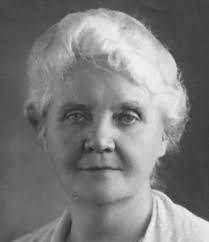
This was lyrically described by Anna (who called herself Nan) Shepherd, a Scottish poet, writer and explorer of mountains. Nan was born in February 1893, close to Aberdeen on the North East coast of Scotland. When she was one month old, her family moved to nearby Cults and lived in a house with a garden overlooking the hills. Nan continued to live in the same house almost till the end of her life. As a young girl Nan was encouraged by her father, a keen hill walker, to explore the nearby hills, and this planted in her a lifelong love for nature and the mountains. Nan was an equally avid reader, and from her early teens she would fill notebooks with passages that inspired her from the wide spectrum of her reading. After completing her schooling in 1912, Nan joined the University of Aberdeen in the first decades after women were allowed to do so. She was an outstanding student, and graduated in 1915 with an MA in literature. Following this she taught English literature at Aberdeen Training Centre for Teachers, and continued to give enthralling lectures until she was well into her eighties. She was not only an inspiring teacher but also a role model for her students, as an early feminist. She wryly described her role as “the heaven-appointed task of trying to prevent a few of the students who pass through our Institution from conforming altogether to the approved pattern.”

Although she had always enjoyed walking in the hills, Nan Shepherd became deeply engaged with climbing in the period between the two World Wars. She was thirty years old when she began her explorations in the Cairngorms in 1928. This experience was the start of a passion that came to define both her life and her writing. From then on, she sought to escape into the Cairngorms whenever her job would allow. Often she would walk alone, camping out, and wading into hidden lochs. Occasionally she was accompanied by friends and fellow walkers from the local Deeside Field Club, or by students from the university.

By the 1940s Nan had scaled some of the highest peaks in the Cairngorms, among the wildest landscapes in the British Isles. However Nan’s expeditions were not about ‘reaching the top’ but rather a spiritual journey to ‘understand herself and the world’. She became fascinated by what happened to mind and matter on this journey up and down the mountain slopes.

These experiences were reflected in her literary work. The harsh landscape, as well as the people and places she knew well, provided the background to her first three books, published while she was teaching. These novels focussed on the harsh landscape which made for a harsh way of life, and within these, complexities of women struggling with maintaining traditional roles in a dawning age which was opening up new opportunities

But Nan Shepherd never wrote for recognition. She wrote only when she felt she had something worth saying. “I don’t like writing, really. In fact, I very rarely write. No. I never do short stories and articles. I only write when I feel that there’s something that simply must be written.”

For her teaching was as, if not more, important than her writing. However she continued to document her explorations of the Cairngorms, which came together around the end of the Second World War, under the title The Living Mountain. She combined her knowledge of the mountains, her observations of their rugged beauty, and her literary skills to muse on the philosophical and spiritual offerings from mountains. She wrote of the Cairngorms as “friends” that she “visits”, and with whom her imagination is fired as if “touched by another mind.”

 Nan Shepherd completed her book in the summer of 1945, and sent her manuscript to a novelist friend. He cautioned that it may be hard to find a publisher of a book of this nature. Nan put the manuscript away in a drawer where it remained for 30 years. Towards the end of her life, Nan retrieved the manuscript from her drawer and felt that it still resonated in many ways. Given her long association with Aberdeen University, she submitted it to Aberdeen University Press. The Living Mountain was finally published in 1977.

The Living Mountain threaded together, beautifully geography, geology, history and philosophy, along with everything that she herself had experienced in the mountains that she had fallen deeply in love with. For Shepherd, the mountains were living beings, and her book describes how she nurtured her relationship with them by walking. She wholeheartedly believed that only through walking and experiencing could insight be gained. “The more one learns of this intricate interplay of soil, altitude, weather, and the living tissues of plant and insect … the more the mystery deepens.”

The Living Mountain, continues to be timeless, since its publication 30 years after Nan Shephard wrote it. It provides a rare lens into a world that has been viewed mainly through the eyes of male climbers, who focus on the challenges, and the conquests. Nan Shepherd’s lens is that of a naturalist and poet, one of contemplation, reverence, and an exploration of the profound. The book suggests that the summit should not be the organizing principle of a mountain; it urges the practice of not walking “up” a mountain, but rather “into” them, so as to explore not just the physical forms but also ourselves, peering into the nooks and crannies.

Today, mountains across the world are facing their own challenges. Climate change is melting glaciers and distorting landscapes; the surge of climbers are leaving behind manmade mountains of garbage that threaten to bury the real mountains. This is a good time to remember The Living Mountain, and a mountain lover who looked beyond the ascents to the journeys within.

–Mamata Pandya

The Joy of the Bouncy Bite

Did you know that Q is a word? No, not QUEUE, but just plain Q. It is the Taiwanese name for a range of textures best translated, imperfectly, as “bouncy.” It is the degree of chewiness of a given food and how it feels against the teeth and tongue.

If you’ve ever bitten into something that resisted you just a little—neither soft nor hard, but springy, elastic, and alive—you’ve probably encountered Q without knowing its name. Think sabudana, tapioca pearls in bubble tea, or handmade noodles that snap faintly between your teeth. That sensation—the cheerful recoil, the gentle resistance—is Q.

What makes Q fascinating is that it describes not one texture, but a spectrum. There is nen-Q, soft and tender; cui-Q, crispy-bouncy; tan-Q, chewy-springy. Noodles are Q: resilient but not rubbery, lively but not tough. (In the case of pastas, I suppose ‘al dente’ is the equivalent,) Even sweets and desserts aspire to it—marshmallows, herbal jellies or sweet potato balls.

In Taiwanese food culture, to say something is Q is high praise. Q is considered one of the keys to good food in Taiwan, on par with taste, color, and consistency. It’s not about indulgence alone; it’s about skill. Achieving Q often requires precise technique: the right ratio of starch to water, the correct kneading time, the ideal temperature.

What’s intriguing is how Q resists quick translation. “Chewy” is too blunt. “Springy” is closer, but incomplete. “Bouncy” catches the spirit but misses the nuance. Q is pleasant resistance, playful elasticity, a sassy texture. It invites you back for another bite. It’s the opposite of mushy or limp.

Q became a recognised food term in Taiwan in the late 20th century — roughly the 1980s to early 1990s,when it moved from slang into mainstream food language. Interestingly, the letter Q itself is not traditional Chinese. It entered Taiwanese usage as a borrowed symbol from English, chosen because:

  • the sound (“kyu”) suggested elasticity
  • the shape felt visually “springy”
  • and there was no single Chinese word that captured the idea precisely

At first, it was slang but now it’s formal enough to appear in Taiwanese dictionaries, culinary writing, product labels and restaurant menus

In Taiwan, the term has gone beyond the kitchen and found its way into everyday speech, where it can describe hair, skin, or even the bounce in someone’s step.

In a world increasingly obsessed with flavour profiles—smoky, umami, citrusy—we sometimes forget texture altogether. Yet Q reminds us that eating is as much about feel as it is about taste.

Q—Taiwan’s playful word for “bouncy”—captures that perfect bite: springy, chewy, lively, and irresistible. From bubble-tea pearls to handmade noodles, Q celebrates food that pushes back just enough. It’s a texture so prized in Taiwan that it’s become part of the language itself, standing alongside taste and aroma. Every culture has its version of Q—al dente pasta, mochi-mochi rice cakes—and we in India find it in sabudana, fresh idlis, rasgulla, modak and more. Q is not just what you chew, but what you feel: a small, elastic joy.

Maybe every culture has its own version of Q, a word for the textures it prizes most. Italians chase al dente, the Japanese revere mochi-mochi and kori-kori. But Taiwan’s Q feels particularly evocative—a single letter carrying a thousand sensations.

So the next time you sip a bubble tea and play absently with the pearls at the bottom, or tear into a dumpling that seems to smile back at your teeth, remember this small, clever word. Q is not just what you’re chewing. It’s what you’re feeling—a quiet, elastic joy.

And here is a tour of Indian Q foods that I can think of: sabudana, fresh idli, rasgulla, modak, noodles, dhokla,  sevai, and appam.

Any others?

–Meena

Sandow in our Lives

The end of the year is a time of going back in time and re-living memories.

And one of the enduring memories for those of us who grew up in the  1950s, 60s and 70s, is the word Sandow. It was a part of everyday lives—an integral part of the pencil box, a dirty grey rubber that erased pencil marks.

For us in India, “rubber” was the term for eraser, a usage inherited from British English and reinforced through colonial schooling. A child did not “borrow an eraser”; they asked for a rubber. And the most trusted rubber of all in our times was the Sandow.

These erasers were made of natural vulcanised rubber, not vinyl or plastic as most modern erasers are. They were firmer, slightly gritty, and erased by abrasion — scraping graphite off paper rather than gently lifting it. They left dark crumbs behind and wore down slowly. A new Sandow rubber meant clean pages. A worn one told the story of errors made and lessons learnt.

Where did Sandow rubbers come from?

The earliest Sandow erasers were almost certainly manufactured in Britain and exported to India during the late nineteenth and early twentieth centuries through British stationery suppliers. During the colonial period, Indian schools depended heavily on imported notebooks, inks, slates and erasers.

Stupid Toy Day (December 16) is a celebration of the wonderfully useless things from childhood—rubber chickens, yo-yos, slinkies, and strange plastic objects that made no sense but brought endless joy. From ridiculous toys to unsettling antique dolls that now star in creepy museum contests, this post reflects on how toys—whether silly or sinister—stay with us long after childhood ends. A nostalgic look at why useless never really meant unimportant.

After Independence, Indian factories began manufacturing erasers using similar formulations and — crucially — the same name. By the 1950s, most Sandow erasers sold in India were produced locally. However, the word “Sandow” was never firmly trademarked in India, allowing multiple manufacturers to use it freely. Over time, it became not a brand but a category. “Sandow rubber” simply meant “the regular school rubber.”

Sandows were not the only erasers available. There were white, scented rubbers, with a gel-like coloured top. But alas, most of us never possessed one, given they were about four or five times more expensive!

And a Strongman called Sandow

Another Sandow (though of older vintage) was part of our childhoods too. He lived on barbershop calendars and tattered posters: a muscular European strongman frozen in permanent flex.

Eugen Sandow (1867–1925) was a Prussian-born showman, athlete and entrepreneur who became the world’s first international bodybuilding celebrity. He toured Europe, Britain and America performing feats of strength before royal families and packed audiences.

Sandow was much ahead of his time, and would have done great in the current days, surely becoming a hero of Insta reels, posing as he did to deliberately display his muscularity. He was also a businessman. He published training manuals, endorsed health products, sold exercise equipment, and promoted physical culture as moral discipline. King George V even appointed him “Professor of Scientific and Physical Culture” in Britain — a title that further elevated his image as a respectable authority on fitness.

In India, encounters were through his images — black-and-white posters, calendar art, tins, and labels that travelled through imperial trade routes. But nevertheless, his name was well known, whether with urban kids or rural youth.

Were the rubber and the strongman officially connected?

There is no evidence that Sandow ever licensed his name to an eraser manufacturer. No contract, no advertisement, no endorsement exists in any reliable archive.

However, the naming may have had a connection. The two existed at around the same time, and the name ‘Sandow’ symbolised durability, strength and European modernity. Calling an eraser “Sandow” suggested that it would last, work hard and not fail easily. In an era with loose branding laws, borrowing famous names for product credibility was common.

Today…

Now, erasers come in neon colours and cartoon shapes. Eugen Sandow is remembered only by historians and fitness professionals. But for those who grew up in that older India, the word still carries a double image: fingers dusted with graphite, and a chest forever flexed on fading paper.

Sandow was never just an eraser.
And Sandow was never only a man.

Both were a part of our simple, innocent youth!

–Meena

Photocredit: Wikipedia for Mr. Sandow

ebay for the Vintage Tin advertising the eraser

Of Tongues: Tied and Twisted

Many of us have student-day memories of freezing up in the middle of an elocution competition, or as adults, not being able to converse comfortably when in a large group of people. We were told that had become “tongue-tied”. The dictionary defines this state as being ‘too shy or embarrassed to speak’.

More recently I was introduced to another, more literal, form of tongue tie. This is a medical condition where a tight band of tissue connects the underside of the tongue to the floor of the mouth, keeping it from moving freely. Nowadays, paediatricians usually check for this in new born babies, and a minor surgical procedure can cut the tight tissue to allow for a free movement of the tongue. While this is not a mandatory nor critical issue, sometimes this restrictive movement of the tongue could hamper the baby from proper breast feeding, and could (though not definitely) be an impediment to speech as the child begins to speak.

This was not a condition that I was familiar with, and I suspect that many adults have grown up unaware about this. At best, these were labelled as people with speech impediments, and either lived with it through their life, or were sent to speech therapists. Perhaps one of the exercises that they were prescribed, was to recite aloud some phrases that had alliteration, rhymes, and repetition. Speech therapists believe that such exercises help to strengthen the muscles that are used when we speak. The muscles of the mouth need to move in certain positions to create individual sounds. Tongue twisters help practice and strengthen these positions and muscles in order to perfect these sounds. 

Even without being guided by a therapist, many of us have childhood memories of getting our tongues in a twist with these lines:

She sells seas shells on the seashore

The shells she sells are seashells, I’m sure

So if she sells seashells on the seashore

Then I’m sure she sells seashore shells.

No wonder such lines were described as ‘’tongue twisters”. Such phrases have been part of the oral tradition in all cultures since early times. In ancient Russia travelling performers called skomorokhi would amuse crowds by reciting fast tricky lines and challenging the audience to repeat these. Most people couldn’t and their fumbling attempts raised a laugh from the others. Folklore in all languages has examples of such nonsense rhymes that need an acrobatic tongue to master.

In fact even today, performers use tongue twisters to loosen up before they are scheduled to go on stage. These help them warm up and get their mouth and tongues ready to perform in front of an audience. Tongue twisters are also used by voice actors before they are recorded.

The term tongue twister is believed to have appeared in print in the late 19th century to describe phrases that are difficult to articulate due to their use of similar but distinct sounds. In the English language these gained attention with the publication of a book called Peter Piper’s Practical Principles of Plain and Perfect Pronunciation, which included a tongue twister for every letter of the alphabet. The book was meant to help children learn the fundamentals of speech mechanics, but it attracted a lot of attention. The title itself garnered curiosity. The author of the book was John Harris, who then was the Peter Piper? The mystery was heightened with the inclusion of the rhyme:

Peter Piper picked a peck of pickled peppers.

A peck of pickled peppers Peter Piper picked.

If Peter Piper picked a peck of pickled peppers,

Where’s the peck of pickled peppers Peter Piper picked?

It turns out that this one was based on a French horticulturist Pierre Poivre. Pierrre is the French version of Peter, and Poivre is the French word for pepper. Pierre, it is believed, was exploring the viability of growing spices in the Seychelles. Thus the peppers, and the peck which was an old measure of weight.

Tenuous connections, at best, but they do add some spice to the story!

While tongue twisters are accepted as a part of speech therapy, people enjoy these just for the fun of fumbling and stumbling over words in absurd sentences. So much so that there is even a day designated as the International Tongue Twister Day celebrated on the second Sunday in November every year. And there is an International Tongue Twister Contest held at the Logic Puzzle Museum in Burlington, Wisconsin in the USA. First held in 2008, the contest has become an annual tradition. This invites everyone between the ages of ‘6 and 106 years of age’ to test their verbal dexterity. A joyful celebration of the playful side of language!

At the same time there is also serious research being carried out on this subject. A team of researchers from the Massachusetts Institute of Technology (MIT) have deemed that the most difficult tongue twister in the world is this one:

“Pad kid poured curd pulled cod”.

If one is not quite up to the challenge of cracking this one, here are some others to twist our tongues around:

“The sixth sick sheik’s sixth sheep’s sick.”

“Imagine an imaginary menagerie manager managing an imaginary menagerie.”

“A tutor who tooted the flute tried to teach two young tooters to toot. Said the two to the tutor, ‘Is it harder to toot, or to tutor two tooters to toot?’”

Don’t let these leave you tongue-tied!

–Mamata