Reflecting on the Five Laws of Stupidity and praying Ma Saraswaty sheds the light of wisdom!

Have you ever shaken your head at someone’s actions and muttered, “How could they be so stupid?” Economist Carlo M. Cipolla, a professor at UC Berkeley, took that exasperation and turned it into a razor-sharp essay in 1976, later published as The Basic Laws of Human Stupidity. What began as tongue-in-cheek satire has, over the years, gained the weight of wisdom. His framework is quoted in boardrooms, military strategy papers, and even risk-management seminars. It is, at once, funny and sobering.

So, what are these Five Laws?

  1. InevitabilityAlways and inevitably everyone underestimates the number of stupid individuals in circulation.
    No matter how cynical you think you are, Cipolla assures us the world contains more stupidity than you can fathom. It’s a reminder not to be caught off guard when irrationality rears its head.
  2. UbiquityThe probability that a certain person is stupid is independent of any other characteristic of that person.
    Education, wealth, power or even high degree of capability in one dimension offer no immunity. History is replete with examples of brilliant scientists, decorated generals, and wealthy tycoons making catastrophic blunders. Stupidity is democratic—it spares no class or group.
  3. Damage PrincipleA stupid person is a person who causes losses to another person or to a group of persons while himself deriving no gain and even possibly incurring losses.
    This is Cipolla’s key insight: stupidity is not mere ignorance, it is destructive irrationality. Unlike the clever or the criminal, who may at least benefit themselves, the stupid spread harm without return.
  4. The Underestimation TrapNon-stupid people always underestimate the damaging power of stupid individuals.
    We often brush off foolishness as harmless. But Cipolla insists it is a potent force that can derail institutions, movements, or nations. Underestimating stupidity is, itself, stupid.
  5. The Supreme LawA stupid person is the most dangerous type of person.
    Why? Because unlike the bandit (who robs you but at least gains something), the stupid person leaves everyone worse off, including themselves. They are unpredictable, immune to logic, and capable of pulling entire systems into collapse.

From Satire to Serious Lens
Cipolla originally wrote the essay as a whimsical interlude in his career as an economic historian. Yet, his classification gained traction because it resonated with lived experience. Management theorists mapped his “laws” onto organizational behavior. Military strategists saw in it an explanation for the chaos of battle. Behavioral economists quietly nodded, recognizing parallels with cognitive biases and irrational decision-making.

Interestingly, Cipolla illustrated his framework with a simple 2×2 graph, plotting human behavior along axes of personal benefit and social impact. The quadrants neatly categorized people as helpless (hurt themselves but help others), bandits (help themselves, hurt others), intelligent (help both), and stupid (hurt both). That little diagram has since found its way into PowerPoint slides across the world.

Echoes Through History
History, as Cipolla loved to remind, is propelled not only by heroes and villains but also by the stubborn weight of stupidity. The fall of empires, disastrous wars, or economic collapses often show a pattern: decisions made against all logic, driven by pride, short-sightedness, or blind conviction. From letting in the Trojan Horse to the Maginot Line, human folly has had a starring role.

Practical Uses Today
At first glance, Cipolla’s laws feel like cocktail-party philosophy. But they’ve been pressed into real-world use:

  • Risk Management: Financial firms use “Cipolla’s Matrix” to flag policies or behaviors that could destroy value for no clear reason.
  • Leadership Training: By distinguishing between stupidity and malice, leaders are taught to manage teams with sharper judgment.
  • Public Policy: Some commentators even apply the laws when analyzing bureaucratic inertia, or social media misinformation.

A Mirror, Not a Weapon
It’s tempting to wield Cipolla’s laws as a judgmental hammer—branding others as “stupid.” But the real power of his essay lies in self-reflection. How often have we acted against our own interest, or underestimated the ripple effects of our actions? If stupidity is so pervasive, perhaps humility is the antidote.

Another thinker came out with the The Bonhoeffer Law of Stupidity describes stupidity not as a lack of intelligence but as a moral failing where individuals surrender their inner independence to power structures, groupthink, and simplistic slogans, becoming “mindless tools” incapable of critical thinking or moral judgment. It is a sociological problem, amplified by rising political power and fostering conditions where people become susceptible to propaganda and blind obedience. Bonhoeffer argued that stupidity is more dangerous than malice because it is immune to reason and force, making it a more insidious threat, especially within groups. which describes stupidity not as lack of intelligences, but as a moral failing where individuals surrender their inner independence to power structures, groupthink and simplistic slogans, becoming incapable of critical thinking or moral judgement.  It is a sociological problem, amplified by rising political power and fostering conditions where people become susceptible to propaganda and blind obedience. Bonhoeffer argued that stupidity is more dangerous than malice because it is immune to reason and force, making it a more insidious threat, especially within groups. 

On the occasion of Dusshera, let us pray to Goddess Saraswathi for to rid the world of stupidity!

–Meena

Happy Dusshera!

Image: artandhome.net/quotes-about-stupidity/

Pencil in the Dates: Stationary Fairs around the World

Two weeks ago, we dipped our toes into the pastel-hued wonderland of Japanese stationery. This week, starting from Japan, we do a world-trip of Stationery Expos.

Japan: Two Shows, Two Personalities

Japan doesn’t just have one stationery expo—it has two, each with its own character.

The Japan Stationery Show, held every November in Tokyo, is the country’s premier industry fair. Here, manufacturers reveal their latest innovations: notebooks that open perfectly flat, mechanical pencils that never break lead, and pens that glide like a brush. It is also home to the coveted Stationery of the Year awards, which often set the trends for the year ahead. Though businesslike in its purpose, the show is open to consumers too, making it a buzzing space where industry professionals and stationery fans meet.

The Stationery Girls Expo (Bungu Joshi Haku), by contrast, is pure celebration. Launched in 2017, it caters to bungujoshi—literally “stationery girls,” a term now used for anyone who adores stationery as a lifestyle. Here, washi tapes in hundreds of designs, pastel highlighters, limited-edition pens, and playful planners dominate the stalls. The mood is festival-like—queues of eager shoppers, arms full of bags, and excited chatter about the season’s “must-have” notebook. If the Japan Stationery Show sets the industry agenda, the Stationery Girls Expo captures the culture of stationery—personal, expressive, and joyful.

With the cheerful tagline “the most enjoyable event for stationery lovers,” this expo is playful, creative, and community-driven. Its name might suggest it’s just for girls, but the event welcomes anyone with a soft spot attractive staionary. Spread across several days in Tokyo and Osaka, it has grown into Japan’s largest stationery festival, drawing nearly half a million visitors cumulatively.

The expo is also known for its Bungu Joshi Awards, where visitors vote for their favorite products—categories range from Tokimeki Design (heart-fluttering design) to Heart-throbbing Convenience (products that spark delight through functionality). The audience becomes part of the show, giving the event a democratic, festival-like atmosphere.

What’s especially interesting is the shopping system. Each visitor is given a transparent bag at entry. As they wander through stalls, they pick up treasures and drop them into their bag, paying for everything at a central cashier. It’s a clever system that avoids long queues at individual stalls and keeps visitors free to browse. The expo also offers exclusive merchandise only available on-site—tiny rewards for the true devotees.

Germany and USA

Germany’s Paperworld (now merged with Ambiente), has for decades set the global benchmark. Here the focus is on sustainability, efficiency, and innovation. Think paper made from stone, packaging that biodegrades in weeks, and pens that feel like sleek machines. It is vast, professional, and very B2B—corporate buyers and distributors scanning stalls with intent.

Then there’s the US National Stationery Show (NSS) in New York. This one feels closer to Japan in spirit—independent designers, hand-illustrated journals, greeting cards that are art in themselves. The joy of paper and pen as a form of self-expression is what binds the NSS community.

India: Now taking Mainstage

And, did you know, India has its own Expos too—two of them!

A Stationery Fair has long been part of the well-known Delhi Book Fair. Last month saw not only the 28th Delhi Book Fair, but also the 24th Stationery Fair at Bharat Mandapam. “Besides promoting books of all genres, the aim is to focus on providing students with educational books and stationery,” says Hema Maity, general manager, India Trade Promotion Organisation (ITPO).

The newer entrant is the Stationery & Write Show which debuted in 2019 in Mumbai, co-located with gifting and lifestyle fairs. That first edition saw 272 exhibitors and over 12,000 visitors—a remarkable start for a new platform. By 2022, the event had grown into a three-in-one showcase—Paperworld India + Corporate Gifts Show + Interior Lifestyle India—drawing nearly 15,000 trade visitors and 215 exhibitors. Fast forward to 2025, and the growth is striking: 18,000+ visitors from 285 Indian cities and 49 countries, with 340+ exhibitors. The annual fair, usually held in late January at the Bombay Exhibition Centre, now rivals international events in scale. It has a Delhi edition too.

And the highlights? Eco-friendly stationery made from recycled paper, cork accessories, even moss-covered desk décor. Alongside these, educational toys, quirky notebooks, and premium pens jostle for attention.

What makes India’s fairs unique is the mood—serious business buyers walk the aisles, but so do college and school students and stationery lovers. It is equal parts trade fair and festival.

The Magic That Endures

Whether in Tokyo, Frankfurt, New York, or Mumbai, expos remind us that stationery is not just about function. It is about beauty, culture, even memory. And perhaps that is why, year after year, these fairs continue to draw thousands: they affirm that ink on paper still carries magic in a screen-dominated world.

–Meena

The Game of Life: Monopoly

This year is supposed to mark 90 years of one of the world’s most popular board games—Monopoly. It is estimated that the game, translated into 47 languages, has been played by one billion people worldwide. Hasbro, the company that produces the game is marking the milestone with events and publicity that retells the story of the invention of the game, and its subsequent success that made history.

According to this version, the game was originally created in 1935 by Parker Brothers. As the story goes, in 1932, a Philadelphia businessman named Charles Todd and his wife, Olive, introduced their friends Charles and Esther Darrow to a real-estate board game they had recently learned. The board game involved rolling dice to move tokens across the board while buying up properties listed on the board. The game did not have a name, and was not marketed but passed from friend to friend who all enjoyed playing it. Charles Darrow, who was at the time unemployed and in need of money, saw a potential opportunity, and asked his friend Todd for the written rules. There were none, friends made up rules as they played. It was informally known as the ‘monopoly game’.

Darrow however put together these ‘rules’ and hired an artist to design a board, and tokens and began to hand produce sets which he sold to a local department store with the name Monopoly. The game was a hit. Darrow sold this version to the toy manufacturer Parker Brothers in 1935, claiming that it was entirely his invention. He was granted a patent for this in 1935. And thus the official time line for the origin of game was pegged by Parker Brothers at 1935, and Monopoly was marketed with the story of how a struggling salesman created the game in his basement to support his family during the Great Depression.  

However, the real origin of the game goes back much further, to the beginning of the century, and its creator was a woman who was a pioneer in more fields than one. Born in Illinois in1866 to Scottish immigrant parents Elizabeth Magie moved to Washington DC in her early 20s. Lizzie, as she was known to her friends, lived as a single woman supporting herself, working as a stenographer and typist, both unusual for a woman in those times. Not only did she live on her own, she saved up and bought her own home, and went on purchase some acres of property. She also wrote poetry and short stories, and did comedic routines onstage. Lizzie had strong and radical political views. This was a time of mighty monopolies which led to huge income disparities. Lizzie became interested in the anti-monopolist policies of Henry George a politician and economist who propagated the concept of a single “land value tax”. The general idea that instead of taxing income or other sources, the government should only tax land, based on the usefulness, size, and location of the land, thus shifting the tax burden to wealthy landlords. The government should use the money from the collected taxes for its essential functions and distribute the rest to people in the lower socio-economic segment. His message resonated with many Americans in the late 1800s, when poverty and squalor were widespread in the cities.

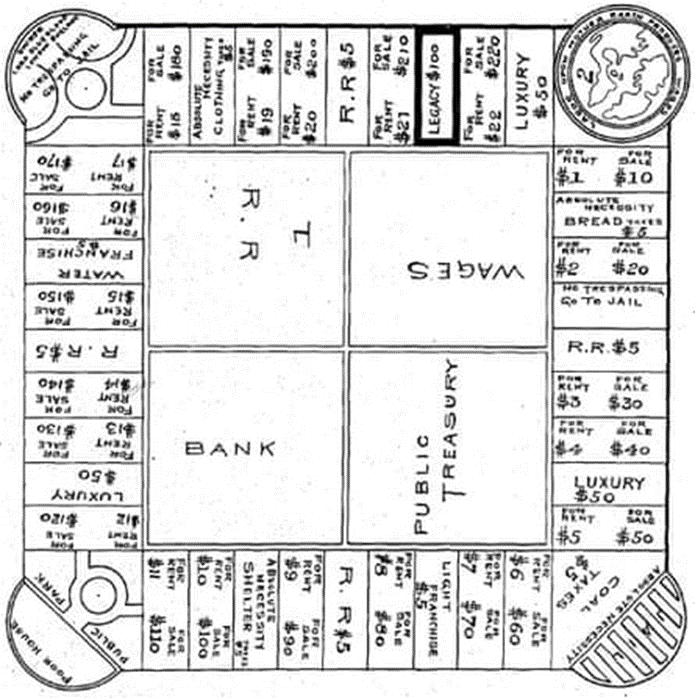
Magie’s original board design for the Landlord’s Game, which she patented in 1903. https://www.theguardian.com/lifeandstyle/2015/apr/11/secret-history-monopoly-capitalist-game-leftwing-origins

Lizzie was looking for an interactive and creative way to teach Henry George’s economic theories to friends and colleagues. The twentieth century had just dawned, and board games were becoming popular in middle-class homes. Many inventors realized their potential not just as a form of recreation, but as a means of communication. Elizabeth Magie felt that a board game could do what she visualized. After her office hours, Lizzie sat at home night after night thinking and drawing, rethinking and redrawing the grid and messages that would communicate these radical concepts.

Most of the board games at that time had a linear path design. Lizzie’s game had a grid that went round the board. The game featured play money and deeds and properties that could be bought and sold. Players borrowed money, either from the bank or from each other, and they had to pay taxes. In one corner were the Poor House and the Public Park, and across the board was the Jail. Also included on the board were three words scrawled across: GO TO JAIL.

Lizzie Magie created two sets of rules for her game: an anti-monopolist set in which all were rewarded when wealth was created, and a monopolist set in which the goal was to create monopolies and crush opponents. Her dualistic approach was a teaching tool meant to demonstrate that the first set of rules was morally superior. Ironically it was the monopolistic version of the game that caught on.

Lizzie called this game the Landlord’s Game. She described the new concept thus: “It is a practical demonstration of the present system of land-grabbing with all its usual outcomes and consequences,” she wrote in a political magazine.

She was in her thirties when she applied for a patent for her game in 1903. At that time she represented the less than 1 percent of all patent applicants who were women. And this was three decades before Parker Brothers started manufacturing Monopoly for which Darrow claimed credit as inventor, and Darrow’s story of a fluke invention by an unemployed man grew into the legend of Monopoly (and earned him millions). 

While some people noted the similarity between Monopoly and the Elizabeth Magie’s Landlord’s Game, the Darrow legend continued. A newspaper story in 1936 aroused interest when it reported on the similarity, and also that in 1935 (when Monopoly got its patent) Lizzie had sold her board game patent rights to Parker Brothers for only $500 and no royalties. Elizabeth Magie never got due credit for her invention, and she died in relative obscurity in 1948.

With its iconic design elements, the paper money, the property names, the tokens and the rush of ‘buying and selling’, ‘making deals’ and ‘undisguised competition’ Monopoly’s popularity continues even a century later. Its origins which were based in the critique of landlords have been obscured as the game has come to represent the blatant pursuit and accumulation of wealth. The words of the mother of its invention Elizabeth Magie still resonate: “It might well have been called the ‘Game of Life’, as it contains all the elements of success and failure in the real world, and the object is the same as the human race in general seem[s] to have, i.e., the accumulation of wealth.”

–Mamata

Civil-Society Seshan: A Tribute to Jagdeep Chhokar

Mr. TN Seshan’s tenure as Election Commissioner (12 December 1990 to 11 December 1996) changed how we Indians viewed elections—he made free and fair polls a public expectation rather than an exception. The revolution he brought about was to enforce the Rules, provisions and systems that already existed, but no EC before him had acted sufficiently on. The Model Code of Conduct for instance, which political parties routinely flouted, with EC looking in the other direction. He cancelled or postponed elections where the MCC was blatantly violated. He took action to drastically reduce booth capturing, and clean up electoral rolls and reduce bogus voting. He made candidates and parties accountable for their campaign spending and took strong action against black money in elections. He strengthened monitoring of polling stations, and deployed paramilitary forces in sensitive areas. He laid the ground for Voter ID cards. He increased transparency by publishing election schedules and guidelines well in advance.

The man who ‘ate politicians for breakfast’ helped strengthen and deepen Indian democracy.

If Mr. Seshan brought about all these changes through rigorously using his given power as a bureaucrat, Jagdeep Chhokar, did it purely from the outside. He co-founded the Association for Democratic Reforms (ADR) in 1999 along with his colleague Prof Trilochan Sastry and others as an NGO.

ADR’s primary mission is to improve governance and strengthen democracy by bringing transparency and accountability into India’s political and electoral processes. Over the past two decades, it has become one of the most credible civil society voices on issues of electoral reforms, political funding, and the integrity of candidates and parties.

One can see echoes of Mr. Seshan’s work–one of ADR’s most significant contributions has been its role in disclosure of criminal, financial, and educational background of candidates contesting elections. Following a landmark Public Interest Litigation (PIL) filed by ADR, the Supreme Court of India in 2002 mandated that all candidates must file self-sworn affidavits disclosing their criminal records, assets, liabilities, and educational qualifications. This judgment fundamentally changed the way Indian voters access information about their representatives. Since then, ADR, through its platform MyNeta.info, has been collecting, analyzing, and disseminating this information for every state and national election, enabling citizens to make more informed choices.

ADR has also been active in examining political party funding and expenditure, a highly opaque area of Indian democracy. By studying income tax returns and donation reports of political parties, it has consistently highlighted the growing role of unaccounted money in politics. ADR’s reports show that a large proportion of party funding comes from unknown sources, often via electoral bonds or cash donations, which raises concerns about transparency. These findings have been widely cited in media, parliamentary debates, and reform discussions.

Beyond data disclosure, ADR has worked to strengthen electoral reforms in collaboration with the Election Commission of India (ECI), civil society organizations, and policy experts. Its advocacy has covered areas such as decriminalization of politics, regulation of inner-party democracy, curbing misuse of money and muscle power, and improving voter awareness.

Another major initiative is citizen empowerment through voter education. ADR conducts voter awareness campaigns, disseminates easy-to-understand report cards on candidates, and organizes debates and dialogues to promote ethical voting. It also collaborates with other organizations on programs like the National Election Watch (NEW), a network that monitors elections and promotes democratic accountability.

ADR has been central in challenging the electoral bond scheme in courts. In February 2024, the Supreme Court of India struck down the electoral bond scheme as unconstitutional, ordering disclosure of donor identities, amounts, etc.

In essence, ADR’s work has created a data-driven framework for citizen engagement, holding both candidates and political parties accountable. While challenges remain in implementing deeper reforms, ADR has significantly advanced transparency in Indian democracy and continues to push for systemic change.

Recent Initiatives of ADR

  • ADR has published updated data (as of July 2025) on how parties redeemed electoral bonds from 2018-24, including comparison with State Bank of India RTI responses. Their analyses show that in FY 2022-23, 82.42% of the income from “unknown sources” declared by national political parties came from electoral bonds.
  1. The report also examines the financial disclosures of Registered Unrecognised Political Parties (those registered with the Election Commission but not recognised as state or national parties).  There was a 223% rise in declared income during FY 2022-23 among these parties.
  2. ADR and its network National Election Watch (NEW) analysed the affidavits of 8,337 out of 8,360 candidates in the 2024 Lok Sabha elections
  3. Among findings:
    • Around 20% of all candidates had declared criminal cases; for state party candidates it was ~47%.
    • 46% of the winning MPs declared criminal cases, up from 43% in 2019.

A Friend

For Mamata and me however, he was Jagdeep, husband of colleague and dear friend Kiran. For me, he was also the colleague of my husband, and neighbour for decades.

What I recall very fondly is how caring of older people Jagdeep and Kiran were. Often when my parents were visiting and they knew I was travelling, they would ensure to drop in and chat, and solve any little problem they might have. The affection was mutual. He was a particular favourite of my mother’s who would rush to make rasam if she heard he had a cold.

Jagdeep did his Law when he was teaching at IIM. And he never did well in exams at all, because he did not follow the quarter-baked kunjis from which examiners expected students to mug and regurgitate answers. He would regale us with the regressive and misinterpreted answers that featured in crib-books, and while we laughed, we also worried about what lawyers were learning.

All of us who knew Jagdeep personally will of course miss you. But the whole country will miss you. Thank you for everything you have done for India’s democracy. We know it was your consuming passion and commitment for the last 25 years. And we also know it took an immense amount of courage.

Thank you Jagdeep. RIP.

Wish you all strength, Kiran.

–Meena and Mamata

Also see: Close encouters with Al-Seshan at https://millennialmatriarch464992105.wordpress.com/wp-admin/post.php?post=1106&action=edit

Beauty in Imperfection: Kintsugi

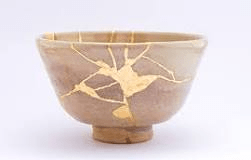
This week Meena wrote about the Japanese reverence for precision and perfection with reference to sationery. Many aspects of Japanese life, as well as products, display the concept of kirei that refers to ‘clean’, ‘beautiful’ or ‘elegant’. While the Japanese revere perfection, they equally celebrate imperfection. Nothing personifies this better than the concept of kintsugi. This word combining the Japanese words for ‘gold’ and ‘joinery’ translates roughly to mean ‘joining with gold’ and refers to a 500 year-old art in which broken pottery is repaired with a seam of lacquer and precious metal. The repair is done not with the aim of disguising the crack, but rather highlighting it to create a piece of art.  The joining is involves fine craftsmanship.

Traditionally, kintsugi is entirely based on the use of urushi lacquer. Urushi refers to the tree sap of the lacquer tree, a type of tree that can be found in Japan, China and also on the Korean peninsula. It is widely used for various crafts in Eastern Asia, such as Japanese lacquerware. Urushi is a natural material that has outstanding protective and adhesive properties. Urushi lacquer is used at all stages of the joining process from sticking the pieces together to the gold finish. While urushi lacquer has been used for thousands of years as an adhesive to create or repair objects, the use of gold and lacquer for restoration is believed to have evolved later, dating back to the Muromachi period (1336 AD to 1573 AD).Historically it is craftmen specializing in lacquerware who also did kintsugi. This was their side activity during the winter when the lacquerware business was usually slow.

There are several stories associated with how this began. In one version a Japanese shogun sent his cherished tea bowl to China for repairs after it had been broken. It was returned stapled together with metal which was the common technique then. Disappointed at the clumsy outcome, he asked Japanese artisans to restore the bowl in a way that honoured the craftsmanship of the object. The craftsmen put together the pieces by repairing the cracks with lacquer mixed with powdered gold. The effect was beautiful, restoring the aesthetics as well as functionality of the bowl.  And so, the story goes, kintsugi came to be–the technique that highlights flaws rather than disguising them, creating a new piece of art that retains the functionality of the object. As a craft and an art form, kintsugi challenges conventional expectations. This is because the technique goes further than repairing an object but actually transforms and intentionally changes its appearance.

Kintsugi is more than an art and craft form. It is inextricably linked with the Japanese philosophy of wabi-sabi. This comprises two core concepts – wabi and sabi. Though related, each has its own distinct meaning in the Japanese language. Wabi represents a rustic, understated form of elegance that avoids extravagance and embraces the authentic, the modest and humble, and avoids anything ostentatious or overdesigned. Sabi refers to reverence of the naturally aged and organically withered objects which have acquired a special character over the passage of time.

Put together the concept of wabi-sabi centres on the philosophy that nothing stays the same forever, and the acceptance of transience, imperfection, and beauty in simplicity. It urges us to celebrate the changes over the passage of time. This is a uniquely Japanese sense of imperfect, impermanent beauty in contrast to the values of perfection and permanence.

The kintsugi technique is an extension of the philosophy of wabi-sabi. The restoration of the broken pieces is a slow and painstaking process, carried out with love and respect. It is literally a labour of love, love for the fragile beauty and age of something that deserves due care and reverence. While the word refers to this specific process it is a reflection of the philosophy of a culture that values the old and imperfect, (including a population which has the highest number of centenarians!).

In an age of mass production, conformity, and “use and throw” we are quick to reject anything that does not fit the mould, and even quicker to throw away something which has outgrown its use, is even slightly chipped or dented, and perhaps not ‘in fashion’ any longer (including putting our elders in the care of others).

Going back to where I started, as an avid collector of stationery all my life, I have wonderful memories of going to a shop called Chimanlals and selecting a variety of writing paper and envelopes, and the joy of writing on these with a carefully-filled fountain pen, sealing it in an envelope, and going to the post office to attach stamps and posting the missives. The period of anticipation of the letter reaching its addressee, and the sweet impatience of awaiting the response was a treasured part of a life that moved at a slower pace. I feel sad for a generation that will not know these simple pleasures. In the ‘virtual’ exchange of communication at the speed of sound, we have lost the mindfulness and ritual that is a part of the zen of stationery. It is heartening that Japan still has a Stationery Expo. I would so love to be there!

–Mamata

The Irresistible World of Japanese Stationery

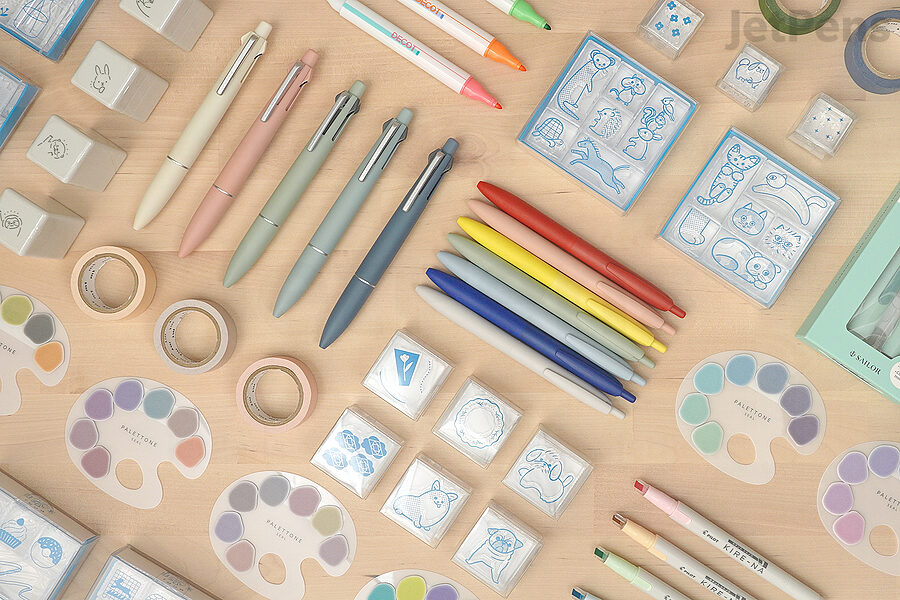
Japanese stationery–it’s not just about paper and pens. It’s an entire universe of meticulously designed (and over-engineered, some people say)products that blend functionality with a sense of artistry. From perfectly engineered mechanical pencils to pastel-hued notebooks that feel like an experience rather than just stationery, Japan’s stationery game is on another level.

Japan’s obsession with stationery is more than just a passing trend or quirky fascination. There’s a deep cultural history and a respect for craftsmanship that informs the country’s relationship with its stationery products. It’s not about pens, paper, or notebooks—it’s about reverence for beauty, functionality, and attention to detail.

At the core of this lies the cultural reverence for precision and perfection. The concept of kirei—a Japanese word that means “clean,” “beautiful,” or “elegant”—is key to understanding the stationery obsession. In everyday life, the Japanese strive for beauty and simplicity, and this aesthetic extends deeply into the design of their stationery. Minimalism is at the heart of many stationery designs: neutral colors, sleek lines, and a focus on function over excess.When it comes to everyday tools like stationery, the emphasis is on creating items that are not only practical but also exquisitely refined.

There’s a conscious focus on making something beautiful out of the mundane or utilitarian, a concept that transcends into stationery. Pens aren’t just about writing—they’re carefully crafted to deliver the perfect writing experience. Paper isn’t just a surface for notes; it’s a tactile experience that enhances the act of writing itself. Craftsmanship plays an enormous role. Many high-end stationery items, like Uni-ball pens or Midori notebooks, are created by artisans who bring decades of expertise to their craft. Stationery is an extension of this artistry.

The Zen of Stationery: Mindfulness and Ritual

Japanese students are encouraged to use their stationery in an almost sacred way. Their school notebooks are often neatly organized with an emphasis on clean, legible handwriting. Calligraphy—known as shodo—is still a highly respected art form in Japan, and the skills learned in this practice often extend into daily life.

The slow, deliberate process of choosing a pen, selecting the right paper, and finding the perfect notebook to match your mood is an act of mindfulness. It’s about being present in the moment and honouring the process of creation.

The Japanese Stationery Expo and Awards: A Celebration of Craftsmanship and Innovation

This devotion to elevating the everyday reaches its peak each year at two marquee events which take place in June every year in Tokyo: the Japan Stationery Expo and the Japanese Stationery Store Awards. Together, they showcase the best of design, functionality, and sheer creativity.

The Japan Stationery Expo is where stationery enthusiasts, designers, and brands converge to showcase the best of what the industry has to offer. (More on this expo and another interesting one next week).

If the Japan Stationery Expo is where products are showcased, the Stationery Awards are where the best of the best are recognized. They honour the incredible craftsmanship and innovation in Japanese stationery, celebrating both traditional designs and newer, boundary-pushing concepts. It’s the Oscars of the stationery world, but without the drama and red-carpet couture. Products are judged based on various criteria, including design, function, innovation, and overall quality, with awards in several categories, from Best Stationery Product to Best New Brand, and even a category for environmental sustainability.

The 2025 Awards went to:

  • Grand Prize: Pilot Kirei-na Highlighter — engineered with a guiding plate that keeps lines neat and smudge-free.
  • Design Award: Luddite THE POST Sustainable Leather Bendy Pen Case — chic, durable, and eco-friendly,
  • Functionality Award: Uni Jetstream Single Ballpoint Pen (Lite Touch Ink) — celebrated for its smooth flow and comfort, turning everyday scribbles into a silky experience.
  • Idea Award: King Jim Hitotoki Kori Jirushi Ice Stamp — a playful yet practical reinvention of a classic tool.

35 other winners were recognized, from elegant fountain pens to ingenious pen cases, and even a “tea-time notebook”.

Some of the Most Innovative Award Winners in Recent Years

1. Pilot FriXion (2006) – Erasable Ink Pen: This was one of the first pens to use thermosensitive ink, which could be erased with friction.

2. Midori MD Paper (2011) – Premium Paper Notebooks : Known for its exceptionally smooth texture, these revolutionized notebook writing with its soft, cream-colored, bleed-resistant paper

3. Lihit Lab Teffa Bag-in-Bag (2017): A unique product that allows people to organize their small stationery, gadgets, and accessories inside a larger bag. It has pockets of various sizes to fit pens, notebooks, chargers, and other essentials.

4. Kokuyo Campus Sticky Notes (2019): This product took the classic sticky note and reimagined it with a special adhesive that works even on rougher papers.

5. Karuizawa Stationery – Plantable Paper (2020): A sustainable stationery innovation that uses plantable paper embedded with seeds. Once you’ve used the paper, you can plant it and grow flowers, herbs, or even vegetables from it.

I will be content if I can read my own handwriting after a few hours. No loftier ambitions!

–Meena

Pic: .jetpens.com/

Stars in the Forest: Fireflies

Photo source: https://www.firefly.org/

Poets have celebrated them, children have been awe-struck by their magic, scientists have not yet unravelled all their mysteries …These are fireflies that glow and twinkle in the dark of the night, like the stars come down to earth.

What makes a firefly? The ‘fly’ part of the name is misleading as these insects are not flies but soft-bodies beetles.

The ‘fire’ in the name is more self-explanatory. It comes from the flashes of light that these insects naturally produce. This phenomenon is called bioluminescence. It is caused through a chemical reaction by two enzymes in a firefly’s tail: Luciferin which is heat resistant and glows under the right conditions (in Latin the word Lucifer means ‘light-bearing’), and luciferase, an enzyme the triggers light emission. The two enzymes combine in the presence of magnesium, oxygen and ATP (Adenosine Triphosphate), to emit light.

This bioluminescence in fireflies is nearly 100 per cent efficient, in that very little energy is wasted to produce their light. By contrast, in an incandescent light bulb 90 per cent of the energy is lost as heat. Because it produces no heat, scientists refer to firefly lights as “cold lights.

Like most insects, fireflies have four life stages — egg, larvae, pupa, and adult. Their average lifespan is around two years, most spent of this is spent as larvae. But fireflies emit light at all stages of their life. Their tiny eggs glow in the darkness underneath leaf litter; the worm-like larvae glow as they crawl around the forest undergrowth, and the adults shine as they fly around among the forest foliage.

Scientists believe that fireflies evolved the ability to emit light to avoid predation, warn predators (like bats, birds, and toads), and signal that they are distasteful. Fireflies release drops of toxic, foul-tasting blood, and their light is an early warning that keeps predators away.

Over time, adult fireflies began using this ability to emit light as a mating signal. Every firefly species has a unique flash pattern, much like Morse code. When a male firefly wants to communicate with a female firefly, he flies near the ground while he flashes his light every six seconds. Once he’s near the ground, a female can more easily tell if he’s from the same species as she is. (Most female fireflies can’t fly.) She answers his flashes by turning on her lights. Then the male finds her. That’s how males and females of a species identify each other and mate.

After the twinkling courtship, an adult firefly lives only long enough to mate and lay eggs in the soil or on aquatic plants. The larvae hatch in around 25 days. The larval form lasts two months to over a year (depending on the species), before becoming adults and giving birth to the next generation. The larvae eat snails, worms, and slugs, which they inject with a numbing chemical to disable. An adult firefly’s life span is just one to three weeks.  Not much is known about what the adults eat; they may feed on plant pollen and nectar, or they may eat nothing.

Presently there are about 2,000 firefly species globally, although there may exist many more which are not yet known to science. They are found on all continents except Antarctica, and inhabit a wide range of habitats: forests, grasslands, marshes, coastal mangroves, and even vacant plots and city parks which meet their two important requirements: adequate food for their larval form (slugs, snails and small insect larvae), and darkness so that adult fireflies can use their light signals to find mates. At least 50 species have been reported in India, distributed across the country.

Fireflies have been on earth for at least 100 million years. Sadly in this  anthropocene epoch firefly populations are in decline. This is because the natural habitats where the adults fly and mate are destroyed or degraded, the pesticides in agriculture fields kills firefly larvae and the insects that they depend on for food. Artificial lighting from streetlights, buildings and vehicles creates light pollution and wipes the darkness that is necessary for the firefly’s signalling during mating season.

A recent year-long study carried out by Tamil Nadu Forest Department’s Advanced Institute for Wildlife Conservation (Research, Training and Education) about the insect’s genetic diversity, distribution, habitat and their ecology, and seasonal changes in population, as well as the environmental conditions at ten different locations within the Annamalai Tiger Reserve identified at least eight distinct species within different micro habitats. The studies aimed to understand the health of the ecosystem and develop strategies to conserve firefly habitats.

The study reinforced the concern that human activities, especially those that create a lot of artificial light (headlights, floodlights from religious festivals, and even the glow of mobile phones) in buffer areas around protected areas are adversely affecting fireflies. This affects synchrony, the phenomenon where thousands of fireflies flash in unison and which is an ecological marker, an indicator of habitat health.

At the same time there are also opportunities for non-scientists to enjoy the pure magic of firefly illumination at some places in Maharashtra which hold Firefly Festivals in May-June every year. Two of these are in Bhandardara (Kajwa Mahotsav) and Purushwadi.

But one can always be on the lookout for even a little spark of the magic in a dark park or garden (even your own) between May to July when adult fireflies emerge. And if you are lucky enough to spot fireflies you can become a citizen scientist by becoming a part of FireflyWatch (https://citsci-india.org/projects/project/fireflywatch/)

–Mamata

Racing with the Oars of Tradition – Kerala’s Boat Races

Come August, the air begins to buzz with anticipation in Kerala. The boat race season is here! Known locally as vallamkali (literally, boat play), the sight of dozens of snake boats slicing through the waters, powered by hundreds of synchronized oarsmen, is one of Kerala’s most spectacular traditions. Shiny black boats stretching almost 100 feet, with rowers swaying to the rhythm of a vanchipattu (boat song).

The most famous of the boat races is the Nehru Trophy Boat Race, inaugurated in 1952 when Jawaharlal Nehru, then Prime Minister, was so captivated by the spectacle that he donated a silver trophy. Today, the Nehru Trophy on the Punnamada Lake in Alappuzha attracts international attention and has been featured on tourism campaigns worldwide. But across the state, from Aranmula to Champakulam, local communities host their own races, each with its own traditions and lore.

Innovation on the Water

One of the most interesting aspects of the boat races today is how technology has crept in—not to diminish tradition, but to amplify it. While the boats themselves are still crafted the old way, using Anjili wood and painstaking carpentry handed down through generations, innovations have entered the training and organization.

Rowers now undergo scientific fitness regimes, with physiotherapists, nutritionists, and even sports psychologists guiding teams. GPS trackers and drone footage help coaches analyze synchronization and speed—things once left only to the naked eye and instinct. Live-streaming and 4K broadcasts take the drama of the races across the world, making it a truly global event. And traditional boat songs as well as new ones are now available on Spotify playlists.

Women at the Oars

But what about women? For long, the snake boat races were a male preserve, embodying sheer physicality. Yet, in recent years, there has been a quiet but important shift. Kerala has begun hosting all-women boat races—a recognition that strength and stamina are not male monopolies. In 2022, the first Vallamkali exclusively for women was held, with teams of fisherwomen taking to the waters.

Even in mixed-community celebrations, women’s teams are increasingly visible, particularly in the Kettu Vallam (smaller decorated boats) races. It is still early days, but the image of women rowing with fierce determination underlines how traditions evolve without losing their essence.

More than a Race

Preparing a snake boat involves dozens of families. Training the oarsmen requires food, lodging, and encouragement from entire villages. On race day, the banks are filled with people singing, cheering, and celebrating. Divisions of caste, class, and creed dissolve.

There is also a spiritual dimension. The Aranmula boat race, for instance, is tied to temple rituals, where the boats are offered as homage to Lord Parthasarathy. Here, winning or losing is less important than participation.

The Kerala boat races are not just about the boats—they’re about the teams, each carrying the pride of their village or community. In recent years, the competition has become so professional that many villages now run their own “boat clubs,” with dedicated squads training year-round. It’s a bit like football clubs elsewhere—loyalty runs deep, rivalries are fierce, and victories are celebrated across the community!  A few of the most celebrated teams are:United Boat Club (UBC), Kainakary, Police Boat Club, Kollam, Jawahar Boat Club (JBC), Kollam, St. Pius Boat Club, Alappuzha, Karichal Chundan (Alappuzha), Champakulam Chundan, Veppu Vallams of Aranmula.

Congratulations to the winner of this year’s 71st Nehru Boat race held last week, the boat Veeyapuram Chundan of Village Boat Club Kainakary. The winning team which was one among 75 competitors, touched the finishing line in 4.21.084 minutes.


And Happy Onam to all
!

–Meena

Pic: nehrutrophy.nic.in/