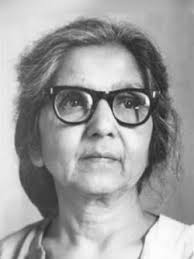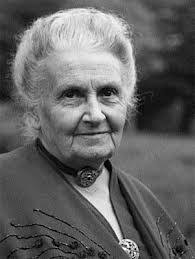
Follow the Child: Maria Montessori

Montessori is a word much-used today in early education and there is an explosion of what are self-described ‘Montessori’ schools. These are often housed in modern buildings, equipped with a surfeit of the latest ‘equipment’, and accordingly charging high fees. Perhaps not many of the parents who rush to book admission for their child in such a school, almost as soon as it is born, may know much more about Montessori than the name.

The original story behind the schools, and the name that distinguishes these schools is very different. It is the story of Maria Montessori an educator, scientist, physician, innovator, philosopher, feminist and humanitarian.

Maria Montessori was born on 31 August 1870 in Chiaravalle, Italy, the only child of Alessandro and Renilde Montessori. Her parents moved to Rome when she was five years old. A curious, strong-willed girl, Maria, from a young age took paths that defied the norms of her times. After completing high school, instead of going in for teaching, a conventional occupation for girls at the time, she applied to medical school but was refused admission. So she enrolled in the university where she studied physics, mathematics and natural sciences; and reapplied to medical school. She was eventually admitted in 1890, one of the first women in medical school in Italy. In the face of many obstacles because of her gender, Maria qualified as a doctor in 1896. She was also beginning to get involved in the movement for women’s rights.

As a practising doctor Maria became known not only for her skills in treating patients but equally for working with the poorest, and the respect she showed to patients of all social classes. She also joined as a volunteer for a research programme at the psychiatry clinic of the University of Rome, where she became deeply interested in the needs of children with learning disabilities. She went on to become co-director of a new institution called the Orthophrenic School which focussed on such children. During her work here she became convinced that instead of writing off such children as ‘retarded’, they needed the right support. This theory was radical for that time. She also travelled to London and Rome to learn more, and when she came back she spent hours in developing and experimenting with materials and methods, using ideas from the founders of kindergarten, Froebel and educators Itard and Seguin. Her experiments began to show positive results.

Maria continued her academic pursuits with studies of educational philosophy and anthropology, and from 1904-1908 she was a lecturer at the Pedagogic School of the University of Rome. During this period Rome was in economic decline, leading to widespread poverty and the growth of many ghettos. One such was an area called the “Quartiere di San Lorenzo” which was known as the shame of Italy. Here children of desperately poor parents who were out all day trying to earn a living, were left to their own devices in unsanitary and chaotic conditions. These children ran wild, destroying property, and indulging in anti-social behaviour. The authorities were looking for a solution to this huge problem. Maria was offered the opportunity to work with these children, using the materials that she had been developing when she was working with children with special needs. Maria took up the challenge.

As Dr Montessori recalled later: “One room was set aside for this purpose, resembling in every way a children’s prison. It was hoped that a person would be found with enough social courage to tackle the problem. I in my capacity of medical officer of hygiene was approached to take an interest in the work. Having considered the situation I demanded that at least the commonest aids in hygiene, food and sanitation be made available. On the 6th of January 1907 this room was inaugurated to collect the 50 children

But while everyone had had the idea that by giving houses and sanitation, the people would be purified, no one had taken in consideration the children; no one had thought to bring toys or food for them. When the children, ranging between the ages of 2 to 6 entered, they were dressed all alike in some thick, heavy, blue drill. They were frightened and being hindered by the stiff material, could move neither arms nor legs freely. Apart of their own community they had never seen any people. To get them to move together, they were made to hold hands. The first unwilling child was pulled, thus dragging along the whole line of the rest. All of them were crying miserably.”

Thus opened the first Casa de Bambini (Children’s House). A pioneering experiment in working with 50 poorest of poor and illiterate two to six-year-old children. Maria began with using the activities and materials that she had developed at the Orthophrenic School. She closely observed the children with a scientist’s approach, noting which ones engaged them and discarding the ones that did not. Her observations led her to realize that children who were placed in an environment where activities were designed to support their natural development had the power to educate themselves. As she said when recalling the opening of the first Casa di Bambini: “I don’t know what came over me but I had a vision and inspired by it, I was enflamed and said that this work we were undertaking would prove to be very important and that someday people would come from all parts to see it.”

The results that followed were so surprising that working for children soon became her life’s work. As she later wrote: “In order to follow them, I changed my whole life. I was nearly 40. I had in front of me a doctor’s career and a professorship at the university. But I left all because I felt compelled to follow them and to find others who could follow them, for I saw that in them lay the secret of the soul.”

By 1909 Maria gave her first training course in her new approach to around 100 students. Her notes from this period provided the material for her first book published that same year in Italy, appearing in translation in the United States in 1912 as The Montessori Method, and later translated into 20 languages. The rest, as they say is history. The experiment at Casa di Bambini grew into a movement. Montessori societies, training programmes and schools sprang up all over the world. Dr Montessori herself travelled across the world, giving talks. But through her life she emphasized: “It has nothing to do with any educational method of the past, nor with any educational method of the future. It stands alone as the contribution of the child himself. Perhaps it is the first of its kind, which has been built by him step by step. It cannot have come from an adult person; the thought, the very principle that the adult should stand aside to make room for the child, could never have come from the adult.”

Today as young parents are faced with choices of educational institutions, and inundated with invitations from expensive Montessori schools, and toys and equipment, it is a good time to recall that the roots go back to very opposite circumstances. And remember Maria Montessori’s words: “Anyone who wants to follow my method must understand that he should not honour me but follow the child as his leader.”

–Mamata
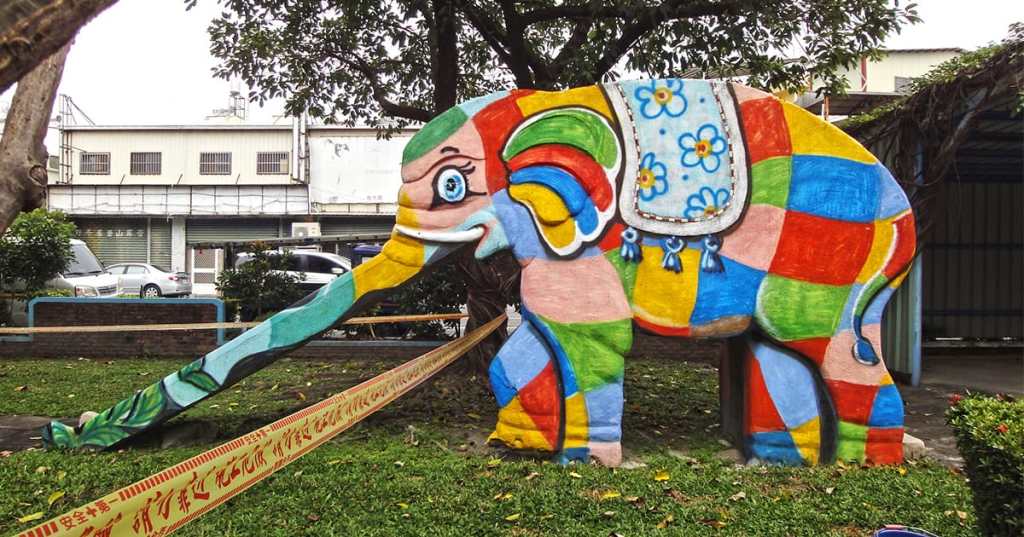
Celebrating Artful Elephants

August 12 is marked as World Elephant Day. And it is also Ganesh Charurthi time. So an appropirate time to talk about elephants.

The Asian Elephant is an endangered species, with less than 50,000 left in the wild across the world. And hence the importance of marking this day as a way of raising awareness about elephants and the dangers that threaten them.

What we see is what we grow to love and respect. And hence the importance of all the depictions of elephants we see around us—from sari borders to sculptures in ancient temples to the life-sized sculptures made from invasive weeds found in the Nilgiris, crafted by indigenous communities. Each and every one of them is an opportunity for education about our biodiversity and this magnificent species.

One can understand the ubiquitousness of elephant imagery in India—after all we hold about 60 per cent of the numbers. But interestingly, it is Taiwan which was well-known for elephant imagery all over its public parks and schools, in the form of Elephant Slides.

These are the whimsical, solid, painted playground fixtures affectionately known as “Grandpa Elephant”— and they hold fond memories for a generation of Taiwanese kids, now grown.

The elephant slide was a fixture of childhood in Taiwan from the 1960s through the 1980s. Found in schoolyards and public parks, these slides were typically made from china-mosaic or concrete, with a stairway or ladder up the back and a gently curved trunk functioning as the slide.

Many bore motivational slogans etched into the sides: “Strengthen your body to build the country.” Even in play, the messaging was patriotic. But for kids? It was all about the joy of scrambling up that broad back and riding the trunk like it was the gateway to an imaginary world.

Now, with safety codes tightened and tastes modernized, many of these eleslides have disappeared. But a movement to preserve and honour them has taken root, led by artists, writers, and nostalgic grown-ups determined to keep these gentle giants from fading away completely.

A Concrete Revival

Writer Yu Chiu-ling and designer Hsiu Pi-cheng have been at the forefront of this effort. Yu founded the Facebook group “Find Our Elephant Friends,” a digital scrapbook of elephant slide-sightings across the island. Hsiu has documented over 400 slides, many tucked away behind schools or community centres, quietly waiting to be remembered.

Their work isn’t just about playground preservation — it’s about cultural memory. About honouring the handmade, the imperfect, and the deeply local.

Elephants Across Borders

Asian elephants range across. Bangladesh, Bhutan, Cambodia, China, India, Indonesia, Laos, Malaysia, Myanmar, Nepal, Sri Lanka, Thailand, and Vietnam. Strangely, there have never been elephants in Taiwan in the wild in recorded history. While elephant fossils have been found on the island, indicating their presence in prehistoric times, there is no evidence to suggest that elephants lived in Taiwan during the period of human history documented by archaeology and literature. 

But Taiwan does have the most emotionally iconic version of the elephant slide!  You will also find their cousins in parks across Japan, Thailand, Vietnam, and parts of Eastern Europe. From Soviet-era concrete sculptures to candy-coloured cartoon versions in Tokyo suburbs, the idea of turning a beloved elephant into a playmate has clearly crossed cultures. But sadly, no ele-slides in India!

Unfortunately today, both real elephants and their concrete urban renderings are endangered. One is fighting for survival in an increasingly human-dominated world. The other is quietly disappearing with changing times.

Elephants have always symbolized memory, strength, and gentleness.

Let’s protect the real ones. And let’s remember the playful ones, too.

Happy Ganesh Chaturthi!

–Meena

PIC: https://www.thisiscolossal.com/wp-content/uploads/2023/07/pi-og.jpg

Dashri and Kasturba: Teacher and Student

Tribal communities have long inhabited India’s lands, living in close proximity with their natural environment and following their ancestral ways of life, culture and traditions. At the same time these peoples were always considered to be on the fringes of mainstream society; socially and economically exploited,

and deprived of fundamental rights. Dashri Chaudhary was born in one such community in the Vedchhi region of south Gujarat on 3 October 1918. Her father Rumsibhai and mother Ambaben belonged to one of the tribes which were collectively called ‘rani paraj’ or ‘people of the forests’, and later known as ‘adivasis’.

Although traditionally these communities were deprived of education, Dashri’s father as well as her grandfather Jeevanbhai had both received education. This was because the Vedchhi region was then under the Gaekwad rule of Baroda which encouraged compulsory education for all. Jeevanbhai Chaudhari was a school teacher and social reformer. Dashri was brought up in a progressive environment, and studied up to class 4 in the government school in her village.  

In the meanwhile her father and grandfather were coming under Gandhi’s influence. They began to organize the local adivasi community to oppose the socio-economic exploitation by the British as well as the local moneylenders. They started an organization named Kaliparaj Parishad for the upliftment of their community. The organization started taking shape in 1905 with the convening of the Raniparaj convention where the issues of exploitation of adivasis and social and educational reforms were discussed. The women formed bhajan mandalis, and travelled from village to village singing songs inviting people to join the satyagraha movement.

After Gandhiji’s return to India from South Africa in 1915, Dashri’s grandfather invited him to attend the convention but he could not do so at that time. However Kasturba came in 1923, the first non-adivasi woman to attend. Gandhiji himself attended the next convention in 1924. Dashri was then six years old. Her family had already adopted the khadi movement. Little Dashri was keen that she should also welcome Gandhiji with a garland of handspun khadi thread. The story goes that Gandhi picked up the little girl who was wearing gold bangles and anklets. He told her “Child, we are slaves. We cannot wear jewellry.” The six year old immediately took off the ornaments, and never again in her life, wore any again.

Dashri completed class four in Vedchhi and joined class 5 in the government girls’ school in Valod. However responding to Gandhi’s call to boycott government school education, she left the school.

She moved to Ranipara Kanya Vidyalaya a nationalist school (Rashtriya Shala) imparting basic education, started by Kasturba, Mithiben Petit and others in Pune town in Mandvi district. Kasturba was there at the time. Dashri barely completed one year here when the school was shut down. All the students got involved with the freedom movement which was gaining momentum in the light of the Dandi March in 1930 which sparked a nationwide Civil Disobedience Movement. Dashri was an active participant. She and her friends picketed liquor shops, they protested against the British policy of prohibiting tribals from producing and selling toddy which was locally brewed. 

On 26 January 1933, she was arrested while picketing a shop that sold foreign cloth. She was only 14 years old. She was tried. When asked what work she did, she replied “To free India”.  She was asked if she knew the consequences of such activity, she replied “Yes, I know. If I die I will be called a martyr”. The magistrate is believed to have commented “This is girl is dangerous.”

Dashri was sentenced to one year in Yervada jail. Kasturba was already imprisoned there. She was surprised to see the young student who had been in the Rashtriya Shala. “How you have grown, and now you are in jail”, she said. The two became close. Dashri spent the year in jail doing all the manual tasks that the prisoners were assigned. Kasturba usually requested fellow prisoners to write letters for her, as she herself could not do so. During the time when they were in jail, Kasturba requested the young Dashri to teach her how to read and write. Dashri herself had only completed primary school and here she took on the role of teacher. In the time that they had free from the arduous prison tasks, the young teacher and elder student attentively worked with the slate and chalk, learning Gujarati letters and moving ahead. It is believed that Dashri successfully taught her student in four months! The first letter Kasturba wrote was to Gandhiji who was delighted. He wrote to Kasturba ‘Tell this girl that “you could do what I could not!”

After her release Dashri continued with her studies at Gujarat Vidyapith. She also learnt music from Pandit Narayan More, and learnt to play several instruments. As the Quit India movement gained momentum in 1942, she once again gave up her studies and joined. She added spirit to the protests and processions with her powerful singing of patriotic songs.

She was arrested once again, and sentenced to a year’s imprisonment. After her release, in 1944 she married a fellow satyagrahi Kanjibhai Chaudhary. She continued to be actively engaged with the activities at Vedchhi ashram.

After Independence she resumed her interrupted studies, completing her Matric and Primary Teachers Course. She started a school for children of very backward communities and continued to contribute to the field of education. She was not interested in getting into politics. She herself never gave up learning, and was always active in social causes. She lived in Vedchhi, where one of Gandhi’s close associate Jugatram Dave established an Ashram dedicated to upliftment of the adivasis in the socially and economically backward area through constructive work and education. 

Dashriben passed away in 2013 at the age of 95 years. A long life dedicated entirely to the cause of the nation.   

–Mamata

Nature’s Libraries: Where the Wild Data Lives

National Librarian’s Day is celebrated on August 12th every year to commemorate the birth anniversary of Dr. S.R. Ranganathan, the “Father of Library Science in India”.

When we say “library,” most people imagine rows of books, a quiet reading room, and perhaps a stern librarian at the desk. But in the language of library science, a “library” is defined less by its shelves and more by its functions — acquiring, organising, preserving, and making knowledge accessible.

By that definition, the world is full of libraries that hold no books at all. Some store bird calls. Others archive satellite images. Some collect DNA sequences. In fact, they are not physical spaces at all. Many are vast online repositories where scientists and citizens alike can deposit, discover, and use data.

On this Librarians’ Day, let’s explore how these nature and biodiversity depositories perform the same core functions as traditional libraries — only their collections are wild, living, and often invisible to the naked eye.


Acquisition: Gathering the Wild

Libraries begin by collecting materials. In biodiversity repositories, this might mean researchers uploading recordings to Macaulay Library (Cornell Lab of Ornithology) or Xeno-canto, which crowdsource bird calls from around the world.

  • Example: iNaturalist “acquires” photographs and species observations from millions of contributors.
  • Example: GBIF (Global Biodiversity Information Facility) harvests species occurrence data from institutions and citizen scientists alike.

Just as a public library acquires books from publishers and donors, these nature libraries acquire data from field biologists, monitoring equipment, and enthusiastic amateurs.


Organisation: Making Sense of the Collection

Without organisation, a library is just a warehouse. And hence the focus on developing classification systems. Dr. S.R. Ranganathan primarily used and developed the Colon Classification (CC) system. The Dewey Decimal system is the widely prevalent one used in most libraries across the world.

Biodiversity data portals however are based on the Linnaean system of classification and organize living organisms based on evolutionary relationships. This involves classifying organisms into hierarchical groups like kingdom, phylum, class, order, family, genus, and species. This is.

  •  Example: BOLD (Barcode of Life Data System) and GenBank organise genetic sequences by species, geography, and collection method.
  • Example: ITIS (Integrated Taxonomic Information System) standardises names so scientists worldwide speak the same language.

The result? You can search for a frog by its Latin name, its genetic barcode, or the location where it was found — just like you can search for a book by title, author, or subject.


Preservation: Guarding the Record

One of a library’s noblest duties is preservation — ensuring the information remains available for future generations. In biodiversity repositories, this may involve:

  • Storing acoustic recordings (bat calls, whale songs) in durable digital formats.
  • Archiving satellite imagery in systems like NASA Earthdata and Global Forest Watch for long-term environmental monitoring.
  • Keeping herbarium records in Tropicos and long-term forest data in ForestGEO.

Like rare manuscripts in acid-free folders, these data are preserved against loss, decay, and obsolescence.


Access: Opening the Doors

Libraries thrive when they are accessible. Many biodiversity repositories are open access — anyone can explore them. And importantly, contribute to them.

  • eBird lets birdwatchers view migration patterns and personal checklists.
  • FishBase offers species profiles for students, fishers, and marine scientists alike.
  • OBIS (Ocean Biogeographic Information System) gives marine biologists open access to ocean species occurrence data.
  • Merlin helps users identify birds by their calls.

Some repositories, like Wildlife Insights or certain ethnobotanical databases, may have restricted access for sensitive data — similar to a library’s rare books section.


Dissemination: Spreading Knowledge

A library doesn’t just keep information — it shares it. Biodiversity repositories publish datasets for conservation planning, scientific research, and education.

  • Movebank shares animal movement data for migration studies.
  • TRY Plant Trait Database supports climate change modelling.
  • The Digital Himalaya Project disseminates ethnographic and ecological knowledge, bridging science and tradition.

Why These Libraries Matter

By meeting the same functional standards as a traditional library — acquisition, organisation, preservation, access, and dissemination — biodiversity depositories are not just “like” libraries, they are libraries. Their collections may be recordings instead of novels, or genetic codes instead of encyclopaedias, but the principles are identical.

In a time of rapid environmental change, these libraries are our collective memory-keepers for life on Earth. They store the songs of rare birds, the paths of migrating whales, the genetic fingerprints of endangered plants, and the traditional wisdom of communities who have lived with nature for centuries.

So this Librarians’ Day, remember: the guardians of knowledge are not only in buildings with books. They are also in digital sound archives, genetic databases, satellite imagery vaults, and underwater biodiversity surveys. Wherever knowledge is collected, cared for, and shared — there, you will find a library. Dr. Ranganathan, I am sure,  would have been excited to explore the new realms of libraries and library science!

–Meena

There are a wide range of data depositories and libraries related to nature and biodiversity across different domains—ranging from sounds (like bat and bird calls) to genetics, species observations, satellite imagery, and more. Here is a list of some of these depositories, which Chat GPT has been kind enough to put together!


🦇 Acoustic and Sound Libraries

  1. Bat Call Library – Region-specific databases like EchoBank or ChiroVox.
  2. Macaulay Library (Cornell Lab of Ornithology) – Massive archive of bird sounds, videos, and photos.
  3. Xeno-canto – Open-access database of bird calls and songs from across the world.
  4. AmphibiaWeb – Includes some amphibian vocalization data.
  5. BLB (British Library Sound Archive – Wildlife Section) – Historical and contemporary recordings of animals.

🌍 Species Observations and Biodiversity Portals

  1. GBIF (Global Biodiversity Information Facility) – Gigantic open-access database of species occurrence data from around the world.
  2. iNaturalist – Crowdsourced species observations with photos, locations, and identification support.
  3. India Biodiversity Portal – India-specific citizen science portal on biodiversity with species pages, maps, and observations.
  4. eBird – Global birdwatching database with detailed observation checklists and trends.
  5. OBIS (Ocean Biogeographic Information System) – Marine species occurrence data.

🧬 Genetics and Taxonomy

  1. BOLD (Barcode of Life Data System) – DNA barcoding records of species.
  2. GenBank – Nucleotide sequences, often used for genetic identification of species.
  3. Encyclopedia of Life (EOL) – Species information including taxonomy, distribution, and media.
  4. ITIS (Integrated Taxonomic Information System) – Authoritative taxonomic info, mainly for North America.

🛰️ Remote Sensing and Environmental Data

  1. MODIS / NASA Earthdata – Satellite data on vegetation, land cover, fires, etc.
  2. Global Forest Watch – Forest cover, loss, and gain data based on satellite imagery.
  3. NOAA Climate Data Records – Atmospheric, oceanic, and climate-related datasets.

🐾 Camera Trap and Movement Data

  1. Movebank – Open-access database for animal movement (GPS collar) data.
  2. Wildlife Insights – Global camera trap image database, AI-assisted.
  3. PanTHERIA – Ecological and life-history data of mammals.

🌿 Botanical and Ecological Datasets

  1. TRY Plant Trait Database – Global plant trait data.
  2. Tropicos (Missouri Botanical Garden) – Botanical information with herbarium specimen records.
  3. ForestGEO (Smithsonian) – Long-term forest monitoring data across the globe.

🌊 Marine and Aquatic Life

  1. FishBase – Comprehensive fish species database.
  2. SeaLifeBase – Same as FishBase but for all non-fish aquatic life.
  3. Reef Life Survey – Citizen science marine biodiversity data.

📚 Literature and Traditional Knowledge

  1. Digital Himalaya Project – Ethnographic and ecological archives.
  2. Ethnobotanical Database – Plant use in indigenous and traditional medicine.

PIC: wildlifedata.org/

Feisty Freedom Fighter: Aruna Asaf Ali

“Do or Die. We shall either free India or die in the attempt,” Mahatma Gandhi told fellow leaders of the movement for India’s independence on 8 August 1942. These words launched the Quit India movement. Although Gandhi and many other leaders were arrested within hours of his speech, with the expectation that without their leadership the resistance movement would be rudderless, the effect was the opposite. Thousands of Indians, young and old, heeded this call and plunged into the movement, each contributing in their own way.

The sweeping movement continued to gain strength in many forms, culminating in India becoming an independent nation on 15 August 1947. Even today, after almost eight decades there are as many stories as there were people then, about how every Indian played his or her part in this movement.

One of the women who picked up the mantle of leadership in the vacuum left by the arrests following Gandhi’s speech on 8 August was Aruna Asaf Ali who went on to play a significant part in Indian politics, even after Independence.

Aruna Ganguly was born on 16 July 1909 in a liberal upper class Bengali family which had migrated to the United Provinces (now Uttar Pradesh). After graduating from a missionary school and college Aruna started working as a teacher at Calcutta’s Gokhale Memorial School. It was here that she met Asaf Ali, a progressive barrister. Despite family opposition on grounds of differences in age and religion, Aruna married him in 1928. Her family practically ostracised her. 

Asaf Ali was a prominent member of the Indian National Congress, and Aruna too soon began to meet and mingle with many nationalist leaders of the day. It was natural that she became actively engaged in the ongoing freedom struggle. Two years after her marriage, she was jailed during the Salt Satyagraha. Her popularity and leadership qualities were already emerging. Apprehensive about this, the colonial authorities did not release her when other political prisoners were released in 1931. They did not anticipate that her detention would raise a great public outcry; and that all the women prisoners would refuse to be released unless Aruna was released. It took Gandhiji’s personal intervention to secure her release.

The following year Aruna was again arrested and imprisoned in Tihar jail. Here too she led a hunger strike to protest against the treatment to political prisoners. She was moved to solitary confinement in Ambala jail.

By the time Gandhiji gave his Quit India call, Aruna had already been active in the movement for over a decade. The country-wide crackdown against nationalist leaders in 1942 left a leadership vacuum which could have aborted the momentum. Aruna stepped in; she presided over the rest of the Indian National Congress (INC) session, and on 9 August she rushed forward and unfurled the flag of Independence at Gowalia Tank Maidan in Bombay. News of this flag-hoisting spread like wildfire. Aruna and a group of INC workers went underground. The British government posted a reward for her capture but she successfully evaded arrest for three years. Her property was seized and sold.

Even in hiding, Aruna continued to contribute to the movement through use of underground radio, pamphlets, and the Congress’s monthly magazine Inquilab. During this period she was unwell and became frail. When other Congress leaders came out of prison, Aruna refused to come out of hiding and give herself up. Gandhiji wrote her a personal note expressing concern about her frail health and urging her to surrender and use the prize money offered by the British for the cause of Harijans. Aruna respectfully declined to do so. Gandhi always had great respect for Aruna’s personal bravery, but did not always approve of her tactics. She had a strong independent streak and high ideals.

Aruna finally came out of hiding in 1947 and returned to active political life. She was elected president of the Delhi Pradesh Congress Committee. However she quit the Congress party in 1948 and joined the Socialist Party, and later became a member of the Communist Party of India. She went on to leave this in 1956, but she retained her leftist leanings and spent the rest of her life in fighting for causes of the unprivileged, underrepresented, and exploited sections of society. She supported with revolutionary zeal the upliftment of women through education and better health care. Her politics was always more a matter of the heart than the head. Her frail physique belied her incredible inner strength. 

Aruna was elected Delhi’s first woman mayor in 1958, and led the way for major civic reforms. But unable to handle the petty politicking, she resigned. She never again contested elections or took up a government post. She passed away in 1996 at the age of 87 years. Till the end of her life she lived in a one-bedroom apartment. She continued to mobilise support for social reforms, working for the rights of women, the poor and downtrodden. She actively helmed the Patriot newspaper and weekly magazine Link. She was awarded the International Lenin Peace Prize in 1964. She was honoured with the Padma Vibhushan in 1992, and posthumously awarded the Bharat Ratna in 1997.

Aruna Asaf Ali, frail but feisty, was one of Gandhiji’s Women Warriors, part of an inspiring band of women from all walks of life who fought not only for the freedom of their country, but equally for the rights of its women to live as free, fearless, and empowered citizens of India. 

–Mamata

DESIGN GURU ASHOKE CHATTERJEE: A TRIBUTE ON HIS 90TH BIRTDHAY        

Ashoke Chatterjee (AC) does not like to be called ‘design guru’. But it is really not possible to come up with a better title for this piece on him. For though not a designer, his influence on design and design education in India has been immense. After all, he was Executive Director of India’s first and leading design school, the National Institute of Design (NID) from 1975 to 1985; a Senior Faculty Advisor for Design Management and Communication from 1985-1995, and Distinguished Fellow at NID from 1995 till his retirement in 2001.

AC played a critical role in conceptualizing the meaning of design in the Indian context. In 1977, he brought together UNIDO and International Council of Societies of Industrial Design (ICSID) members, designers, design-educators and others from across the world to the NID campus at Ahmedabad for a 2-day symposium. The meeting ended with the historic Ahmedabad Declaration which embodies the value of humanism in design. The core of the statement affirms:

  • ‘Its firm conviction that design can be a powerful force for the improvement of the quality of life in the developing world;
  • Its firm belief that designers must have a clear understanding of the values of their own societies and of what constitutes a standard of life for their own people;
  • That design in the developing world must be committed to a search for local answers to local needs, utilising indigenous skills, materials and traditions while absorbing the extraordinary power that science and technology can make available to it;
  • That designers in every part of the world must work to evolve a new value system which dissolves the disastrous divisions between the worlds of waste and want, preserves the identity of peoples and attends the priority areas of need for the vast majority of mankind’.

AC has lived this spirit and has helped designers and design-students across the country imbibe this spirit. He made it a fundamental principle of design education that students needed to understand that design is not restricted to contributing to business profits but also includes contribution made to the livelihoods of artisans, farmers, and the marginalized; and that designers must grapple with social issues. He was one of the early votaries of sustainability and brought this understanding to the education of designers.

As AC is always the first to aver, he is not a designer. He went to Woodstock School, after which he took an Economics degree at St Stephens College, New Delhi. Following this, he did his MBA at Miami University in Ohio, USA. He was with the International Monetary Fund in Washington DC, where he worked as a communications specialist, the Indian Tourism Development Corporation etc., before finding his home in NID and Ahmedabad.  He has advised, and advises, several national and international agencies including INTACH, Water Supply and Sanitation Collaborative Council (Geneva), the Gujarat Ecology Commission, the Government of Rajasthan Department of Health.  He served for many years as honorary president of the Crafts Council of India.

We have had the good fortune to regularly interact with AC over the decades. He was a not-infrequent visitor to the Centre for Environment Education where we worked for many decades, and each occasion brought its laughter, learning and a warm sense of having a caring mentor. He has been on the Governing Council (GC) of CEE from the early years, and as a local GC member, was invited for brainstorming, meetings, events, certificate-distributions and what have you—and if he did not have any prior commitments, he would attend.  He generously served on the advisory committee of several large projects that CEE was involved in, and brought his wisdom to bear not only on the content and design, but also on stakeholder management. As programme leaders, we would often be called into the GC meetings to make presentations on our projects; the butterflies in our tummies would settle when we met his twinkling eye, and he nodded ever-so-slightly to us. And after the presentation, he would sometimes pass us a little chit saying that we had done a good job. That truly made our day!

Ashoke Chatterjee played a key role in the National Drinking Water Mission, which in the late 1980s was tasked with ‘providing safe drinking water to all villages, assisting local communities to maintain sources of drinking water in good condition, and for specific attention for water supply to scheduled caste and scheduled tribe communities.’ AC prepared a road map on the communications aspect of this initiative, without which the gains could neither have been attained nor sustained. He worked closely with CEE in developing communication and education on fluorosis, a disease endemic to large parts of Gujarat.

With all his commitments, AC writes too. Dances of the Golden Hall on the art of Shanta Rao, and Rising, on empowerment efforts among deprived communities in rural Gujarat, are among his well-known books. His latest work (with Harji Malik), in English and Hindi, is titled Learning Together at Jawaja and chronicles the 50-year journey of the Jawaja project.

There is never a meeting with AC when we don’t come away feeling enriched—both as professionals and as human beings.

THE RURAL UNIVERSITY, JAWAJA

One of the criticisms against academic institutions is that they are far removed from every day realities and seldom contribute in solving real-life challenges. The Jawaja project undertaken by IIM Ahmedabad in partnership with the National Institute of Design (NID), Ahmedabad is an early exception. Ashoke Chatterjee was a key part of this.

It was in 1975 that Ravi Matthai, IIM-A’s legendary first fulltime director, set out on a journey to see how corporate management principles could be used to solve the major problem facing India–poverty. Ravi Matthai had stepped down as Director in 1972, and could now devote time to such a project.

The decision was taken to work in Jawaja, a drought-prone district of Rajasthan, consisting of about 200 villages and a population of 80,000. There seemed very little scope for development there, given the arid landscape and lack of water and other physical resources. But Prof Ravi Matthai had a different perspective, because he saw people as the biggest resource.

As the project team understood the area better, they found that the area had a 300-year tradition of leather-craft. The communities there were also skilled at weaving. And so the project decided to build on these skills to develop sustainable livelihoods for the communities there. Prof Matthai roped in NID to join hands with IIM-A, to work on livelihoods and empowerment of the communities in Jawaja. Thus along with Ashoke Chatterjee, his counterpart in NID, he started the journey which involved many faculty from both institutes.

The idea was to connect traditional artisans with contemporary disciplines of management and design, and knowledge institutions which had this knowhow. There were some important basic principles underpinning the effort. The first and foremost was that the relationship was one of mutual respect and learning—after all, even as the communities learnt new skills, the faculty of the institutions were learning how their knowledge could be put to use in solving social problems. Another important aspect was to see how much of the value chain could be controlled by the artisans and communities themselves, so that their incomes could be enhanced. The idea was to innovate and design new products which would have new markets, so that the traditional value chains could be broken and the craftspeople could play a greater role in more areas. The focus was also on working in groups, to give greater resilience and strength to the efforts.

The process was, by design, a gradual one, moving from basic products which did not need very high quality craftsmanship, such as leather school bags and woven floor mats, to higher value ones like office supplies, trendier bags, and high-end furnishings.

The challenges were, of course, many. Apart from the need to design new products which would use the old skills, technologies and equipment, another major concern was quality control.

To quote Ashoke Chatterjee on the subject: The Jawaja project was one experiment which integrated many aspects of craft: heritage, culture, social structure, design vocabulary and NID’s design inheritance. But it was not a craft project; it was development defined as self-reliance for those who have been the most dependent in our society. Ravi Matthai explained self-reliance thus: Can people do something for themselves tomorrow that others are doing for them today and they should be released of that dependence? Ultimately, Jawaja taught us that the whole is about people and you have to attend to people first and last or else nothing you do will be sustained.

The depth of AC’s understanding of craft traditions in India, and his humanity are reflected when he says: Jawaja provided a benchmark in crafts: first focus on and understand the community before we intervene in crafts. Who are the people? What are their earnings? What are their aspirations? What is in it for them? Before we start giving people lectures about their ancient traditions, ask what’s in it for them to stay in the tradition? In the case of Jawaja, many of the heritage problems for leather workers were things they wanted to run away from. Their caste elders told them they must not be identified as leather workers; they must have some other identity. When they stopped flaying animals they were left stranded without an identity. We often look at tradition and heredity as some exquisite artefact, but for them it was centuries-old discrimination.

The Jawaja project was an educational experiment-in-action based on the idea that development activities must be a vehicle for learning. The enduring success of the bold experiment is seen even today at several levels.

The first was the creation of self-reliant institution of crafts people–the Artisans’ Alliance of Jawaja and its associations. These started to manage all links of the value chain in Jawaja, from raw material procurement, finances, bank dealings, design and technology know how, and marketing processes. These are active even today, and continue to innovate, produce and market products which are highly valued.

The second is the impact of the project on the larger development scene. It was the learning from running this grassroots education and empowerment project that the idea of setting up a specialized institution for education in rural management came up, and the Institute of Rural Management (IRMA), Anand, was born. This was given shape by Prof Ravi Matthai and two other professors who had been with IIM-A—Dr Kamla Chowdhry and Dr.Michael Halse.

The Jawaja experiment’s widespread legacy is that it influenced development sector thinking on how to approach community-based livelihood interventions in a spirit of mutual respect and learning.

–Meena

From: Inspirations: Individuals and Institutions That Defined India’s Sustainability Journey. Mamata Panday, Meena Raghunathan.Bookwell Publications. 2025.

See also: The Jawaja Project https://millennialmatriarch464992105.wordpress.com/wp-admin/post.php?post=3624&action=edit

Pic: NID site

The Cream of Swadeshi: Boroline

It finds its place in every home, on all travels, and as a trusted friend at work. The green tube is its timeless identity and it is virtually a panacea for all ills—chapped lips, small cuts, pimples, grazed knees, as soother or smoother… It can be found in first aid kits, home medicine cabinets, handbags, and suitcases. It is Boroline, unchanged over time, and with faithful fans across all generations.

While most of us have grown up taking its presence for granted, this unobtrusive but ubiquitous tube is more than just a cream. It is an early manifestation of the spirit of Swadeshi, and continues to be a lasting symbol of Make in India. I recently discovered this, and many facets of this comforting cream.  

The non-cooperation movement against the British Rule embraced many strategies to demonstrate peaceful resistance including marches, rallies, boycott and bonfires of foreign goods. There was a demand for goods which were locally made, but not much availability of these. It was in this climate that Gourmohon Dutta, a prominent member of the business community in Calcutta decided that he would play his part in the movement against foreign goods in a different way than simply through protests. He established a company called GD Pharmaceuticals which aimed to produce high-quality medicinal products to replace similar products being imported at the time.

In 1929, GD Pharmaceuticals Pvt. Ltd began to manufacture a cream which was visualized as an ‘antiseptic cream’. The formula for this included tankan amla (boric acid) which is an antiseptic; lanolin which is a soothing agent; jasad bhasma (purified zinc oxide), which is a sun screen and astringent; paraffin; oleum (essential oils) and perfume. The cream was packaged in a green tube which had the symbol of a small elephant as its logo.

The name Boroline was derived from its ingredients: ‘Boro’ from boric powder, and ‘olin’ as a variant of the Latin word oleum, meaning oil. The logo symbolized the qualities of steadfastness and strength that an elephant stood for, as well as its auspicious significance, to bestow luck and success. It was so successful that in rural areas Boroline was known as the ‘hathiwala cream’ (cream with the elephant).

Perhaps the most ardent adherents of this cream were the Bengalis for whom the brand represented dependability and nationalism. One of the advertising radio jingles for the cream, originally in Bengali, and then adapted to Hindi, became an earworm that even today, can transport a generation to another time.

There was a brief period when, due to shortages during World War II, the cream could not be marketed in the familiar packaging, but an accompanying note reassured customers that the product was the same.    

In the years leading to Independence, Boroline emerged as a symbol of resilience and self-sufficiency. A true blue swadeshi product which would go on to become an intrinsic part of households across the country, even in the decades following Independence.  

By 1947 Boroline had become a household name that besides its multiple uses, stood as a symbol of patriotic entrepreneurship. As a tribute to this customer support, on India’s first Independence Day, 15 August 1947, the company is believed to have advertised that it would distribute one lakh free tubes of Boroline.

Today, almost eight decades later the swadeshi cream has its faithful followers, even under the deluge of high-end skincare products, which promise miracles. A recent piece by a young model in the fashion magazine Vogue describes Boroline as the ultimate ‘go-to’ in all situations, reinforcing the unwavering role that this cream continues to plays even today. The company has also diversified into a few other products, but none has the same kind of brand recall as Boroline.   

While the basic packaging, colour and logo of this cream have not changed, its mother company GD Pharmaceuticals has moved with the times. Starting with production in a small manufacturing unit in a hamlet just outside Kolkata, and which continues to function today, there is a second facility near Ghaziabad. The factories are fully automated, and production processed are meticulously monitored. The company adheres to all mandatory government regulations and complies with Good Manufacturing Practices (GMP). All packaging materials used are recyclable and the waste produced is biodegradable. Just as the brand denotes integrity, the company also takes its social responsibility role seriously, and continues to be committed to serving the nation.

August is a significant month in the history of India’s freedom movement. The first Swadeshi Movement was officially launched in Bengal in 1905, on 7 August. The Quit India movement started on 8 August 1942. India became an Independent nation on 15 August 1947. This is a good time to celebrate Boroline, the swadeshi cream.

–Mamata

Caring for Care-givers

Care-giving for children with Intellectual and Developmental Disabilities involves a lot of time and a lot of effort, as the children may need assistance for even basic everyday tasks, like personal hygiene and eating.  If they are attending an institution, they may need to be dropped and picked up. Someone has to be there with them at all times of the day.

This also reduces the earning ability of parents, as at least one of them will have to be at home all day.

Parents of such children live under constant worry about the future: Who will look after the child after they are gone? How to financially provide for them? Will their child be cared for, safe and loved after them? They often face stigma and rejection from family, friends and society. They are in constant emotional stress.

These day-to-day challenges and long-term worries put an enormous pressure on the parents.  Worldwide studies have shown that such care-givers suffer more from chronic diseases as well as stress, anxiety and depression. They also neglect their own care.

This is not a well-recognized problem and there are few initiatives to support such families.

That is why the project described below is special.

AMC, a 62 year-old NGO, with the guidance and support of Dr. Srinivasa Murthy retired Professor of Psychiatry at the world renowned Nationa Institute of Mental Health and Neuro-Sciences (NIMHANS), conceived Project ENRICH, to understand challenges of care-givers and develop a programme of support.

Process of Project ENRICH

The project team had deep conversations and interactions with care-givers of children with special needs to understand aspects of caring for such children. The team found that parents face several challenges in their everyday life, from understanding what the special child means to them, to how to care for the child, to financial issues, family un-involvement, lack of knowledge on the availability of government support, associated health conditions of the child at a very young age, and relationship issues due to less understanding between the parents.

Key components of ENRICH

Based on the extensive research with parents and care-givers the set out the following programme:

1. Training for the parents. The training involves helping them understand and practice 10 self-care activities, namely:

  • Finding purpose in life
  • Enhancing supports and connectedness
  • Sharing of feelings
  • Journaling- Learning to use journaling as a tool at a time of distress
  • Relaxation and leisure-breathing, yoga, meditation
  • Music- To help understand the importance of relaxation and pleasure activity when faced by any difficulty or thoughts in stressful situations.
  • Exercise- Understand the importance of practicing exercises every day for 15-20 minutes
  • Understanding the importance of sleep
  • Importance of proper nutrition.

These sessions are held in small batches of 10 parents per batch, giving the time and safe-space to the parents to express their journeys.

2. Publications: Based on the interactions with parents and with expert inputs, two books have been published under the ENRICH project which will enable the learnings to be disseminated, and provide guidelines for other groups to take up such initiatives. Initially published in English and Kannada, these have recently been brought out in Gujarati with in partnership with National Institute of Mental Health and Neuro-Sciences (NIMHANS). The publications are:

  1. Loss Love & Growth- Stories of Families Caring for a Person with Special Needs: The book is a compilation of 25 stories of unique lived experiences of the caregivers of persons with Intellectual and Developmental Disabilities (IDD). The stories are based on the interviews held with these caregivers and families.
  2. Self-Empowerment Activities for Emotional Health-Guide for caregivers of persons with Special Needs: The book includes caregiver guidance and health practices recommended by international bodies such as UNICEF and WHO. The content of this book is for informational purposes only and is not intended to diagnose, treat, cure, or prevent any conditions or disease. This publication is meant as a source of valuable information for the reader, however, it is not meant as a substitute for direct expert assistance.Caring for Care-givers
     

3. Skill-training for care-givers: One of the key findings of ENRICH was that a major anxiety among parents of special children is how to enhance their earnings to take better care of their children and save for their future.     

A skill center, which would help train family members has been set up at AMC, which is open for parents and family members of any child with any type of disability.

Mothers trained at the center have started earning incomes. It is not just the money. They look forward to the future with more confidence and positivity.

AMC looks to collaborate with like-minded individuals, organizations and corporates to share the processes, knowhow and products of Project ENRICH across the country (or the world, for that matter!)

Proud to be associated with AMC.  

–Meena

For more information on AMC and to connect: https://amcin.org/