As most are surfacing after celebrations that ushered in a new calendar year 2025, it is continuing celebrations for a large population to welcome another new year. This is the Chinese New Year which begins on 29 January this year. This follows the lunar calendar which is based on the 28-day cycle of the moon. The New Year is calculated according to the second new moon after the winter solstice, and this year it fell on 29 January. The New Year day is, in fact, the start of a fifteen-day celebration which is known as the Spring Festival in China. The festival traditionally begins on the first day of the first lunar month in the Chinese calendar and ends on the 15th day. Each day has a special significance and is marked with its set of traditional rituals, lore, and celebration which involve the whole families.
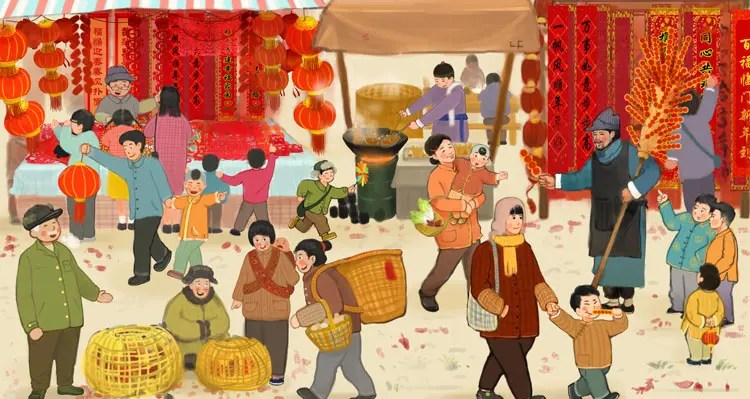
For some families, the preparations for the longer festival begin even earlier, on the eighth day of the 12th month of the lunar calendar, with a festival called Laba. The name is derived from the Chinese words for the 12th month (La) and 8 (Ba). Traditionally the festival also marked the start of the agricultural calendar. On this day prayers are offered to ancestors and gods for fortune and a good harvest. Laba congee, a porridge containing different types of rice, beans, dried nuts, bean curd and meat is eaten.
This marks the beginning of the preparations for the lunar New Year which include cleaning the house by “sweeping away the dust”, shopping for food, new clothes, buying fireworks, preparing gifts and decorations, and prayers to the stove god.
The decorations include red lanterns, paper cuttings, and red spring couplets. The couplets are complementary poetic lines which adhere to certain rules. The spring couplets are written in black ink on red paper, one half affixed vertically on each side of a door, and usually express best wishes for the coming year. Putting up those decorations is thought to keep evil away, and a prayer for blessing, longevity, health, and peace.
Finally it is New Year’s Eve. This is considered as, if not more important than, New Year’s day. The highlight is the family reunion dinner which includes several generations, many who travel long distances to be together for this family gathering. Before they eat, the family makes offerings including food, wine, joss sticks and joss paper to their ancestors.
The dinner menu includes dishes which have symbolic meaning including whole fish, dumplings, sticky rice cake, and spring rolls. After dinner, parents usually give their children money in red envelopes. This is believed to bring good luck, and carry wishes for health, growth, and good studies in the coming year. The family stays up until midnight to usher in the New Year, a tradition called shousui (to keep watch over the year). The start of the New Year is announced with firecrackers and fireworks. It is believed that the louder the firecrackers, the better and luckier it will be for business and farming in the coming year.
Then it is officially the New Year, which marks the start of the 15-day Spring Festival. Each day has its own significance and associated traditions; some customs may vary between regions and groups.
Day 1: People put on new clothes and wish each other with the greeting ”gongxi” meaning “respectful joy.” It is a day of visits. The oldest and most senior members are visited, as well as other relatives and friends. Guests are welcomed with tea and sweet treats, such as sugared fruits which are supposed to sweeten one’s upcoming year. Sweets and fruits are served on a round or octagonal tray – the form resembling togetherness. Most likely the amount of sweets will be arranged in eight units, as the number eight symbolises luck. The visitor also carries a small gift for the hosts–usually oranges, tangerines, or mandarins, as the fruit symbolises gold, hence wealth and good fortune.
In some traditions it is believed that abstaining from meat on this day will enhance longevity. A traditional Buddhist vegetarian dish is prepared using eighteen different ingredients, each of which has a symbolic meaning. Eighteen is believed to be a lucky number signifying wealth and prosperity. There are also temple fairs and activities in parks such as Lion dances and Dragon dances, which are enjoyed by families.
Day 2: This is the day when married women visit their parents, accompanied by their husbands, with gifts and red envelopes for the family.
On this day, people offer sacrifices to the God of Wealth, wishing for a luckier and more prosperous year. People say that after being offered sacrifices, the God of Wealth, leaves for heaven on this day.
Day 3: This is not considered as an auspicious day as it is believed that evil spirits roam around. People avoid visiting friends and relatives and stay at home. Traditionally the house is not swept on the first two days of the New Year so as not to sweep away the good luck accrued by the litter of firecrackers, red paper, wrappers, and other evidence of celebration on the floor. This is the day when the house is swept after New Year’s Eve. There is also a legend that this is the day when rats get married, so people leave some rice in the kitchen as gifts, and sleep early so as not to disturb rats. In return the rats would not disturb the family for the whole year.
Day 4, 5 and 6: People resume visits to friends, relatives and temples. Different regions of China have some variations in the traditions associated with these days. The fourth day is one to honour the God of the Kitchen with the prayer to continue watching over the kitchen. Day five honours the God of Wealth for good fortune. People usually stay at home in case they are visited by the God on this day. It is also the day to light firecrackers to drive away the five bad lucks: of intelligence, learning ability, literacy, life, and relationships.
Day 7: According to a legend, Nuwa the goddess created the world. It is believed that she spent the first six days creating animals. Each day of the festival is also believed to be the birthday of the different animals that she is believed to have created in sequence. On the seventh day she created humans. Thus this is the birthday of humans. The day is celebrated with certain foods. The ingredients of the dishes are healthy and have a symbolic meaning.
Day 8: People normally return to work on the eighth day. As eight is the luckiest number in China, most businesses like to reopen on day 8 of the New Year.
Day 9: This is the birthday of Jade Emperor, said to be the God of all Heavens. People go to ponds and rivers to pray to the gods with offerings of fragrant flower candles.
Day 10: God of Stone’s birthday and also the birthday of Earth Mother celebrated with sweet pastries.
Day 11: A day for fathers to treat their sons-in-law
Day 12, 13 14: These are quieter days, marking a respite from feasting on rich food, but preparing for the first full moon of the year which marks the Lantern festival.
15th day: Lantern festival or the “first night of the full moon” sees lanterns being put and lit everywhere. People often post riddles on the lanterns. Dumplings, with sweet fillings, resembling the shape of the full moon are traditionally eaten on this day. There is usually another family dinner that marks the close of the two-week celebrations, and the official start of the New Year.
According to the Chinese calendar this is the Year of the Snake and much is being written about it. May the spirit of celebrations that mark this day, continue to brighten every day of the year ahead.
–Mamata

 Millennial Matriarchs
