River as a Living Entity

World Rivers Day is marked across the world on the fourth Saturday of September every year. In times when rivers in every country in the world face an array of threats, this day is an opportunity to highlight the integral role of rivers in the environment and lives of all living beings, and to encourage the improved stewardship of all rivers.

The proposal for a global event to celebrate rivers was led by Mark Angelo an internationally-renowned river advocate. The proposal was accepted by the United Nations which had launched the Water for Life Decade in 2005 to help create greater awareness of the need to better care for the world’s water resources. The World Rivers Day was observed for the first time in 2005. Since even as people are reminded of the critical role of rivers as indicators of a healthy ecosystem, rivers across the globe are being sapped of their vital lifeblood.
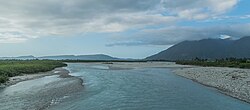
Whanganui River

The ancient civilizations and peoples not only understood this role of rivers, but also revered it. Perhaps the most telling example of this reverence is the link between the indigenous Maori community in New Zealand, and their deep connection with the Whanganui River. The Whanganui tribes have for centuries lived along the river from which they get their name, and fished in it for food and livelihood. But for them the river is equally central to their spiritual practices; it is sacred. It defines their self-identity; as their proverb indicates: I am the river. The river is me.

The large-scale advent of European settlers to New Zealand in the 1840s changed the situation. Increasing trade and riverboat traffic began to take a toll on the river ecosystem. While Maori chieftains and the British Crown signed a treaty to guarantee the Maori the continuation of their rights and privileges, the situation on the ground was very different. Over time, the different resources of the river–water, aquatic life, riverbed gravel, the waterways that supported trade and transport, and the land along the river bank were each exploited separately for their utility to the settlers called Pākehā by the local people, and parcelled out to individual ownership, even as the indigenous inhabitants were being pushed to the brink. This was completely against the traditional belief that the river was a single and indivisible entity, and not something to be owned. The tribes believed that rivers resources could be used but only the people who contributed to the community had the right to benefit. Under Māori belief, all things have mauri – a life force and personality. When the river’s water quality was degraded, the mauri of the river wasn’t respected, in turn affecting the mauri of the local people, who relied on the river to sustain them. The local people protested, and even initated legal action to claim an independent identity and right for the Whanganui River. The earliest of such petitions date back to 1873.

The case went on through the century and into the next. Tribunals were set up and hearings were conducted. In 1999 the Tribunal agreed that the river was a treasure, but that the local people did not have legal rights over the river. Once again, the litigation stalled. It took another two decades to gain legal recognition for the river itself. The local people, many who were descendants of the original litigants, continued their fight. The case went on to become one of New Zealand’s longest-running court cases.

Finally on March 15, 2017, after over 160 years of negotiation, Whanganui gained “legal status as a person.” The river henceforth will be considered as a living entity. This means that polluting or damaging the river is now legally equivalent to harming a human. Two representatives from the Māori tribes can speak on the river’s behalf, and it can be represented in court cases in an arrangement similar to a legal trust.

The Whanganui River became the world’s first natural resource to be granted its own legal identity, with the rights, duties, and liabilities of a legal person. Having the river recognised as a legal person means that harming it is the same as harming the tribe. If there is any kind of abuse or threat to its waters, such as pollution or unauthorised activities, the river can sue. It also means it can own property, enter contracts and be sued itself.

The legal identity reinforces the deep and inalienable connection that the Māori have to the river, which they consider to be an ancestor, and acknowledges their inherent role in maintaining its well-being. The river continues to be the font of their spiritual sustenance and renewal. It is a caregiver, a guardian, and a totemic symbol of unity.

This case is also indicative of a growing movement called Rights of Nature. This initiative which was launched in 2010 is a broad alliance of civil society organizations in partnership with governments, Indigenous Peoples, members of the scientific community, and future generations delegations.

The Rights of Nature model seeks to recognize Nature and her elements as rights holders, providing them with a voice through representation, and reorienting western law around principles of relationship, interconnection, reciprocity, responsibility, and the recognition that all Earth’s beings, ecosystems, and components have fundamental rights to exist, thrive, and evolve.

The movement is committed to advocating, accelerating, and escalating the global adoption and implementation into legal systems of the Rights of Water Ecosystems (e.g. rivers, mangroves, ocean, and others) and in general, the Rights of Nature.

The Whanganui River which became the first waterway in the world to be granted legal personhood, provided a boost to the movement which is today active in several parts of the world. It seeks to repositioning people and Nature as members of a collective whole working together towards a shared vision of a healthy and livable planet, promotes holistic water management approaches.

–Mamata
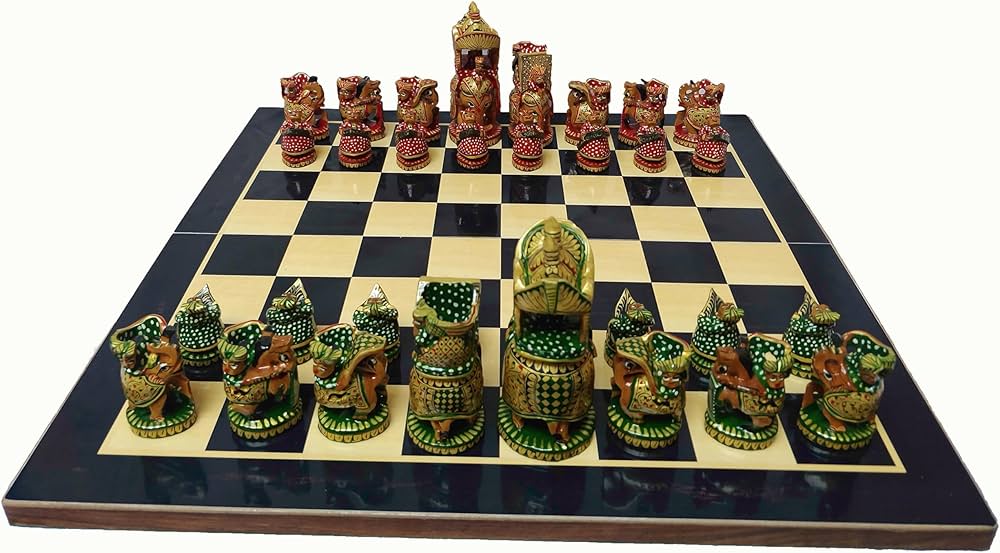
Check and Mate and Gold!

A few months ago, we had the opportunity to meet two greats of the chess world: Vishwanathan Anand and Gukesh. And today to see Gukesh and the rest of India’s young chess players as world champs is such an occasion of joy and pride.

Anand and Gukesh both spoke at an informal soiree.  Anand, older, a world citizen, soft, sophisticated, with wide interests and knowledge, and comfortable in his achievements. Someone you could picture in a corporate boardroom. Gukesh, young (he was short of his 18th birthday by a week at that time), still not quite able to believe where he had reached in such a short time. But several things bound them. Their humility, decency, utter dedication to their game. And the fact that they were Chennai lads!

Chess

Tamil Nadu, not without reason, is called India’s Grandmaster Factory. Manuel Aaron of Chennai became the country’s first International Master in 1961 and was a major force in domestic and international chess from the ‘60s to the ‘80s. He played a key role in popularization of chess in India and in bringing in international protocols and practices.

And then of course came Vishwanathan Anand, first grandmaster from India in the year 1988, five-time winner of the World Championship, and eight-time winner of the World Rapid championship. He has been Deputy President of the International Chess Federation which oversees all the chess federations in the world. India had seen cricketing heroes till then, and a few tennis and badminton champions. But Vishy was the first chessmaster who captured the imagination of the general public and the youth. Since then, chess has acquired a glamour.

Also from Chennai are Subbaraman Vijayalakshmi the first Indian woman to become International Master (IM) and Woman Grandmaster (WGM), and Koneru Humpy who became the youngest woman ever to achieve the title of Grandmaster (GM) at the age of 15 years, 1 month, 27 days—a record that stayed unbeaten for five years.

And the list goes on! About 35% of Indian Grandmasters among men are from Tamil Nadu, and 39% of women Grandmasters.

There have been quite a few game-watchers who have analysed why the state produces such a disproportionate number of champs. As always, it is not a simple answer, and there is really no hard proof. But some factors mentioned are:

  • Early start: The Tamil Nadu State Chess Asssociation, earlier known as Madras Chess Club was formed as early 26 April 1947 at Chennapuri Andhra Maha Sabha, Chennai with the intention to identify the upcoming chess players and make them into world-class professionals.
  • Early Role Models: With Manuel Aaron in the sixties making it to the world stage, followed by Vishy in the eighties, chess was already in the limelight in Tamil Nadu, much before it captured the imagination in other parts of the country.
  • Bringing world chess to the State: The State Govt hosted the World Chess Championship in 2013, which saw a thrilling match between Anand and Carlsen—boosting public visibility of the game.
  • Making it a part of the education system: Like Orissa is doing for hockey today, Tamil Nadu has been supporting chess in many ways for many decades. The government and the educational system have understood the role that the game can play in child-development and have always made space for it in the school system. In 2011, it was made an extra-curricula activity in schools. In 2013, a ‘Seven to Seventeen program’ was put in place under which each school coaches students from 7 to 17 age group to play chess.
  • Making coaching accessible: The Tamil Nadu government offers online and offline chess coaching by best coaches and grandmasters for students everywhere in the state, especially those in government schools.
  • Schools which go the extra mile: There are also schools in the state, like Velammal Vidyalaya,  where there are over a thousand students who take up chess coaching. Apart from high-level coaching, the school adjusts curricular schedules and reduces academic burden for students who show promise, and also provides financial help to those who need it.

Of course, more than anything, sportspeople at any level need the support of their families. In the case of Vishy, it was his mother who initiated him into the sport and supported his endeavours. In later years, his wife became his manager, travelled with him on punishing schedules, and was his pillar.

Gukesh’s doctor-father and microbiologist-mother gave up their careers to nurture his. It was not easy—both of them giving up their jobs put enormous financial pressure on the family. Gukesh was really young when he hit the international scene (he is barely past 18 now!), which meant one of them always had to travel with him. While contestants from richer countries with financial support and sponsorships would stay in fancy hotels near competition venues, Gukesh and his parents would stay in less-expensive accommodation far away. And hire cycles to make it there.

The story of most of the other players is not too different either. And it is against such odds that these young people fight and come out winners. Gukesh dropped out of formal schooling at Std. 4 and is essentially home-schooled, so that he can devote all his time to chess. When we asked him if he did not miss hanging out with friends and doing things that teenagers do, he gently replied that there is nothing he wants to do at this stage other than chess; that he does yoga to de-stress; and yes, he does party with the other players after the tournaments!

Thank you, Rameshbabu Praggnanandhaa, Arjun Erigaisi, Harika Dronavalli, Vaishali Rameshbabu, Divya Deshmukh, Vantika Agrawal, and Tania Sachdev, for your dedication and for doing us all proud!

–Meena

Thank you: https://www.chess.com/blog/JARVIS_SL/tamil-nadus-chess-legacy-the-grandmaster-factory-of-india

Fever Tree

Clay tablets from Mesopotamia mention this deadly disease. Indian writings of the Vedic period (1500 to 800 BC) call it the ‘king of diseases.’ Traces of the disease have been found in remains of bodies from Egypt dating from 3200 and 1304 BC. The 270 BC Chinese medical canon has documented the disease’s headaches, chills, fevers and periodicity. The Greek poet Homer (circa 750 BC) mentions it in The Iliad, as do Aristotle (384-322 BC), Plato (428-347 BC), and Sophocles (496-406 BC) in their works.

The disease? None other than malaria, a disease that has taken its toll on not only humans down the ages, but our Neanderthal ancestors too. In the 20th century alone, malaria claimed between 150 million and 300 million lives, accounting for 2 to 5 per cent of all deaths!

Many have been the scientists who spent their lives trying to understand malaria. Charles Louis Alphonse Laveran (1845-1922) a French army doctor during the Franco-Prussian played a key role. He as the first to postulate that malaria was not spread by bad air, but rather that ‘Swamp fevers are due to a germ’. He was also the earliest scientist to detect crescent-shaped bodies in the blood of affected individuals, and then the four stages of the development of the parasite in the blood. These findings were confirmed by Camillo Golgi. Dr. Charles Ross and India played a huge part in the unravelling of the whole cycle and Ross received the Nobel Prize for discovering the mosquito-stages of malaria.

The story of uncovering the cure for malaria has been dramatic too. For centuries, when no one had a clue what caused malaria, treatments included blood-letting, inducing vomiting, and drastic things like limb amputations, and boring holes in the skull. Herbal medicines like belladonna were used to provide symptomatic relief. 

Cinchona-nitida-quinine
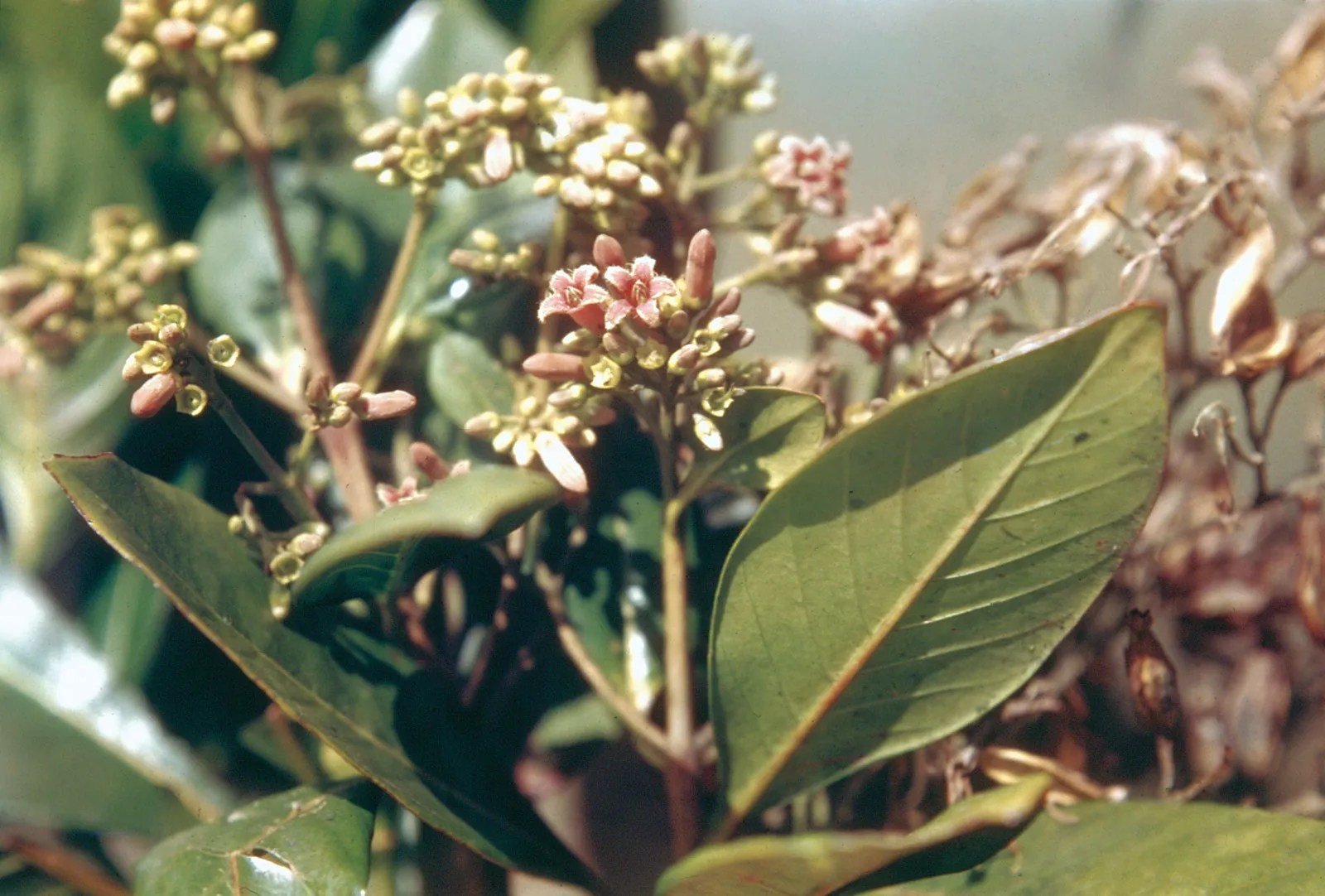
Cinchona Tree whose Bark yields Quinine

But the cure strangely came from South America—a region not originally plagued with the diease. It was probably brought from the outside around the 16th century. The native Indians were the first to discover the cure. The story goes that an Indian with a high fever was lost in the Andean jungles. Desperate with thirst as he wandered the jungles, he drank from a pool of stagnant water. The taste was bitter and he thought he had been poisoned. But miraculously, he found his fever going down. On observation, he found that the pool he had drunk from had been contaminated by the surrounding quina-quina trees. He put two and two together, and figured that the tree was the cure. He shared his serendipitous discovery with fellow villagers, who thereafter used extracts from the quina-quina bark to treat fever. The word spread widely among the locals.

It was from them that Spanish Jesuit missionaries in Peru learnt about the healing power of the bark between 1620 and 1630, when one of them was cured of malaria by the use of the bark. The story goes that the Jesuits used the bark to treat the Countess of Chinchon, the wife of the Viceroy who suffered an almost fatal attack. She was saved and made it her mission to popularize the bark as a treatment for malaria, taking vast quanitities back to Europe and distributing it to sufferers. And from then, the use of the powder spread far and wide. It is said that it was even used to treat King Louis XIV of France.

The tree from which the bark came was Cinchona, a genus of flowering plants in the family Rubiaceae which has at least 23 species of trees and shrubs. These are native to the tropical Andean forests. The genus was named so after the Countess of Chinchon, from the previous para. The bark of several species in the genus yield quinine and other alkaloids, and were the only known treatments against malaria for centuries, hence making them economically and politically important. It was only after 1944, when quinine started to be manufactured synthetically, that the pressure on the tree came down.

Not unusually, the tribe who actually discovered it is forgotten. The medicine came to be called “Jesuit Powder’ or ‘Chincona powder’ or “Peruvian powder’. Trees in the genus also came to be known as fever trees because they cured fever.

May the many indigenous community, their knowledge and their practices which are at the base of so many medicines today get their due recognition, credit and due.

–Meena  

Agatha Christie: Archaeologist

Agatha Mary Clarissa Miller was born on 15 September 1890. 135 years later she continues to be popular around the world as Agatha Christie, the Queen of Murder Mystery. Even as the very English settings of most of her stories and the lifestyle of the characters in her books have seen a century of change, what makes these stories endure is her deft portrayal of human character, with all its foibles, frailties, and hidden depths.

While much has been written about Agatha Christie’s life (including her autobiography), a lot of it describes her life as a writer. From the first short story she wrote (to stave off boredom when she was in bed with the flu) to early days of exploring the ‘murder-mystery’ genre (a detective novel written after a bet with her sister), to creating the memorable detective Hercule Poirot (while she was working as a nurse and hospital dispensary assistant during World War I).

Along the way Agatha became engaged, but then met and married someone else, and became Mrs Agatha Christie. At some point writing became a necessary means of income, rather than an exciting and creative vocation. There were periods when she wished for anonymity, and a yearning to get away from the pressure and spotlight. As her wartime marriage with Archie Christie was falling apart, Agatha began to make brief forays towards breaking free; impulsively travelling alone on the Orient Express to Baghdad 1928. As she wrote in her autobiography …one must do things by oneself, mustn’t one? …I thought ‘it’s now or never. Either I cling to everything that’s safe and that I know, or else I develop more initiative, do things on my own’. And so it was that five days later I started for Baghdad.

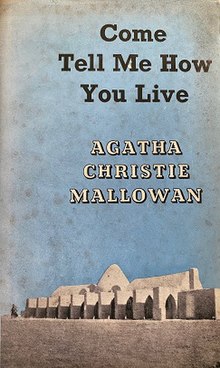
Cover of first UK edition, 1946 https://en.wikipedia.org/

From Damascus she travelled overland to Baghdad, and from there on to an archaeological excavation at the ancient site of Ur, where she met eminent archaeologist Leonard Woolley and his wife Katherine who became good friends. At their invitation, she returned to Ur in 1930 where an archaeologist-in-training Max Mallowan escorted her around the historic sites, the two often travelling ‘rough’ over difficult terrains and situations. The bond between Agatha (already a well-known author) and the much-younger Max grew, and ended in marriage in 1930. Agatha Christie Mallowan discovered the world of archaeology.

Agatha began to accompany Max on some of his excavation sites, and spend the digging season from October to March with him and his team. Here she pitched in, helping to clean, catalogue and photograph the finds. Agatha slept in a tent like the other members of the team, but there was a room set aside for her to write, when she was not engaged in archaeological tasks. This was the only time and place where she was not to be disturbed.

An archaeological dig is like a mystery novel. While the slow and painstaking process of carefully uncovering centuries of accumulated earth in the hope of discovering fragments of past history is far from being a ‘page turner’, the actual discovery of even a fragment of shard is when the mystery really begins. It is from these tiny clues that an entire jigsaw begins to be meticulously pieced together. Where did this piece come from? What was it a part of? Who used this and for what purpose? A single object may lead to the remains of a dwelling, which in turn could have been part of a settlement. And thus the ambit widens. The different clues may provide answers to the key questions of a whodunit: What, where, why, how?

So while Agatha spent much of her time helping the team discover and decipher these tiny clues, she spent some of her time also putting together a different set of clues and characters who would make up a murder mystery novel. Some of these novels were set in the region where she herself was based for part of the year.

Simultaneously she was also noting her observations about the people and their culture, the landscape and its wildlife, the architecture and the archaeological discoveries. These remained notes and memories until the Second World War when Max had been posted to Egypt and Agatha Christie was alone in London, where she worked part time as a volunteer in a hospital dispensary (as she had done in World War I).

In the years when she used to accompany Max on his excavations, Agatha had often been asked by her friends what it was like on an archaeological site. She had started writing about this before the War, but had put it aside. Now missing her husband and nostalgic about their days on the ‘digs’ she returned to those notes and began to chronicle her time there. Drawing upon these and her memories and experiences she wrote about life on an archaeological dig, the different personalities that made up the team (a combination of nationalities, temperaments and dispositions), and the everyday doings and happening that resulted from their interactions. These vignettes, recounted with humour and detail, vividly brought to life the human side of the enterprise. She put these in the context of the political situation in the Middle East in the 1930s.

Agatha Christie finished the book in June 1945, soon after she was reunited with her husband. It was published in 1946 under the title Come, Tell Me How You Live.

For the enthusiasts of detective fiction, who eagerly awaited the new exploits of Hercule Poirot and Jane Marple, the new Christie was a bit of a shock. Where was the plot, the suspense, the investigation and the unmasking of the villain? And yet, in their own way, all these elements were indeed present, this time not as fiction but as facts. The subtitle of the book An Archaeological Memoir, was the first clue to the difference.

But the best-selling author did not intend to ‘cheat’ her faithful readers. The book was published under her married name Agatha Christie Mallowan. It was her tribute to a geographical region and field of study that had given her a lot of happiness. As she wrote in the Epilogue to the book: “Writing this simple record has not been a task, but a labour of love. Not an escape to something that was, but bringing into the hard work and sorrow of today of something imperishable that one not only had, but has”.

–Mamata

Private Gardens for Public Pleasure

Last week, we delved into the making of the Butchart Garden in Victoria, Canada—a private garden which is completely open to the public. This is not common. For the most part, public gardens are public, and private gardens are private—open only to the enjoyment of the owners, their families and friends.

A public garden is defined by the American Public Gardens Association as: “An institution that maintains collections of plants for the purposes of public education and enjoyment, in addition to research, conservation, and higher learning. It must be open to the public and the garden’s resources and accommodations must be made to all visitors. Public gardens are staffed by professionals trained in their given areas of expertise and maintain active plant records systems.”

On the other hand, a private garden is ‘a type of Urban Green Spaces Areas in immediate vicinity of private (privately owned or rented) houses, cultivated mainly for ornamental purposes and/or non-commercial food production’ and is not usually open to the public.

While Jennie Butchart, creator of the Butchart Gardens was clear right from the start that she wanted as many people as possible to see and enjoy her gardens, not all owners have been so open. Or even if they wanted to, didn’t know how to go about it. But that would be such a loss, because some of these private gardens are spectacular.

And hence, the various initiatives in many parts of the world which try to make private gardens accessible to the public.

For instance, in the US, the Garden Conservancy organizes Open Day programmes. This institution is a nationwide community of gardeners and garden enthusiasts who teach and learn about gardens. Believing that there is no better way to improve as a gardener than by seeing and experiencing firsthand a wide range of gardens, they organize these Open Days, which since 1995, have seen ‘more than 1.4 million visitors into thousands of inspired private landscapes—from urban rooftops to organic farms, historic estates, to innovative suburban lots—in 41 states’. These events are curated and ticketed and open up some of America’s best private gardens to the public for a few days. The organization even brings out an annual publication—‘The Garden Conservancy’s Open Days Directory’ This is a yearly guide to hundreds of private gardens across the United States. The directory includes information on the gardens’ types, such as organic, scenic, or historic, and how and when they can be visited.

In the UK,  London Parks & Gardens organizes the Open Gardens London event every year, helping visitors enjoy hallowed private London gardens including roof gardens, city farms, allotments, spaces steeped in history, and much more. A ticket to the event gives visitors access to every garden on display across the whole weekend, with children under 12 allowed in for free!

Under the Open Gardens South Australia programme, garden owners generously open their gardens for a weekend. The NGO helps owners plan and promote their opening. Some of the ticket money is usually donated to a charity of the owner’s choice

In Ireland, the Gardens Open initiative of Garden.ie lists around 300 gardens open for visiting, some year-round, others by appointment.

Mughal Gadens

The Rashtrapati Bhavan gardens, previously known as the Mughal Gardens are not private. However, they are not open to the public all the time. Constructed by Sir Edwin Lutyens in 1917 in the traditional Persian Charbagh style the Gardens were renamed Amrit Udyan in 2023. The 12-acre beautifully cultivated gardens are open to visitors in Feb-March and Aug-Sept every year and a popular tourist spot in New Delhi.

India has some large public gardens, but no well-known large private gardens—certainly none open to the public. Maybe it is time for some people with the means and the green thumbs to create such green oasis in our crowded, polluted, frantic cities. That would be social responsibility indeed!

–Meena

An Olympic Feat: The Boys in the Boat

The Paris Summer Olympics 2024 have recently concluded. The spectacular performances, the breaking of records, the exultation of the winners and the heartbreak of the losers, all these are just the more visible symbols of the gigantic efforts that culminated here. The 2024 Para Olympics are currently underway, also in France. These demonstrate the incredible grit and perseverance of another set of sportspeople who have conquered their own physical challenges as they aim to conquer new heights. And behind every winner, individual or team, there is an incredible tale.

While the more prominent sports made the headlines during the recent Olympics, there are several sports that were perhaps not as widely covered. Among these were the rowing events. Rowing became a part of the Summer Olympics in 1900, but it was a men-only event. It was only in the 1976 Montreal Olympics that women’s events became a part of the Games. The Paris Olympics had 14 different rowing events (equal number for men and women), all of which involved racing over a 2000- metre river course. 

This time, I was curious about these rowing events, and interested to know which team won the Men’s Eight gold (it was Great Britain or Team GB). This was because I had recently read a fascinating account of a team that had won the gold at the 1936 Munich Olympics. A tale of literally fighting all odds.

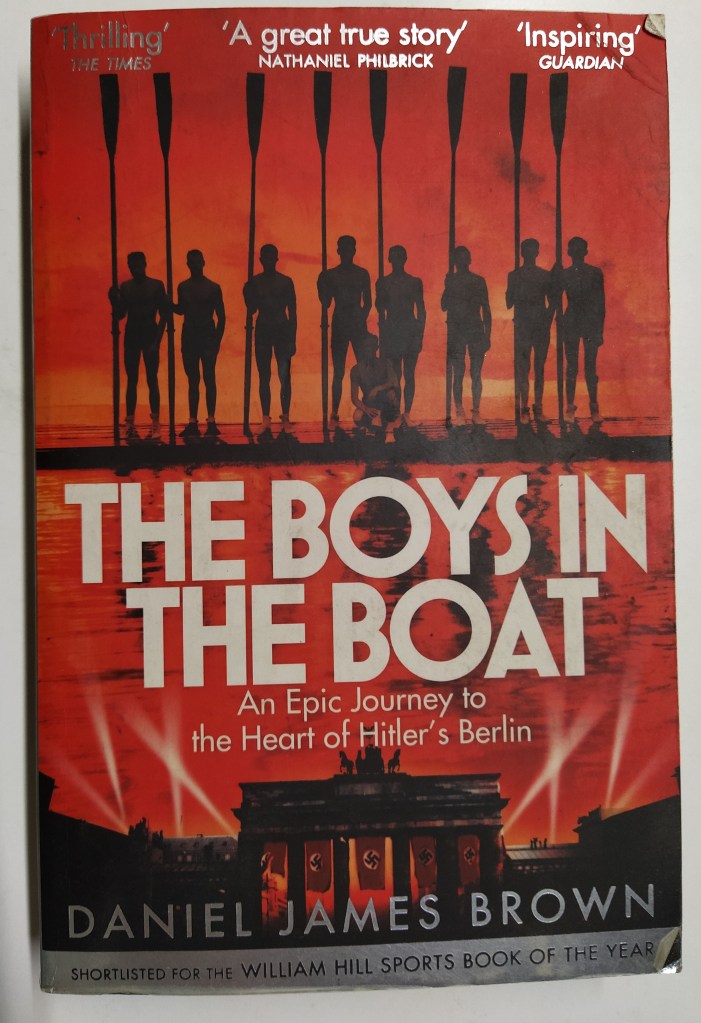
The Boys in the Boat is the true story of the team the represented the United States for the event. How they got there is a moving, inspiring, and often a ‘hold your breath’ account of how a group of young men from working class backgrounds reached, and won, the Olympics. 

These student athletes represented the University of Washington, in Seattle. The story traces how from among the aspiring candidates, eight young men, many of them growing up in the Depression era in poor towns, made it to the team after showing their mettle through some of the most challenging situations including the foulest of weather, almost inhuman demands on the bodies, and the toughest mental trials and tribulations. Following their selection, the story follows how these were shaped into a rowing team (varsity eight) by the coach Ulbrickson, and rowing boat- shell builder and rowing sage George Pocock.

Under the unrelenting regimen set by these men, the motley crew of rookie rowers began their journey to the top. They had to start closer to home, first by defeating the reigning champions on the west coast, the University of California, then competing against the Ivy League teams from the East coast of the United States which had always dominated the sport. These triumphs came after periods of mind-numbing exhaustion, copious sweat and tears. Thus these ‘dark horses’ as they were then, made their way to Princeton for the crucial trials that would qualify them as the official USA team for the Munich Olympics. The destination was in sight, the departure a week away, but not yet a reality.

The next challenge came in the form of the news from the American Olympic Committee that the team had to pay their own expenses for the trip. In the days before “sponsorships” that funded everything from training to outfits, this was a harsh blow for the always cash-strapped University of Washington team. The news spread through the local Seattle newspapers and the community stepped in with donations ranging from 5 cents to several hundred dollars, rapidly collecting enough to give the ‘local heroes’ and their boat The Husky Clipper a rousing send off. An early instance of “crowd-sourcing”!

The team arrived in Germany and even as they acclimatized to the new conditions, climate, and food, they immediately started practising rigorously. They won the qualifying heat, setting world records. But in the final race on the Langer See they had a choppy start.

On that freezing, blustery evening, the men from Washington found themselves in last place. It wasn’t just that they got off to a slow start. Though they’d won their qualifying heat two days earlier–setting world and Olympic records in the process–they had been placed in the last lane, exposed to the brunt of the biting wind much of the course, while Germany and Italy had been awarded the two most protected lanes. The team were trailing badly, until by superhuman will and effort they painfully gained ground, still trailing behind the Germans and Italians, and finally, surging forward to win the race, by just about 10 feet. The boys in the boat had won the Olympic Gold!

The story of how this little known and unlikely team reached to this legendary finish is brought alive in the book by Daniel James Brown. It is told through the memories of Joe Ranz, one of the boys in the boat. The author met Joe Ranz when he was at the end of his life in a hospice. When he started recalling his life, Brown felt that his story needed to be shared widely. Joe agreed, with the caveat that the story should be not just about him but about all the boys and the boat.

The book sensitively captures not just individual histories but also deftly places these within a wider canvas of what was happening simultaneously in Hitler’s Germany. This was the beginning of what was to grow into the devastating persecution of Jews, even as grand stadia were being erected to present a façade to the world.

Above all the book is about the human spirit, its endeavour for excellence, and the innate strength that emerges when least expected. It is about each member having a specific assigned role but which needed to be melded into a seamless team effort. As the wise Pocock put it It isn’t enough for the muscles of a crew to work in unison; their hearts and minds must also work as one.  The story is about the ruthless spirit of competition but equally about team work and cooperation. It is about the vital role of trust even when there may not be complete harmony among the team mates. As coach tells Joe: When you really start trusting these other boys, you will feel a power at work within you that is far beyond anything you’ve ever imagined.

The Boys in the Boat has also been made into a movie. But this does not capture the nuances in the book that make each of the boys in the boat come alive as unique individuals who gelled into an unbeatable team.

In this season of the Olympics, as new stories emerge, these are still stories to remember and celebrate.

–Mamata

A Quarry Blooms: Butchart Gardens

Victoria, the capital of British Columbia, Canada, is a place renowned for its tranquil beauty. And the crown jewel of Victoria is the Butchart Garden. Visited by about 1 million people every year, this 55-acre garden houses about 900 varieties of flowers  tended by 50 gardeners.

Two things are especially interesting about the Butchart.

The first, it is cultivated on the site of an abandoned quarry. Way back in the 19th century, the Butcharts were into cement production–Robert Butchart had started manufacturing Portland cement in 1888 in Ontario, Canada. As his business grew, he and his wife Jennie Butchart decided to move to the west coast of Canada because it had rich deposits of limestone—a critical input for cement production. They started quarrying limestone there, in the Saanich Penisula on Vicotria Island. Jennie trained as a chemist and worked in the company laboratory.

The couple also decided to build a house there, and in 1904, established their home near the quarry.

Jennie was always interested in gardening. In 1907 Isaburo Kishida, a Japenese garden designer from Yokohama, Japan, came to Victoria to build a tea garden at the Esquimalt Gorge Park. Following this, Japanese-style gardens became the rage in the area. Several prominent citizens, including Jennie Butchart, commissioned Kishida to build Japanese gardens in their estates.

This was the start of Jennie’s horticultural journey. In 1909, the limestone quarry was exhausted. Jennie was devastated to see the degradation and destruction left behind. She set about turning it into what came to be known as the Sunken Garden.  She transported tonnes of topsoil by horse-carts and is said to have personally tucked ivy into any hole or crevice in the rock and the grim quarry walls, suspended in a boson’s chair. It was a long process to get the ravaged quarry to bloom, but the garden was ready in 1921. So rather than a wound on the face of the earth which the abandoned quarry might have been, thanks to the relentless efforts of one woman, the site houses a world-famous garden.

After this highly successful reclamation project, Jennie’s ambitions grew and in 1926, she converted their tennis courts into an Italian garden. In 1929, the kitchen garden gave way to a rose garden. 

The reclamation is one part of the story.

The other interesting aspect of the Butchart Gardens are that they family-owned but perfectly accessible to the public.

The gardens came up on land owned by Robert and Jennie. And since then, have passed from generation to generation. The couple gifted the gardens to their grandson Ian Ross on his 21st birthday. He took the mission passionately forward, transforming the garden into an internationally-recognized landmark. Over the course of five decades, Ross not only enhanced the horticultural aspects, but added several performance features, like outdoor symphony concerts, a variety stage show, and in 1987 introduced a Magic of Christmas display.

When Ross died in 1997, his son Christopher took over, expanding the gardens and staff. The weekly fireworks, for which the Gardens are famous even today, were started by him.

After Christopher’s passing in 2000, Christopher’s sister Robin-Lee has been managing the legacy. Barnabas Butchart Clarke, the only child of Robin-Lee and David Clarke, and great-great-grandson of the founders, is next in line.

While the Butchart Gardens continue to be family-owned, they have been a designated a National Historic Site of Canada since 2004.

That the legacy has stood the test of time for almost 130 years is testimony to the fact that Jennie was a woman out of the ordinary. She cared more for her gardens and flowers than fashion, and was usually to be found dressed in overalls and a straw hat. She wanted people to see and enjoy the gardens, and even though there were thousands of visitors even in her lifetime, she was against charging.

The Butchart Gardens have always been at the forefront of taking up environmental causes. Even currently, their site features a campaign against improper disposal of biosolids (nutrient-rich, organic material that are produced as a result of wastewater treatment). They also support NGOs in their area through in-kind donations.

A legacy beyond flowers indeed!

–Meena