The Healing Touch

Almost all of us have been, at one time or another, a patient or the caregiver to a patient. And perhaps one of the enduring memories (good or bad) of that experience may be that of the doctor who treated. From the days of Hippocrates, known as the Father of Medicine, the ‘doctor’ is one of the key actors in the story of life and death.

Society of Bedside Medicine Logo

There was a time, not all that long ago, when the “family doctor” was the first and last word in attending to every member of the family, from babies to the elders. Most of these are still remembered, not so much for their specialized skills, as for their comforting presence and availability, and their personal engagement with the patient. In most cases, the patient was known to the doctor from childhood onwards. Thus the diagnosis and treatment was closely linked not just to the physical, but also to the psychological aspects. Often it was ‘much less about specific diagnosis than it was about knowing the person in front of you and the illness they have, and sometimes the outcome depended much less on the nature of the illness than on the nature of the patient.’

Over time, with advances in the science of medicine, and the new developments in technology that enables more accuracy and depth of diagnostic tests, the medical profession started becoming more and more dependent on these tools. So much so, that in recent times, the first visit to the doctor results in returning with a list of “tests”, based on the results of which, the doctor would begin, at the next visit, to even “look at” the patient, let alone proceed further in diagnosis and treatment. No doubt these advances have led to a deeper understanding of disease and medical conditions, and have hugely benefitted their treatment.  But such advances have made modern medicine so high-tech, research-oriented, data-driven and time-crunched, that somewhere along the way, this has led to the ebbing of the “human touch”, as it were, in the relationship between doctor and patient.

There is however, a section of the medical profession which is promoting the revival of the practice of this ‘human touch’. They believe that physical examination is a key to developing trust between patient and physician. Dr Abraham Verghese is a passionate and leading advocate of this school of thought.

Dr Abraham Verghese is perhaps better known as an author. He became known for his book Cutting for Stone, and his recent book The Covenant of Water has been acclaimed. What is perhaps less widely known is that Dr Verghese is a practicing physician and teacher of medicine, who strongly endorses as well as practices what he calls ‘the ritual of the physical exam’ as the most important aspect of developing trust between patient and physician. He believes that the physical exam is a humanistic ritual that builds trust and creates the crucial bond between physician and patient—a bond that is at the core of quality health care

Abraham Verghese started his medical education in Ethiopia and completed it in India at the Madras Medical College, both places which followed the British system of medical education that put great emphasis on learning to read the body as a text. In an interview he recalled that he had the most wonderful teachers who were incredibly skilled at reading the body as a text. He feel that this is a dying art today. We are getting so enamoured with the data and the images, the CAT scan and the MRI. But sometimes we can lose sight of the human being. …When what patients really need is something simpler and they need to be listened to, they need to be cared for. 

Even as he follows this practice as a sacred ritual, Dr Verghese has been working to institutionalize this in the United States where he has worked for several decades. He founded the Center for Medical Humanities and Ethics at the University of Texas, San Antonio where the motto was ‘Imagining the Patient’s Experience’. He is now a  professor for the Theory and Practice of Medicine at Stanford, where his old-fashioned weekly rounds have inspired a new initiative, the Stanford 25, teaching 25 fundamental physical exam skills and their diagnostic benefits to interns. Verghese feels that doctors spend an astonishing among of time in front of the monitor charting in the electronic medical record, moving patients through the system, examining tests results. In short, bedside skills have plummeted in inverse proportion to the available technology.

The objective of this initiative is to emphasize and improve bedside examination skills in students and residents in internal medicine, and advocating for a similar national effort at all medical schools. Verghese himself teaches students at patients’ bedsides instead of around a table. As he says: I still find the best way to understand a hospitalized patient is not by staring at the computer screen but by going to see the patient; it’s only at the bedside that I can figure out what is important. A part of you has to be objective and yet you have to sort of try to imagine what the patient is going through.

This approach has sparked a movement of Bedside Medicine which believes that the bedside encounter between a patient and physician is central to the practice of medicine. There is also The Society of Bedside Medicine, a mission-based global community of clinician educators dedicated to bedside teaching and improving physical examination and diagnostic skills. Its purpose is to foster a culture of Bedside Medicine through deliberate practice and teaching to encourage innovation in education and research on the role of the clinical encounter in 21st-century medicine.

For many of us who wish for the return to the ‘family doctor’ in an age when this is almost an extinct species, the Bedside Medicine movement spells a ray of hope. This week is celebrated in America as National Physicians Week. In India also we mark Doctor’s Day on 1 July. While this day is marked by thanking doctors, it may also be a good time for physicians to remind themselves of the sacred bonds between the patient and the healer. In the words of Dr. Verghese At its very nature, the experience of medicine, the experience of being a patient, is very much a human experience—patients require the best of our science, but they don’t stop requiring the Samaritan function.

–Mamata

The Colours of Life

We just marked the day of colours. Yes, Holi of course.  

But another one too–the International Colour Day which just went by on March 21. This Day celebrates all aspects of colour and the impact they have on our lives, and how they make the world a better place.

Now who would declare a day for colours? Well, an organization called the International Colour Association (ICA). This is an old and respected institution, which counts the National Colour Associations of over 30 countries among its members. It aims to ‘encourage research in all aspects of colour, to disseminate the knowledge gained from this research, and to promote its application to the solution of problems in the fields of science, art, design and industry on an international basis.’

The idea of an international colour day was proposed in 2008, and adopted in 2009. The particular date—21 March—was chosen because it is the summer equinox—the day when the sun shines directly on the equator, and the day and night are of equal length.

International Colour Day
International Colour Day Logo

If there is a day, can a logo be far behind? Well, not too far! The International Colour Day logo was adopted in 2012. The creator was Hosanna Yau of Hong Kong, who explained the logo thus: ‘two circles form an eye, with an equal half of rainbow color and black representing light a nd darkness, day and night, everyone feast one’s eye on the international color day.

The study of colour is known as chromatics, and is basically about light and its interactions with matter. Colorimetry, which sounds so much more likely a candidate for this, is actually about a related field—‘ the measurement of the wavelength and the intensity of electromagnetic radiation in the visible region of the spectrum. It is used extensively for identification and determination of concentrations of substances that absorb light.’

Colours because of their ubiquity and the emotional and psychological impacts they have, often become a shorthand for other things.

Coming to one of the colour-related matters which has recently been much in the news in India is the Pink Tax. A viral video put out by Sanjay Arora, an advertising veteran, and commented on by several well-known people including Dr. Kiran Mazumdar-Shaw has kept this in the headlines. I have to admit, I had never heard of this, so thanks Mr. Arora!

What is Pink Tax? As the World Economic Forum explains it: ‘Men and women often buy similar day-to-day products. But research shows that consumer products targeted and advertised to women are sometimes more expensive than comparable products marketed to men. This disparity is referred to as a so-called pink tax.’  The video gives several everyday examples, from deos to haircuts, where the  women’s version is more expensive. A research study in the US looked at 800 gender-specific products from nearly 100 brands and found enormous price disparities across product categories.   For instance, personal care products targeted to women were 13% more expensive than similar men’s products. Dry cleaning costs for women’s dress shirts was  almost double that for dry cleaning of men’s shirts!

You will find plenty of examples close to home. Next time you are browsing or shopping, just do a quick comparison Such differential pricing imposes an extra burden on women, who anyway earn less and have less economic power.

My Colour Day resolution is to boycott products which have stark disparities. I will be happy to buy a men’s deo—I don’t there is any difference anyway.

–Meena

Belated Happy Holi!

Namer of Clouds: Luke Howard

Cloud water colour by Luke Howard https://blog.sciencemuseum.org.uk/

23 March is World Meteorology Day. A day when there will be many scientific discourses on the science of the atmosphere and the weather. While not many adults may look up at the sky and marvel at the beauty of clouds as they drift up high, children will look up and imagine, in the continuously changing cloud shapes, everything from elephants to cotton candy! Perhaps few will make any links between the poems and paintings of this beauty with any form of scientific study.

While clouds are almost as old as the earth when it was formed, the science of clouds is much younger. Before the 19th century, the general understanding was that each cloud was unique, unclassifiable and in a state of temporary existence. Instead of strict descriptions clouds, were recorded by colour or individual interpretation. The scientific study of clouds may have said to have begun at the dawn of the nineteenth century, when a young man did more than admire the shapes of clouds, and set out to observe, study and devise a classification system for clouds. This was Luke Howard a London pharmacist and amateur, but ardent, sky gazer.

Luke Howard was born in London on 28 November 1772, the first child of a successful businessman. When he completed school Luke was apprenticed to a retail chemist, and went on to develop his own business, setting up a firm that manufactured pharmaceutical chemicals. While he ran his business, Luke also indulged his childhood fascination for nature, and especially the numerous facets of weather. He built a laboratory at home to observe, collect weather-related data and analyse this; he also maintained meticulous records of his observations.

In 1802 the modest young Luke made a presentation to a small gathering of young science-minded intellectuals in London who called themselves The Askesian Society. The lecture was titled On the Modification of Clouds (Modification referring to classification). In the talk, Howard proposed a common system for naming the recognisable forms of clouds.  In order to enable the meteorologist to apply the key of analysis to the experience of others, as well as to record his own with brevity and precision, it may perhaps be allowable to introduce a methodical nomenclature, applicable to the various forms of suspended water, or, in other words, to the modification of cloud.

Howard proposed a common vocabulary to describe different forms of clouds. The proposed system used Latin names like those that were being used for plants and animals in the Linnaean system. Combining detailed observations with imagination Howard introduced three basic cloud types:

Cirrus (Latin for ‘a curl of hair’) which he described as “parallel, flexuous or diverging fabrics, extensible in any or all directions”.

Cumulus (meaning ‘heap’), which he described as “convex conical heaps, increasing upward from a horizontal base”.

Stratus (meaning ‘something spread’), which he described as “a widely extended, continuous, horizontal sheet, increasing from below”.

He combined these names to form four more cloud types:
Cirro-cumulus
, which he described as “small, well-defined roundish masses, in close horizontal arrangement”; Cirro-stratus, which he described as “horizontal or slightly inclined masses, attenuated towards a part or the whole of their circumference, bent downward, or undulated, separate, or in groups consisting of small clouds having these characters”; Cumulostratus, which he described as “the cirrostratus blended with the cumulus, and either appearing intermixed with the heaps of the latter, or super-adding a widespread structure to its base” and Cumulo-cirro-stratus or Nimbus, which he called the rain cloud, “a cloud or system of clouds from which rain is falling”. He described it as “a horizontal sheet, above which the cirrus spreads, while the cumulus enters it laterally and from beneath”. 

This was a historic lecture for many reasons. His classification brought a sense of order and understanding to a subject that had lacked coordinated thought. There were at the time no documented theories as to how pressure, temperature, rainfall and clouds might be related. Howard’s observations and classification marked the beginning of meteorology, a previously unrecognized area of natural science. The three families he proposed—Stratus, Cumulus and Cirrus , are today included as examples of the ten main cloud types – known as the cloud genera, which are defined in terms of their shapes, their altitudes and whether they are precipitation bearing. Howard’s simple, science-based system of classification was accepted by the international scientific community, and the terms that he coined are still used by the meteorological community across the world.

Howard was not just an observer and recorder, he was also skilled at painting skyscapes with clouds. He was however not adept at painting landscapes and people and a painter friend used to fill in these to complete the picture. He used these paintings to illustrate his talks and publications about cloud classification. Howard’s 32 page cloud book The Modifications of Clouds, published in 1803, is illustrated with his water colours.

Even as Luke Howard was studying clouds, for three decades he also kept daily recordings of temperature, rainfall, and atmospheric pressure in and around London. His comparison of the data allowed him to detect, describe, and analyse the fact that average temperatures are higher in cities than in the countryside. As he described it, the temperature of the city is not to be considered as that of the climate; it partakes too much of an artificial warmth, induced by its structure, by a crowded population, and the consumption of great quantities of fuel in fires. Through his observations Howard was the first to recognise the effect that urban areas have on local climate, many decades before the phenomenon of Urban Heat Islands became the hot topic that it is today.

He published his findings for his “fellow citizens” as volumes titled The Climate of London deduced from Meteorological Observations at different places in the Neighbourhood of the Metropolis in 1818 and 1820, followed by an extensive second edition in 1833. Howard thus became one of the pioneers of urban climate studies.

Luke Howard was elected a Fellow of the Royal Society on 8 March 1821 and joined the British (now Royal) Meteorological Society on 7 May 1850, only a month after the society was founded. He died in London on 21 March 1864.

As we look up at the clouds in the sky, let us remember the one who gave them names.

–Mamata

Easy as Pi!

Well, most people do not think of ‘pi’ as easy. This constant is the bugbear of many a student. The general reaction is ‘The ratio of the circumference of a circle to its diameter is a constant. Something like 3.14…. So what’s the big deal?’

Well, Pi plays a crucial role in many, many calculations within and beyond mathematics and science. It is one of the most widely known mathematical constants and is applied in various calculations, from basic geometry, trigonometry, calculus to complex physics equations and in engineering applications. It is central to calculations related to motion, gravity, and electromagnetic radiation. In engineering, Pi is used in design and construction of circular structures such as bridges, tunnels, and pipes. And in astronomy, it is employed in calculations involving the orbits of celestial bodies and the study of planetary motion. Pi is also important in computer science, where it is used in algorithms for numerical analysis, machine learning, and cryptography. 

Pi

Humanity has been fascinated with Pi for over 4000 years.  The earliest recorded calculations of Pi date back to the Babylonian, Egyptian and Hebrew civilizations—it even appears in a verse in the Hebrew Bible(written around the 4th century BC). The Indian mathematician Aryabhata (476-550 CE), in his work Ganitapada approximated value of Pi as 62,832/20,000 = 3.1416 (more accurate than Archimedes’ ’inaccurate’ 22/7 which was frequently used), but he apparently never used it for anything, nor did anyone else at the time. Famous mathematicians like Fibonacci, Newton, Leibniz, and Gauss dedicated a lot of time to studying the value of Pi, calculating its digits, and applying it in numerous calculations.

These centuries of fascination culminated in someone deciding to do something about it—declaring a DAY for it! On 14 March 1988, the first official large-scale celebrations of Pi Day were organized at the San Francisco Exploratorium by Larry Shaw, a physicist. The events to mark the day included several participants marching around a circle and consuming fruit pies. Since then, it has gained popularity and the U.S. House of Representatives passed a notification in March 2009, recognising 14 March as Pi Day.

Why 14 March? Well, that date is also written as 3.14! And, by coincidence, is also the birthday of Albert Einstein! Pi Day celebrations across the world include calculating more and more digits, and memorizing their value!

Pi has been calculated to over 60 trillion digits beyond its decimal point. As an irrational and transcendental number, it will continue infinitely without repetition or pattern.

Pi has also inspired literary genres! Pilish is a genre which is written in such a way that each digit of pi denotes the number of letters in each word. So, the first word has 3 letters, the second 1, the third 4, and so on. The only novel in Pilish is by the American Mike Keith, with the title: Not A Wake: A Dream Embodying π’s Digits Fully For 10000 Decimals

Mike has also invented the “piku”, which is a Pilish poem based on haiku. And here is something he wrote for Pi Day some years back:

It’s a moon,

A wheel revolving on golden earth, and lotus blossoms.

Mountains embrace windmills, and it all reflects this number, pi.

On the other hand, to celebrate the day, NASA’s Jet Propulsion Laboratory has come up with a series of science and engineering questions that are related to some of the agency’s Earth and space missions.

Well, to each their own favourite Pi or Pie!

Happy Pi Day!

–Meena

New Superfood: Popcorn

What is a whole grain high in dietary fibre, contains protein, vitamins and minerals, is low in fat and sugar, contains no cholesterol, is gluten-free, and helps boost heart health? Among the ever increasing list of ‘super foods’ is, what sounds an unlikely candidate. It is popcorn!

The snack that is commonly associated with brimming buckets in movie theatres and the overflowing bowls within easy reach of couch potatoes has been generally labelled as ‘junk food’. The fluffy crunchy nibbles have more to their history than their addictive aroma and innumerable flavours.

While the most common association of popcorn is with all things quintessentially American, the roots (literally) of its mother grain do not lie there. When we use the word ‘popcorn’ it usually refers to puffed kernels of corn. The word, in fact, refers to a whole grain, which belongs to a group of seeds that come from crops that include barley, millet, oats, rice, and wheat. Popcorn is a strain of maize characterized by especially starchy kernels with hard kernel walls, which help internal pressure build when placed over heat.

This was one of the first variations of maize cultivated from teosinte, a wild grass, in Central America about 8,000 years ago. The popcorn variety of maize was domesticated by Pre-Columbian indigenous peoples by 5000 B.C.E. It is believed that the first use of wild and early cultivated corn was popping. Early Spanish invaders to the Central and South America recorded their discovery of this multi-use maize. Ceremonies of the Aztec Indians involved the use of popcorn, not only as food but also as adornments, in ceremonial head dresses and, necklaces, and as offerings to their gods.

There is also evidence to indicate that the Native Americans also knew of, and consumed this form of popcorn maize. In the early 1600s European explorers who began travelling to the New World recorded that the Iroquois Native Indians in the Great Lakes region popped corn with heated sand in a pottery vessel and used it to make popcorn soup, among other things.

The folklore of some Native American tribes told of spirits who lived inside each kernel of popcorn. The spirits were quiet and content to live on their own, but grew angry if their houses were heated. The hotter their homes became, the angrier they would become, shaking the kernels until the heat was too much. Finally, they would burst out of their homes and into the air as a disgruntled puff of steam.

What is the science behind the pop? A kernel of popcorn contains a small amount of water stored inside a circle of soft starch. The soft starch is surrounded by the kernel’s hard outer surface. As the kernel heats up, the water expands, building pressure against the hard starch surface. Eventually, this outer layer gives way, causing the popcorn to explode. As it explodes, the soft starch inside the popcorn becomes inflated and bursts, turning the kernel inside out. The steam inside the kernel is released, and the popcorn is popped, hot and ready to eat.

The discovery of the exploding kernel may have reached the early colonial settlers to the new World, who were probably the earliest European-American popcorn makers. They tried several methods of popping corn—throwing kernels into hot ashes, cooking popcorn in kettles filled with hot lard or butter, or cooking over an open fire in a wire box with a long handle. By the mid-1800s popcorn became a favourite snack. But it remained largely a home-grown crop used for family consumption. 

In the 1820s it began to be commercially sold throughout the Eastern United States under the name Pearl or Nonpareil. By the 1840s the popularity had spread across the continent. By 1848 the word ‘popcorn’ was included in John Russell Bartlett’s Dictionary of Americanisms. It would be another few decades before the large-scale production of popcorn became possible. This happened when a Chicago entrepreneur named Charles Cretors built the first commercial popcorn-popping machine. Starting with a peanut roasting machine, Cretors went on to develop a machine powered by steam that ensured even heating, and popping, of popcorn kernels. One of the first such machines for popping corn appeared in 1885. Since the machine was mobile, and could mass-produce popcorn without a kitchen, the invention also increased the amount of people who had access to popcorn and thus, the popularity of the snack in America.

Popcorn really caught on during the 1890s. Street vendors, pushing steam or gas-powered poppers, became a common sight at circuses, fairs, and parks. By 1900, the enterprising Cretors introduced a horse-drawn popcorn wagon, and initiated a massive popcorn wave.  In fact, there was really only one entertainment site where the snack was absent: the theaters. Theatre owners felt that the buttery snack would stain their carpets, and the crunching would be a noisy distraction; this was still the age of silent films. Talking movies made their debut in 1927, greatly increasing movie-going audiences, and also customers for in-house snacks. As theatres were still hesitant to install popcorn machines, business for street vendors boomed. They brought their popcorn machines and sold just outside the theatre. Some theatres banned popcorn inside, which increased its attraction! 

The theatres had practical reasons for the not installing popcorn machines. They lacked proper ventilation, which would lead to a build-up of smoky popcorn odours. However, with increasing demand for popcorn they initially leased ‘lobby privileges’ to vendors who could sell there for a daily fee, and whose business continued to boom. Until the theatre owners finally realized the kind of profits that they were missing by not having their own popcorn machines, and went on to make and sell popcorn in the lobby. This proved to be timely; as America plunged into the Great Depression in the early 1930s, movies and a bag of popcorn was all that most families could afford for entertainment. Thus when many businesses collapsed the movie-popcorn combination thrived. And as they say, that was the turning point. Ever since, and up till this day, movie theatre lobbies are inextricably linked with the smell of hot popcorn, in many parts of the world!  

The advent of television in the 1950s made a big dent in movie-going and popcorn consumption. That is until people started making popcorn at home, leading once again to a surge in consumption. The introduction of the microwave, and micro-waveable popcorn was as significant a milestone in its history as was Charles Cretors’ first commercial popcorn-popping machine.  

America continues to be the largest consumer of popcorn in the world. So deeply is this snack entrenched in their lives that Americans have declared a National Popcorn Day to be celebrated on January 19 every year, and a National Popcorn Lovers Day on 14 March. Today popcorn is a favourite snack across the world. From the utterly butterly delicious plain popcorn, to a variety of flavoured ones, everyone has their favourite. Surely a good reason for all popcorn lovers to celebrate!

As a huge popcorn fan myself, cheers to happy Popcorn Lovers Day!

–Mamata

Sleepy Time…World Sleep Day

We who sleep well, generally take sleep for granted. But it is when we cannot sleep that we begin to appreciate how important it is. As adults, at some point of time, we all probably have experienced short-term insomnia which can last for days or weeks and is generally caused by or a distressing event. But some of us suffer from long-term insomnia, also called chronic insomnia.

The necessity of sleep, and what the lack of it can do to us, cannot be underestimated. Doing research on this subject is difficult—after all, we cannot deprive people of sleep to check what happens to them. But the general observation is that after 24 hours without sleep, cognitive effects similar to having a blood alcohol concentration of 0.10% (which is higher than the legal limit for driving) can be seen. Anxiety and agitation set in. Performance on tasks declines, making people more prone to errors. There may be changes to visual perception. After 48 hours without sleep, people may begin to have blurry or double vision, which may progress into distortions of reality and hallucinations. After 72 hours without sleep, a person may begin to slur their speech or walk unsteadily. Hallucinations become increasingly frequent and complex. As people near 120 hours without sleep, they may experience a rapid and severe decline in mental health. This may include symptoms of psychosis, where a person becomes detached from reality and has complex delusions and displays violent behaviour. (https://www.sleepfoundation.org/)

So it is not at all out of place to have a World Sleep Day. This is celebrated on the Friday before the Spring Vernal Equinox, and falls on March 15th this year. It is organized by the World Sleep Day Committee of the World Sleep Day Society, to emphasize the importance of sleep and address common sleep-related issues that many people suffer from.

Human beings generally need between seven and nine hours of sleep, but sleep requirements vary widely across species, as do sleep habits. The general trend is that herbivores who are the prey species not only sleep less in terms of absolute time, but they sleep for shorter periods at a time. Not surprising, considering predators may attack them anytime. And in general, larger animals need less sleep than smaller ones. This is because larger animals have to spend longer time in searching for and eating food.

And to lighten the mood, here are some interesting animal-sleep facts: Impalas specially male impalas hardly sleep, having to be vigilant about predator attacks at all times. Walruses can go for 84 hours without sleep. When they do sleep, they can sleep anywhere on land, on the bottom of the ocean, even floating.    Elephants sleep only 3-4 hours per night. They sleep standing, leaning on a tree or termite mound, or lying on their side. If they lie on their side their sleep is less than 30 minutes, as otherwise their internal organs may get crushed.

An intriguing question is, do migrating birds sleep and if so how? Many birds are on the wing for weeks or months, and they fly day and night, day after day. Then what about sleep? Well, studies on frigate birds have found that they sleep even as they fly! Their power-naps can be as short as 10 seconds! They also have a technique whereby only half their brain sleeps while the other half remains functional. But not all migratory birds do this—many actually take pit stops to eat and sleep.

Well, these species are lucky to be functional with so little sleep, but humans aren’t. So on this Sleep Day, resolved not to take sleep lightly. Get the minimum quota. And if you can’t, talk to a sleep specialist.

Happy zzzzzz…

–Meena

A DAY TO REFLECT

It is March 8, and the newspaper pages are dominated by a plethora of “offers” especially for women. There is much on offer–from designer clothes to jewelry, from cosmetics and ‘make-overs’, to a day of indulgence at a spa or fancy restaurant, and even special health check-ups, all cleverly designed to “celebrate the woman in you!” This day follows on the heels of Valentines/Galentines Day which was all about ‘sugar and spice and all that’s nice’ to make every woman feel special. Tucked away between the gloss and glamour, are stories of ‘women of substance’ and women achievers who overcame many odds to get where they are today. These women certainly inspire a few, but they are quite out-shadowed by the ‘influencers’ with their countless followers.

In all the razzmatazz, not much is remembered about the origins and intent of the day that is today marked as International Women’s Day. The day, ironically had socialist origins and then became a marker of the movement for women’s rights to equality and dignity.

In its official history, the spark was ignited by a march in New York City on February 28 1908 by thousands of women garment workers who were striking to protest poor working conditions and wages. The march was spearheaded by the Socialist Party. However the history of the struggle for women’s rights can be traced further back to 1848 when two American women ‘activists’ Elizabeth Cady Stanton and Lucretia Mott who were attending the World’s Anti-Slavery Convention in London, were outraged at the denial of official recognition to several women delegates because of their sex. On return to America they organized the nation’s first women’s rights convention in New York. The resulting Declaration of Sentiments and Resolutions which detailed the inferior status of women, demanded civil, social, political and religious rights for women. This triggered the American women’s rights movement.

The concept of a day to register women’s voices crossed the Atlantic and reached Europe around 1911. Clara Zetkin, a German communist and advocate for women’s rights, including the right to vote, proposed that the day become an international event at an International Conference of Working Women in Copenhagen in 1910. She believed that if women across the world were synchronised in pressing for their demands, then their collective voice would be too hard to ignore. Her proposal was unanimously backed by the 100 women from 17 countries who were at the conference. The first International Women’s Day was celebrated in 1911, in Austria, Denmark, Germany and Switzerland with rallies campaigning for women’s rights to work, vote, be trained, to hold public office and end discrimination. At the time, celebration was not tied to a particular date.

It was in 1917, that on the last Sunday of February, Russian women, led by Alexandra Kollontai, began a strike for “Bread and Peace” in response to the death of over 2 million Russian soldiers in World War 1. Opposed by political leaders, the women continued to strike until four days later the Tsar was forced to abdicate. As a direct consequence of the marches and demands for universal suffrage in which thousands took part, the provisional Government granted women the right to vote in 1917. Thus Russian women got the right to vote a year before Britain and three years before the United States. Interestingly it was New Zealand that was the first country to grant women the right to vote in 1893.

The date the women’s strike in Russian commenced was Sunday February 23 as per the Julian calendar then in use in Russia. This day matched March 8 on the Gregorian calendar in use elsewhere. And thus the date became associated as a milestone marker in the movement for women’s rights.

In the years that followed, different countries embarked on different paths towards granting women their rightful rights, starting from the right to vote, and embracing equality of access to other opportunities and avenues for growth and development. Ironically, this day is not highlighted in the United States, because of its associations with its Socialist roots and later with communist Russia. However the United States marks the entire month of March as Women’s History Day.

It is only in 1975 that the United Nations marked International Women’s Day for the first time. In December 1977, the General Assembly adopted a resolution proclaiming a United Nations Day for Women’s Rights and International Peace to be observed on any day of the year by Member States, in accordance with their historical and national traditions.

Today, more than a century after the day was marked, there have been many more milestones in the journey of women for their rightful status in all spheres of life—personal, professional, social and political. Every generation has had its challenges and these have thrown up the challengers who have often made it their life mission to carry forward the torch. We have often written about these feisty women in this space.

At the same time, even as women are breaking new glass ceilings, it is still a far cry from becoming ‘a woman’s world’. Women and children are bearing the brunt of war in many parts of the world; women are the most directly affected by the ravages that climate change is wreaking across the globe; women in many countries are at the receiving end of extremist religious beliefs, and women are still fighting for the right to make their own decisions about their own bodies, and minds. There are many new avenues and media to reach out, raise voices, and come together. The same media have the potential to become toxic, to denigrate, to divide and even to destroy. 

Perhaps today is a good day to reflect on this, even as we reminiscence about the women who have made our road to this point less rocky, who have led the first ascents to the seemingly inaccessible peaks, women who have led quiet revolutions at home, in the work place and in society. Let these true women of substance be our role models and inspirations, not just today but every day.

For the Matriarchs, this day marks the starting point of our own journey of sharing thoughts, angst, wild ideas, and laughter. It has been five years of a beautiful celebration with friends, known and unknown. We are truly grateful, and celebrate all our fellow travellers.

–Mamata and Meena

In the century since it was first established, International Women’s Day has come to be marked just as frequently with celebration as it is with protest, but the day’s legacy remains steeped in the struggle for women’s rights — an element that has gained renewed relevance in recent months, particularly as the #MeToo movement has taken on global dimensions.

Image: UN.org

We Got The Blues!

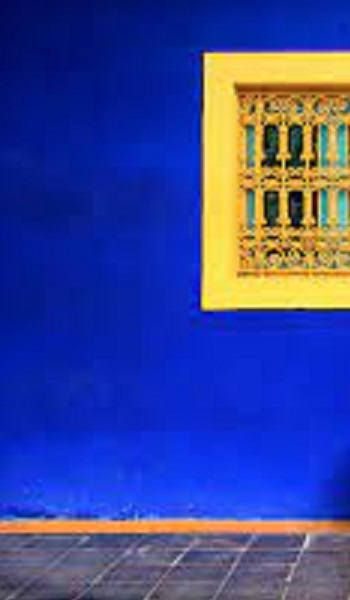
Majorelle blue

Last year we visited Morocco. And of course, one of the highlights of the Marrakesh stay was a visit to the Jardins Majorelle. It is named after the person who created it–Jacques Majorelle, a famous French furniture designer who fell in love with Morocco in general and Marrakesh in particular, and spent most of his life there. He was inspired by the colours and designs of the country. He bought land on the outskirts, and commissioned a Cubist Villa to be built there, which he painted in a particular shade of blue which he developed inspired by the blue tiles widely used in that part of the country. The colour now carries his name, and is trademarked as Majorelle Blue. And as an afterthought, it is also called Moroccan Blue! (I wonder if Marrakesh craftspeople and tile makers whose ancestors must have developed the colour get any benefit from the use of the trademark?!?)

Another artist who added his name to blue was Yves Klein. Over ten years starting 1947, he created what is referred to as the purest blue.  This ultramarine blue is called International Klein Blue.

There is something special about blue. It is invariably voted the most popular colour in American and European polls. It is an ancient colour, associated with the Gods (in India, Krishna and Rama are blue, and Shiva’s throat is blue), and with royalty in many parts of the world. But in many languages, it is one of the last colours to be named! Which seems strange, considering the sky and the seas are some of the vastest expanses human eyes see.

Blue is associated with feelings of calmness and relaxation, as well as stability and reliability. Of course, it is also associated with sadness, which is why we talk about ‘feeling blue.’ Offices are often done up in blue because research has shown that people are more productive and creative when working in blue rooms. In branding and advertising, blue is often used to market products and services which are associated with hygiene(sanitizers and disinfectants), air and sky (airlines and airports), water and sea (cruises, mineral water).

But it is supposed to be a very unappetizing colour! Blue is the least common one amongst the foods we eat. It is said to suppress the appetite, and some diets even recommend eating off blue plates when you are trying to reduce your food intake.

Blue is also a fairly uncommon colour in nature–even the few animals and plants that appear blue don’t actually contain the colour!.

In ancient times, this was one of the most expensive colours to produce, which is why only the royalty and the rich wore it. In India however, it has been in use for over 5000 years, thanks the blue dye derived from the Indigofera Tinctoria (Indigo). Our Indus Valley ancestors dyed their clothes with this.  

This has also been one of the most costly pigments for painters and hence the colour was used only for important subjects. During the Renaissance, the Virgin Mary was the most important subject painted and most art from that time shows her wearing blue.

In pottery however, it has been a mainstay for centuries. Samples of pottery decorated with blue glazes going back to the ninth century are thought to have originated in Iran, developed by craftsmen of Basra. From here, it spread to China, where blue and white decoration was widely used in Chinese porcelain starting from the 14th century. All these glazes used cobalt to give the blue colour.

From here blue pottery spread to Europe, specially the Delft in the Netherlands. And of course, our very own Jaipur pottery is popular too.

Think blue, think calm! Eat off blue, stay thin!

–Meena

And see https://wordpress.com/post/millennialmatriarchs.com/1288