An Extra(ordinary) Day!

When we were in school it was a great novelty to know, or know of, someone who was born on 29 February. There was much banter and joking about celebrating a birthday only once in four years, and therefore being that much younger than others born in the same year! This was about as much as we knew about the phenomenon that was called Leap Year.

Many leap years later, when I realized that this Thursday happens to be the 29th of February, curiosity prompted me to dig a little deeper into the why and how of Leap Years.

My first discovery was that there was a fair amount of solid science, as well as history, behind how this extra day came to be added to the calendar every four years. 

A regular calendar year as per the Gregorian calendar that is most widely followed, normally has 365 days. This is an approximation of time that it takes the Earth to orbit the sun. In reality it takes approximately 365.25 days (more precisely 365 days, 5 hours, 48 minutes and 46 seconds) for Earth to complete a full orbit around the sun. It would be hard, practically, to add a quarter of a day into a calendar every year. Thus while we follow a 365 day calendar for three years, the quarters add up to a full day every fourth year, which is when the extra leap day is added to February, the shortest month of the calendar, making it a 29-day month. In other words, leap years keep the calendar lined up with the Earth’s actual orbit.

This addition is important because it helps to adjust the Gregorian calendar to the solar calendar, so that we remain in sync with the seasons, marking the spring and autumn equinoxes at the same time each year. Put simply, these additional 24 hours are built into the calendar to ensure that it stays in line with the Earth’s movement around the sun. If this difference was not accounted for, then every year the gap between a calendar year and a solar year would widen by over five and a half hours, and over millennia it would shift the timing of the seasons. It has been calculated that in around 700 years the summer in the Northern Hemisphere would begin in December instead of June. 

In other words, the insertion of an extra day is rooted in a complex combination of time-keeping, astronomy and their alignment through mathematics. Interestingly, the insertion of days in a calendar, (known as intercalation) has been tried across civilizations, in an attempt to ensure compatibility between that the lunar and solar schedules, so as to maintain consistency with the seasons. The ancient Egyptian calendar was composed of twelve 30-day months with 5 days appended at the end of every year. In the Chinese calendar, an extra month is added every three years when a “double spring” is celebrated. In the Hindu and Hebrew calendars also, a month is added every three years or so, following the moon’s 19-year cycle of phases.

And then of course is the addition of the “leap day” in the Gregorian calendar every four years. But why the name “leap day” and “leap year?”

The name “leap” comes from the fact that from March onward, each date of a leap year moves forward by an extra day from the previous year. Normally, the same date only moves forward by a single day between consecutive years. For example, March 1, 2023 was a Wednesday, and in a normal year, it would fall on a Thursday. But in 2024, it will fall on a Friday. At the same time, during leap years, January, April and July start on the same day. This year it is a Monday.

The “leaping” of days and years while not scientifically understood by a lot of people was curious enough to generate unusual responses. Over the years, a variety of customs began to be associated with this day. Interestingly, several of these are associated with romance and marriage.

According to lore, in fifth century Ireland, St. Brigit lamented to St. Patrick about the fact that men always did the proposing while women were not permitted to propose marriage to men. Thus St. Patrick designated a day when tables could be turned, but ensured that this would not occur too frequently! This was to be 29 February, once every four years. Thus St. Patrick designated the only day that does not occur annually, February 29, as a day on which women would be allowed to propose to men, and called it Ladies Privilege day. While St. Brigid is usually associated with fertility, care for living things and peace-making, she may also be one of the earliest feminists! There was also a condition attached that if a lady’s proposal was refused, to compensate for her disappointment, the woman would have to be given a gift of silk gloves, a gown or a coat.

The tradition crossed the Irish Sea and reached England and Scotland, and onwards to parts of Europe. In some places, Leap Day became known as Bachelor’s Day. In Scotland the Ladies Privilege tradition was made a law by Queen Margaret in 1288, with the added caveat that women had to wear a red petticoat when proposing!

In Denmark the man who refused a proposal had to give the proposer twelve pairs of gloves, perhaps to help her hide her embarrassment that she was not wearing an engagement ring.  In Finland, the rebuffed lady was to be given a gift of fabric to make a skirt.

Quite the reverse in Greece where it is traditionally believed to be unlucky to get married during a leap year, especially on leap day, because it was feared that it would end in divorce.

In Reggio Emilia, a province in northern Italy, a leap year is commonly known as l’ann d’ la baleina or the ‘whale’s year’. Italians in this region believe that whales give birth only during leap years. In Scotland leap year is considered unfavourable for farmers, as per the old rhyme “Leap year was never a good sheep year.”

And in France, the tradition on this day, is to read a satirical newspaper called La Bougie du Sapeur (Sapper’s Candle). Named after a French comic book character supposed to have been born on a leap day, the newspaper was first published on Leap Day in 1980, and is only published on this day every Leap Year. This is the world’s least frequently published newspaper ever, but the highest selling French paper in a single day. In 2020 it sold 200,000 copies! Perhaps it may break its own record this year.

And last but not the least, the day marks a 4-in-1 celebration for all Leaplings–people born on 29 February. There is an Honor Society of Leap Year Day Babies, an exclusive club indeed. And Leaplings have the added privilege of choosing whether to celebrate their birthday on 28 February or 1 March for the interim three years!

Happy Leap Day to all!

–Mamata

The Shape of Words: Kiki Bouba

Do words have shapes? Or, in other words, are certain words or sounds associated with certain shapes?

Well till about a century ago, linguists did not think so. It was assumed that the connection between words and the objects they are attached to was arbitrary. For example, there is no link between the English word ‘dog’, or the French word ‘chien’, or the Hindi word ‘kutta’ and an actual dog. These are just names that people choose to give objects.

But in 1929 came an experiment by Wolfgang Kohler, followed by others building on this, which changed this thinking.

In the experiment, subjects were given these two words ‘bouba’ and ‘kiki’, and shown two shapes—one rounded and blob-like and the other spiky. Participants were asked to associate each of the given words to one of the shapes.

Over time, the experiment was carried out across regions and languages and ages—900 people across 25 countries.

And invariably, across countries and languages, the majority of people associated ‘bouba’ with the blob-like shape, and ‘kiki’ with the spiky shape. On average, more than 70% of the people tested confirmed the Bouba/Kiki effect– a non-arbitrary mental association between certain speech sounds and certain visual shapes

While this surprising phenomenon has now been accepted, there is no widely-accepted explanation of why it occurs, though several hy­potheses have been put forward. One hypothesis is that the association is related to the shape of the mouth when produc­ing the sounds—the more rounded shape of the lips when saying bouba, and the more taut shape when saying kiki. Another suggestion is that ‘the association is tied to the proportion of vowels and con­sonants and the phonemic qualities of the sounds in the words. It seems that people tend to base sound–symbol associations on the acoustic cues of the sounds.’ But exactly how they do so is yet to be explained.

Some researchers have extended these experiments to other senses. Professor Charles Spence explored the phenomenon in relation to taste. He asked his subjects to associate the words ‘ bouba’ and ‘kiki’ to the following tastes:

  • Dark chocolate / milk chocolate
  • Strong cheddar cheese / brie
  • Sparkling water / still water

Prof. Spence found that kiki was associated with dark chocolate, strong cheddar cheese and sparkling water by most people— in other words, the stronger, more bitter or sour tastes (similar to the spiky shape). Bouba was associated with more rounded, sweeter tastes (similar to the rounded shape).

While researchers are still trying to figure out the science, several interesting practical implications have emerged. Since these associations of sound/shape, sound/taste etc. are real, what happens when there is a mismatch in the image conjured up by a sound, and the real object? Well, people don’t like such dissonance!

For instance, people associate round names (“Bob,” “Lou”) with round-faced (vs. angular-faced) individuals.  And they like targets with “matching” names. One study has found that senatorial candidates in an election got 10% more votes when their names fit their faces very well, versus very poorly! (Will we be seeing a rush of name-changes before elections?!?).

And obviously, these insights are very important in naming products, developing brands, etc.

There are several such kiki-bouba association tests that you can find online. Go ahead and check if your conclusions range with the majority!

–Meena

Wetland in a Dry Land

At first glance the landscape looks like ‘waste land’. Miles of flat land with dry dusty soil punctuated only by the thorny bushes of Prosopis juliflora. The stubble of what seems to be dry remains of grass are barely noticeable. Ironically, we are driving through what is one of India’s unique ecosystems—the Banni grassland. Spread across almost 3000 sq km in the Kachchh district of Gujarat, it is believed that the land here was formed from sediments that were deposited by Indus and other rivers thousands of years ago. The rivers changed course, and the once fertile land gradually turned into a vast arid stretch. Today the region of Kachchh is usually associated with the word rann or desert. However this rann is far more than the textbook description of a desert. The Rann ecosystem of Kachchh is unique, with characteristic landforms, biogeography, flora, and fauna. And though the flat saline stretches are the predominant sight for a large part of the year, these conceal many natural depressions which are transformed into water bodies during and after the monsoon rains. It is these wetlands, within the arid land, that transform into ecosystems themselves, with their special features and creatures.

The local language of the region has four terms to describe these wetlands. The smallest waterbody is called kar, the one bigger than kar is called chhachh, the next bigger one is called thathh, and the biggest is called dhandh. The size of each of these seasonal freshwater wetlands during any given year depends on the amount of rainfall received in that year.

I recently had a chance to visit the largest of these seasonal wetlands called Chhari Dhandh. Spread over around 10 sq km, this water body plays host to tens of thousands of migratory birds who traverse many thousands of miles, as they journey from the frozen steppes of Siberia, crossing the mighty Himalaya, to spend the winter months here. The wetlands are located on the flyway of Palearctic migratory birds who arrive in late August and remain till March, using the ecosystem for foraging, roosting, resting and building reserves for the long return flight back to their summering grounds.  

The water body hosts a huge concentration of water fowl. The drying of the soil due to evapotranspiration after the monsoon rains have receded, and the high salt content in the soil create a unique saline grassland ecosystem that supports a variety of grass species and shrubs that are a vital source of food for important bird species, as well as suitable roosting sites for a variety of birds including lapwings and coursers. The grasses also provide essential nutrients for the livestock of the Banni region, which is renowned for its milk and dairy products.

Visiting the wetland at what is almost the end of the season, we missed the flamingoes, but were rewarded with the sight of thousands of common cranes and hundreds of pelicans, as well as a number of raptors.  

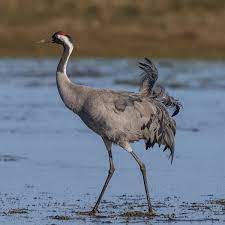
Two birds make their presence best felt in this wetland. The flocks of flamingoes that paint the landscape pink were no longer in residence, but the Common cranes were there in abundance. Their presence was evident all along the edges of the flats, well before the bumpy dusty track ended at the water body. As the vehicle made its dusty way along the track, the seemingly small conglomeration of tiny dots in the distance turned into swathes of smooth wings and tails as hundreds of birds rose as one graceful swoop into the air where they glided on to settle back to earth further on.

These are but short hops for the Common crane who undertakes a marathon flight from Central Asia and Mongolia to winter in the wetlands of Kachchh. The Common crane is a large slate-grey bird, with a long neck, beak and legs. The forehead and the region between the eye and the beak on the side of the head are blackish with a bare red crown and a distinct white streak extending from the eyes to the upper back. The neck, chin and throat are dark grey. The flight feathers are black, with the longest inner ones forming a drooping bushy cloak over the tail when the bird is standing.

This is a shy bird that takes off as soon as it senses that it is being approached. Before taking to the air it runs for a few metres with its wings spread out before it takes to the air. Once in the air, the birds often fly in V-formation with outstretched neck, and stiff wing beats. The flight is smooth and unhurried and makes for a beautiful moving picture high up in the sky. This bird has a wide repertoire of calls, including a loud trumpeting, which carry over long distances.

Common cranes live in large and small flocks. They spend the evening and night near the water body. They leave early in the morning to feed in the adjoining grasslands, and fields on tender shoots and roots, and insects, go back to the water at mid-day, and return in the afternoon to continue feeding until dusk. The feeding flock is always watchful, with a couple of designated ‘sentries’ that immediately alert them in case of any threat, whereupon they take flight. A spectacular flight indeed.

We were lucky to see this sight, along with flocks of pelicans at Chhari Dhandh. During a good rainfall year, the winter season in Chhari Dhandh sees up to 40,000 Common cranes and thousands of pelicans along with a number of other waterfowl, raptors and other birds which include about a dozen globally threatened species and a similar number of near-threatened species as per the IUCN. The area has been identified as an Important Birding Area in India.    

Recognizing the conservation significance the wetland of Chhari Dhandh covering an area of 227 sq km was declared as a Conservation Reserve in 2008. The Government notification towards awarding this status noted that “given its ecological, faunal, floral, geomorphological, natural, and zoological significance, the aim of declaring Chhari Dhandh a conservation reserve is to protect, propagate, and develop wildlife and its environment”. This is the first Conservation Reserve in Gujarat.

A wetland well worth conserving and celebrating.

–Mamata

Hippo Day is a Thing!

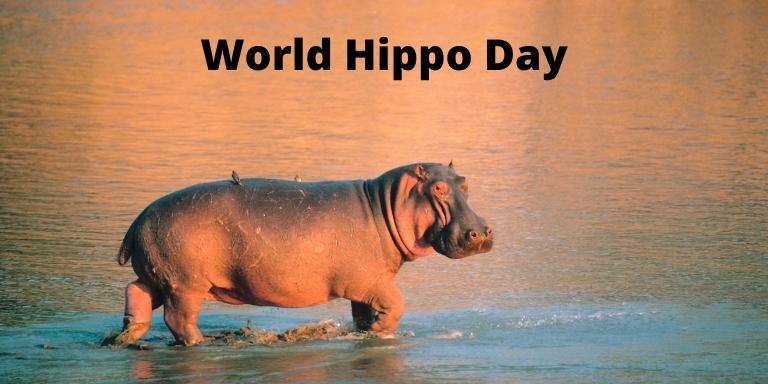
February 15 is marked as Hippo Day.

And come to think of it, why not? After all, hippos are the third largest land animals on Earth (after elephants white rhinos). Males can measure around 3.5m long and stand 1.5m tall, and weigh in at up to 3,200kg.  That’s a weighty reason to allocate a day for them!

On Hippo Day, here is an interesting story.

Hippo
Credit: Animalia Facts

A hippo can eat up to 35kg of grass in one night. And it is this ability to munch down herbage in quantities, and their very bulk, that led to a strange development in the US in the 1910s. Senator Robert F. Broussard, who represented Louisiana, brought a House Resolution for large-scale import of hippos to the US. No, not as a curiosity or to keep in zoos. But to solve two problems that America was facing at that time.

The first was the widespread proliferation of water hyacinth. First brought in as an ornamental water plant from the Amazon, the hyacinth spread madly, and within two decades, had overtaken waterways across the South of the US, threatening water trade routes. Several ways to get rid of the weed were tried—from breaking plants up, to dredging them, to setting them on fire. But nothing stopped the weed. 

The second problem was the steeply rising prices of meat, making it unaffordable for many. The fundamental reason is not clear—it could have been the rising prices of grain, cattle shortages or profiteering by meatpacking companies. Or a combination of all of these. But there were people in the US who seriously feared that they would be forced into vegetarianism which they saw as a disaster. (It was a different time, wasn’t it?)

Senator Broussard and some friends came up with the completely out-of-the-box and bizarre idea of importing hippos to solve this twin crisis. Their claim was that the hippos would happily chomp their way through the hyacinths. And that their flesh would be a great source of meat and protein for the Americans!

And so they moved the “American Hippo Bill” in 1910! Ex-President Teddy Roosevelt was among its supporters.

The House Committee before which the Bill was presented asked some very sensible basic questions: Could hippos be domesticated? Could they be contained? Would they eat the water hyacinth? Is their meat edible? Broussard and his colleagues answered with a resounding ‘yes’ to all the questions.  

But the answers, we know today, are ‘No’ in each and every case. Hippos are not domesticable. They are known to kill about 500 people every year.  They are extremely strong and heavy, and it would be almost impossible to contain them with even the strongest fences. And they are very unlikely to have made water hyacinth a serious part of their diet. They feed mainly on grasses and would not have taken to this weed which is very low in nutritive value. And though hippo meat is eaten, it is not widely consumed.

There would have been other serious negative ecological impacts of introducing hippos into the waterways too—their heavy treading in water bodies would stir up the mud, and their poop would add to the organic load in the water, and would completely disturb the dynamics and lead to algal blooms and other problems.

Fortunately sense prevailed in the House Committee and they vetoed the Bill. Else, who knows what the American landscape would be like today!

And now for some Hippo Trivia to celebrate Hippo Day

We think of hippos as African animals, but nearly 5.9 million to 9,000 years ago, India was home to the hippopotamus. These entered Eurasia from Africa, and later diversified into South Asia before going extinct.

They can hold their breath and walk under water for up to 5 minutes.

Hippos may look bulky, but they are quite athletic, and run at speeds of up to 30kmph!

A group of hippos is called a bloatOther terms for a hippo group include thunder, herd,  sea, school,  pod,  dale,  crash, and  siege.

Happy Hippo Day!

–Meena

See also:

Homes for Hippos: https://wordpress.com/post/millennialmatriarchs.com/4830

Beware the Kiboko: https://wordpress.com/post/millennialmatriarchs.com/2707

A Week of Celebrations

Just as the January festivities that heralded the New Year have waned, the early days of February have their own set of celebrations. From Galantines Day and Valentines Day, to Basant Panchami, to the Chinese New Year, this is a week that celebrates new beginnings.

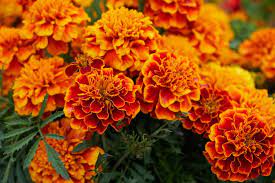
Meena has written about the history of the first two days. The third day, Basant Panchami falls on the fifth day of the Hindu month of Magha. This year this happens to be on 14 February. This auspicious day, marks the first day of spring in the Indian seasonal almanac. This is also the day to pay homage to Saraswati, the goddess of learning, music, arts and wisdom. Homes are decorated with marigold flowers and rice flour rangoli, special food is cooked and distributed to family and neighbours after the traditional puja to invoke year-long blessings of the Goddess for knowledge and progress. Yellow is the colour that marks this celebration of spring—from wearing yellow clothes to the myriads of marigold ornamentations.

Celebrations of another spring festival in another part of the world also commenced this week with joy and fervor. This is the Chinese New Year, which like Basant Panchami, is determined by the lunar calendar. These celebrations, which last for 16 days, commenced on 10 February this year. The Chinese Spring Festival was originally a ceremonial day to pray to gods for a good planting and harvest season. As in all agrarian societies, the entire year was dependent on a good harvest. People also prayed to their ancestors, for their blessings. Even today, Chinese New Year heralds a time of renewal, prosperity, and festivity, not just in China, but for Chinese communities across the world. Celebrations symbolize fresh beginnings and a renewal of familial ties, and it is customary for family members from far and wide to travel to meet up for reunions and gatherings.

The Chinese zodiac follows a twelve-year cycle with each year assigned to an animal. The twelve animals are arranged in this order: Rat, Ox, Tiger, Rabbit, Dragon, Snake, Horse, Goat, Monkey, Rooster, Dog, and Pig. 2024 is the Year of the Dragon according to this zodiac. The dragon holds significant cultural importance in Chinese folklore. The Chinese people deeply cherish the dragon which is believed to represent strength, wisdom and good fortune. The dragon, this year’s Chinese zodiac sign represents power, magic, and the pursuit of one’s desires. Each animal in the zodiac is thought to influence the personality traits and fate of those born that year. Individuals born in the Year of the Dragon are thought to be blessed with good luck.

As in all traditional societies, there are a number of customs that mark the special days. Unlike most festivals which are preceded by a special round of ‘spring cleaning’, in the run-up to Chinese New Year’s day, traditionally bathing was not allowed on this day, as also sweeping  throwing of garbage, a few days prior to this day. This is to make sure that all the good luck is not swept or washed away! On the other hand there is a designated day before the New Year which is dedicated to cleaning so as to sweep the bad luck away and make room for the good. A delicate balance indeed! There are a few other taboos during the New Year period, once again to guard against any ‘seeping changes’. No cutting of hair or nails, no use of sharp objects, no breaking no swearing, cursing or saying unlucky words like ‘death’ or ‘sickness’.

While Indian spring festival is marked by the exuberance and cheer of yellow, it is red that marks the heralding of a new year in China. Houses are decorated with red lanterns, strings of red chilli peppers (real or fake), and red decorations on walls and doors. Red clothes are also a part of the Spring Festival wardrobe. It is believed that the colour red will help to deter evil and demons. Children traditionally receive money in red packets or pockets are they are called. These symbolize the transfer of good fortune from elders to the youngsters. The practice has its origins in folklore.

As the legend goes an evil spirit named Sui would appear on New Year’s Eve and pat the heads of sleeping children three times. This would make the children sick. One couple was playing with their child at bedtime with some coins and left the coins on red paper near the child as it slept. That night when the sprit Sui came it was frightened away by the coins glinting on the red paper. Thus began the tradition of giving children coins in red covers on New Year’s Eve, to guard against evil spirits and for their good health and fortune through the year. The tradition continues to this day.

The other tradition which is closely linked to the celebrations is the bursting of crackers, just as Diwali celebrations are marked in India. This one too has a legend attached. Another mythical beast named Nian who preyed on people and livestock, used to visit villages on New Year’s Eve, forcing people to hide in fear in their houses or escape to the mountains. There are two versions of the story. In one, a young boy burst crackers and scared away the monster. In another, a beggar took refuge in an old woman’s house and promised to save her from the monster. He pasted red papers on the doors and windows and burst crackers at midnight, both of which frightened away the monster. Thus bursting of firecrackers at midnight on New Year’s Eve and again on New Year’s morning has continued to be a tradition associated with this festival.

Ironically, due to safety reasons and air pollution concerns, the Chinese government has banned firecrackers in many cities in China. However there has been a lot of public pressure to allow people to celebrate an ages-old tradition of welcoming the New Year with the sound and light of firecrackers.

On another note, the Chinese government is hoping that the declining fertility rate and falling population numbers which has reached worrisome levels will get a boost with a flood of new babies born in the Year of the Dragon. According to the traits associated with the Chinese zodiac children born in this year will be imbued with strength, intelligence, confidence, and success. Thus it is hoped that parents will hope to conceive and deliver dragon babies in this year!

Whatever the mode of celebration, spring marks new beginnings, hope and freshness. Celebrating red and yellow every day of the year.

–Mamata

Valentine’s-Galantine’s

Media are frantically trying to sell us everything from roses to chocolates to romantic dinner. ‘Tis the season—the Valentine season. The origins of Valentine’s Day as a day to celebrate romantic love go back a long time.  But the commercialization is a phenomenon of the last century.

Fortunately, at least in India, the sellers have not fully caught on that it is actually Valentine’s Week celebrated from 7 February to 14 February, with the seven days including  Rose Day, Propose Day, Chocolate Day, Teddy Day, Promise Day, Hug Day, Kiss Day, and finally, Valentine’s Day.

The origins of Valentine’s Day may lay in the Roman festival of Lupercalia which used to fall around the same time–essentially a spring festival which included fertility rites. A 5th century pope banned the celebration of Lupercalia, but it came back with renewed vigour in the 14th century and has been celebrated since then.

There have been many St. Valentines down history, and it is not quite clear after whom the festival is named. From a priest who was martyred about 270 CE by the emperor Claudius? According to legend, this priest who was incarcerated by the Romans, was friendly with his jailer’s young daughter, whose blindness he is said to have cured, and subsequently wrote her a letter which he signed off with “from your Valentine”. Or was it St. Valentine of Terni? Or a St. Valentine who defied the emperor’s orders and secretly married couples to spare the husbands from war?

At any rate, the festival is now celebrated world-wide on the 14th of Feb as a day of love.

But another day which is of fairly recent origin, and celebrated on 13th Feb is Galantine’s Day. It is like Valentine’s Day, but for girl-pals! It celebrates the bonds between best friends, sisters, moms, grandmoms….

The origins of this one are quite clear—it all started with the comedy show ‘Parks and Recreation’. Leslie Knope, played by Amy Poehler used the term in the second season of the show in 2010. She kind of makes up this day and says ‘What is Galentine’s Day? Oh, it’s only the best day of the year. Every February 13th, my lady friends and I leave our husbands and our boyfriends at home, and we just come and kick it… ladies celebrating ladies.”

Guys of course don’t need to feel left out. After all, the term ‘bromance’ is much better known than Galentine’s Day. It was coined sometime in the 1990s, by Dave Carnie, the editor of the skateboard magazines Big Brother, in reference to the close bond that develops between skaters who spend a lot of time together.

Bromance is a portmanteau word, made up of bro (or brother) and romance  A bromance is officially defined as ‘a very close and non-sexual relationship between two or more men’. It is distinguished from normal friendship by a particularly high level of emotional intimacy.

Here is to Galentine’s Day! May we celebrate it in the true spirit of friendship and bonding, and not let it go the commercial way of Valentine’s Day.

With a shout out to all my girl-pals!

–Meena

PS: www.millennialmatriarchs is a Galentine initiative!

On A Musical Note: Of Earworms and Mondegreens

Who hasn’t, at some time or the other, had a song or piece of music stuck in their heads, which just won’t go away! You get up in the morning, and suddenly you find yourself humming a tune. It follows you around the house, to the office, on the drive back home. It serenades you inside your head through dinner. And sometimes it is still there when you wake up in the morning!

This is what is called an earworm. Extremely irritating, but nothing to worry about. It happens to most of us at some time in life. A recent study of American college students found that 97% had experienced an earworm in the past month. Other studies have found similar results.

And don’t worry how long an earworm troubles you. Though the typical length is 10 to 30 minutes, research shows that for about 20% folks, the earworm lasts an hour or more. And some unlucky folks have been stuck with one for a year or even longer!

The term earworm comes from the German “ohrwurm,” which  is defined as a “cognitive itch” or “the inability to dislodge a song and prevent it from repeating itself in one’s head”. Several terms have been coined for this, including stuck song syndrome, sticky music, musical imagery repetition, intrusive musical imagery etc. The semi-official term is ‘involuntary musical imagery’, or INMI.

It has been a serious area of study since 1885, and scientists hope to get insights into the functioning of the brain. Several major universities have been undertaking studies into the phenomenon.

Sufferers try various ways to get rid of an earworm– by thinking of another song, singing the earworm song all the way through to its end, or taking up other tasks that require focussed concentration. But trying to get rid of an earworm may be counter-productive. One study has found that the harder people fight to quiet an earworm, the longer it tends to harass them!

Something that is not irritating to you, but may be to others if you sing, is a mondegreen. A mondegreen is a word or phrase in a song or poem that you get wrong–the result of mishearing something recited or sung. Incorrectly heard lyrics are called mondegreens.

The origin of the word itself is from an instance of such mishearing. In a column by journalist Sylvia Wright in the 1950s, she wrote about a Scottish folksong The Bonny Earl of Morray that she had listened to. Wright misheard the lyric “Oh, they have slain the Earl o’ Morray and laid him on the green” as “Oh, they have slain the Earl o’ Morray and Lady Mondegreen.” And ever since, such mishearings have been referred to as mondegreens!

The scientific explanation goes as follows: Hearing is a two-step process. First sound waves make their way through the ear and into the auditory cortex of the brain. On receiving the signal, the brain tries to make sense of the noise.  Mondegreens occur when, somewhere between the sound and the sense-making, communication breaks down. You hear the same sound as another person, but your brain doesn’t interpret it the same way.

Sometimes we may just mishear something because it is noisy, the phone signal is weak, or there are other extraneous factors. Or it may be because the speaker is speaking in an unfamiliar accent or is mumbling.  So the sound becomes ambiguous and our brain tries its best to resolve the ambiguity—and gets it wrong.

Another common cause of mondegreens is the oronym–word strings in which the sounds can be logically divided in different ways. This is similar to what we call sandhi vichhed in Sanskrit—the process of analysing and separating compound words into their component parts. Oronyms result in a wrong parsing of sounds when context or prior knowledge is missing.

Yet another reason could be letters and letter combinations which sound alike, and without a context, we can go wrong, and one sound can be mistaken for the other. An example often given to illustrate this is, :“There’s a bathroom on the right” being heard as “there’s a bad moon on the rise”.

When we hear a sound, a number of related words are activated all at once in our heads. These words could be those that sound the same, or have component parts that are the same. Our brain then chooses the one that makes the most sense. In this choosing, we are more likely to select a word or phrase that we’re more familiar with. An oft cited example is that if you’re a member of a boat crew, you’re far more likely to select “row” instead of “roe” from an ambiguous sentence. If you’re a chef, the opposite is likely.

Some mondegreens become the word!  For instance, the word orange was such a widespread mispronunciation of “a naranj” (from Persian and Sanskrit), that it became the official name of the fruit! One can think of any number of place-names which the English mangled, for instance!

Bollywood songs of course have their share of mondegreens. Though not systematically documented, some common ones identified include:

From the song Hawa Hawai (Mr. India):Bijli girane mai hoon aayi’ being heard as ‘Bijli ki rani mai hoon aayi’; and from the song Banno (Tanu weds Mannu) ‘Banno tera swagger laage sexy’ being heard as ‘Banno tera sweater laage sexy’.

Raghu has these examples from his childhood (which he attributes to the poor sound quality of radio transmissions of those times):

Hearing ‘Yeh manzar dekh kar jaana’ (from the film Around the World) as ‘Yeh mandir dekh ke kar jaana’ (could be a jingle for a recent event!); and ‘Ahsan tera hoga mujh par’ (from the film Junglee)  as ‘Ahsan tera ho gaa mujh par’!

The only request: If you have a mondegreen, don’t sing the song aloud. You may give someone a more than usually horrible earworm!

–Meena


Mules: More Than Just Beasts of Burden

The mule has always borne the brunt of uncomplimentary analogies. Stubborn as a mule, mulish behavior… a synonym for obstinate, pig-headed, refractory, headstrong, wilful, and generally self-willed. This uncomplaining beast of burden has hardly received its fair share of credit. And yet, over centuries it is these silent plodders and sloggers that have been the backbone of many military campaigns.

Mule trains were also the primary means of transporting goods across difficult mountainous terrains, especially in Central Asia. They were ideal pack animals to accompany the trading caravans. In Mughal India Emperor Akbar popularized the use of mules in place of oxen which were commonly used then. He kept stables for mules and expected his officers to keep a certain number of mules. The British were not as impressed with the local mules and imported large numbers of these sturdy workhorses from South Africa and Argentina.

The tables were turned during World War II. By this time the British army was beginning to phase out Animal Transport Companies which used to be an integral part of the army. But the conditions in France where the war was raging required transportation of supplies to remote areas where mechanized vehicles could not reach. Thus the decision was taken that each division in the British Expeditionary Force in France should have an animal transport company made up of mules. 2700 mules were shipped from Bombay to Marseilles; they reached without any losses and successfully operated in France through the bitterly cold winter conditions.

What makes the mule such a sturdy animal? But even before exploring that, what makes a mule?   

A mule is a cross between two species of equine: the horse or pony (Equus caballus) and the domestic donkey (Equus asinus). The word ‘mule’ is generally used for the cross of male donkey and female horse. The cross between a female donkey and male horse, is known as a ‘hinny’. Usually mules do not breed naturally, but are specifically bred. Properly-bred mules are handsomely rugged creatures, larger than donkeys, but more solid than horses, giving them a distinctly different look.

The hybrid of horse and donkey makes for a sturdy combination. Mules are stronger than horses (weight for weight), and have tremendous stamina and resilience. They can sustain on frugal diets. They are exceptionally sure-footed, and have very hard hooves, which enables them to successfully negotiate difficult terrains. Their hide is thicker than that of horses so they can wear a harness and carry heavier loads for longer stretches. They can withstand extremes of temperature, and are relatively less prone to lameness and illness.

The stubborn temperament that makes for the many analogies is in fact more than just a mule being mulish! The obstinacy is a manifestation of a mule’s talent for self-preservation. A mule instinctively follows the path of great care when treading on uncertain terrain. It will instinctively balk when its feel its life is threatened. In looking after itself, it also takes care of the cargo it is laden with, and therefore can be trusted to deliver its cargo, including humans, safely.

The mule’s reputation for obstinacy and bad-temper is not a manifestation of its thick skinned appearance, but on the contrary an indication of its wary nature. A mule is very defensive until it trusts a person, and will kick out as a protective measure, not an act of aggression. Whatever the case, mules kick fast, hard and accurately, and hence are best kept at a safe distance till they are comfortable with what they need to do. The mule cannot be forced to do anything, but must be persuaded to cooperate! And till this happens, the tug of war between man and mule will continue, as will the “stubborn as a mule” epithet.

Mules are highly intelligent, perhaps even more than horses. They are very quick to learn, and have an instinctive grasp of a situations. They just need the right handling. A badly trained and handled mule can be a real problem. A well-trained and handled mule can be obliging, kind, patient, persevering, calm, tolerant, sensible, loyal, affectionate, even playful. Not words usually associated with its legendary truculence!  

Little wonder then that mules have continued to be an important component of the Indian Army. They are invaluable at high altitudes where the road connectivity is very bad, and the terrain impassable in the severe winters. The mules are the lifeline for the army, carrying essential supplies of food, construction material, and arms and ammunition to remote border posts. A mule can carry a load of 100 kg and can cover a distance of 40 km in a day. Mules are often described as the unsung heroes of the Indian Army.

The Indian Army has more than 6000 mules who tirelessly carry out these challenging missions. The mules are divided into 15 units. They are categorized on the basis of the loads they carry. The mules assigned the task of carrying heavy arms and ammunitions are part of the Mule Artillery, while other supplies ranging from food and water, to medicine is transported by the Mule General Service. Each mule has one or two handlers, depending on the load and terrain. There is also a nursing staff with them as they move from place to place. They are fed a fixed ration of 2.55 kg of barley, I kg of chana and 7 gm linseed per day.

Pedongi: A celebrated mule

The recognition of the critical role of mules has been largely overlooked by the army. However, there are some legends shared about exceptional mules and their feats. Perhaps the best known one is that of Pedongi, a mule who carried out her duties in the 1971 war unfazed by the crossfire. She was part of an Animal Transport column captured by the Pakistani army, but managed to escape and cross the border back to an Indian post, carrying Pakistani munitions on her back. Pedongi was honoured by the Indian Army for her bravery, and continued to serve at high altitudes for many years. Pedongi entered the Guinness World Records as the longest serving military mule when she died in 1998. Her contribution continues to be remembered in the Central Army Service Corps officer’s mess lounge which has been named Pedongi in her memory.

Recently there is news that the Indian Army plans to disband its entire Army Transport fleet by 2025 and replace it with drones–unmanned systems that would carry loads in high-altitude areas. It has already reduced its numbers of mountain artillery mules and plans to retire the general service mules. The retired mules will receive commendation cards for their service with the Indian military. The retirement of mules will also mark the end of unique links between man and beast that have contributed to the security of our nation for over a century.  Truly the end of an era!

–Mamata