Lighthouses: Beacons of the Coastline

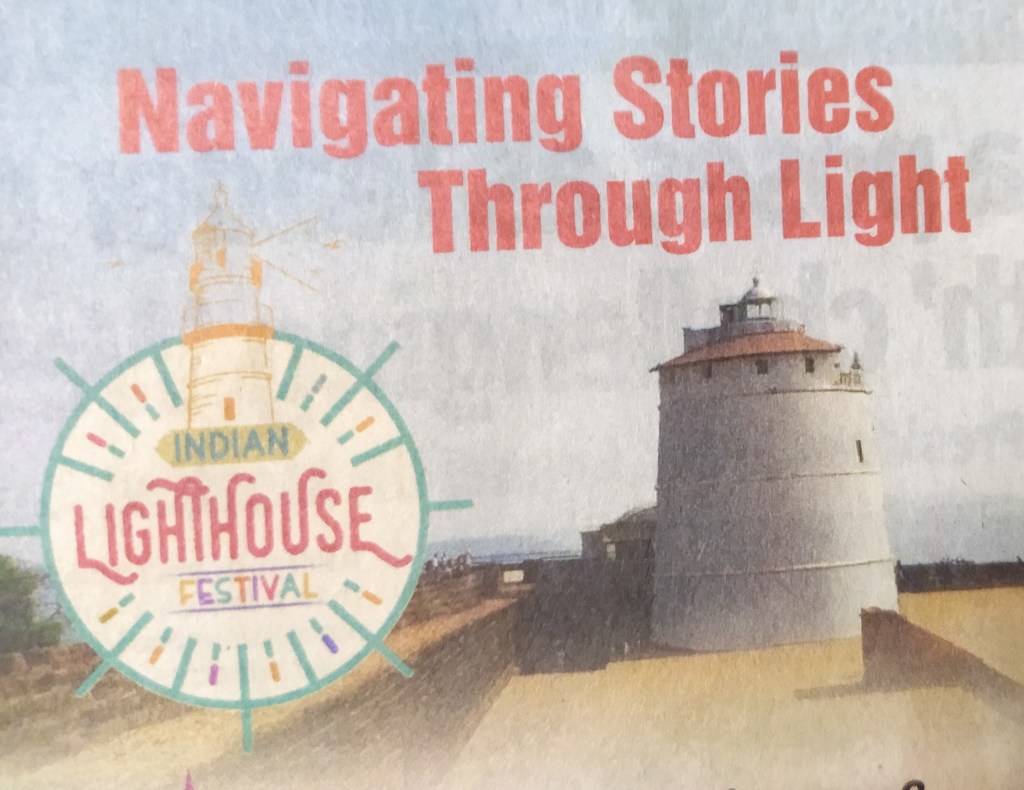
As the country gears up for Diwali, the Festival of Lights, India recently celebrated its first Lighthouse Festival. This is the first time that the spotlight is on lighthouses in India. The festival which was flagged off at Goa’s historic Fort Aguada, is aimed at rejuvenating the rich maritime history of 75 iconic lighthouses of the country, and promoting lighthouses as tourism destinations.

In a country which is so rich in the wide range of world-renowned monuments, spanning different eras and styles of architecture, there has not been much attention on lighthouses as heritage structures. Although there are nearly 200 lighthouses dotting the coast of India, not much is known about them, nor are they high on tourists’ itineraries. However the history of lighthouses in India is long and interesting.

The building of lighthouses in India is generally attributed to the colonial rule. The British, as well as the Portuguese and Dutch who ruled some of the coastal parts of the empire developed and constructed lighthouses at strategic points along the coastline. But India’s maritime history goes back much further, and where ships sailed, there must have been systems to guide them. There are sources that indicate that lighthouses also existed long before.

It is believed that lighthouses were built in India in the 3rd century BC by Emperor Asoka who was a contemporary of Ptolamy II, the Egyptian king who built the famous lighthouse—the Pharos of Alexandria which is the first known lighthouse, constructed between 300 and 280 BC. This was one of the Seven Wonders of the Ancient World.

The first known lighthouse in India was at Puhar Port in Kaveripatnam, an ancient South Indian port city. The famous Tamil writer Illango Adigal of 5-6 century AD in his book Silappadhikaram (one of Tamil literature’s Five Great Epics) had explained in detail about the beautiful lighthouse on the Bay of Bengal coast, and the numerous ships anchored at Puhar port, which was doing brisk business those days.

After the invasion of the Indian subcontinent by the Portuguese, Dutch and the English, trade and commerce through sea increased several folds, and over a period of time, lighthouses were built all along the coastline of the Indian subcontinent to guide the seagoing vessels as they approached the coast. These lights were maintained by the local rulers and port authorities.

As ports became busier, the need was felt for more navigation lights. At Colaba, the entrance to Bombay, the chief seaport of the time, the light was provided by a moored light vessel off the coast in 1842. In 1847, first lighthouse was constructed on Colaba point with a revolving light that gave a bright flash every two minutes. The next lighthouse to be constructed was at Karachi port in 1851. This was followed by a lighthouse on Piram Island in the Cambay Gulf, and then on the north mouth of the river Tapti, which was called the Hazira lighthouse. In 1856 a number of other lighthouses were constructed at important points along the western coastline of India. Among these was the lighthouse at Fort Aguada in Goa, which was the venue of the recent Lighthouse Festival.

The construction of lighthouses continued further south along the Malabar Coast through the nineteenth century. A similar exercise was also under way along the eastern coastline from Calcutta down to Madras. As the number of lighthouses increased, it became essential to establish an authority to control and maintain these lights. After detailed discussions and consultations, it was decided to constitute a Lighthouse Department in British India (with jurisdiction extending from Aden to Rangoon). The Governor General of British India gave approval to the Lighthouse Bill on September 21, 1927, and the Lighthouse Department was constituted. To commemorate this, every year 21 September is celebrated as Lighthouse Day in India.

Initially the department had control of 32 lighthouses. Today India has nearly 200 lighthouses, some of which are centuries old, which continue to be regulated by the Lighthouse Act of 1927. These range from the ancient now crumbling edifices; those painted with traditional red and white stripes, to imposing modern steel structures. Only a few of the original structures remain, some have been repaired as heritage structures, while several new automated towers have come up. Many are equipped with modern radar infrastructure, and equipment to collect weather data. The lighthouses are administered by the Directorate General of Lighthouses and Lightships, under the Ministry of Ports, Shipping and Waterways of the Government of India.

For many of us lighthouses are something that we associate with stories of smugglers, shipwrecks and rescues, or one of the many sights that we may take in as part of a seaside holiday. My own association with lighthouses stems back to the adventures of Enid Blyton’s Famous Five; and the rotating light that arched through the night sky on our summer holidays in Diu. But there is a serious global community of lighthouse lovers who study lighthouses. The scientific study of lighthouses and signal lights, their construction and illumination is called Pharology or pharonology. The term has its roots in the ancient Greek pharos (meaning lighthouse) and logos (discourse). Pharos was also the name of the famed lighthouse of Alexandria. These lighthouse enthusiasts or pharologists, not only study and document lighthouses around the world, they also work to promote the cause of lighthouses and light vessels. They are members of the World Lighthouse Association, and share their passion through the Lighthouse Digest.

D Hemachandra Rao, a retired engineer of Chennai turned his hobby into an ‘epic lighthouse yatra’ by journeying across India to visit and document every functional and non-functional lighthouse on the Indian coastline. Starting when he was in his mid-seventies, Rao travelled extensively along India’s coastline, sharing his descriptions and pictures of his findings through his Facebook Timeline. Known as the Lighthouse Man, Hemachandra Rao passed away in June 2022 at the age of 82, leaving behind a rich legacy in the form of a Maritime Heritage Museum that he set up in his house in Chennai. The museum includes hundreds of photographs of the lighthouses that he had visited.

Mr Rao believed that lighthouses had relevance even in the age of satellite technology. He said “the small light, coming from distance, still navigates the humble fishermen… even today we hear stories of fishermen coming to the shores safe led by the small light”.

There is no fog so dense, no night so dark, no gale so strong, no mariner so lost but what its beacon light can rescue. It beckons through the storms of life. It calls, ‘This way to safety; this way to home’. Thomas S Monson

–Mamata
Cough, cough…

For the past few weeks, I was plagued by a cough. I am assured by sources that it is very good for me to cough—for instance, the Cleveland Clinic says ‘A cough is a natural reflex that is your body’s way of removing irritants from your upper (throat) and lower (lungs) airways. A cough helps your body heal and protect itself.’

I am yet to be convinced!

There are apparently many ways of classifying coughs.  One is related to how long they last. Acute coughs are those which start suddenly and last a few weeks. Sub-acute ones follow infections, and last for a month or two. Chronic coughs persist longer than 2 months. And Refractory coughs are chronic coughs which don’t respond to treatment.

Another way of classifying them is in terms of whether or not they produce mucous. Dry coughs are those which do not. Productive or wet coughs bring up phlegm or mucous.

Some coughs come on at night, and are called nocturnal or night-time coughs. Others are day-time coughs.

Some types of coughs produce distinctive sounds and indicate the underlying condition: e.g., the whooping cough where the cough sounds like a ‘whoop’ is a specific infection. A barking cough may be an indicator of croup. And when coughing is accompanied by wheezing, it may be associated with some infections or with asthma.

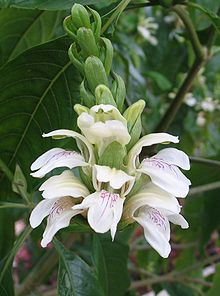
Vaska plant
Vasaka plant, native to the Indian subcontinent, forms a basis for many cough syrups

And what about treatments? Well, you can take a cough syrup, a lozenge or rub on something.

Of cough syrups also, there are different types: Suppressants or antitussives do their job by blocking your cough reflex. These are for dry coughs and that itch in the throat. Then there are Expectorants, which thin mucous and phlegm, making it easier for them to be coughed out.  There are also combination cough syrups which typically combine expectorants with decongestants and an antihistamine.

Rub-ons or topical applications include trusted household names like Amrutanjan.which has a nature-based cold relief balm. Such products usually have menthol and camphor, and applying them to the throat offers a soothing sensation in the area and relieves some of the associated pain. 

Cough drops are the tablets we keep in our mouth, which soothe our throats and give us relief from coughing. These are used to temporarily help relieve symptoms such as sore throat, throat irritation, or cough. They work by providing a cooling feeling and increasing saliva in the mouth. Home remedy equivalents are sucking on cloves or cardamoms.

There are research studies which show that actually, not many of these store-bought medications really work any better than home remedies. The good old haldi-doodh (now fashionably called Golden Latte) is a tried and tested way to soothe the throat. A kada or decoction of tulsi, black pepper, cloves and assorted spices is often effective. Ginger tea with lemon is a sure winner.

Gargling is also an effective way to manage coughs. A salt water gargle creates a sort of osmosis effect and the salt concentration draws fluids and bacteria from the mouth, Salt water gargles neutralize swelling, and pain, and help soothe the throat region. The salt water breaks up mucus and irritants in the throat. Gargling with a salt water mixture also helps neutralize the throat acids, which helps to suppress bacterial growth.

Steam inhalations help too–they help to soothe and open their nasal passages when they have a cold or sinus infection. The warm, moist air is thought to loosen mucus and relieve symptoms.

I hope you don’t have a cough. But if you do, you are probably in good company—in the US, it is apparently the top reason people see a doctor – over 30 million visits a year.

–Meena

New Master Craftsmen

Last week Meena wrote about Master Craftsmen. From Vishwakarma, the  legendary master architect and craftsman and an era when manual skills were highly respected and valued, to the present day when such skills are not as highly valued, as a result of which skilled craftspeople are increasing hard to come by.  

In an age when manual work, with attention to the minutest detail and quest for perfection is often eclipsed by industrialized mass production, there is a small and surprising band of new-age Vishwakarmas. This is the league of Lego enthusiasts who spend hours and days (and considerable manual dexterity) putting together little blocks to create mind-boggling structures.

Nathan Sawaya is considered to be the first artist to use Lego bricks in fine art. A high-powered attorney, he would come home and build with Lego bricks as a way to relax. Eventually he gave up his law career to dedicate himself to Lego art. Today his sculptures which range from a 20-foot-long Tyrannosaurus Rex skeleton to a tiny tree consisting of one brown piece on the bottom and one green piece on the top, are exhibited in galleries.

A Chinese artist Ai Weiwei recreates classic paintings using Lego bricks. Among these is the famous painting by French painter Claude Monet called Water Lilies. Weiwei has recreated this as a 15-metre-long art piece using 650,000 Lego blocks.

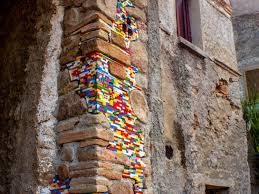
Other artists around the world have used Lego blocks on many occasions to pass a message of social awareness, or simply to entertain the imagination. Street artist Jan Vormann fills in cracks and crevices in damaged walls with Lego building blocks. He calls this ‘art meets functionality approach to repairs’ Dispatchwork. Today there is a worldwide network of people inspired by him who contribute to this creative repair approach.

Lego is usually associated with a children’s hobby kit. It is considered the epitome of an educational toy, and Lego sets have long gained a place at the top of the list of the world’s most popular toys. 

Interestingly the simple interlocking block-shaped toys that we know today as Lego bricks were the invention of a Danish master carpenter and joiner named Ole Kirk Christiansen. In 1932 when Europe was in the throes of the Great Depression, Christiansen opened a small woodworking shop in the village of Billund, with his son Godtfred who was just 12 years old, to manufacture stepladders, and ironing boards from left-over wood. They soon expanded their products to include wooden toys like simple yo-yos, trucks and ducks on wheels, made out of birch wood. In 1934 they gave their business the name Lego, a contraction of the Danish words leg godt meaning ‘play well’.

The company soon built its reputation as a high-quality toy manufacturer and business spread. The company itself grew from only six employees in 1934 to forty in 1942. The product line also expanded to include clothes hangers, a plastic ball for babies, and some wooden blocks.

It was in 1947 that the company made the move that would define its future.  Lego bought a plastic injection-moulding machine, which could mass produce plastic toys. By 1949, Lego was using this machine to produce about 200 different kinds of toys, which included a plastic fish, a plastic sailor, and small plastic bricks which had pegs on top and hollow bottoms, allowing children to lock the bricks together and create structures which simple wooden blocks could not. The ‘automatic binding bricks’ as they were called, were the predecessors of the Lego toys of today. In 1953, the automatic binding bricks were renamed Lego bricks. In 1957, the interlocking principle of Lego bricks was born. But these bricks were not too sturdy, and they did not stick firmly to each other.

In the meanwhile Lego had been working on a stud-and-tube design that facilitated the bricks to snap together firmly. They obtained a patent for this in 1958. This was the game-changer. The new system gave children the chance to build something sturdy, without it wobbling, or coming undone. Lego also made sure that new bricks were always compatible with old ones. In fact Lego has not changed the design of its bricks since 1958 when they got a patent for what is called the “universal system” so that each piece is compatible with all other pieces, regardless of the year or set it belongs to.

As the interlocking blocks grew in popularity, it was observed that children used the bricks in innumerable different ways to create more than just single structures. This led to the Lego Sets which had additional components like vehicles, street signs, bushes etc. to create streets and cities. The landmark addition of the wheel (around brick with a rubber tyre) in the 1960s brought in numerous new possibilities. With the production of 300 million tiny wheels per year, Lego out-manufactures the world’s biggest tyre manufacturers! The younger children were roped in to Lego-land with the launch of the larger Duplo bricks for pre-schoolers. 

The 1970s saw more additions to Lego sets–miniature figures (referred to as a minifig) with moveable arms and feet to populate the Lego towns; castles and knights to create a medieval world; pirates to sail on high seas, and astronauts to ride into space, and almost everywhere that a child’s imagination could take it.

The introduction of the immensely popular themes like Star Wars and Harry Potter contributed to the soaring sales, making this a multi-billion dollar industry. However it is heartening to find out that Lego has a strict policy regarding military models. They do not make products that promote or encourage violence. According to the company “Weapon-like elements in a Lego set are part of a fantasy/imaginary setting, and not a realistic daily-life scenario.”

Despite the scale and volume of production, there is no compromise on quality. The process used to mould the bricks is so accurate that only 18 out of one million bricks fails to meet quality standards. The original founder Ole Christiansen believed strongly in the values of creativity, individuality and, above all, quality. The Lego Group’s motto, “Only the best is good enough” was created in 1936, and is still used today.

Today there is a large international AFOL (Adult Fan of Lego) community. One of the challenges in the Lego world is to become a “master builder”. Coincidentally one of the most expensive Lego items is the Taj Mahal set which has over 6000 pieces to construct the Taj Mahal. Where centuries ago master craftsmen toiled with slabs of marble to create this magnificent timeless edifice, today the new master craftsmen work with plastic bricks to create its replicas.

–Mamata

Celebrating Vishwakarma, Master-Craftsman

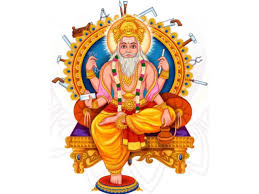
Vishwakarma Jayanthi is marked every year on Kanya Sankaranthi, which falls this year on September 17th. As per legend, Vishwakarma was a master architect and craftsman. The son of Brahma, he is supposed to have been the engineer for the creation of the world. He is also said to have built Lanka, Hastinapur and Dwarka.

Vishwakarma plays a pivotal role in the two great epics, Mahabharat and Ramayana. In the Mahabharat, the Pandavas retained him to plan and build their new capital of Indraprastha, which evoked the wonder and envy of all the other kings. One of the triggers for the Mahabharat war however was this amazing architecture. The pools of water looked like floors, and floors looked like water-bodies. Duryodhana mistaking a pool for a floor, slipped ignominiously and fell, evoking the mirth of the onlookers. He took particular exception to Draupadi’s laughing and commenting at his plight, and this was almost the last straw contributing to the breakdown of relations between the Pandavas and the Kauravas.

Vishwakarma’s work also features as a turning point in the other epic Ramayana. He is said to have built Pushpaka Vimana the flying chariot. It was built originally for Brahma, who at some stage gifted it to Kubera, the God of Wealth. But Ravana, Kubera’s half brother, stole the flying chariot, and used it for the infamous abduction of Sita. The Vimana however was also part of happy times, ferrying Ram and Sita back to India after the victory over Ravana. Ram later returned the vehicle to Kubera.

Vishwakarma has his equivalents in Greek and Roman mythology. The god Hephaestus was blacksmith to the Gods of Olympus, and made all their weapons of the gods in Olympus. He used to be worshipped in the manufacturing and industrial centres of Greece. Vulcan was the Roman God of fire and forge as well as fire and volcanoes. He was the patron of artisans and smiths, and there were several shrines dedicated to him. Vishwakarma like his peers also designed weapons, including Krisha’s Sudharshan Chakra and Indra’s Vajra.

We in India continue to remember and commemorate Vishwakarma. Vishwakarma Jayanthi is a special day for engineers, architects, mechanics, craftsmen, welders etc., and it is marked with pujas in factories and industrial estates. The prayers are for increased mastery and success in their field, as well as for safety.

As an ancient culture, excellence in engineering and the crafts were so revered that not only was there a God for this, but his achievements were enumerated and remembered. We still remember him and worship him. But ironically, we don’t seem to value the excellence he stands for. Our towns and cities are unplanned chaos—surely not Indraprastha or Hastinpur were.

In India, barely one in five persons at the workplace is skilled. We stand at 129 out of 162 countries ranked. As someone who has been involved in skill training, I am aware of some of the challenges in this sector. Critical among these are that skills except those related to IT and computers are not aspirational. To get a young person excited about being a master-electrician, master-plumber, master-anything that needs working with hands is next to impossible. In our culture, manual skills are not valued and respected—plumbers and masons feature way down in the social hierarchy. Nor are they paid in accordance to the value they bring. And sadly, career pathways don’t lead them very far.  

Nor is the skill-training we provide of very high quality, such as will lead them to excellence in their vocations. Most skill training is outdated and out of sync with what industry needs. Our ITI and other skilling institutions are bureaucratic set-ups, far behind where they should be. The faculty has no real experience on the shop floor. Nor do most students ever go into a factory or workplace during their education.

For a country which marks Vishwakarma Jayanthi with widespread events, we don’t seem to really value skills or our skilled craftspeople. Until that changes, there does not seem much point in observing yet another day.

–Meena

Health Activist: Banoo Coyaji

Among the recently announced Magsaysay Awards is Dr Ravi Kannan, an Indian surgical oncologist who has revolutionized cancer treatment in Assam through people-centered health care. 

The citation for the award lauds the doctor’s ‘devotion to his profession’s highest ideals of public service, his combination of skill, commitment, and compassion in pushing the boundaries of people-centered, pro-poor health care and cancer care, and for having built, without expectation of reward, a beacon of hope for millions in the Indian state of Assam, thus setting a shining example for all.’

The Ramon Magsaysay Award, Asia’s premier prize and highest honour, recognizes greatness of spirit shown in selfless service to the peoples of Asia.

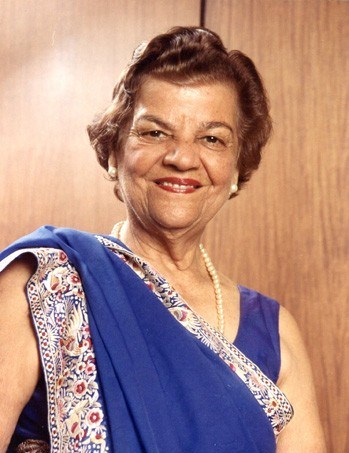
Thirty years ago this award was conferred upon another Indian doctor whose life and work reflected the same spirit that the above citation lauded. She was Dr. Banoo Jehangir Coyaji who was not only a medical practitioner, but an activist who used her profession and passion to change the lives of thousands of women in remote geographical areas.

Banoo Coyaji was born on 7 September 1917 in Bombay. She was the only child of Pestonji, a civil engineer, and Bapamai Kapadia. She spent her early childhood with her parents, but when she started schooling, her mother sent her to live with her grandparents in Pune, where she attended the Convent of Jesus and Mary. Thus Banoo grew up in a large loving household among aunts, uncles and cousins; while the family was affluent, the children were brought up to be disciplined. While many Parsis of the day were supportive of the British, Banoo’s family was nationalistic. Banoo herself was deeply influenced by Gandhiji and his philosophy.  

One of the big influences in Banoo’s life was the family doctor Edulji Coyaji who was known in Pune for treating the poor as well as the rich. It is he who encouraged the young school graduate Banoo to study medicine. Sixteen-year old Banoo joined St. Xavier’s College in Bombay for pre-medical studies, following which she pursued medical studies at Grant Medical College in Bombay, completing her MD degree in 1940. In the meanwhile she met Jehangir Coyaji, her mentor Edulji’s younger brother, and an engineer. The two married in 1941 after Banoo completed her degree. In 1943, she moved back to Pune where Jehangir worked, to set up house. Although she had an MD in gynaecology, Banoo joined Dr Edulji in his general practice. One day Dr Edulji told her that she was to go to KEM Hospital, as they were in urgent need of a doctor.

KEM was a private charity hospital that had been founded in 1912 by Pune’s leading citizens. When Banoo entered the hospital in May 1944 it had only forty beds. Primarily a maternity hospital, most of the patients were poor women, many who came from remote areas when their medical condition had reached a critical stage. The women also came with other medical issues so the small staff had to be prepared to treat any emergency. The workload was relentless and they worked over 18 hours a day. Banoo and her husband moved into a flat above the hospital so that she was able to attend to her young son, as well as her patients.

In 1947 Banoo and her husband were among the millions who witnessed India’s tryst with destiny as we became an independent nation. Around this time Banoo also made her first major intervention at KEM hospital. Having treated, over the years, women whose health had suffered due to child bearing issues (too many children, too early or late pregnancies, and the toll of unattended childbirth) Banoo opened Pune’s first birth control clinic. She was joined by Shakuntala Paranjpe a social worker and family-planning advocate who helped her reach out to women and promoted birth control classes for local women. This was a revolutionary initiative for the time.  

This was the start of many new developments that took KEM hospital from being a small maternity hospital to become a full-fledged general hospital, and one of the leading charitable institutions in Pune. To achieve this Banoo had to be continually fund-raising, adding new equipment and wards as and when she got funds. All the while she took no pay from the hospital.

Working tirelessly to maintain and grow the hospital, Banoo had no time to attend to something that had always been at the back of her mind. This was the question of what was happening in the villages from where patients often came with serious health conditions. In the late 1960s Banoo felt that it was important that the medical services should reach the villagers before the villagers needed to come to the city for treatment. She began exploring how KEM’s services could provide this outreach. Her team started by identifying a poor rural drought-prone area in Vadu Block, about 40 km from Pune. She approached the Health Secretary of Maharashtra government with the offer that the hospital run the block’s Primary Health Centre. This was agreed upon. In 1972, KEM set up a small outpatient clinic in Vadu. Maternal and child care, and family planning were the early priorities of the programme. From the beginning, KEM had emphasized the importance of research linked to its ongoing medical and public health programmes. In 1972, Banoo Coyaji seized an opportunity to establish a research society at the hospital.

While the first step to outreach had been achieved, Banoo felt that this was still a treatment service to those who came to the clinic. She felt that it was preventive care which could make a real difference, which addressed not the symptoms but the causes—sanitation, clean water, nutrition, and antenatal care. She felt that this would be best done by the local people themselves. Thus she asked each village to recommend a man and a woman who could be trained to serve as part-time health volunteers. The newly recruited volunteers underwent a comprehensive three-week training with a holistic approach to health and a healthy environment. The volunteers returned to their villages as community health guides, forming the grassroots base of a pyramid of healthcare services connecting their villages with KEM hospital at the top.

As the experiment showed results, there were suggestions that it be scaled up. In 1980 the model was introduced into the adjacent blocks of Kendur and Nhavra, where the village panchayats had passed a resolution inviting them to come. But the implementation had numerous challenges. However by the mid-1980s, Banoo Coyaji’s multifaceted interventions in Vadu were bringing about a quiet transformation, not just in human health but in the health of the local environment, and in the capacity and confidence-building of the local population, especially the women. 

By 1987, many elements of the Vadu model were accepted by Maharashtra state. These included KEM’s process for selecting and training village health guides, its insistence upon retraining middle-level health officers and on continuing education for its field staff, and its effective patient referral and grassroots record-keeping systems. This model was later used in many developing countries.

In 1988, with the help of the Indian Council of Medical Research, Coyaji launched the Young Women’s Health and Development Project to support an experimental training programme for girls. Aside from lessons in health, hygiene, personal development, and family life, the girls also studied population issues, the status of women, and the importance of education for girls. A second component of the programme involved learning vocational skills such as sewing, knitting, embroidery, crochet, and making costume jewellery and decorative items.

Thus Banoo Coyaji’s vision and the work of the KEM-trained volunteers went well beyond health and family planning to encompass literacy, livelihood options, legal advice, and even the support to question social issues like dowry. It was always a challenge, but as Banoo said All social change is slow. And very profound social changes indeed are needed before India’s women can achieve their full potential.

Dr Banoo Coyaji continued to work for the causes dear to her heart till she passed away on 15 July 2004. In addition to the Magsaysay Award she received many national and international awards, including the Padma Bhushan.  

–Mamata

Be a Sport

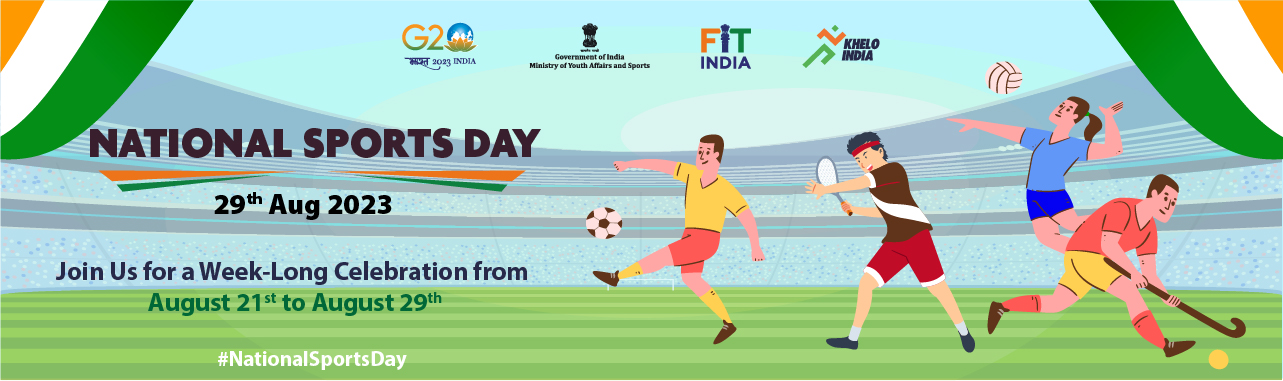
Last week on 29th August, we marked National Sports Day in India. August 29 is the birth anniversary of the legendary hockey player Major Dhyan Chand, and there could be no more fitting day than this to mark our commitment to sports.

sports

I know little about sports. Just enough to wish that we could do a little better on the world scene; just enough to wish young people across the country could access good sports facilities and meet their potential; just enough to wish that there was not so much bureaucracy, bias and barriers in sports.

On the occasion, I thought I would look at where we stood viz a viz other countries in sports. The Olympic tally and other such statistics are of course known to all. But during my exploration I found very interesting statistics on a site* which evaluated countries on their ‘sportiness’. That looked interesting, so I got to exploring it. I would not have thought I would find India anywhere in the top-half of the table. To my amazement, I found we ranked 16th out of 134 countries, with a total score of 48.66/100, compared to top-ranking Germany’s 72.4%.

While the initial reaction was to celebrate, somehow it didn’t sound quite right. So I looked a little more closely at the data behind the ranking. The methodology considers 10 parameters to arrive at the results. These are:

  • Olympic medals
  • Winter Olympic medals
  • Elite sports ranking
  • Sports participation rate
  • Gym membership per 100k population
  • Health and fitness mentioned as hobby
  • Playing sport mentioned as a hobby
  • Watching sports mentioned as a hobby
  • Fitness apps
  • Fitness spends

I can pick a lot of holes in the methodology. The foremost is the choice of parameters which explains why India could be ranked so high–you will understand what I mean when we break down our standings in each parameter:

We stand 48th place in Olympics medals.

We have won no medals in the Winter Olympics. (Of course we can question this as a criterion, given that hotter countries do not have the same opportunities as colder ones in these sports).

We rank 37th in elite sports ranking.

Our sports participation rate is a dismal 13%, among the lowest of all the countries in the study.

Our gym memberships also rank among the lowest in the table. (Again, it may not be a fair measure given the lower incomes in developing countries and hence lesser ability to spend on this.)

How then when we score so low on these parameters, do we rank a high 17th?

The factors that follow will explain the anomaly:

A whopping 43% per cent cite health and fitness as their hobby, way higher than the sportiest nation Germany. Only Sweden, Austria and South Africa rank higher than us. Well, one can claim anything. And these are just what people say in a survey, without any proof of what they do in this regard.

Intriguingly, 35% say that they play sports as a hobby, just 2 per cent lower than top-ranking Germany. Now, from my lived experience, I would never suspect that there were so many people in our country who played for a hobby. Given the statistics on sports participation, as well as lack of sports facilities, who and where are all these people who claim to be playing? Did the survey reach out to rural areas, or was it confined to a few cities? What age groups did it consider?

The parameter of how many people watch sports as a hobby is much more believable—we stand among the top 3 or 4 in the table with a whopping 48 per cent of Indians being serious sports-watchers. This is one of the major factors which tilts the results in our favour.

So in sports as in many other facets, we are ‘watchers’ rather than ‘doers’. Yes, if we were to go by TRPs of cricket match telecasts, sure India should count as a seriously sporty nation. But when it comes to taking sports seriously, or even to making health, fitness, sports and games a part of our culture and lifestyles, there is such a distance to walk.

So a good time to think about what it would take to really make us a sporting nation.

And also a lesson to closely look behind rankings and gradings before jumping to conclusions!

–Meena

PS: Confession: I don’t play sports at all. But I do walk and cycle regularly. Forgive me, I am a product of my generation.

*(https://us.myprotein.com/thezone/motivation/which-are-the-worlds-sportiest-countries/)