Teacher? Teacher!

In the run up to Teacher’s Day which is celebrated in India on 5 September every year, there will be numerous pieces about outstanding teachers, teachers who have changed the lives of students, and other inspiring stories.

Sadly, even as we felicitate and celebrate teachers such as these, there are also disturbing reports about teachers who, perhaps, could leave life-long scars on the children that they have the opportunity to mould and nurture. These belong to the mass of average teachers who are “teachers” in name but not in deed. What do they make of their job, which is really speaking a means of livelihood, and even that, which is insecure?

Take this piece, titled Confessions of a Teacher.  

I am a teacher. I saw an article entitled ‘Teacher’s Confessions’ and thought, why not pen down my own confessions?

I have been in teaching for years now. As a requirement to becoming a teacher, I had at that time, to study the science and principles of education. I have not learnt much more, since then.

I go to public libraries but rarely touch teaching related journals. A glance at the librarian’s issue book will show several books against my name, but none related to education.

I am certainly in the habit of reading. In the early years I was busy studying the textbooks and related material. But the textbooks don’t change often. I now need only to glance at the books. My reading list now includes dailies and monthlies and some assorted fiction.

After school hours I rarely discuss education-related topics. My discussion includes topics such as someone’s dismissal or promotion, forms and examinations, higher authorities or fellow teachers, booksellers, and so on.

During recess time, my colleagues gather for a cup of tea. We talk of many things. But never do we talk about how to teach, teaching aids, or students.

The school timings are fixed. The curriculum is set. The school bell heralds the passage of time, and students are prepared for the examinations. The systems are in place. I go to school. Teach the lessons for the day. I carry out my tasks and keep the order – partly by force, partly by wit, partly through my image, and largely through the set disciplinary systems of the school.

I don’t get into the depths of any subject. There is no time; just enough to complete what will be part of the exams. Students will take longer, and explanations will have to be made to the authorities.

I know the students by name, or those that know their lessons, and those that do not. I do not know anything about their family, their friends, their own personalities. We are not close. I know their minds, but not their hearts.

I see who comes first, and who is last. I do not know about their physical strengths and weaknesses. Those who finish their work and bring it to me, are clever; those I like. The rest are duds; I do not like them. Between us there is no affection. How can there be trust? They are afraid of me; and I exert my authority over them.

Once I leave the school, I scarcely think of them, save perhaps, one who might have been greatly disrespectful. Each to our own homes. Perhaps, as I lie down the thought may cross my mind that as the exams near, I will have to speed up the revision, for which I’d use the recess.

I haven’t seen the home of the children. Nor have I shown them my home. I do not have such a relationship with them.

I dream that I will be promoted till some day I become headmaster. I will complete my term of service, retire and enjoy my pension. I hope to save a little before I am too old. That is why I have to take tuitions.

I wish that I am well thought of in my community, that I can educate my children so that they get good jobs, and I can marry them off before I enjoy old age.

It is for this that I wish to work. Today the profession of teaching is, for me, an activity, a job. In all this, the ideals of education, the changing principles and practices of teaching, the desire to bring new changes in the field – all this is not in one, where will they come from?

I would like to explain clearly what my position is today. My state is like this; I presume my fellow teachers are in a similar situation.

If we think that this is a familiar scenario, it may come as a surprise that this was written in 1932 (nearly a hundred years ago). The author is Gijubhai Badheka an eminent educator who helped to introduce Montessori education methods to India. Disturbed by the dark educational system of that time, he embarked on his journey into the realms of education, and left behind a rich legacy of work and writing.

More about Gijubhai and his work on www.gijubhaibadheka.in.

Several generations later, the dilemmas about what makes a ‘good teacher’ continue to engage educators.

A hundred years after Gijubhai wrote some of his seminal works on education, Sir Ken Robinson one of the eminent contemporary thinkers on education propounded a critique of the school system. His TED talk Do Schools Kill Creativity? is one of the most watched talks. He urged schools to transform teaching and learning to an experience personalized for every student involved.

His words resonate closely with Gijubhai’s angst about the state of education, and his dream for a transformative educational system

Role of the Teacher    

The problem is that over time, all kinds of things have gotten in the way of it – testing regimes, league tables, unions’ bargaining rights, building codes, professional identities, the concerns of various pressure groups, ideology of various political parties. It’s very easy for people to spend all day discussing education without mentioning the students at all. But all of this is a complete waste of everybody’s time if we forget that our role is to help students to learn. Therefore, the question is: what should they learn and how do we best do that?

All the great education systems and schools know that. It’s why they invest so heavily on the selection of teachers, why they insist on getting people who don’t just have good degrees, or have them at all. They want people who know their material, but they also know that teaching depends upon a whole set of pedagogical skills and a love of the process. It’s more than the transmission of direct content. It’s about having a set of skills focused on facilitating learning. (Sir Ken Robinson)

A teacher’s work is like flowing water. The fulfilment of the work of education is not in teaching one or two subjects… Real education lies in making humans aware about their own unending strengths. (Gijubhai Badheka ‘Note to Teachers’ 1920)

Some food for thought.

–Mamata

The Best Kind of Nut is a Coconut

When there are myths and stories about the origins of an animal, tree, bird or anything in nature, we can be sure that the particular thing has played a huge part in human lives and society down the ages. The coconut is one such. There are stories from across the world about the origins of the coconut. Even in India, there are at least 4-5 popular stories about this. Not to mention stories from West Africa, China, Malaysia, etc.

Coconuts are an integral part of our lives in India—from the morning chutney for the idli, to the oil we swear by for hair growth, the refreshing and safe drink we give convalescents, to the coir mattresses we sleep on—they touch our lives in so many ways. Coconuts are a must for a visit to a temple, for a housewarming, a puja, or to launch a new vehicle.  

Coconut Day

I didn’t know till recently that there was a World Coconut Day, marked on Sept 2nd every year. Nor did I know that there was something as grand and formal as The International Coconut Community (ICC), an intergovernmental organization of coconut producing countries organized in 1969 under the aegis of the United Nations Economic and Social Commission for Asia and the Pacific (UN-ESCAP). Their mission is to ‘To promote, coordinate and harmonize all activities of the coconut industry which sustains the lives of millions of small farmers.as well as those engaged in production, processing and marketing of coconut products.’ The ICC Secretariat is located in Jakarta, Indonesia and is headed by an Executive Director. The ICC has 20 member-countries from Asia, the Pacific, Africa, South America and the Caribbean’s. India is of course one of them.

World Coconut Day commemorates the foundation of Asian and Pacific Coconut Community (APCC), an intergovernmental organization of coconut producing countries.

The coconut certainly deserves all this. It is a tree which provides food, fuel, medicine, cosmetics, building materials, and much more. In the South Seas, there is a saying that ‘he who plants a coconut tree plants food and drink, vessels and clothing, a heat source, habitation for himself, and a heritage for his children’. Importantly, it forms part of the livelihood basket of lakhs of small landholders—98 per cent of coconut holdings are with small and marginal farmers.

India is among the largest producers of coconuts in the world with Tamil Nadu, Kerala, Karnataka and Andhra Pradesh being the major contributors. We produce over 19 million nuts a year, accounting for over 31 per cent of the world’s production. We also account for 66 per cent of the world’s exports, and send our coconuts to over 140 countries.

There is also R&D going on into development of a range of new coconut-based medical products. In the world of healthcare, a number of products from sterilizing agents to fungicides to anti-itch products are being developed. The fashion industry too has taken to developing new products based on coconuts. There is also considerable research in the direction of developing several food-related products like coconut skimmed milk, coconut milk powder, coconut cream, coconut vinegar, coconut jaggery and palm sugar, and we may expect to see many such new products hitting the market soon. There is also on-going effort to make coconut shell charcoal and activated carbon.

So let’s join in the celebration of the ubiquitous coconut that we take so much for granted. Drink tender coconut-water, eat a coconut burfi, make a curry with a coconut gravy, or throw a coconut themed party. Just a way to say thank you to a tree that gives us so much—health, beauty, taste, shelter, sound sleep, and importantly, livelihoods to so many!

–Meena

More Than Just a Library

Recently there was an article about heritage libraries in India and how some of these are in the process of being restored, renovated, and upgraded so that the rich history and legacy could be shared with a new generation of bibliophiles. Among these is Mumbai’s David Sassoon Library established in 1870 and the National Library in Kolkata the roots of which can be traced back to 1836.

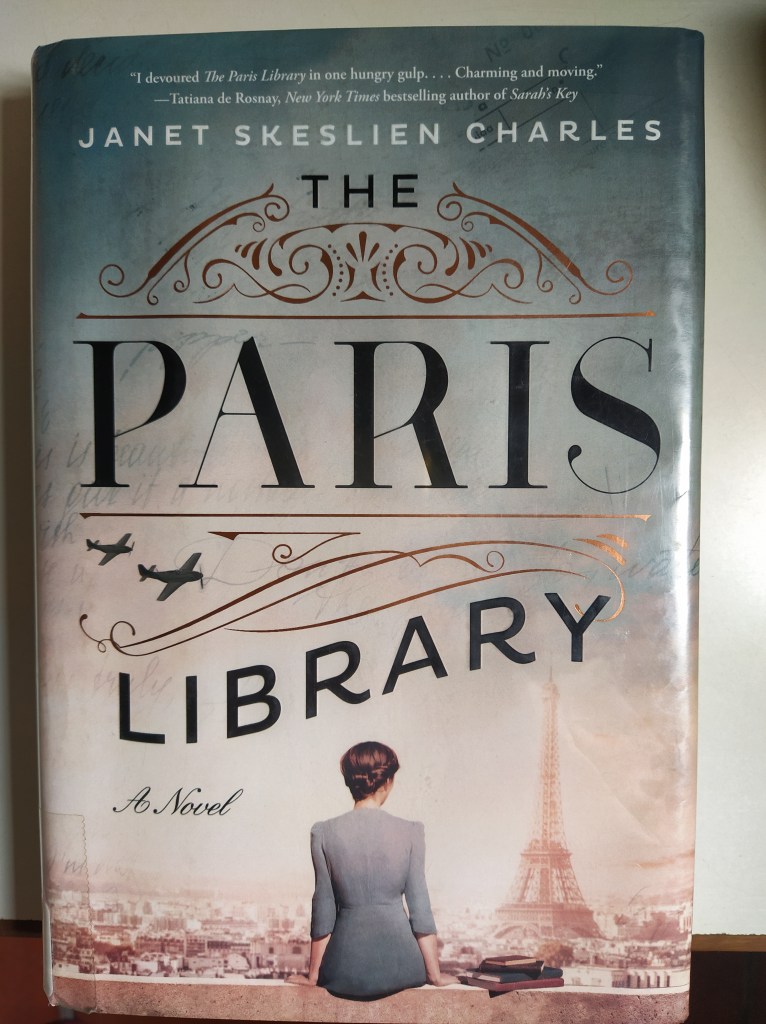
Coincidentally, around the same time I was reading a novel called The Paris Library. While the story and the two main protagonists are fictional, the library around which it revolves, and most of the other characters that are part of the story are based on real people and places. This was the American Library in Paris or ALP as it was called.

As a curious bookworm I was intrigued by this and decided to investigate further into the ALP. I discovered a fascinating history.  

The seeds were sown during World War I. This was when thousands of young Americans were fighting with the Allies on the battlefronts in Europe. At this time when the main supply to the front was in the form of arms or medical equipment, the American Library Association felt that the troops needed something to engage them mentally in the midst of their grueling physical existence. So it collected books and periodicals donated by American Libraries and personal collections and shipped these to France to the Library War Service from where they were sent to military bases, training camps and hospitals where American soldiers were fighting. It is estimated that around 2 million books and five millions periodicals were shared in this way with American soldiers fighting the war far from home. One of the centres which housed part of the collection was also in Paris.

When the war ended, there was a discussion about what to do with the books that that been an important support all through the war, not just for American servicemen. During this period the citizens of Paris had also become fond of browsing through the collection of English language books in open stacks (an uncommon feature of European libraries at the time), and international newspapers and periodicals in the Paris centre. Thus although there was no plan to establish a permanent library in Paris this idea seemed to evolve and slowly take root. The thinking was that the library could also serve as a functional model to demonstrate American library methods, especially the use of the Dewey decimal system and open stacks.

Thus the decision was taken not to ship the books back but to establish a permanent library in Paris in the spirit of Atrum post bellum, ex libris lux: After the darkness of war, the light of books. This also became its motto. There was however the question of funds needed to establish and run the library, but the idea had many advocates, and contributors from all walks of life, in America and in Paris united to pledge every kind of support. This was probably an early example of crowd funding.

As a result the American Library in Paris was founded in 1920 by the American Library Association and the Library of Congress with a core collection of those wartime books. Its charter promised to bring the best of American literature, culture, and library science, to readers in France.

Having been established, there was a continuous struggle to keep it not only running but also to enhance its collections and also serve as a cultural hub. The library constantly innovated to keep itself up and running. The Library worked with sixty-five leading publishers in the United States, who sent free copies of newly published works which the Library displayed in a dedicated exhibition space. Over a thousand new books per year were acquired through this channel. Meanwhile, the Library staff, wrote widely published literary reviews of the new titles, and in 1924, they launched their own literary journal called Ex Libris, to which Ernest Hemingway and Gertrude Stein contributed. The library also formed relationships with other libraries through inter-library loans and other social organisations. The American Library in Paris quickly became a vital hub of reference services and educational outreach. Within just three years of existence, the library’s reference room was visited by 35,000 users. It founded its own children’s section in 1928 and had Story Hours for children. The library had highly qualified and dedicated staff as it invited librarians from some of the best libraries in the USA to come on sabbaticals. Some of these stayed on.

The library which grew out of World War I played a critical role during World War II. Once again it sent thousands of books to the troops fighting at the front in Europe. The library became a refuge for its habitués (regular subscribers) not just providing the comfort of books, but companionship, solidarity and solace. As one of the characters in the book puts it: Libraries are lungs, books the fresh air breathed in to keep the heart beating, to keep the brain imagining, to keep hope alive.

The library remained open even during the dark days of the Nazi occupation of Paris. Many of the American staff including its doughty librarian Dorothy Reeder stood firm, until they were forced to evacuate the country, but a handful of local staff bravely continued to run it. They themselves faced great personal risks in delivering books to the homes of some of the regular Jewish subscribers who were no longer permitted in public spaces. The library was also subject to “inspections” to check if they were harbouring any forbidden literature.

The book The Paris Library tells the story of the library and its habitués during the period of World War II. It is a heart-warming tale of the manifold power of books and the unique bonds that books create between people. As the library director Dorothy Reeder says in the book: Because I believe in the power of books—we do important work, by making sure knowledge is available and by creating community.

The story reflects that the original motto of the library: After the darkness of (another) war, the light of books.

The American Library in Paris celebrated 100 years of its founding in 2020. Even in an age where there is a deluge of information at the fingertips this library serves over five thousand members from sixty countries. It holds the largest collection of English language materials on the European continent, and is wholly community supported. It is now as much a community and cultural centre as it is a library, and its users are as diverse as its collections.

–Mamata

Living On…

August is a Month of Days! Well, I know all months are made up of days, but August is made up of many significant Days—from Independence Day to International Youth Day to Quit India Movement Day to World Mosquito Day, to….

In the process, even media seems to get overwhelmed and is not cover many of the issues adequately.  One such day is World Organ Donation Day, marked globally on 13 August every year, to raise awareness on the need for organ donations, and to clear misconceptions around the issue.

For a quick overview: There are two major types of donations– deceased donation which is the process of giving an organ or a part of an organ after death, for the purpose of transplantation to another person; and living donation, wherein a donor can give part of certain organs to another person. (The other two types of organ donations are Vascularized Composite Allografts (VCAs) which involves the transplantation of multiple structures including skin, bone, muscles, nerves, connective tissue etc.; and Paediatric donations.)

In India, Deceased Organ Donation is usually done only from a person who has been declared brain-stem dead by a team of authorized doctors at a hospital. A person is said to be brain-stem dead when there is an irreversible loss of consciousness, absence of brain stem reflexes and irreversible loss of the capacity to breathe. These are often accident victims and others who have suffered fatal injuries to the head or have had brain haemorrhage. Organ donations after cardiac death are rare in our country. 

Sadly, the deceased donation rate in India is dismally low—it stands at under one donor per million population, and no upward trend has been seen for a decade now. It is estimated that 20 people die each day in our country waiting for an organ donation. Experts estimate that 65 donations per million population are needed to fill the gap.

Considering that we won’t need our organs after death, it would seem that this would be the easiest kind of donation! But in a country where charity and giving are a deep-rooted part of the culture, organ donation meets many barriers. A study published in a prominent medical journal regarding reasons why the figure is so low in India says: ‘Lack of awareness (80.1%), religious beliefs and superstitions (63.4%), and lack of faith in the healthcare system (40.3%) were cited as the three most probable reasons for poor deceased organ donation rates in India. Fear of disfigurement (29.5%), lack of government sponsored incentives (27.6%), fear of procedural delays (27%), and inappropriate counselling for deceased donation (26.4%) were also commonly cited reasons for poor organ donation rate.’ (J Clin Exp Hepatol. 2016 Jun; 6(2): 81–86.).

From the above, it seems that creating awareness and proper counselling are the urgent needs. Most of us don’t know that one deceased organ donor can save up to eight lives. He or she can contribute two kidneys to two people; two lungs to two people; one liver which can be divided among two people; one pancreas and one heart which can save one life each. Apart from this, eyes can give sight and donated tissue can help as many as 75 people. Increasing awareness and appealing to the inherent giving instinct could be critical factor in increasing donations. This is borne out by the fact that in the study mentioned above, people said that the ‘the thought of saving someone’s life’, as well as a ‘feeling of improved sense of humanity’ were motivators for such donations.

You can register your intent to donate organs with the National Organ & Tissue Transplant Organisation (NOTTO). Such a pledge does not carry legal weight as the consent of family is necessary for the donation of organs of deceased people, but it is a clear signal of the wish of the deceased. And if during life the donor discusses his or her wish with family members, they will surely do it, in respect of the loved one’s last wishes. Afterall, what can be more satisfying that their loved one lives on!

So go ahead and visit https://notto.mohfw.gov.in/ today!

–Meena

Sisters-in-Arms: Pritilata Waddedar and Kalpana Dutta

This Independence Day week there have been many pieces celebrating the numerous freedom fighters who were part of the nationwide movement for independence. The movement was unique in that it took the path of non-violence to achieve this goal.

Whilst many of the names are part of history textbooks, there were thousands of people who played their part in the fight for freedom. Not all of these are as well remembered. Among these, there were also some who were driven by the same aims but who chose to take another path of showing resistance to the colonial rule.

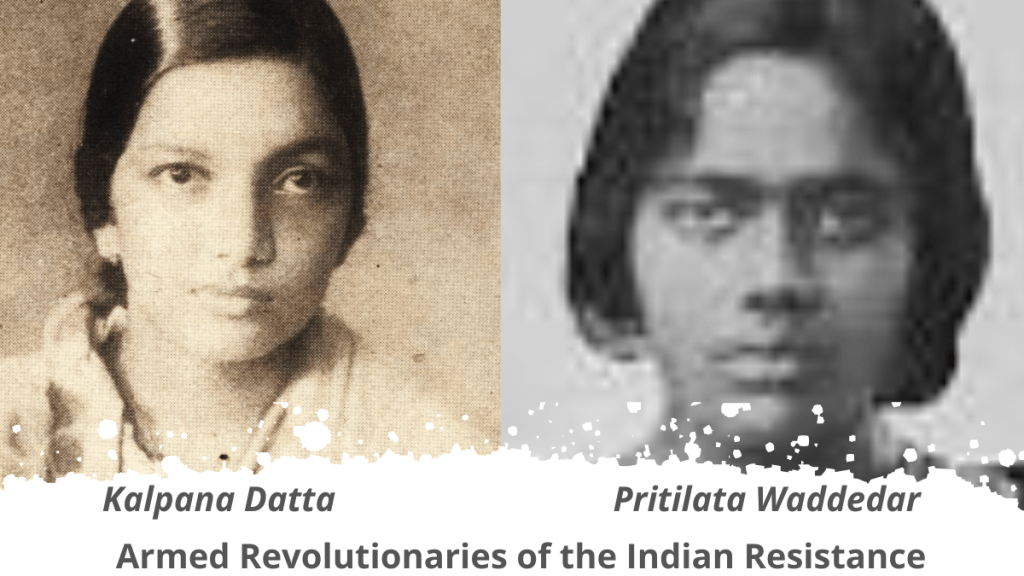
This is a story of two feisty young women who chose the path of direct resistance, and who dedicated their life to the cause. They are Pritilata Waddedar and Kalpana Dutta.

Pritilata Waddedar

Pritilata Waddedar was born on 5 May 1911 into a middle-class family in a village of Chittagong, now in Bangladesh. She did her schooling in her hometown and then moved to Dhaka for high school studies at Eden College. It is here that the young Pritilata came in contact with other women who were strong anti-colonialists and who were inspired by revolutionary ideas. The spark was ignited. Pritilata then moved to Bethune College in Calcutta to pursue a higher degree in Philosophy. On completion of her course, Pritilata’s degree was held back by the British authorities at Calcutta University because of her anti-British activities. The seeds of rebellion were firmly sown. Pritilata returned to Chittagong in 1932 where she joined as a teacher in a school and went on to become the headmistress.

It was during this period that Pritilata was introduced to Surya Sen who led an underground revolutionary group. Pritilata approached Master Da as Sen was called by his followers with a request to join his group. Initially Sen as well as his comrades were hesitant to include a women in the group, but Pritilata’s revolutionary passion and steely resolve to overthrow the British, as well as her abilities to carry out risky assignments gave her entry into the group.

Comrade Pritilata was a key member of the group that planned and strategized armed attacks on railway lines, telegraph office, the armoury, as well as the famous Chittagong Uprising—the raid on the armoury of police and auxiliary forces that cut Chittagong off from the rest of the country. Pritilata played an important role in supplying explosives to the revolutionaries. The raiders managed to escape but the British authorities tracked them down in the Jalalabad hills near Chittagong. Several thousand troops ambushed the rebels and many of them (some merely teenagers) were killed in the encounter. Sen’s depleted band had to reorganize and re-strategize.

They decided to avenge the Jalalabad massacre by burning down the Pahartali European Club. This club was targeted because, among other white supremacy symbols, it also had a sign at the entrance which declared that ‘Dogs and Indians are not allowed.’ Pritilata was the leader of the eight-member team. The team prepared by intensive training in the use of firearms. As in any military formation the leader was to be the first to attack and the last to return after the rest of the team had moved to safety.

On the night of 23 November 1932 Pritilata and her team, dressed as Sikh men laid siege to the club and set fire to it. British troops were quick to retaliate. Pritilata and her team were chased and ambushed with little hope of escaping alive. Nevertheless Pritilata tried to divert the gunfire to give her comrades a chance to escape. In the process she was shot in the leg. Rather than die under British arrest, the wounded Pritilata swallowed cyanide and ended her life. She was 21 years old. The police found her body early next morning and were surprised to discover that the leader of the attack was a young woman.

Kalpana Dutta

A lot of what we know about Pritilata is thanks to the memoirs of Kalpana Dutta which describe in detail the Chittagong Uprising. Inspired by Pritilata, Kalpana became a fellow comrade, and was also one of the few women members of Surya Sen’s underground group of revolutionaries. Kalpana often travelled disguised as a man, to transport explosives and other supplies to the group. She also became an expert in preparing gun cotton, an explosive agent.

Born on July 27, 1913 in Sreepur village in Chittagong, (now Bangladesh), Kalpana Dutta was fond of listening to adventurous stories since childhood. While studying in high school, she read many biographies and stories of freedom fighters, which inspired her with the passion to join the struggle for freedom. She joined a semi-revolutionary student organisation called the Chhatri Sangha and became one of its most active members. It was here that she met Pritilata, and the two became close friends. It was Pritilata who introduced her to Surya Sen.

Following the Jalalabad massacre, both Pritilata and Kalpana were designated as the key executors of the arson attack on Pahartali Club. Just a week before the attack, while she was on a reconnaissance trip of the area, Kalpana was detained by the British. She was released on bail, she immediately went underground to ensure that the plan would continue without any obstacles. Pritilata became the sole leader of the team. As we know, the team was ambushed and the wounded Pritilata took her own life rather than die in the hands of the enemy. 

Kalpana remained underground, even when the British finally managed to locate and capture Surya Sen in 1933. Three months later, she was eventually arrested and sentenced to life in the second supplementary trial case of the Chittagong Armoury Raid incident. She was released after six years of imprisonment. After her release from prison, she completed her studies and graduated from Calcutta University in 1940. Following independence, she led a relatively quiet life until her death in February1995. She wrote her autobiography in Bengali which was translated into English as Chittagong Armory Raiders: Reminiscence.

The note left by 21-year-old Pritilata when she died sums up the spirit of these two fearless young women who broke many stereotypes of the time.

There may yet be many among my dear countrymen who would question [women being fighters]. Nursed in the high ideal of Indian womanhood they may ask, how can a woman engage in such ferocious task of murdering and killing people?

I am pained at the distinction being made between a man and woman in the struggle for freedom of the country. Today if our brothers can enlist in the war of independence, we too the women should be allowed to do the same and why not?

–Mamata

Jumbo Symbol

As we celebrate our 76th Independence Day, here is a look at a creature which is inextricably tied to the image of India—the elephant.

Though the tiger is our national animal, and lions stand proud on our national symbol, it is the elephant which is associated in popular imagination with India. Elepehants have traditionally been associated with the wealth, grandeur and ceremony of kingly India. Even today, people from foreign lands imagine elephants strolling the streets of the country.

A constant and less-than-flattering reference is to the Indian economy as an elephant. To quote former RBI Governor Dr. Duvvuri Subbarao, ‘In development economics parlance, the East Asian economies — Taiwan, Korea, Singapore, Hong Kong — are referred to as the tigers. The next generation of fast growing Asian economies — Thailand, Philippines, Malaysia, Indonesia — are referred to as the cubs. China is called the dragon. All these countries delivered a growth miracle in the last 40 years. ‘

‘India is referred to as an elephant because it is a strong animal with enormous potential but it moves at a lumbering pace. The hope is that it will start dancing and deliver the next growth miracle.’ (Knowledge at Wharton).

But coming back the elephant itself. Though elephants are so central to the imagination of India, ironically, one sees the image of the African elephant all around—from ads celebrating India and Indian products, to calendar art, to even textbooks and school charts.

The two are different at a very fundamental biological level. Asian elephants belong to the genus Elephas, species maximus, and African elephants to the genus Loxodonta, species africana. The two cannot interbreed and produce viable offspring.

Elephant
Coutesy: Britannica

Physically, the African elephant is significantly taller and heavier than our Asian ones. Another obvious difference is that Asian elephants have small ears, while their African cousins have much larger ears, which cover their shoulders. All African elephants have tusks, while only male Asian elephants have tusks. (Artists seem to like depicting large ears and longs tusks on all the elephants they draw, which may be the reasons for the predominant image of African eles even in our media!). The trunk of the Asian elephant has one finger at the tip, while the African elephant has two fingers– this means that the way they pick up things is different—our elephants will curve their trunk around the object, while the African jumbo will hold the object between its two ‘fingers’, much as we would hold something between finger and thumb. Our elephants have two humps on the forehead, while African eles have one.

Importantly, Asian elephants are tameable, while African elephants are not. This is why in India, elephants have played such a large part in our lives—whether in religious ceremonies, in cultural processions, as royal symbols, as transport or war animals.  

Thought still on the endangered list, conservation efforts seem to be paying off in India, with numbers reportedly on the rise, standing at about 28,000 this year, and elephant-bearing states vying with each other to report higher numbers. Project Elephant, launched in 1992, was critical in focussing attention on conservation of elephants and their habitats. Now, it has been merged with Project Tiger, based on the thinking that both animals inhabit the same habitats in some places. Only the future will tell if this is a good move, given that different issues confront the two majestic animals in different locations, and the move may take away the focussed attention on each of these.

On the economic front, bodies like the World Economic Forum think that ‘India’s economy is an elephant that is starting to run.’

As we wish our elephants to do well on World Elephant Day (August 12), we also hope, on Independence Day, that the Indian economy does well and all Indians attain a better quality of life.

Happy Independence Day!

–Meena

Tomato Puree

There is an unusual addition to the front page news these days. It is the tomato! As prices of tomatoes soar, there is panic. From housewives to gourmet chefs there is a scramble to devise meals where the familiar flavor and texture of tomatoes can be recreated without the star ingredient. Recipes are shared, and suitable substitutes recommended, such as tamarind, raw mango, kokum and curd. Ironically these tartness-adding agents have been used in Indian cooking well before the tomato gravy became ubiquitous element in everything from paneer to pizza!

Interestingly, the tomato is a relatively recent arrival in India. It is believed to have been introduced by the Portuguese in the 16th century, and was probably grown in the parts of India where the Portuguese influence was strong. It was not easily adopted by the local people as it was looked upon with suspicion, often referred to as vilayati baingan (imported brinjal), and unclear whether it was meant to be eaten raw or cooked. It is only in the 19th century, with the British influence that tomatoes became a part of Indian cuisine.

As we are missing the tomato in our daily meals, it is a good time to take a look at its chequered history.

The global history of the tomato also is a long and convoluted one. The plant is believed to have originated in South and Central America, and can be traced back to early 700 AD to the early Aztecs who named it tomatl or xitomatl (plump thing with navel). It was an integral part of their native diet in the sixteenth century. The Spanish conquerors of the region called it tomate, from which the English word tomato is derived.

Europeans first came in contact with the domesticated tomato when they captured one of the cities of the region. The Spanish conquistador Hernan Cortes is thought to have brought back the seeds to southern Europe where they were planted for ornamental purposes. The tomato was not eaten till the late 1800s. This was in part due to their reputation as being deadly plants. Some of this was because the tomato was classified by Italian herbalist Pietro Andrae Matthioli as being part of the deadly nightshade family (Solanaceae plants that contain toxic tropane alkaloids) and a mandrake (a group of foods thought to be aphrodisiacs). The fruit was also nicknamed as “poison apple” because it was believed that eating this could be fatal.

Another thing that compounded this belief was that rich people in the 1500s used plates made of pewter which had high lead content. Foods high in acid, like tomatoes, would cause the lead to leach out into the food, resulting in lead poisoning and death. Thus the cause of death was not tomatoes but lead poisoning. However this connection was not made then, and the tomato was labelled as the culprit. The less affluent who ate off plates made of wood, did not have that problem, and hence did not have an aversion to tomatoes. This is essentially the reason why tomatoes were only eaten by poor people until the 1800’s, especially in southern Italy. People may have started eating tomatoes when not much else was available because not only did they add flavour to the otherwise bland meat dishes, but they could also be preserved and stored. The earliest recipe for tomato sauce was published in 1694, by Neapolitan chef Antonio Latini in his book Lo Scalco alla Moderna (The Modern Steward).

Even within the rest of Europe, tomato as an edible component was looked upon with suspicion. Tomato was perceived as a cold fruit, and coldness was considered a bad quality for a food according to the Galenic school of medicine. It was associated with eggplant which was also an unknown; it was cultivated close to the dirt, another factor that didn’t make it palatable. While the tomato was gradually making its way into cuisine in southern Europe, it still had to find its way to other parts of the world.

How did the tomato synonymous with pizza? Thereby hangs a tale! In 1889 the Queen Margherita of Italy was to visit Naples, and one restaurateur wanted to create a special dish to honour Her Majesty. He made a pizza topping from three ingredients that represented the colours of the new Italian flag: red, white, and green. The red was the tomato sauce, the white was the mozzarella cheese, and the green was the basil topping. Hence, Pizza Margarite was born, which still remains the most standard pizza.

The mass migration from Europe to America in the 1800s meant that the new arrivals also brought with them their own culinary ingredients and traditions. The Italians took with them the tomato and its basic partner the pizza. The rest is history! From the mid-1880s tomatoes became a staple in American kitchens. As the demand for tomatoes increased they began to be imported in large quantities.

One of the big importers of tomatoes was John Nix, wholesale merchant in New York. When a shipment of tomatoes arrived at the port a 10 per cent import tariff was levied. At the time imported vegetables were subject to this tax, while fruits were exempt. Nix protested, arguing that tomatoes were not technically vegetables. He was not wrong. Tomatoes were, and are, botanically classified as a fruit. A fruit contains the seeds of the plant while any other edible part of the plant that we eat, which doesn’t come from the fruit of the plant is considered a vegetable.

Nix filed a case against Edward Hedden, the Collector of the Port of New York. The case made its way to the Supreme Court in 1893. The case was argued using definitions of fruits and vegetables from different dictionaries and their usage. It became a hotly debated issue: Tomato: Fruit or Vegetable? Eventually the court unanimously agreed that the tomato should be classified as a vegetable because of how it was used in everyday life, not how it was used in commerce or in purely botanical terms.

A plump thing with navel, a poisonous ornamental plant, a poor man’s multi-use ingredient, a tax-exempt fruit to a taxable vegetable. Tomato puree indeed!

–Mamata

Deadly Fat Sticks

I saw a reference, in a book I was reading recently, to Trichirapalli Cigars. That really intrigued me. For me, Trichy was a place one used to go to as a child to visit aunts and uncles. And of course, a morning was set aside for a visit to the famous Rockfort Ganesha temple. The temple is built on what may be the oldest rock on earth, and we needed to climb 344 steps to reach it—which we as kids did most enthusiastically. And while the elders devoutly visited the Pillayar and Shiva shrines, we kids played around the temple courtyard and passages. Another must-do on such trips was a visit to the amazing Kallanai Dam built by the Chola king Karikalan around the 2nd Century AD, and a picnic on the banks of the Kaveri.

And never in all those years, and all the years following, had I ever heard of cigars originating from there. But apparently, it is quite a thing! Not that one wants any place to be famous for cigars, but I thought that I must at least learn a little about this, since I have memories of the town with which it is associated.

To start at the beginning, a cigar is defined as a roll of tobacco, wrapped in a leaf of tobacco (or in a substance which contains tobacco). This is what sets it apart from cigarettes, which are made of tobacco rolled in paper or a substance that does not contain tobacco. Cigars are expensive—one reason is that the wrapper leaves need to be of a special quality– strong, elastic, silky in texture, and of even colour. They must have a pleasant flavour and good burning properties. Even the filling used for cigars is often a blend of various types of special tobaccos. And cigars are usually hand-rolled, which makes the process expensive. The shape and size of cigars also determine the price, as does the age—if the tobacco used in a cigar has been aged, or the cigar itself has been aged, it will cost more. And then there are ‘special edition’ cigars which are collectors’ items.

If tobacco-leaf wrapped cigars are at the highest end of the spectrum, tendu-leaf wrapped bidis are at the lowest!

While Cuban Cigars are the best-known, apparently Trichirapalli i Cigars are pretty famous too! Apparently, these were among the major exports to Britain in Victorian times. In fact they were supposed to be the cigars of choice for Churchill when access to Cuban cigars was cut. Churchill even appointed a CCA (Churchill’s Cigar Assistant), a cigar taster for the PM! His job was to ensure uninterrupted supplies of the best Trichirapalli cigars to Churchill. So well-known were these cigars, that Sherlock Holmes mentions them in his famous story “Study in Scarlet”, and Hitchcock also referenced them in one of his films.

What is unique about these cigars is the process employed in processing the leaves. Rather than ageing the leaves as is usually done, in Trichy, they ferment them in toddy water or in distilled fruit juice (orange, apple, pineapple, grape) with added jaggery and honey. This gives them a very distinctive flavour.

Cigars may be expensive, and perceived as fancy and high-class. But they are just as deadly as their humbler cousins–cigarettes or bidis. They contain the same addictive, toxic and carcinogenic compounds found in cigarettes and are not a safe alternative.

And in some countries like the US, cigars are becoming popular with younger people. This is because flavoured cigars like cherry or cocoa or liquorice are available, unlike in the case of cigarettes, where flavours are not permitted. Moreover, the fact that cigars are often sold as single sticks make them more accessible. In fact, a recent survey among middle and high school students who used cigars in the past 30 days, 44.4% reported using a flavoured cigar during that time. The cigar industry seems to be deliberately targeting younger people. A cause for worry indeed!

Cigar-trivia is fine, but ALL smoking and ALL tobacco products are bad!

–Meena

Mycologist, Artist, Author: Beatrix Potter

Several generations of children grew up with The Tale of Peter Rabbit. The author Beatrix Potter is a familiar name in children’s literature, but what is less known is that she was also a notable woman of science, in an age when this was almost unheard of.

Helen Beatrix Potter was born on July 28, 1866 in London in a family that enjoyed culture and the arts. Although Beatrix was educated at home by a governess, she and her brother spent all their free time in the woods around their home, observing the small creatures that lived there, and even bringing some, like hedgehogs and rabbits home. Beatrix was a quiet shy girl who expressed herself through paintings and drawings of wildlife, and in coded notes in a secret diary.

When an uncle who was a chemist gave her permission to use his microscope, a whole new world opened up for Beatrix who could minutely study plants, and insects and make detailed sketches. Her interest in natural history was further spurred when she used to visit the South Kensington Museum. She found herself drawn to the study of plants and fungi as well as insects.  

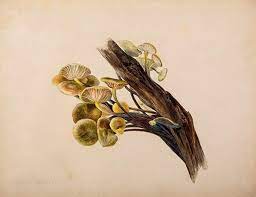
Beatrix’s interest in drawing and painting mushrooms, or fungi, began as a passion for painting beautiful specimens wherever she found them. As her biography says: She was drawn to fungi first by their ephemeral fairy qualities and then by the variety of their shape and colour and the challenge they posed to watercolour techniques.

In October 1892, on a family holiday in Scotland, Beatrix got to know Charles McIntosh, a local postman and self-educated naturalist who was also an expert on British fungi. McIntosh admired her pictures, sent her specimens to paint and advised her on scientific classification and microscope techniques. She sent him copies of her pictures in return. She would go on to produce some 350 highly accurate pictures of fungi, mosses and spores.

Beatrix also started hunting for rare varieties of mushrooms, and growing dozens of different species of fungi at home, in order to study their development. She was intrigued by their life cycle. By 1895, Beatrix Potter’s interest in fungi was becoming even more scientific. Following advice from McIntosh, she began to include cross sections of mushrooms in her illustrations to show their gills and used a microscope to draw their tiny spores. She speculated about whether these spores could germinate and the environments in which they might do so.

In May 1896 her uncle Sir Henry Roscoe, a prominent chemist, introduced her to the mycologist at Kew’s Royal Botanic Gardens. This led to a post at the Royal Botanic Gardens where she produced faithful, detailed renderings, largely of mushrooms and toadstools as seen through a microscope. In addition to her art, the scientist in her also began experimenting with germinating spores of various fungi on glass plates and measuring their growth under a microscope. Her close observations and experiments, as well as her drawings showed in great detail how lichens, a common type of fungi found on rocks and trees, were actually not one but two different organisms that lived together. Her studies showed that this was a union between an alga and a fungus. The two different organisms are able to live together, with each of them benefitting the other in some way. Beatrix thus was one of the earliest to study and hypothesize what would later become the science of symbiosis. However, the botanists she showed her work refused to discuss even discuss the drawings she made.

Beatrix prepared a paper on her findings and submitted her work to The Linnaean Society of British Scientists but was not allowed to read it herself because, at that time, only men were invited to their meetings. The all-male panel rejected her paper and refused to publish it. Potter withdrew the paper, presumably to make amendments. But it was never published; and no copy exists today. Thereafter Beatrix turned her full attention to drawing and writing.

There is today some controversy about how serious Beatrix Potter was as a mycologist. But there is no doubt about the accuracy and detailing of her drawings and paintings of fungi which remain unparalleled, and are referred to mycologists even today. As her biography says: Beatrix Potter never saw art and science as mutually exclusive activities, but recorded what she saw in nature primarily to evoke an aesthetic response.

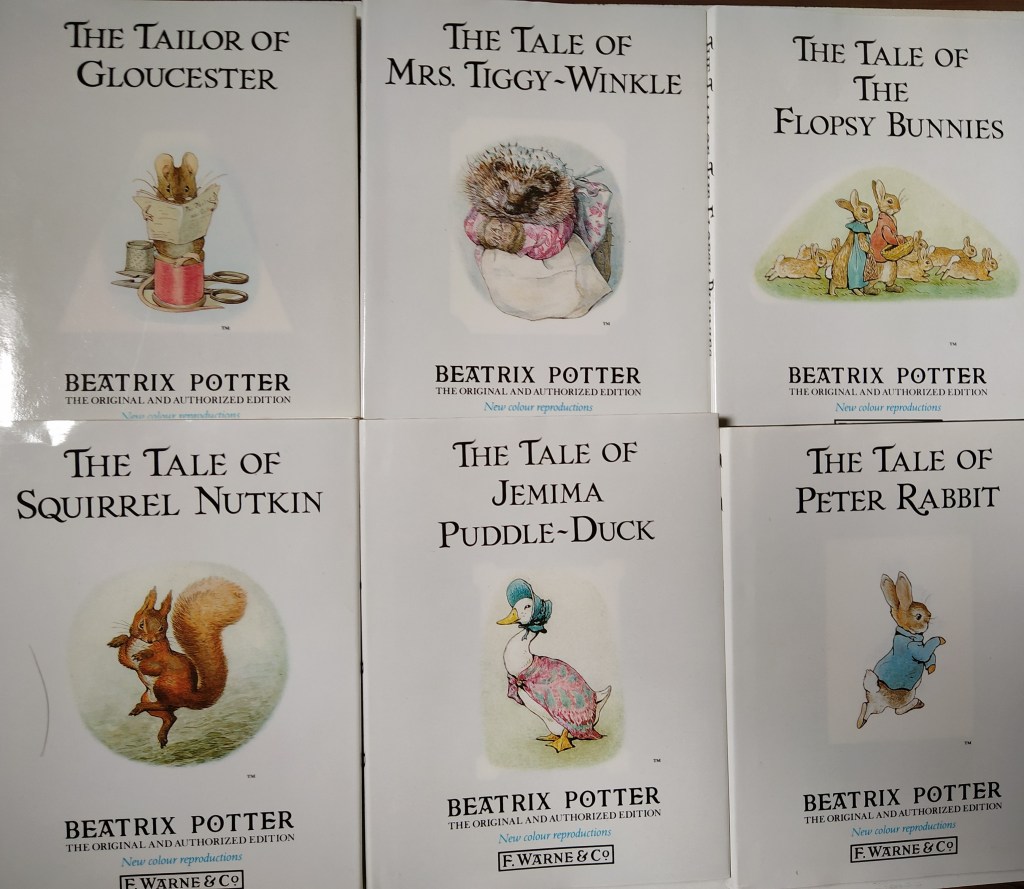
The name Beatrix Potter endures today as the author of well-loved children’s books. In 1893 she sent a letter with a picture story to a sick child of her old nanny which began with the words “I don’t know what to write to you, so I shall tell you a story about four little rabbits whose names were Flopsy, Mopsy, Cottontail and Peter.”  Beatrix went on to create the loveable characters of Peter Rabbit, Benjamin Bunny and Jemima Puddle Duck, among others that had adventures in the 26 books that she published subsequently. Over 150 million copies of her books have been sold and have been translated into 35 different languages

As her books gained popularity, she channelled all the profits towards a large property called Hill Top which she purchased in 1905. Situated in England’s Lake District, this was her first farm. She enjoyed the quiet and solitude that the thirty-four-acre property brought her and this allowed her to work more efficiently. Aside from being a farmer and landowner, Beatrix also became recognized as a sheep breeder. She never lost her love for nature and became an advocate of traditional farming and the preservation of the wild environment surrounding the area. She continued buying patch after patch of land around her farm. By doing so, Beatrix hoped to further pursue her dream to provide land for the creatures that she had loved since her childhood.

Beatrix Potter died of bronchitis in 1943, aged 77, leaving behind a legacy across different fields of study. The British Natural Trust eventually became recipient to her donation of 4,000 acres of land. The property was named a UNESCO World Heritage Site in 2017, and is now open to the public.  Beatrix Potter’s love for the land and all its creatures continues to provide a haven for all life.

–Mamata

Raiders of the Lock Art

Art thefts make the headlines fairly frequently (as do movies and OTT series on the theme). They have a long history—the first art heist probably dates back to 1473 when Polish pirates boarded a ship and stole  Hans Memling’s a painting called ‘The Last Judgement’. They took it back to their country, where even today, it is displayed at the National Museum in Gdańsk. Italy has, since the 15th century been trying to get the painting back!

Patriotism and national feeling were also behind the theft of the Mona Lisa in 1911 from the Louvre. Vincento Peruggia, a handyman at the Museum, along with two compatriots, spent the night in a closet there, and quietly walked away with the painting in the morning. Peruggia thought that the painting was an important part of Italy’s heritage stolen by Bonaparte, and wanted to get it back to the homeland. He hid the painting for over two years, trying all the while to sell it to a buyer who would help in the repatriation. It was no easy task, because the theft had gained international notoriety and everyone was on the lookout for the painting. Finally, after 28 months, a dealer whom Peruggia approached called the police, and the painting was recovered and Peruggia jailed. In fact, it is this theft which is supposed to have catapulted the Mona Lisa to the fame and popularity it enjoys today—few had really bothered about it before this incident.

The biggest art heist in terms of monetary value is the theft of several paintings of incalculable value from the   Stewart Gardner Museum, Boston. The stolen works, still missing, include a Vermeer, a Rembrandt, and a Monet among others, and are valued at about $500 million.  

Another art-theft that caught the popular attention was the one where the thief was dubbed ‘Spiderman’. Vjeran Tomic entered the Musée d’Art Moderne de la Ville in Paris several times without being noticed, by spraying acid on a window. On the final visit, he stole several artworks, including a Picasso and a Modigliani. He was finally caught.

The point of art thefts is a little difficult to decipher, because the stolen works are usually well-known and even if there are people willing to buy them, they can hardly be displayed, as they would soon be recognized.  Of course there are some people who steal art for ‘noble’ reasons, like Peruggia who wanted to restore his country’s heritage. Or there may be others who are happy to pay in the millions and billions, and take enormous risks to enjoy the paintings in very private situations. Or maybe just the idea of outwitting complex security measures gives some a kick.

At least paintings are not too large and heavy, especially if the thief at some stage takes them out of the frame, and are therefore relatively easy to move and hide.

But that cannot be said of stolen public art. One of the most famous of such thefts is that of a Barbara Hepworth sculputre, Two Forms (Divided Circle), from its plinth in South London’s Dulwich Park. The bronze standing at 93 x 89 x 23 inches was installed in the Park in 1970, and disappeared overnight on 19–20 December 2011. While the art piece was valued at about £500,000, the thieves probably stole it to sell as scrap—for which they would likely have got £750!

Lock
The Lock standing proud before it was stolen

Not at this scale, but our own Bangalore (and we personally) suffered such a loss last month. Raghu is an avid collector of locks, and seven of the locks from his personal collection were blown up in bronze, and placed on the kerbside of a large bank located on MG Road. The idea was to add an element of aesthetics and interest which could be viewed and enjoyed by all passers-by. Alas, on a night in June, one of the seven bronzes disappeared! And will probably be sold for scrap. A loss to the Bank, to us who love and cherish the locks, and to the general public.

Many curators and security specialists have thought through how thefts of public art can be prevented. Stephen Feeke, curator at the New Art Centre,  a gallery and sculpture park in Wiltshire, offers common sense solutions—for instance, flood-lighting to deter thieves and vandals;  securely gating and fencing the perimeter; and blocking access for vehicles, as a bronze sculpture is far too heavy to carry off without a car. Others suggest high-tech measures like using forensic coding that might allow the metal to be traced.

But many are united in that there must be an outcry and voices must speak out against these thefts, which are not only a personal loss to the owners, but a loss for the public for whom this may be the most accessible form of art.

Lady Lock did not have Lady Luck on her side the night she was stolen, but let’s hope our cities do more for their public art.

–Meena