July 20th last week was marked as Lollipop Day—where else but in the US!
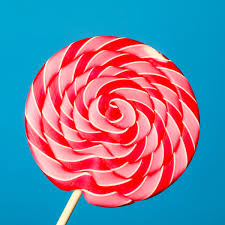
Well, and why not? Lollipops have been ubiquitous since for as long as any of us can remember. Toddlers and young children are happiest when their tongues are red or yellow or any of the other colours of the rainbow, and the sugar of the lollipop is coursing through their blood. So what if this is every mother’s nightmare!
The human predilection to lick and suck at sweet things goes back to pre-history. At that time of course, it was much more ‘natural’—people would poke sticks into honeycombs and suck the sticks—probably the earliest form of lollipops.
In China, Egypt and in the Arab world, fruits and nuts were glazed with honey and sticks inserted into them, to make for more convenient sweet-treats.
But the sweet as we know it today, has its origins in the late 16th and early 17th century. This was the time when sugar started becoming abundant in Britain (on the back of inhuman and slave labour in the colonies). The English started making boiled hard sweets, and inserting sticks into them. And there they were—the first official lollipops. The name itself probably originated in North-England, where tongue is called ‘lolly’ and pop means ‘slap’ — so ‘lollypop’ meant ‘tongue slap.’
The McAviney Candy Company started marketing lollipops in 1908, but it was the Bradley Smith Company which really took it to scale. Manufacturing got automated, when the Racine Confectioners Machinery Company built a machine which could attach hard candy to a stick at the rate of 2400 sweet per hour.
Today, there are over 100 varieties of lollipops available today in all shapes and sizes.
And of course something like lollipops are sure to have many a bizarre record associated with them. So here are a few:
The largest lollipop ever made weighed 3176.5 kg and was created by See’s Candies (USA) for Lollipop Day 2012. It was chocolate-flavoured and was 4 feet 8.75 inches long, 3 feet 6 inches wide, and 5 feet 11 inches in height. The lollipop stick which was 11 feet 10 inches tall was not counted towards the record.
A lollipop-licking event was organized in 2008, in Valladolid, Spain. Here a world record of the most people (12,831) licking lollipops was made.
27 people lined up 11,602 lollipops in a line stretching half-a-kilometre in length to create a Guinness record. This was in South Africa.
But the weirdest has to be the record set by two boys bouncing a balloon back and forth 56 times without letting it touch the ground, using lollipops held in their mouth!
Today, there are lollipop flavours that suit the adult palate as well– lollipops in beer and wine flavours, as well as tea and coffee-flavoured lollipops.
And lollipops don’t need to be sweet. The Indian version—imli-based lollipops are, in my reckoning, the best! Today they are marketed commercially, but back in the day, my grandmother used to pound together tamarind, jaggery, chilli powder, salt, ghee and hing, put the shiny ball at the end of a stick and hand the treat around to us kids. Of course these were extremely restricted and made once a month or so, after much begging and pleading.
But we did also enjoy the store-bought sweets occasionally. Lollipops in those days were generally flat and in one colour. A particular favourite of ours used to be a longish one which had a hole towards one end so that it doubled as a whistle as well.
Today lollipops are often round, and come in a variety of other shapes as well. There is a wide range of sizes, and they are often in a riot of colours. Some are so large that even the most-eager 4-year olds cannot finish them at one go—leaving the mothers with the challenge of a sticky, drooly mess.
Popular as this sweet may be, one also has to be aware that it not only can lead to cavities, and other tooth and gum-related issues, but the sugar-high can sometimes be too much. So it should definitely be a rare treat.
–Meena

 Millennial Matriarchs