Lollipop Day

July 20th last week was marked as Lollipop Day—where else but in the US!

Well, and why not? Lollipops have been ubiquitous since for as long as any of us can remember. Toddlers and young children are happiest when their tongues are red or yellow or any of the other colours of the rainbow, and the sugar of the lollipop is coursing through their blood. So what if this is every mother’s nightmare!

The human predilection to lick and suck at sweet things goes back to pre-history. At that time of course, it was much more ‘natural’—people would poke sticks into honeycombs and suck the sticks—probably the earliest form of lollipops.

In China, Egypt and in the Arab world, fruits and nuts were glazed with honey and sticks inserted into them, to make for more convenient sweet-treats.

But the sweet as we know it today, has its origins in the late 16th and early 17th century. This was the time when sugar started becoming abundant in Britain (on the back of inhuman and slave labour in the colonies). The English started making boiled hard sweets, and inserting sticks into them. And there they were—the first official lollipops. The name itself probably originated in North-England, where tongue is called ‘lolly’ and pop means ‘slap’ — so ‘lollypop’ meant ‘tongue slap.’ 

The McAviney Candy Company started marketing lollipops in 1908, but it was the Bradley Smith Company which really took it to scale. Manufacturing got automated, when the Racine Confectioners Machinery Company built a machine which could attach hard candy to a stick at the rate of 2400 sweet per hour.

Today, there are over 100 varieties of lollipops available today in all shapes and sizes.

And of course something like lollipops are sure to have many a bizarre record associated with them. So here are a few:

The largest lollipop ever made weighed 3176.5 kg and was created by See’s Candies (USA) for Lollipop Day 2012. It was chocolate-flavoured and was 4 feet 8.75 inches long, 3 feet 6 inches wide, and 5 feet 11 inches in height. The lollipop stick which was 11 feet 10 inches tall was not counted towards the record.

A lollipop-licking event was organized in 2008, in Valladolid, Spain. Here a world record of the most people (12,831)  licking lollipops was made.

27 people lined up 11,602 lollipops in a line stretching half-a-kilometre in length to create a Guinness record. This was in South Africa.

But the weirdest has to be the record set by two boys bouncing a balloon back and forth 56 times without letting it touch the ground, using lollipops held in their mouth!

Today, there are lollipop flavours that suit the adult palate as well– lollipops in beer and wine flavours, as well as tea and coffee-flavoured lollipops.

And lollipops don’t need to be sweet. The Indian version—imli-based lollipops are, in my reckoning, the best! Today they are marketed commercially, but back in the day, my grandmother used to pound together tamarind, jaggery, chilli powder, salt, ghee and hing, put the shiny ball at the end of a stick and hand the treat around to us kids. Of course these were extremely restricted and made once a month or so, after much begging and pleading.

But we did also enjoy the store-bought sweets occasionally. Lollipops in those days were generally flat and in one colour. A particular favourite of ours used to be a longish one which had a hole towards one end so that it doubled as a whistle as well.

Today lollipops are often round, and come in a variety of other shapes as well. There is a wide range of sizes, and they are often in a riot of colours. Some are so large that even the most-eager 4-year olds cannot finish them at one go—leaving the mothers with the challenge of a sticky, drooly mess.

Popular as this sweet may be, one also has to be aware that it not only can lead to cavities, and other tooth and gum-related issues, but the sugar-high can sometimes be too much. So it should definitely be a rare treat.

–Meena
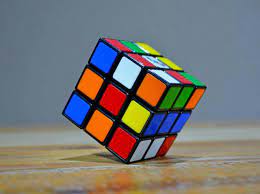
Rubik’s Magic Cube

It was all the rage in the 1980s. Every house had one, and it was fought over by adults and children. It was in everyone’s hands that were never still; it sparked contests and competition across the world. It was the Rubik’s Cube.

At first glance, the cube seems deceptively simple, featuring nine coloured squares on each side. In its starting state, each side has a uniform colour — red, green, yellow, orange, blue, or white. To solve the puzzle, you must twist the cubes so that eventually each side returns to its original colour. Easier said than done! To master the cube, you must learn a sequence of movements that can be performed in successive order. Mathematicians have calculated that there are 43,252,003,274,489,856,000 possible combinations or ways to arrange the squares, but just one of those combinations is correct.

The creator of the puzzle cube was an unassuming Hungarian architecture professor named Erno Rubik. Erno Rubik was born on July 13, 1944, towards the end of World War II in the basement of a Budapest hospital that had become an air-raid shelter. His father was an engineer who designed aerial gliders.

As Erno described his childhood: I was an ordinary boy, wanting to do everything possible—and not possible. I climbed trees and had fun in other ways that weren’t allowed but were exciting to me. And I was curious and tried to make things. Nothing special. He love to draw, paint and sculpt, and went on to study architecture at Budapest University of Technology because he felt it combined the practical with the aesthetic. He went on to teach architecture and taught a class called “descriptive geometry” where he encouraged students to use two-dimensional images to solve three-dimensional problems

In 1974, 29 year old Rubik was tinkering in his bedroom which had lots of odds and ends, including cubes made from paper and wood.  He tried to put together eight wooden cubes so that they could stick together but also move around, exchanging places. The object quickly fell apart. Erno kept at it, taking it as a challenge. After much trial and error, he figured out a unique design that allowed him to build a solid, static object that was also fluid. He then decided to add 54 colourful stickers to the cube, with each side sporting a different colour – yellow, red, blue, orange, white and green. That way the movement of the pieces was visible and trackable. Erno was lost in the colourful maze, but with no clue how to navigate it. It took many weeks of twisting and turning before he could finally get the colours to align.

Once he found that the cube could be restored to its original state Erno Rubik submitted an application at the Hungarian Patent Office for a ‘three-dimensional logical toy’. Rubik now looked for a company who was willing to produce the cube commercially. It was not easy as no one believed that people would ‘play’ with such a toy. Finally in 1977 a small company that manufactured chess sets and toys agreed to manufacture 5,000 such cubes. The toy entered toy shops with the name Buvos Kocka or ‘Magic Cube’.  By 1979, 300,000 cubes had sold in Hungary.

As the popularity of the cube grew and spread, even beyond Hungary, Rubik felt that taking it beyond Hungary needed an international collaboration, but that was the period of the Cold War when geopolitical tensions restricted collaboration with the so-called Western Bloc.

So Erno Rubik started to take his creation to international toy fairs where it met with lukewarm response. In 1980, at the Nuremberg Toy Fair, a marketer named Tom Kremer spotted the Magic Cube. He thought it was fascinating and made a deal to take it to America. Rubik got a contract at an American company, Ideal Toy, which wanted one million cubes to sell overseas. But due to copyright issues, they suggested that the name be changed. And so, Rubik’s Cube made its debut at a New York toy fair in 1980. Erno Rubik himself was invited to launch the cube. The shy professor with not very fluent English, was not the best of salesmen, but he was the only one who could demonstrate that the puzzle could be solved! The rest is history.

Rubik’s Cube became a craze. More than 100 million Cubes were sold over the next three years. Rubik initially believed the cube would appeal to those with science, math, or engineering backgrounds. He was shocked when, as he wrote, It found its way to people whom nobody would ever have thought might be attracted to it.

The Rubik’s Cube went on to become ‘one of the most enduring, beguiling, maddening and absorbing puzzles ever created’. More than 450 million cubes have sold globally, (not counting the many more imitations) making it the best-selling toy in history. It became much more than a puzzle. It has been described as ‘an ingenious mechanical invention, a pastime, a learning tool, a source of metaphors, and an inspiration.’ It has spawned speed-cubing competitions and an assortment of record breaking feats. But as Rubik once said, for him it is not the speed that is of essence; “the elegant solution, the quality of the solution, is much more important than timing.”

The educator in Rubik believes Arts should be an integral part of STEM education. He feels that the Cube demonstrates this fusion. The Cube has become a universal symbol of everything I believe education should be about: fostering curiosity, the rewards of problem-solving, and the joys of finding your own solution.

Even as the Rubik’s Cube became a global sensation, Erno Rubik remained a publicity-shy professor, continuing his “tinkering”. He started his own design studio in Hungary and began to work on new projects and revive abandoned ones, including puzzles called the Snake and Rubik’s Tangle. In an interview he said: I never planned to achieve this peak and had no idea that I would. And, after it, I had no thought that I’d like to do better. My only goal is to do well. I’m not thinking about whether people will like it or not. I need to love it and meet my targets, nothing else. What happens after that depends not on me but others. The Cube created the strongest connection with people—which is harder than being popular—maybe because it taught them that they could solve difficult problems and rely on no one but themselves to succeed. It has meaning, and that’s enough for me.

–Mamata

Another World Youth Skills Day…

In 2018, the proportion of India’s working-age population started growing larger than its dependant population (children below 14 and above 65 years of age). This bulge in the working-age population, called the demographic dividend is going to last till 2055—a total of 37 years.

World Youth Skills Day

But such a large population of young people is productive only if they are educated and skilled so that they realize their potential and contribute to the nation’s growth.

The harsh reality is that only about one in five Indians in the labour force is “skilled” as per the Human Development Report (HDR) Report 2020. India is 129th among 162 countries for which this data is available.

If the absolute numbers are a matter of concern, for me, the less-obvious ‘quality of skills’ is even more of concern.

Let’s look at a few indicators of how effective skill training programmes in India may be. With regard to many skills, a school dropout can be certified at Level 3 or 4 through a 3-month training programme. In the formal skill structure, which is the ITI and Polytechnic systems, the length of programmes is more respectable, but the courses and curricula are outdated by about five decades—some of these institutions still offer programmes in Stenography! The faculty may never have set foot in an industry, and the equipment, even if it is functional and not rusting, has not been in use in the real-world for at least 20 years. And the youth themselves, during their time in these institutions may never work on an industry shop-floor, or even visit a factory.

If skill is ‘the ability to do something well’ how do we expect youth passing out of such systems to do anything useful, least of all ‘well’?

Contrast this to Germany, which is one of the leaders in skill training. They base their skill training on the dual system which works because of the cooperation between Medium and Small Scale Enterprises, and vocational training institutes. Trainees in the dual system typically spend part of each week at a vocational school and the other part at a company. Dual training usually lasts two to three-and-a-half years. It is basically a combination of theory and training implanted in a real work setting. It is an integral part of the education system and is driven by industry and trade unions, who constantly upgrade and modify training modules and job roles. These occupations are certified by either a chamber of commerce or crafts or trades. About 70% of German youth go through this skilling system.

Whether is the length of the training, the rigour, the exposure and hands-on work in industry, or the up-datedness of the curriculum based on industry needs, where is the comparison between skilling in such a system and skilling in India? We can talk about the importance we place on skilling, tout the numbers (the National Skill Development Corporation website says 1,10,34,285 candidates have been certified through the flagship short-term training programmes), and the institutional structure and industry-involvement mechanisms we have put in place.

But to quote a 2019 ILO report on India,

‘Since 2013 … despite ongoing reforms promoting skills development, VET has not kept pace with general education, and its share of upper secondary education fell to 2.7 per cent in 2016. Moreover, VET does not respond to the training needs of young women. Only 17 per cent of VET students were girls in 2016, down from 20 per cent in 2000 (UIS, 2018). Non-formal and informal VET programmes do not reach a large proportion of India’s young people. Survey data collected in 2017 indicate that only 5 per cent of young people aged 14–18 were taking any type of vocational training, whether formal or not. And 59 per cent of those receiving training were taking courses shorter than six months.’

This should not be news to any of us. Each of us has experienced how difficult it is to find a plumber, electrician, carpenter or welder, leave alone one who knows their job, can problem-solve; one who turns up on time; one who works cleanly and cleans up their mess.

We are five years into our demographic window. And still have not put in place a critical building block, viz skilling. How can we hope to fulfil our dreams, aspirations and ambitions if we don’t bring about DRASTIC changes and SOON? We need to take an honest look at where we stand, admit we are not on the right track, and go back to the drawing board.  

July 15 is marked as World Youth Skills Day.  We in India too marked this last week. But Skill Days will come and go. When will our youth be able to access high quality skills?

–Meena

Living Your Dreams: Calvin and Hobbes

I am an unapologetic follower of comic strips. This is the section of the newspaper I save up to savour after reading all the gloom and doom news. One of my all-time favourites is Calvin and Hobbes.  

The creator of these iconic characters–six-year-old Calvin named after the Protestant reformer John Calvin, and his imaginary stuffed tiger friend Hobbes named after the philosopher Thomas Hobbes, is Bill Watterson.

Watterson graduated from Kenyon College, a liberal arts college in Ohio, with a degree in Political Science in 1980. He started working as a political cartoonist for a local newspaper soon after he graduated, but was fired after three months. He then worked for a company creating ads to sell products, something that he hated. All the while he continued drawing, with the idea of creating a syndicated comic strip. It was five years before his dream could be realized.

The first Calvin and Hobbes strip appeared in a newspaper in November 1985. The characters and their adventures and ruminations were much deeper than just “comical”. They reflected the universal quest to accept the impossible and to embrace the irrationality of the moment. As Watterson once described it “My strip is about private realities, the magic of imagination, and the specialness of certain friendships”. Watterson’s daily strip became an icon for all these elements and was syndicated to over 2,000 newspapers. Bill’s new ‘job’ was to come up with 365 ideas a year. For this he said he had to create a kind of mental playfulness. He sustained this for ten years. The last Calvin and Hobbes strip was published on 31 December 1995.

Despite the huge success of the characters, and in the face of intense pressure to allow related merchandise, Watterson never succumbed to what would have been a billion dollar industry. He believed that by doing so “Creativity would become work for pay. Art would turn into commerce. Selling out is usually more a matter of buying in. Sell out, and you’re really buying into someone else’s system of values, rules and rewards. I’m not interested in removing all the subtlety from my work to condense it for a product…Note pads and coffee mugs just aren’t appropriate vehicles for what I’m trying to do here.”

In 1990 Bill Watterson was invited back to Kenyon College to give a commencement address to the graduating students. His deeply personal and candid talk urges young people to follow their dreams even in the face of numerous challenges.

This month, as thousands of graduates across many parts of the world step out of the security of academic institutions and enter, with excitement and some apprehension, the vast, hitherto unknown world of work, Bill Watterson’s words offer encouragement, support and inspiration.

Sharing some excerpts.

At school, new ideas are thrust at you every day. Out in the world, you’ll have to find the inner motivation to search for new ideas on your own. With any luck at all, you’ll never need to take an idea and squeeze a punchline out of it, but as bright, creative people, you’ll be called upon to generate ideas and solutions all your lives. Letting your mind play is the best way to solve problems

You may be surprised to find how quickly daily routine and the demands of “just getting by” absorb your waking hours. You may be surprised to find how quickly you start to see your life in terms of other people’s expectations rather than issues. You may be surprised to find out how quickly reading a good book sounds like a luxury.

We’re not really taught how to recreate constructively. We need to do more than find diversions; we need to restore and expand ourselves. Our idea of relaxing is all too often to plop down in front of the television set and let its pandering idiocy liquefy our brains. Shutting off the thought process is not rejuvenating; the mind is like a car battery–it recharges by running.

A playful mind is inquisitive, and learning is fun. If you indulge your natural curiosity and retain a sense of fun in new experience, I think you’ll find it functions as a sort of shock absorber for the bumpy road ahead.

For years I got nothing but rejection letters, and I was forced to accept a real job. A REAL job is a job you hate. I designed car ads and grocery ads in the windowless basement of a convenience store, and I hated every single minute of the 4-1/2 million minutes I worked there. My fellow prisoners at work were basically concerned about how to punch the time clock at the perfect second where they would earn another 20 cents without doing any work for it.

I tell you all this because it’s worth recognizing that there is no such thing as an overnight success. You will do well to cultivate the resources in yourself that bring you happiness outside of success or failure. The truth is, most of us discover where we are headed when we arrive. At that time, we turn around and say, yes, this is obviously where I was going all along. It’s a good idea to try to enjoy the

To endure five years of rejection to get a job requires either a faith in oneself that borders on delusion, or a love of the work. I loved the work. Drawing comic strips for five years without pay drove home the point that the fun of cartooning wasn’t in the money; it was in the work. This turned out to be an important realization when my break finally came.

You will find your own ethical dilemmas in all parts of your lives, both personal and professional. We all have different desires and needs, but if we don’t discover what we want from ourselves and what we stand for, we will live passively and unfulfilled. Sooner or later, we are all asked to compromise ourselves and the things we care about. We define ourselves by our actions. With each decision, we tell ourselves and the world who we are. Think about what you want out of this life, and recognize that there are many kinds of success.
But having an enviable career is one thing, and being a happy person is another.

Creating a life that reflects your values and satisfies your soul is a rare achievement. In a culture that relentlessly promotes avarice and excess as the good life, a person happy doing his own work is usually considered an eccentric, if not a subversive. Ambition is only understood if it’s to rise to the top of some imaginary ladder of success. Someone who takes an undemanding job because it affords him the time to pursue other interests and activities is considered a flake. A person who abandons a career in order to stay home and raise children is considered not to be living up to his potential-as if a job title and salary are the sole measure of human worth.

Cultivate that interest, and you may find a deeper meaning in your life that feeds your soul and spirit. Your preparation for the real world is not in the answers you’ve learned, but in the questions you’ve learned how to ask yourself.

–Mamata

Homes for Hippos

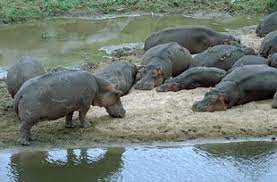
Hippos hit the news every now and then. And in the past weeks, they have been a topic of some discussion in India, thanks to a request from the Colombian Government for us to provide a home to some of the ‘cocaine hippos’ that have become feral there. Actually, it is quite unfair to call them ‘cocaine hippos’—it is not like they snort cocaine. Their ‘fault’ is that they (or their parents/grand-parents) were owned by the infamous cocaine smuggler Pablo Escobar.

Pablo Escobar was a Colombian druglord, who was called the ‘King of Cocaine’, due to his monopoly of the cocaine trade into the US. He was the founder of the Medellin Cartel, and the wealthiest criminal ever, with his wealth being estimated at $ 30 billion in 1993, when he was killed at the age of 44, by the Colombian National Police.

Every aspect of Escobar’s life was larger-than-life. Like the emperors of old, he set up a menagerie at Hacienda Napoles, his huge ranch east of Medellin, and kept giraffes, elephants, ostriches, and other exotic species there. Four hippos—three males and one female–were part of this menagerie.

When he was killed, authorities did not quite know what to do with these animals, and just left them in the estate—where not unexpectedly, they multiplied. In about 25 years, there were close to a 100 individuals (the number may stand at over 150 today). A single hippo can eat over 35 kg of grass and other green plant material in a day, posing a threat to local biodiversity. Being large and heavy animals, they stomp the ground and compact it as they move over the same area day after day. They defecate in the water, and end up polluting rivers and water bodies.

Hippos
Pic: Encyclopedia Britannica

Efforts to curb the population explosion have not met with success. About 15 years ago, the local government tried culling the animals, but this led to protests across Colombia and was thankfully stopped. A sterilization programme is in place, but the hippos breed faster than local experts can find, catch and castrate them (We can’t even manage it with stray dogs, what to talk of hippos!).

Hence the plan to ship the hippos to various countries which are ready to receive them. Mexico has agreed to take 10 of them. Colombia has approached India to house 60 of the animals at the ‘Greens Zoological Rescue and Rehabilitation Kingdom (GZRRC)’, being created by Reliance Industries in Jamnagar, Gujarat. The plan has not met with enthusiasm by any wildlife expert. Housing them in zoos is an expensive proposition.  Hippos are native to Sub-Saharan Africa, not India, and definitely cannot be released into the wild. (However, based on a small fragmented tooth unearthed in Madhya Pradesh, researchers claim that India was home to hippopotami nearly 5.9 million to 9,000 years ago. The hypothesis is that they entered Eurasia from Africa, and then diversified in South Asia before going extinct. But even if they ever were native here, they haven’t been for many millennia.)

There is no doubt Colombia has a problem. Apart from destroying vegetation and biodiversity, hippos are also a threat to humans. They are known to be very aggressive, and can chase people on land, as well as capsize boats in the water. They sometimes raid fields and come into conflict with humans.

And it is also true that a safe home must be found for the hippos—they are only living their life as they were meant to. How can they help it if someone uprooted them from their home and brought them to a new continent?

But bringing them to India definitely does not sound like a good idea. The recent import of cheetahs should serve as a cautionary tale. We need to protect our biodiversity and trying to introduce non-native (at least in human memory) species is not going to help either our diversity or the introduced species.

–Meena

Gracious, graceful, generous: Shobita Punja

Those are my memories of Shobita Punja, who passed away last week. She joined the Governing Council of Centre for Environment Education (CEE) when I was a rookie-professional there. And from then on, for the decades that followed, we would have the privilege of meeting with her twice a year when she came for the meetings, and then again at workshops and seminars. And over the years, she went from advisor to friend.

Shobita Punja
Shobita Punja. Photo: Jaipur Virasat Foundation.

And in every interaction, she was indeed gracious and generous—taking the time to talk to each one of us, enquiring about our projects, and giving her inputs gently and generously. Most conversations gave us a new perspective to the way we were looking at things.

And of course she was graceful. Her lovely cotton saries; her low, loose bun; her warm smile.

We all wished we could be half as erudite and elegant as her. Or even a quarter would do!

When we first met, she was heading the Centre for Cultural Resources and Training (CCRT), and they were bringing out innovative teaching materials to ignite the love of our history and culture in school kids, and supporting that with teacher training to ensure that the material was used in the right way in the schools. There was much to learn and share, for she was doing for the cultural environment what we at CEE were doing mainly for the natural environment. Both CEE and CCRT were pioneers in introducing experiential learning pedagogies, in getting children to look up from textbooks at the real world, and in trying to question and contextualize their experiences; analyze and synthesize their learnings. And these were revolutionary thoughts for the ‘80s! (Today, the ideas are not new, but how effectively they are put into practice in their real spirit is still a question mark).

 She was truly a pioneer! She did her BA in Art History when it was definitely not seen as a subject with any great career openings, at least not in our part of the world.  This was followed by a Master’s in Ancient History from JNU and another Master’s in Art Education from Stanford. She was awarded a Ph.D. for her contribution to Art Education.

From CCRT, Shobita moved to INTACH, and established a Heritage Education and Communication Service there. She was the moving force behind the restoration of the Chowmohalla Palace and Museum at Hyderabad. As an erstwhile resident of that historical city, I can aver to how authentically it was done and how proudly we used to be to show it off to our visitors. The restoration won the coveted UNESCO Asia-Pacific Heritage Award, apart from many other accolades. Chowmohallah after its restoration was the site for many beautiful music and dance performances, made even more beautiful by the settings. Shobita was also behind the restoration of the Jai Vilas Palace Museum, Jaipur and Reis Magos Fort, Goa.

She was a prolific writer, with over 20 books to her credit, ranging from one as recent as the 2023 co-authored ‘A New History of India: From Its Origins to the Twenty First Century’, through scholarly books on Khajuraho and Banaras, to children’s books including ‘Listen to the Animals’ A Fabulous Collection Of Takes For Children,Illustrated by Mario Miranda.

But maybe her most seminal work was her first book, ‘Illustrated Guide to Museums of India’. Nothing like this had been done before for our heritage collections, and it set a benchmark. What is wonderful is that it is available to all free online, thanks to the UNESCO archives. All you have to do is click on: https://archive.org/details/in.gov.ignca.84193/page/n17/mode/2up.

Shobita, you have left us, but your contributions and the memories of your grace and presence will live on!

May your soul Rest in Peace.

–Meena